How Rob Made £7,350 In His First Month Of Trading | Student Interview - Rob Donohoe
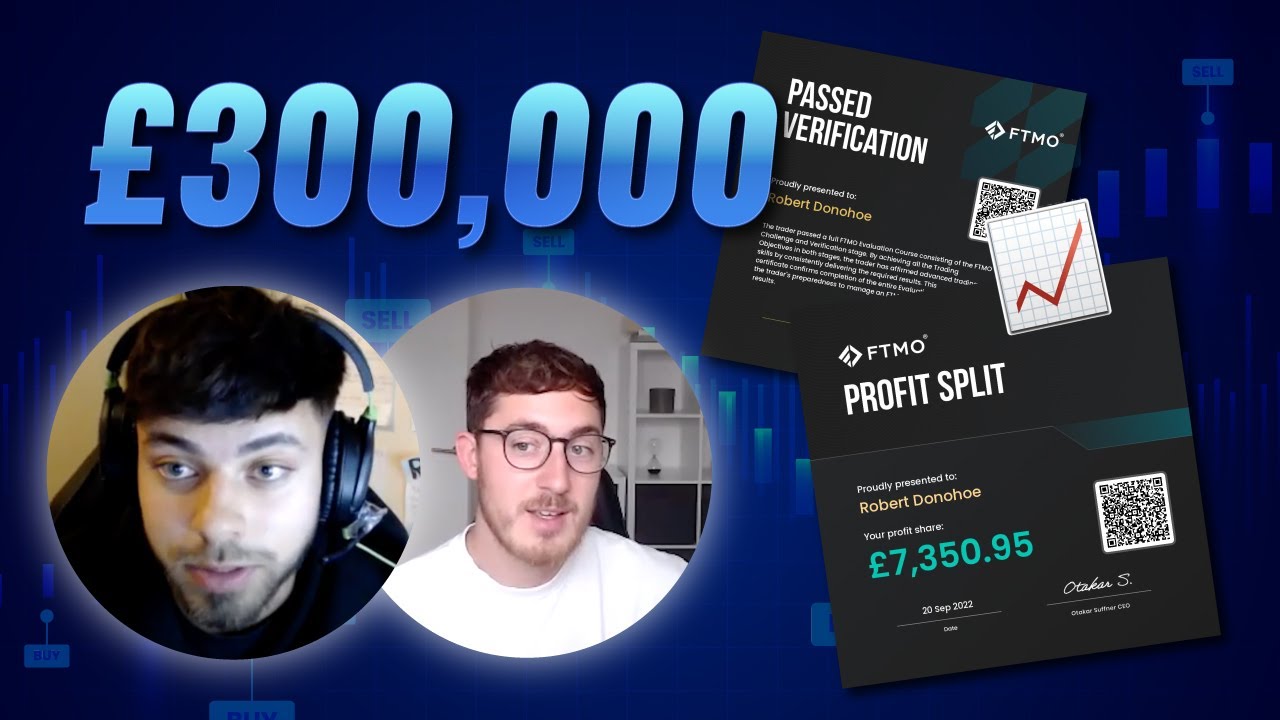
In this interview, channel host (Speaker A) talks with student trader Rob Donohoe about his rapid rise in prop‑firm trading. Rob, a 20‑year‑old from Bournemouth, started trading intermittently two years ago, turning a £500 personal account into £15,000 using high‑risk, low‑management trades. After a costly loss, he enrolled in the host’s course, adopted disciplined risk management, and began passing FTMO challenges. He secured a $100K funded account, then added $200K, now managing $300K. Rob explains the pivotal shift from a gambling mindset to a confluence‑based, risk‑controlled strategy, his daily routine (early wake‑up, preparation, limited trades, whiteboard rules), and the importance of working smarter, not harder. He discusses future plans: relocating to Dubai, investing crypto profits, and running a side recruitment business for his girlfriend. The interview concludes with advice for beginners – treat trading like a job, focus on risk management, and avoid overtrading.
Chapters
So welcome back to the channel, and what an interview I've got for you today. This is an interview with one of my students, Rob, and what a journey he has had so far in his trading career. Since starting with me, he learned all of our systems and our strategies. He very quickly got funded with his first $100,000 funded account. Very quickly after that, he managed to get his first payout of £7,500, and since then he has now managed to acquire another $200,000 worth of funding capital. So now he manages $300,000 worth of funding capital. In this interview, we talk about his journey, how he's got to where he is today, and some of his plans for the future. So give it a watch. Any questions, make sure you leave it below in the comments. Make sure you subscribe. And if you'd like some more information on how you can start your trading career with us, hit the link in our description. Thanks for, for jumping on the call with me anyway. I think you've got a good, a good story to tell. I'm definitely going to be some, some good points that we can, um, that we can bring out to people. But For people, I mean, everyone's not going to know you, but so just sort of give us a, give us a, uh, an introduction to yourself then. Who are you?
Uh, I'm Rob. I, I live in Bournemouth, so quite near you. Um, I've been trading for kind of on and off for about 2 years, um, and I've kind of been doing it full-time for about 3, 4 months. Um, and yeah, kind of just now, um, seeing the consistency, getting the bigger accounts, and obviously getting the nicer profits.
Amazing, amazing. So, so just for a bit of context then, you're now trading full-time. You recently got funded with $100K. Um, is that still the case?
I got funded with another $200K.
Perfect.
So now mid this week.
Yeah, amazing. So $300K in funding, you're now trading full-time. Um, you were— you got into the top 10 leaderboard on FTMO.
Yep.
Amazing. So we'll touch on that shortly. Um, but I want to go right to the start then. So let's say even further than 2 years, let's say, what were you doing sort of back then? And when, when were your sort of first steps into this sort of entrepreneurial life, let's say?
Um, so I mean, I'm quite young, I'm still, I'm still only 20 years old. Um, and I've always kind of wanted to get out of just doing a 9 to 5 my whole life. Um, I've never ever been interested in doing that, and I didn't really necessarily know how I was gonna do that. Um, and I tried a few things that everyone has— dropshipping, Amazon, um, all of that good stuff— and I never really found any way to make a big sum of money. Because obviously the more you read, the more you look at— uh, I mean, I watch as many videos as I possibly can about kind of, um, how to make money and what to do with money. Um, and they all say the more you have, obviously the money comes to money, you can do more with the money that you, that you got, you get. And, um, these dropshipping and Amazon stuff that I just didn't really see the profit, so I kind of saved quite a bit, um, and did a personal account. Um, and this is when I was in work, and it was no risk management involved, not very good, uh, like strategy, but I was basically— it's basically a simple demand trade, um, on Swiss franc, and I basically turned £500 into £15,000 in a week. Um, which is obviously ridiculous because there's no sort of risk management in that whatsoever. Um, but at that point I kind of realized, okay, this is like definitely how you can make money, um, starting from nothing.
Yeah.
And now obviously I got your course I think a year ago. Um, I actually got like a fairly decent job in between that time, so I didn't necessarily focus on it. Um, and then once I made that 15 grand, I started thinking, okay, this is definitely something that I can pursue. Um, I ended up losing like 8 grand the next week, um, because again, no risk management, no kind of mindset to my trades. Um, so I lost that, and then I just cashed out. I just thought, okay, this is something I can actually do. Um, so I kind of went back to your course, went, went through everything, learned it all a bit better, um, and learned how to kind of keep my mindset right. And, um, yeah, that's when I started doing the FTMO challenges, uh, and I went for— well, I did a free trial first, then I kind of got consistent on the demos, um, and then went for the 100K Challenge, um, and passed. And then I had a, I had a bad first week actually, um, I was down like 3-4%, then managed to turn it around. And in the last week I gained something like 14%, um, because yeah, yeah, it was about 14% in that second week.
So amazing.
Yeah, that's where we're at now.
Solid. So, so what was— so the first The first time you were trading, was that when you put that £500 into a real account? Was that sort of like right at the start of your journey?
Uh, yeah, I've kind of like— I've, I've learned a bit about— I like— I've learned really simple things, um, obviously support and resistance, like trend trading, stuff like that. Um, and I was doing that, let's say, 2 years ago with personals, maybe getting like a £200 up to a grand every once in a while, like a £500 maybe up to like £1.5, £2, which is still obviously good. Percent, and I'm on a £100,000 account, that would be amazing. But yeah, um, I was just trying to basically just flip the accounts as quick as I can, uh, and then obviously I had that really, really good week where I, I managed to catch— basically, it's basically a swing trade on, on USD/CHF, um, and that whole week, every single day was, was a bullish candle, and every day I was just buying and buying and buying and buying, um, and then the week closed and I just closed my position, which happened to be about 15 grand. Um, yeah, and at that point I was just like, okay, I want to pursue, pursue this. This is where I'm gonna make money. Um, and then obviously the, the kind of opportunity we have with prop firms at the moment is, is so good, and you don't necessarily have to have lots of money to do them. Um, like if you think about the amount I've risked, um, to get that £100K account was what, £450? And then my first payout was I think like 7 or 8 grand. Um, so it's definitely worth it when you can kind of get to that stage.
Yeah, yeah. I mean, I, I say a lot, I think the opportunity in trading now is better than it's ever been before. Like, you think beforehand when you first started, you were kind of in the position where if you wanted to generate a lot of capital so you could do this full-time, you didn't really have much of a choice than trying to flip an account and trying to get lucky. There wasn't really anything else to do unless you went to you wanted to try and save up for years on end to build this sort of capital or try and find an investor, which is unlikely to happen. The opportunity now with prop firms is ridiculous, especially for people that are, again, very, very early stages of their journey. But obviously you went from being a trader that was pretty much in that gambling mindset, you were just sort of chucking a load in, to now being really consistent and you're making some solid gains. What do you think was, was the pivotal point in your journey that sort of allowed you to transition, transition from obviously that gambling side of, side of trading to, to the now sort of very professional, um, approach?
Um, so, well, obviously when I quit my job, I was like, okay, I need to take this seriously. I need to know that I'm making money every single month, um, or at least have the opportunity to, to gain money. Because if, let's say, you blow a funded account, then you've got no way of making money for a good— well, with FTMO at least at least 20 days.
Yeah.
Um, so obviously being able to learn to manage that risk is, is going to be crucial if I want to do this full-time. Um, so I kind of like said to myself, right, you've obviously know that you can do it with the strategy. Um, you've just got to implement that risk management for it to actually work. Um, so I did kind of just more and more, um, trade. I just trade basically on a demo account until I was like fairly confident with my, like, ability. Um, and it's weird because you obviously got a lot of content and there's a lot of different, um, kind of strategies almost. Obviously, well, I look for a confluence when I trade. Um, so I'm looking for most all of those, like Fibonacci retracement, liquidity supply and demand, all of them, uh, stuff, trends, um, to like kind of meet at one point, and then I'll try and trade it. Um, whereas I think before you don't have those things in mind, so when something's going wrong you don't blame yourself, you blame the market, you blame the strategy. When no, you might just be using one strategy that isn't working in that scenario, um, because of one of those other influences. Um, so when, when I'm doing a trade now and it fails, I just deal with it. I'm like, okay, that's fine, that's, that's because one of those other influences. You could have— I mean, obviously I'm looking for a confluence, but if there's one influence that's stronger than those three influences I've gained and the confluence, then the trade's going to fail. And that's just part of how it works. You're not going to win every single trade.
Yeah, so I mean, as long as you, you have your approach, you have your edge or your strategy, the way that you do things, if it presents itself then you take the trade. It's never going to be 100% success rate, but you know that because you've obviously collected data and you've applied to the system, to the markets a lot of times, you know that more times than not you should be able to gain a profit from that position. So if you just continue to repeat that process and manage your downside, then theoretically you should, you should, um, you should be able to see some profits at the end of the month. So it's been a pretty quick journey for you. I mean, you only really started trading 2 years ago, and you've only really been full-time for about 4 months now, and you're already making really, really good money. Um, how was that? How was the last sort of 4 months been?
Um, yeah, it's been good. I mean, I've— I think I've learned a lot just from kind of managing. It's so much different when you're trading on a challenge or a demo to when you're actually managing real money that you couldn't see. Um, and that, that your mindset completely changes. And that's the thing of FTMO, you have to obviously the minimum trading days. And a lot of the time I would try— I would pass it, let's say, within 6 days. Um, and I'd have to wait those 4 days. Those 4 days that I'm waiting, as soon as I get the account, the reason I think I had a bad week that first week is because I'm so eager to trade. Um, and the way I think of it is you can't work harder at trading, you can only work smarter and get better entries. Um, and that just comes with, with being on the charts as long as possible— and well, not, not as long as possible, but for a long period of time— and learning how to kind of manage your risk, how to get those like perfect entries, um, rather than just kind of getting a position and hoping it goes one way or the other.
Yeah, yeah, that's it. I think you hit the nail on the head there with— you can't work hard, you can only work smarter. Because I mean, theoretically, somebody will look at the markets and think, okay, well, that reacted to a supply zone, so I can just trade that every time I see something like that happen. But if you do that and you just jump into the markets constantly, you're going to take so many losses. So it is about, okay, how can I identify which of these levels and which of these zones and which of these trades are actually high probability? And then How can I try and identify those as opposed to just sitting in the markets all day and just blasting every single trade? It is, um, that is definitely one of those things that, that do take people from being able to identify trades and profitable trades to actually being profitable. I think it's definitely like a— it's definitely a scale. So you're now funded $300K. Um, what is your— what are your plans now? What are you doing with your life now?
So, I mean, I kind of want to get out of Bournemouth at some point, um, and I've got a girlfriend and she wants to move as well. Um, so we're potentially looking to something like Dubai, um, in the future. I'm not gonna— I'm putting a lot of my money into crypto, um, for the next foreseeable future until kind of 2025, 2026. Um, and then hopefully all the profits that I make from trading are kind of like at least 3x or 4x because of— if I have it in something like, I don't know, Ethereum, Bitcoin, um, then it should— when it has its next bull run, I'll make even more money. Um, but no, the kind of plan is to build my capital. I mean, I'm only 20, so there's no rush for me to kind of, um, I don't know, buy a crazy car just as of yet. Um, I do want one, but, um, I'm sure that'll come. I don't— I don't obviously I want to kind of save some capital first, invest it, and then start to kind of go for the more things I actually want in life.
Yeah, but yeah, well, that's it. I mean, once you've built that cash-flowing business like trading is and you're generating this money every single month, you then do sort of need to think, okay, well, I've got this abundance of cash now, what, what am I, what am I going to do with it? It's obviously one thing making the money, but then preserving it and putting that money to work again is obviously another thing. Um, I saw that you, um, that you have started a little business as well on the side, um, a little recruitment company, was it?
Uh, yeah, so I was actually at, um, like a really big recruitment company before this, and this is the job that I quit. Um, and it was a good position, like I knew I was going to be making, I don't know, potentially like 80K in, in like 7 years' time or something like that. But when obviously when I was having those weeks of insane profits, I realized like I'm not gonna ever— like, I'm never gonna be happy knowing that I can make that much money. Um, and I always think, like, it's better to die knowing that you've not taken— um, that you're not regretting anything, that you actually took all the risks that you could have. Um, and so I thought, I might as well, while I'm young, give this a massive go and, uh, really kind of go for it. And at the same time, I did start a recruitment company. It's more for my, um, girlfriend because she was in, uh, she basically did yacht recruitment, um, and she managed to make like 7 grand in a month from recruitment, um, commission. So she, she was only taking about 20% of that, and, um, obviously the company were making— I'm not gonna name them, but they're making like 80% of that.
Yeah.
Um, so I was just saying like, if you're that good and you've obviously done it only for a month, like, just try and like learn what you can. Um, and then they ended up like saying she can't work there anymore. Um, and I don't really know why, to be honest. So I just said like, okay, why don't you do it for yourself? Um, and she was like, oh, I don't know, I don't know, I want to be in a safe job and whatnot. So she got a job, but I was like, okay, well, I'm just going to make this for you anyway, so when you, when you come out, or you can do it in your spare time, it's something that you can make money from. And, um, yes, it's, it's decent, to be fair. I mean, you have seasons in it, so it's like one month you can make loads of profit. But, um, obviously when she got 7 grand commission that her company were making like 35, pretty much.
Yeah.
So it's a lot of money to be made in that as well. But, um, that's just, I think, the mindset you have to have. I mean, in this day and age anyway, to not be kind of stuck in that 9 to 5 for the rest of your life.
100%. So it's very much about that. I mean, it's pretty much why, how I started really. I sort of, I was, I was doing business before. I started so many little companies before, and then trading it like I cracked trading, I made loads of money from trading, and then, then it's very much like, okay, well, where— what businesses can I build now that I can put money into and have something that's going to again just generate me money on the other side? So again, you don't necessarily want to have that 100% stress on having to make money in the markets every single day. Knowing that there's money coming in from other places, from other investments, is, is massive, and it's a huge help for, for your psychology. So you can just go into trading stress-free. Um, again, that's, that's how I find it anyway. Um, so again, just, just to touch quickly on you trading full-time at the moment, what is your— what's your routine look like?
Um, so I'll normally wake up around 6:30, um, have like a shower, wake up, make sure I'm ready for the day, because I've had times where I've woken up, gone straight onto my laptop, try to enter a position. Let's say I wake up a bit later, like 7:30, trying to trade like early kind of Frankfurt, um, London, and then I'm not really awake, I'm not really in the zone, I've not really done enough, I'm just trading stupidly. Um, so I've, I've kind of— what I've, what I've actually got, I mean, you can see it behind me, I've got all these like revision notes and whatnot. I've got like a massive whiteboard behind my, uh, my screens basically, and it's got like rules. Um, and it's saying like, don't, for example, don't place 3 more trades in a day, uh, more than 3 trades a day, because My tendency before was to overtrade, um, which can obviously— it's just a bummer when you've made profits and you're just eating into it. Um, so I've got that. I've always said like prepare yourself, like have an hour of just like get water, have a shower, like fully wake up and like get in the zone and then look to trade. Um, once I've done my trades, like let's say I've done 2 positions in London or, or just one, um, and I've made a decent gain normally it would normally look like 3%, um, then either just call it a day, um, and go to the gym, kind of. I mean, I've got a very— I have a lot of time on my hands at the moment. Like, um, I'm trying to kind of generate as many, um, passive incomes as I can, trying to find different ways to do it. Um, like I said, with the cryptocurrencies, I have like interest accounts and whatnot that pay me out, um, monthly. So I'm trying to kind of get that side of things going now. Um, So that's what I'm kind of doing in my spare time right now, is just basically researching. I've got a few books I read as well. Um, the most recent one I got was Naked Forex. It's quite an interesting one because, I mean, I don't use any sort of, um, indicators, and I don't think that's necessarily the best way to trade. So that book's basically, um, on that, and I've just been reading that for quite a while. That's quite good.
So yeah, yeah, I think a lot of people struggle with that. So many people think that you're just gonna— you just sit on the charts all day, but that's just— it's just not the case. Most of the time you're going to be trading for like an hour, maybe 2 hours, and then, then it's like, then it's, then it's day done basically. Um, but again, it is so easy to sit there and just, just trade and trade and trade and trade and trade. And the more you trade, the more you're in the market, the much harder it is to actually be profitable.
I also think like if you have, let's say you have a bad trade and you lose, I don't know, 0.5% or 1%, um, then you're then gonna have what, what I, my kind of beginner mindset was, was that okay, I need to make that money back, I need to make it back now. Um, so I'd stay on the market, look for an entry, but at that point there might not— let's say it's like, I don't know, 11, then there's not as much volatility, there's not necessarily as much going on. Um, and I'm just looking for positions that aren't necessarily there just to make my money back. And that's where, um, I've kind of learned to be disciplined and just accept like a 0.5, 1% loss isn't much when you're gaining 3 to like 8% on a good day. So it's, it's just, yeah, it's just learning to like manage it like a job, right? And be more— not, not robotic because I feel that's not the right way to put it, but, but disciplined is how I'd put it.
Yeah, yeah, again, I, I totally agree. Um, I think, I think it's very much a case of understanding where the moves are going to happen. So I'm looking at the Frankfurt Open, looking at the London Open, and understanding that if you're trading not around those times, then it's going to be difficult to see your ideas actually coming to fruition and see those moves actually happening. And then being able to say to yourself, okay, well, things aren't likely to move, let me just come back tomorrow and then, and then we'll, then we'll go again. Um, what, what trades do you, uh, what currency pairs do you, do you trade?
Um, I mainly trade GU, don't particularly trade EU that much. Um, and I do quite a bit on, uh, USDCHF just because it was the one, the franc, just because it was the one that made me the money in the first place. And I don't know why, I don't know if this is like not something, um, that's necessarily true, but when I, when I look at the daily swings on, um, USD/CHF, it's like really like they'll have 5 days of, of bullish candles, then like 3 massive bear candles. It's like really clear. And I don't know, my more like longer positions, I'll probably, I'll kind of look for, um on the, on the Swiss franc. So yeah, that's— they're the main two I trade. I do trade sometimes, um, EU if, if there's a really nice setup on both GU and EU. I have— I normally have both of them, um, on the same— I have both my screens, so I have one on one. Um, but other than that, if I'm having a bad time, if I've had a bad few days on that, then, then I'll go on to Swiss franc and see if there's any good, good trades lining up.
Yeah, yeah, cool. Um, so you've obviously— I mean, you, you've reached that level of success that I think a lot of people aspire to get to. What would you say— what piece of advice would you give to people that are perhaps at the start of their journey, or they're looking to start their journey? What piece of advice would you give to them to, to help them get to, to the level that you're at now?
Um, I would say is like, your mindset towards trading shouldn't be like a get-rich-quick quick scheme. It should, it should more be kind of as you should treat it like a job almost, as when, when you come in, do your, do your work, but your job is only now what, 7 till 11, or 7 till 9 in some cases, and then enjoy the rest of the, enjoy the rest of the day. Don't just sit on the charts the whole day. Um, and everything, I would always just say manage risk is what, what changes your consistency basically. Um, Well, that's the only thing that guarantees your consistency and profitability.
Perfect, perfect. Well, it's been good to speak to you anyway, mate. Um, I'm sure there's going to be a lot of gems in here. People are going to get a lot of inspiration from this. Um, so yeah, thanks for jumping on the call with me. Good luck with, with the rest of your career. I think that there's going to be a lot more money to be made. Um, yeah, yeah, we'll, uh, we'll check back in, in a few months and we'll do another interview and we'll see where you're at then.
Sounds good, mate.
All right, nice one. Cheers, mate. Cool.










