How We Helped Paul Finally Get Profitable And Acquire $600k In Funding In Just 4 Months
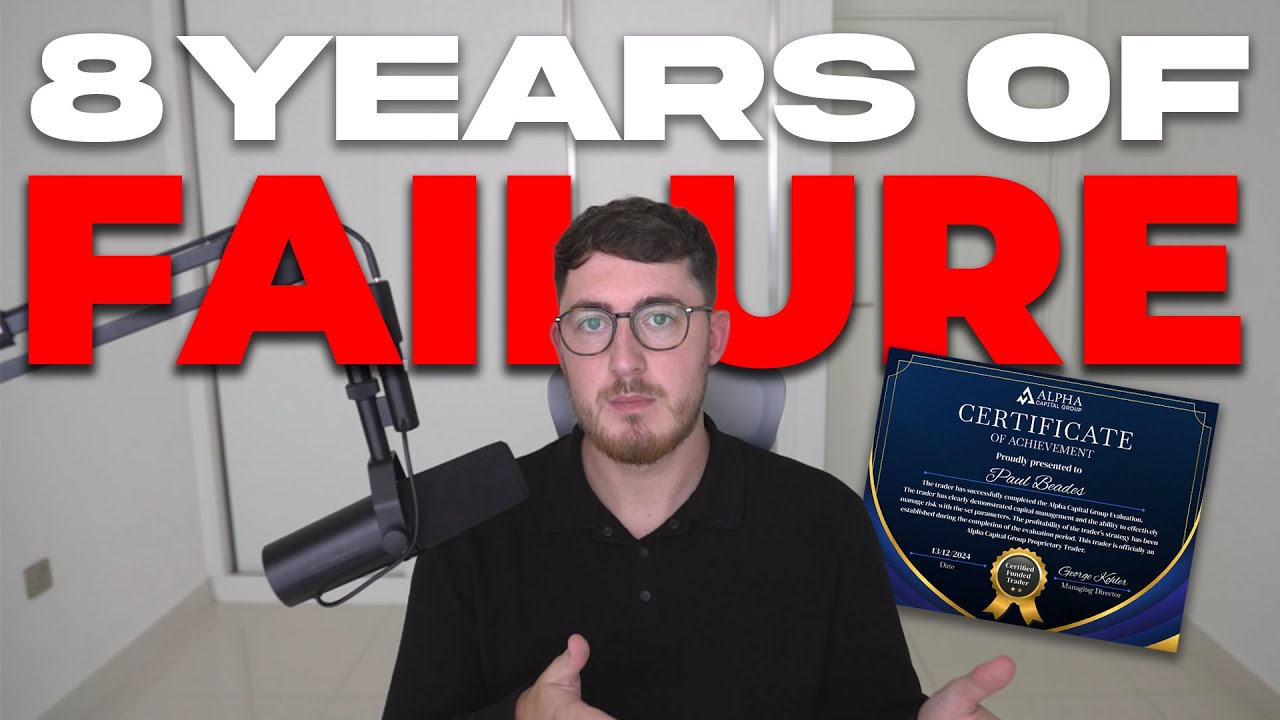
Paul spent nine years losing money trading crypto and forex before joining WeTrade. In four months, he secured $200k in funding and is on track for $600k total by following strict rules: 1% risk per trade, 1:3 minimum reward, 60% win rate. He credits mentorship from Geo Cook and the program's structured training.
Chapters
So what's up guys, George here, back with another killer, killer interview. Now this one's a special one. This interview is with one of our clients, Paul. Now Paul has been trading for 8 years unprofitably. He has tried everything under the sun— crypto, commodities, stocks. He's tried swing trading, scalping, bots, AI, You name it, he's tried it. And throughout all of that, he has done nothing but lose money. And that's when he decided to join WeTrade. And the results that he's got in that time have been incredible. So in just 4 months, we've been able to get him $200K in funding secured with a further $400,000 in funding in phase 2 about to be passed. And the reason he's been able to do that is because he's learned our mechanical trading strategies and he's actually gained an edge over the markets. This is really a testament to anybody that is struggling with their trading, people that are not getting the results that they want. There is really only one way that you're ever going to become consistently profitable, and that's by gaining an edge over the markets. So give this one a watch. Again, let me know what you think in the comments below., and I'll see you in the next one.
Um, but yeah, thanks for hopping on with me. Um, again, really, really wanted to do this interview just because I think you come from a slightly different perspective, right? You've obviously had a— you've had a lot of experience before working with us, so slightly different to the majority of people that do end up working with us. Um, so I'd love to hear a little bit about your story, really. So I guess if, um, if you could take it away and give us a bit of a rundown, just— I mean, let the people know who you are and sort of Yeah, a little bit about how all of this started for you.
Sure. So my name is Paul, I live in Hatford, Hertfordshire. It's almost a bit embarrassing, George, to say that I've been trading and trying to make it for, I think, about 9 years. I first sort of saw trading, woke up to trading through a Facebook advert for what I now know to be a scalping stock strategy, the most aggressive and difficult form to learn. But really, that initial experience opened up my mind to the possibility of being able to trade, um, you know, from your home PC. In those 9 years, maybe 7 years, I think it's about 9, I've done everything— forex, crypto, stock, scalping, day trading, swing trading. I've used indicators, I've run bots, I've been in a number of paid-for communities, um, I've used, um, particular indicator-led strategies. I thought I'd made it twice with big wins like 20 grand months and then blow it the next. Um, I've been scammed a couple of times. I lost money on the FTX crypto exchange crash and, and, and. So, um, it's been really hard. I've had many a sleepless night, hundreds of sleepless nights, because I just knew this was real. I, I know that it has the potential to change my and my family's life. It's an absolute dream for me to, to go and do it, um, and to make it happen and to change my life and to change my career out of corporate. And I've been in for 20 years, and you know, here we are, 4 months into WeTrade, and I've passed my first prop firm account, which is obviously a challenge to get through those very tight rules. But I, I would say through all of that experience, George, what you teach and what Geo Cook has given me is totally transformed how I look at the markets. And we can get into that, I suppose. Um, through all of that experience, I would say this is the purest, cleanest form of trading. It is price action, it is market structure, and order flow with rules-based— a rules-based strategy to tell us when to enter or indeed when not to. I'm, I'm only 4 months in and I'm— I've got so far yet to go, but I'm already profitable now. And I've got a route through the model you have of scaling through prop firms. I can see a clear route to be 600 grand funded in the next couple of months.
Mhm.
Um, post-Christmas, January, February, that's my target. I'm already halfway to the second one, the third one's coming online as well, uh, and that is absolutely testament to the quality of the method and the strategy, the quality of the coaching that I've received, which has been totally transformative, um, and yeah, just totally excited for the future. It's great.
I'm, I'm very pleased for you. And listen, like, this is This is why we do what we do. This is why we do what we do. I mean, we understand that there's a lot of people in positions like yourself, some people that haven't pushed through it, some people that have given up. But yeah, all we've ever wanted to do with this is put somebody on a course that puts somebody down a path, right, where if they walk that path, the results are there, which I think not a lot of people have the intention of doing in this industry. So Yeah, I'm very glad that we've been able to get you back on track. And, and yeah, I mean, it's been great to see. I mean, you're obviously a very, very active member inside the community, so it's been great to see how, how you have progressed in such a very, very short period of time. And often we say this, that people that come from a background like yourself, or they've traded for a long time, it's usually more difficult for us to help them because they've got so many bad habits.
But I mean, oh yeah, I had baggage, I had baggage for sure.
But even so, even so, you've come in and you've adapted very quickly, which is, which is great.
Yeah, and on that point on the community, I mean, it's been brilliant. And I intentionally put myself out there and, and communicated what I was doing, showed my wins and my losses. The couple of times I remember being a bit embarrassed because I just knew it was nonsense that I was posting, but that instant correction from the community and the feedback loop of you know, we've got mechanical rules to follow, and either you've met those rules or you haven't. It's a beautiful, simple thing to apply, although there's complexities and subtleties to it. So that feedback loop is instant, and I've learned so much, um, through that course correction, through the community, and, and then of course spending time in mentorship with Gio, who is— who's totally transformed how I look at the charts, but also is now keeping me accountable on it as well. So that's a really important part to tighten the screw of my quality and performance. But the community and the students there and the relationships I have with individuals has been a big part of it.
Amazing, amazing. Yeah, that's exactly why we have it there, exactly why we have it there. So I just want to sort of backtrack a tiny bit and just, just understand really your reasons behind beginning to work with us. Obviously, I understand you, you've been through the mill a lot. You've obviously trusted a lot of people and had your hands burnt a number of times from people that weren't out there with your best intentions. What was it about what we offered and what we were doing that gave you some sort of hope that, okay, maybe this could be a better way of doing things?
It's a really good question. I saw your advert, or an advert on Instagram, I think, through the torrent of adverts that I get. And so it's sort of hard to know why did I pick you. I suppose having worked with American gurus, if you like, American communities, it was nice to chat to British people. Why is that important? Because trading the London market and being, being on the same schedule as someone who's successful was, I thought, different from what I'd done before. I was interested in the mechanical rule set, um, because I need a procedure, you know, that helps take out the emotion, it helps take out the variation in my skills and my capability. That was interesting. Um, and I suppose, um, yeah, I don't know, I just felt like I had to take the plunge. I, I also knew from the failures where I was trading, uh, essentially scaled hedging dollar cost averaging, adding to losers, and being— having an account with my own money running at 50%, 60% drawdown, I just knew that wasn't right. And, and actually coming back to a pure form of trading where, um, you know, for example, on two challenge accounts, one that I've passed, one that I'm three-quarters of the way to passing now, um, for, for 200 sorry, £400 grand in January. I've made on paper £40 grand over the past month on those two accounts. My maximum risk there was 1%. My maximum risk was 1%. That is stunning. And the power of the We Trade method is that it's so precise an entry and such small stop losses that it's very possible as at a minimum to get 3% winners, but it's very possible to get 5, 10, even 15% winners. And yesterday there was a big move, didn't catch it because it's Christmas. Um, one of the currency pairs moved what would have been equivalent to 40% had I've, had I caught it and we stayed in long enough. And that just shows that the method and understanding the higher time frame structure and trading with the flow of the market with such precise entries, it's incredibly powerful. And it's very hard actually, once you've got it, to not be profitable with that, because you can be wrong a few times and still be net profit in that profit. So, um, so yeah, it was probably— I knew I needed to come back to basics. I needed something that was pure and had very tight risk control, was attractive.
Yeah, no, absolutely, 100%. I, I think that's something that that maybe because of your experience you can— you're able to focus on specific ways of doing things. And, and that is something that a lot of new traders need to realize. It's like, if you just do this, you can afford to lose a lot of trades and still be profitable. Yeah, once you can get the— get your psychology down to the point at which you know just to focus on this process and only execute on these trades, you can then start to refine things. You can then start to fine-tune things so that you begin to increase your optimization. So you might be— you might have a lower win rate than what's on paper because you're taking a few silly trades here and there. Yeah, but then once you've got that process down, it gives you a basis to work within, essentially a set of barriers to make sure that you're becoming an optimal trader.
Yes.
The problem that you see is when you don't have a process, where do you then refine? Which direction do you go in? How do you find the right trades? Which are the good trades? Which are the bad trades? Yeah, so I think it's really important that a trader has that mechanical process that has been proven to provide an edge so that they actually have something, they have some sort of bounds to work between in order to actually make those refinements and, and become profitable.
Absolutely. And it's that foundation, it's this quality standard that we can assess ourselves against. And, and in my data, I'm grading myself. Is it an A-star setup? Some of them are. I've got Bs and Cs in there at the moment, and I'm only hitting a 60% win rate. I'm profitable with just 60%, and I know I can get that to 80% win rate. So I absolutely agree that, um, uh, it's a foundation and a basis for us to assess ourselves against, as quality standard for us to aspire to achieve. And it will never be perfect, I suppose, but it's highly profitable for all the reasons that we've discussed.
No, for sure, for sure. So obviously I saw at the moment you're, you're not trading full-time, right? Or are you trading full-time?
No, I'm full-time corporate. Um, I suppose I'm lucky in that I, uh, have an opportunity to work from home for this current client, and the work that I'm doing, I'm, you know, in my home office, so I have time to focus on the charts. But that may change, um, at some point next year. So hopefully I'll get significantly further forward, or far enough forward, that I can sort of break through. Yeah.
So obviously with the benefits of the way that you can sort of go about your, your sort of corporate life, you've been able to juggle trading and, and, and work fairly, fairly well.
Yes. And that is, um, that is a challenge, um, uh, you know, and I do miss trades, and I do miss days where I'm not at the charts, etc. But I suppose the market will always be there, and I can always, you know, step on when I'm available and step away when I'm not.
Yeah, no, 100%. I think especially if somebody's— even if they're in a more demanding job, having an abundance mindset and knowing that the next trade is going to be there, yeah, at some point there's going to be an opportunity tomorrow, today after, and so on and so forth. And having that abundance mindset can, can really help. I mean, I know so many traders that get caught in the trap where they get back from work and they're like, I need to try and find something, there's got to be a trade here, and they're like just trying to jump in and then they take a loss and they go in that downward spiral and, and, and things don't go their way. So it is really about having that abundance mindset, I think.
Yeah, and, um, uh, what do I think about that? You know, the market has peaks and troughs of volume through the day and we need the volume. Uh, again, understanding and learning that context of we seek to trade the liquidity because that's the, the power behind the expansive moves that we want to catch. And understanding when that volume's in the market and when it's not, that's the context that I've now learned that sets the framework for me to then place a very sort of sniper trade in. Um, and so that's when it becomes powerful. You, you learn the reasons not to take trades and you learn the reasons when to step away, like over Christmas, etc., etc. So Um, I think that's incredibly important learning. And for the students that are, um, you know, trading and flexing around that work, do what you can, be at the charts, but again, learn that context because it sets the framework for, um, how you're trading.
Yeah, no, definitely, definitely. So I guess if you could pinpoint it, there has been something or, or a group of things that have happened in the last 4 months or so that have kind of tipped you over the edge in terms of becoming profitable and finding consistency. If you could pinpoint that to 1, 2, 3 things, what would you, what would you say that, that is?
So I suppose my approach when I got here, when I landed in We Trade in August, I went through your, um, training courses twice and then referred back to it frequently. I totally consumed the case study videos that you have, which essentially a 2-minute, 3-minute update on A* setups. Um, I just got to watch them over and over again. I was really vocal in the community, so I was getting that feedback loop. I was having chart time for backtesting and for forward testing. Um, and, um, by month 2, I sort of got— I got it, I understood it, but it was by no means perfect. And then the absolute differentiator was entering mentoring with Geo, so George Cook, who within 3 sessions, I think every one of those sessions I had a penny drop moment. And within the 3rd session, totally got it. And it was, you know, I was, I was off, I would say. I started a funded challenge then. It was probably a little bit early, but I just wanted to go and I needed the positive pressure. Within the first 2 weeks, I was, uh, what, 5% down and 10% max loss. And then I— you look at my data, all of a sudden I started to become profitable. So again, having those losing trades, assessing those, using my data, understanding what was going wrong, then it, then it flipped. And within 2 weeks, I passed that. So basically made $30,000 rather than $20,000 because I had to make back the loss. And then I passed the second phase within 2 days. So the tipping point feels like it's passed and all of those things came together. But, you know, the training was the foundation. The community feedback was important, but the differentiator was time with Gio and it's been absolutely transformative.
Yeah, no, 100%. And I with the post you put in the other day to say about that, that pass and the screenshot of your trade history before to the trade history after is, it's funny to see. It's funny to see. It's just like, it's just a wall of red and then a wall of blue. It's quite amazing.
Yeah. And I didn't expect it to flip like that really, but, you know, I was always hoping it would. And I suppose I can't really pinpoint exactly why it started to work, but you know, you just stop, stop doing what doesn't work and keep doing what does. And, um, it's really starting to land, you know, up here now.
So yeah, well, these are, these are all the natural, natural breakthroughs that a trader goes through. Sometimes you subconsciously make them, sometimes you consciously make these breakthroughs, but ultimately a trader makes enough breakthroughs and then that is where their trading IQ gets to a level where the edge just plays out completely subconsciously, and just the actions that you take without thinking about it become profitable actions. And that's where, that's where real consistent profitability comes from. And it takes some traders a very long time to get it. Some people just get it. And, and it's— this is why everybody's journey is, is so unique. But I think everybody, if you go back, everybody's going to be able to sort of pinpoint certain moments where they had like those aha moments and they started to see things shifting. They had confidence going into a trade. You get a lot of these breakthrough moments that do lead to beginning to see more, more blue than red. And I think that's a, that's a great feeling as a trader. Gives you a lot of confidence.
Yeah, I mean, part of me, um, feels worried that it's not real. I've been here twice before. I've had two false starts. Where I thought I'd made it, went out for dinner and celebrated, made it. Uh, I think this time it is different because it is a pure strategy, because I'm in control, because it's 1% risk and a at least 1 to 3, um, 3 to 1 profit to loss ratio. So it's very difficult once you get it not to be profitable with it. I think the biggest trade I've caught so far is 9%. And I've no doubt that won't be the last. That's not the exception. That happens all the time for, um, uh, the folks in the community. So, um, I think the tipping point has now passed. I'm really hoping for next year.
Yeah, no, 100%. And yeah, I mean, again, I, I— it's still, it's still crazy to see. Like, I, I swear, like, I think I've probably seen your name more than anybody's name over the last 4 months. Like, your, your dedication to the Sometimes, sometimes, but like, it, it's no surprise that you've achieved the results that you have because your dedication to make this work and your consistency and your discipline towards this and your constant wanting feedback, these things don't happen by chance, right? You've put the work in, you've got the results. Yeah, a lot of people need to learn from, from, from that sort of work rate.
Yeah, and you know, I, I thank you for the feedback I appreciate I was probably oversharing and taking a lot of your time when you're a busy chap in a big community. But you'll notice also that after that initial flurry, it slowed down and calmed down. So I sort of stepped away. This is part of Gio's advice as well— focus on me and the charts. Uh, and that was an important part of the process as well, was to take my own time and start to really focus on what I'm doing at the charts and sort of step away from the community which is a little bit more, um, distracting if you let it, I suppose. So that was, that was an important change as well, I think, of my focus.
Yeah, definitely. Well, yeah, you can see, I mean, a lot— you see a lot of traders will make the, they'll make the transition, like they come in, they're very busy, they're asking lots of questions, then they kind of get the answers, and then they, then they have those moments, okay, if I focus on this now, I can start getting the results. They go and disappear for a little bit, they come back 'And I've achieved the results now.' And then they kind of slowly come back into the community and they kind of become like a figure there. And it's like they've achieved the results and now they're the ones that are providing some of the feedback. Now they're the ones giving the constructive criticism. And I think that's, that's one of the reasons why I've been— we've been able to build such a good community, because now it's not just students. Now it's people that have been there, done it, got the t-shirt, got the results, and, and they can give everyone else support. And again, I think that's why we've got such a great, a great group of guys and girls in there.
Yeah, and I, I want to do that too. I, you know, I want to give back and help, and I hope I am helping. Sometimes I've given bum advice, but less of that more recently. Um, so yeah, it's nice to give back.
Yeah, no, for sure, for sure. So obviously we've, we've got you to this stage now. You've got a good amount of, of funding secured already and also in, in the pipeline for the next couple of months or so. Going forward, what are your plans? I mean, what are you— what have you sort of set out to do from this point?
Yeah. So I just need to keep turning up. That's a major part of it, to be at the charts. I want to focus on the quality now and tighten the screw, get from 60% to 80% right first time, or, you know, win rate, pass those challenges. And I'm acutely aware that passing is just the first step. Maintaining and keeping those accounts is important. Um, and so, you know, being a good trader and, and not making poor decisions on it is important for the long term. So that's really my focus for the next 3 months at least, is to settle into that new reality.
Yeah, no, actually, I just recorded another, another interview just before this, actually, with a, with another student of ours, Harry, and we had a very similar conversation about the funding is secured, you kind of then need to shift your mindset a little bit and, and and think of that capital as long-term and really go into a capital preservation mindset in the capital that's live. Obviously, you can take the more aggressive approach when it comes to gaining the capital, but once you've got it, you want to keep it. So that might involve dropping risk, focusing on certain setups, but you want to make sure that, that, that capital isn't going to go anywhere, or you've got a very good chance of it staying around for a long time. And then the more you build, the bigger the profits become. But you're always in that cycle. You're always building capital, feeding the pot, building capital, feeding the pot, getting payouts, reinvesting your money. And that's how you grow. That's how you grow real wealth with trading nowadays.
Yeah, and I think I want to build a cushion of at least 5 or 10% on those accounts. So I'm always trading on my profit, and that's just another cushion of protection for me blowing those accounts. Um, so building up that cushion I'll probably stay at 1% because I feel comfortable with that. Um, and let's see how that goes, you know. I think, um, I hope I continue that sort of 60% right first time, 3:1 profit to loss. It's a really strong ratio, and if I improve that, then that's even better, you know.
So yeah, yeah, it's a great edge. It's a great edge. You've got a good margin there. I mean, your average risk to reward is going to be way above a 1:3 anyway. 1:3 is obviously a minimum. So if you look at that data-wise, the edge there is massive. You've got a massive amount of room there if performance did dip to keep yourself afloat.
So yeah, it's a massive amount of money when you get to scale, which is what it's all about, isn't it? Financial freedom. You know, the longer-term plan then is ultimately to exit corporate. You know, that's the plan, is go full-time. That is the dream and has been for a really long time. So I feel like I'm on the path now, at least, and the next few months are really key to validate that and to build that cushion.
Yeah, yeah, 100%. Well, I mean, listen, things are going great and you're performing in a time where the performance hasn't even been that good, the markets haven't been that great, and you're still pulling out performance, which is, I think, testament to your focus and ability that you've acquired over the last 4 months. So I'm sure things are going to go— all things are going to go very well. Um, again, I massively appreciate you sharing your story. Again, I think there's going to be a, again, slightly different angle with this interview, but I think people are going to really appreciate your perspective.
Yeah.
Before we, before we go, one question that I always like to ask people, because there's a lot of aspiring traders that are going to be listening to this.
Sure.
What 3 tips would you give to somebody who is either trading at the moment or not trading at all but they want to become, uh, they want to become a consistently profitable trader. What, what 3 tips would you give that person?
Yeah, um, so step 1 is I would highly recommend WeTrade, of course, because it's incredibly powerful. Uh, when you join, um, jump in and focus on it like a business, like any entrepreneur would, and give it your full 100%, uh, consciousness, uh, and, um Seek a mentor because the mentor was a differentiator. It made what was the training and the conceptual part of it, it made it very real and took me to the next level, uh, and, uh, is now holding me accountable for my future long-term success.
Amazing. That's it, that's it. But yeah, again, like I said, I really appreciate coming on with me. I appreciate you sharing your struggles, your story, and how you've got there. Um, again, as always, we always like to catch up in a year or so's time, see, see where we're at. But, um, yeah, I appreciate a lot, mate. And, uh, yeah, thanks for that.
Thank you. The least I can do. I, I feel like I owe you a lot, so thank you very much, George.
Uh, my pleasure, my pleasure.
Cheers, mate.










