Are you feeling "not ready" or are you procrastinating? (2018)
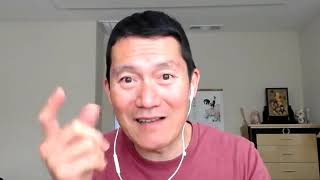
George Kao (2018) argues that "not ready" is usually procrastination: in the digital age launching is low-risk and the market—not your private sense of readiness—tells you when a product or offer is ready. He contrasts old, expensive manufacturing-era constraints with today’s low-cost digital launches, encourages starting before feeling ready, and outlines iterative business stages: build an audience, make an offer, do audience/fan interviews, iterate, then scale. Psychological advice: convert fear into excitement/love, accept being slightly embarrassed by first versions (quoting Reid Hoffman), and avoid unnecessary degrees/certifications when building an authentic, creative self-expression business.
Chapters
There's something that I see a lot of you doing, which is you're waiting until you are ready before you do that launch, before you make that video, before you publish that book or announce the course or whatever it is that you want to get out into the world so that you can create an authentic business livelihood, visibility for your business, etc. You are waiting too long before you are ready. And one of my dear clients mentioned the thin line between readiness and procrastination. And how do you know if you are not yet ready or whether you are procrastinating? Let's talk about this. First of all, you probably grew up in a world where businesses were very expensive to launch. You had to manufacture. Most businesses right before the digital world had to manufacture a product, which means a lot of cost, raw materials, a manufacturing line, getting it on retail shelves. There's limited retail shelf space. So it used to be risky and expensive to launch anything. That's why businesses had to do a lot of preparation, had to be super clear about what they were doing, had to minimize all the risks before they launched. Well, you're not manufacturing a product and if you do, these days, someone else like Amazon will manufacture it for you. And you just have to give them the specs, right? Not many. Well, Amazon manufactures books all the time, right? You just have to give them, upload your draft and they do the print on demand and you don't put any money out. If somebody buys, then they print it and they give you the profit. So everything in the digital world, the risk of launching a business is way lower. Okay? And also, even the risk of a first impression being bad is way lower because with the digital marketing, even if they didn't like what they first saw from you, they will see you again and again and again and they will. First of all, they probably forget. So these days a bad first impression is not like, I am never going to watch George's video again. I am never going to read his article again. It's more like, yeah, wasn't that interesting to me. I'll just. And then you'll see my. Another video for me, not that interesting. A third video you see from me, oh, that was kind of interesting. And then you watch it or you watch part of it and then you have a better impression. So in other words, nowadays it's not like, oh, I'm so scared that if I don't make the first good first impression that the person is going to leave forever. That is not true anymore. It's basically the bad first impression is like, meh, okay? And then, you know. And they're holding nothing against you unless you're purposely trying to offend people. Right? Which you're not. And if you accidentally offend somebody, by the way, they're not the right ideal client for you anyway. They're not the ideal reader. Your ideal reader is not going to be offended by what you do authentically. That's the definition of an ideal reader or ideal viewer, is they are naturally more resonant. They are naturally more likely to accept and enjoy how you are authentically than somebody else. Okay, so let's only make things for our ideal audience, of whom there are probably millions out there. With Facebook, for example, with Facebook ads, you can reach 250 million people in the United States alone. If you're in Europe, Canada, or you want to reach Europeans or Canadians or Australians or Singaporeans or, you know, name, name whatever country you want. South Africans. Right. You now expand your reach by tens of millions of people. Hundreds of millions of people, actually. Sorry. So do not be afraid to make a bad first impression. Because nowadays a bad first impression is only, meh. I'll just wait until I find something interesting. That's all. That's it. So what are you so afraid of? So in other words, the readiness is really. I'm almost certain that if you're saying I'm not ready, it's because you're procrastinating. I am almost certain of it. It's like 90% chance. And if you disagree with me, please comment below and let me know why you're not ready. Okay, so let me. Let me tell you why I feel so certain about this. I never feel ready. Okay, I did feel ready before I pressed the record button because I said, my God, I could have. I can really be brainstorming around this topic for another few hours before I get. I feel ready to turn on the camera and start talking. I don't feel ready. I didn't feel ready. My first ever video, and I still don't feel ready. Now that I'm probably. I think I'm getting Close to video 1000. I still don't feel ready. And I'm going to write an article later about this. I don't feel ready to write it. I'm scared it's going to be a blank screen. I have a few notes scribbled down, and how do I make it sound amazing for you? Maybe you won't like it. Maybe you don't think it's elegant enough, or I don't. I don't know. But here's the thing. I've noticed something. Once I do it, when I'm in the doing of it, I feel more ready. Like right now, obviously the camera's already going, I've already pressed record, it's already live. I feel more ready than I did before. That's the reality of it. You don't feel ready when you start and you just have to force yourself to start now. The forcing of yourself doesn't have to be pain and suffering and like hustle and grinding teeth and pulling self up by bootstraps, those kinds of metaphors. Forcing yourself to start for me is like this. It's kind of like I turned fear into excitement. That's what I want you to practice. Turn your fear, which is what your lack of readiness is, is your fear. That's it. And that's really the core lesson of creative self expression. That's the core lesson of creating an authentic business. Turning fear into love, turning fear into passion, turning fear into service, turning fear into curiosity, turning fear into self exploration, turning fear into abandon. Sort of like a reckless abandon of the child. And it's really not just an authentic business lesson. It's also a lesson for a truly self actualized life. It's turning fear into love. And when you say I am not ready, you are giving in to fear. That's it, you're giving into fear. That's. And you're, you're, you're failing the core life lesson. And again, not saying you're failing, but at least in this moment you're fit. You're failing. If you're saying I'm not yet ready, you're failing in that moment, but you have the next next. And then the next moment will then ask you, will you turn fear into love now? Will you turn fear into love now? Will you turn fear into a childlike. You know, Jesus says, you know, you won't enter the kingdom of heaven unless you are like this little child. Now of course, people have interpreted that a million ways over the years, but let me do some blasphemy now and interpret it in this way. You won't enter the kingdom of heaven unless you have the reckless abandonment and curiosity and love of a child, you know, and the innocence and the humility, right? That's also right. When you say, when you say you're not ready, you're not being humble, right? You're saying, ironically, you think I'm being humble, I'm not ready. No, no, you're not being humble. You are protecting your ego, right? When true humility is offering something that may or may not be ready. And asking the market, what do you think? Do you think this is ready? So here's the key. You're not the one to tell you if you're ready or not. The market tells you if you are ready. So a famous quote by the founder of LinkedIn, who has, of course, not just LinkedIn, he has also co founded several other successful companies, been a very successful investor. He said this. If you are not embarrassed by the first version of your product, you have launched too late. If you're not embarrassed by the first version of your product, you have launched too late. I'm kind of embarrassed by this video, but that means I haven't launched too late because, you know, I'm learning as I go, right? I'm embarrassed slightly by every article that I put out there. I'm embarrassed slightly, sometimes moderately by every book that I put out there. Honestly, Honestly, I'm embarrassed by every course I teach. And here's the, here's the, here's the reality of it. Once you look back, you will always be embarrassed. That's really what's happened. And I want to challenge you to be slightly embarrassed when you start. I'm not saying to be like, mortified and like, this is the worst thing I've ever done. I'm not saying that. And that's not what LinkedIn founder is saying, too. He actually wrote a wonderful article to clarify what he meant. And I will link that article in the notes of this video too. But he said, listen, the reality is that when you look back, you will always be embarrassed by what you just did because you, because you'll be learning in the doing of it. And so you look back. So I could have done that better. And so that embarrassment is normal. Did you think that that embarrassment meant that, oh, I wasn't ready and I shouldn't do it sooner next time? No, we learn by doing. We truly learn by experimenting, not by waiting until we're ready. So here's what's going to happen. If you wait till you're ready, you will always do things too late and you will always run out of time. Okay? I've known people who didn't start until they were in their 70s. They wish they started in their 50s or their 60s even. They wish they started in their 60s, but they didn't start until they were 70s. And they're like, God, I really shouldn't have waited until I was ready. Because you'll never feel ready. You'll never feel ready, honestly. And when you wait until you're ready. It means that you're too late because you've run out of money. Okay, the people who are like, oh, I've got a year now to start my business, right? Because maybe I have a savings of a year now just to run my business, and they wait until month 10 to finally launch their thing, and now they only have two months left to learn or to try to build an audience before they run out of money and have to go get a job again. No, if you have a year, say, to start a business, you should be launching in year, in month, minus one. If you have, you're gonna say, okay, January, Out of a job to start a business, you should be starting now in October of 2018, while you're still in a job. You should be building an audience, not wait till January. It takes longer than a year to start a business because it takes longer than a year, typically, to build an audience who care enough about you and about your energy and about your thoughts and care enough about your presence to even give your product maybe a try. And also it takes about a year. Now, I'm not going to say it takes a year. Some of you might take only three months because you work diligently, you are experimental in mindset, et cetera. It might only take you three months to discover that product that takes off, that service that takes off. Okay, so it doesn't have to take a year, but a year is a pretty reasonable bet. Honestly, if I were betting, if I were investing your company in your business, in your solopreneur business, I'd say I'm not going to bet that you're going to succeed in three months. A year. More likely, I won't, probably won't see a return as an investor. I probably won't see return until you're 2, 3, or 4 or 5. But I could see you sustaining your family in a year. I could see you do that. And essentially, I feel like I'm investing in my clients. I'm not literally investing my money, but I'm investing my heart and my time and sort of the risk of being their coach. So, okay, it takes. So, okay, so let's talk about readiness, because there is something about market readiness and something about audience readiness. And by the way, in case you're wondering, I'm in a different environment today because I'm visiting my mom for a few days, and this is her bedroom. This is, like, the only quiet place I could kind of set up a place to do a video with adequate lighting. So Here I am in my mom's. There is market readiness, there is audience readiness. That's a real thing. I think of business launches in stages. You don't just say, george, I've got a service I want to launch and it better be successful the first time I launch it. If you tell me that, I'll realize, oh, you haven't, don't have any business experience. I see. That's why you think that once you get some business experience, or if you listen to somebody who does and who has coached by this point, hundreds personally, one on one, hundreds of clients. Actually, I think getting close to a thousand now, maybe more. I should count. It's a lot. But business experience. Let me give you 10 years of business experience. Almost no product or service is successful the first time. Almost nobody buys it. You think you're going to launch a service, that someone's going to hire you. You'll be lucky if you do. Sometimes you get beginner's luck and you get a first few clients after you announce your first service. That's amazing. Really, that's amazing. Or you launch your course, or you launch your book, or you launch your product. Somebody bought it. You know how hard it is to get people to buy anything. That's amazing. Business experience has shown me and has shown pretty much everybody, which is why people like, you know, successful investors and business founders like Reid Hoffman says you got to be embarrassed by the first version of your product. Because the real learning happens after you launch. The real learning happens after you're promoting your book, after you've published your book, after you've launched the course. That's the real learning happens after you've made the video, after you've publish that blog post, after you've started your Facebook business page, after you've started your YouTube channel. That's when the real learning happens. Business is built in stages. And the stages aren't done in your own bedroom or in your own head or in your own journal. The stages are done right in front of people, right in the market. That's where the stages are. So let me tell you this. I talked about market readiness and audience readiness. That is a better way of talking about readiness, not do I feel ready? Am I feeling inspired right now? Am I? Oh, God, Am I. Am I skilled enough? No, let me go take another course, then I'll be skilled enough. I've noticed that that's particularly true for a lot of women. Now, I'm not being chauvinistic. The studies research has shown that women are more likely to Feel insecure by not having enough degrees and, and certifications and training programs and classes. Women, you need to know that that is statistically significant that you are more likely than men. And so yes, all the quotes about move fast and break things are from men, usually white men. Right? So genetically speaking, maybe white men are more likely to be more entrepreneurial and more experimental mindset. And women, I don't know if it's particular race or whatever, but women are more likely to feel like, let me have to, I have to get ready. And the way I get ready is to read another book, take another course, get another certification, get another degree. Then I will be ready. So that's what educators and schools, they will market to you for. With that, they will market to your uncertainty and your doubt and your fear that you are not yet ready. You got to get this degree first, then you'll be ready. Okay, I was an admissions director. I was, I marketed a graduate program for a couple of years. So I know what I'm talking about. And now I market courses, my own courses. Now I hope I don't. I'm not marketing to your insecurity. I hope. I know. Please call me out on it if you see any of my marketing copy that's marketing to your insecurity. Because I do want to change and I still am learning how to change myself towards more authenticity. I think I've come some way, but I know I have more to go. So please call me out. I'm serious about that. Okay, so there is market readiness, there is audience readiness. It's not about your readiness, it's about your market and your audience's readiness. So how do we know that we build business in stages? We build it. And that's why I have a 10 year plan. Please go to georgecow.com blog 10yearplan I've written a long blog post detailing my own 10 year plan. I'm building a brand new business. I'm following my own 10 year plan there. And this business that I built basically has followed that 10 year plan. And I'm in year five basically right now of my 10 year plan. I'm already very good. Full time income from this business have been so for several years. But there's more to come. And so here are the stages. Stage one, Build an audience. Build an audience. Now I'm assuming that you're wanting to build an authentic business which I define as a business where your creative self expression makes you money. How would you like that? How would you like to be able to be Yourself in writing or on camera or on a podcast, or being yourself in your creative self expression and people pay you to do it. That's an authentic business. That's the ten year plan. Now you make money after, as soon as year two, you make money and maybe even full time money in year two. We'll see, but depends on how quickly you apply my plan. So step one, build an audience. Okay. Step two, you make your audience an offer and see what their reactions are. And if their reactions are, nobody bought it, which is normal that nobody buys your first launch. Maybe a few people, if you're really lucky, a few people buy it. If you're super lucky, you get a lot of people buying it. But it's rare, like I said, have to talk with thousands of people by this point. Entrepreneurs. Step one, build an audience. Step two, make an offer. Step three, take the feedback or lack of feedback from your offer. If it's lack of feedback, you need to do some fan interviews. You need to have one on one conversations with your audience to say, hey, I'm wondering, what are you looking for? I mean, obviously it wasn't this, so what are you spending your money on, et cetera. I call those fan interviews or audience research conversations. That's step three, right? Do audience research conversations. After you've launched something that didn't work, which is normal, you launch something. Why? So George, why would you launch something that doesn't work? Because you don't know if it's gonna work or not. You don't know. But you need to expect that it won't work. Okay? You need to expect that the first launch is just getting their reactions, planting a seed. You're planting seeds as the first, maybe the second launch, the third launch. You've gotten enough reactions and learning from conversations that the third launch probably will work. Okay, really? Because you've been tweaking for a couple times now, okay? And then step four is to scale the thing that works. And then you go back to step one. Whatever the next product you want to launch, build an audience. Now by this point you already have an audience, but at least you are creating content that is educating the audience, giving context for the next launch, for the next product, right? Not like you're pre launching the whole time, but at least you're giving content that's related to the next product. Right? Step one, Step two, you launch it, see if they like it. They probably, nobody will probably buy it, but they'll actually give you some comments maybe, or you can talk to them and find out what they're buying instead or what they didn't like about this one and then tweak it. Step three, you know, launch it again. It works maybe the second or third time. Step four, you scale it with ads so that you can eventually have a passive income. If you're launching things like courses, okay, for example, do it yourself courses, then you can have a passive income. But you see what I mean? And so let's talk about a market and audience readiness. The audience readiness happens as you build an audience and create content. And you notice the reactions to your content. You notice, oh my gosh, every time I talk about this, they really like it. Oh, so that might be what my first product should be. My first course, my first book, my first service offering, my first coaching package, my first, you know, group program. Ah, every time I write about that, people really like it. Oh, maybe that should be my first, my next first or next thing I launch. So audience readiness is a real thing. But you notice that after you create content and share it in the market, hopefully you're. You're using some advertising dollars to promote your content to new people who don't know you yet. Because otherwise building an audience is really, really slow. Just with friends and family. So do you see what I mean? I know I've been talking kind of fast, but I hope that this video will help you get out of the illusion of being ready. Because every time you see yourself saying, oh, I don't feel ready, I'll remember George said, there is no such thing as personal readiness. There is only market and audience readiness, which happens once I start putting content out there and then I observe their reactions to my content to notice what they're ready for, what is my audience ready for. And therefore, that's what I'm going to promote next. Knowing that the first promotion probably won't get any sales, but at least it'll plant a seed for them for the next one I'm going to promote or at least I'll get. The only way to know if they're going to buy is to put stuff out there. Okay? So I hope this is helpful and I hope you will realize that the risk today. And I'll just reiterate what I said the very beginning. You're not, you're not flying a plane. You're not, you know, you don't want a pilot to your airline pilot. You get on a flight and the pilot says, oh, I hope I'm ready to fly this plane. Okay, I'm not flying a plane. Plus, the pilot also went through stages of readiness. The pilot didn't just jump on a plane. So I read, I read a book about flying a plane. I'm gonna go and try to fly this plane out with 100 people on board. No, the pilot, you know, said, am I ready to go to flight school? Oh, no, I'm being dangerous. I'm saying, you know, you should go get another degree. That's what I. Not what I mean. But the pilot went through multiple simulations. So, okay, now I'm ready for the next simulation. Now I'm ready for the next simulation. Now I'm ready for the next simulation. Well, now I've done fine with 5, 10, 50 simulations. Now I'm obviously ready to fly a plane. But that's same thing with your business. Each simulation is a launch. Each simulation, like a pilot, is a launch in your business. So you need to build your audience. And building your audience is like going to flight school. Don't get another degree. Please, please, please, you don't need, I mean, if you're building an authentic business about yourself, express creative self expression, you don't need another certification. If it's about your creative self expression. Now it's about some skill set that is recognized in the marketplace that people, your prospective clients want you to have. Well, yes, of course, get a certification that. But you're not doing brain surgery and you're not flying a plane. Okay, you are a coach, you are a mentor, you are a healer, you are a speaker, you are an author. You are somebody who wants to just talk for a living or write for a living or help people for a living doing something you love to do. And it's not, you know, in the marketplace for you to have a degree. Please stop. Don't get another degree. Don't get another certification. Don't take another class on that thing unless you enjoy it. Of course, if you enjoy it, you know, do it, do it for fun. Do it for fun. Do it for yourself enrichment. But not for, oh, so then I'm ready to launch my thing. Okay, so back to what I said in the beginning. Launching a digital business. Digital business. Now, nowadays, authentic business, there is no risk. There is no risk of a bad first impression. Watch the beginning of this video. There is no risk anymore. It's just like, meh, I didn't like this video. Ah. I didn't like her product. Oh, I didn't like her blog post. It's not like, oh, I'm never going to read her thing again. I'm never going to watch her again. No, no, no. They'll just wait for your next thing to see if they like it and then it's sort of like there is. You can't go below zero. They just will be like meh, meh meh. They don't like your thing, they don't like 10 of your posts, they don't like 20 videos. Mehmeh, meh. You're at zero and then you make something they like. Oh, now you're at a one, now you're at a two. Okay. And then now you're at a two as baseline. Ah, they know the next thing you do, they don't like. They don't like it. They don't like it. You're at a two. Maybe if you make 30 things they don't like, you're back at a one, but you're never at a negative one. They'll never not like you, they'll never dislike you. They'll just think meh. And then the thing you make that they like, you bump up to a 1 and the next thing they like, probably out of 10 posts that you write, they'll probably like two of them. So you'll just go from 1 to a 2 in their lycometer and then to a 3 and to a 5 and to a 10. And by the time they're a 10 they're like, oh my God, I have to buy something that, that Cheryl makes. She's amazing, right? So anyway, I hope this is helpful. Thanks for those who were able to join me here for this and thanks Linda, Tio, Kai, Sandy, Prem, Ryan, Lori, Joseph, Lisa, Cheryl, and Captain and Pamela, Tina, Annie and Robin. So thank you all. Just going to mention a couple comments here, So let's see here. Yeah, Lori says thanks for sharing that even with all that experience you feel scared. I feel scared before every video that I make and probably in about the first 25% of the video I still feel scared. By this point, I'm not scared anymore. Now I'm kind of scared of what your reactions are. But still, even though I feel scared, it's the muscle I've built of ignoring the fear rather than having to somehow figure a solution for the fear, I just kind of ignore. I try to turn the energy into love and passion and experimentation. Yeah, Laurie says yes, fear and excitement are two sides of the same coin. Often when we think we're scared, we're also excited. It's the same physiological energy that we actually have so we can mentally turn the physio physiology of into oh, I'm excited then that must mean I'M excited. That must mean there's a passion there. Because there is. You won't be scared of anything if you didn't care about it. So, yeah, Lori says, bottom line, if you haven't started yet, start now on whatever it is you feel you're not ready for. Yeah, and you know what? I remember the stages. Whatever you're doing, take it to the next stage. Okay, so what I don't mean is, oh, George says I better launch a business now, even though I'm not ready, I'm going to borrow a loan of $10,000 from the bank to ads. That's called foolishness. Okay, but what George is saying is take the next stage, the next step of something you're not ready for. Oh, I'm not ready for video. What's the risk? Oh, the risk is that people might hate me. No, no, they're not gonna hate. You'll stay at a zero for them, meaning neutral. Okay, the ones who are your ideal audience are not gonna hate you. They're only gonna be neutral. And the ones who hate you or don't dislike you are not your ideal audience anyway. Never will be. Okay, so the next thing you're scared about, video, writing a blog post, building an audience, that's probably the next thing. And after that, launching the first thing in a very simple and light way. Not spending thousands of dollars on, but something in a light way. Onward. Yeah. Prem says it's comforting to know that the perceived need for more training is statistically significant for women. This is why more and more, even in higher education, there's more and more women. You know, females in higher ed, more and more so than men. That's part of this. But also just in adult training, adult education, it's mostly women. More and more so. Anyway, Janko, thanks for being here as well. I'm let you go. Thanks for being part of this video and any questions, let me know below. Any comments, anything you want me to create a video on that you would find helpful, let me know. Be well. Have a great day.









