Artist / Merchant / Seeker (New Book) -- Ewan Townhead Interview
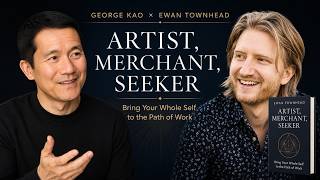
In this live YouTube interview, host George Kao talks with solopreneur and author Euan Townhead about his forthcoming book Artist, Merchant, Seeker. The conversation opens with a shared interest in bringing consciousness, heart, and spiritual development into business. Townhead shares his personal background – an artistic family, performing‑arts studies, a turn toward spirituality (Ken Wilber, integral theory), and a career that moved from a corporate role at Booking.com to founding and scaling a conscious‑coaching company (Coaches Rising). He introduces the core framework of his book: three archetypes that underlie solopreneurial work – the Artist (beauty, creative expression), the Merchant (goodness, ethical commerce, with a shadow of greed), and the Seeker (truth, with sub‑types Mystic, Scholar, Scientist). The archetypes are linked to ancient philosophical ideas (Plato’s good/true/beautiful, Wilber’s first/second/third‑person pronouns). Townhead explains how each archetype manifests, why integrating all three is essential for a whole, healthy entrepreneur, and how neglecting any leads to “starvation” of heart, mind, or stomach. Practical advice is offered: use the Artist mindset in copywriting (stream‑of‑consciousness first drafts, authenticity), adopt the Merchant’s iterative launch mindset (launch early, avoid perfectionism), and honor the Seeker’s ongoing truth quest. They discuss the shadow side of each archetype, especially greed in the Merchant, and how conscious capitalism can counter it. The interview ends with concrete next steps for listeners – reading the book, doing “anytime pages,” joining a potential book club, and accessing a free digital copy of the book on Townhead’s website. Townhead mentions his coaching work and future program ideas, while Kao encourages supporting the book financially to boost its visibility.
Chapters
Okay, I think we're live on YouTube. Um, this— the Zoom to YouTube thing is always, uh, a little tricky. So please, those who are watching, comment below and, uh, let us know that, that we're being heard. I'm George Kao, and I'm really excited to be here with you and Townhead. We have known each other for over 10 years, I think, and, um, we've always been interested, both of us, in How do we bring more, I guess, consciousness, heart, and integrity, spiritual development even into business? How does that integrate so that we can appear in our business as more of our whole selves and really utilize work, business as a stage for personal development for our, you know, soul's growth? And so, you, when you're coming out with a new book, as of this recording, it's, it's going to be available next week. I got an advanced copy. I started reading it. I'm a really, really slow book reader, but it's starting out great. I love your storytelling and the context you're setting. And the big idea, I just want to jump into it pretty quick. You can, of course, tell us anything you like about your background. I think you're about, you have a fascinating background.. And I think a lot of the folks who are watching this will resonate with what you have to share. And I think the framework will be quite helpful for us to place ourselves in where we are along the journey of what I call solopreneurship, right? So I consider you a fellow solopreneur. And so let's start with, well, start with briefly anything you'd like to say about who you are, and then I'd love to jump right into the ideas of the book.
I love the idea of a solopreneur. Yes, that speaks to me exactly. Yeah, yeah. Like, in a sense, I feel like part of my work here is describing, hopefully role modeling, how we can walk you know, the true path, like the thing we're here to do, the person we're here to be, which is the soul's path as I understand it. But like, do that in the world. It's, it's maybe, you know, in a different lifetime I would have been doing this in the monastery. Maybe you would have too.
It's, you know, it's fascinating that you say that. I just wanted— yeah, I, um, some time ago I started to like use this phrase in my mind, life monastery. Like I started to say, well, gosh, what if, what if my life was like a monastery experience? So I just, I just want to say immediately, I'm already, you know, I didn't— we didn't even talk about this and you already mentioned it. So you're saying, yeah, in another life you would have. And why is that? Say more.
I kind of feel like we'll get into the archetypal model of the book, but in a sense, like, I feel like a very native spiritual seeker. It took me a while to realize it. It wasn't like I kind of rocked it from the beginning, but now it's pretty clear. And yet, yeah, I think the time is gone when the deep work in that area is done solely in the monastery. I think this is a time where we kind of got to wake up the whole thing. And there's a bunch of stuff falling apart and a lot of unknown futures that I think we're all trying to work out how to do. And so I think, you know, spiritual work is work in the practical sense. It's like, what are we doing? What are we offering? How do we do so? And who is it in service of? So that's part of the, the premise of the book. And that's been my journey, kind of trying to work out like, how can I have all of these things that seem part of me fit together into one whole? I really struggle to like compartmentalize myself and I'm just playing this role in an organization and there's all these other things I'm actually interested about and passionate about. I couldn't keep them separate. So in a sense, my entrepreneurial journey has been like, well, how can I kind of bring the whole of myself to the table? Yeah. And have that be— it's an ongoing process, but like have that be increasingly coherent and integrated And I think that makes us happier. It certainly makes me happier. I think it makes our work deeper and more impactful too, is one of the premises of the book.
Yes, yes, yes, I think so too. I, um, I think as both of us are, I guess, coaches, teachers, mentors, um, the, the presence that we bring to the day-to-day work and to the relationships with our, you know, people that we serve, um, is as much a teaching and a, um, a healing experience perhaps as, you know, the words that come out of our mouth or our fingers or whatever it is. Um, and so it's like when, when, when we are able to, to be, um, whole, like you said, um, I think that really, that shines through. I think that really, and when people are not whole, when they're fragmented, we also sense into that. Like a lot of the, um, more mainstream business people, marketers that you and I have both learned from, I feel like we sense that, you know, when, when we, uh, watch their videos or, or look at their stuff and, and even sometimes you can't even name it, but it's like, it's, you can feel, you can feel a difference between someone who's coming with their— so, um, so tell us a bit about the various roles that you play and have played. For example, you're a father now since the last time we talked.
True. Big role now, yes, I have. He's nearly 5, he's asleep upstairs. That's been a big thing. That made me grow up, George.
Holy crap.
Wow, yeah, fast. And I have stepkids too, so they're older. They're like 11 and 13. Okay, amazing. So yeah, that's been full. Um, my work career, uh, how I got here very briefly. Let's see. So I, I, my upbringing was more in the artistic domain. My mum was an artist, my dad was a little more on the spiritual side. I studied performing arts at university. I thought I wanted to be a musician. That was the thing I thought.
Well, the guitar is on your wall. You, you, you, you still, you still play?
I do.
Yeah, yeah, yeah.
Awesome. Um, realized that wasn't the thing. Um, in the meantime, I'd really like fallen in love with spirituality and philosophy. Um, I got big into Ken Wilber's work. I don't know.
Yeah, integral, of course.
I got fairly obsessed in my 20s when I discovered that stuff was like, everyone needs to read a Ken Wilber book and everything will be fine. It didn't quite work out that way, but that birthed something. Um, and so I kind of went— I— all my friends were entrepreneurs. I was like the last one to kind of jump. Um, from my last job was at Booking.com, uh, in like— and I left in 2011.
Okay.
And a whole series of things I did, a series called— this was an early success called Waking Up the Workplace.
So which I loved. That's I think how I discovered you.
Ah, okay. Yeah, yeah, right, right, right.
Yeah, yeah, I listened to every single one of them. I, I I remember it had a deep impact on me when I was waking up, right, um, in my work.
Yes, right, me too. Yeah, yeah.
So, so keep going.
Yeah, so we interviewed— it was me and two good friends of mine who are— they were already doing kind of conscious consulting work here in Amsterdam. And we did this interview series. It was early days, it was like, yeah, 2011, 2012. We were on InstaTeleseminar. Yes, I don't know if you remember.
Yes, yes, yes, yes.
Back in the day.
Raise your hands, folks, if you remember that, right?
Yeah, and we managed to get some of our heroes in. What was a print— like, the conscious business is basically about conscious business. Yes. And it was a pretty early field back then. I remember Googling it and there wasn't many people talking about it. There was Fred Kaufman's book, some other people doing little bits, but it was, it was light. We managed to interview some people we were pretty impressed by. Fred Kaufman was one of our heroes who wrote that book. David Allen, who wrote Getting Things Done.
Wow. Yeah, I know.
Um, Tammy Simon, some other awesome people.
Sounds True founder.
Yeah, yeah, yeah. So that was, that was amazing. That helped me realize— and so we kind of got a master's degree in like, okay, here's this topic that's super urgent that you can't go and learn about in one place. Yeah, we got to talk to all these people. I think what I really learned from it is, okay, there are really highly, highly successful people with amazing ethics doing amazing work in the world and they're deeply spiritual and they're kicking ass in business.
Sure.
Like, okay, these things can go together. And even some of them who are researchers were saying, actually, it's even on business's own metrics of profitability, conscious businesses tend to work better. Like if you take into account multiple stakeholders, customers, environment, the whole thing, they actually work better on business terms as well. So that, sold me. I was like, okay, I'm going this way. Um, wound my way through an early small startup with a friend where we did, um, like an online academy for conscious entrepreneurs for a while. That's when I started coaching. And then for 10 years I helped— so I've been a coach and written a lot for a long time. And then for 10 years I helped run and lead Coaches Rising. Which is a company— we were really early in online coaching training, um, transformational programs. Like, the content and the teachers were really the people we felt were the transformational pinnacle of the kind of coaching we love, like Deep Work. Um, we were early in the online space doing that. Um, as one of my very close friends founded it, so I, I helped early stages, then I stepped in and ran all the marketing from 2014 until I left last year and was co-owner at the end as well. So I saw it grow from, you know, early days they were struggling to break even on stuff, and I came in and did some consulting and we had our first like successful launch that was really profitable. Remember that one? And then 2014, I came on board. So we grew from just the 3 of us to a team of 15. Wow. Doing— I mean, we'd have more than 1,000 people a year going through the programs.
Sweet. That's amazing.
I learned a lot, George.
Tons, tons of not only marketing grounded experience, which we can talk about. A lot of folks watching this are going to be interested in that too. But also transformational coaching, like how it, how it works and what makes it work really, really well. I mean, people obviously love the program. So, okay. With all that background, let's dive into the big ideas from the book. So the book is called Artist, Merchant, Seeker. I will, I'll put a link below when it's ready, but at least I'll put a link to your, you know, social media or, or anything that would be helpful for people to, to hear about it. And I think this is going to be a transformational book. I think a lot of solopreneurs will find themselves and like it helps make sense of their journey, their interests, their quirks, their weaknesses or whatever. But it's like helps us to lean more into our strengths. So what is, so maybe we'll start there. You can start wherever you want, but since we've named the 3 archetypes, Um, tell us about that. Tell us about each one.
Yeah, okay. So Artist Merchant Seeker, and this came— there's a, there's a philosophical model under this. We can go in and you can pull me out of the weeds if we go too deep, but I, I can give that context too, though it came super intuitively. I was— one of my practices was blogging regularly, writing an article as much as I could, just kind of channel through what was interesting to me, put it out there, learn from the experience. I did that a lot. I've had a blog for more than 10 years, I think, and I've just found myself writing about these archetypes kind of independently. And then I kind of realized they fitted together in a model. And then actually, weirdly, later on, I then looked back at early notebooks before I'd even been writing, and the model was kind of in there in a slightly different form. So Somehow it was already in here and kind of came out through the blogs. So the idea is that as entrepreneurs, freelancers, solopreneurs, people who are creating their own work in the world, there are, I would suggest, these three core archetypes that are underpinning what we're doing regardless of the context or content. And our mainstream culture tends to want to keep these things separate and say they, they're contradictory, or, you know, they don't really fit together. I don't think that's true. Um, so the artist and the merchant and the seeker are modeled on— there's this really old idea, so you, you know, Integral, so this, this connects with Wilber's work. So there's this really old idea of the good, the true, and the beautiful, which originally comes from Plato but shows up in all these different places. People evolved it. Lots of philosophers talked about it. So they kind of describe these three domains of life, these big buckets of life. Wilber's amazing move was he pointed out that they correspond with even language and pronouns. So in all languages there's, um, first, second, and third person. This is where we get technical. Third— first, second, and third person pronouns. So I am speaking first person, I'm speaking to you, we make a we, the second person. We're speaking about something, in this case my book, that's the third person. So those show up in all languages as far as we know, and they kind of correspond to the good, the true, and the beautiful. So I, as a singular person, experience beauty. It's in the eye of the beholder. It's the ultimate kind of subjective experience. Um, we is ethics and relationship, like what do we consider to be good and a good life. And then we're trying to find the truth, which is this kind of third person, it. It's like, what is the truth? So that— I realized that that model, which I knew really deeply, corresponded to these three archetypes. So the artist speaks the language of beauty, the merchant speaks the language of good, and the seeker tries to find the truth. So the artist and the seeker made sense to me. Okay, the artist is creating things of beauty. I know this intimately. I'm a deeply spiritual practitioner, essentially looking for the truth of who we are and what the world is and how, how our nature works. I was— but I've always had more of a trouble with the merchant. That's been my development work, as has a lot of solopreneurs. Exactly, exactly. So I was like, well, how can the merchant be about goodness when we look out at the world of our free markets and see lots of goodness and some horrificness also, like how do I square this one? But I realized at its root, that's exactly what's happening. And you can see it in the language, which is what do merchants deal in? Well, goods.
Goods and services.
Yeah. So it's kind of, I think that's what the archetype at its root does. But let me get to that. So let's go into the archetypes a little, give a little more flavor to them. So I think it's the artist in us who is essentially motivated by beauty and seeking the things that move us. And so the artist is where our creativity comes through, which in my experience is something we're not really in control of. It's more like we kind of get in the space where we can channel something and it kind of comes out, and then even you're surprised by it, like, oh, I didn't know I could write that, or I didn't know I thought that, or whatever it may be, which is I think how all great artists describe the creative act. You know, in olden days they used to talk about the Muse or the daemon, that it's like, you know, they're giving you the good stuff and you're the vessel. So that I think is an integral part of our work as entrepreneurs, I think, because that's where we get to reveal our direct inner expression and where we get to discover all kinds of things that we're not aware of because it comes from places outside of our mind. And it's what touches other people. Like, what art does, I think, is it's not necessarily answering a technical question for you or providing a service. It's, it's moving you. You like, you interact with it and Well, the stuff you like does anyway. Like, it moves you, it touches you, you feel like there's a richness comes into life.
And I just want to say, this is, this is so good. First of all, um, there's so much richness to what you've identified as these three archetypes. Oh my gosh, there's a lot, there's a lot there. Anyway, I'm, I'm going to ask you some questions, but, um, the artist Yeah, is what you said earlier, the eye of the beholder. And I often say to people, when we create content, it's not really our place to judge our content. I mean, sure you can, but what tends to happen is, you know, we tend to be our harshest critics, or sometimes we think this thing is the bomb, and then you put it out there and it bombs, right? So, and, but oftentimes you put something out there, you know, you keep creating, you keep expressing, and And things that you did not expect would touch people really had the deepest impact. I mean, I, I, I've had this, and people who create content regularly have this experience more often than they— they always surprises them. And so I always tell people, listen, put your— like, you create by creating authentically, you bringing as much of your whole self as, as you can to something. You are an artist. And then you let it, you let the audience tell you what is beautiful to them, what really moved them. And then you get to decide, oh, I see that I put out these 10 things and these 3 things, you know, the, you know, thing number 2 and 7 and, and 9 really, uh, move people. So do I wanna move more in that direction then or something? But, but yeah, it's, um, uh, whether it's content or it's offers, the same thing. It's like you, you, you launch something. And it's like if you could work 5 years on something and finally launch it and realize nobody found it moving, you know, whereas, you know, you launch, I prefer to launch more often when I can, then it's like, oh wow, people really took to this. And so it's like there's a bit of an artistry that I like to put into business as much as possible for the encouragement of everybody to, to be themselves, to work lightly, and to not judge our stuff so much and just let's see what happens.
Yes.
So, but, but, but you— so you're saying that— and I want to clarify something. Yeah. When we hear artist, merchant, seeker, are we, uh, is each person slotting themselves into one of these three, or how does it work, um, for us to identify?
Right, right. Very good question. No, the ga— the, the The proposition is these are all deeply part of us. A fulfilled and successful entrepreneur is integrating all three of these, but it's about knowing, in a sense, where you're native and where you're not. Um, the model breaks it down into subtypes as well, so you can get more detail Maybe not for this conversation, but it's all in the book. Um, so yeah, I think we tend to be native in one or two of these. Um, I'm definitely a native artist seeker. Probably many people in your audience are too. It's common for, you know, people that are really trying to make a difference from a really genuine place. It's like that comes first and they're trying to work out how the business functions for them. So it's, it's a, it's an archetypes game of knowing where you're natively strong. That's kind of what you're born for in, in certain senses. But to be a successful entrepreneur, you have to work on your weaknesses too. And if we are suppressing some of these archetypal energies, I think it causes issues. Like you can see it really clearly with— so let's just speak about the merchant very briefly for a second. So the merchant is—
I'm sorry, yeah, sorry to interrupt. Before you get there, you said as entrepreneurs we need to work on our weaknesses. I'll just qualify by saying the weaknesses of these core archetypes. Yes, like, right, because, because, because once, once people get into business education, learning about marketing, they're like there's, you know, 12 different platforms out there. Totally. There's, you know, you know, 25 different marketing methods. And the point is not to work on your weakness and all these different things. We're talking about these core, these core parts of ourselves that make us whole, which is, you know, you've drawn the triangle of these 3. And, and so yes, I agree that when it comes to such something so core to us as human beings and as souls or spiritual beings having a human experience, to be able to integrate more, to be more integral, I think is, is key.
So yeah, exactly. Yes, thank you for that qualification. Exactly. So for the— so with the Merchant, the Merchant is trying to create goodness at its core. Like, I think a really integrated and conscious Merchant, every trade and transaction is trying to create more goodness in the world. That's what we call value in economic terms. But for me, it's like at In a wider sense, it's goodness. So a good trade in that sense is good for me as the seller, it's good for you as the buyer, and it's good for our community that we're a part of. And if it's good for all of those things, then it's good for all of us, and it's a good thing and we should do it. I grew up with not really knowing business. They weren't the circles I really grew up in. I had, you know, I inherited some politics that were suspicious at the least of these kind of things. So I've had to go on a deep learning journey of A, understanding these things on a technical and practical level, like how do you run businesses, how do you make this work, but philosophically too, like what are the underpinnings of this. I, you know, I wanted to understand at least basic economics, so I understand Okay, how is this thing constructed? Those were like, those weren't the circles I grew up in. But what I've come to realize is, so I can have the habit of, probably like your audience too, of being hesitant of really promoting myself or saying like, here's the thing that you can come in, you know, being direct about it because I'm a, I don't want to be pushy. Or I don't want to come across as the other kind of sleazy stuff that no one likes, etc., etc. Have those issues. What I've had to work on is, from the merchant's perspective, if you have something that you know has a lot of goodness and could really help other people, if you're not doing your best to put it in front of them and make them aware of it, then you're actually being selfish. You're keeping hold of something that can be providing good. That short-circuits other parts of my mind, and I've had to work on it. So it's really common for people to have some suppressed merchant energy because they're afraid that they're going to exhibit it in the kind of shadowy or unethical ways that we see around us. So Each of these archetypes definitely has a shadow dimension to it, and the shadow dimension of the merchant is greed. We see it everywhere. So it's greed for me as the merchant. I don't really care if you ultimately benefit. We can screw the environment while we're doing it, you know, who cares? That's the thing we don't like. None of us want to perpetuate that. So in trying to not do so, we suppress that part of ourselves. And we actually kind of hold back the goodness we have that we could be helping people with. I know I'm preaching from a hymn sheet you know intimately.
No, no, I love the way that you put it so much there. And speaking of the politics you said you inherited, I feel like that's really strong now, even more than— and maybe as a reaction to, you know, the US, the US administration perhaps at this time, right? And there's always a reaction to something that's strong. And then I— so let me speak to that a little bit because I agree, I think a lot of us grew up with this idea that if, you know, business people who make money must be extracting or taking from others. And of course, there is some of that, like you said. Yes. With everything, there is a shadow side. And yet there are also people who are doing their best to do it from a more wholesome perspective, you know, the kind of folks that you started interviewing more than a decade ago, and then, you know, learning yourself. And I'll bring it to current day. Literally this morning, I had a teaching session I worked hard to put this material together. Okay. And I, to be honest, I probably should have promoted the session more because the people who came to the session said, thank you so much. But first of all, when they showed up, I was like, thank you so much for showing up for this. Like, I'm happy that you are going to receive the good that I worked so hard to put together. Thank you for showing up. And then by the end of the session, they're like, this was so much. Thank you for doing this. I'm like, no, no, thank you for showing up. Right? Because, and then of course I was recording it so that those who didn't show up would be there. And, and it's, it's more beneficial for the recording viewers when there are people there to make the energy much more interesting. And so it was literally, like you said, it's a win for me that I was, because I was thinking about them, I put this stuff together because otherwise I might not have. At least at this kind of due date, right? Like I could have taken another month or whatever to put. So because of them, I put— so it's a win for me that they motivated me to put this together. It was a win for me that they showed up. It was a win for them because they, they didn't have to do all this work of putting— I created a shortcut in terms of studying all this and put— and they're like, oh my gosh, this is great. And they created something that, that's going to benefit their clients. So it's like a win for forever. That's how good commerce is supposed to work, right? Like you said, it's a win for the, you know, the provider says thank you, the customer says no, thank you. And then hopefully the stakeholders, the people around the provider and the customer all say no, no, thank you all for having this, had this transaction.
And so— Right, exactly. Yes. So this was, that's exactly my philosophy. So this is where me studying business more— and I've had a business mentor for more than 10 years now too, who's used to be the chairman of Conscious Capitalism. So he's taught me and helped me understand more of these principles too. So this was exactly the thing you mentioned earlier, was the problem I had, and that was the politics I grew up with, which is, hold on, if I'm making money I'm taking it off someone else. And what if they need it, and then I have more of it, and they have less of it? And how's that a good thing? So, why that isn't quite true, or absolutely isn't true, as long as the ethics are in place, is that economics is not a zero-sum game. It's not like there's only a fixed amount in the pie, and if I take a bigger piece, you get a smaller piece. When economics works, it makes the pie bigger for everybody. And that dynamic is true. And our free markets, I think, are amazing at doing that. They also amplify the shadow too. So it's confusing because we see both sides of it and anyone can use the amazing freedom I think we have. But when it's done ethically, no, we're creating more goodness that didn't exist. So in your course this morning, there's more goodness in your heart and your being and the people that were there and the people that will watch the recordings that wasn't there before. So it's increased it. We made it. It's like this magic alchemical thing that we've created.
It's, it's really true, because if it hadn't been for this transaction, because they bought the course, if they hadn't done that, I wouldn't have honestly the motivation, because I would— I could be easily playing video games or whatever else I was doing that was completely just self-absorbed, right? But now I'm in service to them. But by being in service to them, I grew, right? And by them engaging in the transaction, they grew. And so it's like, it's beautiful, really. Everybody was uplifted because the, the relationship was there.
Yeah, exactly, exactly. Okay, so should we do the Seeker and then we can kind of complete the triangle? Absolutely, yes. All right, so we've done the Artist, we've done the Merchant, And then the Seeker is the one who's searching for the truth. They're on a quest to understand the world and themselves. And then I can illustrate the Seeker also by describing the subtype. So it'll also go from a kind of more interior to an exterior perspective. So the subtypes of the Seeker would be the inside is the Mystic The relational dimension is the scholar, who's the one that teaches and learns. And the third person is the scientist. Now, our culture, I would say, puts the scientist in the king's chair and says that is the way to truth. It's very materialistic, it's very objective. I would say it's reductionistic, it's trying to reduce things to physical observable, provable forms. And truth is wider than that. Like, truth is intersubjective. We discover truth as we explore topics together, like today. And the big thing is truth is discovered mystically through your own interior explorations and inquiries. So like we started with, that's been a big part of my path as a spiritual seeker for like 20, you know, 20 years or whatever it is now. That's just a big part of who I am. And it feels easier now, but I mean, it's still a tricky line to walk in today's marketplace that some people can be really turned off if you own the spiritual depth which you actually feel like you're holding and living. I just wrote about this recently. So the proposition in the book is like, well, your work, your entrepreneurial career, is also— is part of the soul path, like where we started. And part of that soul path also is you discovering who you are and what the nature of reality is. And I think especially now, that's really important for us. I feel like part of why the world is going nuts and is such a crazy place these days is the old orders are crumbling. They don't quite work. A bunch of them don't work anymore, and we've got to wake up to who we are on a deeper level, on a more existential level. And I think that's part of our work too. So when I'm coaching people, doing that deep inner spiritual inquiry as part of the coaching and their meditation practice, or what— that's, that's your work too. That's on the to-do list. That's part of your strategic plan. It's not separate from writing marketing emails or making blogs or recording interviews or working with clients or ideating new products. Like, no, that's part of the same thing. It always felt instinctively like that was true. And then the book, which take— it's taken me years to finish, like, to work through and develop this stuff and get through some personal challenges. The book has helped me kind of see, oh yeah, these totally fit together. We can have an integrated model here where these can all be part of the work we do. And yeah, we can choose to specialize in certain things, and it's not like we have to bring, you know, be fully transparent in every moment, the skillful means and who we're trying to serve. But I think I feel like when we bring these together, it just brings this wholeness which feels good, but I think it makes us way more competent. It brings like this kind of breadth of range and, and deeper access that I think people are really wanting.
Yeah. Oh, it's so good. I, I'm really— I, I love hearing about the subtypes for these two, and I'm going to be reading the book and and learning about them. One thing about the Seeker that, um, and I love that you said it's, it's, it's, it's part of the journey of putting out content and, and, you know, offers and things, is we're, we're continuing to find more layers of truth, right? And one of the things I, I'd love for you to speak to, and I'm sure you've experienced this yourself and me too, it's like But we're not there. We're not yet there at the truth. Like, we're still on the pathway. Like, no, no, there's more to research. So I can't— I mean, this is holographic. I can't put out the offer yet. I can't put out the book yet. I can't put out the blog post yet. I can't speak to this yet because I'm still learning about it. So how do you— what do you— how might you speak to this, to the solopreneur who's feeling that? That's a great question. And it comes from a place of care, obviously. Yeah, it's care, care for others to say, I don't want to, you know, I don't want to say something that, you know, I'm going to have to— it's going to be wrong later. It comes from a place of care for truth because obviously we care about that. And then it comes from a place we care for ourselves, like, I don't want to look embarrassed. If later I realize, oh, I was, you know, I have to do a second edition because this whole thing was— and speaking of which, each of my books has, I have like several books and each one has 3 editions already. Right. So it's like I'm on that journey myself. It's like, oh, how many more editions? I don't know. You know, so how do you speak to that, to somebody who's feeling it? And did you have that experience yourself as you're putting this together?
Great question. I do think from the archetypal perspective of the seeker, truth is unending. It's an unending journey. It's an eternal journey. It's not like there's a final one. Or maybe there is, but then we don't need to be here anymore. Like, this phase is done. I feel like you're asking also a very practical question, which is how do we deal with this when we're facing these things as entrepreneurs? I think maybe the answer could be in the other archetypes. I'm thinking out loud here. So as we were saying earlier, from the perspective of the artist, you're not really in control of it anyway. It's an expression that you get to learn from because you're creating something from beyond yourself. And you get to learn by how it touches people and how it affects people. What I know from my merchant studies is, you know, if you, if you, if you study business strategy, and particularly people, you know, in the last 10 or 15 years coming out of the tech sector in Silicon Valley, it's like small cycles of iteration. Like, what's the famous— there's a great quote by Reid Hoffman who founded LinkedIn.
Yes, if you're not embarrassed by the version of your product, you've launched too late.
You've launched too late, exactly. So that's a good reminder. That's a high line, but I think the principle is right because, yeah, maybe the seeker in us wants to you know, get it perfect and embody that mystical thing completely and deeply, or have the scientific proof, or have read the 10 books that, you know, that can have its place. But I think when we're working in the marketplace and we're trying to be in service of other people, like, you've got to let them decide at some point. And like you were saying, sometimes the stuff we think is really good, no one cares about, and the stuff we're like 'Oh, I know, I really don't know about this one.' And some— and like, it goes nuts. It's very hard to predict when you— especially when you're really channeling your own creativity. So I think from a marketing strategy point of view, it's like, it's to your disadvantage to wait too long because you don't really know how people are going to respond. And part of the way I know you do business too is, you know, we try and be really relational. We're trying to be in response and interweaving a conversation with people, either in a specific sense or a wider sense. And if you're holding on to stuff and not saying anything, well, it's hard for people to have a conversation with you.
Oh, I love that. I love that. Yeah, yeah, yeah, yeah. I mean, exactly. I think of it like, um, well, this whole thing is a journey. Finding the truth is a journey. Learning how to express ourselves is a journey. Learning how to do good in the world is a journey. We might as well bring people along the journey. And because it's not— we don't finish the journey until we're finished. Exactly. And so if you're gonna wait until you're finished, you'll be finished. You won't be able to share anything in this dimension, in this life. The whole thing is a journey, so you might as well bring people on the journey. And plus it's more fun to have other people on the journey, and it's more fun to see— for them to see you grow and develop along the journey. You, you, you're more credible, you're more human.
Absolutely. Exactly. Yes. Yeah, yeah, yeah. And we— and then we don't have to also kind of like do all our development work in private and then show up in this professional mode where we pretend we have everything worked out, which is a lie, of course, anyway, and costs enormous energy to try and maintain that kind of difference. I think if we can soften, you know, the skillful means— some stuff, you know, don't share it in the moment when you're pissed or triggered or really scared or whatever it may be. Yes, definitely. That's— I think as Brené Brown says, like, vulnerability without boundaries is not vulnerability, it's something else. So keep your boundaries, but You know, I, I think the marketplace and our beings just want to be able to be our human self also in work. And the authenticity that that brings makes people trust you more also, if you want to be strategic about it. But I think it's a, it's a spiritual question at the heart, like, no, we get to be who we are. We don't have to pretend to be this person that's got it all worked out.
Yeah. Oh, really good. So amazingly, we've already almost to the end of the hour. So I want to like shift gears a little bit towards— Yes. So how then shall we live? Right. So I, well, first thing is I'm going to read the book in detail and I encourage everybody to do so because I think studying and reflecting on the book will develop a lot more insights. I recently got back into doing morning pages again. Actually, to be honest, I call it anytime Pages now because it's usually not the first thing in the morning. And so I think, I think, uh, reading the book, reflecting on it, is going to be part of my anytime pages practice for the next, for the next while. Um, so I think that's a very practical, uh, next step for people. In fact, I may, I may even convene some kind of a book club, uh, on this if those who are interested can comment below. Um, but tell us, uh, Yeah, anything that comes to you in terms of, well, then if somebody was only able to hear this and couldn't read the book, I hope they do. Like, what are a couple practical things to integrate this into what's next in their coming days and months? What does this mean for them?
Yeah, good question. Okay, the thing that's coming to me, here's a way where we can illustrate it. In practical context that you and I know really well. So one of the places I have actively integrated these archetypes is in copywriting. Copywriting, I think, is like the core of marketing. Like, if you don't understand copywriting and don't practice it, it's hard to market anything. Kind of can get around it these days, maybe, but it's as far as the art goes, I think it's the core of it. So probably like you, my early days of learning copywriting were from people who were essentially from direct sales backgrounds. And it was, you know, you remember those incredibly long sales pages with yellow highlighter, you know, the longer the better is what they say, right? Exactly. So There's an amazing art that those guys, and mostly men, worked out that I think is really good to understand. There are principles of copywriting, how you structure things, how persuasion works, the, the perspective you take in it, whether you're right, I, or to you, you know, all of those things are really key, call to action, etc. However, especially today with AI, stuff that's simply channeling the merchant, the marketing archetype of the merchant, is kind of shallow, let's be honest. And it also doesn't really stand out in the marketplace anymore. It's not really very unique. So what I've tried to do over the years is really include the other two. So I try to make copywriting an artistic process also. So whenever I'm sitting down to write something, I try and start from my artist mindset, which is essentially what you're doing in morning pages. So Julia Cameron wrote The Artist's Way. She's writing about— she doesn't call it an archetype, I don't think, but it's the same thing. Morning pages is about the fact that You're not, you're not thinking about what you're doing or writing or saying or making sense of. You're just letting it come through. That's what the artist does really well. That's what they're built to do. And that goes for copywriting too. So first draft, I try and get out of the way and let the artist speak. In my experience, what then comes through is a mixture of my own version of kind of poetic or more artistic metaphor and that kind of style of writing, which I love. And all my weird stuff, you know, I'll have to write in like, "Hmm, don't know what the hell I'm saying here." What am I— you know, I'll leave all of that stuff in too, stream of consciousness. And then I'm also trying to, well, A, be real and authentic. So, be truthful in a kind of more objective sense, like not try to misrepresent anything, that's definitely forgiven. But I, you know, I love copy that's teaching me something too. It's actually teaching me a truth, or it's giving me an insight in a way. It's not just trying to lead me to the other thing. It has a kind of value in itself. Like, you know, there are some pages of copy or sales pages that, even though I have no interest in the thing, are a joy to read because they're beautifully written and I learn something from them.
Yes, and, and therefore you'll more likely read their next thing.
Absolutely, that too. Exactly. Yeah, so I think copy that can integrate kind of all three perspectives is also just better copy. So there's a really applied way of doing it. So, and then in a wider sense, I think the, the invitation is— and you can read the book to get a deeper sense of of the archetypes. It's got a chapter on each one that will kind of take you into it and help you kind of understand it inside yourself. And then I think the inquiry is kind of seeing how all of those can come to the table in your work during the day. Like, are you doing your good merchant activities? Have you got your client pipeline in place? Are you thinking about innovation of new products and how you can serve your community in deeper ways? Really important. Have you got creative time where you don't have to perform immediately for a client or a purpose? It's like, no, I get to express this thing that I don't know quite what it is I want to say, but it feels really important. Like, you've got to make time for that. Like, and are you doing this in service of the deeper exploration of the truth of who we are? Is that part of, um your day practically and how you're interacting with people. So in the book, there are also exercises in going inside, and because these archetypes are pre-installed, it's not like some of us have them and some of them don't. No, we all have them. Some are more activated or active based on our upbringing or kind of who we are and our imprints, but we've got them all. And you can go inside and you can definitely contact them and find you know, how they want to express through you.
Love it. I love, I love this blueprint. Uh, and I, it just also made me realize when you are neglecting one of these archetypes, some part of you is, ends up starving. Yes, exactly. So like if you're neglecting the artist part, your heart is feeling empty. When you're neglecting the seeker part, your mind is not stimulated and challenged and excited. When you are neglecting the merchant part, your stomach is hungry. Right. And so all three, it's like mind, body, spirit, mind, body, soul., this arc— these— this framework, um, keeps us whole, keeps us fed, keeps us, um, growing.
And yeah, because they're native parts of us. And yeah, exactly. I think if we don't allow one of them room, yeah, we starve or weird things happened. That was my— that was why I ended up leaving Coaches Rising, because I found myself this is in the book, so I can be transparent about this. I found myself overdosing on the merchant. I was like leading the company, I was leading the marketing, and I was leading the finance, which is not a crazy thing, George. Like, like, never do those two things together. And leading the company with Joel, and my to-do list was like never-ending, and I never had any time, and I didn't have any room for my artistry.
And after a few years of that, it amplified that part of you and you didn't have the spaciousness to—
yeah, right. And I got— yeah, I got really miserable basically. And I have a lot of artistry in me. I, I'm very creative by nature, so not giving that room to play just became untenable. And my body basically went, this is, this is not working.
Yeah, well, this is, this is also why I keep on being so passionate about helping solopreneurs be solopreneurs. It's like, it's like as a solopreneur, you, you, you have to actually tend to all three, right? You do. And if you— to, to feel whole and to keep progressing your business, etc. Okay. Um, yeah, Ewen, thank you so much for putting this together. I think this was a win-win-win all around. And, and, and so, um, how can people— well, I'll put the links below, but do you provide coaching or programs on, on this framework?
Yeah, coaching. I don't have any programs, um, though I have ideas for some.
Well, right now you're, you're busy with, with your kids.
You've got several full-time jobs, book, clients. Yes, fairly busy, but I'd love to do some programs around this. But yeah, my main, my main offer is I do coaching work with people, entrepreneurs. This is part of the work, whether implicitly or explicitly I'm always thinking through this lens anyway. And also to say, George, so the book will be out, yeah, next week. It's going to be on Amazon, but if you go on my website, I'm giving the digital thing away for free. So the PDF and the EPUB version that you can put on an e-reader. You just get on my list and I'll send that, no strings attached. I realize, like, no one makes money out of books anyway. But I realized, I realized, you know, I want these ideas to be out there. That's really the motivation. I just want to be helpful. I want to find the people that this speaks to. And if I can get it in their inbox for free, and then they can be on my list, that feels so much better.
That's so, so cool. Yeah, so it's free on your website, at least for now. It's on Amazon. The Kindle version is $1,000. And so you could make a decision. You could pay what it's really worth, more than that. No, I know even the Kindle version or the paperback, whatever, is going to be very affordable. And I always encourage people, if you like the framework or the author, you want to support the author or support the work, just spend a few bucks buying the book, please, folks, because it just helps the algorithm surface the book more. But of course, if you want to get a sample of it or just to see what it's like, go on Euan's website and, and, and get the, get the free digital copy as well. And of course, get on the email list. Euan's a great writer and always puts out stuff that's, that's, you know, truly valuable from, from these different angles. Um, yeah, thank you, man. Thank you for your work. I'm so glad we're back in touch. I'm so glad you put this thing out there, and I just am really looking forward to what's going to come out of this.
Thank you, man. It's been a pleasure. Thank you for putting this together. Thank you for all the work you do.
Absolutely. Thank you, man. Thank you, brother.









