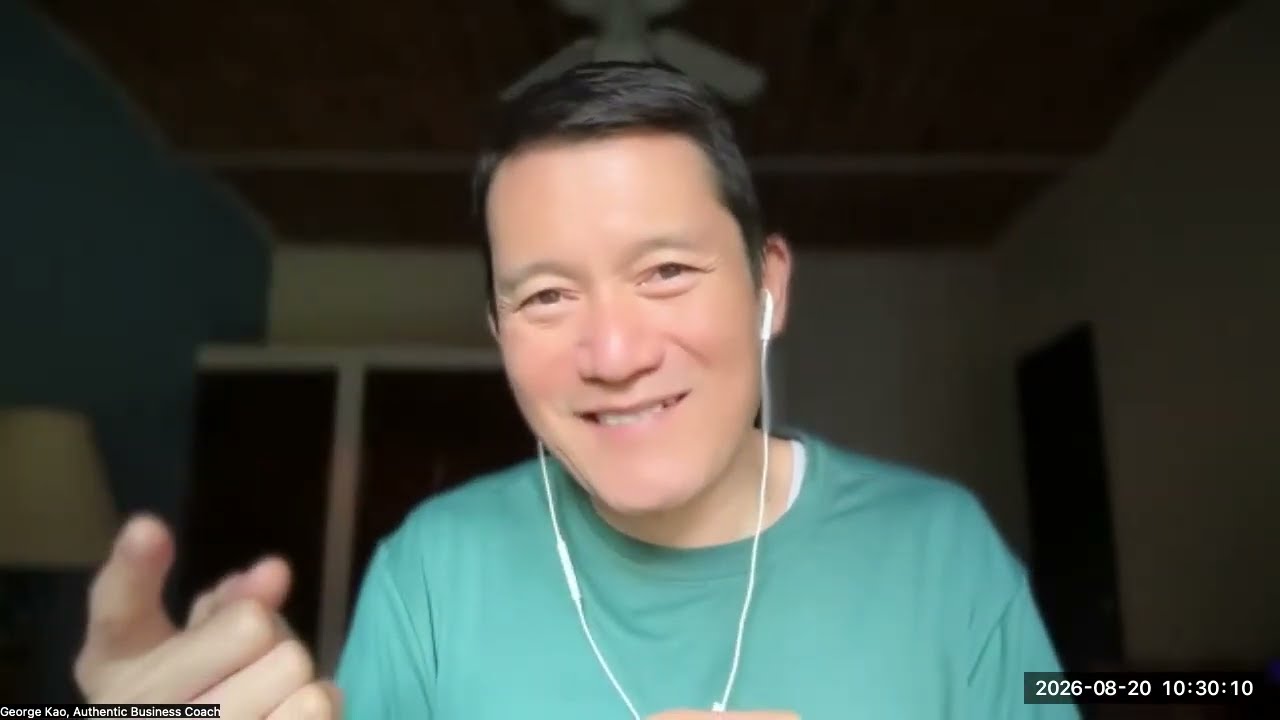
In this solo advice video, George Kao explains why a low signup rate for an online course—despite having a sizable audience—usually indicates either a mismatch between the course topic and what the audience is willing to pay for, or insufficient market research. He outlines concrete validation tactics: first, interview 5‑10 engaged fans about their past purchases and what kinds of courses they would actually buy, avoiding any bias by not presenting your own idea first. Second, run polls or surveys offering several topic options to let the audience prioritize. Third, after gathering insights, individually invite the most engaged respondents to join the course, framing the offering as a community rather than a product to increase conversion. Throughout, he stresses that many creators skip market research, leading to poor launch results, and encourages treating the course launch as a community‑building effort.
Chapters
So somebody has been having some trouble selling an online course, and even though they have actually quite a large audience, it's not, it's not small, it's not giant, but it's large enough where I would say, okay, if you sell a course that they want, you should get a couple dozen people signing up, several dozen, probably at least 20 to 50 people signing up for your course, especially since they're charging only $20 for a course. But even if you charge upwards of $100 US for a course, you should still get a couple dozen, I think, at the audience size that this person has. So the fact that it got a much lower signup rate tells me, well, it's a— it's telling me 2 things. One, it's either a topic that the audience doesn't want to spend money on. So it's not them because, because this person is telling me, oh, they like my content. They tell me how much help, how helpful the content is. So I know they like me and my content. That's great. Excellent. They keep listening. They keep watching your videos. They keep listening to your podcast. Excellent. But if they're not buying, it's because the topic isn't something they want to spend money on. So my question is, and, you know, I'll ask the person not to speak yet because I don't want to reveal the person, keep them anonymous for now. But my question is, how much market research did you do about the course topic before you launched it? Because we often make the mistake of not doing any market research. And what do I mean by market research? Very simple, very simple. I'm gonna keep it simple for now. I teach 2 courses about market research, but I'm gonna keep it to like a 1-minute response for now. Have you talked to at least 5, preferably 10 of your fans and supporters to find out what course you could sell that they would be like, oh my gosh, I would totally pay for that. I would totally pay for that. Now, the first question you ask in market research is not, here's my baby. Do you think my baby is beautiful? Of course everyone's gonna say your baby's beautiful. Meaning if you say, hey, I'm gonna teach— I put— I worked hard on creating this course. Do you think you would buy it or someone like you would buy it? There's, oh, of course. Oh, your baby's beautiful. Yeah, everyone's gonna— and then no one buys it. Because someone's like, oh, that baby! My God, that baby has like three eyes and four noses. Did they realize this? All right. No. So that's not what we ask in market research. We ask, what have you spent money on? Meaning, what kind of babies do you think are really, really cute? And you just can't wait to go up to them and go. You ask them what babies they think are cute before you show them your baby. Okay. So. What have you— have you bought online courses? Oh, you haven't bought online courses? Oh, well, what have you bought? Oh, you bought retreats? Oh, what kind of retreat is it? For example, or, oh, you bought online course? Oh, you bought a course? You don't say online courses anymore. Every course is online now. Do you buy course? Oh, you bought courses? What kind of courses did you buy? Oh, you bought that kind of course? Oh, you tell me more, right? And they tell you 3 courses they've bought in the past couple years. Which of the 3 could you confidently present as your version of that course. Like you ask them what baby they find is cute and then you create that baby. I mean, it's not a bad analogy, but you create the course that they want to buy because they, they've already bought it or they really have thought— that's the second question is, okay, well, you haven't bought one, but if you were to think, hmm, I would totally buy this type of course, what course would that be? Without saying your idea first, because they're gonna say, if you say your idea, they're gonna get influenced by it and they'll say, oh yeah, of course I would buy that, but they won't. So market research is incredibly important. That's one way of doing it. The second way of doing market research is polling your audience. Polling, P-O-L-L-I-N-G. You do surveys, you do say, hey, of these 5 topics, which one is most interesting to you to buy? You know, so this kind of thing. I feel like I talk about market research every single Q&A call because it's so important and nobody does it. Very few people do it. My students do it, but outside my students, very few people do it. So, so, so here's the thing, like, it's hard enough to build an audience that pays attention to you. Congratulations, that's not easy. You've already gotten there, which means you have people who are willing probably to talk to you, who would find honor to talk to you. And the more people you talk to in your audience, the more relationship they have with you. And when you finally launch your course, guess what? You should first invite them in. You should individually invite the people you talk to and the people you reach out to in the past. Individually invite them. Hey, I'm so, I'm so proud. I'm now doing this course. Would you join us? I'm creating this community. Courses are also better if you talk about it as more of a community. I'm creating a community talking about, you know, this kind of issue, kind of trying to communicate in our romantic relationship. It's difficult, particularly this particular circumstances. Let's create a community to talk about it. You know, this course will, will, I'm gonna share my thoughts, but you're gonna also learn from other people and you can share yours if you want to. You know, that kind of thing that's gonna make a course launch much more successful. I hope this is helpful.