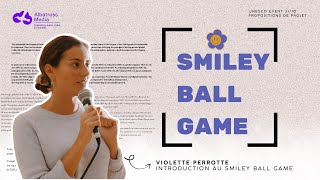
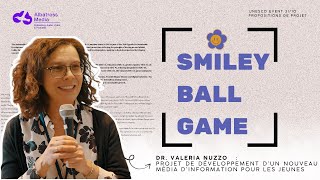
In this spoken introduction, Violette Perrotte, director of La Maison des Femmes in Saint‑Denis, openly critiques the Sustainable Development Goals (SDGs), noting that only about 18% of the 169 targets are on track for 2030. She expresses frustration that the SDGs are overly broad, top‑down, and underfunded for grassroots impact. Perrotte then presents the proposal by Guylaine and the Abbatruz Foundation, together with Albert Rousse, to create an 18th SDG centered on "respect and goodwill for humanity and beyond." Unlike the previous goals, this new SDG is envisioned as a bottom‑up, locally driven effort that also engages corporations by showing them tangible benefits. She highlights the human‑centric potential of artificial intelligence, referencing the book Finding Happy as an example of powerful change achieved with minimal resources. Perrotte calls the audience to brainstorm concrete, field‑born initiatives—realistic, scalable ideas that can be compiled into a blueprint to be presented at Davos 2026. She illustrates the model with La Maison des Femmes’ hospital unit for victims of violence, now operating in 31 cities, demonstrating how small, concrete actions can expand. The session aims to generate up to twelve actionable ideas, starting with at least one, to be documented and used to attract corporate participation.
Chapters
Hey, I'm the last speaker of tonight, and I'm starting the game. I was very surprised when Guylaine asked me to do this because I will be fully honest with you, and I'm so sorry if this is a little harsh, I have lost faith in the SDGs a long time ago. I'm gonna drop this for a sec. I think it was a lot of communications, and I think it gave a great vision of where we wanted to go as a society, but truly it was so unrealistic that as an activist myself, it made me a little angry that a lot of money was being spent in these really broad goals that were kind of unrealistic. And so all these funds were not necessarily going to grassroots projects that could actually make a change. But that's just my view. And I also know nothing about artificial intelligence. I I have never used ChatGPT. I barely know how to use Google Chrome. So this is brand new, and I think I'm the wrong person to do this, but here I am. So I'm very glad that you've asked me to do this because it's kind of, you know, at least it's making me question my beliefs. Now, when I saw Finding Happy, the book, it made me really question my beliefs because you actually started with an idea and you made it into something that was very powerful and very useful and without spending any funds. So you are right that we can do so much with very little. I live that every day. And it's also the good side of artificial intelligence because I think in my work we hear a lot about the scary side of it. And I think that all that we've heard today was we can bring humanity into AI. And that's a very reassuring thought to me because it was very scary to me that we were kind of leaving these very human topics, respect and goodwill, to robots. So I'm glad that there's a human side to it, and I'm glad you're preempting it. And I think you're very avant-garde in right away saying, okay, we're going to go down this path, but we're going to bring a human side to it right away. Because what we're talking about is people, and we can't solve everything with AI if we don't have people backing it up and making sure that real lives are impacted the right way. Anyways, so the idea today for everybody who hasn't understood that is As Guylaine told me this week, I think it's less than 18% of the SDGs have been accomplished so far, right?
17 out of them, 169 principles have been pulled out, and by 2030, only 18% of the 169 principles are out and still in the works to be developed.
Okay, well, that's a depressing stat. Thank you. So we're not achieving the SDGs in the time we said we would. I don't— I mean, I hope we'll achieve them one day, but eradicating poverty is very broad. And Guylaine and Albert Rousse had the idea to create an 18th SDG. So at first I was like, if the first 17 haven't worked, why are we creating an 18th one? Maybe you're wondering the same thing. Turns out Guylaine and the Abbatruz Foundation want to do the 18th one differently. She has analyzed mostly why the first 18 weren't working, which I think is because also the goal was really broad and because big corporations and people as a whole didn't feel the pressing need to be a part of it. And so I think she's approaching this 18th SDG, which is respect and goodwill for humanity and beyond, Look at that. With more of a grassroots idea, so less of a tops-down, but more of a bottoms-up one where we start at the local level and also trying to get corporations to understand what's at stake for them. Because if we want even the big bad corporations to be a part of it, they need to see what's in it for them. And I think for a long time, We kind of hid behind these big ethics and morals saying, well, if they're not aligned with our values, then we leave them out of the conversation. Unfortunately, in the end, they win most of the time. So we need to find ways for it to be relevant to the people in power so that they feel like they have no choice. And I think from what we've heard, the different initiatives is also telling governments and big corporations, this is what's at stake for you and this is how you can benefit from it. So, the idea today is for you guys to start brainstorming a little, now that we've heard from very big brains, on what are different initiatives that we could start thinking of that could be towards this whole respect and goodwill for humanity and beyond idea. But we need them to be realistic, and we need them to be Concrete. No eradicating poverty. No gender equality in general. Because we all want that, but it's not gonna get done tomorrow if we don't have very concrete ideas that are born in the field. And obviously I'm preaching to my choir, but for example, La Maison des Femmes, this one doctor said, "I treat patients for all different kinds of illnesses. All my patients have suffered an episode of violence in their life." So I'm going to treat violence the same way I treat a cancer, an abortion, a delivery, anything. And so she created a hospital unit for victims of violence, and now it's in 31 cities, might expand to other countries. So you start with something very small and concrete, something that's within your abilities to, and then you make it bigger, and I think that's how we'll accomplish it, just like we did with Finding Happy. So that's my speech. Thank you for coming to my TED Talk, and now I will be throwing this thing to whoever has ideas. So the goal, I think from Guylaine, is to have 12 ideas. Now, we're gonna be realistic, we said tonight. So we're gonna start at 1, and if we stop at 1, we'll be happy. But I'm sure we can get to 2. And then we'll write them down, 'cause we'll do a blueprint, if I got that right. And the blueprint hopefully will be presented at Davos 2026, right? That's correct. And then we'll get people together, guys. So then we'll get the big corporations involved. So you have to give us ideas that Guylaine can write in her blueprint and then sell to those people. So we need ideas, we need sparks flying in this room right now. Otherwise, this night will not end and you will stay here until we get all the ideas.