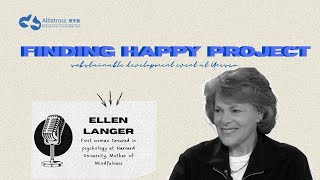
In this UNESCO event talk, Harvard professor Ellen Langer explains the three personal motivations that led her to write the children’s book Finding Happy. First, a cocktail‑party conversation revealed that many affluent parents were on antidepressants, prompting her to wonder about the emotional future of their children. Second, a furniture‑delivery incident showed a low‑self‑esteem worker successfully solving a seemingly impossible task, illustrating hidden talents and the unfairness of underestimating people. Third, she recounts creating a simple song for her grandchildren that celebrates that everyone knows something and can do something, and how a meeting with Elan of the nonprofit publisher Albatross sparked a partnership to bring the book to a global audience. Throughout, Langer reflects on common misconceptions about happiness—linking it to fame, fortune, and external respect—and advocates a simpler, more inclusive view of well‑being for children.
Chapters
Hi, I'm Ellen Langer. I've been professor at Harvard for the last 50 years, writing many books and research articles for academics, for the lay audience, and then I was asked, well, why now would you write a children's book? There are actually 3 reasons, let me tell you. The first, I was at a cocktail party with very affluent, successful people, and somehow the conversation got around to antidepressants. And I was shocked. Virtually everybody there was either on antidepressants or had taken them in the past. And I thought, what chance do kids have in this world if all of their parents are depressed? And I started to think about it. It's interesting that people think that to be happy, what you need is to have fame, fortune, status. And why? Because if you have those things, and other people will respect you. Why should you care if other people will respect you? Because then you're likely to respect yourself. I thought, this is silly, there's a much, much easier way to go about this. Then, second story, we were having a very large delivery at the house, all this furniture that was going to be stored in the basement. And I knew the size of the basement, I saw the size of the delivery truck, so there's no way it's going to fit it in that space. The person who was going to put it away was somebody who had, I think, low opinion of himself. He was uneducated. And so here I am with my prediction, a touted genius, it won't fit. There he is in his whatever. He put it all away. Not only that, where each piece of furniture was actually accessible. And when I saw that, it felt to me it just wasn't fair. Why shouldn't he realize his talents? So then I wrote a little song for my 10-year-old, 5-year-old grandkids, twins. And I won't sing it, but it went like this. Everybody doesn't know something, but everybody knows something else. Everybody can do something, but everyone can do something else. And one day I'm driving in the car with the twins, and all of a sudden Theo starts to whistle. Theo, you're such a good whistler. His brother then says, Grandma El, when Theo was starting to learn how to whistle, I was learning something else. And I was pleased beyond belief to think that they did understand at least one of the messages in the Finding Happy book. The third thing that happened was Elan came to see me to see if I would do some event for Harvard Law School alums. And in the course of that meeting, I discovered that she had a children's publishing company, a wonderful company, Albatross, a nonprofit. And we shared the same desire to help kids, people experience a very different way of being, people across the globe. And I'm thrilled to say that I think she's helped accomplish this with all of the people, wonderful people who've worked with her on this project. And so I'm here basically to thank everyone and to say hello and now goodbye to all of you.