Personal Branding Guidance for Citrix Human Resources Team Featuring George Kuruvilla
The session is an interactive workshop for the Citrix Human Resources team on building personal brands. Led by Simon Muscat with subject‑matter input from George Kuruvilla (global strategist for customer success) and Sarah Baker (HR business partner), the hour‑long meeting blends presentation, live polling, breakout‑room discussions and a challenge. The facilitators define personal branding as the perception others have of you, not just how you see yourself, and stress that this perception is formed continuously through everyday interactions. They walk participants through practical ways to assess their current brand – soliciting candid feedback from a diverse set of contacts, asking trusted peers for three defining words, and “Googling” themselves to audit their online footprint. George shares his own story of how early community visibility shaped his interview experience and long‑term reputation at Citrix. The group then explores a self‑evaluation loop (the “Your 168” concept of aligning weekly time use with personal values) to surface gaps between current perception and desired brand. Sarah introduces the 3 C framework – Curiosity (growth mindset and experimentation), Confidence (attitude‑driven action) and Courage (overcoming imposter syndrome) – as guiding principles for brand development. Concrete actions include continuous learning, mentorship, cross‑functional networking, leveraging internal tools (Citrix Daily) and external platforms (LinkedIn, Twitter, blogs) with consistent, value‑adding content. Breakout rooms generate a set of attributes the team wants to be known for (collaborative, impactful, strategic, data‑driven) and practical tips such as sharing work, being inclusive, pausing to reflect, and managing emotions. The session closes with a recap of tools, a call to capture learnings and “leads” in the chat, and an invitation to continue the conversation on Slack.
Chapters
time, you can unmute yourself and pose a question. We will be using the breakout room for during the session to have discussions in smaller groups. Please feel free to reach out to Rachel, Levent, or me during the session for any technical difficulties. Thank you everyone, back to you, Simon.
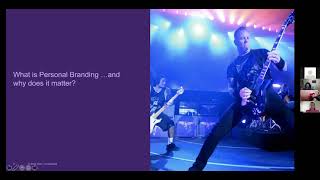
Thanks so much, Harshita. And so today we're going to welcome a really interesting subject called personal branding for HR, so building your personal brand for HR. And I'm joined by a really talented and glamorous team around me in the form of George Kuruvilla, our global strategist for customer success from the business side of things. So welcome, George. Thanks for joining us today as a subject matter expert in this area. And for those of you who don't know me, I think there's probably one or two of you on the call, I'm Simon Muscat, Director of Talent and Organization Development, working in the People Organization Capability team. I'm joined from other members of my team, Rachel Lamont, our Talent Development Operations Manager, and Harshita Ghatti, who's our Talent Development Coordinator. All of us will help to make this a really rich and interesting experience for you as we work through the content. I will say this content is not about sitting and listening to us. There's a lot of activity for you to get engaged in this subject. And we want to hear from you and work with you as we go through this content. And for those of you who are a little bit competitive, there is a small challenge at the end of today's session to see how many of you have paid really close attention to the content that we share with you. So to kick off our discussion, we really wanted to hear from you in terms of what you think when you hear the words personal branding and why it matters. So I'd like you to go to your chat, and I'd like you to type in the chat who you think has a great brand and why, and I invite you just to kind of share openly what you think, who has a great brand and why you think that. So, see Bill Gates, Oprah, Bill Gates again, oh, Bono. Fantastic. Yeah, so we think of like rock stars, people on the TV, people who are kind of outside of like our work, James Hetfield. James Hetfield has a great brand, I don't know what you're saying there, Kirsten. Disney, Modi, awesome. So I think it's a really interesting topic, this idea of personal branding, and often we can associate with those brands we recognise and know from outside of work, but, you know, really it's not so much about what you say, it's more, I guess, about how they say it and how they come across and present themselves. I know that George has a lot of experience in this area, so at this point I'd love to hand over to George. Before I do that, I will just point out a slight mishap I made at the very beginning. We're also joined by Sarah Baker on this call, who will also be sharing a lot of detail on this subject. So sorry to leave you out there, Sarah, earlier on. For those of you who don't know, Sarah as the HR business partner and obviously working closely with our team at the moment on a rotation. So welcome, Sarah, and apologies for leaving you out there.
Very excited to be joined by our team.
Great stuff. So George, could you give us a bit more detail then just on personal branding, you know, what it is and why it matters in your career?
For sure, Simon. First off, thank you so much for letting me be part of this discussion. I'm super excited. I think this is my first time meeting the HR team, So thanks to all of you for joining this conversation. So let's kick things off with, you know, what really is personal branding, right? So it's, if you're being honest with yourself, it's not something that you wake up and think about, what's my brand, right? For most of us, it's more of an afterthought. But the reality is, as you interact with people, whether that's in person or online, people are constantly assessing you, right? People are like very quickly quickly trying to figure out what you're all about. So it's, when you think about the brand, it's really about what people think you are as opposed to what you think you are. So, you know, I think most of us want to be associated with certain values, want to be known to, you know, as people who highlight certain traits, but the reality is it doesn't matter what, you know, what you think you represent, you really need to find out how other people perceive you. Good example of this is back in 2012, or actually maybe even 2011, you know, as I was starting my career at Citrix— actually, this is even before that— someone I knew in the community, without me even knowing, forwarded my resume to my then manager or the director of my team. And then, you know, before I even had my first interview, they had already— they already had a predefined notion about me, and that was based on my interaction in the community or based on certain thought leadership blogs, whatever I had done. So what this, you know, really ended up doing is, as I entered my interview, they already assumed that I know my technology elements. They knew a little bit about my personal side because I mean, I'm into music. So my, you know, if you Google me, that's one of the first things you'll see. You'll find my music page and whatnot. So I go into the interview, expect it to be this really tough technical round, then it ends up being this casual conversation because they take it for granted that I know my technology and they, and they take it for granted that I'm more well-rounded because of all of my other interests, which made the whole process easy and, uh, you know, much more streamlined than what I would have expected it to be. And that, that perception of me has stuck around 8 and a half years in, right? So even today, if you talk to people about, you know, people who know me, they have a predefined notion that, yeah, he's a technologist, he's a thought leader in end user computing and cloud computing. He loves music, he's in a band, and he's a family man. So those are kind of the traits that come out. So regardless of— and initially, actually, I didn't really like the fact that music was the first thing they associated with me with. I wanted it to be technology, but I couldn't escape it because, you know, they found that to be unique. And I remember in one of the all hands meetings, my boss was introducing the team for everyone, they kind of said, hey, he's this, he's got 20 years of experience doing this and that. And for George, yeah, he can sing. That was kind of the description. And I feel like, you know, I was like, is that really what I want to be known as? Right. So again, all about perception. You know, it's, it's something that you can control and we'll talk about it as we move along. So Sarah, I know you've, you and I agree that we live in a really busy world. And how do we really break through and get noticed?
That's an excellent question, George Kuruvilla. And I think our colleagues will walk out of this session with that answer. But let us establish up front 3 important facts. One is that when it comes to personal branding, you are your chief marketing officer. And the reason is very simple. No one has a more vested interest in your success than you do. The second is that you can control the message, including how you present yourself, how people know you, and how they perceive you. And the third is that you control how you build your skills. And this is particularly relevant for us in HR because ours is a dynamic profession, and the current disruption is forcing us to change and evolve. And what we have going for us is the ability to learn, to develop new habits, and to grow so that we can stay relevant. But George, you mentioned that branding is not necessarily what I think of me, but how people perceive you. And you gave a perfect example in that experience that you have. But my question to you is, how do I know how people perceive me?
Yes, sir, that's a great question, right? So I think the first step that we need to take is ask people around us and, you know, it's not just your, the people that are closest to you. So, you know, talk to your colleagues, talk to your friends, even reach out to people who only know you based on your own online profile, right? Ask them about, you know, what they perceive as your strengths and areas that you can improve and Ask them to provide you candid feedback and then look for themes. You know, they might— you'll obviously have the outliers, but then you, if you're doing this right, you will find some commonalities both in terms of your strengths and weaknesses. And that kind of gives you an idea of, you know, what your brand is based on what you're hearing from others. And it's key that you reach out to people from all facets, not just work, not just your family, but, you know, all facets. And that online piece of it is really important because in the post-COVID world that we are living in, I think a lot of us don't have the liberty to be interacting with people face to face. So the online presence is extremely important, and we'll dig into that a little bit more later. So that's what I have to say on that. But Sarah, I know you've got a few additional tips here.
Well, I would like to see— to do a click down, if you allow me, on those concepts and share share some of the things I do that our colleagues may find helpful. These are 3 practical things that anybody can do and you can do right after our session. One thing I like, for example, is to ask 3 to 5 people that I trust what 3 things define me. And this could be a mentor. It could be a trusted colleague. My boss, no, my spouse, and so forth. See, and the question I like to ask is, when you think of me, what 3 words come to mind? And that is very telling to me when I get the answers. The second is to Google yourself. We all have a virtual footprint, and what people say and what they don't say about us is the front page of our reputation, or as somebody said, the COVID letter to our resume. When you Google yourself, pay extra attention to the first page of your results, because this is the first impression that your professional and personal contacts see when they Google you, and 90% of users do not bother to look any further anyway, so first page is important. And then the third is use our insights to your advantage and consider this twist. Instead of asking for feedback, ask for advice. People are flattered when they are asked for their opinion, and they are more likely to give us valuable information, see, that we can use then for our action plan. For example, instead of asking, "What feedback can you offer about my performance in X, Y, Z project?" we may say, "What advice can you offer for greater impact in X, Y, Z project?" And that will give us, I believe, more valuable information. Now, George, this brings me to the next question. See, let's say that we did our discovery diligence. And we want to make some changes as a result. Where do we start?
Yeah, so I think as far as, you know, really trying to do something about your brand, the first step is going through a self-evaluation process. So, so far we talked about this, you know, really understanding how people perceive you and then getting an idea of what your— what people think your strengths and weaknesses are. Then there is the aspect of really asking yourself, what do you want to be perceived as, right? What do you want your brand to be? And this goes through a serious self-evaluation process. And this is something you should do on a regular basis, right? So, you know, I think I was reading a book that actually Sarah recommended, which is called Your 168. And it talks about the fact that you have 168 hours every week. And, you know, you, as you speak to people or, you know, you know, as you think about yourself, you believe your values are X, Y, and Z. And then, you know, if you were to kind of go through an evaluation process on a regular basis, let's say you do this, you know, twice or thrice a week and see how you're spending your time. Does it really match up with the values that you aspire to be associated with? And a lot of times you'll find out what you say you are and what you're doing are completely different. You say that you want to, you know, be contributing to the community, you want to be a thought leader in so-and-so, you want to spend a lot of time with the family, but then you realize, you know, in reality you're maybe spending 90% of your time, you know, putting out fires and, you know, focusing on work and you're not really finding that balance. So going through that self-evaluation process really helps you understand that what you say you are and what you're really doing are completely different and it puts focus on, Hey, this is, this is, these are the areas that I really need to work on and, uh, how, you know, I should be really putting focus on using my, utilizing my time to, uh, map to my values. So again, the self-assessment is really important. And once you go through that self-assessment, you'll know that this is the brand I want to be, this is how I'm being perceived, and here's my gap, right? So at this point, you know what you need to work on, and, and that is really the next step after finding out how people perceive you.
So thanks, George, and let's do that as an HR team. Let's get really, really honest about where our brand is as individuals, and I'd encourage you, like, the more honest you can be about this, the more progress we can make, you know, each on our own and also as a wider HR team. And so we'll invite you at this point to type in the chat one word that that you would like to use to define the brand that you have right now. And what we'll do is we'll collect all of those words together and we'll be able to share what that looks like for all of us as a team on the call just now. Loads of good stuff coming in already. Frantic typing going on. Great. And with some advanced technology here, I believe that we're going to be able to see some responses, and we'll be able to see exactly where we are as a team. Great stuff, and remember this is about where you are right now, where you think your brand is right now.
It's really great to see all the inputs, I mean a lot of great qualities are showing up here.
Yes, yeah, a lot of things that are really important for us as an HR community and partnering with business leaders and folks like yourself as well, George, to be able to be thought leaders in HR. We need all a lot of these skills and we need to be perceived in that way for sure.
And as I was talking about self-evaluation, I think one of the reasons you've got to kind of do this on a regular basis is these things might change over time, right? So like it's good to ask yourself on a regular basis really, what is it that I should be focusing on and what do I really want to— among all of my strengths, what should I focus on in the immediate future?
See, it's interesting that collaborative comes at the top and I think that is a hallmark of not just of just this team, but also of our corporate culture.
Yep. Awesome. And don't worry, this won't be something that just sort of lives in this session. We will share these insights that you're providing back with you after today's session. For those of you watching the recording as well, it'll give you an opportunity to kind of see where we landed with this as well. Great stuff. Okay, so I think just in the interest of time, we've got loads of great words here, interesting insight in terms of how we choose to define our brand right now. Lots of emphasis on our collaboration, lots of emphasis on, you know, how well we kind of innovate, communicate, all those great things coming out. But let's move forward from that, and we will continue to collect, you know, as much as possible that's come into the chat for this part, but let's move on and look at where we're headed. So if we can go back to the next slide, what about what I would like my brand to be and how I'd like to be perceived? So again, one word in the chat about what I would like to be, and this is much harder. So think about also, we're in a crisis right now, lots of change going on, incredibly dynamic environment, going to virtual working or hybrid working, got those kind of things to consider. And, you know, we've got the opportunity to be very visionary as HR leaders as well. So many great things coming through, impactful, Being a strategic partner. There's lots coming through in terms of being strategic and being able to kind of create that business impact, which is exactly what we're all striving for. So I think we're quite well aligned in terms of what we'd like to be as an HR team. And interesting, just to call it out, interesting that that difference between being seen as very collaborative and being seen as very impactful and being very strategic, you know, there's a very clear distinction there between those two things and something for us to consider as we build our individual brands and the future of HR as we head into the future of work.
Yeah, I can see the future orientation in this statement. Absolutely.
Great stuff. We'll just give you a minute or so more for the last few that go into this word cloud, because again, this is something we'd love to come back to and, you know, look at our progress against it. But after we close this particular section, then we'll start looking at how we bridge that gap that George was talking about. Alright. Yeah, look how, by the way, the size of the text here in these word clouds indicates how many times it's coming up. So it's really fascinating just how big we've got impactful and innovative and strategic on this one, compared to some of those other words that were coming up in the previous poll. All right, I think we will at that point move us forward and I'll hand back over to Sarah to kick us off into how we're going to get there and how we're going to close that gap.
See, actually, see, let's recap, which I like to do a very quick recap of where we've been. See, we did, we spoke initially about what personal branding is, and we established that it actually matters. And then we share some tips on how to assess it. And I think with this word bubble here, we started seeing a movement toward envisioning a more impactful brand. And, but I wonder, see, in the It's this question for you, George. In this disruptive environment, a very unusual environment that we are living, is it even possible to build a strong brand?
No, again, great question, Sarah. So my answer is absolutely. You can probably say more so than ever before because with all of us working remotely, one good aspect about this is everyone's within reach, right? As compared to before. So I think that gives us a very unique opportunity. But going back to the conversation, we talked about, you know, understanding how people perceive you, kind of assessing where you want to be, determining what the gap is. So the next step is what are you gonna do about that gap, right? So you've determined that you want to be impactful, you want to be collaborative, you wanna be data-driven, you wanna be strategic. These are all, you know, elements that you aspire to be, make part of your brand. So then the next question is, what do you do about that? So I think the first step is to be a constant student, right? And so be a student. I mean, I always mention this at, uh, to our pre-sales organization, you all have to be a student of Citrix, you have to be a student of the industry. You have to be, you know, in that mentality that you have to always be learning, you know, and surround yourself with people that can, you know, teach you things, right? So if you're always the smartest person in the room, that's not a good thing. You have to always try to surround yourself with people that can show you how you can take your game to the next level. So that— this can come through mentoring, for example. And I think at Citrix we've got a terrific mentoring program through Workday, and take advantage of that. Don't be afraid to reach out to people outside of your organization. In fact, that's what I would encourage, right? So if you're in HR, you know, maybe you want to reach out to someone within customer success or sales and, you know, have them mentor you to get a completely different dimension in terms of where you can take your career, right? And another aspect of this is, you know, obviously go through, leverage the tools that you have. So like LinkedIn Learning, you know, CLC and whatnot to essentially further your career and address those gaps as far as skill sets go. Maybe You know, take advantage of, you know, the education reimbursement Citrix offers and maybe go do, you know, maybe pursue a degree that can help you maybe address— and I saw a few mentioned data-driven, so maybe you want to go learn something around business analytics as an example, right? So these are all ways that you can essentially address the gaps that you have between how people perceive you and the brand that you're trying to build. So that's one step. The second step is You know, just kind of putting yourself out there, looking for opportunities, being proactive, embracing change, you know, being adaptable, evolving, right? So all of these are, you know, like, especially in this day and age as our entire industry is changing, every, you know, whether it's IT or HR or, you know, you name it, all of these, you know, business units are going to look fundamentally different in the next few years. So the question is, you know, you're gonna— you have to kind of foresee where things are going. You have to kind of understand what skills that you have and how can you leverage those skills and kind of take a leap of faith and kind of put yourself out there when an opportunity arises. You're never going to be 100% ready for that opportunity. You know, you have to kind of learn as you go. And I think with a lot of us, the challenge is we have to have everything perfectly aligned before we are going to go and take on a role. And my advice to you is just, you know, have more confidence and, you know, just take the role on and then figure things out as you move along. Because guess what, we are all intelligent people and we will be able to adapt and evolve as needed. So that's again another big thing. And again, as you think about opportunities, don't confine your opportunities to just your group. So don't have a very myopic look at things. Look macro level, like look at the organization, look at our corporate goals, Look at ways in which you can essentially branch out and reach out to other teams to essentially elevate your brand, right? If your brand is just confined to your group, you're not doing it justice. And so that's kind of in my career, that's really what helped me, right? So I could have stayed in SE, you know, and been happy, but then I wanted ways to kind of leverage the skills that I have to look for opportunity outside of my team. And that's, what helped me in my career at Citrix, right? I've always looked for ways to identify gaps, and so this is where another important point: don't just come up with the problems, find a solution, right? So if, if, you know, you might know, hey, this thing is not working well, and your boss doesn't want to know that it's not working well. What he wants to know is what are you going to do about it, right? So when you, uh, have— you find a gap, come up with a solution, come up with a game plan, and then be be ready to lead that change and then don't think you need to do all of it on your own. You know, this is where once you start branching out to different parts of the organization, you build a network that you can tap into to really further that challenge that you've identified. An example of this is the Citrix Unplugged podcast. You know, it was an idea that I had based on a gap that I identified. I told, I first had to get seek approval from my boss. I'm like, hey, I have this idea. You good with it? Said, yeah, yeah, go for it. And at that point, I ran with it. It took a few months, but then I, you know, went through with the idea. I knew who to tap into. So I knew that there's so-and-so can help me with the videography. I needed someone in backstage to sponsor it. So I sold it to them. And then I reached out to some heavy hitters initially to get the publicity, and they agreed. So this is where you kind of have to lead the charge. It doesn't mean you have to do everything. So that's kind of how you think about building your strengths. Identify your strengths, find the gaps, build on those strengths, look for opportunities, take some risks, and put yourself out there.
Thanks so much, George. Loads of really important insights there. And by the way, I didn't pay George to talk so much about learning and development and skill development, just for those of you who are wondering. So George touched on HR being absolutely pivotal to the future of work and the strategy that we're building around about how we partner closely with the business to make that stuff happen. And given the context of the power we have as individuals, using our own personal brands to influence, to be strategic thinkers, to be great partners with our business customers, we want to take some time for us to work on that. So in some small groups just now, we're going to take 5 minutes to brainstorm what those essential skills might be that we could invest in to help us be be prepared to elevate our brands and to really contribute to that future of work. So, leap of faith as always when it comes to technologies like this, but what we're going to do just now is we're going to break you into those small groups, so you'll find that you're in that mini breakout room with, with a couple of your colleagues, some of which you may never have worked with before, and obviously great to mix the teams up like that and get close collaboration between us. So we'll give you 5 minutes and then we'll come back to the main room and hear some of those ideas that you came up with in your subgroups before we move forward. Sound good? I'll take that as a yes. So Harshita, do you want to kick us off and move us into the breakout rooms? And we'll be popping into those breakout rooms just to make sure everyone's okay. Suggest that you nominate somebody who's a note-taker and somebody who's going to speak on behalf of your group for when we return to the main room. Over to you, Harshita, and I'll see you all in a few. Hi folks. Hello. Hello, hello. You may all need to unmute because we muted everyone in the main room because we had about 19 people on the call. Everybody clear on the discussion? Everyone good?
I'm good, I understand, this is Cache.
Great stuff. So I'll leave you to it and perhaps just start to throw your ideas out there and, you know, obviously remember for one of you guys to take notes and one of you to be nominated as a speaker and I'll pop out of this room and jump into another one real quick. Okay, thanks.
Hey, this is Vanessa.
Okay, yeah, well, okay, here we go.
The names are popping on now. Hey folks, just a quick hello. You may need to unmute so everyone can hear you because we muted you all in the main room. Feel free to nominate a speaker or volunteer yourself and a scribe as well for your team, and just start throwing your ideas out there in terms of what skills are needed for the future of work. And I'll leave you to it and jump to another group. Good luck. Thanks.
Hi, Simon.
Hi, everyone. How you doing? All good?
Yeah, clarifying question, Simon, are we supposed to talk about what's important for the HR as a whole, brand-wise, or personally?
Okay.
Yeah, so what's the one essential skill for the future of work? And that's where when you have your discussion, remember assign somebody to take notes or volunteer yourself, and somebody who's going to speak on behalf of the group when we return to the main room.
Okay, cool.
All right, see you in a few. I'll jump to another one. Thanks.
I can take notes if you guys want.
Thank you, Jen.
So one of the things I think from an HR brand that Hey, I just want to add.
Yeah, hi. I just want to add, um, so, um, maybe, uh, you know, it's like, uh, it's okay. I'm open to change is also something that, uh, is important if you are really want to build something and build your brand. Uh, I think, uh, usually I, I— it comes with the fact what you said, and, uh, it's like adaptability, but, uh, I think just more open and embrace the change to, you know, to be the better version of yourself.
So yeah, and don't fear to fail, right? Because you may not get it first time, but it's something that you—
Hello, Simon.
Hi, how are you? Everyone's okay in this group? Yeah, yeah, we're great. Cool, so don't forget to nominate somebody to take your notes and someone to be your speaker. Remember, we're thinking about the one essential skill that we think that we need for the future of work, and that can be for ourselves personally, for us as a team. And I'll leave you with that thought and jump to the next one.
Thanks, Mary. Thank you.
Sounds good. See you shortly.
It's— did you unmute?
Hey folks.
Hey Simon.
Hi, so I hopped in a few rooms and I think we're okay. Do we have a keep track of the time? Because I wasn't.
How long were you giving them?
Supposed to be 5 minutes.
So I think we're 3 minutes in, so they've got another 2 minutes.
Okay, do we want to— like, let's just, let's be fair because I think some of them were just getting started, so let's give them another 3 minutes just to be, be sure.
Sure, we can, we can put a, what should we call it, in the broadcast message letting them know they've got a few more minutes.
No worries. And I see Maria just joined us here in the main room, and maybe we can assign her to—
Yeah, I already assigned her to one of the breakout rooms.
Okay, great. I guess Sarah and George are in other rooms somewhere. I was trying to be careful not to jump into a room where anyone else was. But I think we're okay.
Yeah, I'm not sure whether they know that they can move between rooms.
Should I just broadcast a message, final 2 minutes?
Yeah, yeah, please. How many groups do we have as well?
We have 12 because we had 85 participants.
Crikey, so we'll do a lightning-fast debrief. Of people. And then that way we should be just about okay for time, because I know we've got— still got content to cover. Can we force the return to the main room as well when the time's up, rather than waiting for people to hit return?
Yeah, do you close it and it gives them a minute and then it forces them to come back?
Okay, perfect, perfect. Have we gone past the 2 minutes?
Almost.
Not, not, I mean, I'll be almost there.
Yes, I would, if you've gone past the, if you said 2 minutes, I'd do it now and then they've got like a minute to come back in.
Okay, cool. People were typing really quickly.
It's like I've corrected it and it's working.
You guys did an amazing job. Great.
I think people are coming back in.
I can see some folks rejoining. Alrighty. So I think we have I think we've got everybody back. We're still waiting on a couple of people, maybe. I think we're just about there. So I'll kick us off in the interest of time, just to make sure that we stay on schedule. So, love to hear some of the insights that you came up with from each of the teams, and I promise not to go kind of the creeping from one to 12. We have a lot of groups, so I'll ask for 1 minute from your spokesperson. I'm going to keep it very, very tight on time just because we've got further content to get through, and we may not get through everybody, but we'll try our best to kind of hear from as many folks as possible. But, you know, perhaps you can type in the chat or raise your hand if you'd like to speak, and I'll give you a minute maximum if you'd like to speak and take it from there. So who's going to kick us off? Let's have a look what we've got here. Oh, so I see, I see Ana Maria. Do you want to unmute yourself? And then we'll go to Chris, then Emma, then Beryl.
Yes.
Hi, Simon. Hi, team. This is Ana Maria. I'm part of the talent acquisition team. We had a great conversation on our breakout session. My team thought about self-awareness, having confidence to promote yourself, be adaptable and open to change, recognizing your own strengths and weaknesses, being resilient, embracing— sorry, yeah, embracing yourself to be better, don't have fear of failing, make sure that you're willing to put in the work to represent all of those qualities, having consistency, staying true to yourself no matter what, being very authentic, And then trying to incorporate some humor and heart with a caution on the humor being not sarcastic and ensuring that it's universal, being relatable and staying very positive. I hope I stayed within the minute mark.
You did.
You did fantastic. I love the fact that you bring up the kind of authenticity and humor and things like that. It's so important to remember we're not robots here. We're here to kind of do our our jobs, but we're all people as well. And I think that being yourself is also kind of a really, really important part of creating that partnership and driving that strategy. So thanks for being brave and going first, and thanks for the insights there. I'll move us on to Mr. Kristus Chazer. I think your hand was raised.
Of course it was. Hey guys, good to see everybody here. Our team had a couple of good things. Number 1, I'm gonna switch it around in no particular order, but learn the business. Learn the business and then partner with the business. Listen to the business, be more strategic, and challenge your path, challenge the past, and simplify our processes and practices. So pretty to the point, but I think the team came up with some good stuff.
I love that as well, because being able to be a thought leader means you need to understand you know, your business in a lot of depth in order to be that. So thanks for that, Chris, and well done to your team as well. More great insights. So this is rapid fire, but next on the list I had Emma. You want to speak on behalf of Emma?
Yes, I can go, I can go pretty fast. We had some technical issues, but we talked about the importance of authenticity, not just for how others perceive you, but for you feeling authentic to yourself. Internally. And then we talked about the importance—
oh my gosh, my dog—
we talked about the importance of your voice and how you communicate and how that's really kind of the cornerstone of your brand and your relationship with others.
Yeah, yeah, absolutely. And there's the authenticity with the dog in the background as well. Perfect. Yeah, and somebody else thought the same thing. Ken thought the same thing. Great stuff. Okay, just, I realise there's a lot more raised hands, but we probably have time for one more. I would encourage you to kind of carry with you what you explored in your group anyway, and happy to engage on the subject as well after this session. But as the next person, I'll just choose Paula. If we can go to you please, and hear what you heard from your group. Thanks guys.
All right, I'll go pretty quickly here. Providing exposure to your work. It's okay to be proud of your work and be sure to share that outside of your home group, your normal support system. Be sure to be inclusive because if you're not, you may not be able to hear all of the voices around you. Pause and reflect. I really like this one. Tyshawn mentioned this one. Pause and reflect. Amanda did as well. On your work so that you can be proud of those moments that you have throughout the year rather than just heads down working in the moment. And having the emotional intelligence to walk away whenever things get a little heated and be sure to use resources around you if you do feel yourself getting emotional about something and saying, hey, I need your help. With this particular situation. That's what we got.
I love it, Paula, and I especially love how you call that out because like we're all humans, right, and we sometimes in our function have to deal with stuff that can be incredibly emotional for ourselves that we carry with us, and now I think it's super important to recognise that and to recognise, you know, the impact that can have on us and how we manage ourselves and how we manage that external brand. I can see some great comments going in the chat for those of you we weren't able to reach, so please keep them coming, and what we'll do is we'll capture those and we'll look to share those back with you on the All HR Slack channel, just so that we've got a place that this all lives and we can work with from here onwards. But I am going to move us on, despite this amazing discussion we're having, to talk about some tools that we can provide you to really move this stuff forward. So without further ado, I'd like to hand that back over to Sara to talk us through like a specific technique we can use. Sara?
Yes, thank you, Simon, and perhaps we can put the graphic on the screen. I'd like to talk about the 3 C's of personal branding, but just by listening to George and all of that, I feel that I'll be summarizing the foundation that was laid in this conversation. And the first C is curiosity and embracing the growth mindset. Now, I found that growth mindset has a personal meaning. For me, it's about uncovering possibilities, knowing who I am, who I want to be, and what gets me there. And that includes my personal brand. Now, this process can be challenging. It's not always easy, but that's where curiosity comes in. You know, curiosity is about getting out of our lane and trying new things, challenge ourselves to learn something new, meet new people, and to give us permission to experiment and fail because as George very well said, this is where we grow. I see, I always see, been a student of successful people, and one of them is Thomas Edison. And he was famous for never giving up in his search for the electrical light bulb. And in his journey, he tried 10,000 times, if you can think of that. And when he finally succeeded, he said, "I have not failed. I just found 10,000 ways that it won't work." And so it is that tenacity coupled with curiosity, the willingness to change, and the ongoing learning that are foundational to building a strong personal brand. The next one is confidence. And confidence is about having a winning attitude. It's been said that attitude determines your altitude, and I believe that to be true, because attitudes create a self-reinforcing circle. And here is how: attitude creates behavior, which moves to action. Action renders results, optimizing performance and fueling a winning attitude. Now, have you heard the phrase, "Fake it until you become it"? I happen to believe that there's some truth to it, and I'm not encouraging you to be disingenuous by any means, but rather envision yourself being the person that you want to be before you get there. I'll tell you a little story. See, I have a marketing friend who wanted to teach And she didn't know how to go about it, but she leveraged her network to get advice, and she created a learning plan, and she offered to teach for free in various avenues that she found. She used her social media channels to post content, to get feedback, improve, and to start building her new brand. And eventually she got an invitation to teach at a university. Now, none of that would have been possible without my friend's self-confidence and the fact that she started practicing her target goals even before she got there. And the last one is courage. And incidentally, courage is one of our values, and it stands by dreaming big and be bold in pursuing our dreams. In other words, courage is having the resolve to play the big game. In my long HR practice, I found many talented people facing the imposter syndrome, and that is telling ourselves, I'm not good enough. And in doing so, they miss the opportunity to live their potential, but most importantly, perhaps living the life that they want. So if you have a dream, go for it. And if at the first try you don't succeed, guess what? Try again. One last thing I'd like to leave you with for this segment is this. What got you here will not get you there. I think it was apparent in the word bubble, the exercise that that we did and how our vision changed when we thought about the future. So this is a perfect time, I think, to ask ourselves, what skills do I have and which will I need to keep myself relevant? What are the things that are holding me back? And importantly, why I am not pursuing what I really want. And I hope these reflections spark some ideas on you. So I'll turn it over to Simon, and let's share some of them with the team so everybody can benefit.
Great stuff. Thanks. Thanks so much, Sarah. Like, really nice framework there for us to work with. And so what I'm going to ask you to do just now is to think about those last bits that Sarah mentioned. So what things do I need to learn to achieve my vision? And then also, what things do I need to leave behind? So again, we will capture this and we'll be able to share this back with you, and as we kind of continue to evolve our HR and learning series, you'll see us being able to come back to that and, you know, revisit that and look at how we grow together as a team. So I'll ask you to say just in the chat, learn, and then put, you know, what your comment is, and then leave, and then put your comment in. So, if you can just go ahead and give us your thoughts in here, and we'll, as I said, capture those and aggregate those for you to walk away with as food for thought as you head into your career development discussions, as you look at your future of your personal brand, and once you do that exercise of Googling yourself, understanding where you are, and where you're headed. So I'll give you just a minute or so just to type in what you'll learn and what you'll leave. Great stuff, I see some awesome stuff coming through. So digital dexterity is a super interesting one there, Sarah, I really appreciate that. I think it's, you know, super important when we Think about our partnerships with our customers. Confidence, I see. Learning confidence, leaving subjectivity. Great. So please keep those coming in terms of thoughts that you have around your learns and leads, and keep them coming in the chat for us so that we can capture as much as possible rich content for us to work from. Skip to the next slide and then one more after that. So I think, you know, here is the point where we can give you just a couple more tools when it comes to the external marketplace, because remember, it's about attracting talent towards us as well as retaining the great talent we have. And George has got some great advice here in how we we can actually be more proactive externally. So George, could you give us a couple of minutes on that before we head into Q&A?
Absolutely. So I think this is a very, very important point about leveraging a social network, especially in the world that we are living in. And it's a great tool to learn, and it's also a great tool to build your brand and establish thought leadership. So as I speak to folks within the organization and even outside, I feel there's a certain level of reluctance in terms of engaging. I mean, many use social media, especially LinkedIn, to maybe further their career, but they don't really look at it as a tool to, you know, be learning from others, collaborating with others, and maybe establishing thought leadership. So the first and foremost, I would say embrace social media. Don't, you know, don't let the fear of privacy stop you from doing that. I mean, there are ways to, you know, establish some level of privacy and also participate in these networks and it's extremely important for your career. You know, way back in 2005, I think when I decided that I wanted to be a thought leader in, you know, technology specific, you know, specifically in end user computing and cloud computing, that's one of the first things I did. I embraced Twitter. I decided first that I'm going to use it as a medium to learn. So I just kind of, you know, get up, get a pulse of the industry, hear from others, see who the big players are. But as I built confidence and, you know, I started writing my own blogs, posting them on Twitter and LinkedIn, you know, kind of participating in the conversation and slowly building a network around myself, right, and establishing myself as one among those that is considered a leader in that space. So that's kind of what I'd encourage, you know, get out there, start kind of listening, and then slowly as you gain confidence, you know, contribute. And every one of us can contribute. Everybody, every one of us has some skill that's unique to us. So don't be afraid to share that. What I would also say is that leverage tools that you have internally. Like Citrix Daily is a great tool. Leverage that to find articles that you can share. But then when you share, don't just share it, add your perspective around it. So what I find a lot of people doing is just taking a link and sharing it out. If you're doing that, you're not adding any value. But if you were to kind of skim through that article, find a nugget or two that resonates with you and kind of Mention that as you share it and try to encourage a conversation. That takes it to a whole new level as far as the content that you're sharing. So leverage, leverage the content that's available to you and don't be afraid to share it and be disciplined, right? Share on a regular basis. So, you know, make it a point to spend maybe 5 to 10 minutes a day to see what's out there, share a thing or two in LinkedIn and Twitter. Also be sure to maintain consistency in terms of your profile. Profiles. So whether it's, you know, if you let— most of us have a LinkedIn profile. Maybe we're not so active in Twitter. Maybe you don't want to be, but let's say you have multiple social profiles. Make sure that your profile is consistent. Put thought into what you're writing there. So it's not like you're a party animal on Twitter and you're like this really, you know, preppy looking person on LinkedIn. That makes no sense. I mean, you know, when you talk about authenticity, there you go. They're like, yeah, this person, you know, he's not— he or she is not authentic. So make sure that you have consistency in your profile. Put thought into what you're writing there and constantly go back and revise it, right? Like, you know, you're doing a certification, put that in there, or, you know, your job description has changed, put that in there. So make sure that that's up to date. Be conscious about how you interact with people. Be empathetic. You know, don't get into arguments on social media. Never a good idea. You can agree to disagree. You can do it in a way that, you know, you can express a difference in opinion without being abrasive. So make sure that you're careful there. Be careful about what you post. Don't, you know, this would seem fairly obvious, but still people do it. Don't post NDA information out there or, you know, be careful in terms of what you're posting there. And then always mention that these are your thoughts, not the company that you work for. So those are kind of some initial tips that I would mention in terms of social media. Just embrace it. Blog, you know, we have a great blog platform, leverage the blog, leverage Twitter, leverage LinkedIn, leverage Citrix Daily and get yourself out there.
That's awesome advice, George, and thanks for all the input that you've given during the course of the day. I mean, there's absolutely tons of ideas. Hopefully you guys are feeling just as motivated as I am to go out there and start to apply some of these things. So, you know, just to distill some of that, we've got Personal branding is your secret sauce. It's your opportunity to position yourself for success. You can build your brand by looking at where you are versus where you want to get to. You know, social media is a powerful tool for you internally and externally with your brand. And, you know, to Sarah's point around curiosity, confidence, and courage, loads and loads of really great ideas for you to go away and think about. But we'd love to keep this discussion going. I mean, we've talked about social media. We'll keep this discussion going, we'll post the outputs of our time together today. And otherwise, I would love to just thank Sarah and George and Harshita and Rachel for partnering with us in P&OC. Let us know your feedback, let us know what we should focus on going forward as we continue to build this strategy for HR learning. We will do some Q&A on Slack. To save everybody's time. I'm conscious of everyone's time today. And within that, I'll be asking the question of how many brands that you saw in our presentation today as well, to see how many of you were awake. Let's see who can get in there first and give us how many brands there were and what those brands were. Otherwise, I'll wrap us up for the day. Thank you so much, all of you, for joining, for great discussion and great engagement, and we'll see you on the next one. Bye, everyone.
Thank you.