Thought Leaders Podcast

George Kuruvilla, Global VP at Wrike, merged pre-sales, customer success, and professional services into one team to eliminate handoffs. He uses OKRs to align corporate goals with individual work, and argues sales engineers need storytelling and discovery skills as AI becomes a tool, not a replacement.
Chapters
Hey everybody, welcome to another episode of Thought Leaders. I'm your host, Chris Sheng, and today we've got George, who is the Global Vice President of Wrike. Thank you so much for joining us.
Thank you, Chris. Great to be with you.
Of course. Tell us a little bit about Wrike for those of us that don't know, you know, super large organization, but tell us a little bit about what you guys do and the kinds of companies that you guys work with.
Yeah, happy to. So Wrike is in what we call the collaborative work management space. Space, and our mission as an organization is to empower people to do the best work of their lives. And if you look at most organizations, the challenge that we have is you've got, you know, the C-suite defining strategic imperatives, and then it trickles down to different parts of the organization. But the way that imperative is interpreted and executed on, there's, there's, uh, challenges there. Plus people use all sorts of different tools. So for instance, you know, you might have marketing might have their preference of how to do work, and sales has their own tools, CRM and whatnot, do the work. And so if I'm a leader and I want to know how my strategic imperatives are being executed, it's very hard to gain any sort of visibility. In addition to that, when you think about alignment across organization, efficiencies, collaboration, all of these are challenges that most organizations space. And that's the problem that we are trying to solve, basically trying to create a platform that the entire organization can work together on with a very low barrier of entry that actually allows leadership and also just employees to have clear visibility, alignment of objectives, and create efficiency across the organization, driving greater productivity, leading to, you know, the metrics that organizations are looking for.
Got it.
Very cool.
Um, before we kind of dive into your experience there and, and specifically your role there, um, you know, just kind of scanning through your LinkedIn, uh, you know, seems like you spent some time as an operator, uh, you, you know, in engineering, um, and before you got your MBA, and then you kind of went more into the business side of things, uh, around technology. Uh, but tell us a little bit about just kind of like the origination story for you. Like, where did that interest in tech the tech space come from? Where did that curiosity stem from?
Yeah, so I guess right from my childhood, I've been an engineer at heart. You know, my earliest memories of breaking things down and trying to assemble them back together. So I think, you know, I was always an engineer at heart. I kind of knew that from a professional perspective, there would be two paths that I'd pick. It's either music or technology. But coming from an Indian background, music's not an option. So I ended up going into tech and So I got my bachelor's in engineering and electrical engineering and then I came to the US to Columbia to do my master's. And that's when I really, I kind of, so I was in power systems and distribution and I decided I wanna pivot into networking, wireless networking and comms, right? And so in my early days in Columbia, I pretty quickly realized that tech is where I wanna be. And I remember as I completed my graduate studies, I, you know, I had all, you know, like competing offers, I had opportunities to work in Wall Street, but then I had an opportunity to move to Chicago and work at a smaller boutique consulting firm. And the consulting firm in Chicago was actually offering far less money, but I decided to go down that path because again, it was the fact that it was in tech, I had a chance to get my hands dirty with switching, routing, distributed computing. And that was one of the best decisions I made. It was questioned by a lot of people at the time, but it was the right, it set me up on the path that I'm on. And while there, you know, because it's a boutique consulting firm, very small, we all have to get our hands dirty. And I was surrounded by people with, you know, 20, 30 years of experience. I learned, I absorbed a lot. I used to work long days, but I enjoyed it, right? And it, you know, I was just constantly learning. And in that, during that time, I got exposed to virtualization. And to me, that was like the coolest thing since sliced bread. And because of my aptitude and interest, my president then basically said, you know what, you want to take a risk, why don't you run with it? You know, work, work on establishing a practice with— there was another individual, and we did. And, uh, that was my foray into Citrix. And so that was back in, I would say, 2004, '05 maybe. And I've been, you know, that from that point till about 2021, that was kind of my space, right? So I did consulting, then I went into a global law firm running the Citrix practice. I was at a hedge fund for a little bit, and then Citrix basically said, come work for us. And then I was a— I moved to Citrix in 2012, established myself as a thought leader in the space of end-user computing, and, um, yeah, the rest is history. So while at Citrix, I held various roles, mostly in pre-sales and sales engineering. But towards the end of my career, I had a chance to build our value engineering practice and then from there establish our tech incubation for center of excellence, which is when Citrix acquired Wrike for about $2.2 billion. And that gave me an opportunity to work on Wrike. And while doing that, the founder of Wrike basically asked me if I wanted to come run presales. And at that time it was a no-brainer. I was still part of the Citrix umbrella. So it just feels like, you know, I knew that I had to move away from virtualization, I always felt like it's no longer the disruptive solution technology that it was and it's kind of, you know, at its, you know, not, I wouldn't say end, but it's kind of like a mature technology and I wanted to move into something that's a little bit more disruptive. And to me, collaborative work management is a space that, that pie is only gonna continue to grow because of the pain point it solves. And I thought of this as a great opportunity to delve into it and I haven't looked back since.
Very cool. Um, I love the, love the explanation. Uh, out of curiosity, what, you know, what kind of music were you— would, would you have pursued? Because see that, I see the keyboards in the background, so I still imagine it's somewhat in there.
Yeah, so, you know, I remember my mom telling me back in the day when I said I wanted to pursue music, she's like, you know, not on my dime, go get a degree, and then at some point when you— you're going to enjoy music a lot more when it, you know, your, your food on the table is not going to depend on it. And I think she was right, uh, because Now that I have a stable job and my— there's no pressure on creating music, I enjoy creating music. And so, um, I— back in the day, I was into classic rock. I used to follow, I mean, I've been, you know, heavy metal, all sorts of things, pop. Um, of late, I focus mostly on Christian contemporary music. So I'm part of our church, uh, worship team, and then I, you know, try to— when I get time, it's been almost 8 months since I made something just because of work, but When I get time, I like to sit and think around and arrange music.
Yeah, it's not bad. Um, yeah, I asked because we, we do get like people who have pursued the arts that end up in this kind of space, and like, uh, I, I, I'm always curious as to like the, the itch that scratches in the tech space, right? Which is, I think, like, you know, the, the improvisation of, of how fast things go. And so like you're still feeling this— I don't know what the next note is going to be, but I'm going to like try a few different versions to see how I can make it, you know, how I can make a, uh, make a melody out of it. Or you kind of get the analogy. But, um, but yeah, that's, that's super interesting. And 8 months isn't like that, that far away. It does, you know, seems like you still— you definitely still play. It's not like, um, it's not just like it's a, it's a piece of furniture in the back.
So, I mean, I, I still sing. I'm singing at church this weekend, so I'm still singing actively. But what, you know, when I designed the space, my thought was you never know when creativity hits you.
Oh, absolutely.
You can, you know, go back and forth. And your point on technology and music intersecting is so true. Like, I find, I, you know, I find that a lot of technologists are musicians in some way. Either they play an instrument or they're doing something. And, and I think you're right on, right? There's an element of creativity in both. Um, and there's you know, as time has gone by, there's an element of technology too, right? So we think about sound engineering and MIDI controllers, like, so that is appealing to people. And I think if you look at a lot of musicians, they develop an aptitude towards math and science. Yeah, I think that's the common thread that I find.
Yeah, absolutely. I mean, especially like, yeah, I mean, it's hard for musicians not to be also involved into the technological aspect of production, right? It's like, it's very much part of it. Interesting. So kind of like, you know, just your trajectory of how you kind of merge like tech and business and, you know, operating like these different kinds of projects and spearheading them, presales, you know, it's almost like you are, I mean, you're basically operating like an incubator within a larger organization, right? To figure out what are the next new features or product ideas that you get, you should start scoping out and then ultimately kind of putting, pulling the resources to make it happen. Different than a startup, but similar to a startup, right? I guess the only main difference is like you have more resources to allocate towards it. But how do you guys, or how do you think about like figuring out which problems to go tackle next. Obviously, I think it's within a wheelhouse of the context of the business that you're in. But for example, you know, like at Citrix, and how was that experience like? And then how has that changed or evolved as you, you know, switched over to productivity with Wrike?
No, that's a great question. So maybe I should level set on a few things. So first of all, like, A lot of my background at Citrix was in sales engineering and I find a lot of people still don't know what that is. So maybe I should kind of explain. So when you think about sales, you know, there's two elements to it. There's the actual seller, but then there's the element of understanding the customer's business problem, mapping out a solution, showing proof of value to the point where you technically close the deal so you can have the commercial conversation. And that individual is the sales engineer. It's a very crucial part of the sales motion, right? I mean, without that trusted advisor, it's very hard for a customer to understand what the value of your offering is and quantify it in some tangible terms. So that is kind of, that used to be my space and I did that for a long time and I frankly believe it's one of the best jobs ever for people that like technology and like people, right? And it's kind of at that intersection. So once you find a lot of sales engineers are people who are deep, who've been deep in tech for a long time, and then realize, okay, the tech part's getting easy, it's black or white. I need a new challenge and they wanna explore more into the business side of things without all the risk of the 50% commission. So that's kind of, so the problem now, you know, you might have 5 conversations in a week about the same topic, but all go in a different direction because of the people that you're interacting with. And that dynamic gets super interesting. It's like a challenge you wanna solve. So that's sales engineering. So I did that for a long time. And when you compare and contrast Citrix versus Wrike, at Citrix, we are a fairly mature organization. We are, I think at one point, 10,000+ people. And so it was very structured, right? You have your guardrails, you've got your job description, you pretty much for the most part try to stick to that. When you try to deviate, they push you back into that lane, right? I mean, now obviously my own career was different and I was able to challenge that status quo, and which is what led me to, pioneering a number of things at Citrix. I was, you know, I was the first distinguished sales engineer, I was the first solution strategist, got to build the value engineering team. But in most cases, it's pretty structured and, you know, it's very hard to drive change. It's like, you know, it's just too many operational headaches to deal with. You compare and contrast that with an organization the size of Wrike. Wrike's about 1,000 employees, but we operate much like a much smaller organization, almost like a startup. We are very nimble, we are, you know, very dynamic, flat. So there's no like bureaucracy. We empower people to, you know, if you've got ideas, go for it, right? And then, and prove it out. So that's, to some people, like people like me, that's exhilarating. Like, I mean, I hadn't seen that part of the world, you know, the world before. I was used to large organizations and just, Coming in an environment like this and just being able to impact change at the pace that we can, it's amazing. So I came in, when I came in at Wrike, and this is the best way to explain it. So first of all, today I run the customer solutions and innovations group and I'll get into that. But when I came in, I was responsible for our sales engineering group. Now, as I mentioned, you know, sales engineering is mostly paired up with sellers and the goal is really to drive that top line revenue. But then over time, I've been able to kind of change the mindset. So first of all, I've rebranded the team to being solutions consultants because I wanted them to have a very solution-centric approach as opposed to the bells and whistles and gadgets, right? It's about solving business problems and I wanted them to be consultative in their mindset. So even the brand was a way to get them to shift the way they think, right? So I got into that team and I was brought in to kind of pivot the team from being commercial mid-market to being enterprise-centric and understanding value selling and all that good stuff. So that was a journey for about 18 months. And, you know, like when I started, they were mainly focused on demos. Over time, they were focused on a lot more than that. It was really becoming that customer's trusted advisor and moving the business forward in a variety of ways, whether that's analyst briefings, marketing events, thought leadership. So, you know, it took, again, it took, you know, as leaders, one of the things that we have to be really good at, we have to have a clear mission, vision, and you have to be able to get the people to believe in it. And you have to also show that you have, it's not just about the mission, you have a plan of action. And you have to be very, you have to crystallize how each one of them fits in that plan of action. And you have to keep reiterating that and going back to what you So like I remember my very first meeting with the team, I remember 6 months later going back to the team and saying, hey, we discussed this, here's where we are. That's how you, no one's gonna respect you or trust you, you have to earn that. And so that's something that, you know, I was very conscious of and I worked really hard on and it was a journey, right? It took about 12+ months to get my team to really trust me and believe in me and go from there. And then from there, you know, you talk about innovation and whatnot. So I realized very quickly that an organization like Wrike needs, you know, us to do more than our job description entails. And so like I worked on that and figured out ways to pivot the team to move the business forward in other ways. So like establishing industry principles and demo engineering on all these pillars, eventually leading to what is now, which is the customer solutions and innovation team. And the idea behind that org, and it's kind of unique, in our space, honestly. Typically, most organizations separate pre-sales, customer success, professional services. They're all different pillars. We've actually combined everything. And at an organization our size, we can take those risks and bets, right? And the thought process behind combining everything is that if you think about the customer journey, it's extremely fragmented and broken today. So think about most SaaS organizations. You know, you might have an inbound trial motion or you're going outbound and, you know, basically getting a customer. You have your initial SDRs, AEs, SEs working on it. You pay, you know, you kind of pitch the apple, they buy the apple, and then you hand it off to another team which comes and thinks it's an orange. And so now you've got your customer success and PSEs, first of all, not fully aligned with what was sold. So they keep going through that discovery exercise again. And now as the process moves along, you see there's so many disjointed activities. Leading to a really bad customer experience, which then leads to churn and not growth, right? So that is the problem that I'm trying to fix. Like what I've basically done is we've taken CS, parts of CS, professional services, SCs, solution innovation, and digital all together. And now that they're all together under one roof, I can make sure the incentives are aligned and that make sure that basically leads to a journey where the handoffs are smoother, leading to a better customer experience, which then leads to the right outcomes for the business. So that is the experiment that I'm hedging my bet on. And it's been an interesting journey, but you can only do it in organizations of a certain size. Like if I went to Citrix and said this is like probably harder to pull off, but Wrike being the way it is, we've placed this bet and we are already seeing the dividends as a result of this bet. And you what type of innovation are we trying? So like the things that I'm involved in, I'm very closely aligned with products. So we talk about, we are the voice of the customer. So as products thinking of the roadmap and things like that, our input is instrumental. So we give them feedback on, you know, long-term strategy, short-term strategy, and, you know, help guide that. We work with marketing on everything from, you know, seminars, webinars, conferences, like TSI, things like, we are actively working hand in hand with them. We work with our CS organization in driving adoption. So making sure in the customer success journey, we are helping those, our CSMs in that value creation. We also work, I mean, our primary job is obviously helping customers in that articulating the proof of values. That's another critical piece of the puzzle. We work on go-to-market strategy, right? So when you think about what are the right solutions to take to market, We have an active voice in making sure we're thinking about the problem in the right manner. And then my team works with our marketing team and product team and kind of packaging those solutions. So as you can tell, there's a lot of different pieces and the key to be successful in this again is understanding where your team stands, what are the strengths and weaknesses of each individual, where can you plug them in, knowing what they're good at, but what also, what their aptitude is on. How does it fit in their career trajectory? And then again, making sure that they all understand the big vision. So like I've been able to do that fairly well where, you know, 1 1 11 is my motto. And I think my team's really like working hard to drive the organization forward.
Got it. And how do you, I guess like how do you measure success in these instances, right? Like I can imagine, you know, you're looking at retention, you're looking at, Perhaps contract value or the ability to expand deals. Yeah, I guess like how do you measure success versus like previous processes?
Yeah, so I think there's a few different levers there. So first and foremost, I think every team within an organization needs to be aligned with the corporate strategic goals. So like what the way we do it is we look at what our corporate strategic goals are. It trickles down to our team. And then our team, I then take that and divide that amongst all my groups. And each one of them then has to figure out, okay, I think I can contribute to X and Y. And then for these, these are the specific things I'm gonna do over the course of the year. We, you know, not a plug for Wrike, but we manage all of this in Wrike. Entire OKR management is in Wrike. If anyone's interested, ping me on LinkedIn, I can help you understand the value. But you basically, you know, starting from the corporate, strategic imperative flows down to the team, flows down to the individual leaders within that team, flows down to the individual, and I can track the entire path, right? So like, how is each individual doing against those goals on a daily, weekly, monthly basis, quarterly basis, and then how that all contributes to the business. So that allows me to go to my leadership and say, here's exactly how I contributed. So, so that's one way. Now, broadly speaking, all of these strategic imperatives will be tied to two things, right? It's about top-line revenue, it's about gross retention. So, and you know, in essence, it's net ARR, operating margins, all that good stuff. So that doesn't change, but you have to make it meaningful for every individual. How exactly are you contributing to that? That is what I try to do with the MBO OKR system. And so, and we don't try to change it too much quarter over quarter. We have broad goals for the year, but we have incremental goals for each quarter. And, and then we— the next piece is that incentives are only good if it means something monetarily. So then now you try, you take the variable piece of your, uh, OTE and make sure that's aligned with the PR. So that's kind of how we do it.
Got it. Super interesting. Um, yeah, super interesting. And, uh, in terms of like, I guess, you know, from the perspective of the current, like, landscape, specifically, I guess, like around SaaS, right? Like, I feel like in some of these conversations that I've had, there are, you know, there are organizations that are definitely like seeing a slowdown in growth and, and are struggling in terms of like, you know, innovating fast enough to compete with some of these potential like AI agents that are kind of come in and things like that. But how do you, how do you guys think about it? You know, I think obviously you— how do you think about it from an organizational standpoint? But then also, you know, like, how are you thinking of it as from a sales engineer perspective where you are, you know, trying to make sure that the unique problem statement of each customer is actually being realized all the way through, right? Which obviously can make a big difference in terms of like how they— the stickiness of the product, right? But Yeah, just curious. I'll stop there, but like it's a pretty big question.
Yeah, yeah. I mean, this is what's top of mind for all of us, right?
Yeah, for sure.
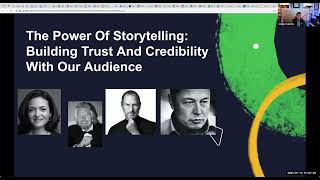
The last few years have been tough for tech as a whole, and especially when you're talking about a solution space that is, I mean, you know, in terms of the product market fit, it's there, but it's not all the way there. You still, you know, a lot of customers still view it as nice to have as opposed to a need to have. So As a business, what we have to constantly think about is how are we gonna make it a need to have, right? So, and how do we do that? The way we do that is we have to get a lot of organizations, you can see that the messaging is changing to be much more vertical-centric, right? So as opposed to horizontal, right? So it's about what can the solution do for healthcare, what can the solution do for manufacturing, and then clearly articulating the value proposition in the customer's language, right? What are the specific business problems that we can solve and how, and how do you quantify it? So as a business, that's kind of what we are doing, like creating solutions that are vertical-centric, that speak the customer's language, that clearly articulates the value that the customer gets, especially for our ideal customer profile. As a sales engineer, this is where the space is evolving because if you think about sales engineers, they take a lot more pride in the engineer compared to the sales, right? So They still like that tech technology. They like to focus on features and functionality. And the reality is that no longer, no one cares, right? I mean, gone are the days where you could go and talk about widgets. You have to be able to articulate value. So, you know, the things that I focus on are, you know, I don't know if you've heard of like, you know, Demo to Win, that's like a methodology, like, you know, basically how do you go about thinking about your meeting and structuring the meeting so that you're, delivering, you know, is that beneficial for both parties? Um, you know, presentation skills, storytelling, active discovery, med pick, you know, all of these soft skills, like, they need to learn, right? I mean, less for technology. I know, you know, any SE can pick up technology, that's a given, right? But what makes them extremely valuable is when they are able to connect at an emotional level or can articulate the business value of a solution. So that is where, you know, as, and you talk about, you know, AI. AI is great, but one, AI can never replace humans on that one level because we can articulate value and connect with people on a level that AI can't. So like we have to use, SEs need to learn to leverage the tools at their disposal. Like AI is absolutely a tool that they need to leverage. So for instance, if I'm going into a meeting tomorrow with a customer in the financial sector, I can use AI to do all the research I want about that customer, understand exactly what pain points they've had, have they had some security breach or whatever, right? And then use that in how I approach my meeting, right? And how I quantify the value that the product brings. So that's kind of how I look at it. So I tell my individual, my team members that the only constant is change. Back in the day, you could have a degree and say that it, covers you for 20 years of your career. No longer the case. You have every 3 years you have to adapt and evolve. And the ones that are going to survive are the ones that have a penchant for learning, are not afraid of being disrupted, love being uncomfortable, and are constantly investing in themselves. And those— I mean, an SE's world is that, right? Like, they have to be so dynamic. Products changing, customers are changing, and if you get a little complacent and are not constantly kind of trying to uplevel yourself, you're stuck. So that's where I'm focused on, really challenging them, pushing them to their full potential, and then also like trying to empower them to be in situations where they normally would not be.
Got it.
Very cool.
As we're kind of like running up on time, real quick, last question here is for you, for you in your role at Wrike, like, I'm sure it's still scratching a certain itch for you and you speak with a lot of conviction and passion around what you're doing. But do you have, what is kind of for you, for George, like what are you hoping to constantly be like, where do you imagine yourself in the next few years here professionally in terms of like personal fulfillment, right? Do you see the evolution of Wrike and your role there and continue to build up these processes as something that continues to like tickle that curiosity? Do you ever have any interest of like trying to find a new problem to go solve and perhaps go into entrepreneurship on your own? Just curious.
No, that's a great question and something that, you know, if you asked me 10 years ago, it would have been a very different answer. What I've realized over time is, I mean, as much as I like technology, after some time technology becomes kind of boring, right? And so I derive satisfaction these days in seeing my team flourish. Like really, I mean, every day when I wake up, what I'm, you know, what I'm really, what motivates me is to help my team realize their true potential. And that is not based on their job definition. It's about really understanding my team members, what their true capabilities are, and plugging them into situations that they themselves might not know, you know, that they need to do. That is a huge motivation for me. So I'm at Wrike because first, I really love my team. I believe in the people and the culture, but most importantly, I think my product is fantastic, right? And if I didn't believe that there's a market and, you know, like an opportunity to be had, I wouldn't be here. I strongly believe in collaborative work management and I strongly believe in the problem that our solution in particular solves for our large enterprise customers and what differentiates us. And so long as that's the case and I can wake up every day believing that and knowing, being excited about the day ahead, I'll be here. And so those are the reasons why I'm still at Wrike, and I think there's still a lot of opportunity ahead of us. In terms of my future, I really like this, you know, So long as I'm able to be challenged and learn, right? So like for every year at Wrike, my role has evolved and I've taken on more and there's always been a new challenge to pursue. That is my mission in life. Like so long as my career is on a trajectory where I'm constantly learning and I'm constantly uncomfortable and I'm maturing, I'm happy, right? Does that mean that I'm doing Sales engineering for a— probably not. I mean, I don't know. I mean, one of the reasons I did the MBA was so, you know, like was to see how it broadens my perspective and it has, right? And so that the way I think about problems and my future is different based on just that education that I've had. But long-term, I certainly aspire to get into the entrepreneurial world, but after my kids are off to college and I can take a few calculators.
Fair enough. On that note, I say thank you so much for taking the time and sharing your journey and then also what you've been doing at Wrike. And super interesting, different perspective, you know, than some of the other guests. So thank you. Thank you so much.
Thank you, Chris, for your time. Much appreciated. Take care.
More from George





The Power Of Storytelling: Building Trust And Credibility With Our Audience (Gies Coffee Chat)