The Power Of Storytelling
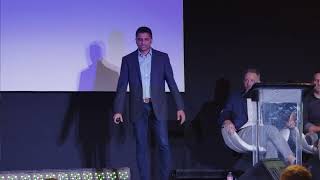
In this concluding segment of the internal Wrike enablement workshop, George Kuruvilla and Clark Schroeder reinforce the importance of storytelling in customer‑facing interactions and provide a concrete action plan. They recap the neuroscience‑backed premise that stories make information up to 22× more relevant, build trust, and tap into a universal human instinct. The session outlines the three essential story components—context, conflict, outcome—and maps them to the three sales phases (connect, differentiate, close) via hook, fight, and land story types. Participants are urged to actively listen, discover customer needs, and select stories that align with specific ICPs. The speakers stress owning a personal story repository, practicing regularly, and sharing effective stories within teams to create collective libraries of value, insight, and success narratives. Finally, they recommend a curated reading list (Resonate, Talk Like TED, Seven Stories, Everyday Business) for continued skill development. The overall message is to keep the momentum, apply the framework, and embed storytelling into daily sales practice.
Chapters
All right. Welcome back, everyone. I hope you're all caffeinated and ready to go. It's great to be with you all. My name is George Karuvila. I run our global presales org that consists of your talented solutions consultants, industry principals, demo engineers, and our security specialists. And with me, I have Matt Allen, who's our IT industry principal, who's been here only 6 months but seems to know everybody from what I can tell. And then you've got Clark Schroeder, who's— I don't know where to start describing him, right? He's our enablement guru. He's a DJ, MC. It's like peeling an onion. I keep learning new things about him every day. So we're really glad to be here with you guys and looking forward to leading the session. So first off, as you went through the schedule for today, you saw your typical stuff, right? You saw your ELT sessions. You saw your ICP sessions. And then you see this giant block for 2 hours that says storytelling, and you're like, what? Why are we doing this session? Makes no sense, right? So to understand the why, I think the best way that I can describe it is to go back to our ELT session. Shout out if you enjoyed the ELT session and really felt energized after that. Let's hear some.
Woo! All right.
So now let's just— take a minute to analyze that, right? So Brian kicked the session off by saying, "Let me tell you a story," right? And then after that, as we went through the session, Andrew then talked about the current state of the industry and how this is our moment. Then we heard Esther talk about a number of stories, talked about our customers. Then we had Alexei talk about the company story. So the recurring theme was a story, right? They were presenting facts and data, but they weaved the story in, which made made it memorable to all of us. We connected at an emotional level. We felt that energy. It resonated with us, right? Now let's reflect on our customer conversations. We have, you know, whether you are a professional services consultant or CSM, SE, sales executive, it doesn't matter. All of us have customer conversations. Think about our conversations and is our message resonating with our customers? I think it's needless to say that everyone in this room believes that we've got the best solution in the industry. That goes without saying. But when we speak to our customers, are they feeling that same passion and energy? If not, why? You got to really ask the why. So the goal of this session is to walk you through why storytelling is important, the what behind it, and how would you go about in a prescriptive fashion of incorporating storytelling into your day-to-day conversations with customers. So let's get right into it. Let's go to the why first. So I'm going to present some numbers to you and just think about it. So 5%. 5% is the amount of information your customers or audience retains 10 minutes after you present that. And so this is when you take a very factual approach to presenting data, right? So that's what we typically do, right? Features and functionality. We like to just— we're so excited, we like to present that. But then the minute you tie a story to it, it becomes 22 times more memorable. So now think of that in the context of every single one of your conversations. We put hours and hours of prep work into our meetings, but then we miss that storytelling. The good news is it's pretty easy to correct, right? So if you somehow weave that storytelling into your existing conversations, all of a sudden customers retain 65 to 70% of what they hear. That's pretty amazing. So another number, 65%. So if you typically ask someone, "Hey, are you good at storytelling?" They'll be like, "No, it's not my thing." But the reality is all we do every day, all day is storytelling, right? I was at the cocktail yesterday, and I was hearing stories from everybody about what they did during the holidays, about their trip here. We are naturally good or great storytellers. It just comes naturally to us. So when people say that, "I don't know how to storytell," I don't buy that. So here's another interesting number: 2,700%. That's how much the perceived value of a product goes up when accompanied by a story. And this is based on some research that Joshua Glenn and Rob Walker did. And the name of the research was "Significant Objects." And you can look it up. I think it's significantobjects.com, the website. But what they did is pretty interesting, right? They bought about $129 worth of small objects, right, from a thrift store. And then what they did is they listed them on eBay, but they hired 100 creative writers, and they tied a deep story to every one of those objects. And what they found out was if the object was like, you know, $3, let's say, it sold for, you know, $300 just when that story was accompanied by it. And so the net markup increase was about 2,700%. And again, what that tells us is that we are naturally wired to respond to storytelling. That's just how we are. And if you're not doing that, you know, we are kind of losing out. And we have to change the way we communicate because our message often lacks resonance. So what is resonance? Resonance is to strike a chord with your customers, right? You feel a certain passion, you believe in a certain value, the goal is to mirror that in your customers, right? And oftentimes we go in with all that passion and we talk about facts and figures, but customers don't feel that same enthusiasm. We felt it this morning in the ELT breakout. That's what we want to try to accomplish in every one of our customer conversations. So if that didn't convince you yet, let's get into the science of storytelling. All right, so that's our brain. And you got your left and right side of the brain. As you know, there's a rational side, and that's the emotional side. So the limbic brain is the hippocampus and amygdala. That's what controls emotional weight to the facts that we say. So normally when you convey facts and figures to customers, you're appealing to the neocortex, which is the rational side of the brain. Now if you tie a story to that same fact, what happens is other parts of the brain light up, they basically tie weight to those facts, and all of a sudden additional parts of your brain are tying, you know, basically tying to that story and makes it more memorable. So what really happens is that certain chemicals are released—dopamine, cortisol, oxytocin—that leads to neural coupling and mirroring. So neural coupling is the idea that, you know, your story is synchronizing with the listener's brain, and mirroring is when the listener experiences basically what you're experiencing. And that's really the goal. So Bottom line is you're trying to light up the brain, and the way you light up the brain is by storytelling. So we love Rike, now we gotta figure out how we're gonna weave some stories in to make our content more memorable, make our narrative more memorable. I think we focus a lot on the technical side of things, we don't focus enough on the narrative, and my ask is that we do that. So this, Ad, how many of you have seen this ad by ASPCA?
I'm hearing Sarah McLachlan music right now.
That's right. You've got Sarah McLachlan playing. You've got a nice, beautiful dog, sad dog, and someone just speaking in a very soft voice. What's your immediate reaction? It's like, take my money, right? Like you want to just immediately pay them, right? Why is that? Why is that? They could have taken a very factual approach and told you about the number of dogs that are left behind or whatnot. But they take this approach because They are trying to appeal to our emotions. And I think this is one of the finest examples of storytelling and how it makes products memorable, right? Because it's tapping into the buyer's emotional side. So that's what we are trying to do as well. So now let's— hopefully all of you are convinced on the why, like why is storytelling important. Yes? Good. All right, let's move into what makes a great story next. Any great story needs to answer 3 fundamental questions. The first is, What is the context, right? So you're going to meet a customer. What is the customer's current context, right? What is the status quo of the organization? You got to figure out what's the conflict. And any great story, you take any great movie or any great book you've read has these things, right? It's got a context and a conflict. A conflict is some key pains and challenges, some vulnerabilities, and what would happen if nothing was done, right? And then lastly, the hero moment. What's the outcome? Like how are you gonna help that customer find value? So as you think about your stories, it needs to have these three elements. And we're gonna talk about a lot of different stories through the course of this session. But as you start creating your own stories, think about the context, conflict, and outcome. As you go into a customer presentation, think about the context, conflict, and outcome. Now to illustrate this, I figured we would listen to one of the master storytellers of our time, Steve Jobs, right? One can argue that he's probably one of the best, and I'm saying that as an Android user that does not really like Apple, so— but nonetheless, he is one of the best and the most creative. And this is from 2007, which is when he introduced the iPhone. I'm guessing many of you were either in kindergarten or wearing diapers at this stage, but for those of us who were around, this was a very memorable talk, right? What we're going to do over the next 10 minutes is go over his pitch, and it's broken down into different segments. So it's a 10-minute pitch that we have broken into about, I think, 9 sections. Let's analyze each segment and see if it's a context, conflict, or outcome, and see how he kind of weaves that whole thing into it. Just a disclaimer: HD back then meant something else, so don't expect HD quality. Keep going.
This is a day I've been looking forward to for 2 and a half years. Every once in a while, a revolutionary product comes along that changes everything, and Apple has been Well, first of all, one's very fortunate if you get to work on just one of these in your career. Apple's been very fortunate. It's been able to introduce a few of these into the world. 1984, we introduced the Macintosh. It didn't just change Apple, it changed the whole computer industry. In 2001, we introduced the first iPod, and it didn't just— it didn't just change the way we all listen to music, it changed the entire music industry. Well, today we're introducing 3 revolutionary products of this class.
All right, so what did he do there, and what does this remind you of? So if you go back to Alexi's presentation where he kind of showed that slide with Reich's history, he's kind of doing that here, right? So what's he doing? He's building trust and credibility with the audience right from the get-go. That we know what we are doing. We are pioneers, you know, you need to trust us. So that's the company story. So again, a very important story that you guys need to keep in mind, especially in a hypercompetitive market where there's a gazillion vendors. You can't expect the customer to just know that you're great. You have to kind of convey that message, and you do that by weaving in a company story. Let's go to the next clip.
Let me talk about a category of things. The most advanced phones are called smartphones. So they say. And they typically combine a phone plus some email capability, plus they say it's the internet, sort of the baby internet, into one device. And they all have these plastic little keyboards on them.
So there is the first conflict or context, right? So he's talking about a pain point. What is the context of it, which is the world of smartphones, right? So that he's basically saying that, hey, Today, this is what the world of smartphones looks like.
Next clip. And the problem is that they're not so smart, and they're not so easy to use. So if you kind of make a, you know, Business School 101 graph of the smart axis and the easy-to-use axis, phones, regular cell phones, are kind of right there. They're not so smart, and they're, you know, not so easy to use. But smartphones are definitely a little smarter, but they actually are harder to use. They're really complicated. Just for the basic stuff, people have a hard time figuring out how to use them.
Yeah, so that's your pain point, right? So we talked about the context, which is the world of smartphones. The conflict is smartphones are not so smart. Next video.
Well, we don't want to do either one of these things. What we want to do is make a leapfrog product that is way smarter than any mobile device has ever been. And super easy to use. This is what iPhone is. Okay, so we're going to reinvent the phone. Now we're going to start—
and there's your outcome, right? So he first paints the picture, context, the pain point that smartphones are not so smart, and outcome, hey, we've got the smartest phone out there, and that it's It's going to leapfrog everything else that you've ever seen. So amazing. Let's go on. Next video. Software.
Now, why do we need a revolutionary user interface? I mean, here's 4 smartphones.
So next. So he's got the main plot. And in the main plot, he's got multiple subplots. The first subplot is UI, the user interface on smartphones. Next video.
4 smartphones, right? Motorola Q, the BlackBerry. Pomtreo, Nokia E62, the usual suspects. And what's wrong with their user interfaces? Well, the problem with them is really sort of in the bottom 40 there. It's this stuff right here. They all have these keyboards that are there whether you need them or not to be there. And they all have these control buttons that are fixed in plastic and are the same for every application. Well, every application wants a slightly different user interface. A slightly optimized set of buttons just for it. And what happens if you think of a great idea 6 months from now? You can't run around and add a button to these things. They're already shipped. So what do you do? It doesn't work because the buttons and the controls can't change. They can't change for each application, and they can't change down the road if you think of another great idea you want to add to this product.
So that's the next conflict. Which is that the keyboard's completely ruined the experience, right? It's not tailored to the app requirements. Now notice that he's not afraid to call out competition. Neither should we, right? If we believe that we have the best of breed product, a premium product, we should not be afraid to call out our competition like he's doing here. Next video.
And to this product. Well, how do you solve this? Hmm, it turns out we have solved it. We solved it in computers 20 years ago. We solved it with a bitmap screen that could display anything we want, put any user interface up, and a pointing device. We solved it with the mouse, right? We solved this problem. So how are we going to take this to a mobile device? Well, what we're going to do is get rid of all these buttons and just make a giant screen. A giant screen. Now, how are we gonna communicate this? We don't wanna carry around a mouse, right? So what are we gonna do? Oh, a stylus, right? We're gonna use a stylus. No. No. Who wants a stylus? You have to get 'em and put 'em away and you lose 'em. Yuck. Nobody wants a stylus. So let's not use a stylus. We're gonna use the best pointing device in the world. We're gonna use a pointing device that we're all born with. We're born with 10 of them. We're gonna use our fingers. We're gonna touch this with our fingers. And we have invented a new technology called multi-touch, which is phenomenal. It works like magic. You don't need a stylus. It's far more accurate than any touch display that's ever been shipped. It ignores unintended touches. It's super smart. You can do multi-finger gestures on it. And boy, have we patented it.
So—
So we've been very lucky to have brought a few revolutionary user interfaces to the market in our time. First was the mouse. The second was the click wheel. And now we're gonna bring multitouch to the market. And each of these revolutionary user interfaces has made possible a revolutionary product: the Mac, the iPod, and now the iPhone.
All right, there's a couple of things you want to take away from that. First is obviously the outcome, which is, you know, keyboards don't make sense. You've got to use a large touchscreen with touch. Multitouch. But there's some other intricacies in the way he delivers that, right? I mean, he keeps reinforcing that company story and the credibility, like he brings in the iPod again, you know. So he follows this pattern of repetition and he chooses his words carefully to make sure every word matters, right? So again, another thing to ask yourselves as you prepare for your customer conversations: how much thought are you putting into every word in that pitch that you're making. It's important.
So next video. It's like baby software. It's not so powerful. And today, we're going to show you a software breakthrough.
All right, so the next piece is kind of tight. He talks about the context and kind of conflict in between. So it's about the software on mobile phones. And the point he makes is it's archaic and not ready for the apps of the future. Next video.
Software that's at least 5 years ahead of what's on any other phone. Now, how do we do this? Well, we start with a strong foundation. iPhone runs OS X. Now, why, why would we want to run such a sophisticated operating system on a mobile device? Well, because it's got everything we need. It's got multitasking. It's got the best networking. It already knows how to power manage. We've been doing this on mobile computers for years. It's got awesome security. And to write apps, it's got everything from Cocoa and the graphics, and it's got Core Animation built in, and it's got the audio and video that OS X is famous for. It's We've got all the stuff we want. And it's built right into iPhone. And that has let us create desktop-class applications and networking. Right? Not the crippled stuff that you find on most phones. This is real desktop-class applications. Now, you know, one of the pioneers of our industry, Alan Kay, has had a lot of great quotes throughout the years. And I ran across one of them recently that explains how we look at this, explains why we go about doing things the way we do, because we love software. And here's the quote: "People who are really serious about software should make their own hardware." You know, Alan said this 30 years ago, and this is how we feel about it. And so we're bringing breakthrough software to a mobile device for the first time, it's 5 years ahead of anything on any other phone.
All right, so the outcome is clear. So he's got iOS 10 and introduced the software that's 5 years ahead of the competition. So to sum up that entire 10-minute pitch, like you saw that it was broken down into almost 9 or 10 different segments, and each segment had significance, right? But if you think about it, first thing that you need to take out of this is the whole thing was only 10 minutes. Because guess what? Humans cannot really comprehend a pitch that's longer than 10 minutes. So as you're thinking about your presentations, think about like a 9 to 10 minute pitch ideally, and then have additional subplots or breaking points where you re-engage the audience before you go into the next one. Another thing is he kept using the formula, the context, conflict, and outcome. So it's, you know, for every story there's that formula, and he keeps using it again and again and again. There's repetition. He speaks with conviction. People trust him implicitly. He brings in the company story pretty effectively. He looks at the whole problem from the customer lens. He is not afraid to call out competition. And just overall, just a masterclass in how to tell stories. So hopefully you got like an idea of what storytelling is based on that session from Steve Jobs. Now let's talk about how we as a customer-facing organization can leverage storytelling in our day-to-day activities. So first of all, there are various stories that can be leveraged in our customer conversations, and the easiest way to think about this is to think about it from the lens of a buying cycle. So whether you are a CSM trying to expand within an opportunity, or a PS trying to sell services, or sales and SCs trying to sell new product, it doesn't matter, right? The stages are pretty similar. You have to connect with the customers, you have to differentiate yourself, and you need to close the deal, right? And so when you think about your stories, they kind of closely align with these three phases. So when you think about the connect phase, you want to think about what's called the hook stories, and we're going to get into this in a little bit. So think connect, hook. The second is when you differentiate. So this is when you have, you know, you're in these competitive battles with other vendors. So that's a very, very important phase of the sales cycle. So that's where you have aptly called the fight stories, right? And then lastly, as you get to that far, you know, you've differentiated, customer believes, yeah, you have a competitive advantage, you still need to close the deal. So to close the deal, you need to use what's called the land stories. So now again, just to remember, connect, hook, differentiate, fight, Close, land. So let's talk about the hook stories. The first type of hook story is your personal story. And I'd probably argue that this is the most important story. Why? Anytime you meet somebody, what's your first thing? You have your guardrails on. You're like, "Okay, what does this person want? Why is he talking to me?" And so that's— you're taking it, that's a natural human instinct, right? You have your— your instinct is to not trust the person immediately. So what's your job then? Your job is to bring in trust, right? Make them trust you, make them feel like you're credible. And how do you do that? You do that through a personal story. You know, who are you? What do you do? Why do you do it? Why should they trust you? You got to kind of weave that into your story. And guess what? The story needs to change depending on who you're talking to. Because guess what? You're a pretty complex individual. There's many things that make you, and you got to figure out what are the characteristics or what aspects of you resonate with the customer that you're talking to. So as you go into a meeting, you got to do some studying about who's the customer, what's the persona, like what do you have in common, do some LinkedIn searches, whatever. I mean, so, you know, the point is figure something out about the customer and figure out how you're going to make that customer trust you. So the second type of story, hook story, is the company story. So one thing is to trust you, but they also need to trust the company, right? Or the products that you're selling. And I think you heard about our company story earlier today. And now the question is, how can you take that and make it your own? So we can give you all the stories in the world, but it's not your story. And so you have to make those stories feel like your own so that you're comfortable delivering them. So you can take that slide that showed where Andrew talked about the fact that he probably invented project management software way back when, and then the evolution and then kind of talk about how that gives us credibility in the industry and how we've evolved based on the customer's changing needs. So that's a very, very important story as well. So that's a personal story and the company story builds credibility with our customers both in you and the company. So again, another key point about a personal story. I know we all like to talk about ourselves. No one's more important than us, right? So that's not what a customer wants. You can't go to a customer and talk about how great you are and how many deals you closed or how great the company is. That's not the point of a personal story. The point of a personal story is to connect, and you cannot connect until they feel like you're like them. So there has to be an element of vulnerability in that story. There has to be an element of good fortune in that story. So again, put thought into your story. So now to kind of reinforce the Hook stories, we have an activity. And so, Matt, why don't you take it away?
Thank you, George. To quote Steve Jobs, this is a moment I've been looking forward to for 2 and a half years, right? All of us together in a room, getting better together. So I wanted to intro myself. Some of you I know we know, know me, others may not. And I'm going to do it how we do it on the phone calls. Hello, my name is Matt Allen. I'm out of Salt Lake City. I'm an IT industry principal. I've been with Wrike for about a year. Looking forward to meeting everyone today. Who did I connect with in the audience with that? Anyone? Kristen, I know I'll get a response from you. If I jumped on a call with one of your customers with that intro, how's that gonna land? Yeah, not much, right? And it's easy to see why this isn't a powerful personal story like George mentioned, right? Let's take it through his test, right? So we're gonna talk about who am I, right? Well, I told you I'm Matt Allen from Salt Lake City, right? What do I do? Well, whatever an industry principal for IT does at Wright, right? If you know, great. Why do I do it? Honestly, you have no clue, right? I didn't tell you. And finally, why should you trust me? You don't really have a reason to trust me. I shared my tenure with Rayke, right? I've been here for about a year. Maybe that's enough to get you to trust me. And maybe you think I'm going overboard here, but I hear this on a lot of calls, right? This is how we come in, and George talked about this, this personal story. First opportunity to connect with our prospect and customer, and just take 30 seconds, right, and add a little bit more to it. So this is how I often introduce myself on calls. Hello, my name's Matt Allen. I'm an industry principal with Wrike, and I'm focused on the IT vertical. Now what that means is I get to focus on 3 things for Wrike. First, I get to connect with customers. Second, I get to work with product team to work on the IT strategy. And finally, I get to take part in thought leadership from blogs to webinars and even present at conferences. But what I truly love about my job is that first point, connecting with customers, because it lets me take my 25 years of experience in IT across service management, project management, security, architecture, and distill those complexities of IT and help our customers find value within the right platform for their IT challenges. So working through that now, right? 30 seconds I took, right? And what did I walk us through there? Well, first, who am I? Still Matt Allen, Industry Principal, but now for those of you in the room that didn't know what an Industry Principal does, right? I gave you that message, right? I connect with customers, I work with our product team, I take part in thought leadership. Now, why do I do it? Well, I want to reduce the complexity so our customers can be successful. And what does that success mean? It means value for our customers from that Wrike platform. Finally, why should you trust me? I gave you a little bit more than my tenure with Wrike here, right? I told you I've got 25 years of IT experience. I'm, I'm, I've got architecture, I've got project management, service management, right? I've established points for you to trust me. So now we want to turn this over to Clark and help you improve your personal stories.
All right. So do we trust Matt? By the way, how many of you have had Matt join one of your calls? Crushing it. Yeah. Yeah. The value of the IT industry principles cannot be understated. In fact, everyone on Georgia's team is here to support all of you to help close, land, win, expand, renew way more deals. So I didn't give you my personal story. I'm actually going to skip that, but you can ask me during the break. What we'd like to do next though is I want you to, each and every one of you in this room, upgrade your personal stories. This is a call to action today. So you heard from Matt. I, I hate to tell you, but I also listen to Gong calls and I've heard word for word the first intro, like a lot. So let's be honest with ourselves. We're here to learn. We're here to grow. As Andrew said, it's all about challenging ourselves to take it to that next level in 2023. And so we're gonna have some fun with this. So step 1, think about your personal story. How many of you have your mobiles handy? You can do this for fun if you want, or you can just think about it. Uh, but if you were to open your LinkedIn profile right now and go to the About section, is it 10 paragraphs? Is it 2 sentences? Is it 1 tagline that truly kind of talks about who you are? Think about that for a second. I'm just going to let you ruminate. What's on your LinkedIn profile right now? What got you the job at Wrike? What does it say about you to the world? Okay. So have everybody kind of pictured that in your mind? You're thinking about that? Okay. So step 2, are you poorly describing your job? I don't know if any of you have done like those internet memes or things where it's like, can you poorly describe your job? So my example would be, well, you know, I work on the internet with other people on the internet to help them do and say things better. That's how you poorly describe your job. But how do you describe your job with passion? Like, "I am one of the luckiest people around. I get to work with 400 to 500 amazingly talented individuals and share some of my 20 years of industry experience to help them do the best work of their life. And I love it here at Wrike as a result of that." Which one do you connect with better? So are you poorly describing your job, or are you adding an element of passion that gets people to want to listen to you and hear what you have to say? So with that, I want you to take 2 minutes, and I want you to share what do you do here at Reich with your neighbor. So just turn to your neighbor, and I want you to describe your job to somebody next to you, what you do at Reich, but more importantly, why you love what you do here at Reich. So I want you to go ahead and take a couple minutes and do that now. All right. I hate to stop these amazing conversations, I truly do, but we are standing between you and Dinner and a Fire show. So if we can wrap up those conversations. I'll wait for the murmur to die down just a little bit. So, that felt pretty good, right? Like some of you did that during our bingo rapid round earlier today. How many of you, just show of hands, were able to get a little passion in there, like an element of why you love what you do? And even if you don't, like, what are you hoping to do? There's elements of that too. Remember, elements of vulnerability. I was never a great public speaker. You can't believe how many times I went on a stage, said something really dumb, or fell on my shoe, or hit the wrong slide. I just learned from those mistakes. So there's elements of vulnerability in everyone's story. So now it's time to make it real. We actually care about your stories. We actually want to hear your stories. In fact, we want to capture those stories. So step 3, now we want you actually to share those with us in a Menti. This is not a quiz, there's no points on the line. This is a brand new Menti that we'll pull up in here in just a few seconds. And what we'd like from each and every one of you is just in a couple of sentences or less, if you could share your personal story with us because we want to crowdsource. We want to crowdsource your stories, find the best and brightest, and showcase those in future enablement. But more importantly, your voice matters. So do me a favor. For those of you that can't use the QR code, remember that the code is at the top center of the screen. It's 5122. 2, 3, 6, 4. I see critical mass starting to build. We're at about 30 there. I will stop in a second when I see that hit about 200. But we really truly want to hear your stories. And in a few seconds when you all join, we're going to see some of those right here on screen. And that's okay, because we want to hear good personal stories. For those of you that are introverts, I'm actually an ambivert. I just play an extrovert on stage. If you're feeling a little uncomfortable with that, remember it can be generic. But what do you do at Reich? Why do you do it? Why do you love it? Let's hear from each and every one of you. So, Katya, if we can proceed, it looks like, um, we've got a few people in. So this is round 1. In a few moments, as you join this mentee, you'll be presented with the opportunity to share your personal story. Hi, my name is Clark. I do global enablement, along with a lot of other things, and I love doing it at Wrike because I get to work with each and every one of you. So what's your story? If it isn't loading, this is okay. We can also capture this organically through Slack and through other things, but we're going to do 3 rounds just like this for the 2 more stories. These are types of business stories that George is gonna share with us in just a moment. But do really think about your personal story. As George talked about, this is really important. It conveys who you are to the world, but more importantly, why that customer should spend another 30 seconds with you, which then buys you another 30 seconds, which then buys you a few minutes, which then buys you a deal in the future. What do we think? You guys feeling a little better about your personal stories? Show of hands, who heard a really cool one? Like you were just, floored by the people in. Like, we've got some mic runners. If anybody wants to share a really good personal story, I'd love to hear that. Jamie and our mic runners, everybody's too shy. Yeah, I'm going to be nice. We're going to move on. We've got a couple up here on screen. I think they're great. Hi, my name is Jack Douglas, and I get to work with customers across diverse verticals to help them do their best work. I like that. Enabling CSMs to do career-defining work and help our clients do the best work of their life. Somebody was listening in the ELT sessions. Again, we want to capture more of those, so do me a favor, pay close attention to that Menti. We want to get as many of these submissions as we can, but we also have multiple Slack channels where you can share these in the future. All right, that was round 1. I'm going to turn things back over to George to talk about the next type of customer story. Thank you.
And you know, the idea of this exercise was not that you guys are going to come up with your stories right here. It's to get you started, right? Start thinking about it. Because it's not easy. It's a wonderful thing, right, to come up with a story. So I want you guys to start thinking about it. You know, go back home and put some effort into weaving in your personal stories. Once you have a structure, then you can kind of change it a little bit based on the customers that you've talked to, but you've got to also be comfortable delivering the story. So that's what the intent was of this activity. All right, so let's keep going. Hold on. All right, so the next set of stories is what we call the fight story. Again, the fight stories are generally delivered during the differentiation phase, right? So this is when you're in a very competitive situation. Maybe it's status quo that you're trying to get past. And the two types of stories that are important in this phase, the first is what's called an inside story. An inside story is, you know, maybe Forrester's got a report that puts us at the top of their list, or maybe it's the dark matter of work, right? So, but it's not just about, you know, hey, we've done this research, blah blah blah, and here's the outcome. No, we gotta and tailor that outcome to the customer that we are speaking to using the framework that we just discussed, which is context, conflict, and outcome. So that's an insight story, very important story because it helps— what it tells customers is the external, you know, like others recognize you as a leader in that space. The next set of fight stories is what's called success stories. So this is, you know, think of it like, you know, you are working with a customer to solve maybe a specific challenge. Within that challenge, there are multiple subplots, right? So maybe one is tied to a request form, maybe something is tied to automation. When you are describing request form and automation, you can actually tie a story to that as well, right? So how you helped customer X who had a similar challenge solve that problem. So instead of saying, hey, RequestForm does this and I can allow external collaboration, blah, blah, blah, blah, blah, maybe you kick that off by talking about how you help somebody else in a very similar situation solve that challenge. Now for success stories, there is a structure to it and it's important to keep the structure in mind. First, you need to have a hero that the buyer can relate to. And you are not the hero, by the way. It's the customer that you're trying to help. Or maybe somebody that you worked with. The second is a change or challenge that that hero must overcome. So he is in a situation, in a bind, and he's reached out to you, and you have to help him solve that challenge. And then you gotta talk about how you helped the hero overcome that challenge. And then how did that have a positive impact on that central character, that hero? And then lastly, how did Reich lead to a tangible human emotional impact on that individual, right? So that's the structure of a success story. Again, don't think of it like a macro-level company-wide story. Kind of think of it like a tidbit, a nugget, a specific feature. So as you describe, as you go into a customer conversation and you're talking about a macro-level problem, you can break that down into subproblems, and for the subproblems, you could potentially have success stories tied to it. So time for the next activity.
Thanks, George. So I'm going to walk you through another example of a success story. And what better place to find success stories than our own WinWire? So this story comes to us from the team of Jordan, Nicholas, Roberto, Barb, Jesse, and Nick Marr. And this is about Oracle. It's not my story, it's their story, right? So one of our customers, Oracle, they were using Jira and they were struggling to find value in Jira having the flexibility to handle all their types of work, right? Couldn't provide visibility into all of their processes. It required heavy-handed administration and the executive team couldn't get that holistic view that they needed of what was happening in their space. So together with Marla, Jordan, and team worked with Oracle to get that flexibility to handle any type of work they could throw at it. It gave that cross-functional visibility to all the teams. The leadership team loved our native BI reporting, right? It gave them that transparency into all of their work. This led to the SVP Marlowe selecting Wrike and ultimately replacing Jira. And let me tell you, there's a special place in my heart anytime we can replace Jira. Yeah, yeah. But it gets even better because as we talked about in the keynote today, and as we go to enterprise customers, we took it even further with Oracle, right? And the team has established a center of excellence with Oracle that's allowed a single team to manage and administer all operations of Wrike within Oracle. And I think this is really powerful because as an IT guy, what I could tell you, this is where Wrike transcends from a product to that backbone of the process at Oracle. Let's break this story down, right? Who's our hero? Well, our hero is Marlo, right? George told us every good success story needs a hero. Marlo is our hero from Oracle here. What was the challenge to overcome? We needed to replace Jira. This can be competitive, it can be challenging, but it's possible. How did we help? Well, we showed Wrike's value, whether it's through that cross-functional interaction, whether it's through visibility or reporting. And we even took that step further, like that post-sale side, right? We worked with them to establish a COE. So what was the positive impact here? We've got 3,000 people working together at Oracle. We've got easy administration. The leadership team loves Wrike and the flexibility that it shows. Once again, this isn't my story. I went out to the win wire and put this together. It's easy to craft these stories even if you don't have your own and to be able to share these with our customers. So to get that started, we're going to do another activity. Clark's going to come back up and we're going to work on success stories. Awesome.
Let's give it up for the team that actually landed that deal, by the way. Yes. So as George said, a personal element also creates an emotional connection. And believe it or not, people don't make rational decisions. If you don't believe me, just pick what you actually ate this morning. Just think about that for a sec. What did you actually put on the plate? Was that a rational decision? Maybe some of us were really disciplined, but it wasn't me. So you need to have a personal element to it, and so you need to craft your own success story. Now, some of you don't have those yet. If you're a newer Riker, you will. We're going to enable you. You will definitely have more success stories. For those of you who've been here a while, you've probably got a whole bucket full of success stories. You just need to frame them and get them out there and share them with the rest of us. So what we'd like from you in this next activity is think about the following. We need to introduce the hero. So who is the hero of your most recent success story here at Wrike? Remember what George said, it's not you. Sorry, it's not you. It's your customer. But who specifically in that customer? Because if we think about that Oracle example just a few minutes ago, the, the ELT loves Wrike. Well, that's cool, but think about Marlo. Did he get a promotion? Is he having a better day than he had a few weeks ago? Like he brought Wrike in and the CEO loves it. That is a personal win for Marlo. So think about that when you think about your success stories that you're starting to harvest from your own customer interactions. And so just take a moment and actually think about this for a sec. Then highlight what was the problem that they came to you with through your discovery as you started to have those personal conversations, you went through your great intro. They listened, you listened, we cried, we laughed, we found a solution together. What was that solution? And then most importantly, how did they overcome that problem with Wrike? We have a ton of cool features, but we don't need to show them all. We need to focus on the one that matters most to that person that's in the room with you, whether that's Zoom or a QBR on site. So now that you thought about that for a few minutes, Next, I want you to turn to your neighbor and share that success story using the framework we just showed to you, right? Who was the hero? What was the problem they had to overcome? How did you be their Sherpa on that mountain of doom to take them to the happy place with Reich? So take a couple minutes, talk amongst yourselves, and share your success story with one of your neighbors. I bet one of you is going to hear a story that's going to help you land a deal in the next month. So take a few minutes and share your success stories.
Spot on for time. I knew it would be.
This is actually the most important part of the whole activity, just like we told you.
Yeah, yeah, this is where the learning happens. This is so great, this is so great.
So even if we don't capture it to load them on screen, like the value is what they just did. Mm-hmm. We're gonna give you just a couple more minutes to share your success stories, but remember, brevity equals clarity. So we are gonna cut you off in about a minute. Alright, like any good story, it doesn't ramble on like that uncle that always comes to your barbecues. We're gonna wrap this up. We're gonna wrap up our success stories. And I hate to be this guy, but time's up for now. I love it. I hear the murmur and the dull roar kind of hush to a silence like this.
And you can hear a whisper in the room.
You know people are paying attention, right? Okay. So I heard some cool success stories. I mean, I could just hear waving up to the stage, the passion, the enthusiasm. Real-life success that made a tangible, emotional, physical difference for one of your customers. I mean, that's what gets us up, right? We can sell stuff anywhere, but Wrike really is helping people do the best work of their lives, and we're really changing people's lives. So when you think about those success stories, put the person back in the room and you'll see how fast that changes. So just like before, for our introverts in the house, you can give us anonymous success stories if you would rather. But we are, step 3, going to do another mentee. We're just using it as a tool to capture some best practices. So for those of you that were able to connect, no problem, it's the same one. Please get out your mobile phones and that great story that you heard from your neighbor or that you just shared, please take a moment to join this mentee, and then we'd like to capture some of these. Crowdsourcing is a good thing, especially when it comes to things that are worth sharing. And great stories are always worth sharing. So we're gonna just take a minute or two. We'll see if we can get to critical mass. Last time it was only about 50 or 60. I'm gonna wait till this little number in the lower right corner, I wanna see that hit about 100. And you can't hide, our IT guys know how many people are actually connected to the Wi-Fi. So, you know, 400 people in the room, only 50 submitting, that certainly feels like social loafing to me. All right, we're starting to speed up here. Okay, tell you what, let's at least get to 100. As soon as 100 of you have joined the mentee, we will then ask you again to share your success story with all of us. Because it's not for me, like, it's for all of you. We are so close. 89. George, countdown's coming. When we hit 100, then we're gonna go ahead and open up the story share. 3, 2, good enough. Katya, please cue the next question. It is your turn to share your success stories with us.
By the way, the personal stories, I can understand why you can't share. Success stories, you should all have plenty to share. So I want to see this board kind of fill up.
Yep. And if it doesn't, I'm a patient man. I'm going to wait. And we're gonna sit here until there is stuff on this screen.
We've got a fire show, let's go.
Yeah, I'm between you and booze and fire, like that sounds like a really fun afternoon. But please, sharing is caring, let's help our fellow Rikers. We wanna see this screen fill up with some cool success stories. And if you have a really good one, like a really, really good one, raise your hand or stand up, we do have mic runners in the room. If you don't want to share out loud, that's cool too. That's why we gave you this Menti as an opportunity to do it anonymously. But please take a moment to start sharing those success stories.
Here we go. We avoided a churn of a client with low adoption and no deployment lead. I ensured the client that Wrike adoption is a continuous process. It doesn't happen overnight.
So brought them along the journey. I like that. In a few seconds, because there's always a natural delay with our— here we go.
Here, I like this one. We've got Keith here. Let me tell you about Keith, head of creative studio at WestCon. Keith was spending 2 days a month building reports for his CMO on resourcing and SLA tracking. We set him up on Wrike Analyze and saved him 2 days a month.
Great story. I like that one. Whoever wrote that, let's give a show of hands. That's a really good one. I like that.
GP was able to utilize Wrike to manage their Scrum framework within one place to better track and improve their sprints.
So I like that one, but what would make it even better is what did that mean for the GP? Like, did he get a raise?
I think we're seeing people slowly adopt the framework, and there we go. You're seeing it in bits and pieces.
Yep. I think it's important for those who've been on calls with me, this framework, I bring it into every call before we go come in and, and think through it.
Oh, see, now that one in the center, near and dear to my heart. I, for those that don't know, I actually spent over 19 and a half years at Apple before coming to Wrike, and I was an avid Wrike user at Apple. So when I see Apple and I want to get more of those apples off the tree, like Brian said, it always catches my attention. But this is a powerful story in the first sentence. Julia from Apple is my hero, helped battle 35 competitors, budget cuts, and a roadmap of challenges. Literally the word hero is in the story.
Yeah, but the question there is if you're telling that to a customer, what does the customer get out of it, right? So you can make it maybe one step better by trying about a value proposition for the customer.
Love it. We'll read just a couple more and then we'll move on.
I was able to work with Kumar Vivek, the director of IT— there we go— who loves Wrike to start the initiative of standardizing Wrike as their single source of truth. We started with a rip and replace of Asana with PMO and added marketing to test Wrike to go wall-to-wall.
Excellent.
It's almost there, except that's why we care. That's actually a Reich success story. Why does the next customer care? What was that wall-to-wall rip and replace? What did that do for the customer? So again, you have to think about the outcome. Remember George talked about context, what's happening right now, conflict, what are we trying to fix, but most importantly, outcome, what did we solve? So with that, I think that's a perfect time to segue to our last of these three sections, which is another business story type that George is going to share with us now.
So quick takeaway from that section, right? So I think success stories are probably the stories that you'll use a lot on a day-to-day basis. And the way you think about it is, you know, maybe do some analysis in terms of who are the typical customers you deal with. Is there a specific line of business that you deal with more often than not? What are the personas that you deal with? So kind of break it down that way, and then try to create some success stories that resonate with each one of those personas, right? And so try to build a library that you can then reuse. And by the way, stories don't have to be your stories. You are constantly listening to stories from all sorts of people. The question is, some stories you'll relate to, some you won't. The ones that you relate to, you either jot it down immediately or maybe ask the person to say it again so you record it, and then you make it your own. So it doesn't matter what kind of story, except for the personal story. Every other story can be somebody else's. It doesn't have to be yours. And I also remember Brian Clark saying this. I think he was in a meeting with a CMO, and he just made up a story on the fly. I mean, he probably weaved in a couple of different stories to make a story that's relevant to the customer. So you don't have to always have a perfect story. It could be some, you know, a convoluted approach based on certain things you heard from a few different people, so long as it's addressing the context, conflict, and outcome for the customer. So don't think that you need to create every single one of these stories, you know. Sharing is caring, you know. Every time you listen to something that's impactful, make sure you note it, jot it down so you can reuse it. Close it. All right, let's go. Where are we here?
Yeah, we gotta skip through this.
This was just a quick recap to give you guys a framework.
Oh, got it. All right, so let's go to the last set of stories. So we did the, the connect, we did the differentiate, now we're trying to close the deal, right? And that's where the land stories come in. Important phase as well, right? So this is when, you know, if I'm— I, I compare this to someone making a pitch of a vacation club to me, right? So, you know, I go into the meeting saying I'm never getting this thing. I listen to the person, I'm like, "Uh-oh, I guess I'm getting it." And then is that last moment, right? I'm going to sign the paper. So that's where these land stories come in. It's really, really important.
George, you've made a really good decision about that timeshare.
Yeah, well, we'll see. But so when it comes to value story, what's important is to quantify the value to the customer. So this could be like in the context of what we do, it could be the number of hours saved, a certain headcount that's not needed, it could be, you know, just overall ROI. But you know, that's what we are trying to tie here. And again, you know, it's not that the numbers have to be absolutely accurate, right? It could be some, you know, sketchy, like, you know, it should be close, but it doesn't have to be like to the T accurate. But you need to create something that makes makes the customer feel like, okay, yeah, I'm going to get value out of this investment. I feel confident making this move. So that's, that's the value story. These are stories of persuasion, convincing your customers that they are making the right decision. The other story in the land stories is the teaching story. So what do we struggle with here? I mean, what have we struggled with last year? Well, you struggle with cross-sell. I think if you're being honest with ourselves, that's an area that we can be a lot better. So why, what is one of the fundamental things that you need to drive cross-sell? You need a champion. And once again, Kristen can attest to this. She's got one champion that's really helped her drive a lot of opportunities at Walmart, right? And so it's important that we foster champions, right? And to foster champions, you have to have teaching stories, right? Again, it's not about you and why you want to expand right within that account. It's about what's in it for them, right? So like, why should they invest their time in pushing Wrike? And in the case of Kristen, she figured out a way to, you know, really empower Carolyn. By the way, I just realized that we've talked about Apple and Carolyn like multiple times today. I don't know what's going on, but nonetheless, Carolyn, we really empowered her to the point where she was a proponent of Wrike, but in the process she grew her career, right? So that's how we have to look at these teaching stories. We have to talk to them about how they are going to be empowered by partnering with you. And you can also use examples like the one from Carolyn, like how other people— how you've helped other people, you know, accelerate their career and also partner with, right? So that's an important story as well. And in both cases, what's— what you have to keep in mind is it's about the value proposition, whether it's about the individual that you're trying to you're trying to foster as a champion or the deal that you're trying to close and you're trying to create value. So that's important. Again, at the end of the day, the litmus test as to whether your story is good or not. So as you're prepping the story, as you're practicing the story, you got to ask these 3 questions. Does the story make the prospect think about the inefficiencies in the current process? Sometimes it's status quo, right? It might be moving from a spreadsheet to write? I mean, so like, can you— can they really understand the inefficiencies there? The second is, does the story help the buyer view the challenge in a new light, right? I mean, do they gain a new perspective about the challenge that they didn't already have? And then, are they convinced enough where they're going to take that story and share it with others within the organization, right? That's an important piece as well. That's how we win. We need to cross a critical threshold where you have enough people saying that I want this, right? right? And so that's an important piece as well. So let's move on to the next activity.
All right, thanks George. So for this last activity, we're gonna go through an example first of a value story. And once again, I pulled this story from our win wire. This one comes to us from Kate, Hedviga, Ellen, Josh, and Patrick from our EMEA team. And this story is about Boston Consulting Group. And let me tell you, Boston Consulting Group before Wrike had some problems. They work on a variety of projects including content, maintenance, and campaign projects. Work passes through the hands of their editors, their product— or their producers, their creators, and even their designers. Everything was chaotic before Wrike. It passed through all these different hands. They had multiple different tools like Excel and email, and everything lacked consistency. The great thing is with Wrike, they've been able to standardize on a single tool in a single location for every piece of content across the entire organization. Wrike's transforming their business too. They're standardizing work across all their publishers, sponsors, and editors. Wrike's used for everything. It's used for intake, It's used for execution and it's used for reporting. And then it gets even better, right? Because working with Kate beforehand, we put this into the new and updated ROI calculator. What's this result in for Boston Consulting Group? 7,000 saved monthly hours and $150,000 monthly saved. Now let's take this through George's litmus test. First, is the prospect going to think of inefficiencies? Yeah, right? The story illustrates the complexity that every single one of our customers face, right? The chaos of their work before Wrike, multiple tools. We talk about this all the time. Second, can the buyer see this in a new light? Yes, they see the before and after of the challenge, right? We saw the complexity and the chaos. With Boston Consulting, and then we see the after, where Wrike has simplified it. And similar to that Oracle story earlier, it's gone from product to part of their process, right? That's a powerful moment. And then finally, will they share the story? I think that it's a pretty compelling story. I think if I could go to George today and say I could save 7,000 hours a month, $150,000 a month, I think I'm going to get the green light on that one, right? Right? So this is a story like I hear and I have that opportunity to share with my leadership team. You bet I'm gonna do it. So let's once again, turn it over to Clark to bring us home with the last activity.
Thanks, Matt. So I'm gonna leave this statement on the slide for just a moment, because the other thing that you've heard is a recurring theme throughout all of today is today's all about the movie trailer, not the entire movie. Right? We're giving you a sneak peek of what's possible, but that's actually the secret sauce to the best and brightest among this room. When we hear and see winning deals and winning presentations and great demos, it's always the same theme. We paint a picture of what's possible, and we don't have to do that with speeds and feeds times 100, but 2 or 3 really powerful statistics, like thousands of hours saved. It's pretty powerful. And if you're Brian and you have that industry experience, maybe you could even flub a few statistics. I mean, after all, 7 out of 10 statistics are made up on the spot, and that's only 50% of the time. Hmm. So here's what we'd like you to do. Again, there's a little bit of thinking, there's a little bit of sharing, and then there's sharing is caring. So step 1, I want you to think right now about a current customer, something that's in your pipeline. And what is the number one reason that Wrike is going to provide value to that customer? Not the 20 reasons, the number one, like if you could fix this problem, you're gonna make somebody have a better day. And then here's where it's really tricky. Cool, we saved the organization 1,000 hours. That's great for somebody, but for the individual, did you get a little more time with your kids that week? Did you stop skipping dinner? Did you actually get a promotion as a direct result of your innovation in bringing a single source of truth like Wrike? What was the personal gain or what is the potential personal gain for that customer? And then we do have to back it up. Can you quantify that? Even if it's a napkin math statistic, what if you just saved somebody 40 hours a week? Of unnecessary work across a team of 4 or 5 people. That's still powerful. That is somebody actually getting more lunches that week. Now, what if you did that across an entire organization? So take a few moments and just think about this for a sec. What is a customer you have right now in your pipeline? How can Wrike help them from a value proposition, right? They're making the right decision to sign on the dotted line with us. And what is the personal value for the individual or champion that you're working with? And how can we quantify that? So just take a few moments and think about that. Show of hands if you immediately have an idea. Like some of you are deep in the weeds with your customer. Show of hands, you have an idea, you could paint this picture. Cool. Cool. I'm seeing some hands come up. I love it. Okay. So step 2. This is your chance to crowdsource among each other. And so what I'd like you to do now is take a few minutes and gather some insights from your neighbor. What are some of the opportunities within these customers that you're talking to today to increase their value with Wrike? Like, if they sign on the dotted line right now today, how is that going to provide immediate ROI? And how can we motivate that champion or that catalyst you're working with to share that story on our behalf and start to sell on our behalf. Because when we have great champions, they start to sell on our behalf, and that makes our job easier but also a lot more fun. So take a few minutes and share with your neighbors, gather some insights. Where do we have some genuine opportunity to increase value? And is that story good enough that your champion would happily share it with others, just like the hundreds of customers we have on wrike.com/customers. They found value. How are you going to paint that same picture? Talk amongst yourselves.
It took 20 minutes, right? I got a little bit. We have one more minty, and then you get to take us home. That's— that is—
Yeah, this is why I love working at Reich. All these great people talking to each other. It's fantastic. All right, as usual, pro tip, brevity equals clarity. We're going to wrap this up here in just a little bit. Take about a minute to recap and wrap up your fact finding. About one more minute. Okay. Once again, I hate to put these amazing conversations to an end. But you know, there's great news on all of this. We are going to wrap up our neighbor fact-finding mission here. But don't forget, you can keep sharing these stories over dinner, in between, at breaks, among your fellow Rikers on Slack, across the world. Remember, it doesn't end here. This is just a kickstart. This is your movie trailer to paint the picture of what's possible with each other. So just like before, third and final round. Step 3 is quite simple. We'd love you to share these ideas that you were just gathering from each other with us. But when I say the word us, I mean all of us, like everybody in this room. So again, if you were in that Mentee before, we're gonna give it till we hit about 50 to 90. And once we hit critical mass one more time, we would ask that you share your best ideas with us on how you're gonna showcase and improve the value for your customer opportunity. To the point they can't wait to share their good news with other people on our behalf. So think about what you might want to submit. Could just be a couple of bullets, could be a few sentences. But in a few moments, I'm seeing all the beautiful hearts. We've got about 40 here on the board. Please revisit the, the Menti that you already had open. Pro tip, it's on the top center of the screen if you need to rejoin. The number is there. And then please share with us your best and brightest ideas. One second, Kyle. We're going to actually give you a mic. We're going to give you a real mic.
So Kristin and I were sitting here talking about what kind of stories we could come up with, and there's so many. Sometimes it's hard to come up with them. And so we're already talking about an initiative that Team Kristen wants to do this year is to create our own library of stories. And we also got to thinking about how for the land story you need to— so we've got this gallery of stories, right? And she asked me a question. She's like, what do you think it costs to replace an employee? We're talking about burn, we're talking about churn, right? What does it cost to replace an employee? And I said, I don't know, let me look.
$350,000.
Well, SHRM says—
yeah, depending on the tier, if you track out 90 days worth of ramp time, hiring, recruiting, everybody involved, engagement, enablement, etc., it's usually twice what you're actually paying them.
They came up with $120,000, and they've got a formula for coming up with that. It's still You know, if you go with the $120,000 number, if you go with the $350,000 number, you can still create a story that's very compelling around those dollars. And we also thought about, you know, what, what story would you want to tell? Would you want to tell the employee churn story to a customer that hasn't lost anybody in 2 years? Probably not. But how are you going to find that out? Well, you probably need to ask a couple of additional questions in discovery to identify which story you pull out of the toolkit. And so that's what we're working on, is we're not only going to try to create kind of a gallery of stories, you know, it won't be one size fits all, but maybe you get 20, maybe you've got one that every customer, you know, something that'll resonate with that customer. But then in discovery, knowing the stories that we're prepared to tell and the data points that we have around that, what questions do we need to ask to figure out which land story to map back to that customer. And so that's another thing. Once we create the stories, trying to figure out which story is going to land the best, I think, is something best done in discovery.
I like how the wheels are turning. This is the idea. First of all, one of the takeaways from this is each team needs to build a library of stories. That's one clear action item out of this. The second is You see that now that you started thinking in terms of stories, you realize you have to ask some other questions, right? That again is the goal, right? So I think, yes, you will create a collection of stories, then you will need to figure out which story resonates with which buyer, and that you do through effective discovery based on that. Yep. So perfect opportunity.
I think we're about at critical mass. We're good enough for now, but I've got easily 65 people joining and growing. So Katya, if you could cue that up, let's capture some of those ideas now. We have some leaders in the room that like to take the initiative, but this is your chance to crowdsource from your peers, 'cause remember, the number one thing here is we don't have to do it alone. We sell a collaborative work management solution. So here's your chance to collaborate with each other. Oh, and we will wait. So we're not going to set foot off this stage till we start to see stuff pop up here on screen. And you can't hide, we knew there was at least 60 or 70 Menti there. There we go, here's our first one.
You can make the right decision and save up to 34% on internal emails and provide your C-level with a report available on demand that would help them to make an informed decision, a report that you do not need to spend 4 hours every month on.
Great job. That's a great story. Nice.
Your counterpart that I worked with over at Square regained over 10 hours of work a week for him and his team, which in turn resulted in a higher ROI and more time that week to live their life. So my only question is, how are you going to use your time?
I love this. This is awesome.
Ooh, I like that one. That's got some punch.
It's got a little hook at the end.
Yeah. And then somebody who is clearly gunning for some favor with our marketing team, quite simply, Go to market 2 times faster. I mean, 200%, sells itself. I suppose if you have enough rapport, that's a, that's a pretty solid pitch. Consolidate to a single source of truth. I want to expand on that a bit.
Yeah, that one needs a few more.
Yeah, let's pull that accordion a little bit. We're— that's off to the right start. You have my attention for about 10 more seconds, but you got to fill in the blanks on that one.
Adopting request forms could help one of my customers save several hours per person per week.
Good. Let's see if we can get a couple more, and then we'll wrap things up. So you can build a construction enterprise risk qualification program leveraging our new custom item types and enable your clients to make informed decisions on their subcontractors. Ooh, that's very targeted. I like that.
It's very nice. I think the next step is just quantifying it.
Yeah. The value. Yeah, there's— sometimes we almost imply something, but I am here to tell you, be explicit. Actually paint the picture. It's not that we think people are dumb. Everybody in this room is super smart. It's you need to paint the picture and then back it up. And that's going to be even more important tomorrow during some of our breakout sessions when we take a double and a triple click on some of these key concepts. All right, I think we're starting to get some good crowdsourcing with that. We're going to keep this rolling. The number one thing I would say before I leave the stage and turn things back over to George to wrap us up: don't let it stop today. We've all had some amazing ideas. Think about the energy you just had a few minutes ago as you were sharing ideas with your peers. Keep that going. This is a post-COVID, new COVID, crazy world that we're in right now. but one of the best things we can do is help each other out. So keep that momentum going. And with that, I'm going to turn things back to George to take us home.
Awesome. So I think something that's obvious out of this exercise is that once you're given a framework and you follow that framework, it becomes a little easier to craft the stories. It won't be perfect at first, but at least it gives you a starting point and it gets you past the threshold of Maybe, okay, I can do this, I'm going to get comfortable at this. So initially when you start off, start using that formula, then start practicing and then you'll get better. So again, we got this slide to get past. So now let's just recap what we did today, right? So first we kicked off with the why, and we talked about the fact that it's pretty obvious storytelling lights up the brain. We're wired this way. And by just tying stories to how we present facts make that content about 22x more relevant to our customers. Secondly, it makes us build trust and empathy with our customers because a lot of times they've got their guardrails up, and by telling those stories, we break down those barriers. Third, every one of us is a storyteller. So if you have some apprehension that, hey, I'm not good enough for this, no. How do you think mankind reached to where we are? We kept telling stories, we got a bunch of people to believe in us, and we just kept growing and growing. We are naturally wired to tell stories and every one of us can do it. Now as far as the what, we talked about the fact that every great story answers three fundamental questions, which is the context, the conflict, and the outcome. And then we tried to map the what to the how, which is where we said that every sale involves three phases. It's the connect, the differentiate, and the close. And then for connect, you've got your hook stories. For differentiate, you've got your fight stories. And then for the close, you've got your land stories. Now what's important to remember is there is no one-size-fits-all strategy. Just as Kyle just mentioned, you might have a collection of stories. It's not that you're gonna follow the same formula with every customer. It's not even that you're gonna use every story at every customer. You might use a personal story maybe when you're just meeting a prospect and that's all you need to share at that point. The goal is to get the next meeting. In other cases, maybe you use a combination of insight and success stories. So the point is you need to have a collection of stories and you need to get comfortable with those stories. And then over time, what you'll realize is it becomes instinctual in terms of when to use what. You'll know. But the important thing is that you need to put in the effort to create the stories and you need to put in the effort to practice those stories. And then you get better. And again, stories are not created equal, right? It's not that a personal story and a company story and success all mean the same. It all varies based on the situation. And then lastly, I think before you get into storytelling, remember you need to listen first, right? And I think sometimes we go into meetings just like, I've got all this information that I want to share and I can't wait to tell you how great Wrike is. Take a step back, right? Do listen to what they have to say. Don't go in with any you know, biases. Like, let's, let's hear them out. And then when you— if you, if you really listen to them, active listening, it might actually impact what you decide to present, right? You might actually change your track a little bit. And we have to be flexible because at the end of the day, it's not about us and our product, it's about solving customer challenges. And to understand that, we have to truly listen. So where do we go from here? So the first Action item, right? You have to own your stories, right? So if there's one thing that I'd ask you after this is, you know, go back and think about what we discussed here and start really creating those stories. Think about some of the interesting stories that you've heard over time. Think about what's shared through our Wrike sales channel or, you know, our customer success stories that we have up on our website. See which one of those you can take and kind of make it your own. Now, some stories I'll read, I'm like, ah, there's no way I can I can't relate to this or I can't make this my own. But there are others that I'm like, OK, you know what, I can work with this. So go through the collection of stories and see which ones resonate. And then start building your own pitch using the formula that we talked about. The second is even when you have a collection of stories, be careful in terms of how you use them because it's important to know your customers. And Kyle, it's great that you mentioned discovery because that's a key point. You need to do your discovery. Effective discovery then tells you which stories are applicable in a specific situation. We also talked about the fact that, you know, there's obviously a lot of data that shows us ICPs matter. So let's, you know, when you think about your story, think about tying it to those ICPs, right? So if I'm talking to marketing and a creative, like, what stories do I think— what are the key features that you would want to talk to a creative? Now, based on those features, now think about what success stories you'd want to talk about, and then go research on what's available within Wrike or GuruCards or whatever that you can repurpose to create those success stories. And lastly, I mean, this is a theme that we keep talking about, we win together, right? So great stories are shared. So, you know, always, you know, if something's worked for you, share it with your team. You've got your team calls, you know, share it within your team calls so that others can learn from it and then reuse those stories. And then maybe at a team level, you know, we talked about Individuals creating their repositories, maybe even at a team level, something like a value story or an insight story or a success story, that is something that you can share with each other just based on the success that you're having. And that's how we grow as Wrikers and how we attain our business goals. So with that, I thought it's apt that I end with my own story. So as an individual, you know, work is not a means to an end for me. I really care about my work. It brings me purpose, fulfillment, joy. And so prior to coming to Wrike, I was at Citrix and I was there for almost 10 years. And I would say that most of my career was tied to my life with Citrix. Even from 2002, I've been working with Citrix Technologies. And we were all about empowering people to do their best work, work from anywhere, employee experience. And that used to give me a lot of purpose, right? Every day, like working with customers. I was in a customer-facing role pretty much. Most of my career. And so I could go to a meeting and say, I believe in this. And so I was motivated and I was successful. And I would say about 5 years back, I'd say, I saw the writing on the wall. And all of a sudden I'm like, OK, now I don't know if I truly believe in what I'm talking to my customers about. It was a struggle for me for a while. And about 2 years back, that's when we acquired Wrike. And I was leading our tech incubation team back then. And I started using Wrike. And so my, you know, back then we had to incorporate Wrike into our sales organization. So my team was doing that and a bunch of us, you know, some of them who are here right now with us, we were like, man, Wrike actually does a better job of our own value proposition about empowering people to do their best work. And, you know, just people doing the best work of their lives. And all of a sudden we were energized again. So much so that I'm here now, right? I'm here. Many of my team members from our Center of Excellence are here, and we are doing the best work of our lives. And, you know, I'm leading a great team, and that makes me really, really happy. I find joy and purpose in what I do. So thank you. Yeah. All right. So we've got one more slide that just has some resources that you guys can use. So these are some great books that you can get started with. I would say if you were to pick one, I would start with Resonate. And then from there, you could go next level up to talk like TED, and then Seven Stories, and then Everyday Business. So don't try to do everything at once. Start slow, learn from it, and then try to apply what you're learning. Again, thanks a lot. Thank you all.
All right. So, as promised, I'm between you and dinner. And a fire show, and hopefully a whole lot of really great stories being created. But, you know, be good stories that you wouldn't mind sharing again tomorrow. But before we do, just a friendly reminder again, please take a moment, get your cameras out, get your phones out. The feedback is really critical. The way we can develop these great sessions for you is to get your feedback and incorporate that into all of our future enablement. So please, Sharing is caring. Share your stories with us, but also share your feedback too. So I'm going to let this sit for a moment and— oh, bonus. I don't know if you paid attention, but there's a $100 gift card on the line just for filling out a few questions. I don't know about you, but that seems like easy money. So I would take a few minutes to provide your feedback. Don't worry if you didn't get this. I'm about to change the slides. That will be provided as well throughout our Rise Up Slack channel and a lot of other places, so you'll have plenty of opportunity to provide your feedback. So, what's gonna happen next? Well, next, and I don't know how we did this, but it is 2 minutes to the top of the hour. We are spot on time. Can we just give it up to all of our amazing presenters and everybody? Yeah. I for one feel a sigh of relief. This is weeks in the making, and hopefully you all got a lot of value out of it as well. There is a team dinner, but this is an important note: we are in the tropics, and if any of you heard some of that epic rain last night, unfortunately there's a little more of that in the forecast. So we won't be sand in the— we won't have our toes in the sand, we won't be physically on the beach, but we will be very close to the beach. And please take note that we've actually changed to Strip and Sofrito at Breathless. So in the resort Breathless, we'll be at Strip and Sofrito. That's where dinner is going to take place tonight. And with that, I just want to say thank you to each and every one of you for being here today. Thank you for all your time and attention.
More from George






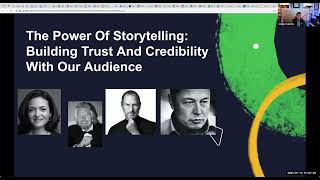
The Power Of Storytelling: Building Trust And Credibility With Our Audience (Gies Coffee Chat)