The Power Of Storytelling: Building Trust And Credibility With Our Audience (Gies Coffee Chat)
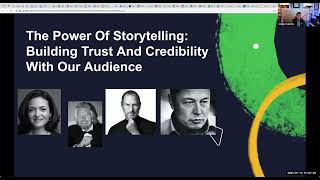
In this 45‑minute coffee‑chat, George Kuruvilla teaches sales‑ and customer‑facing professionals how to use storytelling to shift from a feature‑focused, power‑based sales model to an empathy‑driven, value‑focused communication style. He begins by describing how the internet has democratized information, leaving prospects with the guardrails up and demanding emotional connection. He backs the need for stories with retention statistics (5 % fact recall vs. 22‑fold increase with narrative), the Significant Objects experiment (2,700 % price lift), and neuroscience (engaging neocortex and limbic system, dopamine, oxytocin, neural coupling). He then outlines a universal story framework – context, conflict, outcome – and demonstrates it through a detailed deconstruction of Steve Jobs’s 2007 iPhone launch, highlighting how Jobs builds credibility, paints the market context, exposes the conflict of clunky smartphones, and delivers the outcome of a revolutionary product using visuals, humor, and the 10‑minute rule. Kuruvilla introduces three practical story families for sales: hook stories (personal and company) to connect, fight stories (insight and success) to differentiate, and land stories (value and champion) to close. He provides delivery tips (keep pitches under 10 min, use visuals, show vulnerability, rehearse, record yourself) and advises building a reusable story repository, tailoring narratives to audience, and listening actively. The session concludes with George wrapping up, sharing that the session was recorded, inviting participants to suggest and host future topics, thanking the audience, and encouraging ongoing community engagement. Audience Q&A touches on authenticity, avoiding sleazy tactics, and resources such as “Resonate”, “Talk Like TED”, and the Golden Circle framework.
Chapters
Here we go. Okay, so this, this topic, by the way, I was, uh, at my sales kickoff, uh, earlier. Well, yeah, I think last week. And, uh, you know, we— I presented this in front of about 450 people, um, and this topic's kind of interesting in the, in the domain of sales because what we see in sales is You know, if you think about sales about 10 years back, right, or maybe even 15 years back, the reality was, you know, the seller and, you know, the basically the vendor had all the keys to the kingdom, right, because they had a monopoly on the information that's being shared. You know, internet and, you know, people doing their own research while it happened was not to the same extent. And so, you know, we a lot of times the sales teams came with in a position of power and that's fundamentally changed, right? So now it's no longer about features and functionality. Usually when a customer or a prospect is engaging you, they've already done their research. They've probably looked at 2 or 3 vendors. They've already determined, you know, who they want to go with and it's, they want, you know, some industry insights and unique perspectives that you can share with them and then potentially collaboratively work with them in terms of identifying problems that they don't have, right? So it's, you know, the way we communicate matters, right? And the way we, you know, it's no longer about features and functionality. You have to be effective in terms of communicating the value proposition. And this applies not just to sales, it doesn't matter what you do, right? Whether you are in IT or you're, you know, in technical marketing, whatnot. But I mean, communication and the way you communicate matters. And this, this, this, that's why this topic was important, because I was presenting to sales, I was presenting to consulting, customer success, marketing, and the topic was really storytelling and how do we change the way we communicate. So that's kind of the premise. And with that, I will, uh, keep, you know, maybe start with a bunch of stats. So the way this, the way this is structured is I'd like to first convince you that storytelling is important. After I convince you, hopefully after I convince you, we'll talk about what it is and how do you approach storytelling in the context of whatever it is that you do. And then we'll talk about the how. Now the how is geared more towards sales, but I think there's some aspects of it that you can take irrespective of what domain you're in. So let's start with the why. So a couple of numbers, 5%. Any guesses? 5%. What is 5%? Anyone? All right, 5% is what you typically retain 10 minutes after you hear something when it's a very factual conversation, right? So if someone's presenting statistics or like just some rational data to you, typically you only retain about 5% of what you hear 10 minutes later. And what happens is that that number goes up almost 22 times the minute you tie that with some stories, right? So like if you present just hard facts, you retain about 5%, but if you kind of weave in storytelling into that and then present the facts, then you tend to retain that 22 extra, 22 times more. And what that really tells us is that by making some very small changes in the way we present data, we can improve the retention rate by 65 to 70%. And this is important, right? Because I feel like when we, you know, build content, we focus a lot on stats and figures and whatnot, but we don't pay as much attention to kind of that narrative, right? Or the story that we are trying to tell. And if we don't do that, we are doing those facts a disservice. We are doing our cause a disservice. And so This is why storytelling is really, really important. Here's another number, 65%, right? So I was telling my, you know, audience at sales kickoff, right, even the minute I landed and I'm interacting with people, everybody was telling me stories, right? I mean, this is what we do as humans, right? We are constantly telling each other things about our lives and, you know, you know, and it usually has an element of intrigue and conflict and whatnot. So we We are natural storytellers. In fact, you can argue that the reason we've progressed, you know, these, you know, through generations is our ability to tell stories and kind of gather people around these causes that we strongly believe in. That's what differentiates us from the rest of, you know, the other species, right? So we are natural storytellers. So when you tell someone, hey, you need to storytell, the immediate inclination is, no, I'm not good at that. You know, it doesn't come naturally, but in reality, we all, we all can do this, right? And, and this is another number, 2,700%, right? So this is how much the perceived value of a product goes up when it's accompanied by a story. And this was actually based on a research that Joshua Glenn and Rob Walker did, and it was called Significant Objects. It's a very interesting research. You can go to their website and check it out. It's called significantobjects.com, I believe. What they did is they bought about They bought a bunch of things from a thrift store for about $128, right? And then they hired about 100 creative writers. So imagine an item that costs 99 cents, right? They took that item and then they tied a big narrative to it and they listed it on eBay. And what they found out is those objects that are worth a buck maybe, you know, were sold for $200, $300 just because of the value of the story because people all of a sudden had an emotional connection with that product, which they did not when it was just listed as an object with some features and functionality. The minute the story was tied to it, all of a sudden there's an emotional connection and people are willing to pay a lot more. So, and again, once again, this demonstrates how the perceived value of something that we want to purchase changes so much when there's this emotional connection that we are able to build. So again, what that tells us is that we are naturally wired to respond to storytelling, right? I mean, this is how we are as humans. And we all need to change the way we communicate because our message often lacks resonance. And resonance, what that essentially means, to resonate means to strike a chord, right? So, you know, you are trying, so like in my case, I sell, you know, my organization sells this product called Wrike. We, you know, at Wrike, we all believe it's the best collaborative work management tool. So like that, you know, in me as I'm communicating to customers, There's inherent belief that my product can solve a certain pain point, but somehow when I communicate with the customer, the customer might not still— that customer might not realize the same value proposition that I'm trying to convey, right? So my message might lack resonance, right? And resonance is to me what— to resonate means to strike a chord. What you perceive as the value, can the customer see the same value in the product or in your or in your message, right? And so that's what we are trying to do. And to drive that resonance, you need to tell stories. So if all of that did not convince you about why storytelling is important, I think the next step is to look at the science behind it. And so here's our brain, right? So if you look at our brain, there's, you know, I'm sure you guys have seen this, it's like you've got the left and right side, the rational and the limbic, right? The rational side is the neocortex, right? That's where, you know, basically when you're talking about facts and figures, that's what you're appealing to. But then there's also this limbic system, which is kind of that emotional element, right? So that's your hippocampus and amygdala. So what happens is when you talk in facts and figures, you're lighting up one side of the brain. But then if you talk with, you know, if you try to change that narrative and try to create an emotional connection, you're engaging the amygdala and hippocampus. And so now that same fact, you know, it illuminates different parts of the brain, which means it's more, you know, it's more memorable and there's more of an emotional connection. Your audience is likely to engage more with whatever you're sharing. And, you know, again, more on the scientific side of it, basically when you tell stories, you know, you're basically releasing chemical, making the audience release chemicals in their brain, whether it's dopamine, cortisol, or oxytocin, which leads then to neural coupling and mirroring, right? And mirroring is what we talk about, what we talked about earlier in terms of resonance, right? So where you are trying to tell them something and that same experience is mirrored in their brains and that's when they tend to act. So again, what this tells us is this is not just some BS, like there's scientific proof in terms of why storytelling is important and why we should take this very seriously. And again, this applies to various aspects, you know, whether you're talking to your boss about something and how you're communicating, like you're pitching a strategic initiative to your boss, you need to appeal to his emotional elements as well, right? And then similarly, if you're talking to customers, it matters. If you're engaging with, you know, you're at a, you know, at an event, at a conference, and you're trying to speak about a topic, again, you gotta pay attention to this thing. Another fine example of storytelling. I'm sure everyone's seen this ad, right? ASPCA. There's Sarah McLachlan's Angel playing in the background. There's this really cute puppy, or, you know, like a rather sad puppy. And, you know, all of a sudden you're feeling that emotional connection, and all you wanna do is open up the wallet and, Donate, right? So they could have taken a very factual approach to it, but they intentionally chose to take this approach. Why? Because that's when we actually act upon, you know, the, the cause that they're trying to help drive. So again, to sum it all up, right, storytelling just makes you and your product memorable, and that's what you need to do. When it's memorable, And when you're tapping into the buyer's or the audience's emotional side, you get them to do what you'd like them to do, or, you know, you're getting the outcomes that you're trying to drive. So now let's look at what makes a great story, right? So any great story answers 3 fundamental questions. The first is the context, right? So if you're talking to, you know, in my case in sales and I'm talking to a customer, this context is basically what's their status quo, right? Like what's happening in the organization, What's the current situation? What, you know, what, who are the key players? That's the context. Then there's usually a conflict, right? You need to understand, you know, there has to be an intrigue hook element, like what are the current pains and challenges? What is the cost of doing nothing, you know, and why is change really necessary, right? Why not stick to what they're doing? Why, you know, why should we force a change? So that's the conflict. And then lastly, the outcome, right? So if you're, why should they engage with you? What value do you bring? And, you know, how do we really change their lives, right? So that's the outcome. So any story— so think about the one example that I like to use a lot is the movie Up, right? So the movie Up, if you guys remember, the first 3, 3 and a half minutes, you know, it's kind of this narrative that they're showing, um, um, kind of what's happened in the story so far. And in those 3 and a half minutes, there's a lot of up— there are lots of ups and downs. And by the end of those, by the end of it, you're fully, uh, invested in the movie and, and the storyline. And it's because that Those 3 and a half minutes covers the context, conflict, and outcome really, really effectively to the point where you're emotionally invested in the movie. So that's a really good example of great storytelling. So another great storyteller, probably one of the greatest storytellers of our time, is Steve Jobs. And back in 2007, he introduced the iPhone, and it's considered to be one of the greatest examples of storytelling. So what I did for my presentation is I broke that entire presentation down. So the presentation was about 10 minutes, and I broke, you know, Steve Jobs' presentation, I broke it down into about 8 or 9 different segments. So we'll go through these segments and we'll try to answer how, like, basically look at how he went about storytelling with this whole, during the session. So let me know if you hear the audio, by the way. I have, I think I have shared audio, but if you don't, please Let me know.
This is a day I've been looking forward to for 2.5 years. Every once in a while, a revolutionary product comes along that changes everything. Apple has been— well, first of all, one's very fortunate if you get to work on just one of these in your career. Apple's been very fortunate. It's been able to introduce a few of these into the world. In 1984, we introduced the Macintosh. It didn't just change Apple, it changed the whole computer industry. In 2001, we introduced the first iPod, and it didn't just— it didn't just change the way we all listen to music, it changed the entire music industry. Well, Today we're introducing 3 revolutionary products of this class.
Hopefully all of you heard that. Give me a thumbs up if you did. Anybody? Rama, could you hear it? Okay, good. All right, so what he does there—
hold on, this is a day—
if I could go there— what he does there is he narrates the company's story, right? And so we'll talk about the different type of— types of stories soon. But why does he tell the company story? He tells the company story because it builds credibility, right? So before he gets into the iPhone and everything else, he wants to let people know that, hey, you can trust me, you can trust my organization, because here's our history, right? And so, but in, in the context of that company's, uh, story, there was again a context, conflict, and outcome, uh, relayed through it, right? He talks about you know, the Macintosh and, you know, the iPod and whatnot. So it's important, like when you hear someone or when you're meeting someone for the first time, our natural tendency is to have our guardrails up, right? You're not gonna trust them immediately. Like, who's this guy? Like, you know, why should I care? And you have to somehow figure out a way to get that guardrail down. And you do that by telling a story of trust and credibility. And that's exactly, even at, you know, Steve Jobs being Steve Jobs, feels it necessary to tell that story. And that, you know, that's an important piece of that narrative. So let's move on.
Let me talk about a category of things. The most advanced phones are called smartphones, so they say. And they typically combine a phone plus some email capability, plus they say it's the internet, sort of the baby internet, into one device. And they all have these plastic little keyboards on them.
So what is he doing there, right?
So let me talk about—
so he's basically laying the context. So we talked about the story having— answering 3 fundamental questions: the context, the conflict, and the outcome. Here he's laying the context, right, which is the world of smartphones today, and he's kind of painting, painting a picture of what that's like. The next video.
And the problem is that they're not so smart and they're not so easy to use. So if you kind of make a, you know, Business School 101 graph of the smart axis and the easy-to-use axis, phones, regular cell phones, are kind of right there. They're not so smart and they're, you know, not so easy to use. But smartphones are definitely a little smarter, but they actually are harder to use. They're really complicated. Just for the basic stuff, people have a hard time figuring out how to use them.
Any guesses what that was? Uh, and that's the conflict, right? So the conflict is smartphones are not so smart. So you first— he talks about the context, which is the world of smartphones. Then he identifies the conflict, the fact that, you know, this, you know, the world of smartphones needs some change because they're not so smart. So let's watch the next video.
Well, we don't want to do either one of these things. What we want to do is make a leapfrog product that is way smarter than any mobile device has ever been and super easy to use. This is what iPhone is.
Okay?
So we're going to reinvent the phone. Now, We're going to start— what we don't want to do.
So again, the outcome is the iPhone reinventing the smartphone. And he does that in two ways, right? He does that through his narrative, but also a beautiful visual, right? Like, how appealing is that visual that he shows, right? I mean, kind of iPhone all the way up there. Like, in, in the audience's mind, it's clear that, you know, this product that he's talking about is way better than anything. Not— it's not a close comparison. It's way better than anything that's ever been built in that smartphone category. So that's, that's him showing the context, conflict, and outcome. Now watch, watch what he does again. So the whole thing, by the way, was 10 minutes. We're about 3 minutes in, and watch what he does over the next few segments.
Software. Now, why do we need a revolutionary user interface? I mean, here's 4 smartphones. Software.
So the next context, right? So he talked about the big picture. The big picture is that smartphones are not so smart and we need an iPhone. Now he's going to drill down deeper, right, into the various aspects of what makes a smartphone. Starts off with the user interface, and he's— that's the context that he's going to paint now, the UI in smartphones.
Or smartphones, right? Motorola Q, the BlackBerry, Palm Treo, Nokia E62, the usual suspects. And what's wrong with their user interfaces? Well, the problem with them is really sort of in the bottom 40 there. It's this stuff right here. They all have these keyboards that are there whether you need them or not to be there. And they all have these control buttons that are fixed in plastic and are the same for every application. Well, every application wants a slightly different user interface. A slightly optimized set of buttons just for it. And what happens if you think of a great idea 6 months from now? You can't run around and add a button to these things. They're already shipped. So what do you do? It doesn't work because the buttons and the controls can't change. They can't change for each application, and they can't change down the road if you think of another great idea you want to add to this product.
Again, conflict is the, the keyboards ruin the experience, right? So as the apps evolve or, you know, there's new stuff coming out, you can't really customize that keyboard because it's a physical thing, right? So that's the conflict. So what's the outcome?
And to this product, well, how do you solve this? Hmm, it turns out we have solved it. We solved it in computers 20 years ago. We solved it with a bitmap screen that could display anything we want, put any user interface up, and a pointing device. We solved it with the mouse, right? We solved this problem. So how are we gonna take this to a mobile device? Well, what we're gonna do is get rid of all these buttons and just make a giant screen. A giant screen. [APPLAUSE] Now, How are we gonna communicate this? We don't wanna carry around a mouse, right? So what are we gonna do? Oh, a stylus, right? We're gonna use a stylus. No. No. Who wants a stylus? You have to get 'em and put 'em away and you lose 'em, yuck. Nobody wants a stylus, so let's not use a stylus. We're gonna use the best pointing device in the world. We're gonna use a pointing device that we're all we're born with 10 of them. We're gonna use our fingers. We're gonna touch this with our fingers. And we have invented a new technology called multi-touch, which is phenomenal. It works like magic. You don't need a stylus. It's far more accurate than any touch display that's ever been shipped. It ignores unintended touches. It's super smart. You can do multi-finger gestures on it, and boy, have we patented it.
So again, right, what's the outcome? No keyboard, large touchscreen with multi-touch, and no stylus, right? So he uses humor. Again, look at the way he uses the visuals, right? So effective. Think about our slides. When we present, right? We've got like these dense slides with 20 bullet points and whatnot. I mean, are you trying? So then the question you have to ask yourself is, should the listener focus on the slides or should the listener focus on the narrative? And you know, this is a masterclass in terms of how you combine effective visual storytelling with a narrative. And he, you know, like if you see that screen and that iPhone with just a stylus and him kind of using that humor element, it just registers, right? That prop will remain in your mind much later on. So I think a lot to take away from that segment right there. So let's go on to the next one.
It's like baby software. It's not so powerful. And today we're going to show you a software breakthrough.
So, so again, here the context is software on smartphones, and his point is that it's archaic, right? It's not really designed to enable future development of these devices and not powerful enough for the apps of today and the future.
Software that's at least 5 years ahead of what's on any other phone. Now, how do we do this? Well, we start with a strong foundation. iPhone runs OS X. Why, why would we want to run such a sophisticated operating system on a mobile device? Well, because it's got everything we need. It's got multitasking, it's got the best networking, it already knows how to power manage. We've been doing this on mobile computers for years. It's got awesome security, and to write apps, it's got everything from Cocoa and the graphics, and it's got Core Animation built in, and it's got the audio and video that OS X is famous for. It's got all the stuff we want, and it's built right into iPhone. And that has let us create desktop-class applications and networking, right? Not the crippled stuff that you find on most phones. This is real desktop-class class applications. Now, you know, one of the pioneers of our industry, Alan Kay, has had a lot of great quotes throughout the years. And I ran across one of them recently that explains how we look at this, explains why we go about doing things the way we do, because we love software. And here's the quote. People who are really serious about software should make their own hardware. You know, Alan said this 30 years ago, and this is how we feel about it. And so we're bringing breakthrough software to a mobile device for the first time. It's 5 years ahead of anything on any other phone, right?
So the outcome here is, you know, iPhone runs iOS 10, and the software that they're introducing is 5 years ahead of the competition. And What he also does there, if you paid attention, was again, he kind of reinforces the company history and the credibility that he had, that Apple has in making software, right? And kind of weaves that into the overall narrative. And he also, all through the conversation, is not afraid to call out competition, which I feel like a lot of us are, right? We like to kind of talk about ourselves, maybe not, you know, call out competition as much as we do. And he does that so effectively and he's not scared of, anybody, right? So pretty, pretty awesome thing. So you saw Steve Jobs talk about the iPhone, but you saw him use that structure of context, conflict, and outcome throughout, right? So he had the main pitch, the main plot, and then he had multiple subplots, but he did it in a way where he's kind of reinforcing that point over and over and over again. Um, he followed that 10-minute rule, which by the way is a very important rule. So like if you're doing a 30 or a 40-minute presentation, typically I would say don't do more than 30 minutes. But let's say you do, keep in mind that you have to have a break every 10 minutes. 10 minutes is about the extent to which a person can absorb. So every 10 minutes you should have some sort of a breaking point. I would say even in that 10 minutes you should probably have about a 3-minute subplot where you're gonna either interject with some humor or something to get the person's attention back. To your overall conversation. So he does that pretty effectively. He approaches the entire conversation from the customer lens. He's not afraid to bring out competition. He speaks with conviction and credibility. And then, you know, I think there's clear storytelling throughout, which again is just, he does that without really, you know, you don't really think of it as storytelling, but he does it anyway and you don't even realize it, but you're kind of really emotionally engaged and, emotionally invested in that overall conversation. And this is why people are not afraid to spend thousands of dollars on iPhones, right? I'm an Android guy and still, I, you know, I, I'm sold on this thing, right? Because that's how effective he is when it comes to storytelling. So now we've talked about the why. Why is storytelling important? We talked about the what and we saw Steve Jobs give us a masterclass on what storytelling is. And now let's talk about you know, how would you go about incorporating storytelling into your day-to-day conversations? Again, this has got a sales angle to it, but I think some of these lessons you can kind of use in your day-to-day scenarios. So there are various types of stories that can be leveraged in your day-to-day customer conversations. And I like to kind of think of it in the context of buying and selling, right? So when you think about, you know, buying, right? What do we do? We first define what we're trying to buy, then we look at all of our options, and then we— there's a risk versus reward thing that we weigh out, and then we make a purchase. Or if you're selling, you know, you first, you know, as a seller, you're connecting with the customer, then you're trying to differentiate your value proposition compared to whoever else they're looking at, or maybe status quo, and then you try to close the deal. Now, the stories that you tell very closely align with these Right? So the 3 sets of stories that you need to think about are the hook stories, the fight stories, and the land stories. The hook stories align closely with the connect phase. This is when you're trying to establish credibility. The fight stories are when you're differentiating yourself. So imagine that you're competing with certain other vendors, or maybe there's, you're in your organization, you and someone else, you know, you have competing theories and, you know, you're trying to figure out, you're trying to get mindshare from your stakeholders. So that would be where you'd introduce a fight story. And third is a land story. When you've perhaps differentiated yourself, but you still have to close the deal, right? You still have to kind of show that eventual value proposition, whether it's quantifying the value, whatnot. That's where the land stories come in. So hook for connect, fight for differentiate, and land for closing. So let's talk about hook stories. And I think the first story is probably the most important story. I think every one of us needs to have a personal story. And if you think about the last— think about the last 5 meetings you've had, Zoom calls, right? And think about how you introduce yourself. Uh, you know, you probably go something like, hey, I'm so-and-so, I'm VB, uh, I work for so-and-so, I'm based out of this location, and great to meet you, right? Uh, well, that's all great, but then what does I mean, how are you really connecting there, right? Not a whole lot, right? I mean, yes, the person knows where you're from potentially, uh, and maybe the department that you're in, but maybe that the person doesn't even know what your role means to you or why you care about it, right? So think about how you can reframe that conversation, right? Especially in the customer context, right? You know, customers, like I said, have their guardrails up, right? Audience has their guardrails up, and what you're trying to do is break that guardrail, right? And if you want to break that guardrail You have to connect with them emotionally at that point, right? And how do you do that, right? So you gotta talk about who you are, what you do, why you do it, and why they should trust you ideally. So the example that I used at my kickoff is, you know, I take a lot of, you know, for me, work is not a means to an end, right? I really enjoy what I do and I find joy and purpose in my work, right? And, you know, in my interaction. So that's really important for me. 2 years back, I was at Citrix and, you know, I worked at Citrix for a majority of my career because I believe that we solved a real pain point and we added value to our customers. But I remember about 3 to 4 years ago just feeling like maybe I'm not as passionate about what I'm doing because I don't feel like, you know, our products really solve that problem of empowering people to do their best work anymore. So I was in that dilemma. Which is when, you know, when I, in 2 years ago, I got exposed to Wrike and I realized, you know, I was running the tech incubation team at that point and Wrike was one of the products that we were trying to integrate. And as I was trying to, you know, really understand the product and get our sales organization and our larger organization to adopt the technology, I realized that actually Wrike does a better job of connecting with our vision, which is empowering people to do their best work. Career-defining work than Citrix, right? So much so that I came to, came to Wrike, and here I am running a, you know, a large team, and I, you know, excited about my work because guess what? I believe in the value proposition. I believe in the market. I believe in the pain point that it solves, and I believe in our team, and hence I'm here, right? So that when you say a story like that, you know, there's immediate connection with your audience, right? There's, you know, people, you know, The guardrails tend to go down, emotional connections are made. So that's kind of how you gotta think about a story. Now, not, not every single time can you tell an elaborate story. Typically stories, you know, a personal story should not be more than 90 seconds, but you gotta think carefully about that story. And by the way, the story varies based on your audience, right? So it's not like you have the same personal story every single time that you meet somebody. You gotta kind of have certain aspects of your life that you can use interchangeably based on who you're meeting with, right? So, but you gotta put thought into it and you gotta have almost like a repository of ideas that you can tap into and use depending on who you are connecting with. Similarly, you need to have a company story. So, you know, again, this depends on your role, but if you are in a customer-facing role where you have to, you're in a hypercompetitive market, where customers are probably meeting vendors on a day-to-day basis. How do you differentiate your company? You saw Steve Jobs do it really effectively. So you have to have a way to build a company story. And this narrative, by the way, is not something the company gives you because you have to make it your own, right? I mean, if they give you some, you know, let's say a blurb of data, it's just not gonna sound genuine. It'll be disingenuous. You have to make it in a way that it sounds authentic when you tell that story. So that's an important story as well. So these are your two fundamental hook stories, right? Personal story, which I think every one of us can use, and then a company story. And then, you know, as I mentioned, you know, personal story is the most important thing. But again, keep in mind the idea of a personal story is not to show that you are the bomb or, you know, like you're the best thing since sliced bread. That defeats the purpose completely, right? The idea is to connect with your audience, right? So there has to be an element of vulnerability. So in my case, I talked about the fact that I was, you know, not as passionate at Citrix, right? I was kind of losing my way, um, about a few years back. And then the element of good fortune in my case was that I got exposed to Wrike and got this opportunity here. So like, you have to weave in those elements of vulnerability and good fortune so that the customer can, or whoever the audience is, they can connect with you and feel like, okay, this guy's like me, right? That's the idea. The idea is to break the ice and have that connection so that you can go to the next objective, which is to differentiate, right, from, from that land. You know, we talked about the 3, uh, aspects, right? So that from the hook, we need to move to the, the fight stories. So let's go on to the fight story. So you've now established some sort of rapport with your audience, and now it's about, you know, the meat, meat of the conversation, right? And when you talk about the meat of the conversation, typically you'll have some insights that you want to share you might want to share some successes. So inside stories are typically when you're presenting research, right? So let's say you are tasked to do some research, and you know, you're presenting your findings to your stakeholders. Well, even that can be presented in a way where there's a narrative. Again, think of that context, conflict, and outcome. So inside stories are stories that kind of present data, like important data, important research material, but in a in a, in a, in a using a narrative that basically gets people to connect with you at an emotional level. And then success stories are very, very important in sales, are what helps your customer realize that we've helped others address similar issues. And another key element of success stories is that it doesn't have to be your success story. It's not that you solve that problem. It could be in the customer voice perspective. So it could be something that you've heard others talk about and you've kind of saying, hey, I, you know, we've, you know, so-and-so helped this organization achieve this goal by doing this, something like that. So that's a success story. And any success story has certain elements. Again, there's a framework to it, right? There's a hero that a buyer can relate to, and that hero is not you, right? So if you are meeting a customer and you're talking about just helping them solve a challenge, you can say, hey, I helped So-and-so, you know, I was, I was in a similar situation a couple of weeks back with so-and-so, and that's the hero, right? And then, and then you say that hero had a similar challenge, and this is what the challenge was, and this was the exact pain point that they had. And then you talk about how you help that hero address that issue or overcome that challenge, and then talk about the positive impact that, that engagement had on that central character. Now, this could be At a professional level, this could also be at a human level, right? And then you, if the, when you tie the two together, that's when it's most impactful. So again, the structure is a hero, a change or a challenge, how you help the hero, and then what's the positive impact, and then how, right, how you basically, that whole solution affected them on a tangible human and emotional level. So we can skip the stuff. And then, you know, the last set of stories is basically the land stories. And I don't know where my slides are, but that's okay, I'll talk through it. Land stories are basically where you convey your value, right? So these are considered to be value stories and champion stories. Value stories are how do you quantify the value that you bring to the table? So this is when you think about financial metrics, ROI, things like that. Instead of just saying, I helped you, you know, help the customer go 3x their revenue, whatnot. How can you weave a story into it, right? So that's, that's typically what's considered a value story. And then lastly, you have what's called champion stories. So in your organizations, if you're trying to motivate others or help them kind of further your cause, which is, you know, very, very important, right? So like, let's say, you know, you're trying to drive a strategic initiative, but you have various other stakeholders and you need to make sure that they buy into this and they can tell your story to others so as to build a certain level of momentum in the organization to drive your objective. That's a champion story. So how do you really get them to tell your story? What's in it for them, right? And, and that— what's in the, the WIFM thing, what's in it for me? Really helping them articulate that, that's the champion story. So that's, that's another type of story, then, that, that's considered to be a land story. Uh, so yeah, so when you, when you think about the overall structure, so you got your hook stories, which are your personal stories and your company stories, you've got your Fight stories, right? And then that's your success stories and your insight stories. And then you got your land stories, which is basically your value stories and your, you know, your just champion stories. So those are kind of the, the land stories are probably very sales-centric, but nonetheless it's important. And then just to recap on everything that we discussed, right? I think what's key is that storytelling completely lights up the brain and, you know, it's much more memorable like the facts that you present are much more memorable when you weave in a story. And stories build trust and empathy with the audience, right? And I think that's, in order for them to really take an action or really do drive the outcomes that you're trying to do, you have to build trust and empathy. And that's what stories do. And then third is that like, don't be afraid of storytelling because we are all natural storytellers. We, it's in us, it's ingrained in us. And irrespective of what you do, who you talk to, Storytelling is key in kind of accomplishing our outcomes. The key questions to address when you think about these stories, right? Context, conflict, and outcome. The 3 types of stories, hook, fight, and land. Again, there's a no, like there's not one-size-fits-all strategy, right? So it's not like you're gonna use every single type of story every single time. You kind of build a repository of stories over time. And by the way, these stories are not your stories, right? So some of them might be yours through personal experience, but most of the stories that we use are basically stories that we hear from others. It could be something you saw on TV, or maybe you saw a YouTube video with someone describing a situation. You— the question is, which ones of those— which, which of those stories resonate with you? Which ones can you reuse? And how do you start documenting them and building a repository so that, you know, over time it's ingrained and you, you can kind of use, mix and match those stories in the most effective manner? Um, and then, you know, lastly, I think active story listening is much more important than storytelling, right? Like, till you— the, the most important thing is to listen. You gotta understand your audience. You gotta understand what they're looking for. Maybe do some discovery before you go and create a narrative, right? I mean, you really need to understand, you know, what the audience need, what the prospect need, what the customer needs. And it's really, at the end of the day, it's all about them, right? All of us fundamentally are selfish people, right? We care about ourselves. So like, as we think about our stories, keep the hero or the audience at the center of the story and why, they should care about what we are sharing. So that's kind of another important point. So I think, you know, what I'd say is at the end of the day, you know, if I was to give some, an action item for you guys, I think maybe start with a personal story, right? Think about, you know, kind of do some introspection on how you've been talking about yourself and as you interact with us, how you describe yourself, how you describe what you do. How you, you know, as you're talking about certain or maybe presenting certain ideas and topics, have you really, you know, focused on the narrative or is it just facts and figures and how can you change that, right? Think about that and then maybe start creating some narratives, right? Creating some stories and try practicing those pitches because delivery is as important as the content, right? So, you know, maybe record yourself and see, you know, would you buy from yourself or would you listen to yourself? Would you convince yourself? And then from there, you know, over time, you know, pay more attention to the stories that you hear on a day-to-day basis and then start documenting them and start reusing them and see what, you know, what sort of impact it's making. So that's what I had. And then some books that I think some of these I've already shared with you, but like I think Resonate's a fantastic book. Talk Like Ted's a great book. And you know, all of these, you know, maybe start with one and then work your way from there, right? And, Hopefully that will empower you all to become better storytellers over time. So that's all I had, guys. Let me stop sharing. Questions? George, what was that?
Thanks for putting this together. This is great.
Of course.
Yeah, that was really excellent. This is the first Zoom coffee chat that I've been able to make it to. So, um, yeah, I feel like this was a home run to start with.
Oh, thank you, thank you, Chelsea.
Appreciate the reading list and all your thoughts too.
Oh, you got it. Um, yeah, I mean, this topic though, like, is this something— I mean, you know, I come from the world of sales, right? So obviously in sales this is really, really relevant, but I would imagine it doesn't matter, um, you know, what role you're in. I think this is something that we can all use, at least You know, the, the, when you think about those personal stories, especially, or the success stories as we try to build credibility with our audience, those are all important stories that we could potentially be using.
So I have a few, uh, by the way, great, um, narrative overall, George. I love it. Um, and I know we have had a few discussions about this already last time we spoke, but I have a few things I wanted to talk to you and maybe even clarify with everyone over here. And get a perspective into what are the things that, you know, all this is great, right? Because, you know, you mentioned about the storytellers and over the years we know that we love stories, like you were mentioning, we love stories, we love to listen to the content, but here's my challenge overall with this thing. How do you decipher a lot of people who are not being authentic, right? Because there are people who are trying to dupe you or who are trying to make stuff up, right? Just because they are really great conversationalists, just because they know, you know, how to manipulate you and things like that, right? And we know that that sleazy salesperson who comes in there and just try to sell something to you because they are so slick overall in terms of what they are doing and you get brainwashed, right, into the things. And then later on you realize, oh my God, like what did I just bought, right? Now I'm just talking about, you know, the kind of things or the things that we have sometimes experienced as well. Like the, what do you call, like the first thing that comes to our mind is like sleazy car salesperson, you know, who's trying to sell a car to us or whatever, right? But in general, that has been my challenge overall, like you and me, both of us, right, we come from the technical world and I feel like technology is important, right, technology is important in terms of, for example, if you're trying to sell a tech product. And I hope that this whole narrative that we have comes down to you have to have table stakes, a great tech product. There is no compromise on that, then I guess these all of the things that we're talking about and that equates to everything, not even just the tech product, but it could be a car that you're buying or it could be anything as well. So there are two parts to this question, but I wanted to understand, George, from you and maybe from others as well, what do you all think?
Yeah, so if you think back to how I started, I talked about the fact that sales has fundamentally changed. So the fact is You know, as someone engages you, they've already done their research, right? So they've, so like, think about how when we decide to buy a product, right? Before we maybe contact the vendor, we've already done our research. We know, you know, what's a good product or what is not. We already maybe narrowed it down to 2 or 3. So the old world where a sleazy sales guy can come and fool you, it's not quite the same anymore because of, you know, how much information is available to, and, you know, to the prospects today, right? So Which is why storytelling is important, right? Because now you cannot just rely on the laurels of your product. The best product doesn't always win anymore, right? So if you think about, again, if you think about the, even the stuff that we buy, like a lot of times we buy because we, you know, not necessarily because the product is the best, maybe because of a customer experience or something else, right? So, which is why it's important that we form that bond with customers. Also in other, in some cases, Customers might think they want the product to solve a specific challenge, but through our engagement, we might be able to change that, right? So the, you know, what the customer thinks they need and what they actually need might be fundamentally different. Again, storytelling helps with that, if you mean. So the sleazy sales, that's what I'm trying to deal with, right? I mean, I'm in sales and I don't want to be that sleazy sales guy. And so the way you solve that is by authenticity, by, you know, obviously you need to know your subject, You need to know your stuff. And but then knowing your stuff, my point is knowing your stuff is no longer enough to be successful, right? You have to make that emotional connection. Got it. Yeah, folks on the call.
Yeah, George, there's a great, great putting this together. I think it's, uh, it's objective, it gives you some good tools, and it's a good framework for people to follow. I come from the advertising world, so I'm an anomaly to a lot of my classes. Most people come from the tech world. So for me, it's— I work now in the tech world, but I've— coming from 15 years in the advertising world in New York, I recommend this book. It's called Strategy Is Your Words. And Strategy Is Your Words, it really talks about how language is really It takes the very mechanical aspect of language, but it's things that we do every day and that make a huge difference in how we use words, language, how you put a presentation together, how you— what is your objective and how you storytell, not only from a presentation perspective, but also from a document perspective. So imagine all those things that we— I mean, What I did on the advertising side was do an entire storytelling for you to buy within 30 seconds, you know, for you to react within those 30 seconds and obviously is repeated, but that is a, you know, think about it in a challenge. Anyone who comes from sales, give you 30 seconds to try to sell something is not easy, but when you look at it in a storytelling perspective and you connect emotionally with something, then you are— that's— and there's another video that I recommend that's called— it's from a TED Talk, and probably you guys have heard of it, but it's called the Golden Circle. And it's— and the Golden Circle, you can just search it by Golden Circle, and his name escapes me, but this guy really talks about how we as humans connect the rational side with the emotional side and how in the end it is our emotional side. Simon Sinek, Simon Sinek is the, is the, is the author, and he has many, many books, uh, some of them called The Why. But, um, the really the why is what connects us, uh, to, to making the decisions that are not rational. So if you— and then he actually uses Apple. It's interesting that you use Apple because he uses Apple and how Apple connects with people, you know, and in a very different way than using the rational side, which is as humans we all tend to go. But I recommend— I just wanted to say those two things. I recommend looking at things, and it's, it's interesting because we're so trained, especially in an MBA program, we're so trained to be so rational and to look at numbers and to look at all these different things that really make differences in a business world, but the way we sell and with the way we get venture capitalists and the way we get all these other people, it's on— yes, they'll look at the rational numbers, yes, they're going to look, but really they're going to make a decision on your passion, on the emotional side, on what you bring to the table. So I find that fascinating to look at, to really look at and in a way step out of that comfort zone on our business side and what really makes us work or successful at work because that kind of doesn't really allow us to connect with others and at the emotional level. So great job. I really enjoyed it, George. Thank you so much for the effort.
Thank you for those insights, Gerardo. Rama, you got something. We can't hear you. You're muted or something's up. No audio. Anyone else while he figures that out?
Yeah, I was thinking about, you know, Larry Geis. I'm sure all of us have had the opportunity to listen to him speak. You know, when you like, you're starting the program, you're like, what, what is this word? Geis? Geis? Like, and you know, now we all like clamor to get the swag that has his name on it. We, put the stickers on our cars. We're so happy to be a part of this. And I think a lot of, you know, that Larry brings some great emotion behind his name to make us feel proud to be part of this program. And, you know, looking at him as an inspirational leader, and he's just, you know, a really great example of storytelling and how you bring in your audience and, you know, motivate them. And bring them together.
So true, Chelsea. Actually, I remember I converged when he spoke, right? I thought that was one of the most effective storytelling sessions that I've seen. We all were emotionally invested at the end of it, right? Like, we want— we are proud to be part of this movement, right? Whatever it is, right?
And then the line to take a picture with him too. Oh yeah, like, like, you're a cool dude, and I just like wanna be near you.
That's right.
Yeah, thank you, Josh. I think it was great to see Steve Jobs' thing, how you broke it down. Chelsea, I was going to say Larry Geese too. And it goes back to what George just pointed out, right? That emotional connection. He talked about his story about going to the— was it South Side of Chicago? It's just an emotional connection. He made that personalized disc, told his story, and then got his greater good, right? Talked about his vision about making the world a better place, right? With happier and productive, whatever, right? So this just goes back to that, making that connection that helps you trust, build that trust, and then you hook. Right, that, that is probably a good example of that. Why though, I think to your point, if he's still on, it's about that trust. I think I go back to that trust, right? Whenever, you know, even we talk in our sales teams, it's about how do you empathize with the customer on how we can solve their problem, right? Get that connection first and then they'll start trusting you, and then you pitch whatever you want to go pitch, right? Without doing that, it's more so of, who are you coming and telling me, right, bunch of things type of a thing. So that emotional connection is probably— I mean, even for us, right, um, back to what Chelsea was thinking on the text, on the chat, is like TikTok, all of that. We see everyday users like us using something that is helping them, and that's when it's like, oh, I need that. I didn't need that before, but I need that now because I've made that connection and I trust that person, whoever is pitching it, right? So, thank you guys again. It was good.
Parna ended up with an acupressure mat, right?
It's free.
Yeah, because Chelsea bought it and told me about it.
And now I have an eye massager because Bai Xu bought that for her husband.
I got it because I was missing out.
No, she got it because I told her.
Yeah, all good points.
Share the link so that we can all get it.
Okay, something off of that whole thread as well.
Can you guys hear me?
Yes, Rama, go ahead.
Yeah, so, uh, you know, thank you. It's the first time joining Coffee Chat, and hello to everyone. Happy New Year to everyone. Um, this is fantastic. Uh, you know, I've been kind of on and off learning about storytelling on and off. I, I do talk at, you know, meetups and, and some other conferences, but I've always struggled on exactly how to actually really refine your talk. And obviously I've been, uh, kind of following your presentation. It's really interesting, uh, it makes sense, right? Just, you know, you just, you, you do your 10 minutes, just kind of deliver the nuggets, and then take a break, and then do another 10 minutes. I think that's something new I learned, which is really great. A couple of things that comes to my mind is there was this recent article I read where there was a, you know, two kids in Mali in West Africa. There was Children's Fund, they're trying to actually make a campaign. And, you know, they came up with a campaign with all these metrics and facts and all of that in the pamphlet, right? It was actually, it was not really going very well, right? They didn't really hit the market, hit the mark. Whereas, and then they actually took a story of a girl and then they put a picture and then just really talked about, you know, here's so-and-so struggling, you know, unable to go to school, unable to do things. And, you know, but she would really benefit out of this. And then, you know, just kind of a personal story there. And actually they measured, the outcome. And this actually came up in one of the Stanford, you know, the storytelling exercise. So I think clearly, I think the logical left brain, you know, metrics, and then the empathetical, you know, the right brain obviously have to kind of work together. But definitely more storytelling, you know, that was obvious. So I absolutely loved it. And then the Steve Jobs video is something that everyone may have seen it, but I really haven't It's always good to go back and just see exactly what he was trying to do, right? I think he was following that framework that you were telling, right? You were sharing the, you know, the context, conflict, and then the outcome. It was obvious. So yeah, thank you.
No, you got it. And I think, you know, one of the dangers, I think, for— if you look at our program, right, a large chunk of the folks in this program are engineers, right? And I think the What we tend to focus on are, you know, the facts, you know, the grades, all these kind of the typical metrics that we all wanna be measured on. And we don't focus enough on the soft side of things. Like you think about what we invest in, right? We invest a lot in the hard quantitative rational side of things. We very rarely invest in our soft skills. And the reality is that's what's gonna make the difference. Like even when it comes to even, you know, interviewing. I interview a lot of people all the time, and a lot of times what I'm looking for is not what they know. It's, it's, it's, it's their personality, it's their aptitude, it's cultural fit, and that comes through storytelling and how they can connect with me emotionally. And I think one of the key takeaways for all of us, especially those of us in the technical field, is we need to let go of that mindset that that's what's important. It is not. I mean, it is important, but that's not the only thing that's important. We need to invest more on the other side of our skills, which we, you know, typically struggle with. And that's, you know, even if it is to, you know, pay a coach or whatever, right, just to kind of get us over that hump. It's, you know, time well spent, money well spent.
I agree.
Just to follow up, George, on that is that also I work with a lot of engineers now, so I'm that middle person that represents the customer. So I'm— I work on the website, on the app side. So for me is I'm working with a team in India, I'm working with our team here, and it's all engineers. So they're, you know, from— it's like black and white. And I find that whenever I've engaged with them, you know, I get everybody on the same page. It's easier for them, and it's amazing to see a different side of them when they start looking at understanding and putting themselves in there. I mean, really empathize. Somebody mentioned empathize, but really to put themselves in their shoes of the customer and say, oh, I didn't see it that way, or hey, you know. And what I find is that the more, the more if they see that side and the more they develop that side, is that the more competitive advantage they're going to have in the marketplace, in their own job, in their own, in their own career, you know. Even if beyond whatever the objective is, it's just there's— that's a huge skill that I find working with many engineers that developing a little bit of that side can make a huge difference to stand out for someone over 100 or many others.
$1,000 right now this year. Well, it's not stocks, it's not crypto, it's not something like Amazon. The best way to invest $1,000, they'll pay you back. I know where that's coming from, but sorry about that.
That's me.
Oh, that's fine.
I'm ready to invest $1,000.
You know, I clicked the link, you know, someone sent me to a page. Sorry.
Yeah, no, but that's, it's a, it's in my, in that sense, it's just coming from the outside in, you know, I'm, it's a great, it's a great soft skill to develop, especially if you're in that engineer world. So, yep.
Yeah, I would 1,000% going on that because I also came from a creative agency background. I work in marketing currently and it's a, it can be a, it's a really simple shift, I think, to make, but intuitive shift for people to make, especially like really in technical fields. But, you know, the, The one thing that you mentioned, I think it was in the success stories about the hero of the story. Like that to me is one of the really critical distinctions is, you know, I wrote a blog post years and years ago about this and I used the example of Ferris Bueller's Day Off. If you're familiar with the movie, like it's named after Ferris Bueller, but who's the hero of that story? It's really Emory, and he's the guy that needs to make some sort of change, that's trying to accomplish something, needs to, you know, reconcile his feelings about his dad, all that stuff. Yeah, Ferris Bueller is the guy that plays the guide to get him there, and that's your role, right, as the person selling the product or whatever it is, the service. The hero of the story is your customer. You're not out to hear a story.
John, I think there's something going on with your audio. You're breaking up.
Alongside them, you are trying to— Can you hear me? Am I—
Yeah, there's some lag. I don't know what— I mean, is it just me, or how about you guys? You notice lag too, actually? Like, I can Yeah, maybe, maybe try turning off the, maybe try turning off the video, maybe that'll work.
Yeah, can you hear me?
Oh yeah, that's better. Yep.
Well, I, I was on some sort of tirade, so I'm not sure where you were.
No, you talked about, you talked about Ferris Bueller and the success story and the hero not being yourself, and you use the example, and maybe you want to just wrap that up.
Yeah, just that, uh, you're, you're not the hero of that story, your customer is the hero of that story, and they have a problem, they have a goal they want to achieve. Your job is to come in as the guide and help them over and around and through those obstacles to get to that outcome they want to achieve and avoid the negative outcome. And when you think about it that way, that it's not about me, it's about the customer, then that kind of flips it on its head. And it's very similar. I wholeheartedly agree with the recommendation of Start with Why. It's very All kind of in that same vein.
Exactly. And I think our challenge, right, I think whenever we are asked to lead something or present something, we've got all this information and we want to try and present everything, right, as opposed to like, you know, maybe distilling it down to 2 or 3 things that the customer really cares about. It's more about, hey, I have to talk about every single one of these aspects, you know, otherwise I'm gonna, you know, I'm not maybe not doing justice to whatever topic it is. And I think that's where they got to take a step back and think about, you know, like, is this really— like, as far as that stakeholder or that person that's listening to you, what is really relevant to him? What is he trying to solve? Let's focus on that. And this applies— I was actually doing my— going through annual reviews this morning, um, of my— some of my team. And again, even something like that, right? If you're going to tell me about a gazillion things that you've done over the year, like, I could care less. Tell me about you know, here's kind of the objectives that we had as an organization. Here's how you helped me and the org achieve those accounts. If you laid in that, you know, in that kind of term, then it makes a lot of sense. Instead of telling me, I, I did 20 certifications and my team did this, like, so what, right? So I think, um, sometimes less is more, right? So don't, you know, don't try to show everything that you know. Instead, focus on the things that matter to the audience. Any other thoughts?
Yeah, the only other thing I wanted to say was practicing the pitch. I think it takes a lot to kind of have the energy to go out there, do your pitch. And I feel like the more practice I get of the pitch with people that don't buy into the idea, the better I get for prime time. Just another quick thought, 'cause it's not easy to go up there and tell your story without that practice.
That is such a great point. I mean, 'cause we all form our echo chambers, right? We've got our friends that all think like us and they keep kind of reinforcing the points that, you know, we share, right? Instead, we have to break that, right? So make a conscious effort to network with people who disagree, right? And then like Sri said, try to make your pitch to them and see how they challenge you, right? That's when you get better. And that takes conscious effort. Actually, Gies is a great, I mean, this iMBA program's a great avenue to do that. We all come from different backgrounds. And so maybe there's somebody that has no idea about the world that you come from, and then you try to kind of educate them on it and see how they challenge you. It might change the way you think about the topic. Another good one is Toastmasters, right? So recently I signed up for Toastmasters because I wanted to do something with my daughter. I thought this was a fun activity. And I realized Toastmasters, you know, you would think that, you know, public speaking or whatever, right? But then you go into these, you go into a serious Toastmasters group and you're like, man, there's so much to learn, right? I mean, there's just so much to learn, so much, like as far as things that you haven't thought about when it comes to public speaking, they challenge you, right? And that might be something you wanna consider as well, just kind of getting better at your pitch. All right, any closing thoughts? We have 15 minutes over, but this is a great discussion, so we can keep it going.
Yeah, so one, one question I have is actually, it's really not about storytelling per se, it's really about how do you model questions, right? How do you model your question, you know, when you are in a high-stakes environment, or it doesn't matter, right, whatever it may be, um, I struggle at times when I try to articulate the question, and it has to be precise, succinct, and it has to be relevant at that time. You don't really want to just bog down with a lot of details and then get to your question. That's one thing that I know that it's an area where I need to work on. I don't know if there's any resources or anything that anyone can think of, but that's something that comes to my mind. How do you model your question?
So I would say design thinking is something that's helped me, um, with as far as questions, because I think what, what we have a tendency to is even when we have— when we ask questions, we have our biases, right? So we are trying to ask the question in a way that the people will answer the way you want them to answer, right? So, and I think design thinking kind of helped, like, well, I wouldn't say it's still perfect, but it at least tells you of how you could potentially ask questions in a way that you're not trying to steer your audience in a certain way. And instead you're taking like that divergent, like ask open-ended questions where you get a lot more ideas and then you converge on the outcome together, right? So I'd say that's one approach.
Good point, good point. Yeah, excellent.
Any other thoughts, Michelle? Anything you want to add?
No, this is great. I'm, I'm, I've been a customer-facing, you know, role as well. And, you know, it's nice because at American Express, I'm grateful that, you know, the creation of slides and presentations, they take that off our hands. And, you know, you could kind of, you could choose whatever information you want to deliver and the slides are pre-created. But at the same time, you know, the handicap with that is that, you know, when you're not building your own presentation, you're not creating your story. And so, you know, there's this whole process then of like, okay, how do I, you know, inject myself into this and make it more a customized presentation for whoever it is that you're speaking to. So, you know, at first I thought, oh, you know, it's gonna save me so much time. You know, these slides are already done, it's gonna take me, you know, 30 minutes just to put something together. But, you know, it takes time, you know, to put even just a solid 6-slide presentation together because it's, requires so much thought.
No, it's— so this deck, by the way, this— I spent probably over 40 hours on this, maybe more than that. And, you know, and, you know, it's— yeah, like when you're talking about a good story, it does take a lot, a lot of time. And one— what you said, Michelle, I struggled with that too, because Citrix back in the day had like vision and strategy deck and technical deck. And the challenge I had is it's— I don't agree with everything in there, or the narrative there doesn't completely aligned with the way I speak, right? So, you know, yes, you need to, you know, touch on the key point that the organization wants you to convey, but you still, you know, eventually want to tailor it in a way that it's the way you speak essentially, right? Not everybody speaks the same way or not everybody, you know, likes to go through slides in a certain way. So I think it's worth the effort and you come across as being more genuine and authentic when you make it your own as opposed to just trying to, you know, hey, this slide talks about this. I'm like, okay, so what?
So, you know, right, right. And I do like that point that you made earlier too. It's just, you know, making sure to be mindful of that what's in it for me, you know, aspect.
So awesome.
Well, I think that's a wrap. We see people dropping off. Thank you all for joining on a Sunday. Uh, I did record this, so I'll share it. And then if you've got topics for our next meeting. So now I'm— hopefully one of you can host a topic. Like, I mean, I'd be curious to see what— you know, I'm sure all of us have ideas or expertise. So if anyone's willing to, you know, you know, basically anchor one of these calls, I'm all for it. Shree, I'm looking at you. You owe me one. Uh, but anyway, so, uh, we'll, uh, we'll catch up next time, hopefully in the next 2 to 3 weeks.
Thank you so much. All right, it's good to see everyone.
Happy day.
Thank you.
Bye-bye.
Thank you.