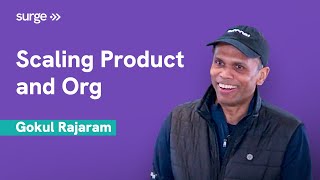
Gokul Rajaram - How AI Will Reinvent Ad Platforms

This is a recorded interview (YouTube) of Gokul Rajaram with Adam D'Angelo about how AI and generative models will transform ad platforms, content recommendations, and product personalization. Rajaram draws on his experience creating Google AdSense and scaling Facebook Ads to argue ad platforms must balance user and advertiser value, that AI assistants combine both intent and identity (enabling new ad formats), and that generative models with large context windows will materially improve recommendation quality and personalization. The conversation also covers practical ad placement best practices (interleaving content and ads to avoid ad blindness), business-model shifts toward commoditized foundation models and downstream monetization (ads/subscriptions), hiring and role changes in an AI-native world, leadership dynamics (the importance of complementary #2s and founder-mode tradeoffs), board meeting structure and governance, and venture investing lessons (patience, conviction, multi-stage dynamics).
One of the most interesting things about these AI assistants is I think Google Search has your intent in some ways and Facebook had your identity. With these AI assistants, they have both intent and identity.
Hello, fellow data nerds. My guest today is Gokul Rajaram. Gokul led product teams at Google Facebook Square DoorDash. He was the creator of Google AdSense. He helped scale the Facebook ad platform, led caviar and Merchant products at DoorDash through its IPO. And he currently serves on a number of boards including Coinbase, Pinterest, the Trade Desk. And earlier this year he launched a venture capital firm called Marathon Management Partners.
Gokul, welcome to world of Das Arin. Thanks for having me. It's so exciting to be here.
I'm really excited. Now you're kind of like part of building two of the biggest ad platforms, Google AdSense and then Facebook ads. Like, what are some of like the core principles that translate into these different advertising models?
Yeah, it's an interesting question. I've seen now over the last 20 plus years a bunch of ad platforms been closely enrolled with two of them and then with Pinterest and Trade Desk seeing different kinds of ads. I think one thing I've learned is that to be successful, an ad platform has to balance both user value and advertiser value. This means that your metrics, your leading indicator of success, can't just be advertiser focused. They also have to include user focus. And I think one of the most interesting things there is how you select which ads to show which is targeting and, and like running the auction and, and, and that. But also where do you show these ads? How do you make sure that you're not overwhelming a piece of content with ads? So where you place ads, ads placement, campaign goals that you want to serve. For example, if you started serving in search of, if you started serving ads that are not relevant to your search but relevant to your identity, it would look very, very incongruous and probably would not be interesting. And then similarly, the ad format also matters a lot. Obviously the powerful thing about, again, search ads was the fact that the ad format looks exactly very, very similar to the SEO ad format or the organic ad format. So everything, all of those things together, targeting, campaign creation, campaign goals, inventory, ad format, all of them have to be consistent and really in keeping with what the platform, the broader platform is trying to achieve. So Facebook's ad system, good example. The initial ad system of Facebook when I started at Facebook was actually very much like Google Ads. In fact, I think some engineers had Just taken Google Ads, they read some papers and just copied Google Ads so you could enter keywords and you basically just bid on keywords. And what is crazy is that it doesn't make sense. Why? Because in Google, when you bid on the keyword accountant, what do you get? You get people who are searching for accountants. Right. And so your ad shows. But in Facebook, when you bid on a keyword accountant, there's no search context. You are actually targeting accountants. So we, even at Facebook, before I joined, we had built a system to take your Google campaigns and port them over to Facebook with one click. But of course that doesn't make sense because you take the keywords in Google and the same creator. Yeah, and it does.
Yeah. You're not searching for. It's just, it's just not the same user experience. Exactly.
And so we had to rebuild everything from ground up. Looking at Facebook's unique value, the context, everything had to be changed. And so that was the real lesson. You can never copy what works because what works in their platform, their context, will not work in yours.
And part of like, I mean, really what you're just saying, it's like this is content that the user wants to see. And the, the ad, the reason why the Google Ads are so powerful is they're actually things that I want to click on because they're, they're relevant to what I want at that moment. And a lot of those Instagram ads are actually things that like, I, I, I'm excited about. I can't tell you how many shirts I've bought or hats I bought or something from random Instagram ads. I may be, because I'm just like doom scrolling while I'm bored on a conference call or something. And it's more exciting than that. But like, it works like it actually, it works exactly. Why, but, but it still seems that content recommendations are still not there. Like, like when I get content recommendations, even on Netflix or Amazon, which have so much data about me, they're often pretty subpar. I don't get good, I don't even get good music on Spotify anymore that I really want to listen to. Like, why is it so hard?
I think part of it is because in the past, till recently, systems have not been able to preserve context on everything you've done. But now with embeddings and generative AI, this is why, if you look at the Facebook revenue growth, it's been so traumatic this past quarter, because from all that I hear a lot of the innovations in gen, all the stuff that llama Et cetera. But even using third party models, Facebook has really dramatically transformed both the algorithm.
So it's not just like an old collaborative filter or something. It's actually like about like it's very.
Very based on what I'm maintain context of a million tokens per user and you can see everything they've done and be able to choose much, much, much.
They're maintaining a million.
I don't know if they're maintaining a million or not models. You can do up to a million. I have no idea how many they're maintaining but essentially their ability to show content, both organic and ads has dramatically improved. And I think this is going to be the case across all platforms. I think every content platform that's not using gen AI and deep learning and basically reinforcement learning is going to be falling behind. They're going to work so they have to be. This is the reason and this is why I think Facebook is able to make this kind of capex investment because I think there is a massive path forward for advertising that I think the acceleration.
But Amazon, Amazon, Spotify and Netflix, I mean these are all smart companies with super smart engineers that have massive capital. You know they can, they can do lots of investments but I think their recommendations still completely suck. Like why have they not, like why have they not somehow moved to what Facebook is doing?
Because I think you need, you need to, I don't think you can just use off the shelf models at that scale. You've got to have people who basically are inside your company who are doing research. So I think a lot of the FAI r Facebook artificial research stuff, fair, fair labs, that stuff has been applied. So I think, I don't think they built native gen AI capabilities the way Zuck and Facebook invested in it over the last few years. And so I think they are building it now but I think they are a little bit behind. But hopefully they will also invest. But I don't think you can just use for that scale at Netflix, Netflix or an Amazon. I don't think you can just use OpenAI or Cloud off the shelf. I think you need another layer at the very least because you have so much data. You have so much data you've got to figure out what the right token size is or the right token window or the right amethyst. It is much beyond what a normal company would use.
The other thing I've been wanting is to me part of this thing is personalizing the product and like when I listen to a song like you know, like the DJ college shout out in the song, I would love them to shout out me and my friends in the song. Right. I'm listening to it. If I'm like, working out, like, that would really pump me up. If there's like, if I'm. Listen, if I'm watching like a superhero show on Netflix, like seeing me and my family, like walk by as extras, you know, when the meteor is coming, like, that would be really exciting. That would get me engaged. Like, that's so easy to do. Like, why is the personalization not happening?
I think again, this, all the things we talked about were text stuff around recommendations. Now we're talking about injecting video and making it seem that we're talking about audio models, all of these things. So I think it's going to happen. This, the thing you mentioned, the scenario is pretty, pretty incredible. But I think in the next five years, these kinds of shows are going to be. These kinds of situations are going to be commonplace. And if they don't do it, they're going to be.
Someone will do it for sure.
Someone else doing it. Yeah.
Now if you, if you were now like advising open AI on how to do ads, and obviously they have to think about completely differently in this kind of chat interface on chat GPT or perplexity or whatever, like, how would you be, how, how would you help them design a system?
Good news is they have a lot of great people who've joined recently, leaders who are going to design it. But one of the most interesting things with these AI assistants is I think Google search has your intent in some ways and Facebook had your identity. With these AI assistants, they have both intent and identity. And so it's pretty amazing because on one side, people are using them as ways to find for commercial queries, to find recommendations for commercial content for those. It's a pretty straightforward thing to actually add useful ads in addition to commercial recommendations, just like Google Search has done. So that set of queries, you can do that. And for the rest of the queries or the rest of your engagement with these apps, you basically have their identity. Because as you know, many people have done this experiment. If you or I were to enter into ChatGPT or Cloud, tell me, draw a picture of me based on all you know about me. It is going to draw pretty. It's pretty cool.
Yeah. Super cool. Yeah.
They know as much about us as maybe a Facebook or someone because they've inferred it from all the things you've done. So given that, shoot, you have identity. And most of Facebook ads are based on Identity on your implicit associations with organizations, with loyalty programs, with restaurants, et cetera. So you have that set of ads you can show. I think the big question for these assistants for this, for these kinds of ads is going to be where to show them and I think how to introduce them into the experience. I know some of the larger AI apps have been experimenting and a bunch of them have pinged me over the last few months and we've discussed different things. I think you start out Gmail was a great example. I think Gmail because I was involved a little bit in helping them think through advertising on Gmail. And there is actually a. I don't know if you've ever clicked on that in Gmail, but Gmail actually does quite well in advertising.
I didn't even know. I thought they, I thought they did it and then they kind of, they, they took the ad off or something. I don't know if I've ever even seen an ad in Gmail.
It's because they, they rotate content into at least back then I think last five years, I myself am not sure. But till about five years ago, they rotated content and ads into the same slot. In other words, it's very important to make sure people don't get ad blind. If people realize that a certain slot is always going to be for ads, you basically start ignoring that.
Yeah, you ignore it.
And so it's very important to start showing useful content 80% of the time or 50% of the time. The remaining 50% show ads. I think this is going to be very important.
X does that too. So they'll have like, here's the people you should follow. And some of those people are sponsored, but some of those people are actually algorithmically like the people you should follow.
So I think that's the best practice where you have to intermix interleave content and ads in the same spot. And that's what I think Web publishers didn't do well, where they would always put a banner on the right. And none of us can ever remember back in the day right what the hell the banner ad said because we all got ad blinds quickly. So the key is to not get ad blind and prevented from exactly what you said. Interleaving content ads in the same slot never have a slot B, never have a notion of a slot. In fact, an ad slot. Every slot can have some content and some ads. You just don't know when. And it's determined by the algorithm or the AI. But that's the most important thing to make sure there's no ad spots. Everything is. That's why in Facebook, I think the beautiful thing is as you're scrolling, you never know. But then an ad is going to. It's not like every five.
Yeah, it's just part of the feed.
Yeah, it's. It's a thing.
What I like about Facebook, you know, is that the ads are good and it's. It's actually real. It's content that I want to. It's actually just content that, that I want to see. Just happens to be paid content. But I want to see in. In on X or Twitter. Like there's. I upgraded to not see the ads. You could pay, you know, X dollars a year to not see the ads. And the main reason I did that is because the ads were terrible. So I just never saw an ad that I wanted to see. So I just decided to. I would, I would pay to not see them, but I would happily want to see ads if they were good.
And look at what Google did. I was just looking at Gmail to refresh what they did. Of course, what they've done is they put ads as emails. Their ads are actually just tagged sponsored and are. Yeah. So they're actually the ultimate blending of the ultimate.
Like that would be great, right? Exactly. If they show me an email that they know I want to see like that that would be good as long as I actually want to see it. Like, is that spam or is it content? Right. This is always the debate.
And that one uses, absolutely uses, I'm sure Google search results and so on. So it truly knows a lot of stuff about me and is able to surface really interesting offers for me and ads for me as email content. So that's a good example. I actually think the right ads in Gmail should be email offers. And that's what it is.
The problem is, I think at some point, so I think actually in Netflix really, they're mainly just promoting their own shows. Right. And so that's essentially an ad. Right. So they're always promoting their own shows. And I think they've gotten really. They've gotten to a point where they just. They only promote their own shows and it's just not good for the user anymore. So they think of it like that ad there. But I think the number one go rule that you had is you have to do what's in the best interest of the consumer.
Exactly. You have to have an. The reality is every ad system in history, from ebay sponsored ads to Facebook, the reality is once you start injecting ads into a purely organic setup. Engagement will degrade. It's an axiom almost. And so the only question is how much you wanted to degrade. And so Mark, Mark Zuckerberg used to have an engagement budget every year as to how much engagement degradation he was willing to permit. And so the ads team and the newsfeed team had to really stay within that, within that, within that budget. So I think that every, every company should be measuring, and probably is measuring through holdout groups and so on. So you have holdout groups of people who never see any ads and so you understand people who see ads versus that holdout group what the engagement degradation is. And then you want to hold that degradation to a certain amount per year, but then you do other engagement enhancing things on the organic side to counterbalance that. And so you're always had this tension between, between advertising and organic. And that's a, it's a good tension to have. You need, you need ads to monetize and grow the business, but you also need the organic side. The content recommendations get better and better.
World of DAS isn't just a podcast. World of DAS membership is a private invite only community for founders and executives of important data and AI businesses. It's a place for off the record, high trust conversations focused on the biggest questions data leaders are facing. The community is about peer learning, curated intros and access to private events. Everyone in the group is building or leading something meaningful in data. If that sounds like you apply to join@worldofdas.com that's worldof d a a s.com now if I want to buy, if I'm an ad buyer and I want to buy ads, if you think of things like X, Netflix and Spotify in those platforms, the richest people opt out of ads, right? They can afford the premium version of Spotify, the premium version of Netflix, the prison version of Hulu or whatever. And then they don't actually see the ads. And as an advertiser, like I might want to advertise to the richest people. So the, the, the amount of opportunities to advertise to these very wealthy people has gone down. What would you be your advice to the advertiser?
I think the interesting thing is even though people want to advertise the richest people, the reality is there's not that many of them. So most people do want to hit the mid market and below.
Yeah, Coca Cola or something.
Yeah, exactly. So I think it's probably a smaller set of advertisers who care. And I bet that even for the premium tiers, there will be ads introduced back again if they're not today? Because the creep of if there's one thing I realized is every company, you either die as a company or you live long enough to become an advertising.
Yeah, every company is an ad tech company.
Every company ultimately does. I never imagined Netflix would do it because they were so against it for so many years. But now that they have capitulated, I know this is an axiom again, every company is going to be going out as a company just like the AI assistants are you.
You have a great tweet about how the future of AI is shaking out. Like do you think most of these categories are winner take all or do you think there's going to be like a, like a, a plethora or like a group of winners?
I think almost in every category, unless there's a very strong network effect, there's going to be a few winners per category. We're already seeing that in the foundation model. I don't think it's going to monopolistic situation. I think there's going to be. That said, there's going to be multiple winners. That said, I think it's likely that the, the number one player in the category will capture 50 to 70% of the value. The number two captures 20 to 30% of the value and then everyone else together captures 10%. So I think there'll be three to four companies but there is importance to be number one or number two because I think the rest of the players.
Are and like today, like you know if we're, our companies are extremely promiscuous. Like we're constantly moving between the model providers and really looking at kind of quality price continuum and trying to, and, and, and even, even there we don't want to be like too overwhelming to one but I could see if they like start memorizing the context more of what we're doing that we're going to get a lot more locked in. Is that like you think the ultimate strategy?
I think it depends on what the company's ultimate goal is. I do think there is a theory that the reason OpenAI dropped the price of GPT5 so much is that they almost want to burn the boats and they want to say look, we are going to make enterprise almost a zero profit pool business over time and instead we are going to basically make money.
You already saw some people move over from anthropic. Even if GPT5 was maybe it's 100% as good, maybe it was 120% but maybe it was only 80% as good, but it's 5x cheaper. Going to likely at least try it out.
Exactly. And the, and then the profit pool shifts. So your profit pool goes from enterprise to the consumer side and then you have ads and, and subscriptions monetizing it. So I think that's an interesting question for me. Is is there a profit pool in enterprise and if so is it at the foundation model layer or is that the application they where you're building agents and adding more value and so on? It might be that, you know, by, through pricing strategy and so on because Google and others have other things they can do. They're trying to almost raise the ground in some ways for these token based models or token based pricing strategies and say look, that's not going to be, we are signaling that this is going to be a zero profit pool thing. Anyone who tries to make sustainable profit of just selling tokens, any model, that's not going to be the case. We are going to systematically eradicate that profit pool. And I mean that's what happened in some ways I think in AdSense. I think that's the thing as there is a saying that says commoditize your compliments. And so they're commoditizing their compliments by just saying yep, that's complementary. Our core business is this. And your core business is B2C essentially it's B2C. It's B2C exactly.
Yeah.
Anthropic is an interesting. I mean anthropic. I bet a chunk of the revenue comes from enterprise today, obviously from cursor for sure.
Yeah. I mean they probably have a, they're gonna have a billion dollars from cursor or something, you know, some crazy number like that.
So the question is for them is going to be how they are.
Yeah.
Replace replit. Exactly. All of the v0replit cursor. All of them use.
All that stuff. Right. They're all coming. They're what? I mean I know we're investors in many of those companies and a lot of them are, are, are becoming a lot more promiscuous. They're, they're using some of these, they're not, they're even using some of these open source models as well.
They have to because otherwise you are negative or very low gross margins. So this then changes the axis of competition. It's brilliant. I mean it's such a. I think historians are going to look back, business historians this period from 23 to 30 probably when everything just the wave of innovation and the business model, innovation is so incredible. I mean ChatGPT was such a, I mean masterstroke in retrospect because it just showed open air that they don't just need to be a developer focused company. In fact I always say now any infrastructure company I invest in, I want the company to not just be a defense company building deep tech, defense defensive company building deep tech, moving slowly, getting enterprise customers but have the opportunity to play offense, build a consumer brand. Vercel, great example. Right. I'm going to invest in Vercel and what a brilliant thing. They just went up the stack and made V0. So I want an infrastructure company that has the potential to do that like an OpenAI or a Vercell.
And yeah, we're also investors in Vercel. And I mean you know, in one of the thing of all these companies, if you think of Vercel, Perplexity, you know, Replit, Bolt, New cursor, you know, etc. Like they all are, they all have these like incredible founders who are very, they're not just like super technical and they are, they're all super technical but they also, they've got like this dual thing. They're also super go to market. Super, super good at marketing and mass marketing. Like Perplexity CEO, he's like a master at mass marketing at like getting into the news cycles of finding a way in. Obviously.
Yeah, it's a great marketing stroke. Exactly right. And so I think the nature of companies is changing just like the nature of people that companies want is changing. Do people want, you know, any. We can talk about that more. But I, I think it's, it's a, what a time to be.
How are the, how are what people want changing?
I think there was an article in the New York Times that talked about how CS grads are having tough time finding jobs. And I think I got a degree in CS and I feel like 30 years ago getting a degree in CS you could just do the coursework, you could do a couple of internships and yeah, you get a job. But today what companies are looking for is full stack thinkers. I mean that's the, that's the word really. Someone who is not just an engineer but can be a product person, can think of business problems, can go up and down the stack, is proactive, can really be a battle over time and they are looking for people like that more T shaped people who can go deep into something but also have a broad perspective on things. And I think just doing the coursework and doing an internship or two is not going to be Enough today you've got to built a product thinking mindset as an engineer so you've got to really be a full stack and then you've got to be AI native. I hate it's. I think companies are being weirdly specific in some ways and many of those, many of these are almost unreasonable. But that's why they're trying to find people who have truly built with AI and lived their lives with AI and have built their own personal AI stack and AI agents and so on. So showing over the last two or three years they were sitting back and doing coursework, they were embracing this wave, they were doing stuff proactively, etc. So proactivity, being able to be on the cutting edge of things and be able to be full stack thinkers. So it's hard. I mean I feel a mid career professional, they're all having these moments where they are looking back, looking at themselves in the mirror and saying, hey, should I just take a step back and go be an IC now and relearn some of these skills? Because what I learned so far, what made me succeed in the last 10, 15 years is not what's going to get me to succeed in the next 10 to 15 years.
But I mean you mentioned proactive. I mean in some ways like if, if someone was just proactive like and really, you know, somewhat smart and just proactive like that puts you in like the 99th point something percentile. Like that's all I need. I mean it's so rare to find someone who's actually proactive.
Exactly. Agency. Right. I mean I always say the two things you have to look for in any role is problem solving. Ability to just problem solve, just be fearless of problem solving. And then high agency. Someone who you don't have to micromanage, they just come to you with problems.
But those skills have always been rare. Like it's not like, you know, and it's not that easy.
To amplify those skills. That's right. Proactivity. You can now have more, more ways to measure, okay, this, this amazing tool that exists for two and a half years now. What have you done with it? Have you been trouble with using it? Earlier there were harder things. Now you can actually say, tell me about five tools you've used outside of ChatGPT.
Show me what you build.
Show me what you build. Exactly. Exactly.
Now you have been somewhat vocal about disagreeing with Paul Graham, Brian Chesky about this Founder Mode essay. Where do you disagree with them?
I think first of all it's a great framing that Paul Graham came up with around founder mode. I think founders look, I think hands on leadership is very important, but it's a double edged sword. I think whether it helps or hurts a company depends on the context and the stage of the company. So where does it help? It's obviously very critical as you know as a multi time founder in the early stages of the company. So you're setting the tone. You're basically being super involved in every single hire, every single decision, every single product decision. And so I mean when I look at Google for example, I was there early and Larry and Sergey even till about a few hundred people were setting the tone every single day of the company. They were basically super involved in. And that level of involvement is needed and the other time is needed is when the company is going to, when the company is either tackling a high stakes problem or even an existential threat to it. And I think that's when or when something is not going well, something meaningful and meaty, the company is not going well. Those are the times. So I remember when Google was launched, Zuck used to have these sessions called lockdown. Whenever he perceived that Facebook was under some kind of threat, he would basically light a sign outside his office that said lockdown. It would light up and it was almost a beacon for all the engines in the company to congregate. And he would give a speech saying for the next X weeks there was no timeframe till we have built all the things we need to build and shipped all the things we need to ship and gotten to a place where there's no longer existential threats. The whole company's in lockdown. No one's going to.
I've never heard that anecdote. That's super cool.
So when Google launched, even though ultimately didn't do an extension, he became the pm. He's like, here's the things you're going to build and here's the teams that are going to build it. And I was on ads, but we still contributed. I mean we had our ADS teams but even those engineers jumped on. And for I think it was six or eight weeks no one did anything except, except these features and working directly with Zuck and he was the pm and that's, that's hands on now I think on the contrary, if you start taking every, you know, if you're hands on in everything, it basically signals to your leadership that you don't have confidence in them and you can't delegate. And then many times you get involved in things where you're not the best in the room at that. So I think you have to understand what your superpower is. Z today, till today, I think it's still very, very, I think again, I think the AI moment is again a lockdown moment for him that he's, as you can see, taken ownership fully. But when I was there, I mean a lot of the ads and sales stuff, Sheryl Sandberg would lead and she was excellent at it. And he would defer it to her and her team. And periodically he would get involved, but it was more we would pull on him versus he would push. And I think you've got to, you've got to have a partner like that. I think part of it is having trust and having a partner whose superpower is complemented to your own.
And you, you've talked a lot about these number twos that are, that are complementary. Why else is that relationship so important?
Every company I've been at, now that I think about it, has had someone like that. Larry and Sergey had Eric, Mark Zuckerberg had Sheryl Sandberg, Jack Dorsey at Keith Ravoir and at Doordash, Tony Xu had Christopher Payne. And so each of them, I think on one side gave them a superpower because the reality is every person has a superpower. You know, even though they are T shaped, they can do a lot of things. They have a superpower and they have something they really want to do on a day to day basis. This helps them. This person is.
And clearly for Socket's product, it's product.
It'S product, it's engineering. It's really the vision of the company. But then there's an infinite number of things that need to run in order for that product to sustain, including monetization, the business side, regulations, all of those things. So you need somebody who has an owner mindset, even at that senior level, someone who can get into the details, someone you trust and, and interestingly, I think Zak has said this a couple of times, someone you'd be willing to work for if the roles are reversed. In fact, you could argue that Eric was the CEO of the company, actually.
Yeah.
And Sagit theoretically dotted line into Eric or worked for Eric, even though they were trying for it. And I think Zucker said the same thing. So you almost need a person who's equal. And I've seen the same at Coinbase with Brian Armstrong and Emily Choi. They're so complimentary. Brian really runs product ranging and Emily runs, you know, huge chunk of the company. And I, I suspect that all of these folks, it works that there is mutual respect. There's mutual respect. And they're almost like peers. And the reason is they have complementary superpowers.
One of the things.
Yeah.
So I, I have a theory about this. I'd be interested in hearing your thoughts, what you think about my theory. So you usually there's like a number one and a number two, and the number two is very complimentary to the number one. They have very different strengths than the number one. Sometimes what happens is the number one retires or whatever and then the number two takes over the company. And I think this is universally bad, like, because the number two is complementary for a reason. So they wouldn't like that particular company needs a different. Needs the number one strengths as number one. So if, like, you know, if you think of Sheryl Sandberg, like Steve Ballmer and, and yeah, exactly like Sheryl Sandberg would, I think she could run many companies, including, like J. Morgan. But I don't think she should have run Meta. Like, I don't think she would have been the great number one for Meta because that would like. She was there as the complimentary kind of person. And again, I'm like. And so this is my crazy theory. I'd like to know what you think of it.
I think, I actually think Cheryl can run any company she wants, including Meta. Yeah.
Yeah.
She would need a complimentary product person who's just as good as her, that she respects. And I think knowing her, she would hire somebody like that. I think you're right.
Like, if you think of Tim Cook. Tim Cook was complimentary to Jobs. Now, obviously he's done an incredible job as CEO, but he needs. I don't know, I, I think I still feel like Apple would have been better off if it had like more of the product person as the leader and someone who's super operational as the number two.
Look, I think Uber has proved it wrong so far, at least. Where Dara, you know, has. Has had some amazing product people as this. Good point.
Yeah.
So I think it, it can work in any case.
It's hard to succeed a founder in any scenario. Right.
So usually iconic companies, I mean, they are one of one, each of them.
Yeah.
Yeah.
Okay, that's a good point. Now, I love to ask you a question about boards. You're on a bunch of boards. I've been in, in many boards in my life, including many I've run. And I would say pretty much all of the board meetings I've ever been, the ones I've run have been subpar, have not been that Great. You know, in the end, like, I've not done a good job of running them. Like, what have you learned about not only being a good board member, but having actually a good board meeting.
Aha. So to be a good member, first of all, you need to care about the company and the industry. You need to care. In other words, I don't think once you join the board of a company where you don't care about the problem they're solving, the customers they have, and that you're not willing to be proactive about learning about this industry and sitting to this. So I think, for example, I love Procter and Gamble as a customer, but if Procter and Gamble were ever to invite you to join the board, I don't think I'd be a good board member because I honestly don't care about that problem specifically to be proactive with what they're facing. Yeah, I always advise people who call me, hey, should I join this board? Do you really care? Have you ever in your life, or are you going to be proactive about thinking about this company and the problem? So that's one. And I think this is a good one for you to test prospective board members. Are they at all, do they care about this? What have they shown? Just like we say, by the way.
If you're a B2C company, like, do they already love your product? So they're already interested in the product.
Exactly. If you find, if you're ex and you go and find someone who's never used X probably shouldn't be, might not be a good executive or a board member.
Correct.
The second thing you learn is that as a board member you have two or three jobs. One is governance, making sure the company is running well. The second is fiduciary, where you are representative of the shareholders. The shareholders in some ways have put you into the seat and you are kind of the nominal boss of the CEO and the managing team. And the third is strategic. And so the second and third are the most interesting ones. First, you've got to hold the CEO accountable and you've got to make sure the CEO is the right person in the seat. But the last one is the thing that you do most often, which is strategic. You got to be asking the questions not around day to day operations and financials. What's happening this quarter or this year? But is the company set up in light of the competitive environment and dynamics and everything else going on to thrive over the next few years? So what are the challenges around the corner that the company might or might not be looking at. And so I always I when I joined first joined boards about 16, 17 years ago, I was very directive in my, in my feedback, let's do this. And I quickly realized that that doesn't make sense because the executive managing team is running the company, not me. So my goal and ultimately I'm going to hold them accountable. They have to make the decision. So I always now ask questions in a Socratic way. Have you thought about this? Have you considered this competitor? So Socratic questions that really still frame the dialogue and discussion.
So the right rather than like having an opinion or something, having an opinion.
And you try to gently nudge and make sure they've considered enough things. So the right board meeting in my opinion is a three to four hour meeting for public companies or later stage companies. I think for younger companies is 2 hours is more than enough. 3 to 4 hour meeting where the first hour you start with an executive session where the CEO gives CEO and the board board meet up. The CEO talks about what's on their mind fresh off like good and bad, what's going well, what's not going well. Give some, you know, that's about 30, 45 minutes. Then the CFO and the leadership team joins the board meeting and then we talk about the financials which are obviously important, how the come typically it happens around the quarterly earnings. So how the company has been doing, what the quarter looks like, what the year looks like, all of that. So you get done with that planning for the year. So that's about one and a half hours. After that you spend two hours, two topics, one hour each or 45 minutes each, which are strategic topics. One can be product centric, one can be business centric, could be channel partnerships, could be a new product, whatever the case is. And those are the topics that there's a lot of time spent ahead of time discussing what those topics should be. And typically I like one product in one business typically led by a product team. And then you want more. You also get to see other folks in the boardroom. You want to make sure obviously the execs are there, but you also want to see the next level and you have the discussion. So really those are things that pre reads are centered a little bit ahead. But really the goal is to not present but as much as discuss and really be open with the board around some of the challenges, problems you're facing and have a discussion around this. And really the board needs to really come much more than any session. Those two sessions really with a point of view around what questions to ask, how to challenge folks, how to bring the diverse set of experiences the board members have to each of these discussions. And some board members will be more actively engaged in the product one, some will be more active in the business one. But you want again, if you feel your board members can't actively engage in one or the other, you don't have enough, then you probably need different set of board members.
One interesting thing, that is the only company I know that does this is Meta. I'm sure there are others where they actually have two boards. They have a board of directors and they have a product board. Some of the people are on both, like Drew Houston or Charlie Songhurst are on both the product board and the, and the, and the, the board of the traditional board of directors. But they're different and they have different goals and different objectives and I assume they have different topics that they dive into and the CEO is going to get different things out of them. Have you heard of other companies that have something?
I've never heard of any other company doing it. That's pretty impressive that they have two different boards. I mean, I didn't know this, to be honest, until you mentioned this. I'm pretty impressed with that. I think most companies getting the board together once a quarter and then there are all the committee meetings and so on is good enough, or at least it's hard enough, I should say so running two boards, obviously there's overhead on the company. You want to really make sure it's worth it. But I mean, I'm sure it's worked well for them with those kinds of folks in there. But yeah, there's product and business and then finally you wrap up with feedback from the board on the meeting, on everything else they've seen and heard for that day with the CEO initially. And then you have an exact session without the CEO at the end. So it's like cleanly many of the boards I'm on. Now we've gotten to the structure where CEO + board thoughts, unfiltered thoughts, CFO comes in, CFO managing comes in, talks about the quarter of the year, two or three maybe, but two is better. 45 minute sessions, maybe three sometimes 30 minute sessions. And then you end up again, everyone leaves CEO and board and then the board alone, giving feedback to the lead independent or the lead director to summarize and communicate back to the CEO and the management team.
Now, you recently launched your fund marathon, but you've been an angel investor in like you're super prolific. You've been hundreds and hundreds of really interesting companies. How, how has the venture landscape changed over the last, you know, couple of decades?
I think, what, 15 years ago or 18 years ago, when I started doing investing, it was very clear there were swim lanes that were very clear. You raised the friends and family round, then you raced around. Back then there were no seed investors. You raised around from early stage VCs, then you went to later stage growth, VC, et cetera. Now they didn't know any swim, they didn't know any swim lanes. I mean, everyone swims in everyone else's lane. In fact, if you think you're swim lanes, you're living in a different world. Pre ipo, quote unquote, firms do seed rounds. And I've seen like, seed firms do like series D rounds, lead series D rounds. So I think there is no swim lanes. And you've got to really, as an investor, you've got to. I think it can be very chaotic and there can be a lot of.
And the strategy is changing constantly. As an investor like you, you can't be like, oh, I have this strategy and stick to it. Like, you have to be very fluid.
But it's also very dangerous because strategy drift means that you end up doing many different things. And so you've got to understand where your true north is. What is the core of things that stays constant through all this change. Because if you don't have a core, if you don't have a core, that basically means that you have no, no strategy at all. And I think that is challenging. I think it's hard to. There has to be something that is consistent across all your investments. Something. It doesn't need to be. The stage doesn't need to be. It has to be something. I think it could be the domain, could be something. I think everyone needs something because otherwise you're just rudderless. You're just capital chasing the best deal, which I think is hard. I think it's possible, but I think it's a hard way too. In fact, I always look back at my angel, my angel. I think of vintages. I have vintage years where I've done 30, 40, 50 investments, not as many as how many you're doing. But when I did more than 30, 40, 50, I'm like, I could barely remember the names of the companies. You're doing one a week. And then there were years when I did five investments. And I really remember them because I was proactive with those years, those vintage years. Some of them died, some of them did well, but I just had a deeper relationship with those companies and I felt more satisfied with those. But anyway, I think, yeah, the things, I mean, the speed at which things are moving and capital is being deployed, it's almost like capital has, capital is just being deployed and it's hard, at least from the outside. So when you're in, you kind of see there's a method to the madness. But the other thing you realize is that you've got to really make sure you build your own conviction on the company. You cannot outsource conviction to someone else. I think what it means is that because everyone is playing their own game. And so if, for example, you work with, you say, oh, multi stage platform fund is leading around, I should invest. Guess what? You better know that if they're leading a seed round, their goal from that seed round could be very, very different than your goal as a seed investor potentially. And so you've got to be very, very careful and thoughtful. And so you've got to build your own conviction. Only then maybe you learn. So I've many times made mistakes of, oh, you know, firm X is leading the round. Yeah, okay.
You know, I was Sequoia's in, I should be in or something.
Literally, you know, you go from saying a no to the deal or no to a yes, and I would be like, hang on. And then you look back saying I was a no.
Right.
Just because someone's leaving.
I made that mistake many times in my life. Yeah, right.
I mean, so you, you only make that mistake and you learn from it.
So.
Yeah.
Now what? You, you recently raised a fund. How was that process? Like, what'd you learn from like the process of raising the fund and, you know, pitching LPs and stuff.
The biggest surprise I have, I'm having just being a venture investor is the importance of patience. I think most LPs are, you know, they basically, many times they, when they meet you, they, unlike a venture firm where, you know, they move fast. I mean, LPs are thoughtful, they move at a certain pace, and many times they want to build a relationship for Fund 2 or Fund 3. So I think it's, it's, you know, you've got to just be, it's almost like an enterprise sales funnel where you have folks and then some folks could go for fund one. But the vast majority of folks you meet want to see a certain strategy and deployment and all of that sub the team working together before they say they'll invest. And this is true even on the investing side. I realized, I think as an operator, I always felt able to Launch product fast, see impact, move fast. So you're used to certain cycles reasonably one or two years, you know, even months now weeks with venture capital, as you know, I mean, oh my God. I mean when you're whole life is around making decisions that don't pan out for pan out for years. And increasingly I don't use any markups and so on as any markers of success. It's all about whether or not the company achieves a liquidity event that could.
Be like 10 years later or more.
Just 10 years. I invested in the seed round of Figma in 2012. It took 13 years, which is why our firm is marathon. It is a marathon. It takes 13 years from seed to IPO if you're lucky. Some companies.
If you're lucky, yes. What are there things you look for in founders that most other investors overlook? Like what's the money ball?
The biggest one I look for is can I meet, can I see these founders operate outside of my pitch. In other words, I'm very, very nervous about only getting to see founders during the pitch they make for me because I feel every. All behaviors are hidden, amplified, etc. And you don't really see the true nature of the founder. So I really try to not meet the founder. If the only time I'm able to meet a founder is when they're pitching me, I feel that is a dangerous time to invest because you don't really.
But any good founder, if they're meeting you, knows that they're pitching even if it's not during a quote unquote pitch.
Right, exactly. So what you do is you try to become the confidant. And so my goal is to try to build a multi month relationship with the founder ahead of their pitch by actually. And one of the best ways you can do that if you can make an introduction to a customer for them.
A real customer, customer, a potential employee, even another investor.
Those are the two things even before you invest that just instantly breaks down the wall. And then actually if you make an introduction to potential customer, you can sit in that customer meeting. Totally realize that recently you have the privilege to actually sit in and listen to how they.
Yeah, we just did. I just did that in a company where I introduced them to Anthropic and then I could see, okay, well how is Anthropic actually interested in this product? Like are they wanting to buy it? And obviously so that would also increase my conviction in the company.
But.
And then you're adding value and all.
That and then you make an introduction employee, the Same thing you can ask the employee how's it to work at this company and what is the experience like? And so you get two very different perspectives. So trying to really not just get my one perspective, so trying to really have other. And that's what been the difference. As an operator angel you don't have much time. But as a venture investor you have more time to think about and do these things. I mean that's why I'm always impressed that you're able to do both or in you yourself as an operator and also as an investor because you just. Time is the key thing. The more companies you invest in, the less time you have per company.
For sure. Yeah. Now you've actually talked recently about like why people in leadership roles should try to like maybe move back toward being more individual contributors. I can see how like that would be looks like seem like for many people a step backwards in their career. Like how do you engage with them when you're giving people career advice?
I think good news is it started out by a couple of the folks who work for me proactively saying they are exploring this. And so over the last few months I have seen ex colleagues, ex friends and friends, sorry proactively move from leadership, which is manager or manager manager roles, to IC roles mostly at AI native companies. I think the key twist is at AI native companies, I think they were prior to that working, not working at AI companies. And like you said, it does seem counterintuitive to start with, but it's the right career move. Why? Because most AI native companies, they want to make sure the person can do the work and they are generally suspicious of people who are leaders, who've been leaders and managers, but necessarily doing the work. And so by, by signaling the, signaling the eagerness or ability to do the IC work and, and doing the IC work, you actually, but, but you have leadership experience. You I think have a really good chance of becoming a leader again at this company if you want to, if you can do the IC work.
Because like managing people is not like that's almost the opposite of doing good work.
Like exactly.
You're starting to see you used. There was this ratio where like I was seeing many companies where It'd be like one manager to five people or something and now you're seeing one manager to 20, 25, 30 people or something.
Span of control has increased dramatically. And I mean this is the first time in history where probably we're getting to the point where leverage from technology is greater than leverage from people. You used to get As a manager, leverage from managing people. Now you can manage AI agents and you can manage technology. Do the work for people.
Yeah, you get more vendors, you get good at selecting other vendors to help you. And that's like it's better than having a.
Exactly. And as you know, I think for managing people and running companies yourself, managing people is not all that is touted to be. And so the more it sucks.
It's a lot of work. Yeah.
You, you, you actually realize that, you know what, if I can do IC work, if I can be impactful, if I can be productive, I can get paid well, you know what, I can be an ic. I can be an IC and I can do great work. Leverage is what is missing and leverage is what is now unlocked through technology and AI.
What? You know, there's this relationship that between like product engineering, data science, design. It seems like it's changing a lot. Like how do you see those, those relationships evolving?
I think the actual job of each of the product engineering and data science folks is still the same. So product is still the what and the why. Owning that obviously in a collaborative way with engineering data science, engineering does the how and then data science is the, I call it the inside engine which is always not just building dashboards but coming up with new interesting insights around pricing, around markets, around hypothesis testing, et cetera. Hypothesis of testing. Those rules are stay the same. What is changing dramatically is how many and what that ratio should be within a team of product to engineering to data science, in other words and how many people who should do those roles. For example, I have companies now that say engineering is no longer the bottleneck because they can move much faster. Product is a bottleneck. So Instead of having 1pm to 5 or 6 engineers, I'm going to have 1pm to 2 engineers.
In fact, also the product people, they can vibe code, they can get things done, they can use vendors and outsource things, et cetera. They can spin up a contractor if they need to.
Exactly. The role of the product managers now goes far beyond I feel some of them have been put into service as designers. So into service of data scientists. So you almost have to do all.
You get in a bolt on you. You can just like spit it up or something or whatever.
Yeah. You can do AI prototype super quickly and then you have one designer shared across multiple teams. That's making sure that you're not doing something crazy. Yeah. And like, but you're staying within the design systems they have. Even front end engineering can be done with these prototyping tools.
Now and of course there are those engineers who kind of act as product people too. So maybe it's like hard to know. There's attention.
Student the skill you want people to build this comfort with taking any of those roles. I feel product engineering, design are, I shouldn't say fully interchangeable. I think there's backend engineers who do complex system stuff, but front end engineering, design, product and data science. I think everyone should try to get all four of those skills. At least figure out how to be passable at two or three of them and have a superb in one of them. Because I do think that's. That's what, that's the example when you're talking about college students and so on. Early career folks. People are looking for people who can do multiple things. We used all of full stack engineers back in the day, right?
Yeah.
But now it's full stack thinkers product people who are not. Who are comfortable just thinking about a design, but all comfortable interviewing customers doing insights. So got to be comfortable. Yeah.
People more. Yeah. And they've got to be AI native.
Got to be AI native. They've got to be able to work with AI tools. Exactly. From day one.
Cool.
All right.
A couple personal questions we ask all of our guests. What is a conspiracy theory, you believe?
I don't really buy into conspiracy theories in the traditional sense, but I do think that there are systemic blind spots in how people interpret events. For example, the way the media and public initially fully dismissed the potential origin of COVID 19 people are like, oh, it wasn't made in a lab, it wasn't a lab leak. It wasn't just about science. I think it was like. I think a lot of it was politics, groupthink and people weren't intellectually curious to try to understand what the reason why.
What's your theory about why that happened? Like why. Why did so many people come up? Which kind of was somewhat the obvious thing. Right.
You know, it became a political thing to express your opinions. And it was very quickly, if you expressed a. There's almost a strong peer pressure. If you express a dissenting opinion, you'd be quickly shut down or canceled in some way. And so it almost was a, you know, I think a sign of the times in some way you could say. And only now that we are actually seeing real evidence with. I think a bunch of the health authorities have released that it's probably, probably a lab leak. And I think that it was a knee jerk thing partly by. I don't know whether it was a government knee jerk thing. But then everyone felt compelled and if you weren't, you're going to be cancelled because you're questioning the. Yeah, so that. Uncomfortable. It was uncomfortable. So that's I think a recurring pattern, you see. I think knee jerk dismissal of uncomfortable ideas. And so I've always like tried to say, I think any consensus narrative, probably, almost any consensus narrative is probably should be questioned because there's, you know, there's, there's, it's just become too consensus.
So now before I get to our last question, I noticed that behind you there's a for, for people who can see this, but for the audio, there's a Settlers of Catan box behind you. Are you a big Settlers fan?
Settlers and Carcassonne, two of my favorite board games.
I love both of those as well. Why do you like them so much?
I think they are, they're a, they're, they're strategic, but they're also fun. They kind of allow you to think long term within the context of a game. So you're not just thinking transactionally each, each play of the game. Similar to poker in some ways. You're kind of building your hand over time. So it's a, it's a, you know, but it's a fun game and it's also something that young kids can pick up. So it's a great family game.
I play with my wife and kids. Last night I played Settlers. We had a great time.
It's a great thing. Kids love it, adults love it. You know, you can play it at different levels, right. There are movies you can experience like inside Out. You can experience it five different levels. It's one of those games you can experience at five different levels. Young kids with adults, with colleagues. I mean many companies have such as a catan nights and so on.
Yeah, yeah, absolutely.
Yeah, yeah.
When we were in person, we would always be doing them.
Well, next time we meet in person, we should place a little katan.
That would be awesome. I would love to do that. Our last question, we ask all of our guests, what conventional wisdom or advice do you think is generally bad advice?
I think the, this is, I think increasingly not credential though. But I think there was a obsession with work, life balance. And I think early in your career when building something transformative you. It's a luxury. Balance is a luxury you can't afford. I think the reality is that building a great company and mastering a craft requires intense maniacal focus. And I think people, you see every single person who achieved extraordinary outcomes don't just clock out at 5:00pm I mean, they basically work. I mean, you probably have companies and I have companies. The AI companies are 996 9am to 9pm Six days a week in the office. And some of them are 997. Actually, it's called 007. There's like new midnight to midnight, seven days a week. I think some of those things are challenging, but that's what it takes. And now you need to have. I think, I think a better analogy is you have intense periods like that and then you have basically renewal periods and then you have intense periods in your renewal periods. And I think. But early in your career especially, I think to build something extraordinary, you can't do it without extreme amount of focus and cutting out some of the balance stuff.
Yeah. Okay. I think what you're saying is almost conventional advice, at least for our people.
In 100,000 tech Twitter friends, basically.
Yeah, exactly. All right, this has been. Thank you, Gokul, for joining us on World of das. I follow you at gor on X. I definitely encourage our listeners to engage you there. This has been awesome and a ton of fun. I knew it was going to be great, but this has been awesome and a ton of fun. Thank you.
Thank you, Adam, for having me.
Thanks for listening. If you haven't already done so, please subscribe to World of Das wherever you consume your podcasts, YouTube, Apple, Spotify and more. And please help us get discovered by leaving a review. And check out WorldOfDas.com that's WorldOfDas D A A S dot com and of course, connect with me on Twitter orn. That's a U R E N would absolutely love to hear from you.
More from Gokul

Gokul Rajaram on the 8 Moats Companies Need & Why Dropouts are "AI Maxing" the World





#80: Becoming an IC again is how products leaders will stay relevant in the AI era | Gokul Rajaram
#80: Becoming an IC again is how products leaders will stay relevant in the AI era | Gokul Rajaram

What I Learned Working for Coinbase, Pinterest, Facebook, & Google | Gokul Rajaram
What I Learned Working for Coinbase, Pinterest, Facebook, & Google | Gokul Rajaram