The B Corp Creation Myth Story - How A Shoe Changed The World
20 Nov 2022 · 5 min
4:34
Tim Jones tells how Jay Cohen Gilbert's shoe company sparked the B Corp movement, a push to measure business success by social impact instead of just profit.
Tim Jones tells how Jay Cohen Gilbert's shoe company sparked the B Corp movement, a push to measure business success by social impact instead of just profit.
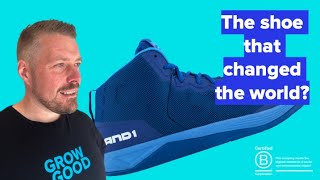
SEPTA B Corp. Came around in 2006 when one of the co founders of the movement, Jay Cohen Gilbert, realized that the power of business and the opportunity that business had to make a positive impact on the world. Jay had come from a successful career where he was co founder of a company called and 1 and 1 was second only to Nike for many years when it came to basketball shoe apparel sales. And really that had been the driving metric for the business was the old school metrics of financial success, shareholder return, trying to be the biggest in the market. And that had been Jay's mantra for business really for all of his life up until a significant moment. Now I call this moment the existential wet fish to the face moment. And it's a moment that's quite common for senior leaders, people of a certain age group, particularly late 30s to sort of mid-40s, where you have this kind of existential moment which could typically be a traumatic event in your life. So for me, it was certainly the earthquakes that we had here in Christchurch where I'm based. It could be the birth of a child, so having new life brought into your family, or it could be the loss or death of someone close to you in your family. Now Jay had two of these moments in quick succession. First off, on September 11, 2001, his sister was trapped in the Twin Towers in New York. Now luckily she got out, she was okay. And then pretty soon after that, within about one or two weeks, one of his close friends and colleagues at An1 passed away. So Jay had this kind of existential shock moment. And you know, typically after these moments, you kind of sit up and ask yourself like, well, what am I doing? What is it all about? Am I doing as much as I could be with my life? And having reflected on that, Jay realized that perhaps he wasn't. And so that led him to think about, well, what could I be doing in my business to create more good? Like how could I spread the wealth? How could I share the benefit of the journey that I'm going on as being a successful business person? So they started looking into ways that they could do more good as a business. And this looked like things like employee ownership schemes, bringing in, you know, workplace, I guess, facilities like massage treatment and yoga and all that kind of stuff. Way before it was cool and before Google was, you know, like a big thing, they looked at their supply chain and they wanted to make sure that they were paying, you know, good wages to people in their supply chain. The company was based in Philadelphia and there was quite a large low Socio economic population around the head office. And so they realized that there were quite a few kids having a pretty rough start to life. And so they created a leadership outreach program for at risk youth to help try and get some of them on the right track. And you know, unsurprisingly, the business went from strength to strength. People just thought they were even more cool than they were before. We like working with you, we like working for you, etc. Etc. Fast forward to 2005 and Jay's got to a point where actually, you know, I just want to. I want to get out the business. I'm going to sell the business. And so he takes the business to Wall street. And the first thing the Wall street bankers do is look at the business and go, you know, look, you've got a great brand, great reputation, but your numbers are terrible. And so they basically forced Jay to rip out all that good stuff from the business that they were doing. So he left that sale and he walked away. And obviously rightly so, felt a bit shallow and hollow. He, I guess literally sold out to the men. And so he got together with Bart Houlihan, who was the CFO at AND one and Andrew Cassoy, one of the Wall street bankers. And they sort of figured, look, well, what if instead of, you know, what if, what if the three of us got together and we created a new business and this time we baked in and we would hold true to these ideals about doing good and making sure that everyone got a fair go through through how we run our business. And I guess the conversation morphed and initially they did look at things like a pizza franchise and other sort of apparel brands and things like that. But after a few conversations, they kind of thought, well, hang on a minute. Instead of us creating one more business that was trying to make a bit of a dent in the universe, what if we got together and built a movement of businesses that aim to be the best for the world, not the best in the world. And that, ladies and gentlemen, is the beginning of B Corp. So late 2005, early 2006, the guys got together, they spoke to their first group of friends and colleagues, and the first 10B Corps were certified in 2006. Hey, it's Tim here, that B Corp bloke from Grow Good. If you want more content on purpose, B Corp, how to do more good in the world as an individual or a business, then you know the drill. Hit the like and subscribe. Check out some other videos. They're probably floating around here somewhere. You know how it works thank you so much. See you next time.