INTERNAL MARKETING SEMINAR
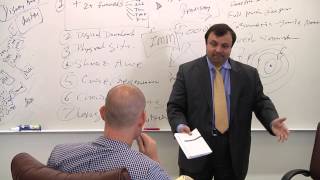
Parthiv outlines a multi-channel marketing system for dental practices selling high-ticket procedures like implants and full-mouth restorations to wealthy patients. The strategy uses direct mail shock-and-awe packages, a 365-day email sequence, case presentations, and positioning for dental tourism, with implementation costs starting at $5k discovery plus $37k build-out.
Chapters
We're talking about affluence, we're talking about how to attract them and who they are, what they want to spend money on. So Parthiv, in 6 hours or less, right now, in 10 to 15 minutes, is going to give you the choreography of what goes on for these high high-value dental practices, how they are attracting and what their sales cycle is to get people to buy the, you know, the high-level services.
So in dentistry, we are talking about— so the specific focus is on elective dentistry, dentistry that insurance is not going to pay for. Right? So— I'm just going to erase for you. Okay, thank you. So, big case dentistry. How many people remember their last dental visit? Was it fun, cheerful, happy, preppy experience? No. Okay. So if you had $5,000 to spare and your choices were between two dentists, two deals, where would you rather spend your money, dentist or Disney? Disney. Why? Fun. So why would you spend money on dentist and sacrifice Disney? Okay, pain. What else? Concern about the way you look. Concern about your— okay. Fear of losing your teeth.
Okay.
What else? Why would you go to a dentist? Pain, perhaps, being proud. Pain, okay. Pain, okay. Well, how about— The amount could double. Pushed by family? A health-conscious family member saying, "Oh no, you have to go to dentist." That's the way we roll. Right? So it's a lifestyle culture thing, okay? But basically, it's a lot like engaging in a service with a plumber. I hate them. Why? It's not— why is dentist different? Than a physician. They are still taking— they are just being preventative or curative or elective. Right? So, And that's the problem. Most of the things dentists do is perceived to be elective. So, a relationship with a dentist starts with a not-so-elective procedure. An urgent care or emergency dentistry. Or you respond to a brain dead ad because you feel guilty about not going to dentist long enough where you're afraid of something bad is going to happen and you know it. Okay. Every single time you go for your oil change in the car, you say, "Gee, I haven't been to dentist." And so, so these are, okay, so that gets you basically started, but the nature of this relationship is transactional. The reality is the big case is not a transactional thing. Big case, We are talking implant, all-on-4, facelift denture, full mouth restoration, cosmetic, smile makeover. Teeth straightening, etc. Right? These are all $5K+ treatments, $5,000 to $10,000 treatments, or maybe more. Facelift dentures cost $25,000, $30,000. So, you can't go from here to here. Here there is a diagnostic, yes, because there needs to be a clinical need for the treatment that's being recommended. Then there is case presentation, and then there is patient education. Here's the problem in dentistry. Dentists did not sign up to be the marketers, persuaders, and salespeople. They signed up— they want to diagnose, prescribe, and care. Therefore, most dentists don't do what can and should be done to educate the patient on the need. So what basically— the relationship basically has the 4 things. There is this urgent care emergency, there is teeth whitening and smile management, So there is cosmetics elements to it. This is when you get your crown, bridge, filling, etc. Okay, so this is what we call TLC, tiny little cases. This, this is not urgent care, but it is appointment-based tiny little case where you don't have to make a big buying decision and insurance will sort of COVID it. Okay? Not that much. Not that much, you're right. Insurance is— dental insurance is different than medical insurance.
If I have to get a crown and my supplemental MetLife policy is only going to pay $1,000.
Yeah, and you need— you're looking for about $2,500.
I— it's going to cost $3,000.
Yeah, so it, it, it, it, it, that's just the way dental insurance thing works in, in America. As a matter of fact, if you didn't, and you're paying for the insurance, right, right, if you made the insurance premiums to the dentist and if you told the dentist to get a $1,000 discount, he will probably give you So sort of dental insurance is a— it's a lead gen tool for the dentist. So you're going to go— you will be forced to go to a dentist who accepts your MetLife insurance, who will— and they will charge you the maximum amount that MetLife will allow them. They will take some money from MetLife, but if you go to a non-participating, non-insurance-accepting dentist, and say, here's the treatment plan that was presented to my— by my current dentist. I need a second opinion. Would you give me a second opinion? Any dentist who does not accept insurance will give you a free second opinion. Okay, you say you don't accept my insurance. Oh, I don't accept any insurance. I understand. Would you consider giving me a discount so my out-of-pocket is same as what it would have been as if I had insurance? Or you can go to India and get it done for a lot less. So that gave birth to medical tourism and dental tourism in India. but talk about marketing for dental tourism. So, I have a doctor in California. He has, he and his partner has a patent on a particular way of doing All-on-4 that will get you an entire smile makeover in a single day surgery. So, we are basically putting together a marketing plan for that doctor to make San Diego as a destination for ultra-high-end dentistry, and we are talking about putting ads in airline magazines and stuff like that, international airline and stuff like that. Okay, so teeth straightening in loss reversal or teeth replacement. So this ascension basically has to happen via patient education, long-term nurture, and persuasion. So what tools do we use for this? Books written by the doc. If you can't write a book, license content and co-author a book with somebody. A shock and awe. Can I have one of my, the blue packets? Yeah, that one and the other one. The blue packet to the right, yeah, there. Okay, so this is a Dan Kennedy formula, shock and awe. If you go to YouTube.com, and search for Dan Kennedy shock and awe for 5 minutes. He talks about how a shock and awe is used by dentists, and he's showing examples of shock and awe done by me on— for Dr. Weik and Dr. Burleson. So this is basically the formula. It starts with a pocket folder, and we took out the gift package because we put it in that. So it starts with a pocket folder. On the left-hand side, there is a guarantee, there is a champion letter, and there is a gift brochure. On the, on the left-hand side, there are step brochures that talks about a message from me, who I am, who the doctor is, who depends on, what kind of elite group of patients you will join when you become my patient, Are you ready to take a quiz? Do you have any of these problems? This is a self-awareness and pain agitation quiz. What happens at the initial consultation, preparing you to buy when you meet with me. Our core services brochure, that what kind of things we do. Sedation, we do implant, we do cosmetics, etc. Continuity care and what happens between major cases, the hygiene, the perio maintenance and stuff like that. And a book of testimonials, a Smile Booklet. This is called a shock and awe package. It prepares a prospect. It builds a mindset. That buys. So it is preparing them to buy before you show up. That's what a shock and awe does. Have you heard of Bosley? As homework, go to bosley.com, fill out the form, and request their packet of information. Get on their email sequence. And listen to their phone calls. Make an appointment and then call to cancel. Make an appointment and don't show up. Make another appointment, actually show up, and then study their entire follow-up sequence. We have been diligently following Bosley for about 6 months now.
Can I hear it twice?
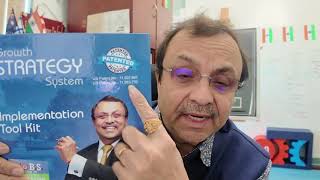
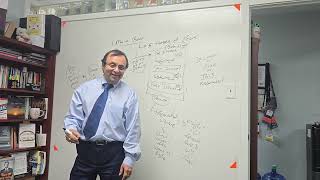
Yeah. I actually fell in love with their TV commercial. They had an infomercial, so I watched a few TV ads, then I actually saw a long-run infomercial. That I thought was really cool. And one thing that kept showing off was the Shakunaw package. And the whole pitch on the TV focused on just the shock and awe. Get my package, get my package, get my package. They didn't talk about— they just talked about the package. Now, Dan Kennedy talks a lot about Miracle-Ear. We actually went through the process of requesting their package, going through a consult and all. Their advertising is phenomenally beautiful. But their prospect experience, I wasn't impressed with. It's not something I would want to simulate. Bosley is a class act. It's an amazing persuasion process. Anyone, hair or no hair, need or no need, should at least go through that process. It's a superb education. If you're looking for a very eloquent sales process, no pressure, yet all the pressure in the world is placed theatrically, go Disney Timeshare. Watch that pitch. Phenomenal, beautiful pitch. Just mind-boggling amazing. Another, another people who do a really good job at television commercial and followed by a decent looking, not as attractive, not as like, not worth swiping, but not bad. I would give them a B, B minus, is Sunsetters. Sunsetters. It's an awning for your patio. These are elective services. These are elective multi-thousand dollar things that an affluent person would buy. So we build, we build those kind of things. Shark and all. Chairside material. So In summary, here's what I do for a dentist, and this is a fairly interesting roadmap that can probably work for a financial advisor, attorney, CPA, timeshare, hair restoration, Sunset, or anybody who has to sell something elective to an affluent consumer. So you start with a squeeze offer on homepage plus 2 or more funnels. A funnel is a landing page, second squeeze, thank you page, tell a friend, Friend welcome, etc. Right? So this is one. You have a digital download, a physical gift that you will send, shock and awe, Case presentation, chairside, chairside marketing, and long-term nurture. Does your dentist do all this, or they basically come at you with a weapon in their hand and say, "We are going to do this, this, this, this, this, the fee is going to be this much," and they begin working on you while you are goggy and don't give you time to basically let this sink in? And therefore, when you are done, you want to run from them like a toddler wants to run from a car seat. That's true. So I don't have to work too hard So I don't have to fix the humans. I don't have to teach the dentist to be persuasive. I don't have to get them into sales training. I just have to give them the tools in paper, pixel, and plastic. So they just have to basically use the props. The props are designed to be persuasive so Doc can remain clinical. Then to fortify it, we add what we call internal marketing machine, a series of 365 emails and 30 digital and print brochures and marketing materials delivered to the right person at the right time based on where they are in the treatment cycle. This is what we do for a dentist or an orthodontist. It can work in any industry where you're making money by appointment. A version of this can work for you. So people who are in your ultra inner circle, you can offer this as a done-for-you because you are basically going to be teaming up with them for the deals. You can offer to sell these tools to people who are in a slightly outer circle. You can show how the tools are used to people who are in yet outer circle. And you can show what tools you have in yet outer circle to people saying, "If you were successful, this is what you had, but again, you wouldn't be successful until you have this." So, migrate here. So, what starts with a book essentially turns into an entire prospect persuasion process. And it's basically— this system is in all the books in bits and pieces. I just had to read them, listen to them, and mind map it. Where is my mind map? You have the big wall chart, yeah. So whenever I go to an event, I take my notes in a software called Mindjet. And mind mapping, Mind mapping is a note-taking tool that is metacognitive. So you can, you can, okay, here we go. So this is a mind map of Game Changer DNA implementation plan. If you go to GKIC, there is a product that you can buy for like like a $1,500, $2,000 game changer DNA. And so this is, I have that product, and I listen to the DVDs, I mean, I listen to the CDs, I watch the DVDs, a combination of it. I read the binders, I basically then put sticky notes all over the binders, and then I distilled the working elements of it and put together a one-page document with about— this particular map has about 400 topics. I took this and then put together an implementation plan so we can now implement what Dan is telling you. If you don't want to implement what Dan Kennedy is saying, You should stop buying his stuff because it will give you anxiety followed by a deep-seated depression. You got to implement what you're learning. Otherwise, I mean, he can't change your life if you don't do what he says. So I learned how to do what he says because when I met Jeff for the first time, I'm like, I said, cool, there are 3,000 people who don't know how to do this and he's telling them to do it. If he doesn't do it, I got a deal. And then so when he came to meet with me, I asked him, so how do they do that? He said, oh, we just teach. I'm like, what? That's how my relationship—
So again, it's about the niching. So you took, here's what you need to do. Oh yeah, yeah, yeah, I need to do this, I need to do this. It all looks good. Holy crap, how am I gonna do all this? That right there. So those dentists get in the room, someone else gets them all hot and bothered about what they need to do and how it's gonna work and how they can charge $35,000 for these procedures. And they see all that, but then they, as Partha said early on, they're not trained in the business side of how to do this piece. They plug him in. And he shows them the mind map. You can absolutely do all this yourself. Here it is. Here's what to do. And here's all the steps. Go ahead and do it. And then when you see the Infusionsoft book that's this thick, and to him it's like tech porn. To the rest of us, it's a tooth filling to look at this. He would just say, look at the book. You have to— it's the niche of how to put yourself in what the market is and who is your market. I keep coming back to it. His market is, his market is dentists who want to run something other than a drill, fill, and bill practice, who have learned that there are other people doing this and don't have the knowledge, the desire, or too scared to do it themselves. And will eagerly pay for someone who's doing it for somebody else who's successful.
So how can I get to a dentist who will buy this from me? I mean, it cost $5,000 to just come and meet with me, and you're going to fly in, sleep over in Germantown, Maryland, which you didn't heard of until we started talking. We put together a a mind map for you, we build this for you, then we, the implementation runs about $37,000, plus there are other expenses, and then it's a complex machine, so you're going to need someone on my team, and you're going to need ongoing maintenance, so there's another $2,500 a month on top. So it's a sizable capital purchase. You're investing in a marketing asset. If I go to a dentist in my own neighborhood, they think, oh, my, my marketing is all taken care of. I cannot make them listen to me until I am a genuine and credible threat, or I am ushered into their life by someone who has endorsed me. So my ideal client dentist is a dentist who is in somebody's coaching program, preferably in a coaching program where the coach is telling them, if you don't hire Parthiv, it's not going to work out anyway, so what's the point? That's basically how you do the positioning. Ryan Dice calls it indoctrination. Without indoctrination, things don't go well. So there is this association called AADPA, Academy— or American Academy of Dental Practice Administration. I've been exhibiting there for 2 years. We have a decision to make if we are going to go there or not. Yes, I started to crack the code. People no longer think I'm a weird little Indian sponsor that other people will buy from, so we don't have to and we will just get him always here, he's fun. I started having some conversations with them. But the biggest problem is, I don't have their heart in the place where they need this.
So let's go back to this list of 7 things that you have to have as part of your offer. Number 1 was, anybody remember? Trust. Testimonial. What he's saying is, I don't have a testimonial. I don't have a warm handoff. From somebody in there, in that ecosystem, to give me the next one. So he's not— understand that he's not marketing and trying to find the user. He's trying to find the people who are already telling people to use it.
So we are discussing— so yesterday I had a call with Aetpa, and they wanted me to come back for an exhibiting for a regional meeting. It's only a day, it's not 4 days. It's New Orleans, so it's cheap flight. It's a Friday, so I can, technically I could go there on Thursday afternoon, spend a day with them, next day is weekend, and it's not $5,000, it's $1,000, $1,500, so it's a, and it's going to be a smaller group of dentists, and if I'm not getting any, what's the point? Instead of talking to 400 dentists, I'm talking to 75 dentists. I'm just looking to get— I mean, we sell high-ticket items. I don't need that many deals, but I need an edge. I need an indoctrination. I need something other than me taking their money as a conversation starter. So we found one last year after spending $25,000. We got one. If you guys come to my office, you will see a yay big poster of Drew Bledsoe, signed autograph poster. So Drew Bledsoe's dad, Mack Bledsoe, was the keynote speaker. He wrote a book called "Parenting with Dignity." I'm gifting "Parenting with Dignity" books to the dentists in a hope that the dentists will buy a case of it and gift it to their patients as a gift. Because it's a parent who pays for the braces. And 99% of kids do not have the skills to eloquently express gratitude. So a parent appreciation package, a gift, would be a really cool thing. It can probably make a mom cry if done well. So that's what we do. We have— see, the whole thing is engagement with the patient. So we have 4 boxes we call— remember we talked about the experience, this is justifying the experience? Okay, so we have 4 things. We have 4 experience boxes that we created for the dentist. One is called New Patient Wow Box. Another one is VIP patient welcome kit. Another one is end of treatment celebration package. And parent appreciation package. What's the VIP patient? A VIP patient is someone who not only is cheerfully giving you money but also giving you referral. If someone's giving you referral, give them tools and gives them reasons to speak. Okay, if you have a patient who is spending that kind of money with you, and if that patient is going to give you a referral who is of equal affluence, who have similar ailment problems in similar age group, would you give them a gift? Would you spend a couple hundred bucks on them? Now, what can you give them, couple hundred dollars, that is valued at couple hundred bucks? If you give them discount, they don't appreciate it. So, you go to vermontteddybear.com, okay, VTbear.com. For $99, you can send them a 5-foot-tall teddy bear. Now, what would a boomer or senior do with a 5-foot-tall teddy bear? It stays in the— I'm sorry? It stays in the house. It is the only toy the grandparent has. If you're not a grandparent, it's the only toy you own. And the last toy that you ever bought was decades ago. This is your thing. It not only stays in the house, it's probably going to sit in the living room. Every guest who comes to the house, The teddy bear will start the conversation. And if you give 2 copies of your book that has a sticker, "Compliments of Dr. So-and-so"— it doesn't have to be a dentist-related book, it could be one of the sound wisdom books— but if the dentist is in a habit of gifting books with a little sticker that says, "Compliments of— from the library of Dr. So-and-so," the teddy bear and the book is the reason to have a non-clinical, non-dental, my dentist is so cool conversation that establishes trust, that will induce an initial appointment, that will get them into the elective dentistry. New Patient Wow Box. I mean, you take your Shark and all, you give them a Kindle Fire with some books that's already preloaded. You give them sweet caramels or brownies. You give them denture-friendly food or something. Don't send them popcorn. And put everything in a box and let a box show up. It is giving them something that they are not expecting. That creates experience that is worth justifying Like what you say, I do it for justification of experience. Well, this is how you articulate the experience. The reality is your business is a stage. You are on stage. Chances are you're a pathetic actor and you don't have props, therefore your business sucks and you're going to die. But if that's not going to happen, and if you are already making half a million to $2.5 million in business, and if you want to to take yourself to the next level, one thing is true, you're not a pathetic actor. You brought yourself to half a million to $2.5 million without all this hoopla. Imagine what you can do if you were on the right stage with the right props, with the right choreography. Can that elevate your game? So that's basically what we are talking about in terms of an internal marketing machine, or the whole experience. Experience marketing.