614 | The Mission is Customer First with Guru Hariharan at CommerceIQ
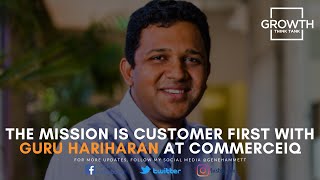
CommerceIQ CEO Guru Hariharan explains how customer focus drives hiring, performance reviews, and daily decisions. During COVID, the company paused non-essential work and launched free Growth Navigator service for all customers. He distinguishes reversible from irreversible failures to encourage calculated risk-taking.
Chapters
Being customer-focused does not mean loving the customer, right? Being customer-focused is truly, and for us it's very clear, it is understanding the customer thoroughly, deeply, what they are, where they are today, where they need to go tomorrow or day after, and what is the path that they need to take, and what are the tools and techniques and people and organizations, everything. Like, you could go multiple levels in and understand. So it's really the brain, not the heart, at least when it comes to CommerceIQ, and then how we define customer focus.
Welcome to Grow Think Tank. This is the one and only place where you will get insight from the founders and the CEOs of the fastest-growing privately held companies. I am the host. My name is Gene Abbott. I help leaders and their teams navigate the defining moments of their growth. Are you ready to grow? Understanding your customers is critical to your company success, period. We have to understand customers in a way that allows us to get results that our peers aren't getting, the competition. As leaders, we have to make sure we're putting those customers first or their success first. I have a very special guest today. He's the CEO of CommerceIQ. They're a platform that helps automated sellers. They work with brands like Kellogg's to really streamline the e-commerce functions and really support them through all of the complexities and how it's grown over the years. But this company has grown really fast because they understand their mission is to put customer first. Now, I don't want you to misunderstand me. I've always thought that customers have to be put first by the company. Now, I will tell you, my research tells me that leaders should be putting employees first. If you really wanna scale, you wanna make sure leaders are putting those people developing them and really positioning them to put the customers first. That's the key. I could go over my data around this, but I don't want to belabor it. But I do want you to focus in on this customer first. One thing I like about this conversation with Guru is he is really smart when it comes to failure, understanding the failure. The way we look at that toward the end of the interview, I think you'll really appreciate. You'll be able to take and apply to your own leadership and culture, and it's something that I think you should really pay attention. Now here's the interview with Guru. Guru, how are you?
Doing very well, Gene, thanks.
Well, excited to have you on the podcast. We are here to talk about growth and culture. Before we kick off, I would love for you to share with us about CommerceIQ.
It's a pleasure to be on your show. Thanks for, uh, thanks for having me. Yeah, so e-commerce IQ is a company based out of Seattle, Palo Alto, New York, and Bangalore, India. We are a— we are the leader in e-commerce revenue automation category, providing machine learning and automation to enable consumer brands like Kellogg's and Johnson Johnson to win in e-commerce, and a world that is really driven by algorithms and machines. That's what we, that's what we are.
Well, I, I really can appreciate that. You probably don't know this, but I spent the first 3 years of my kind of startup career— I spent 10 years in kind of corporate America, but I worked for the e-commerce company. And so we were building software solutions that integrated back into SAP and JD Edwards and working with a lot of manufacturing companies putting the first products online. This was 1999, to give you that perspective.
Um, got it.
I, I have a lot of respect for what's going on right now within the, the e-commerce. You've built a team of roughly about 80 people. Uh, you've grown really fast. You made the Inc. list. I know we talked about some of the key aspects to that, and you thought that one thing was having a customer focus. And you specifically tied it into the mission. How does that work for you?
Yeah, I think, first of all, the definition, oftentimes, and in fact, my team members and colleagues also ask about customer focus. How do you really define it? In fact, we've defined our core values, and one of the things that we talk about, in fact, the first thing we talk about is being, taking the customer-first approach. And to me, I think the definition of that is actually very important. And then it ties back into the overall company operations. Being customer-focused does not mean loving the customer, right? Being customer-focused is truly, and for us it's very clear, it is understanding the customer thoroughly, deeply, what they are, where they are today, where they need to go tomorrow or day after. And what is the path that they need to take, and what are the tools and techniques and people and organizations, everything. Like you could go multiple levels in and understand. So it's really the brain, not the heart, at least when it comes to CommerceIQ and how we define customer focus. So to us, that is ironically close to our heart, that it is very critical for us to have that customer focus in the definition that I just laid out. And in fact, that ends up becoming the mission for the company, that we as, I look at our team and our colleagues as a set of people, a set of missionaries in a tribe. We sort of, whether you talk to me or, folks on, engineers on our team to salespeople on my team, chances are you'll sort of hear the language and the words that are being used and the ethos would actually be very, very similar. And we actually behave and act and hire and promote within and all that like a tribe. And for that, I think going, starting with the customer-first approach, it really helps. It creates a very clear north star and a mission. That we go after. We want to see our customers very successful, and that's how we end up defining ourselves as a team. And that has truly really worked very well for us, whether it be peacetime or whether it be war times like what we are living in today. It just held us together as a team and just makes us do what is the right thing in having that north star.
Well, we all know the importance of having a North Star as a strong mission statement that binds people together. You talked about the core values. A lot of companies, you know, they create the core values once, and I've done so many episodes about how important they are. But apparently you believe they're very important to, to how we communicate and work together and how we actually serve and really grow the company. Where did you get that from?
Oh, so where did I get that from? It was from— I spent early days of my career at Amazon, and that's really where that came from. In fact, it's very interesting the way that Amazon thinks about the core values also happens to be very similar to how we think about it. Is not really sort of values that you just paste on a whiteboard or whatever, or on your walls, but really think about it as leadership principles. What are the principles that we as leaders want are and what we want to cultivate in the company? And from that perspective, when you sort of think, put it in those terms, it starts to become, at least at CommerceIQ, it's a journey. When we're interviewing for people along with competencies, like if you say, let's say you're being interviewed as an engineer, we obviously look for core competencies with, from data structures to programming languages and problem solving and things of that kind. But we also in parallel look for the values and the principles that we stand for. And is this person true to those values? And there have been numerous times where we've declined candidates because they did not stand true to that value of say truly understanding and ability to dive deep, right? Maybe there are sales and marketing folks, for instance, sometimes when they come in, they've demonstrated fantastic capabilities in other companies, but they're not able to dive deep. That doesn't work with us. So we end up sort of discarding some of that pedigree elements and not hiring that person regardless of whatever department that is. But it really starts from there, from a hiring standpoint. So then the next stage of the lifecycle where we have every quarterly check-ins and goals to half-yearly performance reviews. And these are done, the feedback is seeked from our peers and colleagues in the company from, with respect to, from the lens of the values that we stand for. And same performance that is given back from a manager to their team member is through that lens of leadership principles or values. And same thing that sort of takes on further in terms of whether it's promotion or whether it's just parting ways, it's the full lifecycle ends up revolving around that core piece of values. And so that it's sort of a, we have woven this entire, the set of values that we stand for into the fabric of what we've built as a company, from all the way from hiring to the entire lifecycle of people at the company. I don't know what you, like, have you seen other models of potentially this having worked? Always a student of this thing.
You know, I wouldn't say other models, but I think the way people operationalize those values, which make them a part of the day-to-day are different. And so I would love to ask you, like, what do you feel that you do differently that makes you really live by the values? Is there a ritual that you guys do, or is there something else that you can think of that has made an impact?
Yeah, so I think, as I mentioned, I think it's, you know, these are the things that we do, the rituals or the habits that we end up forming are around core things that we do as opposed to something that's like an afterthought that comes as an addendum to your daily job. Right after this, after our call, I'm going to be getting into a debrief about a candidate, and we are going to be talking about the core values. Does this candidate— how does this candidate show up in those, on those dimensions of core values, to also performance reviews and everything else? So I think it's the So the day-to-day working that ends up becoming a part of it, that's what, that's how we have integrated. We do have some awards and things like that, but I would say that's not what defines or helps us follow those core values, but it's really the day-to-day working and things that we as people and employees really care about in terms of how do we succeed at this company, how do we get promoted at this company, how do we, sort of get, um, drive more responsibility set and all that. It all starts from, uh, from, from those, uh, from those core values.
Now hold on for a second. Guru just mentioned the importance of core values. I want to put a spotlight on it because core values are foundational elements that are often overlooked at how important they are. But what I've seen is fast growth companies not only have a clear understanding of what their core values are Every employee can recite them as necessary. But what's really clear about the way they see it is they wanna make sure they live it day in and day out. How do they put rituals inside their meetings and inside their gatherings and inside their one-on-one conversations that allow them to do that? Well, that's the key. You gotta keep tuning in here to find out some of the details behind that. I also have some special trainings that go on. So if there's something you want more information on, make sure you reach out to me, gene@genehammett.com. And now back to the interview with Guru. And one of those core values being the need for understanding the customer. I, I so am in alignment with that. But it is, you know, I don't want to get confused here. We talked offline, Guru, about my research on, you know, fast growth companies. Leaders typically put employees first. But I think we're both in alignment that the company has to put the customer first, or really understand them to serve them to the letter, to the greatest degree possible. When you think about this and you notice maybe someone's gotten, you know, maybe they're putting themselves above the customer, because this happens for whatever reason, how do you, how do you tune into that and how do you handle it?
Yeah, I think it's always the, the, uh, the classic debate, I would say, and you hit the, you hit the right, uh, the core in that question in sort of form, how do you, if push comes to shove, how do you sort of prioritize? To me, I think at the end of the day, I think, you know, as a company, the reality is both are important. However, the way that we have created the company that we do end up putting the customer first and that actually ends up becoming the bond between all of us as I would say the the missionary tribe members that CommerceIQ is, that really putting the customer first helps us create a language and create a sort of an intent around things that we're doing. And which is so important, right? Like it's not just another job, especially when you're working at a startup company, the odds are stacked up against you. There are more things at risk than not. There are more companies who are sort of better positioned and funded and, and start in the higher investments when you're going up against the big leagues. And how do you really sort of stay true to or create that competitive advantage? And to us, that's been really putting the customer first and, and really asking the question, what would be the right thing to do for the customer at this point? So I'll give you an example, for instance, here. We obviously, we went through this pretty intense period of COVID-19, and we are sort of at the, we're in the middle of it. But when it all started, we, so we as a business serve consumer brands. These are companies, as I mentioned, with Kellogg's and Johnson Johnson and Bayer and folks like that who utilize our product to grow on e-commerce. What ended up happening in e-commerce was there was a massive demand shock that was created. This was because of two reasons. One, there was a pandemic stock-up, and second, because of lockdowns that people weren't able to go to stores. So guess what happened? E-commerce traffic spiked up. There were categories like pet food and others which started to be 800%, 900% growth, like paper towels and toilet papers obviously and sanitizers and things like that were on an extreme demand shock. And we started to see our customers start, just brands, start to have issues in terms of supply chain, in terms of sales and marketing to be able to sort of really adhere to this or be able to be effective in this period where it's literally one order of magnitude higher than what they have been set up for, whether it's from a people or process or technology standpoint. So what we did was we said, okay guys, we've got to, this is a super critical thing for our customers. We ended up putting a pause to everything in the company. And we said, we are going to focus the entire attention of the full company behind what it takes to essentially drive success for our customers. And we suspended everything which was non-mission critical, which was most of it, I would say 90% of company's operations. And we came together and launched this thing called Growth Navigator. This was a new offering that we came up with, CommerceIQ Growth Navigator, and we gave it away for free. We said to, we went to every single customer of ours and we said, look, we don't care what you bought from us, what is the term, what's the, where in the lifecycle you are, you may have been tied up to us for 3 years and there's no risk of attrition, but guess what, doesn't matter. We are going to offer this Growth Navigator as free to you and it includes services which are exactly pinpointed on how to survive and succeed in this demand shock and how to set yourself up for the long-term growth. How do you get closer to your shoppers and really for you to be successful as a brand at this, at this point in time. And that's what we did. We put the— we made that offering free, and every single one of our customers, guess what, completely appreciate it. They've jumped in wholeheartedly and sort of taking those services, and that has been deployed. And because of that success, what we also did now, we've then. And given that, given the learnings and how our customers are using it, we've also gone out to the industry and we've said, we've earmarked about $1 million worth of services for offering it again for free for essential products, the brands which are selling essential products in the market. And that is our way of giving back. And that's also created a lot of really positive buzz and aura for the for the company in the market, which has been a welcome output, but that's not what we optimized for. We optimized for sort of really helping our core customers and potential future customers to be able to be successful in this new market that we're sort of getting into. So hopefully that gives you a flavor just as an example on how we are true to our, like how this all comes together, the definition of the customers, customer focus really starts to translate as tangible things when you have to vote with your money, vote with your efforts and priorities for your company that we have been able to do.
I love the story and I'm glad it's working out for you and giving back is a very important piece to this time right now. And we've all probably not going to go back in some of these e-commerce ways. I mean, we've been ordering from Amazon, consumables like toilet paper and whatnot forever. And we had a stockpile, and we won't go back, and a lot of people won't go back to the old way. So this is going to be a boost for everyone. Guru, I want to take a little bit of a pivot here because I find that fast-growth companies have a different relationship to failure and risk-taking than most companies. How do you, you know, what is that tolerance for you? As you work with employees that you really want them to, to take ownership of their work and really make decisions and move forward and not hold themselves back. What is that relationship with failure that you have?
Yeah, I think it's a, it's a very, it's also as leaders, it's very critical for us to define that tolerance levels and how do you sort of form, because it's a lot has to be, has been said and will be said about like failures being important ways to succeed and a stepping stone and ability to learn. We have a very, very clear definition on what failures we want to see and what failures we do not want to see. I would not say it's not a blanket statement saying, hey, all failures are welcome. It is not. But at the same time, not the other way around as well. So we sort of tend to think about it as reversible, reversible and irreversible situations. Which is, if this is a reversible situation where, look, if I'm going to take a stab at something which, where the cost of failure is not that high, I can sort of reverse that, the mistake that I did and go the other way, then sure, that is a very welcome failure. It's better, like you're sitting on a fork of the road, You got to go left or right. And guess what, if you go towards the right and you're able to foresee a little bit and come back and go to left, if that ended up being the wrong direction, we incentivize and we want our colleagues to take those decisions and not to do analysis paralysis sitting at the fork of the road saying, should I go right or left? Let's actually go to the right, see if that's the right path or not and come back because it was a reversible decision. However, let's take the same fork and you say, if you go to the right and the gates are gonna close, you can never come back, right? And you cannot go left. And by the way, if you do that, you're putting the company at, it's a huge value or value deterioration to the company, then guess what? My answer changes on that. I do not want you to go right. I want you to take a step back, do that analysis paralysis, right? And actually get into that, have a deep thought process on that, And also what we also encourage our colleagues to do is go back and, you know, get 2 or 3 people around you to understand and agree with your decision of going right or left. That is, you're essentially putting them into your lock hands and locking your hands with them and saying, okay, we're all in this, the 4 of us are in this together and we're going to go into the right or left. And that way what happens is A, it is when you've gone out and tried to convince your colleagues that they need to be in this with you, it sort of makes you slow down a little bit and not to jump into a conclusion and make a haphazard or quick decision saying, let me go into the right and see if that works. And so really thinking about decisions as reversible, irreversible, and putting a cost of making a wrong decision really helps you define how fast you want to make that decision or how thorough you want to be in taking a step back and analyzing it.
Hold on one more second. Guru just talked about the need for failure inside our organization. In fact, he said failure is important. He went through a few different things that you should be paying attention to, but here's the words I use it with my clients. We want to give our employees guardrails. We want to let them know what's okay and what's not okay. We want to encourage them to stay within the guardrails that protect them so that they can actually make decisions on their own. Because if you train your employees to get review every time from you, or maybe even someone else, then you're actually training them to not trust themselves, not have their own confidence, not have the courage to really stick their necks out. They need to be able to see the difference on when they should move forward by themselves and when they should Ask for input. You want to make sure your employees really do trust themselves and they grow that over time to better serve you and the organization and the overall mission of the company. Now, back to the interview. Love the way you've approached this, because I think that we, we have to put guardrails up there. And that's what you've done, right? Think through, is this reversible or not? And then I love the detail that you add in there is like, Could you slow down enough to gain other people to agree with you? And are they willing to, you know, take ownership of that? You know, making sure that, you know, you're not alone. Um, I love, um, customer first. I'm not— I'm certainly not opposed to that at all. I know that it's a little bit in the perspective you take. Companies putting customers first will win because customers that And I love the part, the part that you said, Guru, about it's not about the customer always being right, because let's be honest, they're not always right. Yeah, you know, what they want doesn't lead to the success because you have much a different perspective and so much data in front of you and what has worked. And you have to be careful and challenge some of those things. So it's about understanding them. Guru, thank you for being here and sharing your journey here with CommerceIQ on the podcast.
Absolutely. Thanks, James.
It was a pleasure to be with you. Fantastic interview. Love having conversations. This is not contrary to what I believe. I do believe that customer first is primary to the company. I do believe that leaders must put employees first. And I love one of the aspects around this that he highlighted, which was the customer's not always right. In fact, many times the customer doesn't understand how to interpret the data, how to see the different perspectives. Things change very quickly and customers are lost inside some of those changes. And so our job as service providers is to have our fingers on the pulse and to be able to guide them as needed and have our employees have the confidence and courage to be able to do that. That takes real leadership. Now, one of the things I wanna remind you of, if you are listening to this right now, that you probably have not had a conversation with me, it is completely free for you to get to know me. I love to get to know you. Maybe your story could be something I could highlight here on the show. Make sure you reach out to me. Let me know that you're listening to the podcast. Let me know that I made this invitation. That's a little bit of a signal that I will pay attention to that email because I get pitched a lot. If you have something interesting about being on the show, make sure you reach out. As always, lead with courage. We'll see you next time.
More from Guru
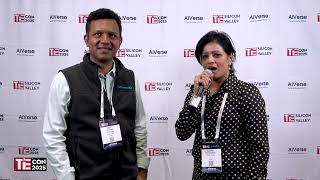
Guru Hariharan, Founder & CEO of CommerceIQ, highlights his growth journey at TiEcon 2025