Guru Hariharan - CEO & founder CommerceIq speaks to the CPGGUYS
Guru Hariharan, CEO of CommerceIQ, built a platform that automates e-commerce decisions for CPG brands. A 2,000-SKU portfolio faces roughly 84,000 daily decisions. CommerceIQ handles sales, marketing, and supply-chain automation across Amazon, Walmart, and Target, letting humans focus on strategy while machines handle routine choices.
Chapters
Welcome to another episode of the CPG Guys podcast. Our co-hosts Sri Rajagopalan and Peter V.S. Bond explore how brands and retailers engage with consumers online, in-store, and everywhere in between. And now here are Sri and Peter.
Hello and welcome everyone to this episode of the CPG Guys featuring Peter and Sri. A reminder to all audience that you can find all our content simply by going to the web browser of your choice and typing cpguys.com. Yes, that easy. And while you're there, Peter and I would love for you to also rate us on our Apple podcast where you can communicate to us what you think about us and where you want us to go with the show and who you'd like us to interview at tinyurl.com/applecpgpodcast or ratethispodcast.com.
/cpguys.
I also want to remind you, because a lot of you have asked the question of Peter and me in direct messages about e-commerce profitability, that we ran a profit series in the month of October last year, 2020. It was a 5-episode series, and the most important thing that you'll have asked for is it has a pro forma P&L takeaway where you can go look at what are the recommended line items of an e-commerce P&L and what to compare it with from a customer P&L perspective. We also ran an Instagram series in the month of November and December, straightforward one question, one answer every weekday through those two months, and has answers to over 30 commonly seen challenges or opportunities in e-commerce for brands. And now, welcome to my co-host, the loyalty and CRM guru who's been through IRI's Vince Dunhamby, and some fondly say is responsible for those 12-feet receipts at CVS. He's the guy that has become my co-host and a friend in this journey. Welcome, Mr.
Bond.
Shree, you are the AirPods to my iPhone. You are the ink cartridge to my printer. You're the fine Bordeaux to my decanter. We just work well together. Always a pleasure to join you for these sessions. Thank you.
Thank you, Peter. We're still waiting for the Sterling Shepard, Tomai Jones, but we'll wait for next year when the Giants have—
maybe let's, let's get pitchers and catchers showing up first. Okay, sweet.
Two more weeks.
Okay, then we can talk Dodgers and Yankees again.
Oh, and yes, yes, sad, sad day as we're recording this.
We—
the Dodgers lost Tommy Lasorda today, so I'm in a bit of mourning.
I will therefore move on out of respect.
Thank you.
A reminder to our audience that the month of January 2021, where we feature this episode, is part of a Founder Series where we are featuring 6 founders of startups that are already well on their way and on their journey of success in digital D2C e-commerce services, etc. And welcome to this episode's Guru Hariharan, the founder and CEO of CommerceIQ. Guru, can you go ahead and introduce yourself for our audience and tell them what you do and what CommerceIQ is about?
Yeah, absolutely. And what a fun crew you guys are. Big fans of your podcast. Thanks for having me. This is Guru. I am the founder CEO of CommerceIQ. We are a modern operating system for brands to win in e-commerce. Just as a background, my background is mostly machine learning and e-commerce, and CommerceIQ has been around for 3 years and we serve some of the top CPG brands, brand manufacturers in the consumer electronics and hardlines and also CPG markets. And we've been fast growing, we're based out of Seattle and Bay Area. Opening an office in New York and Bangalore, India. So that's, that's who we are and that's who I am.
Awesome. So you use the word operating system. We're going to come back to that at some point because Peter and me, the way we think about an operating system is either Catalina on the Mac platform, or I think we're running Windows 10 these days. So we're going to decompose that in a little bit, but I'm curious Guru, you got your degree at UT at Austin. Then you went to Wharton to study something completely different. Then you spent time at Shutterfly, eBay, Boomerang Commerce, and then you started up CommerceIQ. So your journey has been through several well-known brands, let's say, in the digital space. Can you tell us how that journey transpired? And then the most important one of them all, probably, which probably influences you day in day out, and that's my guess. I'd love for you to tell me your journey at Amazon. What was that about and how does it influence how CommerceIQ and you operate every single day?
Yeah, so as a kid growing up, I always was fascinated by computer science and the entire aspect of sort of this, the fact that we are still very early days of a revolution of how things are just completely getting transformed by computers and software just has been close to my heart. So as a kid, I grew up sort of getting into coding at a very early stage and just wanted to, it was just super fascinating for me. And I sort of moved over to the— came over to the US to do a master's at University of Texas with, again, a focus on machine learning. By now, I already wanted to— my fascination in computer science started to focus in machine learning as such. And believe it or not, we coded some of the very— the first humanoid robots back in the day.. And we actually put robots on a soccer field to play autonomous soccer, where there'll be robots from Carnegie Mellon competing against robots in Texas. And they were making decisions on the fly on who to pass, how to hit the goal, and stuff like that. And none of that was controlled by humans. And that was really a great start to my career at machine learning.
You're making me— so these weren't like combat robots with like razors and— Things, were they? No?
Okay. This was fun.
The Yankees will take a robot pitcher any day.
Well, believe it or not, Sri, I think it's the ultimate vision for this, if you get ever interested in this, is that by the year 2050, the vision was to get robots to play against the FIFA world champions in soccer. And I think they're doing really well. The research has come pretty far along that I think it's going to happen before 2050. We'll see if that happens.
That scares me because robots have unlimited endurance.
Well, endurance, but then there's— well, I think it's a whole separate topic altogether to talk about machines versus humans. And I do fundamentally believe that we are centuries away from any Armageddon type stuff that Terminators and movies depict, because I think there's a huge element of the aspect of sort of understanding the human brain and what a human brain is capable of, way more advanced than what a machine can do today.
But that's a topic for another day.
But absolutely, it was a great journey. Started off doing machine learning and wanted to then go pretty deep into machine learning, so I went to IBM Research at Almaden out here in California. Again, did some theoretical foundational machine learning and soon realized that I actually wanted to focus more on the practical applications of machine learning. So ended up joining Amazon. As you had mentioned, that did have a pretty deep impact on my early career and who I am. And did a stint at a few other companies, but really majority of my professional career before founding my first company, Boomerang Commerce, was at Amazon for sure.
Alrighty, well, uh, thank you and welcome, Guru. It's a pleasure to speak with you today. Um, let's talk about what you're doing now at, uh, at CommerceIQ. Can you tell us broadly what CommerceIQ's mission is and what are the needs among your brand clients that your solutions actually address?
Yeah, so our, as I mentioned, our mission and vision is to create a modern operating system for brands to win in e-commerce. So again, I'll kind of rewind that back a little bit to my Amazon days. In working at Amazon, it was super clear that they were building a monolith, huge algorithm to deal with vendors and sellers in the future. And the algorithm was set up in a way that you're essentially automating every piece of retail, every piece of e-commerce, whether it be supply chain, vendor management, forecasting, warehousing, everything was getting fully automated. And my team was in fact, we created the first systems to do automated vendor management for the third-party business, which ended up being right now 60% of the unit volume of Amazon.
Guru, are you the guy and your team therefore the one that CPG brands can now talk to about their common love for automated vendor management and the fact that everyone still believes Amazon is nothing but an algorithm when it comes to purchasing product.
Well, like it or not, the patent is still on my team's name. Of course, it's owned by Amazon. But yes, automated vendor management was something that we lived and breathed for years at Amazon. And I don't think they're still done yet. It's one of the things which is, we just continue to work on and they've been frankly really writing the blueprint for the future. So yeah, I think given that, and as we were sort of looking at the world where it was moving, was moving to a very much an algorithmic world of e-commerce. And what we, it was an extended epiphany for me while working at Amazon and at other retailers as well that that was where the world was going in. Much like what, say, a Tesla is eating the car industry, it's a software. Amazon's eating the B2C industry in being a software that's essentially driving a lot of the retail volumes now. And we want to be the player that's the B2B2C vendor that supports this entire ecosystem. So our goal is to create the modern operating system for e-commerce. What that exactly means is We feel as we sort of fast forward 5 years down the line, we think e-commerce is going to be predominantly a massive machine that you'll have to work with as a brand, and you'll have to figure out how best to interact with that machine. Now, of course, that does not mean you just put a machine against a machine and go home. There's a— what it does mean is to figure out what is really that the human mind is really capable and best at, and figure out the duties that the human and the strategic decisions that humans need to take versus machines. And what we are doing is we're enabling world-class teams at brands with the machinery that is needed, call it the yin and yang. If Amazon has the machine, let's actually empower you with a machine as a brand to go out to war. And win market share in this new world of e-commerce. So that's what we're doing as a company.
Thank you.
So when I think about an operating system, you know, out of jest I said earlier Catalina or Windows 10, but the thought that comes to my mind is an operating system is the brainchild as well as the backbone behind a let's say a computer chip to run, to be successful and get to do what it's designed for, which is productivity at the end of the day of significant proportions. But it also requires a ton of software around it for different applications and productivity. So can you tell us with this crazy rapid growth we've had in e-commerce and all throughout 2020, you know, largely induced by the pandemic, but a hockey stick curve that's not going backwards anytime soon. Or will never go backwards. How is CommerceIQ connecting an operating system with software productivity, etc., for brands and meeting this increased demand for insights, data, and most importantly, a game changer in the industry that has come out of left field with company after company, you know, retailer after retailer announcing that they now have a media company within them. Walgreens was an example. Of a recent one. How are you keeping pace and how does the whole operating system concept connect?
Yeah, great question, Shree. I think, um, let's maybe double-click on the word operating system because it can mean a number of things in a number of contexts. So in this context, what we really mean is that retail or e-commerce is a highly complex and connected system. Let's look at sort of the variety of systems that come into being here. One is from an assortment standpoint, you have to have the right assortment in place. Once you have the right assortment, you need to know which digital shelves you need to compete with. There are millions of digital shelves. When you're selling Pampers at Walmart, there was one. Today you have tens of thousands, if not more, that you have to, which is different variations of search. Then once you have identified the digital shelf, you need to monitor the digital shelf, saying what the hell is happening, who's coming in, who's going out, and stuff like that. And once somebody reaches you on the digital shelf, let's say you start to create a share of voice, they come to your detail page, great. Now you have to have the right content. Well, guess what? The content used to be static. Now it's dynamic. Even third parties can come in and change your content. You had to better keep up with that. Pricing is again dynamic. It used to be pretty constant before, and promotions are dynamic. Competitors who are coming in and maybe even putting that little ad right under your buy box, that's dynamic. And then once you have nailed all of these, on the backend, you're also having to worry about how to fulfill my demand and stuff like that. And finally, as you said, Sri, once you've figured all of these things out, now I want to throw fuel to the fire by adding retail media. I know that my system works, I have the right assortment, I'm capturing the right digital shelf through my share of voice, I have my digital shelf is kosher, PDPs are excellent, promos are awesome, and I have a competitive strategy and supply chain is humming. Great, let's throw fuel to the fire and start spinning the flywheel like crazy using retail media. That's how we look at the business. Now retail media is one portion of it, but as you see, this is one out of six or seven, if not more. Now if you just double-click into each one of these aspects of what it takes to just nail this flywheel, and I'm just talking about Amazon alone, there's a flywheel for Walmart to nail down and Instacart and all that, all those other retailers, even just Amazon alone, We did a simple math. One of our customers actually presented out to their board when they looked at number of decisions that they have to make in a given day. You have 2,000 SKUs and about 30 variables that are changing every single day, if not more. That amounts to about 84,000 decisions that you have to make in a single week. And with a team of 10, that's 2 decisions a minute. Now, even humans, you know that human brains are not meant to making so many high-quality decisions in a day. Even if you look at the most famous example that comes to my mind is Warren Buffett tries to minimize decisions to 1 to 2 a year. Well, you and I may not be able to dial it down to such simplicity. But I'm lucky if I'm able to make one high-quality decision a day. Right. So our entire thesis in this is that you've got to figure out where, how you can make better decisions as a human, which means how do you make fewer decisions, outsource the decisions to a machine which can make fast and high-quality decisions wherever you can. So it's a perfect combination. Call it an orchestra, call it a harmony. Between a man and a machine so that you're able to sort of automate wherever possible and pull in the strategic minds of humans wherever needed in all of these. So I know I went a little bit sort of theoretical in this, but really that's the thesis behind how we approach this and the why behind the software that we're rolling out to our customers.
So there is a, there was a hidden nugget in between over there that Guru threw in, which I'm not, which I want to make sure the audience actually observed. And that was, he said, the CPG industry and brands have always wanted to know how many variables in the Amazon mix and in the Amazon algorithm. And Guru threw out a magic number, 30. So there we go. We got the answer because you always find answers on the CPG Guys. And so I should have asked you earlier, you know, machine learning, is the basis of CommerceIQ. And does that mean it is a platform that's exclusively software as a service for self-serve, or do you guys actually bring an agency service to run the flywheel?
Yeah, so we have both, right? So we, again, we believe that there's a role of category leadership and insights and the knowledge of the category and the human power and strategic minds of a human along with technology. In the fullness of time, we would like our customers and we want to empower our customers to be fully self-sufficient, that they're not depending on us for the human brains and the outsourcing of any of the elements. Now, if you are a software company, you'd never outsource product management, you never outsource marketing. If you're a CPG company, I would posit that you should not be outsourcing e-commerce. Now again, but the reality is things are happening very quick and CPG companies need time to essentially adapt and get ready with all that machinery and human processes and the entire organization that is required to support all this, all the activity that's happening in e-commerce. So what we are seeing is there's a wave that's happening where we are helping our customers right now with the managed services, where we have hired great people from who've been either ex-vendor managers or they have, they come from other agencies and they're helping our customers essentially in the short term deal with and manage this entire ad dollars or even other aspects of e-commerce. And over the next 5 years or so, we are working with our customers to see how many, how does it make sense to sort of pull that in and empower them so that we are not bringing the fish and they know how to go out and fish and catch their fish, right? So that's the eventual goal is to empower our customers so that they can be self-sufficient for managing e-commerce. But in the short and medium term, we are helping them with a variety of aspects in sort of helping them with managed services. And we'll go as long as it's needed. If it's a journey of 5 years, great. If it's a journey of 10 years, that's fine. We are very ready to help our customers.
Great. Guru, for our audience, I'd like to make sure that they have a more detailed understanding of the solutions you offer. And it's probably worthwhile to do that through the lens of the persona or the archetype user of your solutions. How are people using your tools? What are the kind of roles on a brand that would use it? And maybe there's a case study in particular that you've developed, maybe it's masked, that you can share with our audience to kind of illustrate what we're talking about.
Absolutely. So Let's maybe just go back to that 84,000 decisions that I was talking about in a given company. Let's even start with just simplistically looking at 3 organizations that touch e-commerce. One is the sales organization, which owns the P&L and the number. One is a marketing organization, which is responsible for deployment of media dollars. And one is a supply chain organization, which is there to fulfill the demand that's coming in. Now, of course, I'm not talking about the organization and all that. There are different ways you could structure the org and all that, but these are starting at least 3 personas that come in. So we, and the situation here is that it's not just that these teams need to make 84,000 decisions on a given day, but the practical issue is also that they are siloed, right? So they are, the decisions that are being made in supply chain are siloed from the sales team, which is siloed from the advertising team. And the problem here is if we dig in is that you don't have a single source of truth right now, which connects media with manufacturing capacity and inventory issues with price wars or promotions. These are all sitting in separate siloed data systems. Just to take a quick deviation, the holy grail and a huge reason of success for Amazon was that they figured out the single source of truth from the beginning. It was my job as working there for 6 years, every single day and every single week, it was my responsibility as a manager of my organization to make sure my data is going into the centralized repository and data warehouse. If it doesn't happen, it's a severity 2 ticket that's cut on me, and I need to drop everything and fix that first. It is so important to have a single source of truth, and I cannot overemphasize on that one. So it all starts with getting a single source of truth, which sounds like a trite, but it is super critical and is a foundation of everything. And on top of that, we create applications for our customers, and starting with these 3 personas that I talked about. From a sales organization standpoint, they are ensuring that their ASINs or their items are constantly available for sale. They're avoiding delisting due to profitability issues or CRAP issues or end-on-cords and things like that.
Hold on, Guru, just for our audience, to remind them, CRAP is can't realize a profit, correct?
Yes. Thank you for—
We all get caught up in our acronyms. New listeners to our podcast jump in, they may not be familiar with it, so we love to We love to remind everybody what the acronyms that we throw around in our business mean.
It's a nice play on word. Yes, it stands for cannot realize a profit, which is essentially delisting if you go below the profitability threshold that Amazon sets for you. So we ensure that your items are always available. If there are any of these issues that are happening, we immediately catch it within hours and not wait for the next WBR that's happening. We go out and our robots are filing tickets and workflows inside of the retailer, whether it be Amazon or other retailers, and get it reinstated. Another thing would be auditing content issues. Third parties can come in and muck around with your content. Well, guess what? It is all available on the web. We are always scraping and crawling, making sure it's kosher. If something's busted, we go back and correct it. Do you have the right coupons and promos? Is there a price war that's happening? If Amazon went on a price war with Walmart and you still have a bunch of advertising going to it, well, guess what? You're actually accelerating your crap-out situation, your delist situation. Well, can we stop that? So, or can we reverse the price war by starting an internal workflow within your Walmart and Amazon teams to correct that. Third parties are big issues. You can lose your buy box. You may be sitting on tens of thousands of units in inventory. Well, guess what? A third party can come in, buy an item from a Fry's or a grocery outlet, put it on Amazon.com and have a lower price, and they could win your buy box. Can we get that delisted? So things like that, we help the sales team sort of figure that out. And Peter, over the last, in the holiday season, there's about 10 million automations that we did across our customer base to correct and get their digital shelf kosher. So that's sort of one of three areas that we help our customers with. The second of three areas is advertising, which is, can I auto-shift the spend to go beyond return on ad spend and really track the true share of voice across tens of thousands of aisles that we talked about and adjust the advertising spend intraday and make sure that it is coordinated with your sales and supply chain and call it retail-aware advertising that you essentially are able to do that. One of the examples that comes to my mind was this Prime Day, one of our customers, they, we noticed that our software noticed that their competitor went out of stock on an item that they were promoting and our customer was not promoting that. We immediately caught that and we went out, the machine upped the bid on it, and within the next 4 hours we sold out $85,000 of inventory with just $6,000 of incremental investment on it. So things like that, and leave alone the customers that we drove and incremental customers that we drove to buying this high repeat purchase category and product in the category and stuff. So that's sort of the marketing persona that we help in truly hitting their ROAS and share of voice goals. And finally, we've also launched a product for the supply chain team for sales forecasting and demand planning, where we help them really predict the true demand of a particular product. And especially given that a lot of the forecasting is based on trailing demand, it's very noisy these days given the ups and downs because of COVID-related demand that happened. So we are essentially figuring out the true demand of a product and also giving localized views into that so that they are able to fulfill the inventory in a fast and rapid manner. So these are the three sort of personas that we're currently working with. And of course, we also work with their manager, which is prioritizing your team's time. And if I have, if I have a certain thing, certain amount of time to dedicate to make sure that my train's on track, where should I spend my time on? What are the biggest exceptions? What are the biggest losses that I'm having? Or what are the biggest opportunities that I have against my competition? So we also help the sales manager or the director to essentially manage their sales team or their entire sales, marketing, and operations team in a much more effective manner.
Usually the CPG guys are not this quiet. So this is gonna go one of two ways. And Peter, you're gonna tell us which one it is. One, we have no idea what he's talking about. Two, we're really enjoying what he's saying.
Oh, I'm like, I wish I had popcorn. I'd be sitting here eating this. 'Cause this is like, this is gold for us. And here's why, Guru. We, we built this podcast to be educational. So when you start breaking it down and putting it into real-world terms of day-to-day, this is how we can help you, that's when they really start to understand how they can apply this to their businesses and get excited. So thank you for that. This is great.
So my next one, Guru, is a 3-part question. So I'm going to treat it as A, B, and C, and hopefully you can answer it as A, B, and C so we don't miss out. The first one is Advertising is a managed service, correct? And if so, are you focusing your advertising exclusively on retail media, which is like the Walmart.com and the AMG, WMG, things of that nature, Roundel, or you also focus on the Google aspect, which is a completely different ballgame, more D2C oriented? And what platforms do you guys actually cover?
Yeah, so from an advertising standpoint, we have two modes of working with our customers. One is a self-service and the other is managed service. From a self-service standpoint, if you have a team that's internal that you want to deploy, you can use our software and go to town and sort of, you know, do your strategies. And it just, it comes with a pre-built library of strategies that work out the gate and stuff like that. And what our customers have also told us that The software also adapts to their current strategies or the campaigns that have already created. So you don't need to necessarily go out and sort of recreate the campaigns and things of that nature. Truly the value comes from the fact that we are more real-time, more connected, right? And the campaigns can be your campaigns and you can keep evolving over time. But we are seeing a big pull from the market for the managed service. The reason is probably that the industry is still sort of going through, companies are still going through that two-phase process of first going from a, maybe an agency of record doing it to an Amazon specialized agency now sort of starting to take it or a retail media agency taking it up. And then hopefully—
I remember, Guru, salespeople, which is where primarily e-commerce sits these days and has been for like a decade, the word single price auction and see how to optimize a CPC from $3.14 to $2.89 is not in the vocabulary. But on the other end, if you want to optimize your chargebacks or your trade deductions, they can do it in their sleep. And I think that's a large part of the reason why managed service is the way to go for now.
Totally. You're absolutely right, Sri. I think that it does require a new muscle to be built and it doesn't come overnight. You're absolutely right. I think, but the point is you could see how potentially over a 3 to 4 year period, either you train internally or you hire and you start to build that muscle out. I do think that's the right way to go for CPGs, but it's not a, may not be a 2020 problem or 2021 problem. So today we support from a managed services standpoint, we support all retail media. We take a fundamental stance that the retail aspect of it is bottom of funnel. Where the purchases are happening, there you need to have a best-in-class and focused effort and initiative on it. And so we cover all retailers. We do not touch Google and Facebook and other non-retail media. However, from a retail perspective, we cover the full gamut all the way from Amazon, Walmart, and Target to— we also have a relationship partnership with Criteo, where we are covering anything all the way from Sephoras of the world to any, any of the digital media. In fact, Walgreens was a decent one, as you mentioned. So we essentially cover the entire retail media aspect of things. The beauty in this is—
Fair to say then that it's a retail media management optimization ecosystem?
That's correct. But again, to your point, DSP is a core part of it, or AMG, that's gone through a gamut of name changes, but all the The top of funnel, the full funnel, if you may, is a key element of it. What we do do is because we are a managed service, we and many of our folks who are managing this actually come from agencies like, say, WPP, or even recently we had folks join in from Kantar. They have worked with other agencies, so we are able to essentially either own the full national media spend, or we can plug into your national media spend from a retail perspective and provide the back and forth, which is provide feedback and own the performance and provide feedback in terms of where allocation needs to be done and have that on a weekly or a monthly basis so that you're well integrated into the holistic national media spend program that your marketer might have.
Which kind of leads to the obvious question, who uses this? Who uses the platform on the retail media side? Agencies, because classically I think of agencies as they do the entire media buying, but it's done to manage a mix and to be able to deliver productivity via a check back to typically the region or the commercial team once a quarter to meet the quarterly goals. This is very different because this is a more on-site retail media management versus a true DSP offsite encompassing Google and things of that nature and covering those aspects. So who's the primary user? Is it brands? Take the managed service alone, but for self-service, is it brands or agencies?
Yeah, so we have taken a stance, Sri, that we are not selling to agencies. We have to either you, if you're, let's say we work with a company X, if it's an employee of company X, then they can use our software in self-service mode. But again, orienting ourselves to the managed service, over there we obviously work with, we would either partner with the head of performance marketing on that end, or a brand manager. And of course, we'll be partnering with the AOR or other folks who are essentially being, who are managing the full national media. So we take the full, we take the load of delivering the performance for your retail media allocation and do the full funnel and report back in terms of what, how we improved your share of voice, how we improved your return on ad spend, and how we improved your new customer acquisition on the platform. And things of that nature. We've also done things like, for instance, the last Super Bowl and other key elements, like there's a Mother's Day campaign that you're having on other national, non-retail national media, we would be coordinating with that and making sure that we are well coordinated on Amazon platform when there's an ad running during Super Bowl or even a promotion that is being launched in tandem so that you're able to you're able to get the best of both worlds and not just media, but also a high-converting promo on a particular product and things of that nature. We do think that there's a ton of opportunity in A, coordinating all the variables in retail, and B, making it a lot more real-time. These two things are so complex and so involved that a retail media-specific agency has a place in this world and in fact is going to be the lion's share going forward of what the media spend is going to be, especially as it comes to more sort of mid and bottom of funnel.
You won't get a debate from me on that one. I think the world of retail media is radically different than the world of large conversational media, which hits upon very large cohorts and is largely a one-way conversation. But from a CPG lens standpoint, I think progressing over to work with an agency the way it stands today, either you're leading the industry in breaking free from that model and doing probably what is the next step in that direction, or you're going to have to find a way to roll back and go with the agency. So one way or another, it's good to hear someone who is taking a stance, Peter.
Well, now that we're done indulging Sri on his favorite topic, retail media, let's switch to my favorite topic, which is digital shelf content. So we're talking product description, the copy, the visual imagery, this crazy thing called ratings and reviews, whatever it would be. I'd really like to understand how any and all this content on the digital shelf plays into your offerings.
Yes, so, uh, Peter, that's a—
content is obviously a very key element of it. And when you're driving traffic and you have your customers' eyeballs, shoppers' eyeballs coming onto your page, what is the title that you have? What bullets do you have? What is the top of the fold content you have? What's at the bottom of the fold? And there's a ton on that. I would also sort of pull in things around pricing and promotions and things of that nature. It's, and not only that, also the entire way in which even twisters are put out. Like we work with a beauty company, for instance, and they have 5 shades of lipsticks. In fact, they have more than like, you know, there was this one product which had 35 shades of lipsticks. And one of them, like the red lipstick breaks off and becomes its own product detail page. And guess what? Conversion drops on both the pages, new listing sales. So content is a pretty intense area of focus for us.
Now, what we—
there are things that we do and things that we don't do. We are not a DAM, which is we're not a data asset management. We are not a, we're not a SaaS supplier, for instance. You would be working with a data asset management, and we highly recommend you do, where there's about 5 or 6 of them out there which are really good. And, uh, but what we are is, uh, we are essentially, uh, making sure that we are, uh, we are the automation layer that sits on top of that, uh, ensuring that your content is always kosher and well optimized. Uh, first of all, you want to make sure that your con— that your titles are always good and it is exactly the way that you have, that you have intended to be in your DAM. Or in Vendor Central. If it's not, if it's different, then let's make sure that it is corrected back very quickly. The bullets are exactly the same and things of that nature. Variation gets spun out, let's bring it back in, make sure that you're bringing the red lipstick along with the parent lipstick of which that variant was and all of that. So the way our customers are using us is to essentially take all of that, put an automation layer on top of content, and ensuring that you're always prim and proper on your digital shelf. The other big element is obviously like sort of once you have issues with content, ensuring that other organizations in your hub and spoke are informed of it in a very systematic manner, which is your volumes are going down on that red lipstick. Well, great. Let's make sure that your supply chain is aware of that. Conversion has dropped on that lipstick. Well, let's make sure that the advertising team or advertising system is aware of it and you're pulling down the advertising investment on that in a well-coordinated manner. Some of these cases, even the human may not be even involved. It's just the conversion went down, it simply kicks a dependency out to the advertising to just take some dollars down and put it somewhere else where the conversion just went back up, for instance. So it's this entire sort of real-time nature of coordinating all the variables is how I would say content sort of fits in very, very well into the software.
Thank you very much for that. That's extremely helpful.
Sri.
So Guru, I know we're nearly out of time here, so Peter and I will ask you just one quick question and hopefully you can give us a quick answer. Amazon, you obviously spent time there and a lot of your model has been built out of the success you had at Amazon as well as through machine learning language. What do you think is the DNA of Amazon and what is your bold prediction for the next big aha from Amazon?
Well, as you saw, Dave Clark is taking over reins from Jeff Wilkie. Dave Clark is a supply chain person., right? And he is a no-bullshit supply chain person, to put, if I could use that word, I'm sorry. And it is, it's a clear sign that Amazon wants to get your supply chain right. We are recommending and working with our customers to make sure that you are very well equipped with real-time demand, low lead times, fast responses and maybe wherever possible supplement Amazon's fulfillment network with your own direct fulfillment network. And for which you got to sort of have both the promise to do it and also the technology know-how to be able to forecast and make sure that the systems are ready from that. Consumer demand will continue to grow in 2021 and it'll be critical for brands to be able to forecast it accurately and also take that forecast back to the manufacturer, to your manufacturing supply chain so that you don't lose out on an opportunity. I still see PO fill rates to be in the range of 50-60% and that's travesty, right? You're literally leaving money behind on the table. Imagine you can just double your, literally double your Amazon P&L by just fulfilling the products that you're, or the POs that you're getting.
Conversation for another day, I can go on for about an hour, why in the packing order of supply chain prioritization, why Amazon's almost damn near the bottom?
I think it's a very difficult topic and Sri, frankly, we are not seeing an owner for that in this because it's too quote unquote small of a problem for the VP of supply chain and the e-commerce VP does not potentially have the P&L to be able to buy and procure and do something about it. So it is an internal problem that I think some of the best-in-class CPGs are already solving. And I highly recommend that CPGs take a deep look at how you're solving supply chain, both from a technology standpoint, but also from an organization standpoint. Thank you. Next is full-funnel marketing will be a big one. And we already saw the acquisition, a couple of days ago with some of the video and podcast-driven media that's gonna be made available. Full-funnel marketing is gonna be a, is a big one. And thirdly, profitability. And I love the 5-part series that you did on profitability. I could not stress more on the importance of that. And you can go, and I'm sure Sri and Peter, you guys have content for, 5 more of those podcasts. And I think those are— I would just sum it up saying supply chain, funnel marketing, and profitability are going to be areas that Amazon is going to push a lot. And it behooves for CPGs to be ready on those 3 dimensions.
Peter, one last quick one.
Oh yeah, Sri, I'd sure love your view on e-commerce. Does the upper funnel matter more? And this whole digital revolution, is it really all about customer acquisition?
I would posit that it's both. I think it's a fully integrated way. I think in the old school, when you are operating in brick and mortar, we very conveniently separated out above the funnel, above the line marketing, with shopper marketing. Well, we are trying to do that and fit old-school models into e-commerce. Unfortunately, it doesn't work. And the winners would be those who are able to sort of take the lens of the brick and mortar out and put a new lens in and really think ground up in terms of how do you want to spend marketing? What are the right vehicles that you have to— that you want to do— that you want to spend marketing on? How do you measure marketing? Is it truly just return on ad spend or is it also customer acquisitions and share of voice and things like that? So we are working with our customers to be able to look at it in a very integrated fashion. That is DSP and AMS need to be in the same dashboard, same report, and so that you're able to make decisions and look at the investment in a very integrated fashion. And if need be, systematically you're also moving dollars to the top or to the bottom whenever it is needed. So for instance, on a Prime Day or on a particular day where a competitor goes out of stock, it may make sense to take some of the AMS dollars to put it into a spend to put an ad and start to, or DSP ad to potentially start to drive more eyeballs onto the top of funnel and drive to a full gamut of substitutes that you might have for the product of which the competitor just went out of stock. There are cases where it's the other way around that makes sense. So I do feel that, and we believe fundamentally that it's an integrated approach that really makes sense.
You bring back fond memories of my time at J&J working with FASB, the Financial Accounting Board of New York, and PwC auditor on reclassifying above the line to below the line so we could truly leverage the full medium as opposed to trade spend, which means you're taking away, basically you're just repurposing shopper marketing. Which, and we'll end it with that word. Today's media is about the integrated funnel. I think that's a big key word that we should all start imbibing in ourselves, because that is the future of following a consumer. With that, I'd like to remind our audience that you can find all our content again on cpgeist.com. 5-star ratings are always appreciated. And you can do that by going to ratethispodcast.com/cpguys. Jokes apart, guys, use the platform to tell us what you think of the show, what you want to hear from us, and who you'd like to have on as well. And you can do that for the Apple platform. Guru, I want to thank you sincerely for joining us. I think we had a great and fun conversation. You're always welcome back on the show where we can talk some more about machine learning language and about the automation that the industry is slowly and steadily setting itself for. But For those who want to follow up and get to know more about CommerceIQ and do business with you, how should they do that?
CommerceIQ.ai or drop me an email, guru.h@commerceiq.ai.
Got it. Peter, a pleasure doing this week over week with you, sir.
Sri, this was wonderful. And I think what's great about the Founder Series is Guru mentioned data asset management platforms and he specifically mentioned Salsify. During Founders Month, we're also speaking with Rob Gonzalez, the CMO and co-founder of Salsify. So really great complement to what we've going on. Guru, thank you so much for joining us today. This was incredibly educational for our audience.
Oh, it was super fun to, uh, to riff with you guys. Thank you so much for having me.
Thank you, folks. And for our audience, we'll see you again on another episode of the CPG Guys.
Thank you.
More from Guru
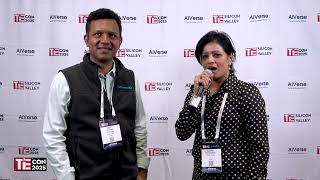
Guru Hariharan, Founder & CEO of CommerceIQ, highlights his growth journey at TiEcon 2025