A Fresh Perspective On The Miracle Morning with Hal Elrod
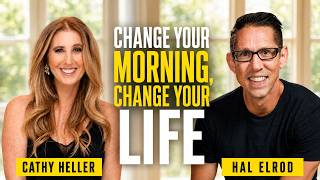
Hal Elrod explains his Miracle Morning routine: six practices called SAVERS (Silence, Affirmations, Visualization, Exercise, Reading, Scribing) that compound over time. He shares how the method helped him recover from a car accident and cancer diagnosis, and offers practical tips for visualization and meditation.
Chapters
Thank you so much for coming on here, Hal. I'm really excited that we get to have this chat.
Kathy, you're so sweet. And from what you've, how you've described your audience, your listeners, they seem sweet too. I'm excited. Yeah, I'm excited for the talk today.
Me too. I feel like what I've been saying so often now is when people ask me, so, Kath, you've done 650 episodes of your podcast and it's all about people who've become successful entrepreneurs. Like, what do they all have in common? I'm finding myself saying that they all have a morning practice. I'm not joking. Like I'm literally, I'm not saying that to get brownie points from you. I mean it. I'm like, they're all doing something like meditation or they're, you know, doing some cardio or, you know, they're grounding in the, in the dirt with their walks outside and the forest bathing. I'm like, but everybody has a frickin morning practice. And along you come with, as you say in one of your books, the not so obvious secret guaranteed to transform your life. The morning, the miracle morning. Tell us about this. What the hell do we need to know? That really is what's up that some of us didn't get the memo on.
So I'm going to, I'm going to share the way that you just started and shared what you shared is going to change the way I normally share what I share, which is good because I share things. You know, I share this message, this story. It's often, you know, kind of follows the same sequential trajectory. So I actually want to start kind of almost like in the middle, sort of toward the end and then maybe.
I like it. I like that we get you out.
Of the predictable totally. Which feels good. I feel so much better. So I'm going to start with the Robert Kiyosaki. For those that don't know, Robert Kiyosaki is the author of one of, if not the best selling personal finance book of all time. Rich dad, Poor Dad. I got to open up for him at an event. So I was like the warmup speaker and he was the headliner and I got to have dinner with him afterwards with it was like a group dinner with all the guys that were putting on the event and I had brought a copy of my self published Miracle Morning book. This was like six, seven years ago. And I had signed it to him and it was under like it was in my computer bag on the floor And I just, I was like, the voice in my head, I'm like, I don't want to be like a goober. Like, and you know, he's not going to read it. Like, this guy's worth, I had googled him. He's worth $80 million at that time, right? I go like, he's not going to read my little self published book. You know, I've listened to his stuff. I know he reads a ton, right? But. And I just, I heard the Wayne Gretzky quote, you miss all the shots that you don't take. I'm like, all right, I'm just going to give it to him. I'm going to look like a goober. And whatever it, whatever happens. So I gave him the book. You know, I'm like, robert, you've, your book changed my life. And three weeks later, I get an email from his assistant. And his assistant says, hal, Robert has read the Miracle Morning three times.
Which my jaw, this did not happen, right?
My jaw dropped. Like, imagine that, like someone that you look up to, one of your favorite authors has read your book three times in three weeks. And I'm like, that's crazy. She said, he does the Miracle Morning every day now.
Most often with his chills. I can't take it.
Most often with his wife. They actually were doing it together. And he said it is totally transforming his life and he wants to have you on Rich Dad Radio on his show. And I'm like, oh my gosh, this is like too good to be true. I go tell my wife. She's like, who's Robert Kiyosaki? I'm like, God, it's no fun to share stuff with you. You don't know who these people are. So I'm doing the interview with Robert and he is just like advocating for the Miracle Morning so hard and like telling his listeners, like, look, you know, you got to take action. Go buy that book. Like, he's just, he's such an advocate and here's what he says. For those of you listening that don't know what the Miracle morning is, and we're going to like again, work backwards to that, but it's made up of six of the most timeless, proven personal development practices that in the history of humanity that the world's most successful people in all walks of life have sworn by for centuries, there is nothing new. What's new is that you're doing all six of these practices in one ritual. So the end. The practices are organized by an acronym to keep it memorable. And I owe My wife for that. It was her idea. I was frustrated writing the book one day and I was like, these six practices have no rhyme or reason or connection. And she goes, why don't you get a thesaurus and see if you can swap out some of the words for synonyms and then make an acronym that people could remember. I'm like, that's brilliant. And the acronym ended up, like being almost like a God thing, where it was like, oh, this is literally the acronym I would want to come up with. It was Save R S Savers. And. And I. And I lengthen that by calling. These are the Life Savers. And they literally are the six practices that saved me from missing out on living life to my full potential. And they've done that for millions of people now. Right. So it was like such a perfect thing. And what originally it was meditation, which became silence. The first S in Savers or it would have been Mavers. Right. The A is for affirmations. And if you think you know affirmations, put that thought on hold your belief about affirmations. They've been taught incorrectly to us, I believe, for I don't know, as long as I've known about them. The V is for visualization. The E is for exercise. It doesn't mean you have to go do a full blown workout in the morning. It means do five minutes of jumping jacks and some stretching. Like get the blood flowing throughout your body to your brain. Wake up your nervous system first thing in the morning. It'll increase your energy and mental clarity. The R in Sabers is for reading, right? No, no rocket science there. But we're all one book away from changing our life. And that book is the miracle. I'm kidding. And then the kidding. Not kidding. Kidding, but not kidding. And then the final S in Savers was originally journaling, but again, that would have been the acronym Saver would have been really weird. It became scribing.
Right.
Which was not even in my vocabulary, but it means writing. So journaling now. And the reason I opened it up with the Robert Kiyosaki kind of his story is, well, there are two reasons. Number one, he was worth $80 million when I created the Miracle Morning. And we'll get into the story, but I was at rock bottom and I was desperate and I was like, what are the world's most successful people do every day for their personal growth and development so they can become the person they need to be to create the life that they want? I need to do those things.
That was where the practice was created. So I was at rock bottom and it changed my life. Robert kiyosaki was worth $80 million and it changed his life. So now I can say, if you're anywhere between zero and $80 million, this applies to you. Now, if you're outside of those realms, this, you might just shut the episode off. Right? So, but here's what Robert said in the interview. It was toward the end of the interview and I've never forgotten it because I had never thought of it this way. He said, hal, before I read the Miracle Morning, he said, every successful person on the planet attributes their success to one of those six practices, one of the sabers. He said, but I've never met anyone until the miracle morning, I had never met anyone that was doing all six of them. He said, if you, if you meditate every day, it'll change your life. It'll lower your stress, it'll help your clarity. Right? If you exercise every day, it'll change your life. If you read every morning, it'll change. He said, doing all six of these timeless practices. You named it correctly. It's the miracle morning. It literally is creating miracles in my life. And by the way, if you go, go look back at pictures of Robert Kiyosaki in 2015, before he read the book, he was heavyset, he was blowed, he did not look healthy. Look at him today, he's lost all the weight. And he has said it in his speeches, it was because of the miracle morning. So, yeah, I don't know where to go from there. But that gives you a broad overview of what we're talking about.
I mean, that was so fun to listen to and so many mic drops. So let's unpack this.
Yeah.
Why is it that it winds up feeling doable when so many people, they hear what you say and they're so lit up right now, but then they get to the first one and they're like, I don't know. Meditation is so anxiety provoking for me. There's no way I can start even because the first one already, like, I'm out. So how can we make this feel attainable and sustainable? Even though those things feel a little bit out of reach? Let's unpack them. Especially as you, as you went on, you were like, and affirmations are not what you think. So let's unpack a few. We don't necessarily have to do all six, but let's do the first. Let's. Let's unpack the first two and we'll see where we go after that.
All right, so here's what. You're a great interviewer, great questions. The. And I'm not just getting brownie points. I'm sincere. So the. So, so here's. I actually want to. I want to start a little bit. I want to create a little context around this, which is not just the practices, but the morning routine. Like, there's two parts to this. There's, should I wake up before I have to. Like, is there. Is there really value in waking up before I have to be somewhere, do something, or take care of someone? So I got to be sold on that, right? And then it's if I can. So if I get sold on that, then it's okay. But how do I beat the snooze button? I'm, like, addicted to snoozing in the morning until the last possible minute. How do I overcome that? So we got to address that, right? Like, these are all the things I was writing the book. I'm like, okay, I've got to convince people that this is, like, this is life changing to start your day with the practice. Then I've got to go. Okay, well, I got to handle the objections of I don't know how to get up in the morning. I don't know. I don't know how to do it. I've tried my whole life. I've never been able to do it. Okay, and then it's, once you figure those out, what do you do to maximize that time? And that's kind of where we started with the last one. Like, you do the Savers, right? So working back from there, why to have a morning ritual, in fact, and one of the questions I often get is, do couldn't I do the Savers any time of day and get the benefits? It's a really fair question. The answer is yes and no. Yes, you'll get benefits if you meditate at any time of the day. 24 anytime, meditation, journaling, any of those are going to benefit you? Here's the thing. The benefits of meditation, for example, it lowers your cortisol levels, right? It actually, and I'm not a neuroscientist, but it does things to your brain, right, that allow you to actually, you gain clarity. In fact, what sold me on meditation was an article that I read back when I was researching this miracle morning thing in 2008. And it was Fortune 500 CEOs who swear by meditation. And, like, I scratched my head at that because I go, wait. I always pictured meditation as, like, you know, a spiritual pursuit. Monks Meditating all day, not CEOs, so they could get in a peak state to go crush it at work. Right? And that's how they talked about it.
So the premise of this is how you start your day sets the tone, the context, and the direction for how you show up to the rest of your day. Right. If you win the morning, you are in a peak position to win the day. And so these six practices will benefit you any time of day. But the thing is, when you do them in the morning, you are putting yourself in a peak physical, mental, emotional, and spiritual state. And then you get to take on every aspect of your day as the best version of yourself, as a better version of who went to bed the night before. And it makes you a better parent, it makes you a better leader, it makes you a better employee, it makes you a better entrepreneur, it makes you a better podcast. Like, you fill in the blank, whatever you're doing, if you start your day. So let's say you waited till the end of the day to do these practices. You would have missed out on the benefits all day long. You'll probably sleep better. Awesome. Right? But. So that's why to do it in the morning. And then we can tell, you know, we can go into this if you want, but I have. There's an entire chapter in the Miracle Morning book called the Five Steps News Proof, Wake Up Strategy for the Recovering Snooze A Holics. It's the longest chapter title, I think, in history. But. But it's literally like. Because. Because here's the thing. I wasn't a morning person when I started this. So I actually had to Google how to beat the snooze button. Like, I had to figure it out. And then I just combined the best of the best of the best. And I tried some stuff. I experimented with some stuff. I had this realization that our last thought before bed is almost always the first thought we have in the morning. Think about when you were a kid on Christmas and if you didn't celebrate Christmas, think about the day before your first day of back to school, a vacation, whatever you were excited about waking up. Was it hard to wake up that morning? And it didn't matter if you didn't get much sleep or if your sleep was terrible and you were tossing and turning. Right? Like, I think of no excited, no time was I more excited than Christmas Eve. And I went to bed. I didn't even get good sleep because I kept like waking up, is it morning? Is it morning? So it was terrible. Interrupted sleep. But Once it was morning, I sprung out of bed with so much energy and motivation, and I had this theory. I thought, wait a minute. What if I could create that every single day? And then I dissected, what is it about Christmas Eve that allows me to wake up Christmas morning as a kid feeling unstoppable? And then I just broke that down and made it duplicable. And so I could do it every single day. So, yeah, so we can get into how to beat the snooze button. There's some tips and tricks in there, but. And we can also go into the savers. That's actually what you asked. And I diverted it. And I was like a politician on.
This one, but I. Yeah, your politician. I love the last thing you said so much, which is, how could I make every single morning feel like Christmas?
Yeah.
And, you know, I'm a Jewish girl. I still am obsessed with Christmas. We have, like, so many Christmas lights at my house on Christmas that I always blow the fuse and then have to add to the gfc.
You're like Chevy Chase, national empire.
I love Christmas music, so much of which was actually written by Jews as well. So everybody gets how cool Christmas morning feels.
Sure.
And I love that as a question, like, how could I make every morning feel like Christmas? What if we could. So I do want to break down even. I want to, like, change the thing I asked. I want to break down the first three. The meditation, affirmations, and the visualization. But because you started this episode saying, let's go out of order. I want to go out of order. I want to start with visualization and then affirmations, and then we'll talk about meditation. Why is it so important to visualize and.
What'S the precursor? Like, do you have to actually believe there's a potential for your life to be better? Do you actually have to be aware that there is more expansion possible before you visualize? Or can you just start visualizing? And how do you. How do you suggest to do that? Do we, like, cut out pictures from a magazine? Do we just close our eyes? Let's talk about visualization and then affirmations.
Yeah. And I'm actually going to ask about your visualization silence than affirmations. Because affirmations is my favorite. So let's finish strong. So visualization. So in terms of your question, do you have to believe first? I think the answer is no. In fact. Right. We believe what we repeatedly think. Focus on, ruminate over. Right. So if you haven't thought about what's possible for you up until now, you're not going to believe it's possible from day one. Like that's putting the cart before the horse. You need to see it a few times, you need to affirm it a few times, you to need, you need to imagine it, right? And then it starts to feel kind of real visualization similar to affirmations. I think that we've been, we've, we haven't been taught the most effective way to do it. We've been taught to visualize the ideal outcome, period. That's it, right? Like the secret, you know, 10 years ago was like, you know, write like you said, cut out pictures, make a vision board. I always joke that like my vision board became an invisible board because it just sat on the wall and I never looked at it and I just walked by buy it every day, right?
Can we talk about that for a second? Because you just mentioned it. Yeah, I'm allergic to the secret. Every time someone mentions it, I feel allergic to it. And when it came out, I didn't want to watch it. I wasn't interested in it. And then meanwhile, cut to like. I'm a huge fan of meditation, have been to several Joe Dispenza events, love the idea of visualizing. But for whatever reason I intuited that like not that way. Like I was like not like that. So I found my way to doing it and I want to do it even better, which is why I love that I get to talk to people like you. So tell us why that way? No. And what way? Yes.
So the problem with visualizing your ideal outcome over and over and over is it can be counterproductive in that it can trick you into thinking it's a foregone conclusion independent of your effort. Right. You see it over and over and you go, oh my gosh, I just know it. It's coming. It gets in the realm of like manifesting and such, which that's a whole nother topic that I do believe there is some merit to. But I think that people hang their hat on that without the pre. They hang their hat on the metaphysical without focusing on the practical. And to me, the practical actually leads to the metaphysical, but not always the other way around. So for me, that's one of the things I think that made the miracle morning sticky is I took these concepts like visualization, which is like, oh, just see it and affirmations, which again we're going to talk about, but these practices that were kind of woo woo the way they'd been explained and you couldn't really grasp them. They weren't very practical. And my brain just doesn't work that way. I'm like, no, I need it to be practicable. Practicable. I made a word. Practical, actionable, and results oriented. Like, I don't want to just feel good and trick myself into thinking something amazing is going to happen. I want to see measurable results from the practice that I'm doing. So part one of visualizing seeing the ideal outcome, there is merit to it because. And it goes back to your question. When you see something over and over and over, when you vividly imagine that you feel it, it starts to become real for you. So I'll give you an example. When I was. I hated running. I've hated running my entire life, and I still hate running. Okay? I do not identify as a runner. Not at all. However, when I started doing the Miracle Morning, way before it was a book Idea, this was 2008. It was my own practice. When I was $50,000 in personal credit card debt, my house was being foreclosed on. I had, you know, basically, when the economy crashed, I crashed with it, like millions of Americans. That's what led me to figuring out what can I do differently to change myself and change my life? And when I got, like. As I started doing the Miracle Morning, I just started thinking bigger and bigger. And I defined what I call level 10, right? Which is. I mean, this isn't rocket science, but I went, what is. What do I look like at a level 10 in every area of my life? What does level 10 health look like for me? What is level 10? Motivation, discipline, like, every aspect of my life. What would it look like for me to be level 10, fulfilling my potential in every single area and physically? A friend of mine hosts. He used to host a. He founded a charity called the Front Row foundation, and he hosted an annual run for the Front Row Foundation. And he called me. He had called me right before I started the Miracle Morning, and he said, hey, we're doing the Atlantic City Marathon again this year. You're going to come out and run with us. I said, dude, I'm not a runner. I'll donate some money. I am not running.
And once I started the Miracle Morning, I don't know if he pinged me again or I just thought about it, but I'm like, wait a minute. I hate running. I've never run more than a mile. What if I were to run 26 miles in a day? What if I were to run a marathon that is so far outside the Realm of who I've ever been, what I believe is possible for me. Right. Again, I did not believe like running a mile, which was only required PE class. That's why I did it right. And I hadn't run once since high school 10 years before, but I thought that would force me. If I committed to that publicly, I would have to become a level 10 version of myself. I don't even know who that guy is that could run that, but I'm going to do it. And then I decided to double it and commit to a 52 mile ultra marathon. And I had never run more than that mile. And I. So here's. That's a long way of getting to. Here's how I incorporated visualization. Every day I would visualize crossing the finish line of the Atlantic City Marathon. In fact, I kind of went secret style and actually printed off an 8 and a half by 11 image of the finish line. So I literally knew what it would look like as I was approaching it to cross it. Now visualizing that every morning and literally for just like 60 seconds, just I would visualize and then I would create a compelling emotional state around that like I'm going to. And I would affirm it. I go, I'm going to do it. I'm going to. I'm going to. I'm going to train, I'm going to work, I'm going to fit. I'm going to run 52 miles. I'm going to cross that finish line. I'm going to do it. That's the value in visualizing your ideal outcome, is that it becomes real for you and you want to attach it to a compelling emotional state. But here's the second step that I'm going to share with everybody. This to me, is what makes visualization effective. And it's rarely taught to us, or at least, you know, it's not in the secret, that kind of thing. Number one. Yeah. Visualize your ideal outcome. Get excited about it. Make it real for you. Number two, visualize yourself engaged in the necessary activity today. The training, the phone calls, the cold. Right, whatever you have to do, the writing, whatever you have to do today, literally close your eyes and picture the time that your alarm on your phone goes off, that you got to do that thing. And it's often the thing you don't like doing that you always procrastinate on. That's going to get you where you want to go, right? So you visualize. So I would visualize myself. Here's how it played out. I would close my Eyes. And I would see my phone alarm going, beep, beep. And I would hear it in my head, beep, beep, beep, beep, beep. I'd pick it up. It was 7am because that's when I committed to train, to run. I would picture myself in my mind. It was like a little movie. I would turn it off. I would walk into my bedroom. I would picture myself putting on my clothes to go running. And then I would visualize myself. I would picture myself walking across my living room. I mean, like literally, it was the whole thing. Into the room, into the closet, get dressed, head out the front door. I would open my front door. I would visualize seeing my sidewalk in front of my house. And then I would say something like, you know, hell yes. Like, this is going to be the best run of my life today. I am going to be a better version of myself because I am following through with something that I don't really want to do. But I am going to enjoy this, right? I am excited. I would get myself in a peak emotional state while I visualize getting ready to go for the run. That is the most important, powerful, effective technique I have ever discovered for visualization. Because here is what would happen when the alarm went off at 7am and if you're listening right now, I want you to imagine anything that you need to do in your life to get where you want to go that you might not like doing. There might be rejection involved. It might be painful, it might be uncomfortable, it might be whatever, out of your comfort zone. So when the alarm on my phone went off at 7am I picked it up and guess what? I didn't visualize putting it back down and going, I don't want to run. I'll just do it later. No, no, no. That's not what I rehearsed. I rehearsed getting up, going into my closet. So guess what happened? Without even thinking, I looked at it. It said 7am I got up, I went in my closet, I changed my clothes, I went out front, I opened the front door. And I was flooded with a rush of positive emotions as I looked at that sidewalk. Because that is what I rehearsed. That is the way to effective visualization. Spend one minute visualizing your ideal outcome and four minutes walking through the activity that you need to do today that will get you to that outcome. And feeling, picturing, imagining that emotional state that is so compelling that when it's time to do the activity, you won't think twice. You'll just do it.
Oh, so good. And I mentioned before that I'm Jewish. And something that's Jewish that a lot of people know in the zeitgeist is the word mazel tov. Like, people have heard it in movies and whatever, and people don't really know what it means, so they think it means good luck, right? Oh, mazel to. But mazel is a word that's actually an acronym that stands for makom, Zman, La sot, which Makom is place, Zman is time, and La sot is action. And so a friend of mine who actually created a TV show called Third Rock from the sun read a book by Malcolm Gladwell called Outliers. And I had Malcolm Gladwell on a couple of times, and I reminded him of this. My friend read that book and said outliers, which is about how the most successful people in history became outliers. My friend read the book and sent Malcolm Gladwell a note and said, your book basically outlines what mazal is. It's being in the right place at the right time, but having done the work so that when you're in the right place at the right time, all of the action you've taken makes you the person for this role. Which is where he talks about in Outliers. The Beatles. But before the Beatles were the Beatles, they had been a band for eight years performing together, and they were so coherent and so tight that when they then went to be the Beatles, they read each other in seconds. Their harmonies were amazing. Right? Like, we forget all of that stuff. So I like what you're saying so much, because again, people are like, I'll just sit here and think about a red bicycle, and it's like, what are you gonna do today? It's not gonna show up in your backyard.
No.
So if for it to show up in your front yard, do you need to go to Amazon? Do you need to go get the $390 for the red bicycle? So what do you need to do for the $390? And that's where there's, like, your inspired action is so helpful and compelling. And like you said, we. We. We. We bow out of the game so fast when things become uncomfortable because you haven't rehearsed the part where it's like, you can tolerate the process. You can tolerate making the brownies and actually having to stir and wait for them to rise in the oven, and then the brownies will be there because you tolerated the patience of the process. And that's what you're saying, like, show up for it. But my Question to you is, what if somebody has this thing where they're like, I want. For instance, I just. This came to me. I want a podcast as big as Joe Rogan. I just talked to somebody who said that's what she wants. What if. Then she doesn't know what the steps are? So she's like, I don't even know how I would visualize for four minutes the steps, because I don't know the steps. I could understand the steps to learning how to run the marathon.
Yeah.
But I don't know the steps to that.
Yeah.
And so then what do they do?
I mean, so it's, you know, it's always, if you don't know what the steps are, then you Google what the steps are. Right. Like, I mean, but really, like, it's that. That's that, you know, Google. How do you.
Like, they're there, they're there. You're like.
And here's the thing. Yeah. Well, yes and no. There's definitely no steps to how to get as big as Joe Rogan. Right. And that my dream is actually not to be as big as Joe Rogan. Maybe. I mean, sure it is. But. But that my podcast that I can just talk about anything I want, like Joe Rogan. Like, you know, I'm always worried I'm going to offend half my audience if I say this or that. Right.
You just nailed it. How you just nailed it. That's what my agent said. I asked my agent at Gersh, why do you think his podcast. He goes unapologetic, period.
Yeah, that's it. Yeah. Yeah.
Being. Being unapologetic is a very high. It's a high vibe.
Yeah. Yep, yep.
I know, I know.
Over my house. But no, it's hard.
We're all pleasers. And I'm sure he was at one point, too, so.
So it's simply dedicating time to figuring it out. Right. So if you know. And this is where. In that case, and this is actually a great question, that actually there's a broader question of do I have to do all the savers every day? You know, which is the best? Like, that kind of thing. I don't visualize every day. In fact, that's one of the only savers that is probably the only saver that I don't do every single day. I do it as needed. I do it when there is something that I need to put myself in that peak state for if I'm about to. If I'm giving a speech that day, I'll always visualize taking the stage, being, you know. Right. Embodying my best energetic self, you know, and, like, I'll just rehearse that so that when I'm there, I've already done it, but I don't visualize every day. So in the case of her, she might go, I'm going to visualize just the end result. And then I'm going to open my schedule and I'm going to commit one hour to figure out how to grow my podcast. That's it, right? That's it.
And I think what you're really saying is visualize for four minutes when you do choose to do this visualization a few times a week, that you're tolerating, being in the process of being this. Whatever that is you're tolerating. Like, I'm in this process and I'm up for figuring out this process piece. I'm not skipping over it.
Okay, let me say I, I. The word tolerating doesn't resonate with me just because I, like, I get where you're going with that. But to me, it's. I really want people to be rehearsing, being in a peak state, being excited to do something. You know, fake it till you make it. Like, I used to. I hated running, right? But I'm like. So I didn't visualize. I didn't visualize tolerating running, right? Cause that wouldn't have compelled me to go on the run. I was like, this is gonna. I'm gonna be a better version of myself. I'm doing something that I hate. That's difficult because it's making me better. Right? So I was like, that's something I can get excited about, you know? Right.
I love that note. I love that note. Okay, and now you. I wanna hear what you had to say. Cause you, you mentioned. Oh, we don't know what affirmations really are, but I know you wanna save that one. So tell me why. Why people, you think are going to be able to meditate when they hate it?
Yeah. So meditation. And I do love that. The act that when I use the thesaurus, that meditation became silent because it's such a broader term and it gives so much kind of room. You know, you might pray for five minutes in the morning. Right? Prayer might be your silence. There may be no meditation involved. Right. But however, you know, There are over 1400 scientific studies, and that was years ago. It's probably, you know, tripled since then. Who knows? On the benefits of meditation and benefits in terms of emotional, physical, you know, mental, Right. I mean, there's so many benefits of meditation. This. I just read Michael Singer's book, Living Untethered. Have you read that?
Yeah, it's amazing.
God, so good. But, but anyway, Living Untethered, he like, he defined meditation so well and he, and he addressed the frustration that most of us have, which is like, I can't quiet my mind.
Yeah.
Like that's what. Like I suck at meditate. Like the first time I meditated, I'm like, not just the first time for like weeks, you know, it was like, yep, me too. This, I suck at this. I'm not doing it right. My mind's flooded with. And he said, and Michael, he goes, many people would say I'm terrible at meditating because my mind's flooded with thoughts and I can't stop the thinking. And he said, oh, most people are flooded with thoughts, but they're not aware of that. They're not conscious of that. Now. You are beautiful. What a powerful meditation that you had to be aware of how your mind is out of frickin control. And now that you're aware of it, you're no longer under its spell. Now you can, from that higher place of consciousness, you can keep watching your mind and what it does. And then I've experienced this. You know that the longer you do anything, the better you get at it, right? And the more you can meditate. And here's, and here's. You know, the simplest meditation is counting your breath. And actually Michael Singer talked about that in his book too. And he says, count to 25, 25 breaths each, inhale and exhale. That's one, right? And then you go to 25. And, and then if you get to three or four or five and all of a sudden you notice that you're thinking about what happened yesterday and you totally even forgot you were meditating, which is what happens to me. And it still happens years later. It still happens, right. You can either just, if you remember where you were counting, go back to 4, 5, 6, whatever, or you can start over again. Right? There is value. It's kind of one of those things, you know, where they say, like, even if you don't know it's working, it's working. Right? And so quieting your mind, or even not even just quieting it, just observing it without judgment. Yeah, Being in that witness consciousness, that's transformative. Let your mind, it's that separation of. Yeah, my mind's fricking crazy. But as Michael talks about in the book. Right, But I am not my mind, I Am not my body. I am not my name. I am not my age. I am the one who notices it all. I am witness consciousness. I am the one that notices. Oh, I have a crazy mind. And you sit back in that seat of consciousness and silence. That's what it allows you to calm your nervous system, to get centered. And there's physiological benefits in terms of lowering your cortisol levels, that kind of thing. My best idea. And here's. Let me just say this. Let me talk about the way. The opposite of how most people start their day, which is not silence. Most of us start our day with chaos, right? Yeah. We reach over. We. I mean, how many seconds are you wait before you grab your phone and start scrolling something? Checking email. Yeah, one second. You know, Facebook, whatever. I have a rule. I do break it sometimes. But my general guideline is I'm not allowed to check my phone until I've finished my meditation. My affirmations are on my phone. They're actually in. The Miracle Morning app is now a thing. So I do use it. Yeah, but, but. And I so use the affirmations. And we're about to launch a like membership side with guided meditation. So I'll be using those at some point.
Cool. How so cool?
It's been on our list for like 10 years. It's really cool. But anyway, so. But the point is, I'm not allowed to check my phone for at least like 10, 20 minutes when I've been up and I've gotten centered and I've. I've, you know, I've made my tea, right. Like if gone through this ritual. And most of us start our day with that mental stimuli, overstimulation, right? We grab the phone and we're stimulated from day one. And if you think about it back in the day, moments of peaceful, purposeful silence where we could reflect, where we could really think, where these brilliant insights came to us, they were built into our lives. Whether you were, you know, waiting in line or you were staring out the window of a bus, right. Or you were on a train to work, and now our smartphone has all but made that extinct. And that is when our greatest brilliant insights, our wisdom, emerges. Whether it's our own wisdom or wisdom from God, higher consciousness, it emerges in silence. That's why your best ideas often come in the shower, because you can't have your fricking phone in there.
Just talking to someone about that. The same girl who wants to have that podcast, she's like, you know, I was in the shower last night and I'm like, of course. Because you finally stopped trying to figure it out by busying your mind. Yeah, there it was.
And that is that. I'm glad you said that because that is an aspect of it, right. Is trying to figure it out versus quieting your mind and allowing, like, where do ideas come from? Whenever somebody says, wow, when they compliment me on the miracle morning, it's amazing what you've created. I'm like.
Thank you. But the idea came from somewhere.
The download.
Yeah, right. Was a download. I'm like, I don't, you know, I, like, I'll take credit for. I've been working hard for the last 10 years to share it. But, like, you know, like, I don't, I don't take credit for any ideas. I don't know where they come from. I'll take credit for. I give myself the silence that allows for the ideas to come. Right.
It's very brave. You know, I think that the reason people are constantly running from silence is because there's a whole bunch of identifying with that mind, that monkey, monkey mind. And that monkey mind is not just thoughts. Right? Thoughts don't stay in our mind. They become feelings. That cortisol creates stress and anxiety. And then we're like, if I'm silent for even 40 seconds, I'll be caught in that. And then I'll be thinking about my past and my ex, my mother and my this. And it's like, terrifying. So we just keep running. But if we learn what you said so beautifully, you're not that you are the witness to that and you have even one pause to be in that witness state, you will be free for a moment of constantly being reactive to that which isn't even essential to you. It's just your mind. So let's. Before you are. Are going to be hopping off soon, tell us a little bit about the affirmations and why you think they've been taught incorrectly and what you think they really are.
Yeah. Affirmations, I think, are the most misunderstood, underutilized and effective form of personal development.
The reason that there, there. There's multiple reasons. One reason they might be misunderstood. If you grew up when, you know, I don't know, we look about the same age. I'm assuming the. Back in Saturday Night Live when Stuart Smalley had that, I'm good enough, I'm.
Smart enough, and doggone it, doggone it, people like me and I have friends.
Yeah, it was, it was positive affirmations with Stuart Smalley. So it made a joke out of it, Right. He used to look in the mirror and say all this positive stuff to himself. But here's the two main problems from my vantage point. Number one, we've been taught one of two strategies. Either lie to yourself. Like, affirm that something is true that is not true. So you trick yourself into believing it.
Example of that is, if you want to be wealthy, we're taught, just affirm, I am wealthy. Just own it, embody it. I am a millionaire. But if you're struggling financially, then you're. You're sub. You know, you're smart enough to know the truth, and the truth will always prevail. So if you're like, I am a millionaire, your subconscious is like, dude, you're not even a thousandaire. Like, you need to stop lying to yourself. And you're like, shut up. I'm doing my affirmations. Right. You're literally creating an internal conflict that doesn't need to be there. So lying to yourself is never the optimum strategy. The second problem with affirmations, the way that we've been taught is we've been taught to use this flowery, passive language that similar to visualization, visualizing the ideal outcome, it promises a result independent of any effort. I'll give an example that most of us have probably heard some variation of this affirmation. So a financial affirmation. I am a money magnet. Money flows to me effortlessly and in abundance. Right. If you affirm that now, why do people actually. Why is that affirmation stood the test of time? Because it gives you temporary relief from your money woes. If you're struggling financially and you're like, oh, my God, I'm so stressed looking at my bank account balance. I need to my affirmations. And then you pull them out and you get in the state of delusion and you go, oh, I'm a money magnet. Money is magically going to come into my life out of thin air and solve all of my problems, and I'm going to be a millionaire, and everything's going to be okay because I'm a magnet and I'm attracting it. All right? And then you go, oh, that feels way better than when I was looking at my bank balance and I was super stressed. Oh, thank you. Affirmations. You give me relief, right? Like, it's delusional, though, and it doesn't produce results. It makes you feel better for a moment, and then it deludes you. And then your finances don't improve. And then the next day you have to do the affirmation again. Right, Right. Kind of like Taking pharma, it's like taking pharmaceutical drugs that, that are, are handling the symptoms for a few hours and not causing the. Solving the root cause.
Yep.
I'm gonna give you guys three gals and guys three steps to create affirmations that will produce measurable, meaningful results and make you feel good. Right? But I, I don't wanna feel good for the sake of feeling good. I wanna feel good to an end. Right. Number one, affirm what you're committed to. Don't affirm something that's not true. Don't affirm what you want. Because in life we don't get what we want just because we want it. We get what we want if we are committed to it and that's it. So if you want to be a millionaire, say, yeah, I'm committed to becoming a millionaire. Right. You can even have the date by this date. Here's my affirmation formula. Step one. I am committed to blank no matter what. There is no other option. I am committed to running 52 miles no matter what. There is no other option. When I add cancer, which we haven't got into that, we can go a little longer, by the way. Let's just keep going. 15 more minutes. I had forgotten that we were talking about finishing. So yeah, let's keep going.
But when I had cancer, I affirmed, I am committed to beating cancer and living to be 100 years old alongside Ursula and the kids, no matter what. There is no other option. And again, we get what we are committed to. And I was given a 20 to 30% chance of surviving. This was about five years ago. And I.
When I would feel fear that I might die.
Despite doing everything in my power to survive, I thought, what if I, what if I die? Like, what if, what if I don't make. I mean, what if I'm in the 70 to 80% people that die from this? I would pull up the affirmations. I had them everywhere. They were printed on my bedside table, they were on my phone. They were with me at all times. I felt the affirmations. Whenever I'd feel that fear, I would acknowledge this fear is not serving me. I pulled the affirmations and I would go, I am committed to beating cancer and living to be 100 plus years old alongside Ursula and the kids, no matter what. There is no other option. I would read it with such conviction and such passion and such emotion that it became my reality. And eventually the fear disappeared. I didn't even really feel the fear anymore because I replaced it with that faith. Right. So Step one, affirm what you are committed to. Step two, affirm why it is a must for you. Why is it a must? Why are you committed? And for me, I like to list bullet points of the most compelling reasons why I am committed to that outcome. So, going back to the affirmation, the cancer affirmations, I said, I'm committed reading cancer for Ursula because I promised her forever. Sometimes I get emotional whenever I say these. I'm committed to being cancer for Ursula because I promised her forever in a day. I'm committed to beating cancer for Sophia and Halston because they need their dad's love. You're getting emotional and I'm getting emotional. They need their dad's love, guidance for the rest of my long life. I'm committed to being cancer for my mom and dad because they don't deserve to lose another child. My sister died when I was 8. I'm committed to being cancer for myself because I deserve to live a long time, happy, healthy life.
And I am committed to being cancer for the millions of people who are themselves battling cancer or some other disease and were not blessed with the knowledge or resources that I was, and they desperately need my leadership and guidance. And I am committed to helping as many people as I can. So that was the fuel that powered the affirmation, right? That is as Simon Sinek says, right? It is the why, the why that I'm committed to this. Because this, this, this, this and this. And without step two, step one can fall flat, right? You can forget why are you committed to that thing that's so far outside of the realm of what you've done before? It's so far away from where you are now, right? It's so far away from what people are telling you is even possible. Step two is where you fuel that. And then step three is what are you committed to doing and when? What are you committed to doing and when that's where the rubber meets the road, right? Step one, you're affirming what you're committed to. You're affirming it, you're embodying it. It becomes your reality. That commitment is your reality. Step two, you are affirming why? Why, why, why, why? Why will I do everything in my power, no matter how I feel? I don't feel like it. I don't care if I feel like it. I committed, and here's the reasons why. And then step three. And so I will do these things on these days, you know, if you're writing a book, I will write every morning from 7 to 8am you know, if you're trying to, you know, run a marathon, I will train from 7. You know, whatever. If you're. You know, when I was in sales, it was, I will make 20 calls a day, five days a week from this time to this time, no matter what. There's no other option. And so when you. When you follow that formula, you are programming your subconscious mind for success. You are programming your conscious behavior. You're literally setting your behaviors up for success. Right? You. I mean that the reason affirmations are my favorite of the Savers, and I believe they're the most effective form of personal development, is how precise you can be in designing the exact mindset that you need and the actions that you must take. And then tweaking it. I edit my affirmations all the time. I'm like, ooh, actually, I'm going to tweak this. Ooh, I just read a. I'm reading this book, and this. This quote. Oh, that. That. That is. That will fuel my why even more, right? So my affirmations are always evolving as I'm evolving, and, you know, I think they should for all of us. So those are three of the Savers. And like Robert Kiyosaki said, any one of them will change your life. When you do all six. The miracle morning, right? It will create miracles in your life as it has for millions of people around the world.
I think your. Your vibration is what saves people's life. You know, there's literally, if there's two guitars on a table and I pluck the C string on this guitar, the C string on the other guitar will vibrate. And it's called resonance. And it is undeniable how much resonance you're being offers. It's like, very good WI fi, right? It's like you are somebody else's personal hotspot. And I was totally brought to tears, you know, And I'm saying it out loud only because you're. You're all listening to this, so you couldn't see that. And it's because when. When we hear truth and we see truth, we cry. Because there's no way to not cry. Because our soul says, ding, ding, ding, ding. That's truth. This is what truth feels like. This is what truth looks like. And so I just so honor and am in awe of your courage and your generosity, because every one of your whys was for somebody else, right? And it's interesting because.
People tend to feel miserable when they're obsessed with themselves, right? Like, we actually don't Want to be the center of our world. We don't want to have a lot of free time. We're like, what do I want? What do I this? It's like, really? We get the most lit up for other people. Sure. And we were put here for other people. And so it was just so gorgeous and really inspirational to hear you talk about. That's why. Right. And I think a lot of people give up on themselves.
So they have a lot of learned helplessness. But when you put it in that way, like, you know, why I'm gonna live for these kids, for my parents, for my wife, then, oh, boy. Does that, I think, touch a nerve with everyone. Like, you might think not so highly of yourself, but every one of us can think of a person in our life who we will do it all for. Right. So that was just so beautiful. And it's really amazing how, like, it's one thing that people like Robert Kiyosaki, you know, admire you, and it's another thing that you've been able to build this beautiful fortune and have impact, but you literally had an aggressive form of leukemia and now you're sitting here.
And that is something that's in your rear view mirror. That, that's mind blowing to people. They're like, well, that's not something you can rehearse doing anything about. And here you are, you know, so.
There'S no excuses. Like, no one has an excuse, right? No one has an excuse. And for those people who are like, but you don't understand the evidence of my situation, you're like, well, you don't understand the evidence. That was my situation.
Yeah.
So if they're still holding on to this self defeatist, why would I even bother? I'm never going to win the marathon and I'm definitely not going to beat cancer. What might be the one thing that you could say to possibly convince them that there's definitely a potential in this reality, that they in fact can beat it. And they can also finish the race too.
I would say that one of my favorite affirmations, which is, I'll put it on you listening. So instead of I am, I'll say, you are. You are just as worthy, deserving and capable of everything that you want as any other person on earth. And life's just waiting for you to believe it, act on it and prove it.
But that to me is one of the most fundamental affirmations. I am just as worthy, deserving, and capable of blank. It could be specific, right? Anything that you want as any other person on Earth, you know, I am just as worthy, deserving, and capable of beating cancer as any other person that has ever beat cancer. And. And if you're listening to this, like, you really do, you know, showing you how to say it, but you're extraordinary. Like, you are a miracle to the way that I look at, you know, God is. God is the oce, and we are all droplets of water in the ocean. That is God. There is no separation. It's made of the same stuff, right? Made in the image and likeness of God. The kingdom of heaven is within, so on and so forth, right? And if you're listening to this, like, we, we, you know, we look at our past. I talk about, in the, in the book, I call it rear view mirror syndrome, right? That we all have this rearview mirror in our subconscious mind. And whenever we're faced with a challenge or an opportunity, we check the rear view and we're like, well, how have I responded in the past? Or what in my past proves that I can overcome or accomplish this? And you're like, nothing. There's nothing, right?
I got nothing.
I got nothing. Like, when I wrote the Miracle Morning, I was like, I kept, you know, it took me three years. I was like, who am I? Nobody's going to read this. Like, I don't know how to, you know, And I'd already written a book that didn't sell. So I like, my review mirror said, hal, you busted your butt to write a book and nobody bought it. Like, you know, so that was my review, and I just, you know, and I doubted myself every day. And then I, you know, but I'm like, I'm like, I. It really went back to the, if this changes one person's life, I have a responsibility. Because this morning ritual changed my life. And I wasn't a morning person then. I taught it to all my coaching clients. It changed their life, and they weren't morning people. And I'm like, if it worked for the, you know, it could work for anybody. And I am a selfish asshole if I don't get over my issues, my insecurities, my self doubt, my writer's block, whatever, right? If I don't get over, like, it's not about me. That's been a mantra of mine since 2005. I read the book Love is the Killer App by Tim Sanders, and he talked about selflessly adding value to the lives of other people. I don't know if he used that word, but that's how I walked away. That became my purpose in life, to selflessly add value to the lives of every person I possibly could. And you can be selflessly selfish, right? Because like you said, Kathy, that's what lights you up. Guess what? I feel really good when I help others. So it's like a win win, right? You know, better than when I just try to do something for myself and go watch Netflix. I don't feel lit up and fulfilled when I watch Netflix. Right. But if I help somebody, that, that's amazing. It's like, right, Everybody wins and so.
Going with that.
But, yeah, it's beautiful. I want to ask you, though, this, like, you have such a positive vibration. Like, it's more than like, you're so positive. It's like your whole being is plus. Right? It's like all plus signs. And your charge, it gives charge to other people's batteries. That's how charged you are with life. Life force. So what was it like for you to be already on this journey and then have this diagnosis? Like, how weren't you like, wait a minute, I'm. I'm positive I'm here. I'm like, were you blindsided by that or did you walk away with some wisdom of like, oh, this is how I made meaning of this, you know, out of like a moment where I was already pretty onto positivity and living a well life. Well lived.
So I, yeah, I had, I had a reference. So when I was. So I was 37, when I was diagnosed with cancer, when I was 20 years old, I was hit head on by a drunk driver at 80 miles an hour and I was found dead at the scene. I broke 11 bones. I was clinically dead for six minutes.
How does anyone do an hour podcast with you? It needs to be a day. It's even a retreat in the woods.
With a microphone, Joe Rogan style. You're like, there's three minutes left and you tell us you died in the car accident. That's usually like the opening story I share, actually. So we really went backwards.
But I was told I was dead for six minutes. I was in a coma for six days. Came out of the coma to learn I had 11 broken bones and permanent brain damage. And at 20 years old. I don't care how old you are. At 20 years old, I was like, you know, that's hard news to take. And they said I'd be in a wheelchair the rest of my life. And I decided to maintain two opposing ideas at the same time. I thought, okay.
If I'm in a wheelchair for the rest of my life, I will be the most grateful person that you've ever met in a wheelchair, Because I'm in a wheelchair either way. So I will not let my wheelchair affect my emotional wellbeing and my quality of life. Right? And I have to give credit to a mentor. A year and a half earlier, I had learned this thing called the five minute rule. He taught us that whenever something negative happens, you set your timer for five minutes, and you get five minutes to feel the feelings. Bitch, moan, complain, cry, ventures, whatever you have to do. When the timer goes off, you say three very powerful words. Can't change it. Can't change it. It's an acknowledgement. I can't change what happened five minutes ago. There's no value in wishing it were different. There's no value in wishing it didn't happen. There's no value in feeling angry, sad, upset, depressed about it. Right?
You know, learn from it. If you made a mistake and you feel like, great, okay, but you don't need to dwell on it for hours or days or weeks or months. So I've been practicing this five minute rule in the context of a sales career where whenever I'd have a canceled order or a no show or stuff that normally a salesperson, it would, like, ruin their day, it would only ruin mine for five minutes. And after a while, it became five seconds. Because I would set a timer on my phone. I would go, son of a. I can't believe this happened. And then I would, like, I would. You know, I would, like. I would get mad for a sec, and then I'd look at my phone, I'd go, all right, I have four and a half minutes left. Like, why? What's the point in getting, like, why don't I just accept. Why don't I say, can't change it now and get on the phone and schedule some more appointments, right? So it just. It elevated my consciousness around. I don't ever have to feel bad. I can just choose to. Whatever feelings come up, I can process them very quickly and move on. And I had practiced that in traffic. You know, I mean, you name it. Where I. Literally, no matter what happened, I was. I call it emotionally invincible. Kind of where I'd feel it, I would go, this sucks. Okay, what can I learn from the emotion? Why am I feeling this? Oh, I'm feeling this because I shouldn't do that again. Got it. Lesson learned. Moving on. And so when I came out of the coma with the car accident, it was very quickly. I mean, you know, I mean, it was a few days of like, oh, my God, like, picturing okay, what's a wheelchair like? Like, you know, there was so much to unpack around, like, my new reality. I woke up and I'm broken bones and all this, and. But I decided I can't change it. So it's. Even though this is a much bigger adversity than the other stuff that I've been working on the last year and a half, the little stuff, the principle is the same. I can't change that I broke 11 bones. I can't change that if I'm in a wheelchair the rest of my life. But I can choose to be the happiest, most grateful person anyone's ever seen in a wheelchair. That's my choice.
But I thought, I'm not going to accept that I can never walk again as the only option. I'm going to visualize what I want. I'm going to visualize walking again. I'm going to pray that I can walk again. I'm going to maintain unwavering faith that I can walk again and not be disappointed if I don't. It's a really interesting dynamic, right, where most of us, if we want something, the more we want it, the more disappointed we are if we don't get it. And I realize that's not the only option. You can want something really bad. You can visualize it, you can maintain faith, and then you can accept life before it happens. Go. No matter what the outcome is, I'm at peace, because why wouldn't I be? How does it serve me to be depressed and sad and angry over something I can't change? It doesn't. So no matter what happens in my life, I'll be at peace. But I'm going to focus on what I want. I'm going to visualize it. I'm going to put all my energy, my vibration, as you say, into that. Two weeks after I came out of the coma, the doctors came in with routine X rays. They said, we don't know how to explain this how, but your body's healing so quickly, you can take your first step today in therapy. And I had broken my femur in half. I had broken my pelvis in three places. I had broken my arm in half, shattered my elbow, severed my radial nerve, fractured my eye socket, severed my ear. I mean, all of that. And.
Three weeks after I was found dead, two weeks after the coma, I took my first step. So when I was diagnosed with cancer, the day I was diagnosed, my wife was out of town, and I was told I had a 20 to 30% chance of living but literally, I felt very little emotional pain because I had practiced this mindset for 17 years. So I'm like, oh, I have cancer. Whoa. Wasn't expecting that. Okay, how am I going to beat it? That's literally where I went. It wasn't. Oh, I feel sorry for my. It's like, there's no value in that, right?
And if you're listening and you're like, what? How do you. It's because I practiced it for 17 years, right? Like, if I was diagnosed with cancer when I first learned what I'm sharing with with you now, I wouldn't have been able to do this. Right? This is practicing acceptance. Can't change it. Five minute rule for 20 or 17 years. But I called my wife. I told her, she broke down in tears, which caused me to break down in tears, of course. But I said, sweetheart, two things I want to share with you. Number one, I'm not scared. I have unwavering faith that I can beat this cancer. It's a 20 to 30% survival rate. But I've decided there's a 100% chance that I'll be in the 20 to 30% of those who beat it. And you know that. I mean, I don't think it made her feel much better, but. But that was it. And so. So I forgot what your original question was.
But, oh, my gosh, you know, what I realized is like, you are the miracle. You're the miracle morning. And that's why people keep reading the book more than one time. And that's why God saved you from that accident, because you are here to tell this story the way you tell it. You are such a generous, delicious, helpful, wonderful, inspirational, incredible person. And your very existence gives everybody exactly what they need to go make their lives into a miracle. So I am just incredibly grateful that I have the gift of just being witness to you and getting to feel the medicine that is. Every word you speak is medicine. It's the best medicine, and you are the best remedy for all of this. Just, all of this was such a generous gift. So. And on top of everything I just said, you've done this so many times. You've done keynotes, you've done podcasts, and you treat each one with this much passion and give this much energy. Like, may you just be aware of how much this drastically changes the world. May you. May you be aware of it.
I want you to talk. I want to talk to you every day. You're, like the sweetest, most articulate, most encouraging human being. I think I've ever met. I've never. I don't know that I've ever, like, gotten choked up so much on a podcast as I did today. So amen to all of it. It's beautiful. Thank you.
That means a lot. I think everyone who ever, like, listens to you, loves you immediately. You're very, very lovable.
You're so sweet.
You're so humble. It's like that kind of humility is such a legacy. It's amazing.
Well, there's something about you, like, the way you're articulating and recognizing this. Like, I don't know how to put it into words, but you have something extraordinary. You have an extraordinary gift that you can, like, see that and bring it out and articulate it the way that you do. So I feel honored to be in your presence and to hear you say that.
Thank you. Well, I've had so many people that you and I both love on this show, including, like, Deepak Chopra and Tony Robbins and Matthew McConaughey and all these people, and I loved every second of it, but I've never cried like this in 650 episodes. And all of those people, you know, brought a lot of big, beautiful things to the table. But you're so special. God is just. If God has a refrigerator, your pictures on it, and he just wakes up. He wakes. If he would wake up, if that was a thing, he'd just look at that refrigerator and he'd go, well, I made Hal. So that sort of. That justifies it. That justifies it all, folks.
Of course he wakes up. He does the miracle morning every day. I've talked to him, like, this is his practice, by the way. Like, he just gave it to me, obviously. And he's like, hey, go share this with the world, buddy.
All right. Obviously. Thank you for being such a conductor of that. Of Godliness.
We love you. Tell everyone where they can find your podcast, where they can buy the books, where they can follow you on Instagram.
Yeah. Miracle Morning.com is the hub. Miracle Morning.com. you can find the app there. You can find that. There are a bunch of free resources. The apps free. The podcast is free. What else for the movie is free? Which you don't even. There's a documentary, by the way. I know.
We didn't even get to that notes. I'm like, forget it.
We were two years into filming the documentary when I called my director and I said, I have this really aggressive cancer. It's not looking good. The movie's on hold. And he said, hal, I'm coming to the hospital with a camera. We have to film you beating cancer and sharing it with the world. Yeah. So that whole journey is in the movie, but, yeah, in the books, everything. MiracleMorning.com is the hub. And join the community because there's hundreds of thousands of people in the Miracle Morning Community Facebook group that wake up every day and support each other, and it's a really, really beautiful community. So, Kathy, I love you so much.
So much. Thank you.
I want to do this again.
I want to hang out. Where are you? Where do you live?
I'm in. Outside Austin, Texas. Where are you at?
Of course you live there. That's where you should live. You will be bigger than Joe Rogan. He's your neighbor.
There you go.
Got this. I'm in LA and I'm sure we're going to hang out at some point. Thank you. Give your whole family, the kids, the wife, just tell them I just love them for being the people that are in your life. You're amazing.
Yeah. Hey, my calendar invite thing, I think. Or did you. I don't know how we booked this. Get. Text me, get my cell phone. Let's stay in touch.
Okay. Thank you. God bless you.
God bless you. You got it.
More from Hal


Hal Elrod shares the most effective tool he’s learned to quickly handle anything life throws at you.







Jim Kwik: How 5 Minutes Each Morning Can Rewire Your Brain and Change Your Life
