Becoming a Potent Leader with Ruby Fremon
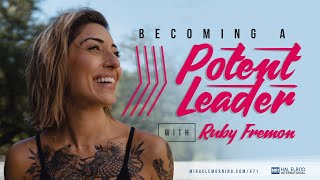
Ruby Fremon talks with Hal Elrod about her book Potent Leadership, arguing that real leaders drop the mask and lead from the middle of the room, not the stage. She offers a four-step framework—Awareness, Acceptance, Ownership, Shift—for handling triggers and restoring shared humanity in a polarized world.
Questions this video answers
March 1, 2023
Potent Leadership: Drop the Mask, Ignite the Real You, and Reclaim the Leader Within
Amazon, Audible, and via potentleadership.com
I AM RUBY (written as @iamruby / I am Ruby)
Awareness; Acceptance; Ownership; Shift
Chapters
Foreign.
Ruby, it's good to see you again.
Hey, Hal. It's good to be here.
Yeah. It's been just a few days since I was with you at your home, in your space with your husband, Kevin, and you and I got to have a great conversation for your podcast, the Potent Truth. Right? Is that potent truth, or is it the Potent Truth? Potent Truth.
Potent.
Awesome. And today we're talking about your new book, which, if you're watching this on YouTube, I'm holding it up. It is a gorgeous cover. I was just complimenting you before we started recording on the interior. I was like, who did your interior layout and design? I'm like, it's gorgeous. I had a lot of influence, but Kevin helped. Your husband helped a lot. It's beautiful. So I want to start here. We, the, you know, we've known each other for many, many years, and we run into each other, literally. It's funny, we both live, like, 20 minutes away from each other, and we go to this place called Sun Life Organics, and, you know, I see you and Kevin there, like, all the. And so what got me, though, to reach out to you, I had not read your book yet. I had seen your book, actually, at Sun Life, which. It's up on the shelves, and I was like, oh, Ruby's got her book out. That's so awesome. I was really excited to see it. But I've been following you on social media, so I actually get the most value from your content. Until now that I'm reading the book, but it's been on social media. And I've been so proud of you, so inspired by you.
And how you've led these last couple of years, you know, through this really divisive time where people are really afraid to speak their truth because they're going to offend other people, they're going to get canceled or demon, you know, whatever it is. And I just want to acknowledge you for how you've been showing up as a potent leader, honestly, as a potent leader on. You've been practicing what you teach in the book in the way you lead on social media and, of course, you know, behind the scenes, in other ways. So thank you.
Yeah, thank you so much for recognizing that and acknowledging. Acknowledging that it's been, I mean, what a time to be alive.
Yeah. Let me ask. Let me ask you. And where are you most. I follow you on Instagram, primarily. That's where I read your stuff. Is that where you're most active?
That's where I'm most active, yeah.
What's Your handle on Instagram. So everybody listening can follow you.
I am Ruby.
I A M R U B Y Correct. I am Ruby. That's simple. I like that. I should do I am Hal. I'm gonna change mine. Yeah, I like that. So the. There was a specific post that you put up, and. And that's what, actually. And then I reached out. I'm like, ruby, I gotta have you on the podcast. Like, I'm just so inspired. It was. It was like the straw that broke the camel's back, but in a good way. You know, I'm like, okay. Like, I've been. I've been. I've been stalking Ruby's Instagram for a while. I know she's got the new book out. I'm going to order the book. I started listening to an audible. But you read, which was awesome, by the way. Hearing your voice. I think one of the biggest problems right now is that human beings were so divided. And that's not news. I'm not saying something that we're not aware of, but I think we've lost sight of our shared humanity collectively. Many of us have. And, you know, we see that as people are calling other people out and shaming them for having different beliefs. You know, you're stupid. You're an idiot. I can't believe you can't see this. I can't believe you voted for him. Right? I mean, there's just all this just hate. And, you know, for me, I've. That's been my message. I've tried to go, dude, we're all brothers and sisters. You know, we all have far more in common than we will ever have different. We're human beings doing this thing called life, trying to be happy and healthy and. And get along and take care of it, you know, and so. And I think you and I both have a, you know, not a theory, but, I mean, we see who's dividing us, right? It's there. It's very much governments. And, you know, they're politicians that are really actively dividing us. You think about that. Like, what's a good leader do? They don't divide the people. They lead. They. They. They bring them together. Right? They bring them. So you. You posted something. You talked about the difference between calling people out and calling people in. And what you said really touched me. And so I'd love if you could talk about the difference between calling someone out that might have differing beliefs and calling someone in.
Yeah, the. The easiest way for me to explain this is calling people out is the shaming. The Blaming the pointing the finger, which we're seeing a lot of the canceling. Whereas calling people in is calling people into a conversation, into a. A space where we can actually see the human in each other. It's been a wild few years, and I have, you know, I was really loud at the beginning, but there was, there were certain things, certain lines that I didn't cross. Like, I didn't want to call names to anyone. All I wanted, like, just personally for myself, was the ability to be able to have a conversation without being shot down. And now over the past couple of years, it's gotten even worse. Now the polarization is literally having people's accounts removed online and, and removing their voices from every platform. It's getting people fired. And that is the calling people out mentality. It's, it's bullying. It's the same energetic frequency. But when you call people in, you're calling them in from a. Of responsivity versus reactivity. And that's the biggest difference. Most people right now are reacting to everything because they're having a triggered response, and they're reacting from that response versus taking that triggered response, getting curious about their own triggers, waiting until they can get to a calm, collected, responsive state where they can actually respond to something. And that is what I see as the biggest issue. And of course, yes, there are people who are.
Controlling this division because, of course, divide and conquer, right? A collective that is divided is much easier to conquer. Why not just have them blame each other? But we all essentially want the same damn thing. And if people can just take a step back, despite the differences, and just look at the basic human needs of what we all desire, that's where we can recreate or reconnect to the humanity.
Yeah. Yeah, well said. So how does some. Let's talk about that in action. So if, if you see somebody on social media and so much of it happens on social media, right, that's like our. Yeah, right, that, that's our new town hall or our new coffee shop or whatever. Right. But if somebody sees somebody, and I think you kind of address this in terms of you get triggered. Right. What, what, how, what might somebody, like, let's actually give somebody a script, if you will. Right. Like, what might somebody say if they're engaging on social media and also in person. Right. Let's say you're, you know, at, you know, you got family over. Right. The in laws are over and, you know, your in law says something that's like a very heated, divisive statement or divisive in that, like, you're like, oh, my God, I can't believe they think that this. Oh, it just boils my blood when they say that or they believe that.
How might we respond? What's a way? Is it. Is it with a question? Is it with an invitation? Is it. Is it with an observation? Like, how might you respond to somebody, whether it's in person or on social media? And are those different? Maybe? Is there a nuance there?
There is a difference between in person and social media. And let's start with social media, because when you're behind a screen, people are very brave behind the screen.
Yeah.
Right. It almost like it dehumanizes people. So. So it's easier to bully people behind a screen because it dehumanizes. You don't feel like you're actually talking to a human being. You don't have the. The. The energetic resonance, the heart resonance with this person as if they were in front of you. And so if you notice yourself reading something or noticing someone's commenting on. On your post.
And you feel triggered, your heart starts racing, your blood starts flowing, you start to feel. Feel, like, anxious in your chest, and you just want to, like, pounce on them. Put the phone down. Just put the goddamn phone down. Like, just put it down, turn it off and breathe. And get curious about the trigger. Because if it happens on a phone, if it happens online, you have the grace to take a moment.
Yeah.
But we've now become this, like, instant noodle society where we think we have to get to everything right away. Yeah. When, you know, you and I were our children of the. I'm hoping I'm saying this right. Children of the 80s. And, like, we didn't have cell phones and pagers and stuff. We have to wait until we got home to answer to. To listen to the answering machine. So why do we feel like we have to respond to everything so quickly? So put the phone down.
And it's funny, like, the emotional trigger literally triggers someone's thumbs to just start moving on the phone. Right, Right.
So that's why it's like, just drop the phone or close your laptop, Walk away and get curious with what it is that you're feeling. Because it's not that someone did something to you. It's whatever they said actually triggered a wound within you. And that's what you get to get curious about. If this happens in person, you don't necessarily have the same grace to just, like, drop and walk away. Especially if it's a family member at a dinner party, you know, but you can notice in that moment, huh? I'm feeling triggered. And when you notice that, again, the heart racing, the palpitations, maybe you get a little warm. Maybe you feel immediately the. The fight response going into action.
Again. Just take a deep breath and let that be the version of dropping the phone.
And get curious about maybe what they see said and where that's coming from. I think that when we start to get curious about why people say the things that they say or why we say the things that we say, it helps you reconnect to the human behind the words.
It's a great point.
I want to hear your thoughts on. So there's a. There's a take for me that's been really helpful for this kind of a philosophy, which is if I had lived that person's life, whoever that person is. Right. Including my wife. Like, I literally. I applied this philosophy to every other human being on the planet other than me. Right. And I guess, including me. But if I had lived that person's life, been exposed to the same media, the same resources, the same mentors, the same influences, the same trauma, the same pain, if I had lived their life, I'd probably be exactly the same.
There's something that I say that's very along the lines of that is everyone is doing their best according to what they know, what they've experienced, what they've lived through.
Yeah.
And I. It's funny because I've had a lot of arguments about this too, because people will get really upset about that. It's like, no, this. My ex didn't do their best, and this person's not doing. But they are. They're doing the best with what they know, what they have in their experiences. Like, that's literally the best. That's. That's where they're at with what they know and what they've experienced. And again, like, this is what is happening. The division is happening because of the dehumanization. We're no longer seeing people as people. We're seeing them as red or blue.
Black and white, left or right.
You know, it's. That's how we're seeing people. Or even, like, states. Oh, California, Texas. Like, we're just starting to see people as labels.
Yeah.
We're not seeing the human being behind the labels anymore. And that's where we need to get to in order to begin to heal as a collective.
Yeah. Is that. Am I making up this term ideological warfare? Isn't that what we're in the midst of? Right. Left versus right? And then you Immediately you find out, oh, wait, you're in that camp, and then all of a sudden you have this entire narrative of what people in that camp, what that represents. Right.
Because everything is so black and white. Right. There's no room for nuance.
Yeah.
It's insane.
Yeah.
Yeah.
Oh, wait, you're like, I have. You know, I'm not. I always say I'm apolitical. Right. Like, I. To me, I think I said this on your podcast. I'm like, choosing between Republicans and Democrats is choosing between McDonald's and Burger King. Right. Neither are looking out for your best interest. Neither really healthy. Right. And if you're arguing that. No, no, no, McDonald's is the one. They're the one that look at. It's like, dude, they're a corporation looking out for their bottom line, as are the people in power. Right?
Yep.
And so I forgot where the hell I was going with that.
I mean, it's the polarization, really. Right. And. And polarization has seeped into our culture as a whole. So we're seeing this on a political standpoint in our population, but it's now also seeping into marketing and the way that people position themselves and the way that people show up on like, Like Facebook. Oh, my God, I can't stand Facebook. It's like, people go there to post super polarizing questions to stir people's emotions and create long, engaging threads that are really just a bunch of people arguing petty from a reactive state. Like, this is now seeping into our culture and how we operate. And it's not. I mean, it's not okay. This is not how we should be treating each other.
Yeah. This is. It's the downfall of society if we don't change. And here's the thing. We can't change other people. We can only change ourselves. And if you're listening to this and you found. Right. Like, no judgment. If you've been that person that was like, triggered or was shaming somebody. Right. You know, I know for all of us, like, I almost feel like we woke up from a nightmare, dream, slash, nightmare over the last couple of years. And I feel like we're now kind of. At least a lot of us are like, whoa, what? What happened? Where were we? You know, and. Yeah. And I even. I mean, I got caught up in it. Like, I mean, I think that not, not, not. Not shaming people, but caught up in, like, oh, you think that you believe that you're into that ideology. Like, oh, you know, you're. You. You've been fooled. Right. And it's like, on both sides, but it's like if I was exposed to the same things they were, or vice versa. Like, if all you watch is CNN all day, you're gonna believe one thing. If all you watch is Fox News all day, you're gonna believe another thing. Both of you think you're right and the other one's wrong, but all you're believing is the, you know, the. The narratives, the propaganda, et cetera, that's being handed down. Let's do this. I want to dive into potent leadership, the book. Drop the mask, ignite the real you, and reclaim the leader within. What I love about this book is how universal it is in how you approach leadership. And what I mean is this. I did a podcast.
Probably a couple months ago. It was episode 2 66, for anybody that wants to listen to it. It was called the world needs you to lead. And I talked about, you know, that you might not identify as a leader, right? Maybe you're like, I'm not a leader. I'm a mom or I'm a dad or I'm a, you know, I'm a. I'm a salesperson. I'm a whatever, right? But I said if you influence another human being, which every human being influences, at least one other human being. Unless you're a hermit living by yourself, you know, in the. In. In the. The Amazon, you're a leader, right? You are leading through the way you show up for those that you love and those that you, you know, directly lead. I want to read the back of the. I'm going to read the back of.
The book real quick.
Or at least the first half. You said. In today's online culture, it's easy to confuse influencers with leaders and chase the followers, the likes and the superficial success. But while influencers paint a pretty picture, real leaders pave a path. Leadership isn't about what you do, nor is it about what you've accomplished. It's about who you be. What people really yearn for is someone who cuts through the bullshit and lives and operates authentically. They're looking for you stripped of the facades you undiluted, leading with your true self, your potency. Define that. What is, you know potently. What is potency? What is potent leadership?
Potency is the unique medicine that you have to offer the world and yourself. It's the totality of all that makes you you. If you're in business, you've probably heard the term unique selling proposition. Everyone wants you to find the one thing that makes you unique. But the Truth is, is we all don't have one thing that makes us unique. It's the totality of everything that we are that makes us an individual. And so the. Your potency is that that is your power. It's taking all of those things that make you who you be, your tonality, your expression, your beliefs, your values, like what you stand for, how you show up, all of that. That is your potency.
Yeah. And including, would you say, your personality, your sense of humor, your quirks. Like all of it.
Right, all of it.
Who you be, who you be. Yeah. So what do you see then? What are, what do you see as the main issues in leadership today? Like the opposite of what's causing people to not access and, you know, tap into that potency, that medicine that. That people need.
Yeah. So I like to define it as the two paradigms of leadership. We have the old paradigm, which is slowly crumbling, yet people are still living in it. And that's like the typical. I'm going to paint a picture the leader standing on a stage with a microphone, speaking down to the people in the audience. And then the new paradigm of leadership is the leader standing in the middle of the room. No stage doesn't need a microphone, doesn't need to be higher up than everyone else and is talking with the audience. That is the difference. And I like to describe it in that way because it provides a real feeling. Right. Leaders are leading communities. Leaders are paving the way for other human beings. And so to try and take yourself and put yourself on a pedestal, that is positioning yourself as better than. Versus equal to.
Got it. I love. So one of my friends, do you know John Berghoff is by chance.
No.
So John's one of my best friends and he started a company called Exchange and they do this work, appreciative and inquiry. But the. It's based on. So they go into like Google and Facebook and all these companies and it's based on. It's this holistic approach, hearing the voice of every person in the room and giving it equal value versus just the CEO or just the executive board. You know, And I love that, you know, that, that it made me think of that when you talked about that leader in the middle of the room. Right. Not like I've got all the answers you need to follow me versus, hey, we're in this together. Right. It's almost like a leader, a real leader is more of a facilitator. Right. Facilitating interaction and engagement amongst people, bringing equality, etc. What are some of the other qualities of a potent leader? That you would, you know, what are, you know, empathy or love or like what, what are some of the qualities that you would attribute.
Leading with heart versus ego. That is huge. Leaving with the, the a devotion to service to others versus versus service to self. I call it self conscious leadership versus conscious leadership. If you're leading consciously, you're leading with a heightened awareness of yourself and those around you. But self conscious leadership is really leading for your own self conscious desires for the notoriety. Potent leaders are also unafraid to show up in their truth. They're humble enough to admit when they're wrong or when they don't know something. And yeah, they're not afraid to position themselves as the same as everyone else.
Yeah, I want to dive into one of the things you just said, which is the element of service. I'd love for us to spend some time on that. And.
And I want to help people listening to really try to find this place inside of them. And what I. Here's what I mean. A place like, of servant leadership. Right. I think that for you, potent leadership is servant leadership. At least that's a huge component. And I think that it's like I have some friends that have debated me on this, right? And saying like, because let me back up when in 2004 I read a book, Love is the Killer App by Tim Sanders, and he talked about, I don't know if this is how he worded it, but what I took away from that is selflessly adding value to the lives of other people. That became my purpose in life, that I wrote in my affirmations. And every day I affirmed it and asked myself, how can I selflessly add value today to those I love and those I lead? And I don't remember if at first it was authentic, meaning not the desire was authentic, but I don't know, like into the whole fake it till you make it. Like, I was wondering, like, you know, I was like, dude, I'm selfish. I have a lot of selfish desires. But like, I don't want to be selfish. Like, I actually want to be someone who serves others. So meaning I'm trying to remember the, the how, when it started, if it was like, you know, I want this. I don't know if I'm feeling it. It feels like weird and like I just want my own selfish stuff. So I'm just putting that out there in case someone's listening and they're like, yeah, I'd love to get there. Like, I'd love to, you know, be a servant leader, but I really want to achieve my goals and make lots of money in all of these things. And here's the distinction that I want to make. And then I want us to converse on it and hear your thoughts. I believe that you can be selfishly selfless. And what I mean is it goes back to, I think it was Zig Ziglar that said, you can have everything that you want in life if you help enough other people get what they want. And so another one I mentors, he said that, you know, there's two ways to get what you want. You can take it or you can give so much that people give it to you. Right? Or that you, like, attract it into your life. And so the point is you can have your cake and eat it too. Meaning if someone's like, well, I can't be a servant leader because I've got bills to pay and I've got, like, I need and I want to be successful and I want to be the star and I want to build these things. What I've found is that when you can and do it in writing, get to a place where you go, you know what? I'm going to commit to selflessly adding value to the life of every, every person I possibly can. That's going to be my M.O. right, my mission objective. But you can do it knowing that the more you do that and the more you can live in alignment with that, the more people are going to see you as, oh, wow. Ruby is someone that, like, genuine. Like, at first I didn't buy it, but I've been following her now for like a year. Like, she legitimately is looking to serve and add value at every turn. And I'm so attracted to that. I love, I want to hire her, I want to coach with her, I want to buy her book. I want, you know what I mean? And so that's what, like, I've found through experience that, like, I leaned into that and people. I'll give you one example.
I, I, I committed to do this. The year I committed, I'm like, I need to live this in my actions, not just in my philosophy. So that year, it was 2005, I, I was a salesperson for Cutco. It was my last year. And I was like, I'm going to lead a group of Cutco sales of my every week. I'm going to lead a call that I get nothing out of. I'm not getting paid for it. I'm going to do a really good job. I'm going to plan content, I'm going to hold people Accountable everything, every year. And I'm going to, because I've got this big goal, and I believe that if I lead, I can help other people reach higher heights than they would without my support. And so I led this group all year long with no expectation, never asked for anything, and I genuinely didn't have anything. I was trying to get out of it. I. I was just selfishly, I was using it to live my new value of leadership. Right? But here's the cool thing. My book came out, my first book, Taking Life Head on, like, six months after the year ended. And that year, more people in that group hit our highest milestone than ever before in the company. Right? And I reached out. I was really nervous, but I reached out to a corporate contact I have at Cutco, and I'm like, hey, John, I've got a book coming out, and I was wondering if maybe, like, I could make them available for sale at the. At the. At the national conference this year. Like, I could just set up a booth in the back. Like, no pressure. He's like, hal, are you kidding me? You've given more to this company this last year than any sales rep I've ever seen. We're going to have you fly you in, hire you to speak at the conference, and we're going to buy 500 copies of your book for every person in that room. And I was like, oh, my God. Like, I never expected that. Right. And it's just. It's about playing the long game, right? That's part of it is, like, if you always are looking to add value and do it from a place of sincerity and authenticity. So, like, as I'm reading Potent Leadership, I'm reading your book. Like, I'm. That's what I'm getting from who you are. Like, you really are a servant leader. So I would love. I know I just said a lot. I would love to hear your thoughts or stories or experiences or anything on. On that aspect of, like, really being a servant leader.
Yeah. So I love this topic. And the way that I look at it is actually a little more nuanced. So let's backtrack. I was raised Sikh, and in the Sikh religion, selfless service is our backbone. We call it seva. You might have heard the term seva before. That is what we do. And so when we go to the temple, we also perform seva in the temple. So if anyone listening or Hal, if you've ever gone to a Sikh temple, you'll notice that there's always a kitchen and there's always food. At all times of the day, the doors are always open. We never lock anything. We welcome people of all colors, of all races, of all nationalities, of all religions. And we will feed you if you come into our kitchen. Which means that the people who attend the temple must also then donate their time, energy, resources to cook the food. So I grew up going to the temple. I grew up going and helping in the kitchen with these giant huge pots on the stove and making big pots of like dal and like Indian food and doing all the dishes. And so I grew up as that being part of my backbone. The idea of self is selfless service and of giving back. So moving forward in my life, volunteering became a big part of my life. I was always volunteering. So somewhere giving back my time, energy and resources. Now where things get tricky, I think is this idea of servant leadership. Because and I'm going to say this, not everyone is in a, in a, a place emotionally, mentally, physically to be able to do that. I fe. I believe that when someone has their basic needs met.
Yes.
Like the, they, they got a roof over their head, food, water, they feel secure, they have some idea of a community, whether it's like family, friends, or maybe the volume places they volunteer provides the community. It becomes easier to give back. But when you are struggling, it is difficult. And so I feel that especially in the personal development space, like there's a lot of talk about this, but it's really important to also then understand this is another nuance is that human beings are built with ego for a reason. Now what when ego gets unhealthy is when we're operating from.
The majority of our life through our ego. But ego is your sense of identity. It's a sense of self, it's a sense of I and you are important. So if you are not filling your own cup, it's going to be really hard to give back. If you are not doing the miracle morning every morning. Nice little plug.
Yeah. I mean that, that's a given. Yeah. You could continue.
Then you're not going to be, you're not going to feel like your cup is full.
Sure.
You know, and then, and then there's this other like nuance of people who have experienced, let's say trauma around being abandoned. That is my biggest core wound is, is the trauma of being abandoned or feeling unheard. They can often fall into the category of like being the martyr where they like give everything and then they forget about themselves. And that's also not servant leadership. Right. Servant leadership to me is really just heart led Leadership. When I lead, when I serve, I serve from my heart. But if my heart is not feeling full, then I will acknowledge that and pull away and know that I'm not in a position to serve at this moment in time. There are also experiences, again, the nuance. There are also times when your heart isn't full. But serving is what fills your heart, right. And so you go and serve and you fill your heart. And that's kind of like the selfish piece. It's like, I'm serving, but it also makes me feel good, but I'm also serving this person. Like, what a cool dynamic. So I think that there's all these different nuances involved with service, but what I strongly believe in is serving from heart versus ego. And quite often in this day and age, with social media being a thing and everything, being seen and tracked and, and shown and recorded, service has become this weird way of proving yourself to the world. Like, oh, look, I just gave my sandwich to this homeless person.
Yeah.
And I'm going to record myself doing a selfie.
Yeah. Take a selfie of it.
Yeah, right. Like, does it, did it really happen if you didn't capture it and show it? Right. And so that's something that people can ask themselves is, can you serve without even people knowing that you serve so selflessly? Yeah.
Yeah. That's an interesting, that's a very interesting nuance. I have says for me, I really, I, I don't, like, I don't want to put it out there. You know, to me it's almost embarrassing to be like, hey, look at, I gave all this money, I did this or that. But I've had a friend of mine, Brianna Greenspan, she's one of my co authors, she is on our team and she said, say, Cal, you should tell people, like, you need to be more forward facing about what you're doing. A, because she's like the Miracle Morning community and all the, you know, the books that they bought and all of that, like, they're really contributing. So you should let them know that. And she goes. And then B, it sets an example for whether it's other leaders or whatever. Like, oh, wow, you know, this person's giving, maybe I should give. Right. It's just the whole how you live your life gives others permission. So then I wonder if is it my ego in like an upside down, weird opposite way where I don't want to be seen. Like, I'm gloating, but I'm actually robbing people of being inspired to give. So, like, any thoughts on that?
It's a. It's a conundrum.
Yeah, it's a conundrum.
And I felt that too. Mostly, though, mostly because of the ways it's being done online now, right? Like, there are people who do this, and you almost have, like, this visceral reaction when you see it, read it, and you're just like, ooh. Like, this is totally coming from this weird, egoic place. And there are others who do it, and you're like, wow, this is coming from heart. Like, for example, there was an organization when I was living in LA that I was very deeply entrenched in, and it's called spy, and it's basically an organization that supports homeless youth. And I would go there once a week in person and volunteer at their location, and we would hand out free clothes and. And give them job opportunities, help them build resumes, things like that. I would never go and, like, do these selfie videos and, you know, because you got to keep things sacred and you got to respect the privacy of other people. But I will. I would go and do a story and say, like, just heading to spy, Check out this organization. They're doing great work. There's a difference, right? If you're doing it, if you're showing it to make. To pump yourself up, that's different than showing it to inspire others. And I think for you, there is actually a really big opportunity. It's why transparency in the. The NGO space is really important. I used to work for Charity foundation, so I was really big in that space. And transparency is really important, you know, showing people where money goes. Even just having, like, a website dedicated to, like, here's where we've donated, like that. That's something I invite you to do, right?
Yeah, yeah, no, that's a great point. Yeah. It's. It's nuances, like you said there, right? Nothing is black and white. Everybody nuances.
So nothing is red or blue. Nothing is red.
Yeah. Nothing is red or blue either. Yeah, yeah. It's interesting, right? Like, I saying that I was apolitical. I'm like, I have many liberal values and many conservative values. It's not one or the other. Interesting. So one question I have for you is, you know, I think right now, the word influencers, it's a very popular topic, right? And people are aspiring to be an influencer. I've even identified as an influencer or had someone call me that at various points. I'm sure you have too, right? What's the difference between influencers and leaders?
Yeah, so it's the quote that you read, which is influencers paint a pretty picture and leaders pave the way. That's the best way I can explain it, but I'll dive deeper into that. Like, every leader is an influencer. Every human being has influence on something, on someone. Every leader is an influencer, but not every influencer is a leader.
Yeah.
Right. So a lot of, like, the traditional. How you would traditionally define an influencer is someone who is going online and making money through their online. Online presence. So they're promoting a lot of product. Like, this is literally how they make money. Yeah. Whereas, like, leaders who, like, I've accumulated a big community around my work, but I look at them as my community and not my audience. And that's also a difference. Right. But I understand the responsibility that I also have in having a platform like this. So I do spend a lot of time and thought into ensuring that everything I do is coming from a place of my values. Because this is why people have chosen to hit the follow button. Whereas influencers are really just doing their own thing to make, you know, pay their bills, do their. Get clout, gain notoriety, all the things. And I think the two get enmeshed, especially in the personal development space. Space, because of the way that people are fighting to be seen. Right. AKA proof their work, AKA feel visible due to maybe some traumas around visibility. Like, there's a lot of reasons that we do this. I've done it too. And that was the first half of my career is being really big, being seen on all the things, doing all the things, doing daily videos, like, just. It was insane. There was one point in time when I was recording two. Recording and releasing two podcast episodes a week. Insanity.
Yeah.
And. And then I pulled it back and I got clear on, well, why, like, why am I doing this? Am I really doing this for the notoriety? Am I really, like, that's my inner child saying, hey, I want some attention, because I didn't get enough attention. So now I operate from a place of intention. And I think with influencers, they don't put much intention into what they're doing.
But yeah, it's. It's really like the picture versus paving the way for others.
Yeah, yeah. And it's. It. I feel like that speaks to, like, it's quantity over quality. Right. Like, how many followers can I get? How many clicks, how many likes? Right. Not. What's the depth of the impact that I'm making? You know, what's the depth of the impact that I'm making? What. What is your, you know, as the Author of a book on leadership. What's your vision for leadership?
Yeah, well, first, funny story, I started writing the book in 2020. I started working with my book coach and he really was just like my, my cheerleader on. Okay, write every day. Write every day.
Yeah.
I started writing, it's like February 2020, and I'm. I'm pumping out pages, you know, like just in the flow. And then it's like the second week of March and holy shit, what is going on in the world?
Yeah.
And I'll tell you, my, my, my entire inner paradigm collapsed and I had to take a break from writing because I needed to get back in touch with my beliefs, which were slowly crumbling in front of me. And I was left with dust to pick up the pieces and figure out what do I believe.
Yeah.
So writing a book on leadership in the year 2020 in itself was a feat. Let me tell you. That's a huge compliment.
Doing anything in 2020 was a feat.
Oh my God. Yeah.
Yeah.
Doing anything.
But my vision for leadership is one that is really based on building and harnessing community, on bringing humanity back into our population and our collective. It's one that's based on.
Seeing each other, hearing each other, acknowledging each other, seeking to understand, understand one another versus being the one trick pony who knows all the answers to all the questions, you know? It's one that's based on servitude, on love, on humility.
It's being human, truly.
Yeah. Yeah. See? Yeah. Seeing the best in others, bringing out the best in others. The best in yourself. What? So leadership is, it's, it's a really loaded word. Right? Like, you know, you could write a book on leadership that's for CEOs specifically, like how to lead an organization. Right. Who is potent leadership? Who's your book for?
It's for anyone that sees themselves as a leader and for those who are seeking to feel more lead internal leadership for their own lives. I've worked with people in corporate and I've worked with entrepreneurial. I will say mostly most of my clients are entrepreneurial leaders, but I've worked a lot with some corporate leaders as well because they're seeking to, to change the paradigm in the corporate space too. But there are also, you know, the, the moms who, the stay at home moms who lose their identity when they have children and they want to feel that sense of like self led.
A self led operating system again.
Yeah.
And so that's who the book is for.
I read the first review that popped up on Amazon when I looked at your book is something for everyone, literally. It's so funny. You said for anyone that wants to see themselves as a leader. But here's what I like the person wrote. If you are on a spiritual journey or running a business or looking for a new perspective on how you are moving about in this world, this is the book for you. Thanks for the lessons and wisdom. Get your copy asap. And I really second that. That's what I mentioned is in the beginning. I love how universal the book is because to me, that's what leadership is about. It's not a role. It's who you be. It's who you choose to be, how you choose to show up and how you choose to show up. Right. You are a leader for everyone you love, everyone you lead, everyone you impact, everyone you contact, everyone you touch. I mean, right? And that's what I like about this book. And to me, it really was a book on getting in touch with your authentic self. And then once you're in touch with your. Who you truly are, that's your unique selling proposition, is who you are, as you said, then you. I feel like you really help people muster up the courage which you've exemplified with how you've shown up these last few years as a potent leader. But really, you. You help people. I mean, that's your process, right? It's. I don't have it in front of me. It's. You tell me the four steps. It's awareness. Way to have it right here. I can tell you what it is. One second. Awareness, acceptance, ownership, and then shift. Right? The four steps to freedom or the four steps to potent leadership. So where can people grab the book? Where's the best spot?
It's available on Amazon and Audible. You can also just head to potentleadership.com and all the links are there.
All right. Yeah. And I recommend audible if you are an audible person, because you get to hear Ruby's voice the whole time and her authenticity and your potent leadership comes through that. But I also have a hardcover copy because I like to underline and circle, which I've been doing and I'm holding my hands right now, and then go back to it and be able to revisit it. So, Ruby, any final thoughts? Closing words? Closing message for everybody listening right now.
Yeah. In a world that.
Makes it feel like it's tough to own your voice, to own who you be, have the courage to understand who you be, have the courage to show up in all of your being, let go of the doing and focus on who you're being.
Beautiful goal achievers and members of the Miracle Morning community. The book is Potent Leadership. Drop the mask, Ignite the real you and reclaim the leader within. Grab it on Amazon audible or@potentleadership.com and follow Ruby Fremon at I am Ruby on Instagram. Ruby, I love you. I can't wait till the next time I get to see you and Kevin. We gotta have a dinner. We've been talking about that for far too long and for years. Or at SunLife Organics. We're gonna see. It's funny. We've seen each other at Sun Life. We run each other. Like there's something. There's some sort of. Like we're magnetized to each other. We see each other at the farmer's market. Like we just run into each other. So there. There is definitely, you know, a reason for that.
So definitely. Thank you so much. It was such an honor to be on this podcast. I feel so much love. Like, my heart fails anytime I'm in your presence. Oh, my God, I'm going to cry. Like, it really. You're such a genuine human being, and I just want you to know that the human in me really honors the human in you.
Thank you.
You.
Thank you so much. That means a lot. That was the highlight of the podcast for me. I don't know about everybody else, but selfishly, that was the highlight of the podcast for me. So I appreciate that so much. And I love you, too. And goal achievers, members of the New York Morning community, friends, family, I love you so much. And I will talk to y' all next week. Go get Ruby's book, Potent Leadership.
More from Hal


Hal Elrod shares the most effective tool he’s learned to quickly handle anything life throws at you.







Jim Kwik: How 5 Minutes Each Morning Can Rewire Your Brain and Change Your Life
