Boost Your Self-Confidence and Self-Worth with Jamie Kern Lima
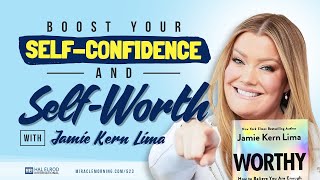
Hal Elrod interviews Jamie Kern Lima about her new book Worthy. Jamie explains she wrote the book to address chronic feelings of not being enough despite achieving great external success. She distinguishes self-confidence (skill- and outcome-based, fluctuating) from self-worth (identity-level belief of deserving love and belonging exactly as you are) and says Worthy contains 20 tools to build self-worth. Chapter 2, included in the interview, focuses on changing one’s relationship with rejection and failure via a Four Rs framework (Reveal, Redefine, Revisit, plus an additional R-type practice) to reframe past hurts and reduce their hold on identity. Jamie also gives purchase info (retailers and worthybook.com) and states she is donating 100% of proceeds.
Questions this video answers
Worthy
20 tools
"When you change your relationship with rejection, you change your entire life."
A four-part framework called the Four Rs (Reveal, Redefine, Revisit, plus an additional R practice discussed in the chapter).
She states '80% of women don't believe they're enough' and '73% of men struggle with feeling inadequate and not enough.'
Chapters
Jamie Kern Lima, it is so good to see you.
Hal. It's so great to see you. I'm excited to be here, excited for this episode. Thank you for having me.
We were just talking about you and I got to actually meet at. It was called the Author for Author Mastermind at Donald Miller's house just a couple of months ago. And, you know, I've watched you on social media, like many of your followers and fans that, you know, we feel like we know you because you, you do show up very authentically and very vulnerably. And then when you came up to me and you said, you know, miracle Morning, I don't remember exact words, but, you know, I read Miracle Morning. It changed my life or it helped me or something. And I was like, oh, my gosh, you know, that's incredible. So it's just, it's cool because you're like the book that you. So you're already a New York Times bestselling author, right? You've already. That's the pinnacle of any author, right? Like being a New York Times bestselling author. But now you have a brand new book and I'm seeing this book everywhere. But what I love about the book is the title is worthy and something that before we I'm going to ask you a question, but I'm going to make a statement first.
Affirmations are one of my favorite parts of life, right? Like affirming, you know, optimizing my mindset by affirming what I really know I need to think and believe. And my favorite affirmation is that I am just as worthy, deserving and capable of everything I want in my life as any other person on earth. That is my foundational. In fact, that's in the new the Miracle Morning book. That's my foundational affirmation because to me, that is where it starts. So with that said being that I do believe that your feeling of self worth is where everything starts. And your book is called Worthy, you say it's the best work of your life. Tell me why you wrote it.
Oh, my goodness. I wrote it because exactly what you just said I could not be more aligned with. And I have had such huge lessons in my life. Most, you know, a lot of people, if they Google my story, they see a of lot. Oh, Denny's Waitress builds Billion Dollar Company and all the things. And you know, my real. And while that's true, my real story is most of my life, like not believing I'm enough. And right now, 80% of women don't believe they're enough. 73% of men struggle with feeling inadequate and not enough. It's a real thing. And I think, you know, for me how I got to this kind of really wild point in my life where I thought once I achieve enough, then I'm going to feel enough, right? Like, I kind of always felt like something's missing, like I'm not quite enough. And so I believed what I'll call this lie that so many of us do, which is like when I finally get that goal, whether it's, you know, getting married and having kids or getting a certain, you know, level of my company or some type of external level of achievement. And in my case, you know, I worked so hard building this company to a really large company and even got to the point where I felt like I had achieved so much more than I could have ever imagined that the world tells me success looks like. And I had hustled so hard for it. And still when I arrived at it, it was like, why don't I still feel enough? And I became obsessed with studying self worth. And I realized that for every single one of us, whether it is in our businesses or our relationships, or our hopes and goals and dreams that, you know, we don't, in life, we don't, we don't become what we want, we become what we believe we're worthy of. And, and when it comes to our level of fulfillment and joy and even what we, what we think is possible for our lives, like we don't rise to what we believe is possible. We follow what we believe are worthy of. We don't soar to our level of goals and dreams. We stay stuck at the level of our self worth in so many ways. And I have been obsessed the past few years and understanding that, you know, I have had a lot of self confidence in my life and a lot of us think we need more self confidence. And while it's really important, it's very different than self worth. And we so often strive for things that build more self confidence, which is great. But what we really need is self worth. Because without strong self worth, that believing we are worthy of love and belonging exactly as we are, we can achieve everything in the world, but we'll still never feel enough. We'll still not enjoy it, not feel fulfilled, and always feel like something's missing. And so it's kind of been this huge obsession. And I'm really excited because what I've realized is most people in my life, even really, really, really smart people, still think they're unhappy because they just haven't achieved enough or done enough or worked hard enough and it's this never ending cycle to nowhere. If you don't also learn that foundation that you so eloquently shared in the open of the show, which is your self worth. I mean that is the foundation that, that is everything. And so I'm just so passionate about this book. It's my first book, was really my story and my journey. This book Worthy is packed with 20 tools on how do you truly build self worth in your life and how it shows up when, when, when, when you might have confidence and all the other things, but you have low self worth. And I think it's just going to be, I mean for me it was just such a huge aha, life changing moment. Understanding the difference and then learning how to build my self worth to actually be able to enjoy my life.
And even serve at a higher level.
So yeah, yeah, I mean it's such a fundamental truth and principle and I think the proof of it is, I mean to your point, you've achieved levels of external success beyond what 99.999% of people ever will. Right?
And we see it with so many celebrities, right? Or any, anyone who achieves the success, but they're not happy because they thought that happiness and love and joy and the, the internal feelings that they were chasing, they thought it would be found in the external accomplishment. And then, you know, and then you achieve all your goals and dreams and you're like, oh wait, I'm still me. I still don't feel good enough. I still feel like an imposter. I think it's important for people to understand too that highly successful people sometimes have the biggest struggles with self worth and that's why they become so successful, because they needed to feel worthy so bad that they were willing to work tirelessly and hustle and grind and do whatever it took. And then, yeah, to your point, they got there and they're like, oh, I didn't work on the inside. I'm, I'm just an unworthy millionaire or I'm an unworthy celebrity. I'm an unworthy world champion right now. You, you just talked about, you talked about self confidence and self worth. What are, what's the, how would you define the difference between the two?
Yes, this is, oh my gosh, thank you for asking that. Because this one thing, just understanding the difference in your life and this is so big for everyone listening, no matter, you know, what really matters to you most in your personal life, your professional life, no matter where you're at in your own journey. You know, self confidence is. While self confidence is an internal trait, it's probably the thing we hear most about out in the world. Like I just need more self confidence. So self confidence, while it's an internal trait, is so much based on the external of what's happening around you. It's based on your assessment of your own skills and abilities and how you feel you stack up and compare to others. It's a reflection of your willingness to try and go for it. How much of the world's definition of success you feel like you have. If you're winning or losing at any moment and your self confidence is volatile, it's free, fragile, it can fluctuate, right? They the studies show the boxer that wins the fight is automatically 30% more confident and it fluctuates. And our self worth, on the other hand, is the deep internal knowing and an identity level that you are worthy of love and belonging exactly as you are. Not as you achieve, not as your wins or losses, not as your past mistakes, like exactly as you are. And in so many ways it's like self confidence is this house we're building in our lives. But, but self worth is the foundation that that house is on. And I think one way that maybe everyone listening to us could kind of apply the difference in their life right now is that, you know, we are taught kind of to your point, we learn. And we can learn through just society, through television commercials, through every ad we ever see in a magazine that we're taught like if we finally get this thing, you know, then we'll be happy. And so for everyone to kind of imagine maybe something that you thought, you know, if I finally get the thing, maybe it's like, you know, I finally put my book out into the world or I finally get that certain job title, or I finally find, you know, a partner and get married and, or have kids or get the six pack abs, you know, the dream car, whatever it is, a certain bank account number, we think when I finally get that thing and I'm going to be happy, I'm going to be fulfilled, I'm going to feel enough. And for so many of us, we work really, really hard for some of those decades to get that thing. And then when we arrive at it, for most of us we're like, huh, we're really happy for like maybe a month or a week or a few hours. And before we know it, we're back to that feel. Feeling of like, I just don't feel enough I feel like something's missing in my life. And what people then often do is they think, well, I've just got to work harder, I've just got to achieve more. That's the issue. And then we work harder, harder and harder, harder, and we arrive at the next thing and then the same thing happens. And for anybody who's a perfectionist or an achiever, this can be like a never ending cycle to nowhere forever. And while in that process of going after the things, we are building three things that are really important, we're building self confidence, doing all that, we're often growing, which is so important for a lot of us, we're contributing to something greater than ourselves. Those two things are really important. But while we're building all the confidence in the world doing those things, none of them build self worth. And that is why we arrive at them and we still don't feel like we are enough. And the way that that can manifest in our lives is there's a lot of people thinking like, I just don't feel fulfilled and I don't know why. I think it's my job. So then they quit that job or I don't feel fulfilled in my marriage, I don't know why. So then they leave that partner and really they don't realize, like, oh, wait, first, deep down inside, do at an identity level, do I have strong self worth? And when we don't, what it can look like. You can be achieving everything in the outside world. And I've had this happen to me so many times, you can be achieving all of it. But then whether you're winning or losing or whatever, if you have low self worth, really low self worth, it'll look like staying stuck. And you don't know why you're stuck. Like why you're not putting your ideas out there in the world, why you're not sharing that big, bold, wild, crazy idea at work, why you're not, you know, getting back on the dating app. It could be any number of things that low self worth will cause us to stay stuck. If we have like low to medium self worth, we might go for the things, but then in the process of them, we might sabotage them. When we have medium to high self worth. Right. The best case possible is you go after all the things you hope and dream for in life and you may even achieve them. But when you arrive at them, you don't feel fulfilled, you still feel like it's not enough and you still feel like something's missing. So self worth is like the one Thing that changes everything. And it's really why I wrote Worthy, because it just, it was a huge problem I realized I had in my own life and that I didn't understand that self worth is so different than self confidence. And I didn't understand that no matter how much I achieve or how many other people I please and make happy, when I don't believe I'm enough as I am, I'll never feel true fulfillment. And I know that's the case for everyone else too. So I'm really, really excited about this.
Yeah, and I can see like the self confidence as you're talking about is. And I was just reading this and I forgot what book I was reading recently. But you know, you build self confidence by doing things right? Meaning that if you do something, you attempt, you, you pursue a goal and you get a result. Now you have confidence that you can now get results when you pursue goals. Right. And the difference for what I'm hearing is what, you know, whereas self worth, that's an inside out job. And, and the beauty of it is, and, and that's where I'm excited. I'm excited to read your book because I struggle with this like anybody does. The beauty of it is you don't have to like, unlike self confidence where, yeah, you got to go achieve some goals and then build that confidence up. You literally, I'm imagining like these 20 practices or solutions that you teach. Like this is you literally get to sit at home on your couch, right, and build your self worth through simply shifting your paradigm and your mindset of who you really are and that we are all just as worthy as any other human being on the planet or of self love, of self worth, of so on and so forth. The, you know, one of the things that you mentioned earlier about sabotaging and, or, and being stuck, two things you said about, you know, that we get stuck, we sabotage. To me, two of the reasons that people do that are fear of failure and fear of rejection. And I know that you have some solutions for both of those. Fear of failure, fear of rejection, how we can overcome those so that we can get unstuck. Can you talk about that?
Yeah, absolutely. I love that you just called this out because this is so important. You can build self worth literally. Like, you don't need to leave your couch. That's so good. And it changes everything. And before I forget to mention this, when you end up learning to truly believe you are enough exactly as you are, just as Hal said, as worthy as every other human being, it doesn't hinder your ambition. You don't all of a sudden just go, huh, okay, you actually just become more fearless about going after the things because you're not afraid to fail anymore. You're not afraid to fall flat on your face. You know that if you do all that might jolt your confidence for a little bit, but it does not touch your self worth. That is unshakable. So you actually can become so much more ambitious just by sitting on your couch learning how to build some self worth. And all of us can do that. And, and yeah, so. So the 20 tools, there's a whole lot of. Well, this is. Here's the truth I'll share with you because fellow author, I wrote this entire other book called when you change your relationship with rejection, you change your entire life. And it's just for me, you know, in building this company in my out of my living room, I went through years and years and years of rejections and failures and figuring out two things. And by the way, let me hop back, I wrote this whole book, but I would have to wait two more years for it to come out after Worthy. So, so we put it, I made it chapter two in worthy. So inside my new book Worthy is a chapter two called when you change your relationship with rejection, you change your entire life. This one thing, Even though it's one of 20 tools, this one thing is so huge because to your point, so many of us fear we stay stuck or we sabotage things that we're afraid of rejection, we're afraid of the pain of failure.
And that can affect our confidence. But here's where it goes to a self worth level. So many of us have had past mistakes, failures, rejections, things we regret.
And instead of going, ha, I've been rejected so many times, I failed so many times. We actually can let it take root at a self worth level, an identity level where we say to ourselves, sometimes without even realizing it, I'm a failure, I'm a reject. And that can be where it starts to really chip away at your self worth as well. So in, in wordy chapter two called change your relationship with rejection, change your life, I go deep into like how, like there's a framework, a four, a four part framework called the four hours where I take you through not only how to sort of.
Become aware of what your current definition of rejection and failure is in your life. Because sometimes we don't realize that we associate so much pain with rejection and failure that as human beings are wired to avoid pain at all costs and we'll stay Stuck. We won't go for things. But then how to redefine rejection and failure in your life in a way that you truly believe the new definition of it for one that can be empowering. And then also how to revisit past rejections and failures. Because a lot of us have had so many of them that we, you know, and they can be from someone who, in our personal life who hurt us and our family, who didn't love us the way we needed. It can be from professional rejections or failures or interpersonal ones. But a lot of us like hang on to them, let them almost stick on us like labels and kind of define who we are. And it can feel like we're trying to fly with lead balloons attached to our wings when it comes to our self worth. And so really quickly, just to do this in real time with everyone who's in your audience is if you just imagine yourself right now. Okay, we're going to do the four hours really quickly, if that's okay. Do we have, do we have time for that? So, you know, I wrote this entire, literally how an entire book called when you change a relationship with rejection, you change your entire life. But I would have had to wait two more years for it to come out. So I put it inside Worthy as its own chapter. It's chapter two and worthy. And it's called when you change your relationship with rejection, you change your entire life. And this one tool, even there's more than 20 tools in the book. This one tool. I'm so excited because now after you said what you said, I'm imagining everyone sitting on the couch. And when you literally learn. So in this, in this chapter, it is part one of the keys of how I took this idea in my living room, endured hundreds and hundreds of rejections and failures and didn't let it take root at an identity or self worth level. Because a lot of us, we have rejections or failures, they hurt our confidence. But then we start to sometimes think we're a rejecter, we're a failure. And it could take root at this identity level that hurts, hurts our self worth. A lot of us have past mistakes, past failures, past regrets, past rejections, or people maybe even in our family or our experiences in life who have hurt us. And it feels like a painful rejection or perhaps a painful failure we've been hanging on to for years, you know, and a lot of those can cause us to stay stuck. Stuck can cause us to sabotage things and think we're unworthy of them. So I go deep into this chapter called when you change your relationship with rejection, you change your entire life. And I go into a framework called the four Rs. And I'll just do like a real quick overview of it.
Give us a mini lesson.
Yeah, mini lesson. When you get this, the book at home and you go through. You go through this in your life, it is so powerful. And not only is it powerful for how you are going to frame and embrace anything that might bring rejection or failure in the future, but it helps to literally reframe past rejections and failures so they're no longer like these labels stuck on you like lead balloons on your wings when you're trying to fly. And so I go through how to do that. So we'll do this together real fast. So everyone listening to us. Everyone listening right now. If you just take a moment, you got to be very honest with yourself because a lot of us don't even realize we're doing this. But real honest with yourself. When you imagine yourself getting rejected or failing at something, what's the first thought that you have without thinking about it? The first thought you have when you get rejected or you failed at something?
I suck.
I suck. Yeah. For me, most of my life, it's, yep, I'm not enough. There's proof again, I'm not enough. I've asked, you know, groups of people this, and some of them, Hal, are very similar to yours. I suck. Some of them are a lot more brutal. Like, I'm stupid. I don't have what it takes. I should have never even tried. So here's. Here's everyone listening right now. That first thought you just had, that is your current definition of rejection or failure. And as human beings, when we're wired to avoid pain at all costs and when we have a definition or the meaning we attach to rejection and failure is one that's super painful. Like, it's a big reason. We're just not going to go for things. We're not going to put ourselves out there. We're not going to. We're going to stay stuck because we want to avoid that at all costs. And so there is a season of. When I was building my business out of my living room and a few years into it just was like hundreds and hundreds of rejections. And I just gotten one really painful rejection from qvc. And I knew in my gut, I knew every time I would get still and meditate or pray about it, I just knew we were supposed to be on qvc. And when we have these knowings. But then, like, in this case, QVC says to me, you're not the right fit for us or our customers. I mean, it was. And it was no. Afternoon. Afternoon. Now, eventually, how we built the biggest beauty brand in QVC's history. But at this point in time, it had been, you know, a few years of them saying no. And I just got this one time where I thought, it's finally going to happen. And it was most painful no. And I didn't know how the business was going to stay alive. And I remember climbing under my covers crying. And I just decided to start Googling Every single person I admired in business or who has helped move humanity forward, or incredible thought leaders, and every single one of them has had so many rejections and failures in their journey, right? They are just the brave ones willing to keep going anyways. And that day was the start of these four R's for me. I wrote out, oh, rejection and failure. It doesn't mean I am not enough, which is what I always tell myself. It means I'm one of the brave ones willing to keep going for it. Like, I'm not going to live my life on the sidelines and regret like I'm going to just. And I remember that day, I decided every rejection, bring it like it's a victory. It means I'm one of the brave ones willing to go for it. And I started accumulating these new definitions of rejection, failure. Another one I use all the time is rejection is God's protection. You know, someone could say, rejection is the universe's protection. You know, another one you could say, rejection is, you know, I'm putting in the reps, I just got another rep. And putting in the reps, I'm one step closer. And so I started building this toolbox of new definitions. And every time I'd have, you know, experience another rejection or failure, of course my neural pathways in our brain, they're deep. I would be tempted instantly to go back to, yep, I'm not enough. But I would catch it, intercept it, replace it with this new definition that I knew and believed in my soul to be true. And when you do that, I take you through, like how to do this in a deep level and worthy the book. But when you write these new definitions, they have to feel true to you, right? True at a core level. And then you literally learn to replace them. So the first R is to reveal, right? That's what we did with our current definition of rejection. The second R is to redefine it. I have so many examples of this in the book. Of rejections and how I define them and how you can in all the different areas of your life and different failures. The third R is my favorite though, and it's called revisit. And this is where you really just become aware of what are those past rejections and failures and that you're hanging on to it at an identity level. And you know, just to share this one with someone who needs to hear it today is like, it's probably my favorite one that I use the most is, you know, if you've ever had somebody just, oh my gosh, some a painful rejection, someone who just didn't love you the way you needed or didn't see your value or broke your heart, maybe you had a friend or a colleague or a business partner like pull the rug out from underneath you or betray you. Maybe it's recent, like you applied for a job and you wanted it so bad and you didn't get it. When this happens to me, this is my favorite. When I look at past things in my life, this is my favorite definition is. The third R of revisit is I literally imagine like I imagine God saying to me, oh, you weren't rejected. Like I hid your value from them because they're not assigned to your destiny.
Wow, that's profound.
I believe it. I believe it at a core level. And so even to this day how like every one of us will, will want to be invited to coffee and we're not, we don't know why or we didn't get invited to the party. It doesn't matter what it is. Or maybe it's an in law or a new friend and you just are so you just love on them and they do not like you and you don't know why no matter what you do. Like it could be all kinds of examples. I will literally apply this definition so that, so that I don't let it take root at like I'm rejected. Something's wrong with me. Me, I'm not enough. I'm like, oh God's hiding my value from them because they're not assigned to my destiny. And I believe that in my core. And over time I can look back at all the time someone didn't see my value. And often I could be like, oh thank God they didn't see my value because if I had ended up with him, my life would be a hot mess or whatever it is.
You know what I mean?
So anyhow, I go deep into how to do that in worthy with the four R's and it's one of 20 tools that, you know, I. I've never heard that before, Hal. Now I'm obsessed with your idea. You can sit on the couch, enjoy life.
Well, yeah, and to me, it's so much aligned with Miracle Morning, right? Because it's like, you know, this isn't a book where it's like, hey, here's what you got to go do and how you're gonna. Here's the strategy to get out of the do the thing. It's like, no, no, literally, this is how you're gonna transform how you experience every moment of your life. And the lens, you see your failures, your challenges. And I love that you go into the revisit where it's like, not just the ones from now on, but you literally can go reframe your entire life in a way that gives you peace, makes you feel worthy and whole and deserving. And from that place of worthiness and wholeness, now you're like, oh, I can do anything. So I am so excited for this book. Where is the best place for people to go to get a copy?
Yes. You can go anywhere books are sold, Target, Amazon, anywhere that you love to shop at, and worthybook.com you get lots of free just thank you gifts there. And I'm donating 100% of the proceeds. Like, literally. I just. I'm so passionate about this because I just feel like it's the one thing that changes everything.
I can't help but imagine how people learn and. And you and I have seen this transform our own lives. But when people learn to believe in your self worth, like, I just think about the ideas that will be birthed and shared with the world and the, you know, unhealthy relationships that will end, the businesses that will be launched, the dreams that people will go after. I'm just. I'm so excited about this. And so, so, yeah. And it's a gift to talk about worthy with you, and I love how closely it ties to your favorite affirmation. So thank you so much.
Awesome. Well, thank you. And everybody listening. I definitely go get a copy of Worthy. I've already pre ordered my copy. I'm excited to receive it when it comes out, which is this week, I believe. And yeah, Jamie, thank you for taking your struggles, your challenges, how you overcame them, paying it forward and sharing it with the world. Because I think this book's gonna bless a lot of lives and you bless a lot of lives, and you blessed mine. I love you. I appreciate you. Thank you so much for doing this interview.
Thank you, Hal. Thank you. All that right back to you. You see that in me? Because that's in you, too. And I'm so grateful. So thank you so much. Thank you.
Yeah. Thank you.
More from Hal


Hal Elrod shares the most effective tool he’s learned to quickly handle anything life throws at you.







Jim Kwik: How 5 Minutes Each Morning Can Rewire Your Brain and Change Your Life
