Change One Question to Change Your Life with Joe Polish
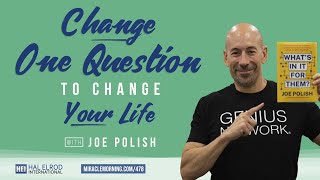
Joe Polish talks about generosity-based networking and identifying what others need. He calls it being a 'pain detective' to add real value, and argues human connection beats electronic connection every time. His book What's in it for Them? outlines nine networking principles, with proceeds going to Genius Recovery.
Questions this video answers
April 19, 2023.
Approximately 2,200 books (in that one room).
Title: What’s in it for Them? — Subtitle: 9 Genius Networking Principles to Get What You Want by Helping Others Get What They Want.
whatsinitforthem.com.
Vern Harnish (founder of EO) — he chose it as the best business book of the year.
Chapters
Joe, you ready? Countdown I'm ready. Has concluded. It's good to see you, brother.
You too, man. Thanks again.
I hope everybody could be here on the. On the pre podcast banter. We're moving books around, we're talking about all sorts of random things. And you ever have that where you do a podcast, you're like, ah, sometimes like a beautiful gold nugget comes out in the pre and you're like, I wish we'd been recording that, you know?
Yes, yes. And pretty much for the sake of.
Yeah, no, I was gonna say for the sake of this podcast. No, I was gonna. I was basically gonna like, make things up and say that the best stuff was talked before then, and you're not going to hear it here, but hopefully we make it valuable. And anyone that's watching on video, I actually said, you know how. I gotta go get the Miracle Morning for Addiction Recovery, which is the book that we did together with Anna David. And so I ran downstairs and I got a couple. I happened to be in my office. And here's the funny thing. I'm in this room right now where you only seen one part of shelves behind me, but there's approximately 2,200 books in the room that I'm in. This one room. You've been here at my office. Yeah. And so. But I didn't have any of the Miracle Morning books for addiction recovery in here. I have the other Miracle Morning books. I have pretty much all of them. However, I didn't have that one. And so we had to decorate around my head or, you know, like, as if we're advertising here, which we kind of are. So we're always behind me.
Advertising a little bit. Yeah.
Yeah. There's four. Wait, there's 1, 2, 3, 4, 5 of my books behind me that I've written five different books. One of them being the Miracle Morning for Addiction recovery. And the other is the newest one. And the other ones in between are sandwich in between another recovery book and another book on marketing and a book on called Life Gives to the Giver. So.
And. And as well as I know you, I'm surprised that your face is only prominent on the front of one of the books.
Yeah, well, the whole my face thing for people that. Well, I don't know if this is valuable for right now for people listening.
It's actually, it's. It's funny. And then some people for sure judge it, right? They're like, what's this guy that puts his face all over these stickers and then these posters? But I Think it's hilarious. So.
Yeah, well, here's. Here's the thing. I never. I never started it. This. So I have been doing a podcast with Dean Jackson since 2010. The first time I ever recorded a podcast was in 2005, before most people even knew what a podcast was. And there were people that listened to podcasts now that weren't even born during that time. And so, you know, we had started a podcast, and it was probably 2011, maybe 2012. I get a package in the mail with a bunch of stickers of my face on these little sheets. And then there's a letter with a guy named Mark who has a company called my sticker face, mystickerface.com and he's like, I've built my business listening to your podcast, and I wanted to share with you some of our. My product. And he just had gotten a picture of me online, put it on a sticker. There's different sizes, and I'm like, thinking, this is hysterical. So, being the person that I am, I start putting these stickers on people's phones, on their computers. I would travel with them, and, like, I take them over to my friend's house. I would just put them behind kitchen counters, refrigerator doors, washing machines, all these places where they would open it up one day and they would. It would. Yeah, there's a little. And it became this. So all of a sudden, people start sending me things with, like, pillows with my face, T shirts with my face calendars, like, coffee mugs, like, and it became this whole thing. And people come to my office, and there's my face on all this everywhere. And what's funny is I'll make a joke and say I probably look like the biggest narcissist on the planet. And I've never, never have. I said, go put my face on this to anyone on my team or ordered anything that have my face on it. It's just everywhere. And it took out a life of its own. Now we have all kinds of our Genius Network members that. At the last Genius Network annual event, I had Mark do stickers for every one of our members that we could get really good pictures for. Nice. When they entered the. And they loved it. So we had, like, you know, 350 people that had stickers of their face. So you just see it like they're on the name tags. I was telling people, okay, if you meet someone really cool here, put a sticker on your Genius Network journal or whatever so you can remember who that person is. And they actually now serve a functional Purpose. So the narcissistic approach of having my face on everything has actually become a good genius networking methodology.
I love that. And. And if you are. If you're listening my stickerface dot com. It's really fun to do for your kids. You know, I mean, it's the coolest thing when your kids have stickers of themselves to, you know, to put on stuff, give to their friends. And. Yeah, it's. It's super fun.
Totally.
So, Joe, real quick, the story of how we met. And I don't even know if you remember this. I got invited to a Dan Sullivan event in Los Angeles. It was like a. A strategic coach preview evening, and you were sitting at a table. And this is the funny part, is that I was like, oh, dude, that's Joe Polish over there. That is. That's the Joe Polish. But I knew nothing about you. I didn't even know what you did. I don't think I knew about Genius Network at that point. I'm like, that's. Which is probably. I mean, it's pretty positive. Your reputation is so big that someone doesn't even know who you are. Knows who you are. Right? Like, I'm like, it's Joe Polish. And, you know, being a. I had my, you know, miracle morning, had just come out, and I always had coffees with me, and I was like, I gotta find a way to give Joe a copy of my book. But, you know, I'm big on authenticity, and I can't, like, authentically say, joe, I'm a big fan, Joe, I love your work. I'm like, I'm literally Googling you on my phone. I'm like, who is Joe Polish? Right? And so I forgot. I forgot what my entry was. I forgot what I said. But I approached you, I gave you a copy of my book, said, thank you for all the work that you've done. And. And then I figured you would never read it. And I get a Facebook message from your friend, this guy named Ivy, like, probably two weeks later, and she says, hey, Joe picked me up from the airport yesterday. And he hands me your book, the Miracle Morning, and says, you've got to read this. She said, I started reading it and I couldn't stop. I read it cover to cover, and Joe and I just did our first miracle morning together. And I was. And at that point, I had listened to your podcast, you know, I had engaged in your work, and I was like, wow, that's incredible. That, like, Joe the Joe Polish. Listen. And then who knew that years later, we'd Be friends. You'd be featured in the Miracle Morning documentary. We'd co author the Miracle Morning for Addiction Recovery. You're on the podcast again. This, I think, your second time on the show, man. So, yeah, Fun beginnings.
No, totally, totally. And what I do remember about that is that you were very, you were very nice, you're very edifying, you're very polite, you're very cool. I mean, you were very enthusiastic. So I could also tell, you know, and when I learned your story of the car accident and all of the different stuff you had been through and you know, I mean, look, you're, you're, you're a fighter, you're a survivor. You've been through some difficult stuff and, and you, you really just went out of your way to be, you know, just a nice, cool dude. And so I, I had a very good impression. And yeah, and I mean I, I did go through the book and we looked at the savers and you know, we meditated and we worked out and we journaled and all this stuff. So all the things.
Yeah, well, dude, I'm holding your new book in my hand. What's in it for them? And you've got four copies surrounding your head right now like a Halo.
9. Genius networking principles to get what you want by helping others get what they want. This is really good. And I'm about, I'm halfway through it, but I mean, it's dog eared, it's underlined. You know, I'm getting a ton. And I described this the other day. I was actually, I was going to tell you this, I was being interviewed and I think somebody asked me like, what's a book that's really impacted you or is impacting you now? And I said, what's. And I, But I, if you would have heard me, you would have thought I was pitching my own book to put food on my kids, family, on the family's table. But I went off and I go, I go, this is the new how to win friends and influence people. And it's like, literally, if somebody were to say, hey, take that classic book that sold tens of millions of copies and, and make it better somehow. Right? If you were to hire a ghostwriter and you're like, make it better, make it more modern, make it more tactical, more applicable to our current lifestyle and culture and. Right, like, that's what this book is, dude. So congratulations.
No, thank you. And let me also acknowledge, you know, Dale Carnegie, who's obviously not alive, but you know, about 100 years ago he wrote how to Win Friends and influence people. And when I was in my twenties, I read that book probably very early in my twenties, and then when I started a carpet cleaning business, that was my first venture into business, just trying to figure out how to make my carpet cleaning business work. I went through a Dale Carnegie 12 week course. And so every week you would like, go through one of the chapters and I always remember this one chapter which is never criticize, condemn and complain. And I would make jokes that I love to criticize, condemn complaints in a funny, joking way. And also there's toxic criticism and then there's this blowing off steam and someone that doesn't outwardly speak words of angst or blame or annoyance or anger or being pissed off, they will internalize that in a lot of ways. And it could, it could eke itself out in other creepy ways. And so I think, you know, but the point is, you know, toxic critics and people that, you know, I mean, yeah. That you, you can either, you know, create or you can complain. It's hard to do both at the same time, although you can prob create while you're complaining along the way. But bottom line is, I love that book and it was really valuable. And over the years I became friends with, you know, Robert Cialdini, who wrote the book Influence, who's a dear friend of mine. He was just here at Genius Network a couple weeks ago. And you know, there's, if you think of how to win friends and influence people, I started thinking a lot of, well, it's not just winning friends and influencing people, it's winning the right friends and influencing the right people because you could, you could win friends that really aren't friends. You know, there's real friends and then there's deal friends. And so with, with true relationships, your time, which you know in the book, chapter two is about Tammy is what I call it. I don't refer to it as Tammy in the book, but I use that as shorthand now. It's, it's time, attention, money, effort and energy. And all of us, like anyone listening to us right now, right now, you're putting time into this. Attention, effort and energy. There's not money per se involved like with what we're doing right at this moment. But you're going to go spend money, you're going to go spend time, you're going to go spend attention. So you want to do you, you only want to align yourself with people that are aligned with you. Now oftentimes you don't know that until bad things happen or you're into it. But the more that you go through life and you develop the spidey senses of who's a giver, who's a taker. And by the way, this message right now I believe only will land on people that are givers and have empathy. If someone is a full blown narcissist, they can maybe get the mechanics of it. If they're a psychopath or sociopath, they can hear this and they can use it to mirror and manipulate. But people that really are givers, they will resonate with this message and people that are takers, hopefully it'll sink in a little bit and the ones that are changeable are open to that will realize that, you know, there's different operating systems. You certainly can go through life and get a lot of things through criminal activity, through, you know, taking advantage of people to operating with a win lose mentality. There's a lot of takers in the world that get rich, that make money. There's a lot of takers in the world that are leading in the world of leadership in certain positions right now. But at the end of the day on your deathbed, if you want to look back and say did I expand humanity or did I contract it? A lot of that has to do with, you know, giving more than you take and, and not taking at all to the degree that you. And when I mean taking, I mean like non consensual manipulating sort of taking. I mean we all, you know, have parts where we give and take. And by being a giver that also means you have to give to yourself. You can't believe, you know, it's hard to fix the world with broken hands. And there's, you know, so this book was my, you know, my, my, my thanks and my gratitude and hopefully it will add to how to Win Friends and Influence People, which I believe is a great book. But yeah, I'm hearing that a lot. People like this is a modern day version of how to Win Friends and Influence people. And I, you know, I say that in the very beginning of the book that this book wouldn't exist without that. So if you're a giver listening to this right now and I imagine, you know how with your audience and people that come through you, you know, I mean it's pretty much what the Miracle Morning methodology is about is developing rituals and ways to become very aware and be very productive and set. You know, if you start off your day where you really give to yourself, I think that you can expand that greatly throughout the rest of your day and the rest of your life.
Yeah, yeah. That's one thing that I frame it often when I talk about the Miracle Morning community. As I say, it's humanity at its finest. Because it's people that are taking time every day to give to themselves, to elevate their own consciousness, which the way I define elevating consciousness is your awareness of how your thoughts, words and actions impact yourself and other people. Right. And by. When you don't take time every day and you're just going from stressed, falling asleep, stressed out, to waking up stressed out, to reacting all day long. And that's your, this vicious cycle. You don't have any time to get centered and calm and connect with your spirituality and with your higher self and so on and so forth. When did you, when did your mindset develop like to this giving kind of selfless or generous mindset? Because you're. People describe you as, you know, one of the most connected people in the world. You can, you only become that way by being generous and being someone who others want to, you know, be around because you are a giver. Were you always like that or. I know in the book you describe as a kid, like you were trying to ease people's suffering, but I also heard you talk about being selfish. So where did this, how did that evolve, that mindset?
It evolved over many years. And it's always, I don't ever think one arrives. I think there's always a place for continual improvement. For me, there's definitely times in my life where I was desperate, I was self centered, I was hurt, I was traumatized. You know, so in that certainly unhealed eats its way out. For me, it was in the, you know, is in the realm of addiction. I mean, I, I believe addiction is a solution to pain. I believe addiction is a response to trauma. I believe it's biochemical. So, you know, if you're lacking dopamine or serotonin production, so there's things like diet and exercise and sunshine and sleep and all these other elements that factor in how a person is able to show up, you know, because if you, you know, if you, you know what it's like to be tormented, we, you, you had a great conversation, you know, a couple of weeks ago about sleep and you telling me all the things that you have utilized that have been very helpful for you when you were going through very difficult times. And so depending on where someone's at, I think we're all going to have stages where we're caring, we're conscientious, we're empathetic, we're sweet, we're loving, and other times we're self interested and just desperate and we're self serving. And so when I was a drug addict, I mean, I would shoplift, I would sell drugs to support my habit because that's what people that are drug addicts do. And that would not be considered, you know, giving behavior. It would, you know, it's weird though. I was, I was always very conscientious. I never wanted to hurt anybody. And anytime I did something that sort of had a inner, you know, ding on my value system, I felt really shitty. So even when I was doing things, looking back, I mean, I think part of my pursuit of recovery was you don't stop doing something negative unless there's some consequence, either emotionally or, you know, sometimes people need to get arrested or they need to have a terrible breakup or they need to get fired, or they need to lose their children or get divorced or whatever before they even are aware that their actions are causing some pretty destructive stuff. I always had a sense whenever I started going down a bad path that this is not a good path to go, you know, and I did 30 days in the treatment center years ago, you know, over 20 years ago, and they wanted us to do art therapy. And I, I wrote this one thing out in chalk where, you know, there's this line from a really hardcore like industrial band back in the day called Big Black. And the lyric was, I tell myself I will not go even as I drive there. And yeah, yeah, yeah. So, you know, there's always times where it's like, I shouldn't be doing this, I shouldn't be doing this. And look, every single person that's read the Miracle Morning, they're probably attracted to that because they're staying up too late, they're doing things that aren't good. They're, you know, like you said earlier, you know, most people's lives are, they wake up, look in the mirror and say, good morning, let the stress begin. And so, you know, it's like if you can wake up and before you get to that level, you know, you can pause, you can do something, you know, you can change that. And so what, what happened for me with the mindset was I'd gotten just a lot of pain. I wish I could say my, my growth in my business and becoming, you know, a quote unquote successful business owner. Getting my life together, going from being a disconnected, messed up, shy, scared, intro, introverted, you know, drug addicted young person to finally getting my act together was not driven by inspiration. It was driven by desperation. It was driven by pain. And luckily, the mentors that I had or that I at least accessed were not humans. They were actual books. They were audio tapes. I mean, I just had Diana Nightingale, Earl Nightingale's, you know, wife, at the last Genius Network meeting. And I interviewed her because my all time favorite audio program is Lead the Field by Earl Nightingale. And then many years later, I created the number one selling marketing program in the history of Nightingale Conant, you know, which produced audio learning programs. Back in 2004, we did that program. And how. So the question is, what caused it? Is a line I heard early on was one of the things. There's many. But I heard the line, be nice to the people you meet on the way up. They're the same people you meet on the way down. So I've always, I try to tell young people that you're going to run into people five years from now, 10 years from now, 20 years from now, 30 years from now, even 40 years from now. I now run into, because I'm 55 years old now. I literally have people in my life that I've known, you know, that aren't family for over 50 years. You will run in to some of the same people. And some of those people, I've ran into them recently and I've not seen them in over 25 years. And do you want to leave scorched earth? Do you want to piss people off? Do you? People don't forget when you screw them over. People don't forget when you were, when you were short or when you were abusive. And that doesn't mean you have to give everyone your attention, because some people, you can't, especially if you're doing a lot of stuff in the world and people create narratives. That person should have done this. That person. There's a lot of entitled people that don't show up with any give, but they show up with a take. And one of the things I say is we all want something. Everybody wants something. But when you show up with a want from anybody, do your best to make sure that your give is equal to or greater than your want. And the people that we like in our lives that we think of right now, like, do it as an exercise in your own mind. Hal or anyone listening, who in your life do you really like really makes you feel good? You love hanging out with them. And I can almost guarantee it, there's something that they are giving you. It could be entertainment, it could be a job, it could be learning. It could be love, it could be sex, it could be a variety of things that humans can provide or give to each other, but they do it in a way to where it's not a taker energy, it's a giver energy. And so show up with that giver energy. And so I always do my best to do that. And the people that become my real friends are. How are people that are more powerful treat people that are less powerful than them? Do they say thank you when someone opens a door? Are they nice to a server? Are they pleasant to people even when there's no money or no one's watching? You know, but how many people have we met that are on stage talking about authenticity, you know, doing social media, pretending like they're monks, you know, all this sort of crap that you see out in the world of the influencer world. And you meet these people backstage and you're like, you're a narcissistic jerk, you're abusive to your team. You don't give a shit about the people that you really are pretending because you're saying it. I mean, I've heard some people, like, I don't care about them.
We're just trying to sell politicians right now, or influencers.
They actually. Aren't they the same.
While you're taking a drink of water? I'll say couple things, couple kind of philosophies that I live by that I really feel like you embody. One is the more value you add to the lives of other people, the more valuable you become to those people. Right? Yeah. And it's to your point, like, the people you like, they're adding value to your life in some way, and then they are now valuable to you. Right. And. And so. And then the other piece of that is, is like, for me, I read. You ever read Tim Sanders book Love is the Killer App?
You know, not the whole thing. Parts of it. I never finish it.
That was a book for one of the first books I read, you know, 2004, I think five. But it really, it really turned me on. You know, his whole message is love is the killer application in business. Like love others. Give of your time, your energy, your attention, your resources, etc. And that really, that flipped my mindset to. To where your mindset kind of is, which is I'm just going to focus on adding as much value to the lives of every person I ever meet as I possibly can. And what I found is that's the recipe for success. And what your book teaches you, like, here's the Tactics of how you actually do that. Because it's one thing to say that and someone's like, yeah, that sounds great, but how do I add value? And it's like, well, you need proven processes and systems and strategies and the questions and everything that your book offers. But I found it to be so true. And like, you mentioned the same people you meet on the way up, you meet on the way down, when you always are adding value to people's lives, you just become a value, just a light, just a value creation machine where you don't know how that's going to come back to you. But like you said, people don't forget. And they're like, yeah, when I met you at so and so, and you mentioned like waitresses or waiters, right? Like, for me it's every person. What's your name? How can I actually, my waitress the other day, I was at this restaurant, the. Well, it's my favorite restaurant. And she came up and I said, hey, how's it going? And she said, you know, I was there to eat, I was by myself. And she said.
I really had some pain in my leg and I went to get help and the chiropractor, like, I don't know what to do and I'm really scared. And I talked to her for like, we talked for like 15 minutes. And I was like, hey, I'm going to share with you a couple of my life stories, right? Which, I mean, that's what I do. But I said the real life examples of how the doctor said I would never walk again. I want you to have this in your back pocket so you can remember that if I could do it, you could do it too. And at the end she ends up, she's like, can you get up and can you give me a hug? Is that okay? So I'm hugging my waitress that I met 15 minutes ago, right? But. But it's just if, like that's your mindset, how can I always add value? And I feel like, you know, that is your mindset. I want to read something from your book. This is how you start your new book. What's in it for them? I think this is. It's either the first line or the first paragraph. You say, the secret to success in life and business is learning how to connect and form relationships with other people. And most people don't know how to do that. So my question for you is, I guess two questions. Why is that the secret to success in life and business? And why do you say. Or why do you think that Most people don't know how to do that.
Yeah. So I think we are more connected electronically today than we ever have been in human history. But we're more disconnected as humans. Right. And now like I, in December of 2022, you know, just a few weeks after ChatGPT came out and AI started like, you know, just exploded, I wrote a email about the dark side of AI and about how this can become very addictive and how it can become, you know, who do you trust anymore when everything is fake or when you can fake everything? So the need for human connection when you, you've heard that saying, time is money. You know, I've never had an alarm go off next to my bed, be it a phone or back before smartphones existed, actual alarm clocks and there was a pile of money there. You know, money comes from relationships and friendships and I mean you can be a lone ranger, but humans are not built to be isolated and you know, to go to borrow from 12 steps. And we write about a lot of this in the miracle morning for addiction recovery. You know, you're sick as your secrets and hardest, you know, silent battles are the hardest battles to fight. So if you want a really hard battle, try to do everything alone. Try to do it without relationships. Try to do it without gratitude, respect, appreciation, make sure no one desires you and make sure you desire no one else. Really hard to go through life. You can make a lot of money and be a miserable person. I mean, we both know very rich people that live in prisons with golden bars. So I think the real juice in life comes from appreciation and it comes from being able to do things for other people. There is a real, you know, if you feel like your life sucks and believe me, I've spent thousands of hours of my existence thinking life sucks. And when I was, you know, a full blown addict, you know, I wasn't in a happy state of mind. There wasn't no positive mental attitude. I'm just, you know, trying to survive and get through the day. And you know, I've been suicidal. I've been all kinds of things. And you know, when you're in a state of, ah, you know, like you think your life sucks, one of the best ways is actually go be valuable to someone else. Find someone whose life is, or someone's hurting more than you are. And it's so weird because in that state it's hard to think I've got nothing else to give. I feel hopeless. But the way you generate hope is you actually give it to others. You give value, you know, the whole thing about being a servant leader, I mean, there's a lot of seminar speakers, a lot of stuff like that. And I've thought about that term, and I'm not sure I love the term because it sounds a little weird in certain contexts. The fact, though, is if you show up with like, a hand of I want to give, giving actually generates more gratitude. It generates being useful, makes people want more of you. It actually creates attraction. Not like lust, I think you're hot sort of attraction. It just creates a energetic, like, wow, you know, there's a presence that you feel. So I think it's one of the most important things in life, simply now. Again, I say this because this is Joe Polish's perspective. And everything that comes out of my mouth is my current level of consciousness. And so in a lot of the stuff that I believe, I'm hoping that 10 years from now I can look back and say, boy, that was kind of dumb, that I thought that maybe there's a different layer to it. So I always. I kind of have a mix of, like, what has worked for me, what can I share? But where have I screwed up? What are the cautionary tales? So, like, my book is filled with that. It's a combination of here's the things that have worked really well for me, and here's the cautionary tales. What I do say in the book is that if you are a giver, it's not a matter of if, it's a matter of when you will be taken advantage of. And most people stumble upon my book because they have been betrayed, they have been lied to, they have had their heart broken, they have been taken advantage of. And Zig Ziglar, I didn't know him very well, but I spent an hour on couch, was Zig Ziglar in the early 90s. And, you know, I smart dude and, you know, character, good speaker. And he had this famous line which is, you know, you can have anything in you want. You can get anything you want in life if you help enough other people get what they want. And my. My friend Martin Howey came to one of my genius network meetings, probably close to a decade ago now, and he was talking about that, and he said, you know, there's a lot of lines that people use that you have to really think about them because you can help some people get what they want that won't do a damn thing for you. And some of those people will abuse you and they will take advantage of you and they will lie to you. And, you know, that's a really hard thing when you hear me talking about, be a giver, be a giver. And there's someone listening to this right now going, I've been a giver and I've gotten freaking, completely taken advantage of. And, you know, the thing about it is that that will happen. However, all of the people you meet, all of the great value you put out into the world, the net benefit of being, you know, Adam Grant is a friend of mine. He wrote Give and Take. He talks about givers, takers and matchers. That's a good book. I mean, my book is completely different than Give or Take. The point, though, is that he did this research on who makes the most money. And it starts out saying, well, takers make a lot of money, but, you know, givers actually, who makes the least amount of money, you know, givers. But there's this sort of, like, way where he just. It's how you. It's how you determine who you give to. So you can do really well as a giver or a taker financially, but you'll do way better in the long run, I believe, as the operating system where you don't leave scorched earth because you piss people off, you take advantage of people, you keep taking, taking, taking. There's, I believe there's like a karmic bank account. Yeah, they sort of exist. And sometimes it's really hard when you see people that have done pretty despicable things and they seem to be doing well in the world. And then envy sets in or jealousy sets in, and what ends up happening is these people are such global takers that it actually creates resentment. And then the people start becoming takers because they let that person take their enthusiasm, take their belief. And so you got to be careful to not let hijackers and let yourself be hijacked. To get Eckhart Tolle here, you don't want to turn into a pain body where you become identified so much with the actions of others. So the thing is, I wrote the book so that it will protect the genuine givers of the world to put up better boundaries around the takers so that you can take your amazing giver energy, which the world so badly needs right now more than anything. And you can. You. You can put your Tammy, your time, attention, money, effort and energy into people that deserve it, into people that appreciate it, people that are reciprocal. I always start with giving. I give people a test, I mean, because I want to show up being useful, and then I'll see, because you oftentimes don't know, I mean, like, you know, I'll share my opinions. I mean, certainly I'm an opinionated guy, but I don't share opinions based on not having evidence. I'm very careful about trying to act like I know or have expertise in an area where I really don't. And I question myself constantly because the challenge with being human is most of us think we're right all the time. You know, I mean, I usually wake up thinking I'm right. Everything I'm saying right now in my mind, I think I'm right.
You wouldn't say it. Why would you say it? It wasn't right.
Right. Well, at least you believe it. But I also know that a belief means that you're just not sure oftentimes. And I also have learned through recovery that unlearning is more important than learning. So I've had to unlearn a lot of things in my life. And I also have to have the awareness that I'm not always right. And if I've said something that has been hurtful, I try to follow the 12 step philosophy. You know, make amends whenever possible, except when to do so would injure yourself or others. And I just think it's a good way to live. And so am I perfect? Absolutely not. Am I working on stuff all the time? Yes. Am I trying to unlearn things? Yeah. That's actually more important than learning, and that's a more difficult one because it happens on the unconscious level and oftentimes. And I know that feelings are not facts. Just because you feel shitty does not mean life is bad. Just because you feel excited and wonderful doesn't mean that you're in a good position. So I'm constantly evaluating kind of where I'm at from the standpoint of be a giver, produce more than I consume, direct my energies and effort towards people that appreciate it. Don't throw pearls before swine. And I say that metaphorically. I mean, I believe all humans have value. I think there are people that do bad things, but they're not bad people. And there are people that do bad things that actually, unfortunately, are pretty toxic. And the best thing you can do with those people is just not give your energy to that. And I also know that. Think about this, Hal. If you dealt with the same stuff you deal with every single day, the first six months you ran your business, you would be frickin wanting to kill yourself. As business grows, as you get a family and you develop a tolerance, you develop resourcefulness, you develop ways to navigate landmines and what is a business? I'm speaking to the business owners and people that work for a business. A business solves problems for a profit. That's what a business does. And that means life is filled with problems, continual problems. But problems are opportunities. Pain is a messenger. Everybody has it. And if you can be a pain detective and if you can identify things that, where people are hurting and you can take your life experience that you're still developing and always will, man, you can be an incredible asset as long as you don't let the takers come in and run the show.
That's actually a perfect segue because the next question I wanted to ask you is in your new book you talk about being a pain detective. What is a pain detective and why do you recommend that everyone becomes one?
Well, yeah, it's just my way of saying that pain is a messenger. And.
There'S all kinds of ways that you can build rapport and you can be useful to people. You can be funny, you can be valuable. Some people though, they, they will not open up because they're either you have taker energy and they've got good spidey senses or there's something going on. And in order for them to find a opening for you to help solve them or be useful or be a friend.
They need to resonate with, you know, the pain. There's some hurt that they have. And so oftentimes if you view people that no matter how rich, successful they are, there's something in their life that needs to be solved. There's some sort of, it could be, you know, very drastic, like shame or they could just be hungry and they need a, they need a bite of food, you know, so. Yeah, yeah, exactly. And so a lot of this is not super complicated, nor am I talking about. You have to NLP every person you meet and make presuppositions about how difficult their life is and you know, jump into every, you know, I mean there, there's certain, there's certain pains you don't want to take away. Look, I speak out of ignorance because I'm not a parent. I, I love the. Although I've, you know, raised a baby for a year and I've been around a lot of kids and I think a lot of my clients are kind of as difficult as some children. But you know, you don't want to, you don't want to handicap your, your kids by making their life too easy. Right? So let me say it this way. What humans want is more woo woo. Excitement, joy, happiness, being you know, thrill, thrill seeking, whatever, on every level, just enjoying life. And they want less ah, you know, pain, angst, annoyance, frustration. You know, the only healthy form of fear is concern. Everything else from terror to, you know, what's frustration, it's, you know, fear and anger kind of combined, right? So people want more woo and less ah. However, certain ah gives you more woo. Exercise is an example. Turning off the TV and going to bed early so you can wake up and not be exhausted. Eating, you know, I'd much rather eat pizza and ice cream and sugar and all kinds of stuff all day long because in the moment it's going to be a big woo. But the ah that will come later. So learning that, you know, every person can identify with someone they were lusting after and this person wasn't the healthiest person for them, but boy, they really wanted to, you know, get together with this person. I'll try to keep this PG rated. And you know, and what happened was like, you know what, you paid a price for jumping into that pit, right? So be careful of the things that are enticing and seductive because oftentimes they don't have really good consequences attached with that. So when you can identify the pain, there are certain pains that are valuable. I get into a sauna and cold plunge almost daily and in the midst of doing that, it is ah. But the woo that I get from doing it is worth the ah. So not everything that is painful is actually bad for you. And oftentimes so what I'm talking about being a pain detective is look at what their life is hurting. Look where there's disconnection, look where you can. Sometimes it's just simply making people laugh. You can gauge the value of most relationships by how often people laugh together. And so sometimes, you know, what is comedy? Comedy is pain plus time equals comedy. Whenever you have pain in your life and you put time between it oftentimes, sometimes it takes decades, sometimes it never goes away. But you can think of something where you're like, it's really funny. But at the time that it happened, like a breakup or someone left you, or you got really embarrassed or you got rejected, you can look back and you know our friend Sean Stevenson, who passed away, unfortunately, he was my best friend, he would always say to me, you know, rejection is God's protection. And we, you know, even if you're an atheist, you can kind of get what that means. And so, you know, the, the point is that there's a lot of things in life that are painful to people in the Moment, and you can probably do a lot with it. And if you learn how to do that, not only will you be really valuable and useful to people, it actually is one of the best ways to make money and be useful. Because if you can turn. I mean, like, would the Miracle Morning exist as a series if you weren't removing a shit ton of pain from people's lives? No.
That's a good point. Yeah, yeah, yeah, yeah. No, I think that, you know, and in your book, I, like, I was just flipping through it right now trying to find that section, but you're, you know, you. You give questions, you like, you teach. How do you become a pain detective? Because it is a matter of. I find that going first is often one of the best ways. Right. Which is being vulnerable. And then people go, oh, you're not perfect. Oh. The other. The other philosophy that I meant to share earlier is that again, I think you really live is you embody is. Don't worry about trying to impress people, just figure out how you can add value to their lives.
Yeah.
And I think in today's society, it's so much like, I need to look good for this person. Right. I need to impress them. I need to be on their level, or I need to. And then you're. You're racking your brain. What can I say? That sounds impressive, right? Yes. What can I tell them that they would think is cool? And it's just, It's a. It's a. Just a. It's a subtle but profound shift from. They don't give a. About. About the things that I can impress them with. They just. All they care about is can this person add value to my life? And like you said, maybe they're funny, you know, but. But I think to your point, the deepest connection comes when we connect with somebody through their suffering. And then we're able to. Whether it's just lending an ear or, or, you know, embodying empathy for them or relating like, wow, I can relate to. I went through something like that that you did, you know, and now you're connecting on. Arguably the thing. The pain is what keeps us up at night. The pain is what? It's the monkey on our back that never goes away. Right. Or not that it never goes away, but it's the one that makes the biggest impact on our nervous system and our psychology. So if you can find another human being that you can express that, right. Get it off of your. Out of your nervous system and actually express it and then talk about it, and then that, that in and of itself can be. So healing is just talking through it. God, I feel so much better after talking to you. Thank you for simply being a space for me to share.
Right, right. Yeah. Look, and I, and I. I've been, you know, the primary caretaker of a couple of very, very close people to me while they were dying in hospice centers. And when you have sat with someone that you can't fix it, you know, people often, well, what kind of value could you give there? You know, I don't. I don't know what value I could get. Well, you can be a companion sometimes. Presence. Presence is a gift. When some people, you know, there are thousands of people sitting in mental institutions or incarcerated or in assisted living homes that are incredibly lonely, in incredible pain. And there's so, you know, animal shelters, freaking burn units. I mean, there's so much human suffering in the world. And that sucks. But what sucks more is if you don't have anyone to assist and help. And so when people are like, I don't know how I could add value in the world. Oh, my God, there are so many people that. Anyone that's listening here, it would be a dream come true just to have someone sit and just sit with them or hold their hand or say, you're not alone. And so we're not talking about. You have to be some elaborate magician that understands every bit of human psychology in order to, you know, it goes back to your thing. You know, if you're trying to impress somebody when you're pursuing status versus growth, it's a completely different thing. You know, I've had numerous conversations with Dan Sullivan about this. You know, like, so when we say influencers, I kind of make fun of influencers because, like, look, in our own ways people will call us because people know who we are. However, I, like, have a love hate relationship with that whole term because it's like, what do you influence? You know, I mean, like, influence is great.
If you're showing pictures of your. Of your cool lifestyle, I don't know what the hell that's influencing. That's valuable for anybody.
Right, Right. Well, what, what happens is, what it does is a lot of people that are quote, unquote, influencers, and you talk to every one of them and they all spin it. And even the ones that are doing, like, what I would consider just nonsense. They're. But, but yeah, we're really, you know, I've got a brand and we're really, you know, got all the followers and we're cultivating this sort of, you know, mission and everything. It's like you're showing pictures yourself and provocatives that like, like really, you know.
But no, but I put an inspirational quote under.
Yeah. And you know, and again, Look, I'm a 55 year old dude. I mean, like, I understand being young. It's appealing to have people admire you. It's appealing to have people look up to you and say, oh my God, that person is so whatever. The fact of the matter is though, is it expanding or contracting? And the worst thing about.
Pursuing status is that all the focus is on you, not about them. That's the antithesis of what I'm saying. You can still get all of those benefits and a hell of a lot more by actually caring about people, by really approaching people, by being useful and grateful and generous and value and saying, does this grow the relationship or does it not grow the relationship? And so, you know, it's a simple question to ask, but you can, you can ask yourself that all the time about any of the relationships that we're in.
And yeah, and you mentioned status. So for me it's a question of like, who doesn't? Like, I mean, we're human, we like attention. We like people saying, hey, you're awesome or you did something great or whatever. But like I have this conversation with my daughter who's 13 and she wants, you know, she's in theater and she wants to be a, you know, famous movie star or whatever now. And, and I just always, I said, sweetheart, I said, just, you know, think about it. Being famous is cool. I said, but what are you being famous for? And just, just I want you to think about what's more meaningful. Being famous because, you know, you're, you're a celebrity or being famous because you've helped so many people improve their life in some way, right? And that's what you're known for, you know, and so I guess I'm projecting my own for sure as I'm saying this. I'm like, I'm totally projecting.
I think, you know, here's the thing too, because one thing I, I grew up very shy, introverted, disconnected. My mother died when I was four. I never saw a model of a healthy love relationship. My father was forever hurt, broken and tormented. I felt and feel even more empathetic and also.
Appreciative, even though I did not have a very good childhood. You know, I would not want to wish my childhood on anybody. You know, I was raped and molested as a kid. I had a lot. I had no self esteem. It was very, very, very Unhappy. And looking back, though, if none of that stuff happened, I wouldn't have an addiction foundation called Genius Recovery. I wouldn't do the stuff that I'm doing now. I wouldn't have written the Miracle Morning for Addiction Recovery with you and Anna David. I have another book called Understanding Addiction Recovery. You know, we have an educational platform. All this stuff came out of pain. And so the whole be a pain detective is if you learn how to transmute it, if you learn how to transform it, you can be really, you know, helpful and useful. And I don't say any of this stuff because someone should be like, oh, poor me. Because we also have a culture of narcissists that are sharing their painful story as an attempt to live in woundology and use it as an artificial way to get people to. But to, like, think they're really cool because they've been through some difficult shit. I mean, everybody that. I mean, you've been through grueling stuff. I mean, God, you know, you were out here in Arizona when you were not in a good place with cancer, and you freaking. You literally look like someone that was in a concentration camp. I mean, you could not gain weight. Your eyes were sunken in. You were coughing. I mean, like, I could just see the misery that was in your being. And of course, you know, that hurt me, too. But I didn't go into the space of like, oh, poor. How poor. How. My whole approach is like, you know, how can I just be useful to the guy? Because, you know, you don't want to take. Oftentimes and, you know, this sometimes is the people take on the pain of the people that they're being a caretaker for. When someone's dying, they often experience it in worse places than the person experiencing it because of how, you know, emotionally distraught they become. So, you know, the point is, with all of this sort of stuff, what. That was a difficult challenge. What I, you know, now looking back on it is I can see a lot of it as a gift. Not a gift that's like, thank you. You know, some people, you know, and I understand there's many different ways that we can take our life experiences and extract the lessons, extract the joy, the learning, use it for amplification. You know, for me, I just know that there's a lot of people in pain, but there's a lot of people that are loving life. And, you know, you can't fix the world with broken hands. And so to the best of one's ability, be a useful, helpful person. But don't bleed yourself. Be Very, you know, be discerning on who you give your time, attention, money, effort and energy to realize that. You know, like my friend Don Wood says, if you understood the atmospheric conditions of somebody's life, it would make sense why they are the way they are. I am the way I am, think the way I think, do the things I do because of the atmospheric conditions in my life. And the atmospheric conditions of my life for a very long time were very painful. And they were a storm, they were a disaster, they were a tornado. And I got to the point where I actually learned you can change your atmospheric conditions. You can wake up and write a tragedy or a comedy or a drama or a love story, and some days are going to suck and other days are going to be awesome. And, you know, life is never always wonderful or always horrible. Like my friend Dave Keckich, who spent half his life in a wheelchair, he became paralyzed. You know, he said, life is seldom as bleak as it seems when it's going wrong or seldom as great as it seems when it's going, well, lighten up, you'll live longer. And so I try to bring some levity to everything as best I can, and it helps you get through difficult times. And if you operate that way, you can be a lighthouse for so many other people, including yourself.
Yeah. Amen, brother. Well, I'm so grateful that, you know, to me, you. You are a lighthouse with not just your work, but I mean, this book specifically, right? This is a lighthouse for people that want to improve their lives, that want to improve their relationships, that want to expand their circle of influence, that want to suffer less and thrive more, that want more woo and less. You know.
It was ah. And it's always weird, even every time I say it. I feel a little goofy when I'm saying it, but it's like it's woo and ah. Because like the rest of the day, we're all. Think about it, we're all going to be looking for what's woo. What's ah. Don't be one of those ah people. That's how you, you know, you want to be more woo and less ah.
Well, brother, where. Where is the best spot? I mean, I'm guessing wherever books are sold. But the book is what's in it for them by Joe Paul. Polish. Like shoe polish. Not like my wife's nationality. The subtitle 9 Genius Networking Principles to get what you want by helping others get what they want. Where should people go? Grab this.
Well, the website is what's in it for them.com okay. And so they can get it there. My name is Joe Polish. Like you said, like nail polish or shoe polish. Spelled the same way as Polish, but it's pronounced. I pronounce it Polish. And you know, I also have JoePolish.com, but that's my social media handle for pretty much everything. And I will say, you know, if, if, if someone goes, has any addiction struggles whatsoever, obviously read the Miracle Morning for Addiction Recovery, because I go through the four different ways to get sober and stay sober. It's not just meetings. It's not just, you know, it's. It's four different things. And it's, It's. It's what I've learned. And I've spent over half a million dollars on my own recovery. And so what. What is summarized in that book, you can really get a lot of insight, especially from Anna David, especially from you. So that's a real valuable book. But, yeah, what's in it for them? I also recorded the audio myself. And as you know, recording your own audiobook is a bit of a pain in the butt.
That's a bear.
I love it when the author reads their own book. And I spent two years on this book, and I hope it really helps direct people in their lives and is what I call a domino for them and so that they can be a domino for other people and really be useful. And so that's. So thank you.
Awesome. Well, mission accomplished, dude. Again, I'm about a third of the way through it, so I've got a lot to go. But it's just. I mean, I'm dog earring, probably like every third page, literally.
So, yeah, you know, Vern Harnish, who's the founder of EO Entrepreneurs Organization, he actually chose my book as the best business book of the year. And he, when he was given a talk about it, he said, there's not a single page on this book that I've not underlined or highlighted something like, wow, that makes me feel good because I really worked hard on it. But you oftentimes don't know how people are going to respond until it's out into the wild. And now that it's out into the wild, people seem to really find my book valuable. And all the proceeds of the book go to Genius Recovery to help people that struggle with addiction. So, yeah, this is a. Yeah, this is a book that I hope stays around for hundreds of years. Yeah.
And the fact that Verne Harnish, you know, one of the best business authors of our generation, is making notes on Every page of your book is a huge feather. Your cap.
So no, thank you. Thank you.
Well, dude, it's an honor to know you, Joe. I love you, brother. It is an honor to. To have co authored a book with you and what's in it for Them? With my audience, Miracle Morning Community members and goal achievers. Go to what's in it for Them dot com. I always think that's the best place if you're going to look at a book. Start with the. If they actually have a book website for the book. The author put a lot of thought into that. There's usually bonuses and stuff. I don't know if there are in.
This case, tons of free bonuses and interviews. When someone gets the book, they don't have to buy a course or. Well, one day maybe we'll make one. But we have tons of videos. Every testimonial that's on the book is only from someone that read the entire book. That was my rules because I don't like when, you know, business books have a bunch of famous people that have never read the book on it. So every testimonial is a real authentic testimonial. And yeah, and there's a lot of bonuses for people just for getting the book.
Incredible. Incredible. All right, I love you, brother. And I will talk soon. And goal achievers and members of Miracle Morning community, you know, I love you so much. The book is what's in it for Them. I hope you enjoyed today's conversation with Joe Polish and I'll talk to you next week, everybody.
Thank you.
More from Hal


Hal Elrod shares the most effective tool he’s learned to quickly handle anything life throws at you.







Jim Kwik: How 5 Minutes Each Morning Can Rewire Your Brain and Change Your Life
