Daily Habits that Achieve Meaningful Long-Term Goals
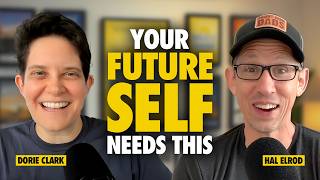
Hal Elrod and Dori Clark, author of The Long Game, discuss why workplaces reward quick wins while real impact takes months or years. They cover scoping goals realistically, spotting small progress signals, automating good habits, and using AI as a thinking partner rather than a replacement.
Chapters
If you find yourself overwhelmed with more to do on your to-do list than you can get done, and that's keeping you from creating, setting, and achieving meaningful long-term goals, today's episode is for you. My guest is Dori Clark, author of the book The Long Game, and we're going to talk about how you can make sure that the goals you're working towards each day are meaningful, are valuable, will be transformative in your life, as opposed to just answering emails and checking things off of your to-do list. If you don't know Dori, she's been named one of the top 50 business thinkers in the world by both Thinkers50 and Inc. Magazine. She is a keynote speaker and teaches executive education at Columbia Business School. She's also the Wall Street Journal and USA Today bestselling author of Entrepreneurial You, Reinventing You, Stand Out, and as I mentioned, The Long Game, which was named the number one leadership book of the year by Inc. Magazine. She's a former presidential campaign spokeswoman. She writes frequently for the Harvard Business Review and Fast Company. You can learn more at dori-clark.com, and you will learn a lot more today during this conversation about about how you can achieve your long-term goals and stick with them even when it feels pointless, even when it feels far away and you're not sure if you're going to get there. This episode will show you how. Dori, it's so good to be with you.
Hal, I'm so happy to be here. Thanks.
You are literally the perfect guest for this. This is the Achieve Your Goals podcast, and your book is about doing small things over time to achieve meaningful goals, right? And I love what you also talk about, which is you've got to be willing to keep at them when they seem pointless. Pointless or boring or hard. And I can reflect on all of the most meaningful things I've accomplished in my life, whether it was reaching people with Miracle Morning or my marriage, right? They all at times seemed pointless, boring, and hard. And so, yeah, your book, The Long Game, you literally wrote the book on the topic. So, thank you for being here.
Well, thanks. And you're the right person to be talking about it with. I mean, something that's so impressive. To me about you, Hal, is we know a ton of authors. And so often, if you're lucky enough for your book to be a bestseller, it is like the first week or the first couple of weeks or something like that. And then, whatever you try to do, it kind of crashes down. And Miracle Morning not only has had such incredible longevity and continues to be a presence in the world, But I mean, tell me if I'm correct, but, but I believe I remember hearing you on podcasts talking about how it wasn't a bestseller at first and you were just churning for years to make it one. And that is so incredibly rare.
Yeah. Yeah. It's interesting. I literally didn't even think of the connection until you just said that. But now my brain is because I'm like, yeah, when I remember I launched the book, it did all right the first week. We sold a few thousand copies. But then it just fell off the cliff because I had leveraged every relationship, every favor, right? It's like now no one knows who I am. I'm an unknown author. And I do remember I'm doing dozens of podcasts every week, 12 to 15 to 20, and I'm making pennies on the dollar for the time. So, it seemed pointless, right? But it's just this, I was playing the long game. I was like, I'm committed to reach a million people no matter how long it takes. So, yeah. Connected the dots on that. So, thank you for doing that. What is the premise? So, you wrote the book, The Long Game. What's the premise of The Long Game, not just the book but like as a concept? And then, I've heard you talk recently. I saw an interview where you're saying it's more important now more than ever. And so, those two things, what's the premise of The Long Game, the concept, the book, and why is it more important now more so than ever?
So, the premise of The Long Game is the fact that all the incentives point in the opposite direction, right? What we get rewarded for all the time is doing short-term things and short-term rewards. You get rewarded by your boss and your coworkers for answering emails quickly. People get so excited about that. And yet I think we all know intellectually that answering emails quickly is about one of the worst uses of your time possible. That's a terrible thing to be a master of because instead you should be taking a step back and saying, Well, what's the work that needs to be done? How do I work on important things, not just, you know, making everyone else's trivialities better? So I think that a real question we need to zero in on and what I was hoping to do with the book is to help people use that lens and say, all right, we know that, that everything is stacked in the corner of short-termism. And so how do we fight back against that and how do we get enough distance and perspective And honestly, emotional strength and character to make the tough choice that isn't rewarded, but is going to be more valuable in the end.
Yeah, no, it's so true. And I love that example of emails because it is this delusional, like I sent an email and you like, it's like this little dopamine hit. Like I did something and someone's going to, and they're like, thanks for getting back to me so fast. And you're like, yes, I'm awesome. And then you fast forward 3 years and you're like, or the end of the year, you're like, "What? I answered a lot of emails and that got me nowhere." How do you balance that? I know you talk in the book about strategic patience and just in general, patience and consistency being so important. But how do you balance that when the need for immediate results, you know, I need your email answer, I need Slack, I need like all these things. There's the reward for the immediate. How do you have the discipline and the consistency and the patience to think long term?
Yeah, it's such an important question. So I'd say there's, there's two categories we need to separate. The first one is there are certainly people who will make the argument, okay, I work in an organization, I have a boss, they want things, I don't have a lot of discretion, I just have to do, do these things. And I would say yes, that's certainly true. Up to a point. But that being said, we do have the ability to frame things. We have the ability to sort of make arguments and to say, OK, I know it's important to do this as rapidly as possible. I also have these other projects that you have told me are important for the company or that are really strategically aligned. So help me think through. How I can be spending my time on those things as well as, as all the little day-to-day things. And I think we can have those conversations more than we think. A problem that I'm especially interested in, uh, because I think it, it touches on something even more fundamental, is that if you look at people like entrepreneurs who in theory have total discretion on how they spend their time and what they're doing We are victims of this too. We're victims of our own thinking because we don't have to be playing so many short-term games. And yet we do because of these biases of human psychology that, like you were saying earlier, it's the dopamine hits, it's the fear of judgment from other people about, well, why are you spending all your time on that? Oh, you've been, you've been trying to become a master of X, Y, and Z. Well, what do you have to show for it, Hal? And, you know, we're always sort of just looking and saying, oh my gosh, is this actually a waste of time? Am I going to look like an idiot for sticking with this? And it takes a certain amount of bravery to continue persisting.
Yeah. Meditation comes up for me as like an example of this in the micro and the macro, right? Meaning in the micro, let's say you're doing a 30-minute meditation and the first 20 minutes you're like, am I wasting my time? I have nothing to show for this. There's a bunch of emails that I need to answer, right? Like all these things I need to do. And so, even in an individual meditation, this shows up, this short-term thinking. But the benefit I find oftentimes, it's the last minute of the 30-minute meditation when I have a profound insight as if a message from God or higher consciousness where I go, "Oh, thank goodness I didn't give up after minute 10, 15, or 20." Then the long-term, the macro version of that is like, "Oh, I've been meditating for a few weeks and I'm okay at it, but I still feel like I'm not good." I've meditated for the last 10 years and I feel like it's such a crucial part of my life. So, I like that as an example. What are some other examples? You gave examples of email answering as a short-term game, which we can all relate to. What are some examples of the long-term game? Writing a book, starting a business, like what for you are some examples?
Yeah, absolutely. And before I turn to that, I just want to— highlight something that you said, which I think is, is so apt in terms of the meditation example. When I was writing The Long Game, I realized partway through— I mean, technically it's like a business book, it's a career book— but I sort of had this realization. I'm like, oh my gosh, this feels kind of like a personal finance book in the sense that the parallels were so clear. It's like, okay, keep doing the thankless thing consistently for a long time, and oh, something really good is going to happen at the end that is actually much more than you expect. And so the parallels around fields, I mean, you gave a perfect example with the compounding value of meditation. It's also true for investing in financial planning. It's also true for working out, right? I mean, every, every fitness trainer says, you know what, it's the last rep that counts. You can, you know, you can do 30 reps and it's like, oh, nice, easy, but you're not building the muscle there. You're building the muscle on 28, 29, 30, where your muscle is almost failing. And then that's, that's the one that needs to be there, but it wouldn't have been there if you hadn't done the previous ones. So I think there's a lot of parallels across disciplines. But to answer your question about what, you know, what are examples of long-term thinking, essentially it's, it's any kind of a goal that somebody has that sort of takes, takes longer than, you know, one cycle to be achieved. You know, an email is like, okay, you do it in one click. That's super easy. But yes, it's, it's writing a book, it's starting a business, it's, you know, finally losing that weight. It is, you know, repairing a relationship with someone. It is, you know, going back to school and getting your degree. Whatever it is, that is the kind of thing that a lot of people do put off. If you become one of the few people that doesn't put it off, it actually is just such an enormous competitive advantage.
Yeah. Yeah. No, you said some things there, like the investing example is a good one because you're like, wow, I saved $5. It'd be more fun to go spend the $5. I'd have something to show for it, have a reward. And this isn't making a difference. But I heard you talk about in an interview, Warren Buffett made the majority of his wealth after 50, right? It was like he wasn't— he didn't strike it rich when he was in his 20s or 30s or 40s. It was like, it was the— he just was consistent and smart and invested, you know, and I know he lived in the same house for his entire life and drove a modest car, right?
He, he was—
I mean, Warren Buffett's like the perfect example of playing the long game.
Yes, that's, that's exactly right. And it is so clear, um, when, when we see the power of time. I mean, I think about— I have a Roth IRA, for instance, and I, I haven't contributed to this since, you know, since my early 20s, uh, because You know, as you earn more, you're not allowed to, to do that. Uh, you have to have different savings structures for retirement. So I just, I haven't touched it. I haven't put any money in, but I've just let it sit there and earn. And, you know, the money that I was putting in, oftentimes it literally was from minimum wage jobs that I had when I was in my, you know, late teens and early 20s. And it's, you know, it's six figures now, just because it was sitting there and I didn't screw it up. And so I think, you know, with, with just a little bit more direction, uh, from us— the, the example that I like to give around long-term thinking is it's, it's kind of the difference between being a jellyfish and being a speedboat. You know, if you are the jellyfish in the ocean, it is possible that you might end up in a really great place because things happen and the tide takes you somewhere great, but It's also equally possible you might wash up on shore somewhere that, you know, is not where you wanted to be. Yeah, but if you, if you were the speedboat that has some kind of intentionality between where you want to go and making that happen, it's not a guarantee you'll get to your destination. I mean, a lot of things can happen, a lot of storms can happen, but if you're betting, I would bet on the speedboat.
About two of my favorite products, I've been taking these for 4 years and they are now a sponsor of the podcast. Cured Nutrition Flow Gummies. I start every day with 2 of these. I meditate for 30 minutes without any supplements, and then I take Flow Gummies 7 days a week, almost every day. And then I go to bed with Night Oil. 30 minutes before bed, I take Night Oil and it helps me fall asleep and stay asleep. So I start my day with Flow Gummies. I end my day with Night Oil. If you want to implement my routine into your day with Cured Nutrition, go to curednutrition.com/hal. Again, that's curednutrition.com/hal and use the discount code HAL at checkout for 20% off your entire order. Flow gummies to start the day, night oil to fall asleep. You'll feel better, you'll act better, you'll perform better. Check it out. I want to ask you about how AI plays into short and long-term thinking, but before I do, something that just came up, which I guess it's important for anybody listening, which is where do you start this process? So if I'm the average person, and I can relate to this right now. I'm in a place in my business, I'm putting out a lot of— not putting out fires, but I'm like, I got so much short-term, like, oh, my publisher needs this and my team needs this. And it's like, and very often, I'll schedule like, okay, here's the long-term stuff. But then I get an email that's like, we need this today. And I'm like, I was going to do something really important that would benefit me in the long run. Well, I guess I need to get to this. So, I think that the majority of people are in that place of like urgent but not important living, right? That short-term thinking. What do you do? Is it starting with creating a vision for your life, setting long-term goals? Like, where should somebody start after this podcast? What can they schedule time to do?
So, one frame that I like to use that is kind of easy and it doesn't require you to figure out a whole future vision for yourself. I mean, it's great if you do. I certainly think that's awesome. Sometimes that creates a barrier for people of like, well, I don't know what my life is going to be like. I don't know what I want it to be like. And so then they, they put off everything because they say, well, if I haven't solved that, then there's no point. What I like to ask is a really simple question. What would it look like to do a favor for your future self? What is a thing you can do today that will make tomorrow easier? And that can really be big or small. A small favor is, okay, I know I want to go to the gym tomorrow. I will leave out my gym clothes so that that is the thing I put on in the morning so that it becomes automatic that clearly I'm going to the gym. I'm wearing workout clothes. I, I'm not going to go to my office dressed like this. I'm going to go to the gym first. It could be something that that's, you know, a little bit, you know, it's not technically hard, but might be emotionally hard. My wife is really afraid of the dentist. She does not like going to the dentist. But, you know, we found her, we found her a dentist she likes. And so she started going and she's, you know, getting different procedures that she needs. And it's scary, and she doesn't like it at all. But she knows that fixing things now is going to prevent a lot bigger problems in the future. And so, that is a favor to her future self.
I like that. What comes up for me is doing the right things regardless of the outcome, right? Meaning long-term thinking is like, "Oh, that outcome is so far off," which is what makes it hard. Whereas if you're like, "Hey, I know that I want to be in better shape, so I'm just going to start exercising right now." and I'm not going to worry about the weight loss. I want to lose 40 pounds. That's going to take forever. Okay, great. I know that somewhere in the future if I start doing the things every day. So, I'm going to start saving 10% of my income and not be attached. I call it being committed to the process without being emotionally attached to the results because the emotional attachment, I think, is what people are like, Well, I'm attached to the result and it's so far off that I have no motivation to get there. What about AI? So, what came up for me as I was preparing for our conversation today is I thought, well, does AI eliminate the need for long-term thinking? It's like, well, okay, for example, I used to want to write a book and it took me 3 years to write The Miracle Morning. And now, with AI, somebody could write a book if they wanted to in 5 minutes. They could be like, "Hey, write me a 200-page book about blah, blah, blah." It's not going to be a good book, but meaning the point being that AI has shortened lots of things that used to take long term. So I'm just trying to reconcile how does AI fit into the long game?
Yeah, it's an interesting question because of course we're all still learning and living into it. But I think in a lot of ways, AI clearly is an accelerant. You want to write a book? Okay, you can write a book a lot faster. That being said, I think it's, it's useful to understand what the actual goal is versus, you know, sort of what is the process or the pathway. It is absolutely true. I can write a book, you know, a 200-page book, you know, really fast with AI. I'm not sure that that necessarily is what people mean when they say that they want to write a book. For a lot of people, it's about the pride in the craftsmanship of actually creating their own ideas and intellectual property. And so if you are wanting to write a book as kind of a marketing tool and it's part of your marketing checklist, like, oh, I need, I need to create a PowerPoint, I need to create a book. Okay, great. Then yes, you can do that. You can expedite it. And that's, that's great. Let's knock it off the list. But I also think that there is still a place for craftsmanship. And we just need to sort of understand what is it that we want out of the goals that we're accomplishing. But there was actually a really interesting article that I read this morning in the New York Times. And it was a guy who is a longtime software coder. And he was talking about the fact that AI has personally, while scary in its implications for jobs, it has been personally meaningful and transformative for him. Because he said he had a folder of projects for over a decade that was kind of his, you know, maybe one day when I get the time to do it. And it was things he was genuinely interested in and curious about, but he never had the time to do them. And now with AI, literally, he said on his commute home from work while he's on the subway, he starts vibe coding with these apps. And he's been going through this amazing clip where he is actualizing things that he dreamed about a decade ago and never had time and never would have had time to accomplish. So that's, that's kind of cool. And I feel like that's a great use case of AI actually helping to fulfill someone's goals better and faster.
Yeah, I love that. And what came up for me, I actually just had a coaching call today with someone who's writing their first book and the way that they used AI in their writing process, which is a hybrid between what I threw out there, which is like, you just couldn't— you just have it write a book, right? So, the long game now becomes a short game. So, he, every night, he would do these gratitude walks and he would just share his story and his lessons and his ideas and just ramble into his phone. Then, he had those transcribed. And rather than tell AI to write the book for him, he said, "Hey, I want you to go through this audio and I want you to create an outline of the key points." that shaped the story and the lessons, right? Then he took that outline and he wrote it himself because he wanted that experience of writing. And what that also brings up for me is like, what's your purpose in life, right? So, this is like if we really look at like a really big picture question, my favorite answer to the question of like, how do you define your purpose in life was a book called The Rhythm of Life by Matthew Kelly. And he says the purpose of life is to become the best version of yourself. And I love that because it's like everything that we do, we can backtest that. All right. I really want this really unhealthy food. And then there's the healthy food, which helps me become the best version of myself physically. It's the healthy food. Okay, got it. So, it's this really easy binary of which one Which decision, which choice helps me become the best version of myself? Writing for the sake of writing and the craft actually enables you to become a writer. Telling AI to write you a book, that you don't become anything except for someone that can click a button, right? So, so that's what just came up for me when you, when you shared that.
Yeah, that's so interesting, Hal. I love that. And in terms, I'm, I'm just curious, uh, in terms of AI, How, how have you been thinking about it in terms of, in terms of your workflow? Do you feel like it's, it's just been helpful in terms of like knocking tactical things off the list, or do you feel like there are broader goals that you have that, that you've led it into or that it's been helping you with?
Yeah, I've struggled with it in that I have a real— I don't know if moral is the right word. In fact, in our author mastermind, I don't know if you saw in our WhatsApp group, I asked the question, Hey y'all, are you still using human editor, human beings to edit your books or are you using AI? And then I wrote in parentheses, I feel a little bit sad asking this question, right? Like, 'cause I think of the human who is an editor. Like, so, so, so I've really struggled with that. And so because of that, I've actually, like, I'm using AI a lot. I'll answer your question for sure, but I've been way slower to adopt it. Because of that. Thankfully, my chief growth officer who really oversees our entire company, thankfully, he's all in and he's going way faster than I am. So, he's leading everybody and I'm dipping my toe in. But here's how I'm thinking of it is it's a thinking partner. So, for example, I have a meeting coming up, a very high-stakes meeting. I wrote the email. Well, first, I wrote the letter to the person that I'm having the meeting with., right? And then I ask, I put it in AI and I go, "Hey, I want you to read this as if you were," and I put who the person is and their role and the context of our relationship. I said, "Do you see any, are there any negative potential consequences in the email the way that it is written?" And it brought up all of these things that I had never, I was like, "Oh my God, you're so right. That totally could be interpreted that way," right? So, then I'm rewriting the email now accordingly. And then I send it. Then, so, so, so like it helps me clarify my thinking versus just, hey, write this email for me. And even sometimes I'll say, hey, write the email for me and then I'll edit it. So, I'll do either way. But then I took the person's responses and I put all of their, I go, hey, here's their responses. What do you read into this? And what angle should, you know, and it was freaking brilliant. And by the way, very important, my ChatGPT, is the instructions are, I don't want you to agree with me for the sake of agreeing. I want you to push back. And that is so important because otherwise it'll say, you're right, you're great, you're the best, you know everything, your first draft. And so, that's super important that you program your AI, whichever program that you use, yeah, to really push back and be brutally honest and that kind of thing. So, what about you? How are you using AI?
Yeah, that's, that's fantastic. I am trying to be thoughtful about building my muscle about what I can outsource. I think that for, you know, for all of us, you know, I mean, I think right, right now it's all of us. Eventually, you know, we're going to have AI natives just like we have digital natives. Yeah, but it's a little bit like, oh, I guess I should use AI for that. And so right now, I'm really trying to be as AI-first as I can in terms of thinking, what can I do with this? How can I— as Ethan Mollick, the Penn professor, talks about a lot, he's done such interesting research about AI frontier models and what he calls the jagged edge, which is that they're brilliant at some things. They're terrible at others. And because there's no user manual, we just don't know except by trying. And so I'm trying to throw a lot of things at it. Probably my favorite use case, which I, I am not a mechanical person, unfortunately, that is really not a strong suit of mine. And there was a dumb thing recently where like the cleaners at my house sort of knocked something off on my bidet and, and like the, the little stopper wouldn't go anymore. And I'm like, okay, this is clearly fixable. I know I can fix it. It took me 90 minutes because I'm really pathetic at these things, but I kept taking pictures. Like, I crawled behind it and like was taking pictures and AI with the pictures was coaching me through how to fix it and I successfully fixed it. Wow. I'm like, this is amazing.
That's amazing. Yeah. No, I've been some, and I mean, I've been blown away different things that AI is able to do. Yeah. And I'm trying to, you know, how do we keep the humans, like how do we just enhance the humans, not replace, you know, replace the humans. So, yeah. What I was going to ask you. Oh, so you talked about in the long game, we talked about like the patience and consistency being needed because it can feel pointless, it can get boring, it can get redundant. You don't see the results coming as fast as you want. How does someone keep going? How do you keep going when you're not seeing results as fast as you want?
You're putting your finger on something really important, which is that as I was writing The Long Game, I talked to so many people. And what I discovered was that for most people, the fear is that you're going to keep going too long on a thing that's not working and you'll either waste resources or you'll look dumb or you'll just feel like, oh, you know, why, why didn't I see that? And there'll be a lot of regret around it. And what's interesting is that that is the fear But the reality is so much more frequently the opposite, which is that people are giving up too soon on a thing that probably could have worked, but they just, they, they didn't give it a sufficient amount of time. And so I wanted to really explore that tension and try to figure out, well, how do we solve for it? How do we make sure that we're at least being smart about when, when and if we should quit? And I, I like to think of it as, as kind of the, I call it the tunnel problem because when you embark upon a long-term goal, you're essentially going into a tunnel. And the problem is that you do not know at the outset how long that tunnel is. That tunnel could be a mile, that tunnel could be 100 miles, but you're in it. And so you kind of have to keep going with it. So fundamentally, there's, there's two things that I would say that you can do. The first and perhaps most important is scoping up front. And this is where a lot of people go wrong because they just kind of dive into their goal and then they're like, I don't know, it doesn't feel like it's working, which is very subjective. If you scope it properly and really try to analyze and understand before you get started, what is my estimate of how long this will take? What has worked or not worked for other people? What is common? That is really helpful because, you know, you might be an outlier, but you're probably not a 10x or a 100x outlier. And so knowing what is a reasonable estimate— is this, is this going to take me a year to launch this product or is it going to take me a decade? That's very helpful for expectation setting. The second thing is what I call looking for the raindrops. And what I mean by that is that so often we just get our blinders on when it comes to the goal and it's like, well, the goal isn't here yet, the goal isn't here yet, and you get very frustrated, but you need to train yourself to look for small preceding signs that something is happening. And so as one example, okay, maybe you're not selling a lot of your product right now, but is there an uptick in your web searches? Is there an uptick in your social media activity? Or are you, you know, getting more subjective things? Maybe you're getting more, more media buzz. Maybe you're getting more LinkedIn friend requests. Those are things that might be a sign that something is coming down the pike later, and that's what we need to watch for that can help keep us encouraged and motivated.
It's called watching for the raindrops.
Yeah, exactly. You know, it's, it's like if, if the actual goal achievement is like the big thunderstorm, the thunderstorm doesn't come out of nowhere. It rolls in and then it starts to drizzle, and we need to be noticing that. Now, I'm curious for you, Hal, it, it just took such a, such a tremendous amount of perseverance for you to keep going? A lot of people, I'm sure, probably told you, okay, Miracle Morning, that was nice, Hal, but time to write another book. Try again. You know, find one that's going to catch fire right out of the gate. How did you decide not to do that?
Yeah. So, I love this question and I think it brings in so many lessons of what you're talking about, which is when I wrote The Miracle Morning, so, it took me 3 years to write it. And I put up a web page where people could download a free— like, I did a 60-minute interview. And this was back in the day when I was making stuff by myself, like 2009, '10. And so, I put up this audio, which is an interview with me about the Miracle Morning. And I'm like, "Hey, while I'm writing the book, this will get you started." And we had over 10,000 people opt in just word of mouth to get that interview. And then, I would see Facebook posts. I would get emails go, "Oh, my gosh. I started doing your Miracle Morning and it changed my life in these ways." And what you call raindrops, I call microcosmic evidence, right? It's like the microcosm evidence of what's possible in the bigger picture because I'm going, "Wait, if the Miracle Morning changed my life and I wasn't a morning person and it's changing these people's lives and they weren't morning people, this could change millions and millions of—" Like, I know it's changing lives. So, to your point, like paying attention, I'm not selling a lot of my product. But the people that are using it, they freaking love it. So, that means I just got to figure out how to market. I got to figure out how to get it out there in a bigger way. And so, my goal when I wrote the book, just because it was the biggest one I could think was change 1 million lives one morning at a time, which was a mission-driven way of saying sell a million copies of The Miracle Morning. And so, year 1, I did everything in my power. I was on 150 podcasts. There were only probably 1,000 podcasts in the world back then. Like, I was on most of them, but I got all the— and that was all just me emailing and asking to get on. And it was all guerrilla marketing. And at the end of the year, my goal was to sell 1 million copies, and I was 987,000 copies short of my goal. So, right? Like, and so now, if I hadn't had that goal, 13,000 copies from zero, I probably would have been like, hey, this is a great start. But I was like, Oh my gosh. I got out a calculator. I go, "It's going to take me 77 years to reach my goal at $13,000 a year, 77 years to hit $1 million." But I just remember, and this goes back to really like your purpose and your mission, I was like, "If it takes me the rest of my life, I'm committed because this isn't about me." That was a mantra. It's not about me. This is about getting the Miracle Morning into the lives of people who need it and it can help them the way it helped me and people that have discovered it. So, that was really it. And so, I tried again year 2. The goal was still 1 million and I sold 23,000 copies year 2. I was like, "Okay." And then, year 3, I tried again. And it took 6 years to reach 1 million people. But if you look at the graph in sales, it was like this. And here's the thing. I have shared this message at author conferences and I always hear authors say something that you kind of alluded to earlier, which is, They go, "Man, Hal, seeing that graph, I only promoted my book for 3 months, maybe 6 months, but then I was like, well, I'm not getting the results that I want. I got 14 other ideas. I'm going to move on to that." It was boring. It was tedious. It felt pointless. They weren't seeing the results. They go, "If I would have kept doing it for 6 years and now I'm 17 years, I still do it, show the Miracle Morning every week, it's like they go, "What would have been possible?" So, in other words, if I had been playing the long game as opposed to just being attached to my short-term results, who knows what would have been possible? And so, yeah. So, that's my answer on how it kind of came to be. And actually, before you respond, Dori, it's interesting in hindsight. I couldn't have sold a million copies in year 1, meaning like I didn't have the resources or the relationships or the the network or whatever. If I hadn't met that person in year 1 that led to the relationship in year 2 that led to the connection in year 3 that led to the opportunity in year 4, looking back, as Steve Jobs would say, you can connect the dots only looking backwards. I'm like, "Oh, all of those things had to happen in the timing that they happened for the Miracle Morning to reach the people that they've reached." And now, the way I look at it long-term-wise, long game, is 3 million people have read The Miracle Morning, which means there are 8 billion people that I have a responsibility to spend the rest of my life trying to reach.
So, that's where we're at. That's so cool. I love that. That's definitely a powerful arc. And I think part of it too is particularly for authors, but I think that this is true for everyone. We kind of, as humans, defaults to doing what we like to do. And so as a result, if, you know, if you're a writer, presumably you like to write. And so any excuse you get to say, oh gee, I guess it's time to write another book, yeah, you're gonna do that, uh, especially if the marketing part is not your, your natural thing or it's not your favorite thing. But again, if we really want to be service-oriented, if we want to have the the impact that we want to have, sometimes we need to go beyond the ruts that we have and say, all right, what does the moment call for? Yes, you know, it shouldn't be something you hate, but we can't just default to doing the thing that always is the most comfortable or that feels the most fun to us. Yeah, yeah.
No, that's— I think that's a really good point. Yeah. You got to get— you have to get out of your comfort zone, right? Like, I don't know who it was, but some famous person that we know said success is on the other side of your comfort zone. And one of my friends, Chandler Bolt— do you know Chandler, the CEO of SelfPublishing.com? I do.
I do.
So, Chandler says what he learned early on as an author because he was like, you know, everyone's like you said, I like writing. I just want to write all the time. But if you don't get your book out there, well, nobody benefits from the words that you're writing. And so, one of Chandler's mentors said, you got to get to know Sam, Chandler. And he goes, who's Sam? You know, can you connect me? And he goes, Sales and marketing. He goes, you might. And Chandler goes, I hate sales and marketing. He goes, no, very few people like it. But if you want your message, your product, your book to get out there in the world, you got to get to know Sam. You got to get to know sales and marketing. And anybody can learn it. So, what about habits? I was reading our friend Michael Bungay Stanier's book, The Coaching Habit, this morning. So that's on my mind. Are there any daily or weekly habits that help you stay focused on the big picture and the long game rather than getting caught up in the short-term distractions?
Yeah, habits are a really important lever for all of this. I mean, part of the reason that there's been so much focus around habits in recent years, whether it's, you know, people reading, you know, Michael Bungay Stanier and The Coaching Habit or James Clear and Atomic Habits, is that It takes so much effort and willpower sometimes to, you know, quote unquote, do the right thing. And it can feel exhausting and it can feel overwhelming. I mean, we already have a huge cognitive load with just our day-to-day life. And so it turns out that about 40% of our daily actions, according to various studies, are habitual. And so if you can actually get over the hump of turning something beneficial into a habit, then it becomes part of your automated ritual that you're, you're just doing on autopilot and you don't have to think so hard about it. And so that is a really good victory and that's a nice way to be able to, to just stack the deck a little bit more in your favor. You know, it's, it's our— all of our parents did us a favor when it's like, oh, you always brush before you go to bed. Yeah. So, so in terms of things for me, And examples of that, I mean, I, I, I'm a big fan of, you know, just like forcing functions and, you know, what is, what is the thing that makes it automatic for me to do things? So, you know, for instance, some people do it with a personal trainer. For me, I almost always, I go to the gym with my wife so that it's, you know, something that we're doing together. It becomes kind of systematized. That's really nice. You know, when it comes to you know, investing, for instance. I have, you know, automated systems set up that, that just try to take the conscious choice out of it. And it, it ends up definitely falling into the category of doing the favor for your future self. Yeah.
Yeah, I love that. I was actually going to ask you earlier and just reminded me of automating some of these long-term things. Like, for example, I, you know, on Coinbase, it buys $100 of Bitcoin every week, right? Dollar-cost averaging. I don't think about it. It's— and for my kids, I have similar things happening. In their account, saving money for them. Right. So, that's one thing that's kind of cool is a lot of the long-game goals, long, you know, long-game outcomes that you want, you can automate some of those. So, I got to ask you on the topic of habits, do you have a morning routine or what is your— everyone has a morning routine. What is your morning routine and how has that impacted your ability to stay consistent? Yeah.
Thank you. Mine is not as extensive as yours, although I always admire saving I think, I think that's fantastic. I would say that probably my most enduring morning routine now is in our home. I have, I have a very fancy coffee maker and it is fancy enough that my wife is scared to use it. She thinks it's gonna, you know, she's gonna destroy it somehow. And so, I have become the barista of the family. And, and so, that's, that's actually a nice thing because I like to be able to start out every every morning, uh, doing a gesture of care, uh, and creating, you know, this, this, you know, special fancy foamy coffee. Uh, and so, you know, I think that's, that's kind of its own version of a gratitude practice of like, oh, let's start the day doing something nice for someone I care about.
Yeah, yeah, I love that. So we know we now on this podcast episode learned two fears that your wife has: the dentist and the coffee, the fancy coffee makers.
So Exactly. We're going deep here.
We're going deep. All right. So, all right, 2 more questions. One is about the cost, like what's the real cost of short-term living? Because again, most people are trapped in the short-term living cycle. So, what is the cost over time personally or professionally? Yeah.
So, I think all of us can relate to the short-term cost of short-term things, which is I think we've probably all had days where at the end of the day, maybe you go home and you're saying to your partner, they're like, well, what did you do today? And you're like, oh my gosh, I was working all day and I don't even know what I did all day. I've got nothing to show for it. And that is the feeling that we get when we haven't actually made any real progress, when we've just been firefighting and doing these urgent things that don't add up to very much. And so the alternative to that, there actually is research about this. There's a professor at Harvard Business School named Teresa Mobley, and she wrote a book called The Progress Principle, where she shared some research that, that she had done. And what was really interesting, she was studying employee motivation. And what she discovered is that the single most motivating thing for a person in a professional context is if you are able to make progress every day, even a tiny amount of progress on a goal that feels meaningful to you. And so, I think that's really the North Star is that if we can find a small place, maybe it's just the first 15 minutes of the day, maybe it's like you evangelize for, maybe it's, okay, before bed, I'll do this one thing to move the ball forward. I'll send a message to this person to get this document, I'll do this piece piece of research, I'll read this article, whatever it is. But if you can say to yourself at the end of the day, all right, I didn't have a ton of time, but I moved the ball forward just a little bit on something that I care about, that really can make all the difference.
I love that. You're so right that at the end of the day, it's like if you're busy, you, you don't feel fulfilled. But if you are productive, even if it's just one baby step toward a predetermined meaningful goal in your life, that makes all the difference. Um, how would you define— what does a meaningful life look like in practice to you?
Yeah, so I, you know, I'm, I'm very goal agnostic for most people. I mean, to your point about the book that you were referencing, uh, that I think was Matthew Kelly, um, I, I want people to, to be self-actualizing in, in their own way, be the best version of yourself. And so that could, that could mean a lot of different things. You know, for, for some people, it's that they want to be the best parent. For some people, it's that they have some kind of a professional legacy they want to leave. I want to build this amazing business that lasts for generations, or I want to create this art or this book or, you know, whatever it is. I think all of that is fantastic. I want people to have the tools. I want to try to, you know, with The Long Game, I was really trying to create almost an infrastructure to help people figure out how best to achieve the thing that they are after. I would say for me, I, I started out always, you know, like even as a kid wanting to write books, I was very interested in that world. I liked that a lot. I think that over time, something that has sort of presented itself to me because sometimes your, your audience or your mission sort of finds it, finds itself. Yeah, I found how hard it was for me over the years once I started working for myself, like 20 years ago now. To sort of get my ideas heard. And I had to— I had to, like, really reverse engineer that and crack it in a very deliberate way. And just seeing how opaque that process was and how hard that was, I wanted to make it easier for other people. And so something that I would say gives me a real sense of mission is for the past decade, I've run an online course and community called Recognized Expert. And the goal is helping talented people kind of unlock that and figure that out in an easier way. Like, how do you get your ideas heard?. And I think that's, that's powerful because we all know there's so many smart people out there that just don't have the reach that they deserve because it's a separate puzzle to crack. And so I like, I like helping make that clearer. Got it.
So that, so recognize experts. So that is, that's what you do, or that's part one of your offerings for people to help them figure out how to get recognized and get their message out there. Yeah, that's correct. Where can people— what's the best place to connect with you and your work online?
Yeah, thank you so much, Hal. Folks can find me at doryclark.com, and that's the main hub with all, you know, 700+ articles I've written for places like Harvard Business Review and Fast Company. They can get them for free. Join the mailing list to get more information and learn more about Recognized Expert also.
Amazing. Y'all head to doryclark.com and get the book, The Long Game: How to Be a Long-Term Thinker in a Short-Term World. And if you can relate to feeling busy but not productive, feeling like you're just keeping the machine running without actually making progress toward really meaningful goals in your life, this book will unlock that for you. The Long Game by Dory Clark, available wherever books are sold. Uh, Dory. I love you. I'm really grateful that we got this time today.
Me too, Hal. This has been fantastic.
Thank you so much for having me. Until next time.
More from Hal


Hal Elrod shares the most effective tool he’s learned to quickly handle anything life throws at you.







Jim Kwik: How 5 Minutes Each Morning Can Rewire Your Brain and Change Your Life
