From Homeless Heroin Addict to Millionaire with Khalil Rafati
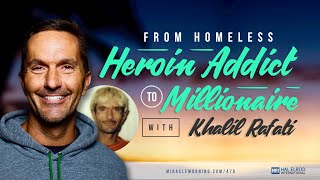
A recorded interview (YouTube, Apr 5, 2023) where Hal Elrod interviews Khalil Rafati about his life: growing up with abuse and cultural dislocation, early substance use escalating to heroin and homelessness by age 33 (weighed ~109 lbs in 2003), multiple overdoses and hospitalizations, entry into treatment and recovery, then rebuilding a life through work in hospitality and recovery services. Rafati later founded Riviera Recovery, Sun Life Organics (opened ~age 41), authored I Forgot to Die and Remembering to Live, and grew Sun Life into a multi-location brand (13 locations with five more planned). He describes spiritual practices, visioning (Secret, Think and Grow Rich), persistence, and assembling a leadership team that helped Sun Life become profitable after many years. The conversation also covers views on addiction (as a double-edged 'superpower'), health-focused food sourcing, and advice for loved ones of addicts.
Questions this video answers
33 years old (in 2003) — weighed about 109 pounds.
13 operating, with five more planned.
Opened Sun Life Organics at about 41; bought his first house at 49.
He said it had been 12 years in business and last year was the first profitable year (profitability arrived recently; COVID-related changes helped).
Chapters
Khalil. Good morning, brother.
Good morning.
It is so great to see you.
You too, buddy. Thank you.
Yeah. So you and I met at Cal's house, Callahan. I don't remember. It was pretty brief, probably a year or two ago. It was one of the times he had all the guys over and you had just finished a workout when I got there. And then I started coming to Sun Life Organics. And I just have to thank you because, like, SunLife is one of, if not my favorite spots in Austin.
Thank you.
When I moved here, I don't think. I don't think SunLife was open here in Texas that you were in California. Juice Land, I found, had organic smoothies, and I had stopped drinking smoothies completely because I used to drink with Jamba Juice until I got aware of. Oh, wait, there's more pesticides than there are nutrients in these smoothies.
Yeah.
And so I completely. And more sugar. So I completely stopped drinking smoothies. I moved to Texas. I find out Juice Land is organic smoothies, and I'm over the moon. I'm like, this is amazing. Turns out I went in there one day probably a year ago, and I go, hey. I go, your smoothies are so organic. Right? I don't see organic anywhere on your menu. And she goes, no, they haven't been organic in a long time. Yeah, it's like, you're killing me. So, man, thank you for your commitment to, you know, just to quality and to health and. Well, actually, we'll get to that in a second. But I just had to thank you for Juice Land, man. I mean, I'm sorry. Thank you for Sun Life Organics.
No, no, no, for sure. And by the way, Juice Land is no different from Juice Generation and Pressed and all of the other amazing juice bars out there that started out 10, 12 years ago with pure intentions. They're not bad people for doing what they're doing. It's almost impossible to run a multi chain food establishment and be 100% certified organic. I do need full disclosure. It has been 12 years that I've been in business. Last year was the first year that we were profitable.
Get out of here.
The first year. So if it wasn't for cryptocurrencies, my book that did incredibly well gambling, which I did incredibly well on. I don't gamble anymore. But gambling that I did incredibly well, I got super lucky in real estate. I didn't buy my first house until I was 49. And that was a miracle in itself. And then 15 months later, somebody offered me a million dollars more for my shitty little townhouse that I had paid for. So if it weren't for all of these amazing. Sorry, I swore already.
If it wasn't for all of these amazing blessings in my life, then we would have been bankrupt. But I have a wealthy business partner that put up the money, and we've had cash calls, meaning we ran out of cash many times over the last 12 years, several times in big, big ways. And he just gave me more money. So I don't. I don't hate on. On any. First of all, there's almost no restaurants out there that are all organic. Yeah, we are and we will always be. I will shut down before we stop because it's so important for me. But most of the restaurants that I eat at in Austin, nothing is organic. So it is what it is. If you want to have a thriving business and make money, don't go into an organic juice business. Or if you want to make money and be able to be in food service, you're going to have to cut corners and you're going to have to compromise.
Yeah. And that's my thought. With, like, Juiceland, it's like, they probably sold out to a bigger company that all they looked at was the spreadsheet, and they're like, dude, we can. If we go non organic, we can cut costs by, you know, 40%. Let's do that.
You know, exactly.
Yeah, that makes sense. I want to ask you something that just came up for me. It wasn't. This isn't. I've got a lot of questions I want to ask you your story. I'm listening to your audiobook right now. I Forgot to Die. And as you know, your story is extraordinary. It's inspiring to me. It's a story of.
It's an example of what's possible for all of us in terms of. You were at a place that I think very few of us could imagine being that low. Right. 33 years old, addicted to cocaine, crack, heroin. Weighed 199. 109 pounds. Sorry, 109. 109 pounds. This was 2003, and you're living on skid row in Los Angeles. Right? So I'd imagine as a, you know, crack addict living on skid row in Los Angeles, no one, maybe other than you. I want. This is what I want to hear. But. Right. Nobody would go, oh, I bet that guy's gonna turn it around and become a multimillionaire, you know, with a successful franchise, you know, helping people heal themselves.
Tell us your story, man. I'd love for my audience to hear how you went from the lowest of lows to now being the pillar of health and wealth and impact and all the above.
Oh, that's a loaded question. And I have to paraphrase.
I had a very, very rough childhood. My parents were immigrants from two different countries and two different religions, and I grew up in rural Ohio, where everyone looked like. If your audience is old enough to get the reference, everyone looked like they were on the Brady Bunch, okay? And I did not. So I had a weird name, dark skin, and I just didn't. Didn't fit in at all. And beyond that, there was a lot of violence, incest, neglect, psychological abuse. I just, I had a very rough go in my. In my early life. And so I began acting out as, as in my. In my. Well before my early teens, I was sort of experimenting, trying to fit in with the older kids, puffing on a joint, you know, drinking beers to get attention. But then by time, I was 12 years old and I was able to pay the, you know, older kids in the neighborhood to get me beer or wine or alcohol. I actually began blackout drinking. And I would drink alone by myself, because drinking and smoking weed at that time was a panacea for me. It was the first time where I wasn't absolutely terrified. And it was also around that time that I started developing panic anxiety disorder and having severe panic attacks to the point where I became agoraphobic at times. So.
And that was at what age?
That was at 12 was my first major panic attack.
Panic attack. Now, you mentioned you had dark skin. Well, what's your nationality?
My father's from Palestine and my mother's from Poland. So my father was born a Muslim. My mother was born a Jewish. I was raised Catholic in the. The only private schools in Ohio were Jesuit Catholic. So sort of confusing as a kid. And, and, and not that I didn't believe in God, but it was like, God definitely doesn't believe in me. You know, why. Why is, why is everyone playing catch in their front yard with their dad or going camping? And, you know, I'm. I'm getting beaten and severely abused by my half brother or by my swim coach, getting sexually abused. Like, I just didn't feel like God cared for me at all. I really felt like I was unlovable. And by the way, I had empirical evidence that I was unlovable through the actions of my mother and my father.
Yeah, talk about your. Your dad, because from. From the audiobook, right. I'd love to. For people to understand just what that figure in Your life was like. And the impact, you know, very. I understand. Angry man, abusive man. I mean, talk about your dad.
Yeah, that's a tough one, man, because he's still trying to reach out. And, you know, we haven't talked and almost 10 years now. I've never had a good relationship with him. He was a very violent, very angry man. And part of that is cultural, and part of that is circumstantial. He had a really, really rough life.
He was terrifying. He was a monster. And. And he was a rageaholic. And that had a major impact on me. He beat my mom a lot. And not like. I don't mean, like, slap my mom. I mean, he beat my mom.
Wow.
And beat her bloody and in front.
And in this.
In front of you all the time. And as a matter of fact, late in life, I think I was in my mid-20s. I remember asking my moms. I was trying to do my astrological chart, and I was trying to ask her when I was born, like, what. You know, what. When I was born, what time I was born, whatever. And she said, well, remember, you were born early because, well, your father got excited. And I'm like. Got excited. And she's like, you know how he was like. So he beat you and I was born prematurely?
Yeah.
And she's like, well, you know. And she would always make excuses for him to the day she died. Now, they. They separated in 1977.
Oh, wow.
Now 7 years old, she made excuses for him until the day she died, which was two years ago. She still loved him for. For. For the next 40 years of her life or whatever it was. She still was loyal to him and loved him. She never was with another man, ever. My mom, in many ways, is a saint. And my mom was a horrible, horrible mother, but not because she's evil or bad, but because the war happened. She was four years old. She got left on a doorstep. She got marched off through Kazakhstan, Uzbekistan, you know, eventually Siberia. So my mom didn't know how to be a parent. My dad didn't know how to be a parent. They were both very attractive, which drew them together, but they. And look, I'm grateful, by the way. I'm grateful. Thank God I wouldn't be here. And I'm also grateful in a weird way.
You know, like the story in the book where I wanted to get those Nike tennis shoes with a Velcro strap around them when I was 12 and my dad went nuts and, like, beat the shit out of me, was like, if you want the goddamn tennis Shoes. You got a goddamn job. And I'm like, I'm 12, I'm 4 foot 11, and I'm 90 pounds. And we were at his friend's restaurant, Gus, and I was. I refused to talk. I was so upset because my dad beat me and my dad wouldn't get me the tennis shoes. And he was visiting from. Because he left in 77. He left, but he would come back, like every year, every six months. So were in his friend's restaurant and he was like, Mac, what's wrong with your kid? And my dad's name was Mahmoud, but everyone called him Mac. And he said, oh, he wants a goddamn tennis shoes. And Gus, being a wise guy, you know, part of the syndicate, Detroit mob, all that, like, whipped out a wad of hundreds similar to this. And he put it down the table. And my father, being an angry, violent Muslim man, slammed his hand down, said, God damn it, no, you want to help him?
Give him a.
Give him a job. And so Gus was like, you want a job, kid? And I'm like, yeah. And he goes, great. Be here Friday at 4:00 after school. And. And I'm going to give you a job in the dish tank. And I got a job washing dishes. My point in saying that is I learned through very difficult circumstances that if you wanted something in life, you had to go out and earn it. So I went to work Friday. I loved it. I did great. I went back to work Saturday. I loved it. I asked him if I could come back on Sunday. And he said, no, you're going to home and study for school, but come here. And he pulled out that wad and handed me the hundred. And he goes, I'll see you next Friday. I took that hundred and I walked to Southwick Mall and I bought those pair of Nikes in bright red with the Velcro strap. And by the way, Hal, I went back every weekend. I bought like six pair of them.
You were working. You started working to support your Nike habit.
I was at 12 years old as a dishwasher, 14 as a busboy, 16 as a host, 19 as a waiter manager, and then onwards and up.
Oh, you were at that rest. That one restaurant for that long?
I was at that restaurant and another restaurant called Fifi's. Fifi's is where I took. I lied about my age and got my first waiter job. And Fifi was the ex madam and ex girlfriend of the head of the Detroit Mafia. And she was black, which was very controversial at that time during the 70s. Okay. And so when she Retired from being a madam, the Detroit mafia set her up with her own restaurant called Fifi's. And that's where I learned how to wait tables and make a Caesar salad.
Wow. Not too many people would say they worked for a mob boss's ex madam or.
Yeah, wild.
So, so, and then, so okay, so this is your, your teenage years as rough as they can be. And then, and then where? Take us into, you know, the transition kind of. What were your 20s like into your 30s? When did the drugs get really, when did they become a problem? When did you get go from marijuana to these hardcore drugs?
Well, Gus, the guy that gave me the job as a dishwasher, he eventually moved me into his house because my mom didn't want me and my dad didn't want me. They just couldn't me. So I lived with his daughter and his ex wife in their house. And Gus was very against drinking, so I had to hide my drinking to the best of my ability. But when I would drink, I would, I would blackout and sometimes wake up like a town over. I also got arrested three times before the age of 16. The third time was for aggravated medicine. So I was a real trouble juvenile delinquent. The drinking and the pills and the weed continue to progress to the point where I was 20 years old and I'm living a life of crime, I'm dealing drugs, I'm still working in the restaurant. And I realized I was going to die or go to prison if I didn't get out of there. So I ran off to California to get away from all the trouble and went to California. And for a short period of time, I did escape the trouble and I worked real hard and I had all kinds of doors open up for me. I got my SAG card right away. I was working for Elizabeth Taylor when I was a little kid. I was 24 years old.
Washing cars, right?
Yes, yes.
Yeah. A little entrepreneur even at that age. You started your car business?
Yeah, Jeff Bridges, and I'm being an LA name dropper right now, but Guns and Roses, like it was a real special time. But sooner or later it was a lot easier to go grab a pound of weed up in Marin county and then break it up into ounces and sell it off to people. And so in, in my mid-20s, I, I got introduced to the rave scene by a young girl that I was seeing and she started taking me to raves. And I had tried MDMA for the first time. That's when the, the, the addiction really took off. Because when I first felt Club drugs, the, the, the ketamine, the GHB, the MDMA, etc. I was literally like, oh my God, I'm gonna feel like this forever. Like, I never want to not feel like this.
Yeah. Yeah.
It was again, a new panacea. Because all of a sudden I didn't just feel, it didn't just take the terror away from me. Those drugs raised my serotonin and my dopamine levels so high that all of a sudden I felt like I was 6 foot 2 with blonde hair and blue eyes instead of being 5 foot 7 and sort of misshapen, with a massive skull and a long torso and short little stick legs. Like, all of a sudden I, I felt like I was beautiful. And I had, and I had a honeymoon period, about a three year honeymoon period with psychedelics and with those drugs and I, and by the way, I had some profound paradigm shifts within some of those experiences, unfortunately, because of lack of set and setting, lack of a, a therapist or a guide or someone that could properly help me to integrate those experiences. I was a pig and an addict and I just couldn't get enough into me. So the wheel started coming off at 27. Heroin entered at that time. I was in a rock and roll band and heroin entered at that time. And I was so stupid that it all seemed so glamorous. And once I hit the needle, once I went from smoking to injecting, then the wheels came off and I abandoned every. I stopped paying my bills. I started behaving in ways that I'm embarrassed. I don't know if you're that far along in the book yet, but just horrible. Operating, living my life without a moral compass. Eventually homeless, on the streets, psychosis set in. Selling my body for drugs.
Panhandling, filthy, in and out of jail, in and out of hospitals, and that, that took me all the way to 33 years old. And that was when, after I think the eighth overdose, and I don't know how many hospitalizations and how many times in and out of county jail for, you know, weeks at a time, I, I just, I just couldn't do it anymore. I, I didn't stop doing drugs and drinking for moral reasons. I literally physically could not go on anymore. So I raised my hand, I surrendered, and I joined the winning team.
So how did you, what did that look like logistically? So, you know, when you're, when you're a homeless drug addict on skid row in, at Los Angeles, do you go into a halfway house? Do you like, where did you turn? What's your first step on the road to recovery.
So there were free places. There was the Claire Foundation, Tarzana Treatment center, and the Weingart center, which I wasn't familiar with most of those, but I had heard about some of them. I tried to go into one once where they literally. I. I think it was a Salvation army on Tunga in Sun Valley where they literally put you on a cot and you were in this room with a bunch of other men. And I was terrified. And I ended up lasting, I think, maybe 30 minutes. But when I finally. They say in. In some 12 step programs, put the plug in the jug. For me, it wasn't a plug. It was a needle and a spoon. When I finally put down the spoon and picked up a fork, I was 33 years old. I had been shacking up with an older woman named Penny. She claimed that the Beatles song Penny Lane was written after her, which I did the math, and I don't think it was.
It was, yeah.
So Penny had told me about this guy named Bob Forrest, and she said, bob Forrest can help you. He can get you to treatment for free. He can take care of you, whatever. I didn't believe it, but I took his number anyway. And it was after one of the really severe seizure that I had went to a pay phone and called this Bob Forrest guy, and he was like, yeah, come on down to Maps, and it's now called Music Cares. But, yeah, come on down and, you know, we'll get you all set up and we'll get you into treatment.
And so this is a rehab center?
Yeah, Pasadena Recovery center, which is no longer there. But Bob put me into Pasadena Recovery center for a few months, and then they sent me to a place called New Perceptions, which was a halfway house in the Valley. And I stayed as long as I could. They used to give us 40 bucks a week so we could eat and. Well, or get cigarettes, in my case. And.
And that was the beginning. That was the beginning of my recovery. And it was brutal. I mean, it was absolutely miserable. I had stopped taking any of my meds when I was in treatment, against medical advice, because you never want to just stop your meds. There can be very serious repercussions. I knew myself well enough to know that if they're going to give me Wellbutrin, Seroquel, Lexapro, Trazodone, you know, blah, blah, blah, blah, blah, that if I'm just going to take that stuff so I can feel better, sooner or later, I'm just going to walk out the door and Go get the real stuff.
Yeah.
And. And so I. I told Dr. Bloom, the psychiatrist, I said, I'm done. I'm not taking anything anymore. And they made me sign all this paperwork ama, like, in case I died or whatever. Went through the worst withdrawal I've ever gone through in my life. I truly believe, Hal, that because that withdrawal was so bad, because I. Ultimately, no one enabled me anymore. Everyone finally just backed off, and they were like, go away. Even my mom, because that had happened, and I had to pay the piper. The price was so severe, I bottomed out so hard that I was just like, I'm never going back. I am never going back to whatever that was that I just went through over the last three weeks. And I thank God for that pain and for that suffering. I don't wish it on my worst enemy.
Yeah.
That. What I went through. My body turned inside out. I turned colors. I was green. My teeth were falling out of my head. I had scabs. I mean, you can still see scars all over my face. If you look at my nose, I had clipped part of my nose out with cuticle clippers because I. I thought there were, like, parasites coming out of me.
When you were on. On meth or. Or something along those lines.
When you don't sleep for days at a time and you're shooting coke, you start to go through severe psychosis. There is a spot here on my skull where I pulled an entire chunk of hair out with, like, meat on the end of it. And I now have to, like, carefully.
A little comb over. Yes, yes.
So, dude, it was. It was horrible. But had I not gone through that pain, and this is what I want. Anyone who. Who has a. A loved one, a sibling, a boyfriend, a girlfriend that is an addict, and you keep trying to help them by giving them money or letting them stay or, you know, whatever you're doing.
I know your fear is if you kick them out or whatever, they might die. Well, they might die if you let them stay. And I've had so many parents who I tried to get to stop enabling their kids, eventually found their kid dead in the bedroom because they were giving the kid money and they were letting the kids stay. So you do run the risk with tough love. Sure. You definitely run the risk. Somebody might leave and they might go off and they might die. That has nothing to do with you. You didn't create it. As much as your ego wants to tell you you were a horrible parent or you're a bad girlfriend or you're a bad boyfriend, you did not Create it. At the end of the day, my parents were horrible parents. That had nothing to do with why I got high. I got high because it felt amazing. I loved getting high. And I'm selfish and I'm self centered and it helped me with my insecurity. It fueled my ego's self aggrandizement. It's a tricky, it's a tricky thing and I don't want to shame anybody, but I'm just telling you my own personal experience.
Sure, it's beautiful. I mean, it's horrific, but it's beautiful that you've come through it and now you're able to share your story and help other people to realize that they can go from this whatever their rock bottom is, whatever their addiction is. You know, I've realized I'm addicted to all sorts. I'm addicted to caffeine, I'm addicted to my phone. You know, I've got all these addictions. Actually, literally in the last week I wrote down in my affirmations, I am an addict. My addictions are colon. And then I just started bullet pointing the different things that I'm addicted to. And yeah, so this is very new for me to be like, you know, and obviously it's not, I'm not trying to even compare what you were going through, but just realizing that I would encourage anybody listening, right? What are your addictions? What are the things that you do every single day? And like caffeine's a great example. You know, if I don't have caffeine, I can't function anymore. And it used to not be that way. I used to have one cup of coffee per day that I sipped from morning until afternoon. And now I've got, you know, green tea at 4am, green tea at 7am, green tea at 10am, green tea. You know what I mean?
And it's just the idea, in fact, I'd love for you to speak to that. This is actually selfishly, I think for me.
Do you have any thoughts on what an addiction does to us? So like my addiction, obviously these, these are minor addictions. They're not, I'm not, you know, losing my teeth, I'm not on crack, anything like that. But what I'm concerned with is the psychological. What are the psychological impacts of me not having control over these little areas of my life, whether it's television or it's masturbation for someone, or pornography or you know what, Any thoughts on just the, like, what having an addiction and not being able to control an addiction does to our self Esteem, our psychology, our emotional intelligence. Any thoughts on that?
Yeah, it's a double edged sword. I mean, I knew you were an addict from reading your book and hearing about your tenacity. And you were addicted to work, you were addicted to success, addicted to proving to people that you were something and not nothing. And I don't think anyone did it better. You couldn't have been, you couldn't have achieved what you achieved. You couldn't have put out such an amazing book that's impacted so many people's lives. You couldn't have all those things on your wall behind you if you weren't an addict. Being an addict is a superpower. Addiction is a superpower. It's totally mislabeled. And there's such a bad stigma with addiction. Addiction is amazing. If you're an addict, if you, if you find yourself with that compulsion, celebrate it. But be mindful of the ingredients. Mindful of the ingredients, because green tea is going to increase your cognition. It's going to burn fat, it has all kinds of antioxidant components to it. But if it were cigarettes, I would caution you and I would say, you know what, you might want to switch ingredients. If it's, if it's heroin and cocaine, you might find yourself living on the streets selling your body for drug money. So there's nothing wrong with addiction. You mentioned pornography and I know you were being vague. You weren't talking about yourself, but I'm going to talk about myself. When I was addicted to pornography and when I was addicted to masturbation, it was stealing pieces of my soul from me. And it was teaching me.
A really inauthentic lie about what intimacy and love is all about. And here's the thing that most people don't think about. When I was looking at porn, I'm talking about when I was a kid. Yeah. But when I was, when I was looking at pornography and I was masturbating, you know, three, four, five, seven times a day and struggling to find a girlfriend. The reason I was struggling to find a girlfriend is because they can smell that on you. You cannot be lascivious and, and not be found out.
What does that word mean? Lascivious?
Like, like creepy and gross and overly sexual.
Yeah, yeah. It oozes out of your pores, right?
Yes. You think you're hiding it because you're in the bathroom pounding your carrot. You're not hiding it. People can smell it on you. It. It. When, when you abstain. And this is a little bit like think and grow rich because he talks about sexual transmutation. Articulate that well. But when you abstain, when you stop throwing away your life force and you start redirecting it inward and towards, you know, real.
Goals, good goals, you know, goals that are going to bring value into your life. Being addicted to work and being addicted to becoming the number one salesperson in the country. Not fun. Yeah, definitely. You beat yourself up and probably over tax your adrenals and, you know, we can look at the negative side of it, but the positive side of it is, look with the value that you brought to this world, your book. And this is just the God's honest truth. There's so many self help books out there. There's so many. Yeah. If people took. I call it. Is it Miracle Morning or Morning Miracle.
It's Miracle Morning. It gets transposed all the time.
I do it all the time. If people took that book and they literally read it and they did exactly what it said to do, that would be the last self help book they would ever need to read. Your book is so powerful and so real and so you can, you can do what you say to do in that in your book immediately. It does. It's not all this fancy stuff and all these weird different words and talking about archetypes and talking about like all these, like, Austin, you hear it all the time and all the, you know, the life coaches and they're going to teach you about manifesting. You want to manifest? Go to work?
Yeah, yeah.
You know, get up early, meditate, do some breath, work. I mean, it's so simple. Your book has brought so much. Books have brought so much value to people's lives. You never would have done that if you weren't an addict. So I love addiction. I think it's a superpower.
Just, it's about intentionally directing the addictions, making sure that they're healthy. Right. Healthy addictions. You saying that reminds me, I remember I used to always say I'm addicted to productivity. And I feel like years ago I'm like, of all the addictions to be addicted to, I feel like that's a pretty good one. But I will say, when I got cancer, right, I did realize that, oh, I'm addicted to work. And I am a workaholic. Even though I thought I wasn't and, and I was neglecting. Here's what I realized. I would always choose productivity over health. And I think that is potentially. I'm almost answering my own question after listening to you share your perspective, which is.
Health, whether mental health, physical health, financial health. Right. So let's just say health. I think that's it. It's your addictions. When you are choosing, you go, ok, does this addiction ADD contribute to my health or does it take away? So for me, I was always like, okay, I really need to get this thing. In my 20s, I was prescribed with Adderall and, you know, diagnosed with adhd. And I was like, of course, if you're addicted to productivity, and then the doctor tells you that you need to take Adderall, and then if you've never taken Adderall before, it's like speed. It's like, right? And then you take it, and now you can be a thousand more times productive than before you took it. Right? And so I was like, oh, my God, this is amazing. But then eventually I started to learn, oh, this actually has. I, like, I went in blind. I just trusted my doctor. I didn't know any better back then. And I was like, oh, doctor said, cool, I can take it. Then I started to realize, oh, I learned over the years that this is. It's like. It's like one degree away from, you know, street drug method.
Period.
It's a cleaner methamphetamine, but it's a methamphetamine.
It's a methamphetamine. And so then I realized, oh, I need to. I need to get off of this. I need to stop taking this. Right. But the point was, whenever I chose Adderall, I was choosing my addiction to productivity over my health and the unknown consequence of taking that methamphetamine over an extended period of time. So I think that, for me, helps answer the question is, does this addiction like green tea, for example? Right. It has polyphenols that have been shown as anti cancer, you know, cancer fighters. Right. So it's like, all right, you know, but. But I do think there is a moderation to where are you taking it so much? You're getting headaches in the evening, which is kind of the point where I went, oh, I'm. I'm drinking too much green tea. You know, you can have too much of a good thing, right?
Yeah, you could definitely drink too much green tea. And if it starts to affect your sleep, if it starts to affect your mood, then you need to be mindful of it. You need to cut back. I have a friend who is the owner of a very, very famous clothing brand. I'll leave his name out of it, and I'll leave the name of his brand out of it, but it's one that anybody would recognize. And I was on his jet. We were flying around the country looking at locations, and we would stop at a Starbucks.
It seemed like every two hours. And he ultimately was drinking 16 to 20 shots of espresso a day. And then in his overhand, he would have a, whatever their venti of gunpowder, green tea, double bagged, right? And he would just sip on both of them all throughout the day on the jet. Soon as we land, another Starbucks, another location, another Starbucks on the jet, another city, another. And I said to him, like, dude, that's, that's gnarly. And he looked at me and he goes visit. I'm like, I don't know. I mean, like, I do a couple shots of espresso in the morning, maybe some matcha mid afternoon for that, for that kick. But like, that's got to be really taxing your adrenals. And he's like, I don't know. I sleep great and I work out every day and I feel great. And I talked to Ben Greenfield about it and he was like, there are people that process caffeine differently. And just because I'm super sensitive to caffeine doesn't mean that somebody else isn't, you know, I mean, I have friends that drink espresso after dinner or drink a latte after you go to sleep. They go to sleep?
Yeah, yeah, yeah.
Drink espresso after dinner. I'd be up all night staring at the ceiling. So self knowledge, being awake, not woke, but being awake and aware of yourself.
I think is step one. And then just making sure that the ingredients of your addiction, you know, if it's pornography, cigarettes, alcohol, things that are going to steal your humanity from you, steal pieces of your soul from you. I would encourage you and challenge you to switch the ingredients to stuff that's going to bring great value to your life.
Yeah, beautiful. Well said. I want to fast forward. I want to talk about Sun Life. I'm actually going to read something and then I want you to expand on it. And this is on your website. It's in the, you know, the about section. But it really resonated, you said, and this, to me, it's also what I'm about to read, you know, right. Who you were, at least how you lived your life as a, as a young, you know, teenager and into your 20s and at 33 on skid row, like, you would never imagine that that guy would feel or think or live this way. So here's what you, what you wrote. Sun Life organics exist for three simple reasons. To love, heal, and inspire. This isn't just a juice bar. It's a way of life fueled by the belief that you matter. We view each interaction as a valued opportunity to connect and make a positive impact on someone's life, however big or small. Because you deserve to be loved. Yeah, talk about that. It's beautiful. And to me, it's how every business I know, it comes from your heart and soul. It's. Every business should view commerce with human beings.
I wish they did. I wish that I didn't have to feel lousy after eating what I would consider an amazing tasting meal because they're using tons of seed oil or because they're using wheat products that are sprayed with glycosphate or whatever. Look, I mean, that's. Again, that's not like, because I'm a good guy or a virtuous guy. It's, it's what I wanted. Yeah, it's what I wanted that didn't exist. So Simon Sinek, or whatever his name is, talks about, what is your why, like, why does SunLife Organics exist? It's, it's literally that. Now that is a conglomeration of a bunch of different things I've said. And the gals that run the company took a bunch of stuff that I said and they condensed it down into one concise message, which I, I am incapable of doing because I'm accused of being verbose. Yeah, but you and me both, that is the, that is the hearted soul. That is the ethos of the brand. Like, I, if I, if my goal was to make money, I mean, my God, I, I, I just have a natural knack for being industrious and driven. If my goal was to make money, I could go sell used cars and make 10 grand a day. Nobody could outsell me. I mean, well, you probably could, but most people, most people couldn't outsell me if I wanted to go make money, if that was my goal. But I spent most of my life feeling like a piece of. And not belonging and not fitting in anywhere and just always awkward and misshapen like I referenced earlier. Like, I remember being like, I think I was.
15 and I wanted to join the wrestling team and they told us we had to go get a singlet. And I went to.
They sold them at Foot Locker at that time. I don't even if they're called singlets, but I remember trying it on. It seemed really tight. And then they had those, Remember those old timey mirrors where you could, you could stand on the platform and there were mirrors. There was like five mirrors. And you could see your front, your back.
Yeah.
And it was the first time that I ever realized how misshapen I was. Like, how short my legs were and how long my torso was and how big my head was. Like, almost like dwarf. Like.
Characteristics.
Yes, characteristics. And I wanted to die. Like, I just. I was so embarrassed that that's how saw me. So I just. I never felt okay. But when I was running my previous business, Riviera Recovery, and I was making smoothies for myself and juices and doing cleanses and fasts, and the clients started asking questions and asking if they could have a juice or if I could make them a smoothie, and I started to watch the miracles happen. I started to watch these people literally quit smoking spontaneously. I started to watch the life force come back into their skin, the. The collagen return to their skin. The same thing that happened to me, you know? Yes. At 33 years old, I was 109 pounds, but I'm 53 years old and I'm 171 pounds, and I'm fucking glowing. Oh, sorry.
That's all right. You're proud of all the work you've done, man.
Yes. I'm stronger than I've ever been. I'm faster than I've ever been.
I absolutely love how I feel now, and. Sorry, I gotta plug my computer in. And I wanted to share that with other people, not just clients at Riviera Recovery. I wanted to share that with the people in my community. Because ultimately, what I found out is, you know, I heard from one of the great, I don't know, Paramahansa, Yogananda or Krishnamurti or somebody said, to serve is to rule. And I remember thinking, like, no, it's not. Like, what about me? What about my needs? And I found out very late in life that it is. It is. It is very true. To serve is to rule, because I get to be a part of these communities that we're blessed to be open in, and I get to meet all these amazing people. And I get messages every day on Instagram from people who are like, I had a message this morning from some guy. I lost 43 pounds. I'm getting 1% better every day. I quit eating sugar because of you. Blah, blah, blah, blah, blah. Like, amazing for him, but way more amazing for me because I get to feel like a hero. I got to become the hero in my own story. So sun life is. It's. It's. It's. It's my. It's my purpose. And I'm very passionate about my Purpose and, and I love it. So I just want people to feel energy and to feel good and to experience what I went through. The, the miraculous transformation I went through by putting 100 certified organic ingredients. Number one, that's baseline. But then beyond that, the best of the best. The, the colostrum, the collagen, the lotus pollen, the Sheila G, the, all the weird stuff that most people don't know about. I wanted to put that into a cup in a palatable form already chewed up for you, so you could literally come in for lunch, grab one of these protein superfood packed so called smoothies and down it and feel amazing and feel the life force flowing through you.
Yeah, that's beautiful. No, not. And I'm the same way. I, for me. And I think this is a quick little bonus lesson for anybody listening and I know you're on the same page, but 99% of restaurants.
Do not put healthy ingredients in the meals they are serving you. I rarely eat out because of that. Once I was aware of this, my favorite restaurant used to be Yard House. Right. Their food's amazing. Tastes great. Yeah, it tastes great. Amazing based on the taste. But then you realize that they're using seed oils that cause inflammation, that will cause cancer. If you have those repeatedly. And they're, you know, and every. Here's what you have to realize about restaurants. And I mean this is really what we talked about in the beginning is that there are businesses that are in business to make profit. So most restaurants are going to use the lowest quality, lowest priced ingredients.
And then they're going to use simply seasonings that make these ingredients taste amazing. And that's what you're eating. And so for me, what I do, I've done this in Austin. I've called every restaurant that looks somewhat healthy and I say, hey, do you guys use grass fed and grass finished beef? And they usually, usually if they have to go ask, they probably don't because if they do, they're usually. Yeah. And they lie too. Yeah, yeah, yeah, yeah. Which is hard. And then do you use organic ingredients? You know, so for me here in Austin, I used to pretty much only eat at, what's it called? Casa de Luz. Yep. Right. Because it's all organic, clean, great ingredients. Problem is it's the same meal every single day. You can only do it so many times. And. And then. Have you eaten at the, I would imagine the well downtown.
Yeah, of course. Yeah, I love the well.
Yeah. So that's my, that's my new Casa Deleuze. I'm like, oh, it's. They using clean oils, clean ingredients. But. But, yeah. So for me, though, I literally earned my wife's. Like, why are we eating the same place every time?
Because.
Cause, like, these are the only two restaurants in Austin that actually you can go to picnic.
They don't use.
Oh, picnic does.
Yeah. So they don't use seed oils. A lot of their. Most of their stuff is organic. We eat there, like, three or four times a week.
Oh, nice.
It's very tasty. And what I love about them is, listen, I'm from Ohio, so I still want fried chicken. Right. I just want it gluten free, and I want it fried in avocado oil. So I'm not suggesting that that's necessarily the healthiest thing that you can put to your body, but it's way healthier than almost everything else that's out there. So we do picnic a lot. We do the.
Well, picnic isn't with a K or something.
Yeah, it's a weird spelling. And you got to go to the one on first street because if you don't go to the one on first street, you end up at this, like, truck, like on Lamar, and it's.
Oh, yeah, okay. So that's. That's the one. I've been to that one. Yeah, but that's.
Yeah, you got to go to the one on First Street. And then there's Dai Due. I think it's called Dai Due.
They have, like, antelope and bison and like. Yeah, it's a weird place. It's a weird part of town.
But.
And. And the it Customer service is a little bit, you know, I don't know. I think they could recognize from my car, the way I dress, that maybe I was from la. So it wasn't, like, the best customer service. But the food is amazing. Bring your own ketchup because they have some of those, like, weird, like.
Yeah, text me. Text me if you will text me the name of that one once you figure it out. I just. I just text myself Picnic just to remind myself that, hey, there's a new spot to eat at. Let me grab my notes again. So I read an interview with you on entrepreneur.com and you were asked to share an interesting fact about yourself that not many people would know. And your response was interesting. And I think it's worth talking about because I think that it gives a lot of people permission that might not feel like they're as capable or intelligent or worthy as another person.
Right.
I think that's a big one of the biggest problems in our society, I think, is that we tend to see people that we admire, that we aspire to be like or attribute some level of that they have of success. And we create this separation, like, oh, they're better than me, they're smarter than me, they're older than me, they're younger than me, they're better looking, on and on and on. And then all of a sudden it's like, now I can't do it because I'm not them. And here's what you said. I don't have any real skills and I'm not intelligent. People struggle to accept that someone who isn't intelligent can be successful. Well, it's possible. I can't type or spell. I have mild dyslexia and adhd. I stopped going to school regularly in sixth grade and dropped out of high school. Yet I'm the CEO of a successful company speak to that. How does someone who is, I think somewhere else I saw, you know, someone that is not super intelligent according to you, or not skilled. And you ended in that article. You also said that I'm not being humble, I'm being very honest with you. You, you know, what does that look like? How does someone that doesn't think they're smart enough to be successful. How were you successful? How did you achieve the success from Sun Life? I guess that's one gap we didn't really close. Like, how'd you go from drug addict to founding the successful company?
Well, I mean, my God, that's what the whole second book is about.
I've not read that yet.
Yeah, it's just, it's a how to manual of how do you go from living off of $40 a week in your halfway house to, you know, I guess, becoming a self made millionaire. I hate saying that because it's like.
Pretentious, but I agree.
I mean, it's real. I mean, I live a life beyond my wildest, wildest, wildest dreams. I never thought any of this was possible. So the beginning part was washing dogs, washing cars, working three, four jobs at a time, working at rehabs for minimum wage. I mean, there's a lot of that. If you're interested in the early beginnings, read my second book, Remembering to Live. And it explains everything in excruciating detail.
So I Forgot to Die is the first one. That's the one I'm listening to now. And then Remembering to Live is the second one. What a really cool title. The connection between the two titles. Right? It's really, really beautiful.
Thank you.
When I was, when I finally got a little bit of, I'm gonna call it abundance, even though I was still living at my sponsor's house at that time. But I started to have some money and, and someone introduced me to the Secret, which was a very, very poorly shot documentary made by a woman named Rhonda Byrne. And somebody introduced me to the book Think and Grow Rich. Those two books. And then eventually Psycho Cybernetics and, you know, the Science of Getting Rich by Wallace D. Wattles. But I guess my point is I started to put positive stuff in. So all of that negative self talk that, that said all those things. I don't have a high school diploma. I'm an idiot. I'm too old, I'm too short, I'm too dumb. I don't have skills. Like a lot of people are born with real skills. Like they have real talent, sports, or.
Just they're really natural charisma.
Yeah. Do you know Austin Floyd?
I don't.
You don't know Austin? He used to work out at Cal's house. He's like this 26 year old, 20, maybe 28 year old kid who's just. He's so brilliant. He's just so brilliant. And that's just who he is. He's so smart and he's so talented and he's also ridiculously good looking. I was never like that. I was never like that. I struggle for people who really, really know me. Like, my CFO says it all the time, like, I cannot believe you've built what you've built and accomplished what you've accomplished and you can barely send an email.
So my wife says that to me all the time. But we continue.
It's not feigned humility. I mean, I'm one of those guys that's on my phone pacing around frantically doing a conference call and, you know, walking around the house looking for my phone because I'm late for an appointment. I'm on my phone. Like, stuff like that happens all the time. Yes, I can tie my own shoes. But beyond that, I'm challenged in just about every area of life. And that's okay. What happened when I started watching the Secret? Think you grow rich reading, you know, all that stuff? I was doing Tony Robbins Hour of Power every morning. And he would make you do these silly mantras, like every day, in every way, I'm getting stronger and stronger.
Yeah, yeah.
And then you would do these visual visualizations where you would visualize yourself already having your dreams. So like for me at that time, my dream was an XC90 the Volvo SUV. And there was a. A gal that was working at a local smoothie shop that I. I was in love with, but I had never even had a conversation with her. I would. I would visualize myself driving in that Volvo suv, holding that girl's hand and laughing and smiling and singing and, you know the story. I mean, eventually I. I got that suv, and eventually that woman became my partner. For nine years we were together and brought tremendous value to one another's lives. We're no longer together, and that's fine. She's doing great. I'm doing great. Sometimes people come into your life for a season. Sometimes you come in forever. So I guess.
I started giving myself permission to dream. I started giving myself permission because you're right. When I read about Jack Dorsey and Tim Ferriss and Elon Musk and all these different people, what was frustrating for me was my mind and my ego immediately went, well, you didn't go to Stanford. Well, you didn't. You don't. You don't come from generational wealth. Well, you're not the grand recipient of nepotism. Like, my ego would always tell me, you're never going to make it because. And here's all the proof why. Like even some of the best podcasters who I looked up to, and they called themselves self made millionaires and self made men, if you looked a little bit underneath the covers, you realize that their father invented something and they were a billionaire and they grew up with this very wealthy family. So I guess the beauty or the strength of my message is, no, I'm not smart. No, I don't have any skills. And the only thing that I seem to be able to do that other people think that they can't do. Glad to hear it. I don't take no for an answer. And I know how to run through walls.
Those are the things, the strengths that I possess. Like, I will just come up to a wall where I get the answer no, and it's impossible and it's never going to happen. And I will just take a few steps back and I will run and I will run and I will run. Now, if I were smart, I probably run around, go around, or I would build a ladder, or I would have a crossbow with a thing on it like in the James Bond movies. But because I don't have all that, that's okay. I run and I run and I run until I run through that wall and I accomplish my goals systematically, one after another. I was encouraged early on by a man named Michael Cartwright, who was my boss to write down a one year or three year and a five year plan. And, and that's what I did. And I was incredibly descriptive. Incredibly descriptive. And I think the more descriptive you are. And you can also follow it up with the vision board.
What kind of cats do you want? You know, do you want the, the hairless Cornish rex with two different colored eyes? You know, do you, do you want to build your own jewelry? Do you want to have a certain watch? Because it symbolizes something when you were a kid and you saw men wearing these types of watches. Like, I wrote it all down, I cut the pictures out, I put it on a vision board. As silly as I thought. As it thought it was. Yeah. And I just went for it. And by the way, I opened Riviera Recovery when I was 37 on a shoestring and a prayer. I.
So that was your, that was your recovery center?
Yeah, yeah. I, I, I opened Sun Life Organics at 41. Again, a shoestring and a prayer. I didn't have the, I didn't have the experience. I didn't have a business plan. I've never had a business plan. I don't know how to do a business plan. And I didn't open up my, my yoga studio until I wrote my first book at 46 by hiring somebody to dictate because I can't type and I can't spell. I opened my Yoga Studio at 47. I bought my first house at 49. I'm 53 now and I am just scratching the surface.
Just getting started, baby.
Getting started.
Yeah. I wanted to ask you, I actually was going to ask you this early on because I felt like you mentioned that Sun Life hasn't been profitable for, you know, 11 years.
We just had our first double year.
You just had your first profitable year, and yet all of the right people and resources and things have come into your life to support you financially. Would you say that, Is that accurate?
I would say for the most part, there's been some real hiccups, some real challenges, some imposters, some bad people, some evil landlords.
If it weren't for Covid, we wouldn't have a profitable year last year. But because of COVID we were able to shut down four locations that were hemorrhaging cash, and I only ended up getting sued by one of the landlords, and I was able to settle that lawsuit for next to nothing. And then, strangely enough, ended up becoming really good friends with the guy. And now we work out together every time he comes into town. Like I wish. Like, it's so weird, but it actually happened.
So. But for the most part, 80% of the time, because I wrote it down, because I visualized it, because I allowed myself to dream and believe, and because I wholeheartedly have a relationship with a living, loving God that takes care of me, that always takes care of me. And it's not about my necklace. This is. This was Fred Siegel's necklace that I ended up redoing. And I did it with different colored gems in the form of a rainbow. This is not. This doesn't represent my relationship with God. I've got a different necklace for every religion. I don't care. If you walk into SunLife, you're going to see a mezuzah on the door. You're going to see Psalm 103:1 through 5 on the wall. You're going to see a unicorn with a rainbow horn. You're going to see be here now on the floor. I respect and love all religions. My relationship with God is my relationship. It's not my God, my mom's God, your God. It's my relationship with God. That God that I wholeheartedly believe in. And I talk to all the time. Some people say pray. I just talk to God. God, can you please be with me now? God, can you please hold my hand? God, can you please walk me through this difficult situation with my faith as the foundation and with my. My ability to now dream again? Yes, the doors open and the people come to me and they assist me. And by the way, Hal, I don't have anything to do with running my company. How does a company become successful and finally profitable when someone like me finally concedes to my innermost self that I have no idea what I'm doing? And I, yeah, over the reins to some brilliant women who took over the company four years ago, cut out all the fat and got rid of all of the excess employees that didn't need to be there and encouraged me to contact landlords during COVID and say, hey, just be honest with them and say, we can't do this anymore. I'm going to give you your keys back. Those women make me successful. So I don't have anything to do with the success of the brand. I don't have anything to do with the success of the book. My ex girlfriend actually was the one typing away after book in a box, handed us sort of my story in a cohesive format. Yeah, it was my ex girlfriend, after we broke up, after we broke up, who sat there and edited that book six Times with me with the help of, I think, you know, Neil Strauss, but Neil would. Would give her pointers. And we just rewrote it and rewrote it and rewrote it until it is what it is now.
Awesome. Well, man, I'd love to talk to you all day. I feel like there's, as you talk, there's so much synergy similar with your relationship with God. For me, I love all religions. I think they're all pointing to the same thing that we really can't articulate quite as well as we think we might be able to or we have. But to me, it's a constant conversation with God and it has been for most of my entire life. And. Yeah, and I feel like I wanted to ask you about the financial piece because I felt like for me, and I found my ups and downs. 2008, I lost it all. Lost my house, but I never lost my ability to be safe. Right. And it sounds like you've. Since you've turned a corner in your life, you've never lost your ability to be safe, to have a roof over your head, to have food in your belly. And I feel like there is some godly cosmic force that allows that to be possible, that I just am humbled and grateful for. And I don't question it. Sometimes I do. And I'm like, I feel like I've been really blessed and, you know, things just, the right people and the right resources come into my life when I need them. And even when life, you know, puts you through really difficult times, or for me, the times I've gone through, I'm like, we've been put through it, but it's like, I don't know if you maintain faith in not just God, but in your ability to, like you said, keep going through those walls, keep moving forward. And I think that for anybody listening, right. Your story is one that no matter how low you are right now, no matter how low you are, no matter how hopeless life seems, there is always hope. And you don't have to be the smartest or the best looking. You can even be oddly shaped. Like you, Khalil. Yes. Like our friend Khalil. But if you just, if you just stay committed and you just keep, you know, writing down the dreams, writing down the goals, and keep moving forward and stay positive, stay happy, stay upbeat, you're eventually going to create something extraordinary. I think that it's inevitable. It's just a matter of time. So thank you for leading by example and inspiring so many people.
Of course. Of course. And you know, and I will say if things get really, really, really bad, like as dark as they ever could get, for some reason, I always reach out to Jesus. I'm laughing only because it's funny, because they call it like foxhole faith. If you're in the foxhole, like you're pretty sure you're about to die, that's.
When you're start praying.
Yeah. All of a sudden you find Jesus quickly. In my life, in my darkest moments, I. I have always asked Jesus for help. I don't even know what that means. I'm not. I don't claim to be a Christian at all, but in my darkest moments, I have said, Jesus, please, Jesus Christ, in Jesus name. Like Jesus, if you're there, if you're.
Listening, if you're there.
And. And every single time I get help now when the problem goes away, I go back to the fancy necklaces and the different statues and I'm going to go to India and I'm going to do yoga.
But yeah, yeah, at the end of.
The day, love God above all else and love your neighbor as you would want to be loved. And that's pretty much it.
Amen, brother. We're going to end it at that. That's. It's as simple as that at this point. So. I love you, Khalil, man, I'm so grateful. And are we going to see each other next Tuesday at Cal's house again?
Yes, definitely.
Awesome.
David Nurse with the great David Nurse.
David Nurse, man. He's the connector.
Yeah.
Well, hey, goal achievers and members of the Miracle morning community, thank you for listening today. Go get Khalil's book I want to die. I Forgot to Die and remembering to live. If you're in Austin or any of the. How many locations do you have for Sun Life?
Thirteen, with five more coming.
Yeah. And is it sunlifeorganics.com yeah.
Yeah. Miami, Vegas, Louisiana. Austin, soon to be Chicago, Nashville, blah, blah, blah.
Awesome. I'm a huge fan, dude. So. Well, everybody go out there, have a great week. And remember this conversation with Khalil and that if he could overcome his demons and his challenges and the people in his life that abused him and his self doubt and his lack of self worth to create the life of his dreams and beyond, you can do the same. I love you so much and I will talk to you next week.
More from Hal


Hal Elrod shares the most effective tool he’s learned to quickly handle anything life throws at you.







Jim Kwik: How 5 Minutes Each Morning Can Rewire Your Brain and Change Your Life
