Hal Elrod's First Keynote Speech After Being Diagnosed with Cancer - "The Miracle Morning"
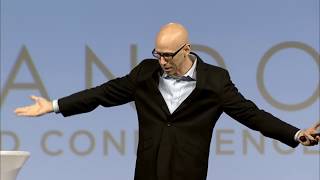
Hal Elrod shares the Miracle Morning routine he built after a 1999 car crash and 2008 financial collapse. The SAVERS practice (Silence, Affirmations, Visualization, Exercise, Reading, Scribing) takes six minutes daily. He challenges listeners to wake 30 minutes earlier for 30 days and join 91,000 members in the online community.
Questions this video answers
July 6, 2017
20 years old
Six minutes
Silence; Affirmations; Visualization; Exercise; Reading; Scribing
The 'five-minute rule' — allow up to five minutes to feel negative emotions, then say 'can't change it' and refocus.
Chapters
Yes, my man card got revoked a long time ago.
Just so you know. So this morning we got a great speaker, we got Hal Elrod that's here and.
You know, this guy is a best selling author. When you are going to listen to him today, you are going to find out some unbelievable things. And one of the things that you have to understand is he's probably wrote one of the most life changing books because at the age of 20, his life changed. You know, see he was hit head on by a drunk driver going 70 miles per hour, died for six minutes.
And what you'll find out about him in the book that he wrote. And the book that he wrote was the Miracle Morning. And this book is a book that's fantastic. I know that some of our staff has read it. I know Cheryl's read it. I know Jana Vuklich, I know some of my other top consultants have read this book and it was kind of funny that they were all reading it at the same time and they were all challenging each other to really start their mornings out and get focused on the good things, get focused on the things that they have to get focus on to make them positive for the day, to make their day go a little bit smoother, better. And it is what you get up and you start to get focused on can lead to better behaviors in business, better lives and giving you that positive outlook that you need. This gentleman that we're going to bring up today is a phenomenal person, a phenomenal businessman. So would you give a pure romance welcome to Mr. Hal Elrod?
Thank you.
Good luck. Have fun. Woo. Good morning.
Good morning. Good morning.
Did I say good morning? I meant miracle morning. My bad. I can't believe I screwed that up. How could I screw that up? Ladies, you ready to have some fun?
Shoot. I don't have anything fun planned for you. All right, well, I'll do my best. I'll do my best. I'm gonna start out with a couple of quotes and a couple of questions. How many quotes? Let's say two. Yeah, that was like a trick question. I messed up. Two quotes, two questions. The first quote is. Oh, there we go. All right. From Robin Sharma. And Robin Sharma said one of the saddest things in life is to wake up one day and realize you could have been done and had so much more. Raise your hand if you resonate with that.
I love that quote. I love Robin Sharma. What I don't fully align with is one day. That's why it's in bold, right? One of the saddest things in life is to wake up one day and realize that you could have been done and had so much more. But when's one day? If I hear that, I'm sitting there going, whew, he's right. Thank goodness today is not one day. Like, I got a lot of time to keep accepting mediocrity for my life and kind of settling for less than I really want. Cause who knows when one day is? So I think that one of the saddest things in life is to wake up every single day of our lives to know that we could have be and do so much more. And to accept less than that. To accept less than our best. Raise your hand if you're guilty of that. Let's all be honest. I'm raising both hands, right? Guilty of that. So the question is, if one of the saddest things in life is to wake up every single day and realize that we can have, be, and do more and not fully live to our full potential, then the question is, why did you wake up this morning? Think about that for a second. Why do you wake up in the morning? So there's one of two camps. Either we wake up because we have to or cause we want to, right? And most of us. And it's not our fault. We're conditioned this way. We wake up because we have to. Think about it. As a kid, when did you get up in the morning? When you had to go to what? School. School. And if there was no school, what did you do? Right? And you didn't get out of bed. And by the way, if it wasn't for your parents coming in and making you wake up, even if there was school, would we be out of bed?
No.
Right? So we're conditioned 18 years of our lives to wake up when we have to wake up. And the challenge is it sticks with us, right? It sticks with us where we live that way as adults. It's like, if I don't have to work today, I'm just gonna keep sleeping, right? Then there's this other camp, if you will, of people that wake up because they want to.
They want to dedicate time in the morning to putting themselves in a peak physical, mental, and emotional state and a spiritual state so that they can win the morning and win the day. Where are my miracle morning people? Anybody read the book and already doing it.
All right. I love it. So next year when I come back, everybody's gonna be woo the whole group, right? So I. My whole life, up until about six, what year is it right now? 2017. Oh, my God. Nine years ago. I literally thought six was the right answer nine years ago. So I went from being the I wake up when I have to to wake up when I want to. And it was essentially 2008. The US economy crashed. I crashed with it. Anybody else around during that time? It wasn't just me. So I lost my house, I stopped exercising, canceled the gym membership, I got depressed, which led to me put my body fat percentage tripled in like six months. I went from being a debt free Dave Ramsey student to having $50,000 on my credit card balance and climbing constantly. Credit went from 700 that I'd worked so hard for for so many years down to like 520. So it's like I just. Everything fell apart and I got deeply depressed and I felt hopeless and afraid and essential.
That's the story I'll share with you today. But the story is a small. My story's a very small part because your story is what matters. And whether you are already a morning person and you know, you wake up because you want to and get up early, or you wake up because you have to, or you're already doing the miracle morning. What I'm gonna share with you is how to elevate all of it. How do you elevate yourself so you can elevate your business, you can elevate your life in every single way. Next quote is from.
Oprah Winfrey. Any Oprah fans?
So Oprah said, the biggest adventure you can take is to live the life of your dreams. Now, everybody in this room, I would imagine, agrees with that. But the average person in America, right, if you go to them and go, hey, the biggest adventure you could take is to live the life of your dreams, they'll probably kind of roll their eyes at you. Life of my dreams, I'm just trying to survive. Like, I'm just trying to pay the bills. I'm trying to make it through the day, right? But I think this is such an important lesson to learn. I think it's one that we all need to really, really live by. And so the question is, how do you define the life of your dreams? And that's really what I want, what I encourage, what I invite all of us to do for the next 55 minutes roughly, and that is remove all limits for what is possible for you in this business as a pure romance consultant in your life, in your relationships.
The old adage, anything is possible. It truly is. And I think I'm living proof of it. And you guys will hear the Whole story. But I think there's so many of us where we've had those times when we thought life's difficult, life's challenging. I'm encountering an adversity I've never experienced before. And then at that time, it might seem like it encompasses all of life, but then you overcome it. So as far as living the life of your dreams, I'll share with you. When it started for me, I was 15 years old, and I had a dream of being a radio dj. Like a world famous nationally syndicated radio disc jockey, right? Like Howard Stern, but not offensive, you know? Or for you, if there's any older folks in the room, Casey Kasem.
I've never gotten a reaction like that for Casey kasem.
So.
At 15, I was DJing school dances, right? Like, I was literally, my dad is here, and I was using his 1979 Sony home speakers and a $35 strobe light from Radio Shack. And I was DJing at my old school and doing the school dances, and I wasn't getting paid. I would put a tip cup out, and junior high school, junior high school students don't make a lot of money. I'd get, like, $3.50 by the end of the night. And I was like, yes, I got paid to play music. That's the dream. But I wanted to be on the radio. Now, keep in mind, at 15, I'm thinking, like, my plan is okay. Like, I'll finish high school, then I'll go to college, and then I'll get, like, an internship and, you know, maybe, you know, I was 15. So I'm thinking, like, four more years, five more years. I could be an intern at a radio station. Well, word traveled around my small town. I lived in a small town, and I got a call one day from Larry Gamble. Larry Gamble is the owner and manager of KTNS FM or AM 1090. AM 1090. And Larry called me. He has one of those DJ voices. You know what I'm talking about? Hey, Hal, it's Larry Gamble down here at AM1090. How are you, my friend? And I'm going through puberty. So I'm like, oh, Mr. Gamble, I'm fine. How are you?
And he says, hey, I heard you're a DJ and you're doing school dances. Well, we want a high school student to host a radio show every week, every Thursday. Play whatever you want as long as there's no curse words in it. I give you concert tickets to give away the whole bit. Would you be up for that?
Oh, my. That's my dream, Mr. Gamble. Of course, right? So I go down, my mom drives me to the radio station the next day. Because I'm 15, I might have had my permit, I might have driven. I don't remember. But I remember I came out of the radio, I got the job. I think I was the only one that interviewed, but I got the job. I was stoked. And my mom's waiting in the car. And right as I'm about to leave the interview, Mr. Gamble says, oh, hell, one more thing. Do you have a nickname?
No, not really, Mr. Gamble. Why? He said, DJs always have what's known as an on air moniker. It's just a fancy way of saying a cool nickname. Can you think of a cool nickname by next Thursday? Your on air moniker? I said, sure, sure, Mr. Gamble, no problem. But I was stressed out. My name's Hal. I don't have any cool nickname. And I'm walking out and I'm nervous and I'm fidgeting and I'm going, oh, what am I gonna DJ named moniker? I have no idea. And I open the car door and I sit down in the passenger seat and my mom's here. And I just didn't say anything. And she, of course, is thinking the worst, right? Oh, my poor baby, he didn't get the job.
And she said, sweetheart, it's okay. There's always another chance. And I said, oh, no, Mom, I got the job. I start next Thursday. She goes, well, that's great. Why do you look this? Why aren't you excited? I thought that's what you wanted. I said, mom, I have to have an on air moniker like a cool nickname. You guys name me Hal. That's like the dorkiest name ever.
What am I supposed to do with Hal? And she goes, oh, sweetheart, first of all, you're named after your grandfather. It's not a dorky name.
She said, second of all, I'll help you think of a cool DJ name.
Okay, mom.
This should be good. What's your idea for a cool DJ name? She said, well, it's easy. Rhyme it with Hal. Be like Hal. Am I pal or your pal Hal or ooh, I know. She said, use slang. Be yo pal Hal.
And she's all proud.
I said, mom, you're such a dork.
I will never be yo pal Hal. Nice try, though. And I think this next slide teaches us two lessons.
Number one, mom is always right. Yes or yes.
And number two.
Always be open minded. Right? You know, I think that we often get Close minded. I think a really important lesson that I learned, not to go too far off on a tangent, but when I was 19, I started selling Cutco direct sales. Maybe you can relate. And at 19, my mentor. So I quickly, within my first 10 days, I sold more Cutco than anyone had sold in the 50 year history of the company. In my region, there was a guy on the east coast that had sold more. But.
I got real cocky real quick. I was like, dude, I sell more than Aldi. So I was at a meeting one time at a sales meeting and I was on my phone messing around and not paying attention to the guy speaking because I had sold more than he did. And in my brain I'm like, well, I can't learn anything from. I sold more. That was my immature, limited thinking at 19. And Jesse, my manager came afterward and he said, what are you doing, man? You're not paying attention at all. I said, well, I sold way more than Robby. Like, what am I going to. I can't learn anything from Robby. And he said, hal, one of the greatest lessons you'll ever learn is that you can learn something from everyone.
I'll pass your applause along to Jesse. Thank you. But right. And he said, hal, I don't care if it's a child, right? If it's a homeless person. He said, everyone in the world, every person, has had different life experiences from you, which means there's something you can learn from them. But he said, it's not their responsibility to tell you that or, or to even tell you what it is. It's your responsibility to always remain open, always remain curious. Don't ever think you have everything or anything figured out. Right. You know, I think we think that the way we look at the world is the way the world is. And when someone looks at it differently, like they have different beliefs or opinions, it's like, oh, they don't get it, right? Like they don't get it. They don't. Like I have it figured out, right? So I try to always just play dumb, be dumb and just learn and absorb as much as I can. If you guys are ready to get started, we haven't even gotten started yet. If you're ready to get started, say we're ready.
I thought I might get one of those. So here we go. Three things the message will do for you, and you might want to jot these down. Number one, help you develop emotional invincibility. Imagine if you were. I won't say 100%, but let's say 95% in control of your emotional state at any given time, no matter what happened, tragedy befalls you, and you say, well, can't change it. Not gonna get upset about it. Gonna focus on what I want to accomplish or overcome. Right. So that's the first thing is help you develop emotional invincibility. Number two is elevate your morning ritual. Like I said, even if you're doing the miracle morning will take you to another level. And number three is create level 10 success in every area of your life. And for the last 17 years, that's been my study. How can I fulfill my potential in every area of life? And it's definitely been a up and down and bumpy journey. Right. In fact, a lot of that desire came from having parts of my life when I looked at it that were down here. Like when I was selling a lot of Cutco, I stopped exercising and my health was. I was eating fast food. I was on the move. I was right. Health was down here. Then I got my health back up, and then I wasn't selling as much. And it's hard. How do you create this on a scale of 1 to 10, level 10 success in every area of your life. And I will tell you that I feel like I've through studying other people, I don't take all the credit. I've kind of cracked the code on how to do that. So I'm excited to share that with you today. Part one of the message is the origin of the miracle morning. And we're gonna start with a quick story. My first. Rock bottom. Let me define a rock bottom, and then I'm gonna ask you if you've ever had one before. The way that I define a rock bottom is any of those moments in our lives when we experience a level of adversity that we've never experienced before. Could be losing a loved one, could be losing a relationship. Could be a friendship or a romantic relationship. It could be a physical ailment. I was diagnosed with cancer four months ago. So that right now is the greatest teaching experience that I've ever had in my life. And I'm very grateful that I have cancer. I'm maybe even a little more grateful that I'm planning on beating the cancer. And. Right. So.
Thank you.
Thank you, thank you, thank you. In fact, I'm going to talk about two rock bottoms today, and I've already been going, okay, so the third one, how long can my presentation be? And I hope that it doesn't ever get any longer than that. Right. There's no fourth One. But anyway, so the way I define a rock bottom, right, is when you experience the level of adversity, that it tests you, challenges you, you look in the mirror and you go, I don't know if I can do this raise. Jen, if you've been there before.
The thing is, more rock bottoms are on the way for all of us, right? Meaning that we'll always experience new challenges or adversities in our business, in our life, et cetera. And it's not what happens to you, but it's how you, what, respond to what happens to you. So when I was 19 years old, sorry, 20 years old, a year and a half after I started selling Cutco, I gave a speech at a conference. And what made that night very special and, well, I will never forget it for two reasons, but the first is I got my first standing ovation ever. And I'd probably given about 20 speeches at that time in the company, in Cutco. And I got a standing ovation from my peers. And I was like, not expecting it. Totally caught off guard. And it was just this huge honor. And I was on cloud nine, right? I was cloud nine. So I leave the meeting, just like float out of the meeting. And at 20 years old, I had just bought my dream car, which. Well, the dream car that was in the budget, like the Ferrari. I didn't buy a Ferrari. I bought a Ford Mustang, right? Which is, you know, right. Steps, steps along the way. So I get into my brand new 1999 Ford Mustang, three weeks off the lot. So you get in and what do you do? You just take in that new car smell, right? I start the car and I want to call my mom and dad to tell them how great the night went. They got a standing ovation. But I look at the dash and the clock, the digital clock. You were at a Ford at that time. It was a teal clock, glowing. Dash said 11:37pm and I thought they might be in bed. I don't want to wake them, right? Hindsight's what, 20 20? And so I get onto the freeway, I turn up the music, and I'm just. Again, I'm still. I'm just reeling off the night's event, right? I'm just feeling so grateful, so excited. And I'm driving down the freeway, cruise control set. And that's the last thing I remember from that night. And everything I share with you now, I only know from hospital reports, eyewitnesses, police reports, that sort of thing. But around 11:39, I think is somewhere in that range just A few minutes later, as I'm doing 70 miles an hour, cruise control, sit down the freeway, a man in a full size Chevy truck leaves the bar after having two beers. How many beers? Two beers. And you call that buzz driving? I guess. Right. He was on the freeway, full size Chevy truck, coming straight at me. He got on the wrong side of the road going the wrong direction. And at around that time, I don't remember this, but our two cars collided head on, around 150 mile an hour impact between the two of us, my car spun off. The drunk driver and the car behind me crashed into my door at 70 miles an hour. And that's why when you look at the picture, it looks like it's half a car. Well, it's not missing half the car. It's that that car was crushed in half with me inside it. And instantaneously I broke 11 bones on this side. My femur broke in half, my arm broke in half, shattered my elbow, severed the nerve. My eye socket was crushed. This is all made of titanium. Got titanium throughout my whole body. My ear was almost completely severed. Sorry to get graphic. I have scars on my head that I haven't seen. I had never seen them before because my hair grew back. So once I was like, oh, wow, cool. I've got all these scars I didn't even know about. So isn't it neat when you discover something new about yourself? Right?
And to keep a very long story short, I was rushed to the hospital. I died on the scene of the accident for six minutes. So my heart stopped beating for six minutes. The paramedics revived me, rushed me to the hospital. And in the hospital I underwent emergency surgery where they repaired my broken bones. I was in a coma for six days. When I came out of the coma, my doctor shared with me that I would probably never walk again. And I had permanent brain damage. And the brain damage was at that time I had no short term memory. You could literally come visit me for three hours in the hospital, go grab lunch and come back and what's your name? What is it? Nicole. And so Nicole would say, we grew up together, we're best friends, right? We just hung out for three hours in the hospital and you go get lunch, come back, and I'd be like, nicole, did you hear I was in a car accident. Like I had no short term memory, right. And which some would say it's a good thing because I, you know, I don't think the emotional pain maybe could seep as deep as it would have otherwise. But no short term Memory. And then they said I would never walk again. Now, that's hard to hear, right? I don't care what age you are. Doesn't matter what age you are. That's very hard to hear. And at 20, it was very hard to hear. I'm thinking I got a lot of goals. I was working towards that need walking. That's part of achieving those goals. And.
Essentially, I was faced with the choice that we're all faced with. When we experience any adversity, right? Doesn't matter if it's a customer that doesn't buy from us, a canceled order, Those are all tough to take. But anytime we experience adversity again, it's not how what happens, but how you what. How you respond. So in that moment in the hospital bed, being told I may never walk again, I had the responsibility and the opportunity to choose my response. And I thought about it for a couple of days, and my brain was just. My mind was racing, and I'm thinking, what's life gonna be like if I'm in a wheelchair the rest of my life? That just is so far out of my paradigm. And I processed it, and I finally decided I can't change it. And I learned something in my Cutco training called the five minute rule. How many minutes? Five. Five minute rule. And it said, it's okay to be my manager, my mentor, Jesse, he said, hal, it's okay to be negative when things go wrong, but not for more than five minutes. And he would teach us to literally set our timer on our phone for five minutes when something happened that caused us emotional pain. In that time, the context was Cutco, right? It was selling, so it was the canceled orders. It was setting a big goal for the week or the month or the year and not hitting it. And how that can be so emotionally devastating. And of course, when we're in a negative emotional state, we're not at peak physical, mental, or emotional or spiritual place. So therefore, we don't make the best decisions. We. We don't take the best actions. But when you can learn to manage your emotional state, you now have control over how you think, how you feel and what you do. And so Jesse taught us this five minute rule. So literally, I'd have a canceled order, and I'd go, oh. And I'd set the timer for five minutes, and I'd have five minutes. And I would bitch, moan, complain, cry, punch things, right? And that gives you the space to feel it, experience the emotions, but not dwell on it. I mean, think about it. There are people that are suffering to this day. They're creating self suffering, right? Many of us are doing it in different ways, but over things that happened last year or a decade ago or in our childhood. And the thought of it causes us pain because we haven't accepted it.
And so that five minute rule is five minutes to be able to accept it. And here's what would happen, by the way, for some of you that are thinking five minutes isn't very long. Like, could I get like a five day rule? Like, set a timer for five days on my phone, and you give me five days to be upset. So here's what would happen. I'd set the timer for five minutes and we would. I'd be upset for five minutes and the timer would go off. And I would go, I'm still pissed off, I'm still upset. But here's what would happen. Our manager taught us to say three powerful words. Can't change it. He said, when the five minute timer goes off, you say, can't change it. You take a deep breath and you acknowledge, if I can't change it, then putting negative emotional energy toward it, wishing it were different when it can't be. He said, there's no point. So you gotta condition yourself to go, okay, I can't change it. Why? What do I want to focus on that moves me forward? Can't go back in time. Unless you're Marty McFly with the DeLorean, you can't go backwards, so you can only go forwards. So he taught us that, and I decided to apply it in a different setting, which was this car accident. I thought, well, wait a minute, I can't change that I was in a car accident. But what if I just choose to accept it and be at peace with it? What if I choose to not think about how life could have been different or should have been different, or how this drunk driver is, what, a jerk for drinking and driving, doing and ruining my life, right? That was my choice. I thought, I'm at peace. Well, here's what happened. The doctors called my parents in about a week later, this is about two weeks after the car accident. And they said, they sat my parents down and they said, Mr. And Mrs. Elrod, we are a little concerned with Hal. I want to give you an update. Physically, he's doing great. Physically he is. You know, he's progressing.
You know, we're through the worst, essentially, because at that point it was like, just keep me alive, right? That was all I was really. I flatlined twice when I was in that coma. So they were trying to keep me alive. And he said, physically he's doing great. But we're concerned mentally and with his mental and emotional state, we believe that he is in denial.
We think that he's in a state of delusion. Every time we. The reason that we think that that's our prognosis is every time we spend time with Hal, we being the doctors, the nurses, the therapists, he's always smiling and laughing and joking and making us laugh. And they said, frankly, that's not normal.
They said, that's not normal for a 20 year old who's being told he's never going to walk again. He's got all these broken bones, he's going to be scarred for life. I mean, that's not normal. And they said, so we'd like you to talk to him and find out how he is really feeling, get to the bottom of it. Because the emotional healing can't begin until he accepts what happened to him or until he faces the pain, right? Goes through it. So my dad comes in and I'm laying in my hospital bed. I think I was watching Oprah, like I was big into Oprah. She was my inspiration in the hospital, you know. And so he comes in and keep in mind, it was just two weeks after that picture you saw on the screen of me hooked up to tubes, right? So like my head is shaved, my ears bandaged, my eyes bandaged, my left arm, by the way, I'd severed a nerve to where I didn't have any use of my hand for like six months. So I was just, I could only use one hand. This one just would lay here limp. So I wasn't in great condition, you know, I'm laying in the hospital bed and he comes in and he sits down next to the hospital bed and he says, hal, do you mind if I talk to you from, for a second? And I look over and he looks, you know, real serious. His eyes are watering and his face is red. It looks like he's been crying. And I'm thinking he's got some really bad news. And I go, yeah, dad, what's going on? And he said, hey, the doctor's a little concerned. He explained the whole thing to me and he said, how are you really feeling, Hal? It's okay to be sad, scared, depressed, angry, like those are normal emotions. I. I'm feeling that for you. How are you feeling? It's okay to admit that. Let's talk about it. Let's work through it and move on.
I looked at my dad and I said, Dad, I thought you knew me better than that. I said, I live by the five minute rule, and it's been almost two weeks.
I said, my five minutes are up. And I said, honestly, dad, I've been processing this a lot. And I said, I've decided that there's two options. There's two possibilities, and this is true for all of us. There's what we want, the ideal result, and then there's anything other than that, right? Which could be the worst case scenario or somewhere in between. I said, dad, if the doctors are right, the doctors might be right that I will never walk again. That's possibility number one. I said, I've already accepted that with the five minute rule and the can't change it, those three words. I said, and I've decided that if I'm in a wheelchair the rest of my life, I've already seen it. I'll be the happiest person you've ever seen in a wheelchair. I'll be the most grateful person you've ever seen in a wheelchair. Because I'm in a wheelchair. Either way.
It seems like being miserable in a wheelchair isn't as good of a life as being grateful in a wheelchair, right?
Either way, I'm in a wheelchair. And so what's your wheelchair, by the way? What's your wheelchair? What's the adversity in your life? And maybe it's not happening now. Maybe it happened in the past, right? But that you're still. It causes you pain. Causes you pain, right? Maybe it's happening right now. Maybe you're facing one of your rock bottoms right now, right? Maybe you're facing it now. But what's the wheelchair where you can choose to be the most grateful you've ever been, going through the most difficult circumstance in your life, and talk about deja vu 17 years later. This is every day for me now, right? So I said, dad, the second possibility is I will walk again. I don't know if it's Will. I don't know if I will. I don't know if that's really even possible. All I know is it is a possibility. And I said, and here's the thing, dad, that's the one I want. So I've accepted what I don't want, accepted the worst case scenario. I've not only accepted what already happened to me, I've accepted life before it happens. You follow that, right? So, like, I've accepted that adversity I faced, but then I've accepted my worst case scenario for the rest of my life. I've already accepted it, so there's no pain. It can't cause me pain because pain is caused by resistance. It's our wishing and wanting that something were different. It's our wishing and wanting that person didn't drop out of our organization or cancel their order, right? It's that that causes the pain. Once we accept it, we find peace. So I said, dad, I'm at peace with what happened. I'm at peace with what might happen. I said, but I don't focus my energy on that. I put enough energy to accept it and think through it and be at peace with it. Five minute rule, yada, yada, yada. I said, all my energy goes into walking again. I visualize it every day. I think about it, I pray about it, I talk about it, right? That's my focus, is my vision for what I want while I accept what I don't want. And I don't have a graph to show you how my bones healed in coordination with my positive thinking. Right. I just have this picture to show you. And that was three weeks after the crash. The doctors came in and they said, hal, we have your routine X rays from yesterday, and we don't know how to explain this, but your body is healing so fast that we're gonna let you take your first step today in therapy.
Thank you.
I think that was my reaction. Yeah. Thank you, doctor. That's awesome. Right? But they couldn't explain it. And it shows the power of the mind. You know, I heard. I was with a friend the other day, and we were talking about my situation and when I should step away from chemo or if I should step away from chemo. It was yesterday and kind of like, what's the. It's just hard to know, right? It's such a. I don't know. It's like, I don't know what the best decision isn't clear. And so she told me a story about how Tony Robbins and his son Jerick. Jerick went on a trip to. I can't think of what country it was, but he got very sick overseas and obviously, you know, sick where he had to go to the hospital. And he said, dad, they wanted to give me one of two options. They're trying to give me this drug or this drug. Which one should I choose? And Tony said, jarek, I'm not sure. That's not my expertise. He said, but I'll tell you what, is whichever one you choose have 100% certainty, 100% certainty that it will work, and it will.
And Jarek said, okay. And he chose one. He maintained 100% certainty in every fiber of his being that it would work. And of course it worked. And so for me, I think that was it. I call that unwavering faith. Right? So whatever resonates with you. If you're left, brain, 100% certainty. If you're right, brain, unwavering faith, law of attraction, vision boards, all of it, right?
You know, but so that was it. And you see that quote or up on the screen, those words, that is a foundation of emotional invincibility is acceptance. And the way that I access acceptance, the way that I access it is through the five minute rule. So I can feel it, followed by three very powerful words which are can't change it. In fact, I used to have a wristband that I used to wear when I would speak. I wore it years before I spoke as my own personal thing because I would forget the can't change it philosophy. I needed a reminder. Anybody need a reminder? Like, you learn something and then you forget it, and then you don't live it, and then you hear it like 10 years later and you're like, ah, my life has been not as great as it could have been the last 10 years. Because I totally forgot that. And if I would have remembered it, I wouldn't have. Everything would have been different. So I made a wristband that said can't change it. Because here's the deal, it doesn't just apply to these horrific adversities. In fact, here's a game changer. Raise your hand if you ever drive in traffic.
Okay, so most of us don't like traffic. I used to not like traffic, right. Growing up, my dad was, he was a real, you know, got real intense in traffic and kind of upset, right? And so I was kind of the same way. And I would, you know, oh, why are you cutting me off? And the worst is, right, you know, you wake up a little late or you're getting ready and you leave the house late, you lose track of time, and then you go out and then you hit bumper to bumper traffic. Anybody ever done that before? Right? And what's the emotion? You're like, oh, no. You know, the funny part is we always, like, blame the traffic. No, not today.
Like, if it's the traffic's fault that you didn't leave on time to be at your not today of all days. These cars assembled in front of me to ruin my morning.
So I used to not like traffic. And then I started applying the can't. Not even the Five minute rule. You don't need five minutes. It's instant. Can't change it, right? So I'd be like, oh, son of a. No. And then I'd see my wristband, I'd go, oh, yeah, I can't change it. And then I'd go, huh. I'm gonna accept that there's traffic because there's no point. Kinda like the wheelchair. Like I'm in traffic for 30 minutes. Either way, I can either be frustrated or I can be blissed out, right? Stressed out or blissed out. That's your choice. Write that down. Every day in life, you can be stressed out or you can be blissed out. Somebody sent that on Facebook. That's a good quote. I'm gonna put that on Twitter or something. So. Stressed out or blissed out? So here's what happened. I used to speak to college students. So 10 years ago, I was young, I had spiky hair. I swear there's pictures, you can google it.
And I asked my wife yesterday, I'm like, sweetie, I'm kind of liking the bald head. Are you okay if after this I just keep it? She's like, no.
She said, I support you in whatever you want to do, but I really like you with hair. I think you look great now, but I really like you there.
So I used to speak at colleges and I was speaking at a college in Canada and a few days later I get an email from this girl with an attachment with. With the picture that I'm about to show you. And this picture kind of caught me off guard. I wasn't expecting it. She said, hal, I learned the can't change it philosophy. I've applied it the last few days and I've lived every day stress free. Whenever I get upset, I go, wait a minute, can't change it. Or I do the five minute rule if it's really hard to accept. And she goes. And I'm like free from. She goes, you're right. Emotional invincibility. I'm in control of my emotions now. And she said, I wanted a permanent reminder. So I got it permanently tattooed into my wrist.
Now I had two thoughts. Number one, wow, I am so inspired that something I said impacted someone so much they would get it permanently tattooed. And the second thing I thought is, she's 19. Her parents must be so angry with me. Like, can you imagine? Your 19 year old daughter goes to an event and comes back, hey, the speaker said these three words and I thought it would be cool to have them permanently etched into my wrist. And for the rest of my life, right? I got, what if I come back next year? And I said, guys, I got a new message, you can change it.
So I thought this was like a one time deal, right? Like, okay, can't change it, one time deal. And then a few months later, sorry, probably a couple weeks later, I got another picture, similar situation. This one put me in tears. The email kind of to summarize it, she said, hal, I saw you speak last week. Yesterday was the 10 year anniversary of my dad's death. He died when I was 9 years old. She was 19, also 9 years old. She said, I've spent the last 10 years on depression medication, in and out of therapy. I've tried to commit suicide twice. In fact, you can see the scar on her wrist if you look.
She said, and I thought it was because my dad had died when I was 9 years old and that wasn't fair and I didn't deserve that. And I lost one of, if not the most important person in my life at 9 years old. And she said, when I heard you talk and you shared your message about acceptance and the five minute rule and can't change it, she said, it shifted my paradigm. And I realized, wait a minute. I haven't spent the last 10 years deeply depressed because my dad died. I've spent the last 10 years deeply depressed because I wasn't aware that I could accept it and then be at peace with it. She said, you said emotional pain comes from wishing and wanting things to be different. And that's what I've done for 10 years, is wished and wanted that he were here and cursed God and life for taking him from me. She said, for the last week and a half since I saw this, I got your little can't change it wristband. It's the first time in 10 years that I have been at peace and I haven't, you know, cried and been depressed. I've been at peace. I'm not taking my depression medication anymore. I just have three words that for the rest of my life. I decided when I look at that, it will remind me that I can't change that my dad's gone. And I'm okay with that because the impact that he had on me will never, ever, ever be gone. And I was so moved. And I realized that whether it's traffic or losing arguably the most important person in your life, that emotional invincibility is a very real thing. And if she could, in a matter of days flip a switch and go from 10 years of depression to a Whole new life, essentially. That's why these three words I still share with every audience that I speak with. So we're going to move on, and now we're going to dive into elevating your morning ritual. And the second rock bottom, by the way, this story's not nearly as long. You're like, he's only on the second rock bottom. Now you will see that it says, surprisingly worse than the first. And I often get funny looks when I share that because people go, wait, didn't you die?
It wasn't the first one. You died. And then they perk up, like, what is this? What is worse than dying? Wow, this is good. So, no, it happened in 2008. In fact, I already kind of told you the story. So there's the bullet point synopsis, right? And what happened was this is in 2008, I had built. I think so I had left Cutco. I hit hall of fame with Cutco, which was like, okay. I felt it was time to move on to. I wanted to be an entrepreneur and do something new. And so I started a coaching business. I was doing sales coaching, life coaching, success coaching, et cetera. I bought my first home. You know, I bought a new home, met the woman, my dreams, all this great. Everything was great. I was in the best shape of my life. And.
The economy crashed. And it felt like it was overnight. I mean, it felt like it happened really fast. And I'm such an optimist. Everyone's going like, well, you know, you concerned with the economy? I'm like, I don't buy into that. I create my own economy.
And then I got my first client to cancel, and then my second client to cancel, then my third client to cancel. And then I lost over half of my coaching clients, therefore over half my income. And the economy crashing became very real. And nothing that I tried worked. Nothing worked. It was a six month downward spiral. My house was in foreclosure, you name it. And my best friend and now my business partner, John Berghoff, I called him and I confessed how bad everything had gotten because I hadn't told anybody, because think about that. When you're a success coach, you don't go tell the world I'm failing miserably.
Do you want to hire me?
Right. It is funny, I had one thought. I was like, the only angle I thought is I was like, what if I. Is there any way I could, like, people reaching out that are struggling, if I could position it to. To. To like, I get what you're going through, I'm going Through it too, but I can help you. But no, that pitch didn't work. They're like, yeah, I'm gonna call someone that figured it out already. All right, all right. So John, I called John and I confess and I'm like in tears. And I've never cried in front of my friend before like this. And I'm, you know, this really intense moment. And I said, I told him everything. I laid it on the table. I said, john. And by the way, I called him because my wife told me to, because my wife suggested John's the smartest business person, you know, Right? Yeah. So call him for advice. Yes. Good. Why didn't I do that six months ago? Right? And so I called John and I said, john, tell me what to do and I'll do it. I've got my laptop open before I sell it for food, please tell me what I can do to keep my laptop and then get my house back and all that. And he said, wow, buddy, I'm sorry to hear that. I really am. Are you exercising every day?
I go, what the hell does that have to do with anything? I just told you.
My problem isn't exercise, buddy. I really need to make some money. He said, I'm serious. He goes, if you're not exercising every day, if you're just getting out of bed, going into your office, sitting there in front of your computer all day, he said, you're in a very low mental, emotional, spiritual, physical state of mind. He said, your energy is going to be very low. He said, one of the best things you could do to kickstart everything is every morning go for a run. Every morning go for a little jog. And I hate running. So no applause.
And that was my response.
I said, john, I hate running. What else could I do? He said, what do you hate worse, running or your life right now? In the circumstances that you just described to me? That's a good friend, right? Call your friends out on their bullshit. Call them out.
I was like, okay, touche, I'll go for a run. What else? He said, while you're on a run, listen to a self help audio, a podcast, an audio book, so that he goes, while you're running, Hal, here's the thing. You'll put yourself in a peak physical, mental, emotional and spiritual state. And he said, your energy will be up. You'll think clear. Learn something that you need to apply to your business that will increase your income. That's how you're gonna increase your income. It's not about me telling you to build A website or do this or that. He goes, it's a daily conditioning of your mind, body and spirit and educating yourself on things that will improve your business or whatever area of life you wanna improve right now. He said, it's your business. You need new clients. He recommended a book, I think it was Book Yourself Solid by Michael Port, which, if you're a coach, that was like, it's how to get a bunch of clients. So I don't know that it applies to your industry necessarily. But the next morning, I reluctantly laced up my basketball shoes, my Air Jordans, had the big baggy basketball shorts, right? Like I wasn't a runner. I didn't have my cute little running shoes and New Balance, you know? And so I go out the front door and I'm just thinking, this is so stupid. I should be at home calling prospects. I don't need to run. And I had my ipod with a Jim Rohn audio that John told me to listen to. Jim Rohn fans give it up to Jim Rohn. Very grateful for that man and the inspiration he's had in my life. But I heard the following quote, and it changed my life. He said, your levels of success will seldom exceed your level of personal development, because success is something you attract by the person you become.
And I stopped running and I rewound it and I played it again because it hit me. I'm not dedicating time every day to become the person that I need to be to create the success that I want in my life. I dabble in personal development. I start books and don't finish them. Raise your hand if you're guilty. Come on, we're all friends.
And at that moment, I realized, I've got to go home and I'm going to go online. I'm going to Google. What do the world's most successful people do every day for their personal development? I'm going to try to create the most extraordinary morning or not it wasn't morning at that time. The most extraordinary personal development ritual known to woman. And I said, I am going to do this every day. And theoretically, and this is actually where I got the level 10 success thing. I don't know why, but my brain turned it into a kind of a metric that I could measure. I thought, on a scale of 1 to 10, we all want level 10 success. But my level of personal development, as Jim would say, is that like a two, like maybe a three or a four on a good day, right? And do you guys see the disconnect? If this is what we want in our lives. But if this is who we are at this time in our lives and we're not working every day on getting better, right, that will always be a disconnect. And that's why I think most people in the world out there are. They want level 10 success, and they every day are banging their head against the wall going, I don't know, why, why, why? Why does she have it? And he has it? And I don't know. And I realized that it was for me, I wasn't becoming a level 10 person. And that was my commitment. I'm gonna dedicate time every day to become a level 10 person. I ran home, I was googling personal development. I was writing things down, like meditation, affirmations, visualization, exercise, reading, journaling. You know, I'm just coming across all these different modalities for personal development. But the one thing that kept coming up is morning rituals. And I would delete, I'd be like, nope, not a morning person. What else?
Not a morning person. Nope, that's not for me. And I don't remember which article it was. But finally, after, I'm like, I keep seeing this everywhere. And so I finally start reading and studying and I heard my mentor, Kevin Bracey, one of my mentors, he always said, if you want your life to be different, you have to be willing to do something different first. And he said, it's normally outside of your comfort zone. And I heard that in my head and I went, damn it.
He'S right. I gotta do something different. I'm waking up an hour early tomorrow, and I pulled out my schedule and I wrote down my Franklin Covey planner. I wrote down at 5am Personal, my hands, like, shaking development. And then I did it. And it's amazing how once you commit to something, like the energy, what you need, the motivation, it, all the mind, it just kind of comes together. And I was like, I'm gonna do this. And I felt excited. And that night, falling asleep with a kid on Christmas morning, I woke up the next morning and what I decided to do, by the way, during that time, because that was the question, like, okay, I'm gonna wake up an hour early. What am I gonna do for that hour? And I had a list of six of the most powerful personal development practices known to man or woman. And I thought, which of these is the best? So I kept looking. And then I decided, what if I did all of these? None of the research I was doing or the G search, which is Google searching, right? Research is a little, you know, embellishing what I was doing, the G search, the Google searches, none of them showed. I never saw anyone that did more than one or two of the six practices altogether. They'd meditate and then go for a run, or they would read a book, then they'd journal about it. You know what I'm talking about. But none of them were doing all six. I thought, what if I woke up tomorrow and I did the six most powerful, proven personal development practices? 10 minutes each. Give it a shot. So that morning, I woke up, literally like a kid on Christmas. The alarm went off. Normally the old me would hit the snooze button. Nope. Out of bed, went in the living room, sat down. I had prepped everything the night before. I had my journal out, my book out, my. And then my computer, which I just Googled, how to visualize, how to do affirmations. I didn't know how to do any of that stuff. And if you look at part number two on the screen, the Lifesavers, these are the six practices that I did. And they were not this cute acronym that is very memorable and actually makes it very easy in your mind. I hear a lot of people tell me that they just check it off. They do the S and they do the A, and they go through it. Makes it really easy to remember and kind of go through. And in the beginning, there was no acronym. That was. By the way, I'll just give credit where it's due. My wife, when I was writing the Miracle Morning book.
She. One day, I was frustrated. I said, she goes, what's wrong? I said, sweetheart.
Stephen Covey has the seven habits of Highly Successful people. And Robert Kiyosaki's got the cash flow quadrant. Those are memorable devices. I said, these are just six random things. I don't know how to make them, how to organize them. And some people going to remember or make it cohesive. And, you know, she goes, why don't you get out the thesaurus and see if you could make an acronym by changing some of the words. I was like, God, you're so brilliant. Right? Anyone's spouse more brilliant than them? Yeah, yeah. Like, like, they're like.
Yeah, yeah. And. And if you're here with your spouse, you better be raising your hand. God, yeah. All right. There. Yeah, yeah. Oh, you have two spouses. Okay. He pointed at both sides.
I said, pure passion. All right. So I said, brilliant idea, sweetheart. And meditation became silence and journaling became scribing. And you get the S's that tail in each side of this. So the first S is for silence. And what I love about silence versus meditation, not only that it fits in the acronym, but is that prayer is now kind of an option, right? So for some people, they don't meditate in the morning. Their miracle morning is they do prayer for me. I do both, right? I start with prayer and go right into my meditation. So that's the silence. And by the way, if you Google benefits of meditation, by the way, scientifically proven benefits of meditation, you'll find, I think it's over 14 scientifically proven studies. You want to be happier. There's an entire book called 10% happier. That's all about how this CEO discovered meditation and how it changed his world, right? You want to lower your stress, meditate every day. So silence, the A is for affirmations and not the way that Stuart Smalley did them. Remember snl? So if you don't, if you didn't watch Saturday Night Live back in the night, there was this character, Stuart Small. He looked in the mirror and he said, I'm good enough, I'm smart enough, and doggone it, people like me, right? And it made a joke of affirmations. But the way that I like to teach affirmations is not affirming some fantasy like I'm this, I'm that. It's affirm what you want, why you want it. And that's what I teach in the book in the miracle Morning is like, how do you make affirmations result oriented, not just feel good? Because that's the problem. Most people affirm things that make them feel good in the moment. They're like, yeah, I tell myself, I am a millionaire, right? It's the I am, I am a millionaire. I am a millionaire. I am a millionaire, right? And then you meet that person three years later and you're like, how's it going? And they're like, oh, it's still going to happen, or I still believe it or whatever, but they're just affirming something makes them feel good. But they're not getting clarity on, well, what do they have to do to become that millionaire, right? Or I weigh blank pounds. And, you know, they look in the mirror and they don't weigh that, but they affirm it. So what happens is you trick your subconscious into thinking it's a reality. But if you don't affirm what you want, followed by what you're committed to doing to achieve it, affirmations are next to. Not that, you know, they only make you feel good in the moment, but they actually. Here's What's. Actually, I've read a lot of studies on this. So science has shown that if you affirm an end result over and over again, you will trick your subconscious into thinking that it's as good as done, and you'll actually remove that drive you need to make it happen. Follow. If you say, I have already reached my goal, I am going to reach my goal. It's as good as done. Your brain thinks you've already reached it. You're going like it. Tricks it. So the way that I really encourage you to affirmations is, yes, affirm what you want, but more importantly, affirm why you want it. And most importantly, affirm what you're committed to doing today and every single day. When I first played affirmations, it was a year that I wanted to double my sales and double my income. I hit hall of Fame with Cutco, and I thought, I'm done. I'm moving on. And I went to the last sales conference just to say goodbye to all my colleagues, accept a couple awards from the year before. And I saw a couple of people that had sold double what I had sold before. They were the top of the top of the top. So it's amazing how number six in the company, number one. I was number six. They sold double what I sold. I mean. And so I saw them go on stage and get their awards, and I was getting ready to check out, and I went, I never did that. And I had this in the pit of my stomach, this feeling of unfulfilled potential. I never did that. And I could. We all can. We all have unlimited what? Potential. And so I opened up my computer and I thought, I can't leave until I do it. And I wrote down, I'm committed to selling $200,000 this year. Why? I'm committed to it. And specifically, I will double my calls from last year so that I can double my sales this year. Right. And that year ended exactly as I affirmed that it would that moment and every day afterwards. So what happens is you're programming your subconscious to do the thing. Not just see what's possible, but to do the thing that will get you there. The V is for visualization, and I encourage the same thing. Don't just visualize the end result. Don't just make a vision board and stare at it when you walk by. You don't even stare at it. How many of you made a vision board just like I have, and it becomes background noise and you don't even see it anymore. Right? So visualize the end Result. But visualize the action. So I would see myself going out the door every day to train for a marathon. When I did that, I would see not just the crossing of the finish line, which is all feels good, makes me feel good. I would see myself lacing up my running shoes and heading out the front door. The E is for exercise.
And even if you go to the gym in the afternoon, do like a 7 minute workout in the morning or a little 5 minute yoga video on YouTube or something to get your heart rate up right. That run I went for gave me more clarity than six months of feeling depressed, six months of sitting around. So a little bit of exercise can change your world. And the final S is for scribing. Oh, we're not. I'm back. Eye on one, huh? Or no, sorry.
The R is for reading and not like 50 shades of gray.
Or Harry Potter books. Those are okay, right? But choose a book or an audiobook that will get you where you want to go. Maybe Miracle morning. I don't have those with me, but they are available on Amazon, right? Audiobook, Kindle, paperback, whatever you want. Hardcover or. I just found out they're now in the Amazon stores. That's pretty exciting. They only carry a very small number of books in Amazon stores. There's one in Seattle, San Diego and somewhere else. Yeah, Seattle. My mom lives in Tacoma.
And the final S is for scribing. And scribing is a fancy word thanks to my brilliant wife. And the thesaurus for writing or journaling. And the power of when you put pen to paper, the level of clarity that you have to gain is elevated because you have. Thoughts bounce around really quickly. We think one thought, then we think another thought and we think our focus can go all over. When you put it in writing, you cement a thought and you focus yourself to clarify it enough so that it's worth writing down. That's the power of scribing. My favorite journal is the five Minute Journal. Highly recommend it. If you like to write by hand, you can buy it online or whatever. Five Minute Journal. But I like the app cause I can put a picture. Every day I capture one picture of a magic moment, what I call a front row moment. And I put it in the app. So my whole phone for this entire all of last year and this year, there's almost probably 90% of the day there's a picture of me, what the highlight of that day was with my family, my kids, my wife, an audience, something that's meaningful to remember. So those are the savers. And here's the thing is that actually, I'll share. Robert Kiyosaki is a big fan of the Miracle Morning. He does it every day. He wrote the book Rich Dad, Poor dad, and he said it changed his life and it changed his wife's life. And what he told me, he interviewed me on Rich Dad Radio. And he said, hal, he said, here's the thing about the saviors. He goes, this is what I tell everybody. He said, before you created the miracle Morning, he. He said almost every successful person on the planet was doing at least one of the savers. And they swear by it. People swear by their meditation. They swear by their morning, you know, whatever he said. But I had never met or heard of anyone that was doing all six of these ancient best practices. And he said, that's what's so powerful, is now I do them every single day, and they've transformed my life. And so that's what I encourage you to do, is the six miracles or the six Savers every single day. And part three, and we're going to wrap up with this. This is the Miracle Morning 30 Day Challenge. Never leave the scene of inspiration without clarifying and committing to action.
So very quickly, this is for all of you that have a challenge getting up.
This is a hack, and it's very real. It's designed to be simple. So don't go. Well, like it says, brush your teeth. Probably you already do that, but let me explain what I'm talking about. So here's the point. Here's how you do it. Very quickly, move your alarm clock across the room. That's the night before. That's for the rest of your life. You don't have the alarm clock in arm's reach because what do you do when it is. It's too easy. Because when it goes off, you're still half unconscious and you reach over and you turn it off before you even realize it. So when you have to get out of bed and walk across the room, that's a whole different level of I'm awake versus.
Right.
That is a first. That is a first. Got it. Thank you. All right, number two, set your intentions before bed. Remember, anybody celebrate Christmas growing up? And if you didn't think of, like, first day of school or vacation or whatever, was it hard to wake up Christmas morning? It didn't matter how many hours of sleep you got. You didn't go to bed going, oh, my God, I got to wake up in four hours. No, you went, oh, my God, it's Christmas in four hours. And here's what I realized. You can recreate that experience every single day of your life.
Before you go to bed, decide what time you're going to wake up and decide how you're going to feel. Don't wait to see how you're going to feel. Decide how you're going to feel. Number three, brush your teeth. What does that mean?
It means that when you wake up and you turn the alarm off and you're still half asleep, don't start with thinking about what you got to do today. Walk over to the counter with your eyes halfway and just start brushing your teeth. And here's what I found. Every minute that you're awake, your ability to stay awake goes up. The ease of staying awake goes up. So start your day with some mindless activities. The fourth one might be one of the most important, which is drink water. What's the first beverage for most people of the day? Yeah. Does that hydrate you? Does it dehydrate you? Yes. And then you crash. So I love coffee, by the way, but here's what I encourage you to do. I keep a full glass of water by my night or by my alarm clock. I brush my teeth. And then I literally, like a college kid at a keg party, I just go like, right. And I drink the whole thing. And then I'm hydrated. You've got to rehydrate. And immediately now your brain starts to go, oh, great, I'm awake and I've got hydration. Then go make your cup of coffee. And number five is dress for exercise. My philosophy is you better earn your shower. Earn your shower.
Right? Put on your exercise gear and go down to your miracle morning. And then, by the way, here's a little bonus tip. If you're groggy and you're like, oh, my God, I'm going to fall asleep on the couch. Do 30, 50, 100 jumping jacks. It's amazing how your energy level goes from 2 to like 7. From as many jumping jacks as you can do. Get the heart rate up right. First thing that you do.
And here's the Miracle Morning 30 day challenge. Very simple. Wake up 30 minutes earlier. You can do 60 if you want, but I believe in starting things easy. Ease into things. Don't just go from. Don't try to make a quantum leap overnight and jump into it. Wake up 30 minutes earlier. Do one of the savers. Don't wait till you read the book. I hate that when they go, somebody will tell me, yeah, I'm halfway through your book. Like, awesome. If you're doing your miracle morning. No, no, no, no, no. I want to finish the whole book. It's one of our BS excuses that we make for ourselves, right? No, I want to wait till I finish. I want to know all of it. Like, why aren't you waking up a little bit early? Here's the deal. At the very least, wake up 30 minutes earlier and do the R. If you're reading the book.
Do the R. Do the R. Okay? And then you can add in the A, V, E S whenever you want. And then last but not least, and this is optional, but highly encouraged, join the Miracle Morning Community. It is a Facebook group. We have 91,000 members from over 70 countries that support each other at a level I've never seen before. Imagine the culture of your company and how much you guys love each other and support each other. How the leadership supports you and all of that, right? That's the Miracle Morning Community. And it's this place where every day when you're up at 5am and nobody else is up, well, actually, you'll all be up. You can text each other, right? But I'll give you an example. We had somebody that said, hey, my husband's going in for surgery. I'm actually new to the community. I've only been here for a week, but I see how supportive you guys are of each other. If anybody would pray for my husband, I'd really appreciate it. They had 987 comments in 24 hours.
Amazing. The power of right of community. So that's it. I think. Let me double check my slides. I think that's the last one.
All right. There we go. So the last thing that I want to say is this. There's actually two things that I want to. Two closing thoughts that I'd like you to take with you. Number one is that I believe the number one cause of unfulfilled potential is never deciding that now matters more than any other time in our lives. Now, today, it's that mindset of, oh, there's always tomorrow. I could always start tomorrow. I could always start tomorrow. And then I could always start tomorrow. I could always start one day. When's one day? I don't know, but I'll start then. No, we've got to decide. We have to create urgency. Most of us wait for life to give us urgency. Oh, shit. I gotta do like, I'm screwed if I don't do blank now. Don't wait for that. Create urgency every day. Be at peace, meditate, relax, and then get your butt to work. And just create urgency that today is the most important day in my life. Because here's the deal. If you don't decide that today is the most important day in your life, what makes you think that tomorrow you'll decide that? Follow that, right? If we don't decide today, what makes tomorrow different? And the last thing that I want to leave you with. And again, these are my opinions. So you can adopt them, or you could leave them, but I believe that one of the greatest responsibilities we have in our lives is. Is to live to our full potential. Not even for ourselves, but for the people that we love. Because how we live our lives gives others permission to do the same. If we eat crap, the people we love go. Eh, I'll have some of that. If we settle for mediocrity, people we love go. Oh, I guess that's okay. I'll hang out with you and watch TV instead of working on my goals too. So I believe I'll say it again. One of the greatest responsibilities, responsibilities that we have is to live to our full potential. Because that gives permission to the people that we love to do the same. And that is a responsibility and a power that we can never take lightly. I love you guys. Wake up tomorrow to your full potential. Thank you for having me.
Thank you so much.
Thank you so much.
Ah, did you love hal?
I love hal.
More from Hal


Hal Elrod shares the most effective tool he’s learned to quickly handle anything life throws at you.







Jim Kwik: How 5 Minutes Each Morning Can Rewire Your Brain and Change Your Life
