Hal Elrod's "Miracle Equation" Keynote Speech
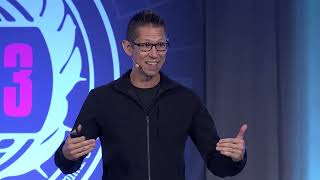
Hal Elrod shares how he survived a catastrophic car accident and cancer through faith and relentless effort. He walks through his recovery journey and introduces the Miracle Morning routine he developed to transform his life.
Chapters
All right, now the part that we've all been waiting for, the part that I have been dreaming about for and gearing up for this event today, we have an amazing, amazing keynote speaker that's going to light up the room and get you all inspired. Now, the person that we're Speaking of is Mr. Hal Elrod. Now for the.
I say that very gently to get you guys geared up. For those of you who have not heard Mr. Elrod's amazing story, let me give you a little bit of background as to why this man has inspired millions of people around the world. This was an individual who encountered a very catastrophic accident at the age of 20. He was hit in a car accident and he actually died on the scene for about six minutes. When they got him to the hospital, doctors said that he may never walk again. Imagine getting that news at the young age of 20. But this is a man that was so strong in his willpower, so strong in his ability to fight, that he decided to prove all of the doctors wrong. And he came out victoriously and survived that. And then after this accident, he was hit again by fate, destiny. At the age of 37, he encountered life threatening cancer and was told that he possibly could not survive. But being the fighter that he was, he pushed through all of that and ended up in recovery. So let's give him a big round of applause for that strength, for that inspiration.
Now, with such a miraculous and powerful story.
He'S been able to inspire millions of people all around the world. He's been a keynote speaker at many venues globally, and we are so privileged to have him here with us today to share his secret, his inspiration. But before I bring on this legend to the stage, let me show you his video.
So December 3, 1999. We went home that night, and about 11:30 at night, we got a call from Hal's good friend Jeremy. And he had indicated that Hal had been in a. A car accident.
So the night of Hal's accident, we were at a conference and we were coming back from it. He gets in the car, I get in my car and we head out. He got ahead of me and I caught a red light.
Hal was driving about 65 miles per hour.
The drunk driver was going 80 miles an hour.
Someone crossed the median and hit them head on.
His Ford Mustang spun around and the oncoming driver T boned him.
There was like all this debris in the middle of the freeway and my buddy looks out the window and says, I think that was a Mustang on the side of the road. I was like, Dude, I couldn't even tell. And as I kind of started driving, he's like, no, ma'.
Am.
I think that was howl's Mustang.
When I talked to Jeremy, I told him to tell Hal that we loved him and, you know, that he had to hang in there and that, you know, we were all coming.
The fire department, everyone showed up. They had to cut through the car to have to pull him out.
His heart had stopped for about six to seven minutes.
I remember walking through the door and it was like they'd been waiting for us. And, you know, there was whispers, and it was like, the l rods are here. And then we were rushed into a room.
The damage that was done to his body was horrific. I did not expect him to live through the weekend.
He's probably not going to be able to hear because of the damage done. He might not be able to see because he had shattered bones around his eye. He'll never walk again.
There was so much brain trauma. And they told us that he would be a vegetable.
I think he was in lycoma for about a week.
First it was like, say goodbye. Then they were like, oh, looks like he might make it, sort of.
We knew he was alive inside. His brain was still working. He wasn't a vegetable. And he woke up the next day talking.
When Hal woke up, his short term memory was completely impacted, so. So it was like groundhog's day every day. I remember one time he's like, did I get in a plane crash? And I think we went with that story for a while. I was like, tomorrow we'll retell the real story again. You know, he just. He took his first step, and it was just another one of those things where people were just shocked at how fast he was coming back.
He just defied everything the doctors said.
We laughed through all of it. It was just, you know, you always kind of found humor, and I think that helped him survive.
When Hal got out of the hospital four months later, his high school principal called and he said, I know this is crazy, but he goes, do you think Hal would speak to the student body? And so that was the start, really, of Hal's speaking career.
I just feel like Hal had another purpose. He wasn't done yet. I still believe that now. It was a miracle.
Everybody, my new skin family, get on your feet.
Put your hands together and welcome how everyone?
All right. All right. Check, check, check. Can you hear me?
One Team Global. Good miracle morning, everybody.
If you can help me. I'm trying to find the person that put me on After Phil and Jennifer. That's bs. I don't want to follow that. They were incredible. Can I get a round of applause for Phil and Jennifer?
Incredible. If you look up at the screen, you'll see you are only two decisions away from everything you want. And I mean that very sincerely. And it's encouraging because we're two decisions away. And if you study the world's most successful people in all walks of life, these are the two decisions that they make every single day, over and over and over and over again. The first decision is unwavering faith. They decide that they will maintain unwavering faith that they are just as worthy, deserving and capable of everything they want in life as any other person on earth. And the second decision is extraordinary effort. They will do something every day to move closer to their goals and their dreams and the vision of the life that they want. And I want you to think about something for a second. If you wake up every day and you actively maintain unwavering faith in yourself and your ability through your miracle morning, through affirmations, reminding yourself I am just as worthy, deserving and capable of everything I want as any other person. So mentally and emotionally and spiritually, you're ready. And then you put forth extraordinary effort. It doesn't mean that you work all day, that you're working 60 hours or 80 hour, 100 hour weeks. It means that you're simply doing enough. You're doing what you need to do every day. You're doing something to move from. And if you do those two decisions every day you make those two decisions, your success is inevitable. It's a matter of time. You eventually get there now, and I'll warn you, it probably will not happen as fast as you want. One of my favorite sayings, I don't know who said it first, but it takes 10 years to be an overnight success. You ever heard that before? Right. It took me six years. So we'll get into that story. But my goal was to reach a million people with the miracle morning. And I tried to do it year one and I reached 13,000 people. Right? Might sound like a lot. 13,000 people, but it was 987,000 people short of my goal. Okay, that's a failure rate of 98.7%. Like, think about that. Was I discouraged? Yes. I was like, ah. And I did the math. I was like, I literally divided, you know, okay, 13,000 people a year divided by a million and. Or the other way around. But I went, okay, it's gonna take me 117 years, I think, to reach the goal, something you can check my math, that might be off, but it was somewhere around there. I was like, okay, I got the rest of my life to give it everything that I can. And six years later, it happened. I wanna begin here. And I already said this in the form of an affirmation, but I want to say it to you. The theme of this event is I'm possible. And to me, this slide, that's how I would define that you are just as worthy, deserving, and capable of achieving everything that you want in life as any other person on Earth. The people on stage, the Dan McCormicks, the people that are up here that you admire, that you aspire to achieve the levels of success they've wanted. They didn't show up to Nu skin with a downline. Well, some of them did, but most of them, Right, meaning they didn't show up to network marketing with a downline. They showed up nervous and insecure and scared and unsure if they could succeed. But they made two decisions every day. They maintained unwavering faith that, you know what? They can succeed. And I'm sure it wasn't unwavering. I'm sure it wavered. But what made it unwavering is they kept coming back to the faith that they could succeed. They'd have a bad day or a bad week or a bad month or lose one of their top distributors and go, oh, no, I don't know. Maintain unwavering faith that I can do this. And they put forth extraordinary effort and continued to move forward. And they might have taken two steps forward and then one step back, another two steps forward, maybe three steps back, but they kept putting forth that extraordinary effort. Here's the thing. What makes effort extraordinary is consistency. That's it. That's it. Very few people are consistent and do something every day to move forward. They do something when they feel like it, right? Come off an event, I'm all motivated, and then that fades off. If they're not doing their miracle morning. If you're doing the miracle morning, the motivation sustained. How many did a miracle morning this morning?
All right, awesome. That is great. My people. And how many are doing a miracle morning tomorrow that didn't raise your hand? Okay. All right, cool.
So here's the three things that today's message will enable you to do. We have about an hour together, and my objectives are to help you develop unwavering faith in yourself. And that's not based on your past. It's based on your potential. I'm gonna say that Again, developing unwavering faith in yourself is based on, not on your past, but on your limitless potential. Number two, make extraordinary effort. Ordinary. We already started that process, right? It's just consistency. It's doing something every day to build your business to move forward. And number three, create miracles in any area of your life. And I'm gonna share with you four stories today, four miracles, if you will, that I've experienced in my life. I believe I've co created them with God, right? It's not passively going, please, I need a miracle. I'm gonna sit here and wait.
Where'S the miracle? Why is my life not the way I want it to be? Right? That's not creation nor co creation. Co creation is, please fill me with the strength I need, the motivation, the energy, all right? And then you've got to do the thing you've got to get right. You have to do it. That is co creation. That's how you co create miracles in your life. And I want to define a miracle for all of us because it's a very vague term. If you ask someone to define a miracle, you'd probably get a lot of different definitions. Deeply meaningful outcome that is beyond the realm of what you currently believe is probable for you.
Now, I didn't say possible, and here's why that is. The word probable is very intentional. In life, we don't get what is possible, we get what we believe is probable. Because think about it, anything's possible. It's a very popular phrase, right? Anything's possible. But how often do we pursue that which is possible that we don't actually think is probable? Probable? Very rarely. How many of us are like, man, I've got this goal. I don't think there's like any chance I can achieve it. So I'm gonna give it everything I have. It doesn't work that way. You've got to psychologically, mentally and emotionally get yourself from, okay, it's possible, but how do you bridge the gap from possible to probable? We're gonna talk about that today. And it is those two decisions, and they create a feedback loop where when you establish unwavering faith, even if you don't fully believe it, you gotta fake it till you make it. Sometimes unwavering faith, you establish it, you cultivate it, you nurture it every day during your miracle morning, and then you put forth extraordinary effort at the end of the extraordinary effort at the end of that day that you did the thing that you thought about not doing that you were tempted to procrastinate on, but you did it anyway. That's what made the effort extraordinary. Now you're fueling the faith that it's possible to keep going. And that faith fuels the effort, and the effort fuels the faith. And round and round you go, and you become more convicted, your faith becomes stronger, the effort becomes easier day after day after day.
My first miracle. We'll go through this one relatively quickly because you already saw the video that showed this experience. And by the way, the pictures were in black and white, so I paused. I apologize if these are too graphic for anybody, which normally they're not, but sometimes I've had somebody say, I couldn't look at those pictures. So you're welcome to close your eyes. But when I was 20 years old, as you saw in the video, I was a top sales rep for Cutco Cutlery. I don't know if that was mentioned, actually, but I had been selling Cutco for a year and a half, so I was in direct sales. And a year and a half into my Cutco career, I had broken a lot of records for the company, which, by the way, I want to insert an important part of that story.
For anyone that doesn't feel worthy or extraordinary or capable and just says, I'm just me. And if you have a past, like most of us do, where you look at that, I call it the rear view mirror syndrome. You go, well, I'm checking the rear view mirror. I've never really done what I'm trying to do now. Maybe I've never even done anything remarkable. Maybe I've never achieved at a high level. Maybe I've never been disciplined. Maybe. Maybe I've never maintained faith in myself or felt worthy. Maybe I've never put forth extraordinary effort. So that rear view mirror syndrome that we all suffer from, for me, when I was 19 and I started in sales, I looked at that rearview mirror and I'm like, I was in trouble all the time in school, always in detention. I didn't get good grades. I wasn't popular, I wasn't athletic. I never really did any. Like, I have no evidence that I'm capable of doing what I'm trying to do. And I just decided one of the most important beliefs I think, that we can all adopt into our life is if another human being can do something, that is evidence of what's possible for you.
So those you see on stage here today, every single one of them, like I said, they started at nothing, with no experience selling new skin, building a team or building a business.
Just like anybody else. That started in new skin, right? And if they can do it, that's evidence that so can you. And so that was the belief that I adopted. I'm like, if another human being could break the all time company cut fast, start record, why not me? And then I put forth the extraordinary effort. To be honest, I had to borrow unwavering faith from my mentor because I had very little. I had that rear view mirror going, faith in what? You've never done anything.
And I talked to a mentor and he said, hal, you are capable of more than you've ever done before. There's no limit to what you can do. And I had to borrow the belief that he had in me until my belief caught up. And I encourage you to borrow the belief that your upline, your mentors have in you until your belief catches up.
And I gave a speech at this conference for Cutco driving home that night. The car accident happened and came out of the coma six days later to be told I would never walk again. Which is hard news to take at any age, you know. But at 20, I had a lot of goals that involved walking again. And I had to think, what is this going to be like?
And.
I live by this thing that Dan talked about called the five minute rule, which is when something goes wrong. I learned this in my Cutco sales training. And it's one of the most valuable lessons I've ever learned. When something goes wrong, it's okay to be negative. However you define that. Feel sorry for yourself, bitch, moan, complain, cry, vent, punch a wall. Like whatever you gotta do. Don't suppress your emotions. Allow yourself to experience them. But the point of the five minute rule is to give you a time frame where you realize it's not really healthy or productive to dwell on something that you can't change. Whether it happened five minutes ago, five months ago, or five decades ago. And many of us are suffering over things that happened a long time ago. They're not happening anymore. They're not happening anymore, but we still suffer when we think of them. And here's what I learned as I understood the five minute rule more and I unpacked it. It was, and this is very important, so really write this one down, maybe record it. As many of you are.
Every painful emotion that you or I have ever experienced in our life is self created and completely optional. It is self created by our resistance to, to reality.
So I'm gonna squish that together. I'm gonna encapsulate it. Every painful emotion that you have ever experienced or I have Is self created by our resistance to our reality. What does that mean? It means that when something happens, whether it happened five minutes ago or five months ago, to the degree that we wish it didn't happen.
We resist it. No, this isn't fair. I don't deserve this. How could that have happened? We. We replayed in our mind. By the way, replaying is resisting replaying it over and over and over, wishing it didn't happen. We do this all the time in traffic. By the way, raise your hand if you're not a big fan of traffic. Okay, this will change that. Seriously. So I used to not enjoy traffic, right? I'd be in the car and.
Let'S say I woke up late and I'm running late and I got a meeting and I can't be late to this meeting or there's gonna not be a. It's gonna be a consequence. It's not gonna be good, right? And then I hit traffic. Bumper to bumper traffic. What do we always say? No, not today. Like it's the day's fault that you didn't plan better and you're running late. No, not today. Of all day. Come on. Oh, I'm gonna be late. And let's say you're in traffic for 30 minutes. How do you spend those 30 minutes? Are you happy? Are you light? Are you grateful? Are you joyful? Right? No. You're tense and you're frustrated and you're stressed and you're riding the bumper. You're literally resisting the reality of the pace of the traffic with your car.
Does that make them go faster? No, it might make them flip you off. I don't know. But it doesn't actually change anything. Resisting reality doesn't change reality. Say that again. Say that with me. Resisting reality doesn't change reality, but it does cause us inner turmoil. It causes us emotional pain. It causes frustration, sadness, fear, stress, anger, resentment. All of these things. And so when you're in traffic next time, you can set your timer for five minutes. If you want to give yourself the five minutes. For me, I don't even need the five minutes anymore. After you practice it a while, you just get to the point where you say three very powerful words. Can't change it. Can't change it. It's an acknowledgement. I can't change that there's traffic. So right now I have a choice. I can either enjoy every moment of this one life I've been blessed to live, or I can resist reality, wish it were different, be frustrated, be stressed, be upset over something I Can't change.
I think when you frame it that way, it's obvious, right? There's really only one choice to make. I'm gonna accept my life exactly as it is. I'm gonna accept what happened five minutes ago, five days ago, five years ago. I'm gonna accept everything that's ever happened in my life and never allow it to deter my mental and emotional state. Because see, we've been conditioned to think when bad things happen, we feel bad. And then when good things happen, we feel good. And the five minute rule, the can't change it philosophy to me offers a new paradigm which is, hey, I accept life as it is. So no matter what happens, I just feel. However I choose to feel, I'm at peace. So I get to choose. I'm in traffic. Ah, this sucks. I'm gonna be late. Ah, that's not good. I'm, I want to be in trouble, so and so is gonna be mad at me, but I can't change it. And I'm in the car for 30 minutes. And I've been blessed with one life, so I'm gonna enjoy every moment. That seems to make a lot more sense.
So when I came out of the coma two weeks, one week after I came out of the coma, two weeks after, my leg broke in two pieces, my pelvis broke in three places, my arm broke in half, my elbow was shattered, I severed my radial nerve, I broke my eye socket and in pieces to where this is all titanium right now, and my ear was almost completely severed and the top of the ceiling buckled and sliced the top of my head open. Two weeks after that.
The doctors called my parents in. So I had been out of the coma for a week. They told me I would probably never walk again. And the doctors called my parents in and they sat them down. They said, we're concerned with Hal. We believe he's in denial or he's delusional because he's always smiling.
They said every time we interact with him, they're telling my mom and dad this. They said he's always smiling and like joking and laughing and telling us jokes to make us laugh. And they said it's not normal.
For a 20 year old young man to be like, yeah, no, I never gonna walk in, I'm in an accident, I have scars beyond belief. Cool. No problem.
They said. But it's not completely uncommon, they, they said because sometimes an accident victim, their reality is so painful and they don't want to experience the pain, they can't accept it. So they check out and they Just act like everything's okay until one day they have to face the reality of what happened to them and the painful emotions that they've suppressed. And that can become very dangerous when they turn to drugs or alcohol or something to numb the pain that they never faced. They said, so we need you to talk to Hal, find out how he's really feeling so that he can begin healing emotionally. They said he should be sad, scared, angry, depressed. Those are normal responses. So I'm in my hospital bed again. This is two weeks after all that trauma occurred. And I'm watching Oprah Winfrey because I need some inspiration in my life at the time, literally watching the Oprah show. And again, my leg's in a sling, my arms in a sling, my ear's bandaged on, one eye's bandaged right. You know, I'm not looking not in great shape. And my dad comes in and he says, hal, can I talk to you for a minute? I said, I'm watching Oprah, but, oh, okay, yeah.
Cause I looked at his face and he was like, really emotion, like really emotional. I said, what's wrong? And he explained the doctor's concerns. They said, physically, Hal, you're going to be with us for a long time. You know, they don't know if you ever walk again, but you're going to live.
They said, but mentally and emotionally, they are concerned that you are not processing what happened to you, that you're in denial. And he explained what they said. He said, hal, I know when your friends are here, you're smiling and laughing and reminiscing and joking, but how are you really feeling? Like when the lights go out at night and you're processing what happened, how are you feeling when you're thinking about the doctor saying you're never gonna walk again? How are you feeling? And I really, I really went inside and I went, am I sad? Am I scared? Am I angry? Am I depressed?
And I looked at my dad. I said, dad, I thought you knew me better than that. He said, what do you mean? I said, remember, I lived my life by the five minute rule. For the last year and a half, it's been two weeks since the car accident. I can't change that I was in a car accident. I can't change that I broke bones. If the doctors are right and I'm in a wheelchair the rest of my life, which I am not accepting that they're right until enough time has gone by where I'm proven that, no, dude, it's been three years, you're not going to walk. Okay, all right, I'll accept it. But I've accepted it before it even happened. I said, so if I'm in a wheelchair the rest of my life, I told my dad, I said, I've decided I'll be the happiest, most grateful person you've ever seen in a wheelchair. Because I'm in a wheelchair either way. So what's the point in being sad, angry, scared and depressed in a wheelchair when I could be grateful, happy, excited and hopeful and optimistic in a wheelchair?
And I want to ask all of you, I want to put this back on you. What's your wheelchair? What are the experiences in your life, past, present or future, that you've allowed unconsciously, unintentionally, but they cause you emotional pain.
Right? Could be a relationship in your life. You can't change that person. You can't change what they do or don't do or what they say. But you can either choose to allow what they do, don't do, or what they say to emotionally destroy you or anywhere in between, cause you emotional turmoil, or you can go. I accept life as it is. That includes the people in my life. That includes the circumstances in my life, and, yes, the discernment, right? God, grant me the serenity to accept what I can't change, the courage to change what I can, and the wisdom to know the difference. Yes. It's not. I can't change anything. So life's. You know, I'll just sit here and do nothing. No, use your discernment. I couldn't change that I was in a car accident, but I could change my mindset. I could change. I could put forth. I could maintain unwavering faith that I would walk again, which I did. Maintain unwavering faith every day. I. I don't know how, but, God, I trust you. Whatever's meant to be. But I'm putting the intention out there that I'm gonna take my first step, that I'm gonna walk again, right? I could put forth the extraordinary effort to go to therapy and do the little electro. All the stuff they were doing, right? To just try to get my body to heal and go. I could do all of that. That was all in my control. And I could show up and I could stay longer and work hard. I could do right. I couldn't change what I couldn't change. There's no point in feeling sorry for myself or being angry or upset or anything that didn't serve me. The question is, what emotional state serves you at any given moment? And So I told my dad, dad, the doctors are wrong. I'm not in denial. I'm at peace. Very different. I'm at peace with what I can't change. And all my energy is going into what I can change, which starts internally, how I think about this, what I learn from this. And I really told my dad, I said, dad, you know, ever since I started selling Cutco and giving these speeches at all the Cutco events, I've been saying, like, I want to be, like, a professional speaker someday. And he said, yeah. I said, well, I never really had anything to talk about.
Like, you were a good mom and dad. And, like, I had a pretty. Like, I was bullied, but who wasn't bullied? Like, I had a normal life. Maybe that's why this happened, dad. Maybe I'm supposed to get through this in the most positive, proactive way I can and then share it with other people. And I literally said that to my dad in that conversation. And what do you know? Look at where we are. Yeah.
A week after that conversation, three weeks later is three weeks after the date of the cross crash. So a week after I told my dad, go tell the doctors. No offense, but they're wrong. I'm at peace. The doctors came in with routine X rays, and they said, we don't know how to explain this, Hal, but your body is healing so quickly that. I know. We said, you might never walk again. You can take your first step today if you're up for it. And even. Even for me, I was, like, thinking, like, one year from now, I might walk again. Not two weeks after I woke up from the coma. Right? Like, even. I was. My mind was blown. And that's my therapist, Bob, and he rolled me up in the wheelchair, you know, And I literally. It was scary. I was like, oh, I've got, like, a broken leg still. It's only three weeks, you know, old, Right? And I was. I'm nervous, but I just. It was just kind of like a. But I'm walking, right? And I sat back down, and that began, you know, the journey back to full health, if you will. And here's the lesson. Every adversity we face is an opportunity to learn, grow, and become better than we've ever been before. And I heard someone say this recently. I forgot who it was. They said. I said that to them. And they said, yes, I've always. They said, I've always said that the greater the adversity, the greater your destiny. And I love that. The greater. So the harder life is for you at Any given time, go. Wow. I got big things in store for me. This sucks right now. Not gonna pretend it doesn't suck. This is not what I was hoping for. Right. Whatever that is for us. Financial challenges, a divorce, losing a loved one, health challenges. Right. It's not easy. But who's seen the Miracle Morning movie, by the way? The documentary? Awesome. Thank you. So you might remember there's a scene in the movie. If you haven't seen it, there's a scene where I'm. They gave me chemo in my spine, and they missed the spine and they injected it into a nerve. And I mean, when they told me they're injecting chemo in my spine already, I'm like, that sounds horrible. I don't like. No, can we skip that? Can we not do that? We have to do it. Okay. And they injected it in a nerve and. Anybody ever had a migraine before? I've had migraines my whole life. I've never had a migraine.
With this kind of intensity that lasted for 11 days nonstop. And they gave me morphine, did nothing. Oxycodone, nothing worked.
And.
There'S a scene in the movie where. So I was recording a lot of selfie videos for the Miracle Morning community and social media and my family and friends just, like, positive, like, hey, guys, I'm doing great. Just updates, right? And at this time, I'm bawling my eyes out in so much pain. My dad's there. And I said, dad, turn on the camera. And capturing all this positive stuff. I want to capture this moment. And I didn't know what I was going to say. Just, like, just capture it. I couldn't think straight. And in the movie, you see me bawling my eyes out.
But you see me say, and I mean it when I say it. This does change that. I am grateful for this experience because the old, you know, cliche adage, if it doesn't kill you, it makes you stronger. I believe that, right? And I said, this doesn't change that. I am grateful for this experience because it's helping me become a better version of myself again. Every adversity we face, even the most painful, unbearable ones, are opportunities for us to learn, grow, and become better than we've ever been before. And think about how the adversities in your life right now, the challenges in your relationships, in your finances, your health, whatever, with your children, whatever it is, it's an opportunity for you to learn and grow and become better. And then here's the beauty. This is what helps Me with that, putting my focus off myself and on other people. I have a responsibility to overcome this, not only for myself, but for those I love and those I lead. Because I can't help anybody else overcome what I'm going through if I don't overcome it. Like, that is literally my fuel. When I feel like I'm not strong enough, you know, it's like, wait, I have a responsibility to do this for humanity or my loved ones, my kids, whoever it is.
My second miracle was much less, well, much less dramatic from the outside, but internally, it was actually much more difficult for me than that was. And it was the 2008 financial crash. Anybody else around during that time? Not just me? Yeah. I'm what you would call a delusional optimist, or I used to be. Right. I think there's a fine line between delusion and optimism. And, you know, usually optimists cross that line quite often. But, you know, the economy starting to crash and like, I don't watch the news at that time and people are asked, my friends are going, hey, are you paying attention to the economy? You're watching what's going on. I'm like, kid, you not. I create my own economy. It's very empowering, right? I create my own economy. Until I realize that, oh, maybe I don't. Because over half of my coaching clients in a matter of months canceled their coaching with me because they couldn't afford to pay for it because their businesses were affected by the economy.
And I was living, you know. Right. Over half of my income is pretty significant since, like most of us, I was living at like 90% of my income, you know, some months, 110% of my income. Right. Putting it on a credit card. But I was, I was, I was. As much as I made, I was spending. So losing over half my income. I couldn't pay my mortgage. My. My house was foreclosed on, my first house I ever bought. So I go from like, I'm living the dream. I met the woman I'm gonna marry, we're living together, we're engaged. I have my first home to I can't pay my mortgage, and the house is going back to the bank, and I don't know when they're gonna kick me out of here. But at some point, I canceled my gym membership. My body fat percentage tripled because I couldn't afford to pay for things. I was eating really cheap, inexpensive, unhealthy food. I went from being a Dave Ramsey student, debt free credit cards paid off every month to $52,000 and climbing on my personal credit card in six months just to pay for groceries and gas and all of that stuff. And I had never experienced such a downward spiral like the car accident. The reason I think it was easy mentally and emotionally is it's like, okay, what happened? I was in a car accident. Great. With time, everything can get a little bit better, right? Like, I'm gonna heal, I'm gonna move forward. Like, the worst of it is behind me. Whereas in this case, it was like, I'm losing client after client. I'm having financial repercussion, and I wasn't equipped to handle it. I didn't know how to handle it. And a friend of mine gave me the advice to listen to this one. Jim Rohn Audio. Yeah, that's right. Dan works with Jim Rohn. And here's the quote that changed my life. This one quote changed my entire life. He said, your level of success will seldom exceed your level of personal development.
Now, let me define personal development from my perspective just before we dive into the quote, which is personal development is who you're becoming. That's my definition of it. Who are you becoming? What's the mindset that you are developing? Nurturing? What are the habits that you're establishing and maintaining? What's the knowledge that you're acquiring and integrating into your life? That's your personal development. It's who are you becoming based on what you're learning, what you're doing, who you're associating yourself with? So according to Jim Rohn, your level of success, and by the way, success could be fulfillment, and it's in every area of your life. It's not just your business success, your new skin, your financial success. It's level 10 health, level 10 relationships, level 10 happiness. If we're measuring success in any area of our life, on a scale of 1 to 10, 10 being the best, what level do we all want? 10. I've never met anyone that's like, well, I don't wanna be too happy. I don't mean, like, those annoyingly happy people. Like, I'll do, like, a seven, right? I don't want too much money. I don't want, like, my cousins calling me for loans. Like, 8.5 is fine on the finance. No, we don't think that way. I believe that human beings have an innate drive and desire to fulfill our potential, to create the best life we can possibly imagine. We want level 10 success in every area. And so as I assess that for myself, personally hearing this quote from Jim Rohn, I went, okay, well if my level of success will rarely exceed my level of personal development, where's my level of personal development? And at that time I'm depressed, I'm in scarcity mode, I'm sleeping till the last minute. I'm not reading because I don't have time. I just gotta make money, which I'm not making. My level of personal development was like at a 2, maybe like a 3 or 4 on a good day. And I believe this is the disconnect for our society. Everybody wants level 10 success. Very few people have a daily personal development ritual that is sustainable, that is consistent, that is proven to work to become.
That level 10 person that we all need to be to create the level 10 success that we want. And it's not an all or nothing game. If you're at a two and your success is at a two, right, you get a little better. You get to a three and then do a four and then do a five, right? It's not an overnight thing. It's a daily consistent process. But as you get better, your life gets better. And I'm the proof in that. Within two months of doing the Miracle Morning, I went from being in debt, depressed, scared, hopeless, mentally, emotionally, physically, financially, at the lowest point in my life. I more than doubled my income in less than two months after I started doing the Miracle Morning. Cause I focused all of my daily learning, my reading, everything was on how do I get more clients. I bought a book called Book Yourself Solid by Michael Port, which was for service based businesses. How do you get more clients? And then I read that book every day. I learned the things I needed to do. And then when I, in my silence for Miracle Morning, I would meditate on.
Generating the confidence that I needed to implement what I was learning. Then I would read these affirmations where I articulated exactly what I was committed to in terms of how many clients I was gonna get and how much effort I put forth, why it was a must for me to fuel the desire and the drive and the motivation.
And then which specific actions I would take and when my affirmations were the clear blueprint. This is what I'm committed to, this is why, and this is what I will do every day to ensure that I make that happen. Right? It was my miracle morning. In less than two months, I more than doubled my income. And here's. I've been waiting to share this version of the story in this context for 12 years. 14, 15, I don't know, what year is it? 15 years, something like that. Meaning I go, wow, when the next recession hits, I'm going to be able to tell people, you don't have to be afraid of it. It's not your. You can create your own economy. And you do that by generating it within yourself, by getting clarity on. This is what I'm committed to in my life. Here's why. It's a must for me. And I'm going to put forth extraordinary effort every day to ensure that I create it. And it was revolutionary for me to realize, oh, even though the economy is getting worse, and I was paralleling the economy because my success was paralleling my personal development. As soon as I dedicated time to daily personal development, even though the economy continued to get worse, my success reflected that. And I went to my wife, my fiance at the time, and I said, sweetheart, I just signed on two coaching clients today. I'm on fire. We have officially doubled our income in less than two months. And it's all because of that morning routine. Feels like a miracle. She goes, it's your miracle morning.
I was like, I like that.
And I will tell you, in no way in that moment did I imagine that it would be a book that was read by thousands of new Skin distributors and that I'd be on stage in Utah.
If it's possible for me, it's possible for you. Meaning whatever you see in your future, or maybe you don't see it, but you need to let yourself see it. Right? If another human being can do it, so can you. We were all born with limitless potential, and the only thing that stands in our way is ourselves. We might think it's somebody else. Well, no, no, no. But you don't know what happened to me. I was in a car accident. Okay? No, no, no, no. But I lost everything in 2008. Okay. But no. But then I got cancer. Okay, Those are all great excuses or they're great reasons. Right? Fuel for you to. Yeah. And because of all that, that's why I'm here. Because you can overcome every challenge you can, you've ever faced. You can be at peace with the trauma from your past. Stop letting it define who you are now and base who you are not based on your past, but on your potential. And the lesson in that story that I just shared is that the real secret to success is dedicating time to your daily personal development. And, of course, the miracle morning is the ritual to do that. Now, the miracle morning for those of you that anybody not aware of what the miracle morning is or, like, familiar with it. Okay, I didn't we're going through this real fast. So here we go. I will say one thing about this slide, and that is the Savers. Silence, affirmations, visualization exercise, reading and scribing. I'm actually going to let. I'm going to paraphrase what Robert Kiyosaki said. Any Robert Kiyosaki fans? So Robert Kiyosaki is probably one of. Next to Dan McCormick, the biggest miracle Morning fan.
Last time I checked, he had read the book three times. Which, by the way, if you've only read it once, I encourage you to read it a second time. Because you get different information when you're not learning something for the first time, but you're assessing what you already know. Very different. It's how you achieve mastery. Learning something the first time. That's kindergarten, right? Reading it again and going, okay, am I living that? Ooh, I forgot that part. I'm gonna integrate that in. Ooh, I stopped doing that. Right. That's how you move toward mastery. But Robert said, hal, before the miracle morning, every successful person on the planet did. One of the Savers, at least. But he goes, I had never heard of anyone that did all six. And he said, any one of the Savers will transform your life. I mean, any successful person on the planet would tell you, yeah, it was the books I read that made me a millionaire or whatever, right? Yeah. It was the affirmations that I did that reminded me of who I was and what I was capable of. But he said, when you do all six Savers, he goes, hal, I truly believe that you named the book correctly because it creates miracles in your life. And he said, it has for me. And I was like, if it works for Robert Kiyosaki, it works for anybody.
Now, my third miracle. This is one. I don't know if I've ever shared this story. Like, today, guys, I really customized this message. I really wanted to make it really special and new. And so here's my third miracle. It was my goal to change 1 million lives 1 morning at a time. And I wrote the Miracle Morning. I put it out. I started getting emails and reviews like, this is changing my life. Oh, my gosh. And, like, really profound. It saved my marriage. It was. It got me off my depression meds. I lost 20 pounds, right? And I'm like, this is crazy. But again, my belief, if one person could do it, this is evidence that 8 billion people could get the same experience. So I have a responsibility to share it with everyone. So I'm like, all right, I gotta Go bigger than my little self published self was thinking. I go, I'm gonna go try to sell a million copies of the book in 2013, the first full year that it's out. One million people, one million lives. One morning at a time, y'. All. I did everything in my power. I was on 152 podcasts that year. I did 52 of my own podcast episodes. I was on social media every day. I gave 36 speeches across the country. I paid a PR for money I didn't have, and went on 12 national and local morning TV talk shows. I did everything in my power to change 1 million lives that year. And at the end of the year, I had sold 13,000 copies. I mentioned that in the beginning of the message, right? 987,000 copies short of my goal. And I think this next graph, this next slide, I hope this will be very empowering for y'. All. This is what success looks like, at least for me.
You'll see that for a year and a half, sales were pretty flat. And I've spoken with a lot of authors that go, man, I only promoted my book for six months or three months, and then it wasn't doing that well. So I moved on to my next book. Or I started, I focused on a course, or I changed my focus and I'm like, wait, wait, so do you not actually believe that everyone needs your book, Everyone needs your product, right? And so for me, at the end of that year, I dusted myself off and I went, oh, that's discouraging. It's Gonna take me 117 years to reach the goal or whatever. But I thought, I have a responsibility to dedicate my life to getting this message out. And I just went to an author mastermind yesterday and I shared this part of the message. I go, y', all, like, they're all talking about, you know, I'm on my 12th book and I'm doing this, I'm doing that. I said, you guys, all I do every week is talk about the miracle morning. I'm doing podcast interviews every week, just talking about the miracle morning. It's been 11 years. I said, 3 million people have read the Miracle Morning. That means there's 8 billion people that I have the rest of my life to try to reach. And I want you to think about that in your life. Two things. One is that if you believe in new skin, make some noise.
Then you have a responsibility to maintain unwavering faith before the extraordinary effort to make your goals happen, to make the impact that you are destined to make happen. And the greater the adversity, the greater the destiny. And the other thing is, I want you to realize that I mentioned it takes 10 years to be an overnight success. Well, it took me six years to reach a million people. Right. So it takes longer. It may take longer than you think. And the universe or God, whatever, you believe it, you get tested. It's like, are you really committed? Smack. Oh, I don't. That didn't feel good. Okay, well, I know, but are you committed? Well, I guess I'll keep trying Smack. Like, I don't. Right? How many smacks can you handle? Right. I forgot what Dan probably could name the person, but there's a very famous quote, which is like, success is going from failure to failure without losing enthusiasm. That's it. That's it. Now for all of you Miracle Morning practitioners, something you may or may not be aware of. Pull your phones out because you want to. You're going to want to screenshot or you're going to want to grab this QR code. One of my dreams for a long time, mostly because it was the most requested thing in the Miracle Morning ecosystem, was, when are you going to do an app? We need a Miracle Morning app. When's there going to be an app? And it took me a decade because I wanted to be the perfect app app. And so my developer, my friend Josh, who might be here. I don't sh. You here. All right. He couldn't make it.
But he said, hal, let's just start with a super simple basic design until, you know, and we'll just. We'll make it. It's not going to be your perfect app on day one. Right. And I'm realizing as I'm saying this, the lesson that you're all probably getting in this, right, Is that, like, it's not going to be perfect on day one. You're not gonna get the results you want on day one. Right. You've gotta build gradually, slowly, over time. And the app's been out for a year and a half now, and now it handles all of your savers. It helps hold you account. It's got a ton of features, and it's a free app. There is a premium version where you can get, like, guided tracks to guide you through the savers. In fact, I would encourage all of you. There's a free track. It's called Savers 101. It's 11 minutes long. Your Miracle morning tomorrow, all you have to do is wake up, like, 15 minutes early or 30 minutes early, whatever you want. To do and hit play on that track in the app. And in 11 minutes, Lucy Osborne, who's the voice of the app, she's amazing. She guides you through a miracle morning. She guides you through your silence, then she guides you through affirmations. Then she'll be a stand up for exercise. She'll go, all right, you know, march, I forgot what she says. You do. But you know, you do your exercise, then she'll read to you. So you literally just sit there and go, chill. I'm gonna chill. Read to me, Lucy. Right? So she reads to you, then she'll have you pull out your journal and scribe for the day. It's beautiful. So again, that's a really cool resource that I'm very excited about. And what's really neat, here's the last thing I'll say on that is I was hesitant. Cause I'm so like, the miracle morning book is what changes lives. I don't think an app's gonna change lives. Yes, it'll support the people doing the book, but it's the book. And so Josh, my friend, he's like, hal, the app. The app. And I'm like, well, yeah, the app's cute. It's cool, but the book is what they need. It's the book. And this is the craziest thing. He started sending me app reviews. There's over a thousand now, but he sends me app reviews all the time. And so many of them are like, I read the book three years ago and I fell off the miracle morning. I just couldn't hold myself accountable. This app, now, I do it every day. It's been 69 days or whatever, or 70. Right. And it's. Cause it holds me accountable. And so that I was like, wow. They really. The synergy between reading the book and then having a guide, having something to help you execute your miracle morning. So anyway, it's been really, really valuable.
And we're gonna close this. I'm not closing right now. I got 10 more minutes. But we're gonna close with the fourth miracle. And this was.
Say the biggest, scariest, most challenging miracle that tested those two decisions more than any other. And I was 37 years old. My daughter was seven. My son was four. So I had two little ones. My wife's age is unknown.
But he has 21. Yeah, 29, I think is the oldest she ever got. But.
So I wake up in the middle of the night one night, struggling to breathe. And you know, my wife, she sits me up with a bunch of pillows, which, by the way, it was the last time I ever, you know, made fun of her for all the decorative pillows on the bed, because they were functional at that point. So she sits me up in bed and, you know, I can breathe a little better. And then the next day, you know, I can breathe if I'm standing up, but if I lay down, I can't. I'm like, you know. And so she's like, go to er. So I went to the er, Actually, urgent care. They misdiagnosed me with pneumonia because they saw a mass on my lung with the X ray. They said they didn't give pneumonia, but they weren't sure. And they go get a second opinion. If it doesn't get better in a few days, take these antibiotics. So I took antibiotics. A few days later, I'm still. I can't. I have to sleep sitting up. I can't. You know, I'm struggling. So I go into another doctor, get more tests. Long story short, every other day, I'm having my lung drained. A liter of fluid. Every day. Every other day, you know, a liter of fluid. Up to 2 liters of fluid one day. And the doctors can't figure out what's wrong. And they say, I'm going to hospital. Hospital. I end up being diagnosed with a very rare, aggressive form of cancer, Acute lymphoblastic leukemia. It's a blood cancer with a 20 to 30% survival rate. So if you can imagine sitting across from the oncologist that you're meeting for the first time, and he's saying, if you start chemo, you have a 20 to 30% chance of surviving. And if you don't, you're probably going to be dead within one, two, maybe three weeks. Those are your choices. You either poison your body and do permanent damage, and I'm giving you a 20 to 30% chance of making it. That's the good.
Or you're going to die in one to three weeks.
And my wife squeezing my hand under the table so hard, it's. You know, my fingers are white. And.
I said, doctor, can I have. You know, I know you say it's urgent. Obviously, my heart was failing. They discovered more organs failing. My heart, lungs, and kidneys were failing. And I said, can we do some research, you know, on our own? He said, yes, but I would really implore you to tell me tomorrow what you're going to do. Decide by tomorrow. I called some of the best holistic doctors in the country, thinking they would help me. They said, your cancer is so aggressive, there's nothing that we or Any holistic doctor is probably going to do for you. They said, your best bet is chemo. So, like, I'm like, oh, my gosh, I'm going to poison my body. The damage, I don't even know. And I only have a 20 to 30% chance of making it.
So I did my miracle morning the next morning, and I journaled about this, I meditated about this, I prayed about this. And.
It became really clear.
And I went. And when Ursula woke up, I said, sweetheart, I want to talk to you. I know you're scared. I am not. Let me tell you why. I said, I live by this thing called the miracle equation. Yes. I think I've told you about it before. So I used to break, like, records with Cutco and stuff. And she's like, yeah, I think so. I said, it's worked for me every time. Everything I've tried to do that I've applied the miracle equation to has worked. From walking again to breaking Cutco records to selling a million books. I said.
I believe that there is a 100% chance that I'll be among the 20 to 30% of those that survive this cancer.
I said, that statistic is based on the masses. It's based on people that don't have any faith in themselves, that are going to give up on day one, that eat horrible diets and are feeding the cancer with sugar. Right? I mean, on and on and on. I said, so if 20 to 30% of people beat this, that means I will do everything that they do and more to beat this. And, you know, I don't. I think she was pretty skeptical. But this is my kids, Sophia and Halston. And that was obviously after I started chemo. This is the first time I've ever had these pictures in the presentation, so forgive me.
Thank you. I love you, too. I'm trying to look at y' all and not the pictures. All right. My daughter brought me that sign one day, but this is the most difficult time in my life. And this next slide.
We were filming the Miracle morning movie, which my director convinced me, hey, I called him. I said, hey, the movie's on hold. I have cancer. I gotta fight cancer. He goes, no, no, no. I'm gonna come film you fighting cancer. And we're inspire people with it. I'm like.
Let me talk to Ursula and see. I don't know. Okay. And so we did it. Thank God, because it made the film what it was. But I love this picture. He's randomly caught that, right? But it's like, every day is the best day of our lives because we're alive. It's not based on what happens to you. It's based on what happens inside of you. Right? And so for me, I was grateful for every moment that I was battling cancer. And the lesson here, of course, there are only two decisions. You need to achieve everything that you want for your life. I maintained unwavering faith that I could beat cancer. And I put forth extraordinary effort, doing not just the chemo. That was the least that I was going to do. I was not gonna delegate my survival to doctors. I owned that. And so I did every holistic practice known to man. I took 70 supplements a day that I vetted out to make sure there were no filler. I mean, I was diligent in the supplements that I took every day. I'm talking like, new skin. New skin, quality supplements. Right?
Organic fruits, vegetables. I mean, right? Coffee enemas. If you've ever done a coffee enema or any kind of enema, that's out of my comfort zone. That was new for me. I did three a week. Lymphatic massage, ozone sauna. I read every morning before I read any other book. I read a book on beating cancer every morning, and I implemented every morning. My miracle morning potentially saved my life, but so did the miracle equation and the miracle equation. While the miracle morning is a daily practice for personal development, the miracle equation is a daily process for goal achievement.
And your first decision. Unwavering faith there is how I would define it. It's the sustained belief that you are capable of overcoming and or accomplishing anything you remain committed to. Notice it's not anything you want. It's very different. You don't get something because you want it. You get something when and only when you are committed to it.
And you'll definitely want to take a picture of this next slide because this is your template. This is how you maintain unwavering faith. That is my mantra, my miracle mantra. Your miracle mantra. It's, I'm committed to blank no matter what. There's no other option. When I had cancer, I read, I am committed to beating cancer and living to be 100 plus years old alongside Ursula and the kids, no matter what. There is no other option. And I read that every day with such conviction that it became my reality.
And the second decision? To maintain extraordinary effort. It's consistent, predetermined actions put forth over an extended period of time until your goal is achieved. You'll notice the word until is underlined. My goal was to change 1 million lives 1 morning At a time. With the miracle morning at the end of the year, I had 98.7% short of the goal. But the effort didn't end then. It was until the goal is achieved. And it took me six years. And then once I achieved that goal, I was like, okay, well, what's the next goal? Now it's humanity. It was 1 million people. That was the. That was the baby step, right? And then now that mission from changing 1 million lives one morning at a time is now to elevate the consciousness of humanity. One morning and one person at a time.
And until is probably going to be the rest of my life. So it's a long time to reach the goal. Here's how I. Here's how. Similar to the miracle mantra is how you implement unwavering faith. This is the way to put forth extraordinary effort. Define, commit to your daily process without being emotionally attached to your results. So when I was in Cutco, I realized, oh, I need to make 20 calls a day, five days a week. If I do that, on average, I had paid attention to how many calls does it take to Schedule 1 CUTCO appointment? How many Cutco appointments does it take to sell X amount of dollars in kitchen knives? And what are my goals, right? And I figured out, okay, so I need to average 20 calls a day, minimum of five days a week. And if I'm off, I might go six days a week if I'm not having a good week. But I realized that all I have to do is commit to my process. Y' all have a process to get to a Nu Skin customer. There's a process from today, sitting in these chairs to your next Nu Skin customer. The secret to success is to commit to that process daily without being emotionally attached to your results. Cause some days it's not gonna go the way you were hoping, the way you wanted it to. And you can let that affect you emotionally or you can go, I can't change what happened today, so I'm totally at peace with it. Doesn't hurt my emotions. I'm happy, excited, grateful, just as if I had had the best day. It doesn't matter. I choose how I feel. And tomorrow I'm gonna do it again and again and again. Knowing that if you do it every day, unwavering faith in your abilities, extraordinary effort. By committing to that daily process without being emotionally attached to the results.
Your success is inevitable. It's only a matter of time. And so we're gonna wrap this up with a 30 day miracle equation. Challenge number one. Set a meaningful Goal. Set a goal out of your comfort zone.
It doesn't need to be somebody else's goal. Don't go, well, I'm set. The goal that they have, it doesn't need to be that. It's just, what's the next level for you? What's something that you haven't quite done yet that scares you, that challenges you, that requires you to maintain unwavering faith? Number two, use your miracle mantra to maintain unwavering faith and commit to your daily process to maintain extraordinary effort. It literally is that simple, y'. All. We make it too complicated. We focus on too many things that are out of our control. If all you do is remember, I will make these two decisions every day over and over and over. I'll make them in the morning. I'll make them when I face challenges, rejection, failure. I'll just keep making them over and over and over. I'll maintain unwavering faith before the extraordinary effort, and I'll do both of those things, those two decisions, until I get to the next level and where I'm trying to go.
And we're going to end where we began because I'm possible is the theme of this meeting. And you are just as worthy, deserving, and capable of everything that you want in your life as any other person on earth.
And now it's just a matter of you acknowledging that's the truth. Nod your head, y', all, if you're with me.
Yeah, that's it. And now you just gotta decide. I got two decisions to make every day. It's pretty simple. And if I do that and I enjoy every moment of this one life I've been blessed to live, I can't fail. And you can accomplish anything and everything that you are committed to and please do so. Do it for yourself. Do it for the people that you love, and do it for the people that you lead, because none of you deserve anything.
I love you, Nu Skin and One Team Global. Thank you.
All right, everybody, are you guys ready to do something that's not on the script? He's agreed. He's agreed to do a selfie with all of us together at one time. Are you guys ready for that? So, everybody, I want these aisles filled in. Stay where you're at, but just scoot in as much as you can. No pushing and shoving, no working with the machinery here. We got our photographer with the wide angle on the edges.
Get in here.
You're gonna post this on your social media. And so we're gonna get Hal facing you and Hal facing us, so we're gonna keep. Oh, you guys are so professional.
Look at this.
Look at this.
Should I get down?
Yeah.
Oh, I like that. Hal, reread what we think. Trap our thoughts into the ink. Early to rise. Time to be healthy, wealthy and wise.
I think we're done. Are we done?
Oh, good idea.
Okay, here, we got. You want the stool? Okay.
More from Hal


Hal Elrod shares the most effective tool he’s learned to quickly handle anything life throws at you.







Jim Kwik: How 5 Minutes Each Morning Can Rewire Your Brain and Change Your Life
