Healing After Tragedy with Granger Smith
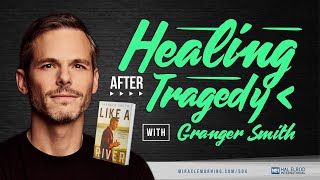
Granger Smith lost his son River in a 2019 drowning accident. He talks about the hospital, his suicidal crisis six months later, his spiritual conversion, and how he and his wife chose to stay together. He's now in seminary and wrote a book called Like a River about the grief.
Questions this video answers
June 2019.
River.
Dell Children's Hospital in Austin (serenity garden mentioned).
About 10 minutes (family lived out in the country).
"Jesus, my God. My God, save me."
Chapters
Granger, welcome to the achieve your goals podcast, man.
Thanks for having me, buddy.
Yeah, no, as I was just telling you, it's really, really a pleasure to connect with you. I didn't know who you were about a month ago, and then a friend, Dan Caldwell, reached out, and he said, you've got to read this book, Like a River, and he mentioned that you had mentioned the miracle morning in the book a few times. So that was the connection where. I think that's why he reached out to me. I'm sure he recommended your book to a lot of people, but I've got the audiobook, I've got the Kindle book, and I'm a fan of your music now. I'm listening to your music. I'm a fan of your writing, but I'm a fan of you as a human being. And I think that more than anything, like, who you are, I think that you just sense authenticity when you're like, oh, this is actually a good person. There's no front. They're not BSing me. They're not manipulating me. They're not trying to sound like you're just a good human. So thank you for. For being who you are and being courageous to show up in the world the way that you have been, man.
That means a lot. And, yeah, I've been a fan of you for a long time. And, yeah, he's not lying that the Miracle Morning is. It might be mentioned. I don't know if it's mentioned three times, but it's definitely kind of underlying a lot of the themes in the book itself in Like a River. So, yeah, I had my miracle morning this morning, so that's been the journey for me.
That's amazing. So you're, you know, reading your bio is. It's like, wow, this guy's, you know, one of the most successful country music artists of all time. He's an actor, an author, New York Times bestselling author. All of these different things. I was really, you know, putting a lot of energy, like, where. Where do we start with this. This interview and this conversation and this story. And I want to. Let's just start with. With now, and we can kind of work our way backwards. Meaning you just wrote, I believe it's your second book. Like a River is your second book, right?
It's my first trade book. There's, like, a coffee Table kids book before that, but this is. Black river is my first trade book.
Okay, got it. And so for those that don't know you and your story, what's the Book based. I mean, it's based on every parent's worst nightmare. It's based on a tragedy. It's based on you and your wife committing to stick together for your other children and to heal in the midst of tragedy. And then now you're paying it forward and you're sharing it through the book. So talk about the book, talk about the subject matter. Take us back to that day in 2019. And then why did you write this book? And what do you hope it's going to do for people?
Yeah, the catalyst really of the book is chapter one, and that is we lost our son river, and he drowned in our home pool. And I was there. This was in June of 2019. I, I was in the backyard with the three kids and the boys were playing water gun fight. I was playing with my daughter. She was doing a gymnastics routine. It's just this beautiful Texas evening in June. And I remember thinking, soak this moment in because.
It won't last forever. Moments like this just, they fly by, especially when you have kids. And I didn't realize how true that statement actually was because soon after that it was quiet. And I thought, where's River? And I looked over my shoulder and he was inside of our locked, gated pool. We still don't know how he got in there, but I ran to grab him. It must have been 30 seconds, 60 seconds since I've seen him. We know now that this could happen quickly with a child because they inhale water and they lose consciousness. I didn't know CPR besides what I'd seen in movies, but. But you know, my nightmare started there. I started trying to administer cpr. My wife came out. My daughter got my wife. She came out. She had to go back in to get my phone. We called 91 1. We live out in the country. She was. The emergency services weren't able to arrive for about 10 minutes. And that's just way too long for him to be unconscious. That's literally how the book starts. And it's, it's interesting looking back on it, because that's not really what the book is about. It's. It's about the aftermath of that. That's why it starts there. It's going to start there at that, at that scene. But it, it's, it's my demise after that really just overridden with guilt and, and shame and burden and loss and grief and, and it's my story of navigating that. And the story I tell people when they go, oh, it's going to take me a while to read the book. I always say it has a good ending, it has a happy ending. So, so yeah, the book really is that journey through that. And like you also mentioned how the, my wife and I making the decision, the very unromantic decision that we were going to love each other through this, despite the statistics that people get divorced over things like this.
Yeah. Talk about that moment when you and your wife, I believe it was at the hospital. And, and I don't recall if river, if you knew that he, if you had known that he wasn't. He couldn't be saved at that point. Clarify that part. But, but, but what was that like when you and your wife like, talk about that decision, that conversation that, like, hey, we're going to stick together through this because it seems like to even be thinking like, almost, that's like a meta view of like, okay, hey, this is happening. We have other children, we have each other, we have a family. Like, so, so talk about that.
Yeah, that, that meta view is, that's a good way to look at it. And that kind of was prevalent through a lot of that, that time for us when we were really in shock and we weren't making, we weren't making these big conscious decisions on our own. It was, it was kind of this meta view of it. And so when the emergency services arrived at our old house, they were able to recover his heartbeat again. And that gave us a sense of hope. Like, oh, okay, good. Well, we really dodged a bullet here.
Wow.
So as we, as we followed the ambulance to the hospital, we had a lot of hope that he was going to make it and it was going to be a long journey. In fact, nurses even told us, they said, look, he might look good and he's got a good heartbeat, but he was on the breathing machine and he's going to be very sick regardless of what happens here. And so I thought, okay, well, in my mind I'm thinking, okay, he's going to have some kind of, some kind of mental disability. That's okay, you know, as long, as long as we get him back.
And it wasn't for about 24 hours before we realized when the doctors came in and said, we want to tell you there's zero chance of recovery. And it was, that was the first time I had heard that because we, the nurses had been telling us, like, okay, you know, this is, this is a good sign or this is hopeful that what this reading means, this could be hopeful. And so we continued to have that hope until then. And so everything Crashed. We weren't gradually going that direction. It was all at once. They came in and said. They sat us down and said, look, there is all the. We've done all the neurological tests, and there is zero chance of recovery. So they said, part of this discussion is. And they said it in a gracious way. They said, part of this discussion is we need your permission legally, to turn off the machine.
And so we're kind of like, well, we want a second opinion. Yeah, that's the only thing we could think to say. We want a second opinion. And they said, absolutely, we'll bring in another team. Like they were expecting that conversation. They bring in another team. After a few hours of research, they came in. Once again, just heartfelt and very gracious, and said, collectively, as a team, we want to say that we've seen this before and there's zero chance of recovery, but we need to know when you will give us permission to turn off the machine. So at that point, Amber and I said, just complete shock. We were just. I mean, the way I'm almost describing the story right now, just so surface level, it can't begin to get to the depths of what the confusion we were going through, really. That's a good word. Maybe it's just so confused. I mean, just a few hours earlier, a few days earlier, we had this beautiful baby boy, you know, three years old, the life of the party, always. Always at the center of attention and exploring and exciting and laughing and cutting jokes. And now they're telling us, oh, we're gonna have to put him in the ground in about six days. That was not computing to me. I could not begin to. I couldn't go there. So Amber and I take a walk. We got to this serenity garden. It was in Dell Children's Hospital in Austin. We walk out to this little serenity garden, and I remember walking up to this railing, and we just kind of looked out into this little pond, and we're just staring at the. At the garden. And.
I don't remember who started it, honestly, but we kind of simultaneously looked at each other and said.
We'Re going to stick together through this.
Regardless of what the statistics say. We need to make a deal right now. I mean, it was almost like I said, it's just unromantic, Just handshake. We're going to do this. We're going to make a decision to. To stick through this. And it's going to get bad. It's going to get really bad. And we had no idea how bad it could possibly Get. But that. But we knew that it would. We knew that the reality would set in.
But, you know, that decision, I think about it often, and that meant the world to that scenario. Now, looking back, almost five years removed or four years removed from that, that was a decision that really mattered as we hit the turmoil of life that was to come.
So just hard to imagine. And what a roller coaster from, you know, river at the pool to then, oh, they got a heartbeat. It's okay. Thank you, God. It's a miracle, right? And then the nurse is giving you the, you know, good sign. Good sign. And then just that complete 180 of like, oh, no, there's no chance.
Talk. You talked in the book openly about how hard it was and the guilt that you felt the night that you reached for the 9 millimeter and thought about taking your own life, the voice of God that you heard, the cry that you made out. Talk us through a little bit of that. Of what were some of the most difficult times? And maybe it was that night, but what were the most difficult times and what saved you? And that really leads into the direction that your life is heading right now.
Yeah. You know, the reason that that was the worst night, and it certainly was. It was about six months after we lost Riv, I hit complete rock bottom. But. But the reason. The reason that that felt like rock bottom was because there were times when I've made a little progress, and there were times I got. I was kind of fixing myself and getting a little bit better here with Amber. And I went to therapy. I was practicing what we learned in therapy, and there were times when it actually worked pretty good. And that particular day, we were in Boise, Idaho. It was about six months removed from losing him. And I remember we had a show. It was just a really good show. We were distracted by a couple other things going on during that day. My guitar player got injured snow skiing that day, broke his collarbone. So there was. There was these nice little life distractions that, as we leaned into the concert.
One less guitar player on the stage, and he was. He ended up being fine. But, yeah, and then we. We pulled off a show, and it went really well. And through those distractions and the good show and the lack of guitar player and me focusing on the music, and we walked away from the show. And I thought, man, I feel a little bit normal again. This is the first time in six months that I felt normal because I went through all kinds of guilt and shame and going on the public platform and playing music so many times. I walked on the stage. And I thought, here I am, I'm the guy, the father that was neglectful, that couldn't keep his own son alive until he's 18. That's like the joke that people say, just keep them alive till they're 18. Well, I failed at that. And I'm on public display. Look at me, the shameful guy, the guy that just couldn't do it. And I felt like that for months and slowly would get better and better and better until the culmination of that show and the good vibes from the band and the good crowd. And it was after that show, we decided to have a few drinks to celebrate a pretty normal feeling night. And that was a huge mistake in hindsight, because when I had a few drinks.
I went back to the bus and I suddenly thought, oh, this is. This is the first time I've been inebriated since. Since we lost Riv. Will I be able to. In this inebriated state? Will I be able to fight through those horrible visions, through all those bad feelings? Will I be able to muscle through that like I had learned in therapy? And the answer was no. A resounding no. And that's what.
That's when I decided, you know what? In this inebriated Satan, I'm kind of walking through this lightly. But that was the moment I decided, you know, here's where the rest is. Here's where the peace is. Just end my life. That'll be a lot better because then I won't think about this stuff anymore. That's the surefire way to end all these bad feelings and to get out of this trap. And it was that night when I realized that those thoughts were outside of any kind of ration that I had, rationale that I had outside of any.
Consciousness that I might have had myself. Those were thoughts that were outside of me. And that's when I realized I was in a spiritual warfare. And then I was under attack. I was flanked, surrounded. I had no weapons to defend myself, and I was in a war that I didn't even know I was fighting. That's when I realized it that night. And I cried out to Jesus that night, not really knowing why. I wasn't really a true Christian. I could say it. I thought, maybe thought I was. But when I called out to Jesus that night, the war ended and all of those crazy thoughts ceased. And I fell on the floor and ended up passing out on the floor of that bus. That was the beginning of a new awakening for me.
When you say you cried out to Jesus I've heard you say the exact words. So what were the words that you said?
I said, Jesus, my God. My God, save me. Save me.
And from what I heard you say before, that, at that, from that point on, at that moment, the visions, you called it the slideshow where you kept replaying River's death and then the ambulance ride and then being at the hospital and then telling the kids. Right. You just, you were replaying this for those six months, this slideshow of terror, if you will, right? Every parent's worst nightmare. And you said that after you cried out in that way that the slideshow stopped, Is that right?
It did. It did. And it didn't stop permanently, but it ended that night for the first time. There was a lot of other vices, marijuana pins and things like that that could dull the slideshow, but that was the only thing that stopped. And then that, that was the, the catalyst for me thinking, oh, there's, there's something else at work here. And, and then, Hal, I'm curious for you. I mean, can you relate to that slideshow, like after your accident, for instance, can you relate to the idea where your brain is trying to, trying to comprehend something, it's trying to find an answer to something that's unanswerable, and so it's running the slideshow around to try to, to find a loop, the end of the loop. Does that make sense?
Yeah, and I think, you know, I honestly think that most people can relate to that in different ways. But, you know, I think that that's what our, our brain is, a problem solving mechanism. It's literally trying to figure things out and solve problems all the time. And I think it's a big reason why people can't sleep, because they lay down at night. And if they don't make the conscious decision that, okay, I've got to shut my brain down, I've got to, I, I, I, I'm not going to try to solve all, all of my life problems right now as I'm supposed to be falling asleep. I think that, yeah, I think that most people play some form of, whether it's, they think of it as a slideshow, but it's just some way where our brain is always trying to figure it out, solve the problems, close the loops. When. And what's, what do you, what's your resolution to that, Granger, other than calling out the way that you did, is, do you have, you know, you mentioned therapy was helpful for you. Are there any, any tips you can give people listening right now that are like Man, I can't sleep at night because my finances. Maybe they haven't lost a child, but, you know, their finances aren't in a good. Like, whatever. Just normal, everyday challenges that people face that cause stress and anxiety and depression and fear. Are there any mechanisms, any tools, any strategies that you found that are helpful to rest that mind?
Yeah, I mean, you probably know where I'm going with that by now, but that's when. Shortly after that, as I began a new quest of what was this outside of me? That. The spiritual warfare that then ceased on that night. What was this? And so my miracle morning then started transforming because I had. And I know that you didn't call me on this podcast to talk about the miracle morning, but it is a big part of my life. And so I know that you're too humble to want to even go there. But. But before this, before that night in Boise, my miracle morning was. Was really strategized towards me, helping myself.
Finding solutions, myself. Powering. Powering through things. And after that, my miracle morning slowly started changing, actually, to what it is still today, to this day, what it was this morning. It is much more of a surrender. Mm. It's. It's. It's much more of a. I. I do not have the power to. To. To conquer my own problems. When they get. Now, you can conquer your problems when they're. When they're mild, sure. When they can re. When they reach a certain level. I have realized that I am not in control. And. And you don't have to be a Christian to. To realize that there are just things outside of me that will happen, that could happen. That can happen. Like we saw with COVID or anything else that happens in our life that we couldn't control.
And we can't manipulate and we can't power our way through. There's certain things when you get strep throat, you can't power your way into not having a sore throat. You have to deal with. You have to live with it. You have to live in it. You have to surrender to that moment. And so my miracle morning really turned into much more of a surrender. And for me.
That was reading the Bible, I actually stopped reading devotionals that were taking highlights of the Bible, and I started reading it itself. It's called the McShane Plan, and it is. Reading.
It basically gets you through twice of the New Testament, twice the Psalms, and once the Old Testament in a year. And so it's a plan where you're reading about four chapters a day. And I put that into My miracle morning.
How do you spell that? The McShane plan. I want to look that up.
Yeah, it is MC. It's Irish. Let me make sure that I'm saying it right. M. See? McShane.
Yeah, it's M, C, H, E, Y, N, E. Got it. Okay. McShane plan. And it's. It's a. It's just a really good plan. And it's. It's a. It's a great addition to my miracle morning. And that started changing me. That started transforming me as I learned more and more of who God is. And.
He is sovereign. He's providential and resting in that. I mean, when you rest in a providential God, you have a lot less to worry about. And whether that's finances or whether that's losing a loved one.
It'S unbelievable, really, what that does for your mental state.
I. You know what? I'm going to show you, actually, my miracle morning this morning. I want to show you something here because it's very relevant to Elrod. And.
This is a great example.
Part of my reading in my four chapters this morning was in Jeremiah 10, and this is verse 23. It says this. I know, O Lord, that my way, that the way of man is not in himself, that it is not in man who walks to direct his steps. That's crazy. Verse 12 says, it is he who made the earth by his power, who established the world by his wisdom, and by his understanding, stretched out the heavens. When he utters his voice, there is a tumult of waters in the heavens, and he makes the mist rise from the ends of the earth. He makes lightning for the rain. He brings forth the wind from his storehouses. And you read things like this, enough on enough mornings, and you go, oh, praise God. He's got this day. He's got the whole world in his hands. It's not me. It's not in my own power. And slowly, over time, you just start resting in that, and your anxiety starts to vanish, and you just go, God, you got it. You got it. I'll follow you. Let me follow you.
Wow. Just a few weeks ago, I did a podcast on surrendering and that we're trying to control everything and take it all on ourselves. And that's so stressful. It's so overwhelming.
Absolutely. Absolutely.
And there is, for me, so, Granger, this is interesting. So I've always been really.
Thoughtful, careful in my writing to think, okay, people like the miracle morning, for example, this is universally applicable, whether you are Jewish or Christian or Muslim or atheist or like, for all people.
Absolutely.
So I've always been really, really cautious to kind of like, you know, I always mention God in my books. But I'm also, I try to not think, hey, it's either this way or you're not on the right path. You know what I mean?
Absolutely.
And so the. But, but and so I always have also tried to explain different aspects of God. Like my last book, the miracle equation was like unwavering faith plus extraordinary effort is how you co create miracles. Right. But it's the idea where it's like, you know, I often will, people will message me. They're like, wait, so I can tell you believe in God? Are you like, you know, but they're not totally sure. And I'm like, that's actually what I wanted. I wanted you to be like, how do I apply this to me, whatever my beliefs are. Now you, I love that you're very clear in your Christian faith and you are going all in. So if it's okay, I'd love to pivot to this next phase of your life. So you are one of the most successful touring country music artists in America in the world. Sold out shows. You just performed your last sold out show here in your home state of Texas. And now talk about the next phase of your life. And I mean, I just can't even imagine like you're living your dream, you know, and, or at least it's been the dream up until this point, but you feel this calling from God that is so powerful that you're not going to try to divide your time between the two. You're literally leaving this amazing, successful career. You've had to pursue this new path. Let. I'd love to hear about this.
Yeah, it's. Well, it didn't happen all at once. I didn't just wake up and say, oh, this is all, I'm going to throw it all away.
Okay.
It was, it was a, it was, it took a few years really of this, of this feeling. And man, how you said, you said the word, you said the word and it's surrender. And that there is that sometimes you, you could hear that word. And especially in America, we would think that, that, that sounds like weakness, like a surrender, that sounds like retreat. And like I'm waving a white flag, I'm giving myself up. And surrender is much more of an action. It's much more of an actionable term that we have to understand that surrender, like the word meekness, does not mean weakness. It means, it means power under control, under constraint. It's saying that, look, I have this. I have built this, and I am grateful for this. And I am releasing it to something that is greater than me.
And how do we know that that even makes sense? Well, anyone that's traveled long enough through life, that's journeyed through life, knows that they can get beat down to something that is not within themselves. And so to surrender to that and say, God, this is yours. Let me follow you, that's the beginning of such peace and such rest. And as I began to do that more and more, and I was still fighting for myself and exalting myself in my music career and getting up on stage and needing people to applaud and clap, and then I would get off the stage and I would go back to reading my Bible like that Jeremiah 10 that I read. And it's like, man, man, I want to surrender more. Not because I'm weaker, but because I feel like I'm getting stronger by the surrender. And I'm feeling more joy, and I'm feeling more hope and more peace. And so it turns out the best way I could say it is it's like I'm just one beggar telling another beggar where I found some bread. I've been eating this bread over here, and, buddy, I want to show you this bread over here. Like, you don't have to eat it, but I'm telling you what I found and the way that I feel. Matthew, in the book of Matthew, Jesus told this parable. We said, the kingdom of heaven is like treasure hidden in a field that a man finds and covers up. Then in his joy, he goes and sells all that he has and buys that field. And so it's not that I'm giving something up for some life of some monk life. Yeah. I'm trading something for a treasure that's an incredible treasure. But I want to show more people about this. This completely priceless treasure that I have found. And. And I know there's people listening to me. There's people listening to my podcast that think I'm crazy. There's people listening to my radio show that think I'm crazy. And there's probably people listening right now maybe that think this guy's just crazy, and maybe I am, and that's okay. But, man, I have so much joy and so much peace and so much rest. I just want to tell you where I found this bread, and if you want to munch on it, please let me show you where it is.
Yeah, and that's. I think that's it, man. To me, that's the purpose of life is to fulfill your potential, to follow your calling, and then to help other people do the same. And to your point, it's like, hey, here's what works for me. Here's, here's what I found. Here's the treasure that I found. Give this a shot, you know, and I was thinking about how many people, you know, millions, billions of people that their relationship with God, with a higher power, how it brings peace, peace of mind, how it, how it gives them faith in themselves, how it. You mentioned, like what it does for your mental health, which I think is so true. Sometimes that's at night, how I'll shut my brain off is I'll just go, all right, God, I'm giving it to you. I'm going to go to bed. Like, I need to, I need to stop thinking about this because I'm not fixing anything. I'm just stressing myself out. I need to sleep. Is that deal like, you got this, I'm going to go to sleep and it's like, yes, okay, cool, thank you. And I can actually sleep, right? And even if for someone that's like, that's skeptical or that's not, you know, religious or spiritual, you know, it's like there's an interesting, an interesting question is like I was examining beliefs the other day and I thought, you know, our own, our. Every person's reality is really just constructed in their head, right? In their mind of like, this is what I believe is real. So the real question is, is it useful, right? Is this belief useful? For example, right now, the world's in a pretty crazy place, right? There's a lot of uncertainty. I feel more so ever than I felt in my lifetime. And.
There'S a narrative that we could buy into a belief that is like, oh my gosh, the future is going to be worse than life is now. Things are, you know, society, the government, yada, yada, yada, things that are out of my control, I think are heading in a bad direction.
And there may be truth to that. But if that's the belief that you choose to entertain and to think about as you're laying down to bed or to write, if that becomes your God, so to speak, this fear of an unknown future, is that useful? Not really. Right. It's detrimental to your mental and emotional well being. But if you were to just switch that and go, you know what? I actually have faith in God that life's going, whatever happens, a, I can handle it. I can handle it with, you know, with God's help and B.
I'm actually going to choose to believe that the future is going to be even better than the present or that it's just going to be whatever it is and it's going to be perfect. Right. You know, like you went through, you would have never in a million years, ever, and to this day, I would imagine you would ever want to lose your son. But in some ways, and I remember you said something along this line that, you know, just something that some of the greatest blessings in our life are things we would have never asked for and even painful, tragic circumstances. You know, I don't know if you know this, but my sister died. So my parents. I was eight years old and I heard my mother screaming across the hall. And my sister died that morning. She was 18 months old and she died of heart failure in my mother's arms.
You know, every mother's nightmare. And. But within a matter of months, my parents were leading support groups for other children that had lost other parents that had lost their children. Right? Then they started doing fundraisers for the hospital that tried to save my sister's life. Right? So so much good came out of it. Who my parents became in terms of their resiliency that they passed on to me to deal with my tragedies later. So I think that just having that belief and whether, you know, someone puts it, gives it to God, or just chooses to believe that I can handle anything that comes my way, and I, you know, similar to you, I find that when I surrender.
My favorite words that make me feel so more peace and joy than anything is thank you, God. Like, as I lay to bed at night, thank you, God. And then I just go through the list of all of the things, but. And this goes back to like, this is my bread, try it out. Or, you know, you know, this is what works for me is I don't know why I literally can't even explain it. And I don't have to. I don't care if I say I'm grateful for my son, it doesn't have the same impact on my nervous system as thank you, God, for my son. I don't know why. When I express the gratitude to God, it's far more impactful on. So is it useful? Right. It's far more impactful than if I just blindly say thank you for this or I'm grateful for this. Right. And to your point, if you just say, I surrender all of my problems, if you just surrender them to the ethos, I. For me, it's not nearly as impactful as when I say, God, I give this to you. I'm going to go to bed. Please help me handle this right while I'm sleeping and give me a solution in the morning if you can. That'd be great. Right. When I direct that gratitude, that surrender anything and everything to God, it is infinitely more helpful and impactful for me. So any thoughts on that? Any follow up?
Yeah, yeah, there's a lot of thoughts. And I think you're, you're, you're onto something and it's so good. So C.S. lewis was a. An evidentialist apologist, and they brought him on to the BBC in 1941 to give a message. It's similar to what you said earlier, Hal, about how your podcast is for, and all your listeners are for all faiths. So they brought in CS Lewis to, to as an apologist to use evidence to give people hope and peace on the radio during World War II in Great Britain. So that's a big task for him. And so what he did as, As a Christian, C.S. lewis wrote an apology, which is a defense of the faith, but he wrote it from a, an evidentialist worldview where he, without even getting to Jesus, without even really even getting to the God of the Bible, he started with, let's go. Let's, let's examine our feelings. Let's examine why do we feel better if we say thank you, God?
Oh, interesting. Okay.
Why would we, why would we feel better if we said thank you, I surrender to God instead of I surrender to the universe? And so that's a great example of an evidential apology. And he would. And that's based on the law of nature, which is the law of the moral law, the law of right and wrong. And it's interesting because you say, I don't know why. I don't know why I say thank you, God. And that feels better than thank you, universe.
Yeah.
Well, maybe, Hal, it's because you were created in a way that thanking God is fulfilling to you. And, and we don't have to say who God is. We don't have to say who Jesus is. We could start with that. We could start with a common ground that anyone listening can go, you know, Hal's right. We could just start there. Let's. Can we both agree that there is a good feeling saying, I surrender to you, God, and a less of a feeling saying, I surrender to you, butterfly, or I surrender to you, universe. Yeah, it's not as good. So we could start there, start with small steps. And that's evidential apologetics. That CS Lewis kind of revolutionized, and most of us know him from, like, Chronicles of Narnia, but that was a book. It ended up being a book called Mere Christianity. Look, I'm actually sitting here, like, surrounded by C.S. lewis books. I didn't mean to do that. But this is actually the book right here. I promise I didn't mean to do it, but I'm just kind of surrounded by him right now. But that's exactly what you're saying. And. And so we could look at our. Everyone has a worldview. Everyone has a faith. Everyone has a belief. And some people go, I don't. Well, it takes faith to hear me and you talk about this and go, I choose to think that that's not real. Yeah, because I can't prove to you with 100% evidence that God exists, but the same time, no one can prove that he doesn't. And so both. Both of those worldviews require faith. Both of them do.
Yeah. Yeah, that's. I love. That's really well put. And so you are. Now, I don't want to miss. Use the wrong word, but is it. Is it a minister? What is the. What is. What is this? What is this? Next venture, what would you identify? You know, you were a country music artist. I mean, you'll always be that. Now you are a blank. What is that? Blank?
We've been having that same discussion because it's like, not in. I'm not in ministry. That's kind of a bad. That's kind of the wrong use of that word. I think that what I'm doing is I'm writing books and I'm getting out and speaking. We'll start with. We're starting with that. And the rest of my life really is just being equipped. I'm trying to learn as much as I can. I'm actually in seminary. I'm trying to learn from my pastor here at home, which I haven't been able to do consistently as a country singer. Gone on. On Saturdays and Sundays most of my life. So I'm just being equipped, and I'm writing books and I'm getting out and telling people where I found the treasure. That's. That's really what I'm doing.
Yeah. Yeah. I think I was on your website and I went to your tour dates, and now it's not concert venues, it's churches. And.
Yeah, that's different.
Yeah, that's different.
Yeah, man.
Well, let me. Let me. Let me. As we're coming to a close. Close here, I'm curious. And this is Kind of, you know, almost going back. But.
What has it been like if you were to describe and. And. And feel free to use this as a moment to actually. And I'm sure you've done this, but just to reflect on how blessed you've been to tour the world and, you know, sell millions of records and perform in front of I don't know how many countless people. So going back to this country music career, I mean, that was a dream of yours that I would imagine you've exceeded your wildest expectations that your younger self could have ever imagined.
What has that been like, looking back?
Oh, man, you're right. All that has happened and.
Incredible feeling of gratefulness to be able to look back and go, man, we did it. And. And you know what? I think what might be relevant to this conversation is this. As I. As I reflect back on 20, 25 years of touring, I could tell you with certainty that at any point in those 25 years, the good shows were great, the bad shows were not fun, and it was always relative according to the time and the era I was in in my life at that time. Meaning when I. When I had a really, really good show in 2019 or 18 or 22, it was not that much better than a really good show in 2004. In 2004, a good show might have been 50 people singing along. In 2022, it might have been an arena of people singing along, but it was always relative because in 2004, that was a good show. And you can't take that away from me because relative to where I was then in my career, it was awesome. And then a bad show in 2004 just sucked. It sucked. It was a bad show. And in 2022, a bad show might have been 7,000 people instead of 14. You know, we had a low number, but we had 7,000. But that was a bad show.
Oh, yeah.
So it was. It's always.
It never got, like, substantially better in the later years. It was. I was always conditioned to either enjoy a good show or despise a bad show. At whatever point in my life, I think it's important for me to remember.
That I love that we're wrapping up kind of ending here and that you said what you said. It's what I call the miracle life, which is realizing that the life you're living right now is. It's the best life could ever be. Based on your perception of it, could your circumstances be better? Absolutely. Could you make more money and could your relation. Absolutely. But if we allow our quality of life internally, meaning our mental and emotional and spiritual well being to be determined by these circumstances in our life or any outside forces like the people in our life, then we're not in control. And I love what you talked like what you just described is it's all an inner experience. Right? Like the way you felt performing for 50 people when the show went great was the same way you felt performing for 50,000 people when the show went great. Right. And it just goes to show that we create our inner experience, you know. And so I think for everybody listening, like realize that, that you already have everything that you need right now to be the happiest, most grateful, most fulfilled you could ever be in your life. It's called life. And you can change the circumstances, but it's still you that you're taken into those circumstances and you can be miserable with great circumstances or you can be totally at peace, grateful and joyful with subpar circumstances. So wherever people are listening to right now in your life, choose to enjoy this one life you've been blessed to live. Because we only get, you know, we only get one, at least here on this earth that we're aware of.
So, you know, let me say one more thing because what helps me with that, with that in mind, what helped me so much over the years was if I could keep my gratefulness higher than my expectations, then I'm always going to be happy that day. And you don't have to have incredibly high gratefulness, just slightly better than your expectations, as long as it beats it. And that means if you have low expectations for, say in my case, a concert, if you have low expectations but you're just grateful to be there, it's going to be a great show no matter who shows up. If you have really high expectations for a show, oh, you better crank up that gratefulness because you're probably going to be disappointed. Yeah, high expectations are a problem if you don't have an exceedingly greater amount of gratefulness. Yeah. And it's so interesting to. You could experiment with that today. Anyone listening can experiment with this and, and find out how they react to this. But expectations are always a problem because we expect, I expect that next year is going to be better than this year and then when it's not, then we can go, I need to crank up my gratefulness a little bit more. And then we will find through that that joy and happiness are at the end of that for sure.
Yeah. And that's such a beautiful way to put it is making sure that your gratefulness exceeds your expectations. Right. And with that, would you say that gratitude is one of, if not the most, one of the most important, important component to enjoying this life that we're living?
Yeah, absolutely. Yeah. Gratitude is such a key, Such a key in everything that we do.
Well, Granger, man, I love you, brother. I'm so grateful that we got to connect and finally meet face to face. And like I said, now that we're both in Texas, we got to get together and grab a meal or some barbecue or something.
Let's do it. I'll hold you to it.
Awesome, brother. All right, well, then, book, y', all, is like a river. It is fantastic. Granger, do you have a recommendation? If somebody were to get it, do you think they should they get the audiobook or the physical book? Because what are your thoughts?
Well, first of all, I love the audiobook. I loved recording it. Yeah.
I love listening to you read it. Yeah.
In a way, that was performing the book. But if you're a paper guy, you like to actually read, then I won't take that away from you either.
Awesome. So grab the book, y', all, and then head over to grangersmith.com you can also grab the book there@grangersmith.com but to follow Granger and become one of his 12 million plus social media followers, you and your wife are fantastic. You and your family are beautiful, brother, and look forward to talking to you soon.
Thank you, Hal. Appreciate you so much, brother.
Yeah.
More from Hal


Hal Elrod shares the most effective tool he’s learned to quickly handle anything life throws at you.







Jim Kwik: How 5 Minutes Each Morning Can Rewire Your Brain and Change Your Life
