How to Break Unhealthy Relationship Patterns for Good
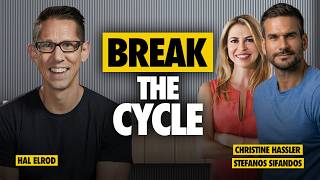
Relationship coaches Christine Hassler and Stefanos Tsafandos explain why couples feel a gap between the love they imagine and the love they experience. They cover codependency, projection, nervous-system regulation, and concrete tools like repair agreements and stuffed-animal cues to close that gap.
Chapters
Most people in a relationship will tell you that they love their partner, but far fewer will tell you they feel truly seen, deeply connected, or anywhere close to what they imagined love could feel like. And that gap between the relationship you have and the one you actually want is exactly what today's episode is about. My guests are Christine Hassler and Stefanos Tsafandos, a married couple and master relationship coaches with over 30 years of combined experience helping people heal relationship wounds, break the cycles that keep showing up in their love lives, and build the kind of relationship that most people have stopped believing is possible. Christine brings the feminine perspective and a spiritual psychology, while Stephanos brings the deep work around masculinity, trauma, and what he calls sacred union. And the fact that they're doing this work inside their own marriage and were willing to be completely honest about how hard it is, makes this conversation a lot more useful than your typical relationship advice episode. And we also touch on Stefano's groundbreaking new relationship book that he just released titled Tuned In and Turned On: A Path to True Connection, Deep Healing, and Lasting Love, in which he offers what I think is a very different approach than most relationship books. It begins with self-healing because only when you heal yourself can you bring that version to your relationship. And then the book ends with spiritual awakening. And I'll be honest with you, I told him we'd talk for 30 to 40 minutes, and we went a full hour, and I could have kept going. That's how good this conversation is. So whether you are single, married, in a relationship, healing from one, or just trying to figure out how to stop repeating the same cycles of conflict in your romantic relationships, this episode is absolutely for you. Hey, welcome, Christina and Stefanos. This is so wonderful.
We're so happy to be here. We've known you for a long time, and just love you and love your community and your message. And yeah, we're just happy to be here.
Thank you. I am excited for this conversation because our personal connection and beyond that, I think relationships, we would agree, have the power to bring us some of the greatest joy, but also some of the greatest pain and confusion and growth. And I think it's easy when, again, I know y'all as a couple and We're all on a journey, especially when you're in a relationship. Even if you've got all your stuff figured out, which nobody does, but even if the more evolved you are, we still have differences and dynamics and contrast. And so, Stephanos, you've got a new book. I'm holding it up right now for those watching YouTube, Tuned In and Turned On: A Path to True Connection, Deep Healing, and Lasting Love. And Christine, I originally scheduled this just with Stephanos. And then I was like, why would I not bring Christine on? Because Christine, you bring your own wisdom and depth. I remember we were talking about the Front Row Dads Retreat. I think it was December, this last December. And you stepped in for Stephanos, who was scheduled to lead us through a session. And like, how amazing that you're like, yeah, my wife's just as good, if not better. Like, I can't make it, bring her in. And we were blown away, Christine. Like, there were tears. You led a group of I don't know, 100 men or so through a really profound and powerful set of exercises. So, anyway, all that is to say that my hope today is that we can help people better understand themselves, better understand each other, and whether they're single or dating or married or struggling or thriving or stagnant, just that we all walk away with tools to build even healthier, stronger, and more conscious relationships. and I can't think of two more qualified people to do that. So thanks for being here.
Oh, well, we're happy to be here. And, you know, you said something that made me kind of giggle of even with all the work we do, relationships are still hard. And we were quickly humbled because we, when we got together, we're like, oh my gosh, we've been in the personal development world forever. This is amazing. We can be in the deep end. We have the tools. We're gonna have a conscious relationship. And You know, after that honeymoon period came in, and all our stuff came up, it was like, have we ever read a book? Have we ever done a workshop? Like, we were so quickly humbled, and we still are humbled of— it doesn't matter how much you know, whoever you're in a relationship with, whoever you pick, and we can talk about the singlehood journey as well, because I had a long journey in that. It's, it's it's gonna challenge you. It's gonna bring your stuff up. It's not like the movies, you know. And I think a lot of times people can look at couples that are in personal development world, and I know I speak to so many women who are like, oh, I wish I had a man like Steph who, you know, was so into this work. And so, and I'm like, well, let me tell you how fucking awesome Steph actually is, right? That's exactly what I was gonna say.
Wait, Christine, it's— wait, so it's not all sun— I thought it was all sunshine and rainbows with Stephanos. What? I don't get it.
Every Tuesday. Yes. No, just kidding.
Every Tuesday between 4:05 and 4:07 PM, sunshine and rainbows.
Yeah, there's a little zone of genius.
We're human, you know, and it doesn't matter who you are, how much work you've done, how much money you have, how many kids you have.
Like, the more money you have, the more you hide, actually.
Yeah. Yeah. I think we all think somebody else has it easier. And, you know, relationships, I think, especially for people who crave depth, which is going to be anybody who listens to your show, right, and just don't want to do the rinse and repeat kind of surface level relationship lifestyle, it's going to challenge you. It's really going to challenge you. And I think the best thing about our relationship, because I'd say we're in a hard season right now, the best thing about our relationship is our commitment to growth. And if we didn't both value that, we'd be in trouble.
Yeah. Hal Elrod: Yeah, it's a great— oh, man, Christine, I'm so glad that you started this way with just a little vulnerability and like kind of peek behind the curtain and just being real. It reminds me, I was interviewing Robert Kiyosaki and his wife, Kim, for the Miracle Morning documentary. And Kim said something that just speaks to what you just said, which is that her and Robert made a decision years ago that if we don't grow together, we're probably going to grow apart. And the fact that you're both committed to growth, I guess my first question then that comes up is what if one of you is not? Not one of you, but meaning, right, if someone's listening and they're like, "I'm doing the work. I listen to the podcast. I'm growing as an individual and my spouse is not." How does somebody approach it from that perspective?
Well, that was me in my first marriage. That was exactly what I was saying. And I think there's a couple options, and it really depends on, you know, what you truly desire and how much ownership you're willing to take. So, it was really easy for me in my first marriage to look at my husband and go, "If only he..." And I dragged him to every workshop I could drag him to. I put every book in front of him. This was before all the podcasts were out, but if those were there, I probably would have been doing that too. And what I didn't actually realize, it was actually an expression of my codependence. I hadn't healed yet. I was trying to change someone else to make me feel better. And what I actually probably needed to do was embody the work myself. And then either he would have been like, "Oh, she's getting on that train. Wow, she's more open. She's more vulnerable. She's more happy. She's more connected to God." That sounds good.
Yeah.
Or it naturally would have grown apart. But me trying to make him change definitely did not work. And we've seen this in so many couples we've coached and worked with is that, you know, one person's kind of dragging the other person. And yeah, one person can be the catalyst or the invitation or the inspiration. But if you're focusing so much on how you want someone else to change, you're going to drive them away.
So you can feel better. It just doesn't happen.
Yeah.
And there's another option there as well. The other option is you, you continue to do your inner work, you continue to open up to your own life and your own self, and you realize that, oh, that person doesn't need to actually be on this part of the journey with me. Yeah, we don't need to value growth in this way because that person gives me so much in every other area of life, and even in, in my, my own personal life, that I value that so much that I actually want to be in this relationship even if we're on these, these growth paths. Seem different, like on the outside, but on the inside he or she is very nurturing. They're attentive, they listen, they, they want to hear me if I have an issue or a challenge. They want to be in it with me. They may not be doing the work per se, but that is another version of the work. And so you recognize things differently when you start opening yourself up as well.
Well, and what we're doing so much in relationship subconsciously is projecting our unmet needs from our parents onto our partner. And the whole kind of personal development is, is a great kind of excuse to be like, oh, but this is so great. Like, we could be more conscious and that. But really, like, what's underneath that? Like, what, what need are you really looking for? Did you not feel seen by your parents? And so now that you're in this, this awakening, Is it hitting on that wound? Because you don't feel seen by your partner? Like, what are you actually really asking for? Because in couples that we work with, often what someone's consciously asking for is a little different than actually what that subconscious need is. But whenever we're looking for our partner to make us feel a certain way, we gotta turn the lens back on ourselves. Now, that's not to say that we don't have needs in partnership. But it's like when we're wanting our partner to fulfill unmet needs, that's when we get in the projection problem.
Yeah. I so resonate with this. And one of the things, Christine, that you said, and then Stephanos, you really followed up on it, is the idea that, A, you can't control another person, right? So that if they're not into growth the way you are, it might just be timing. Like my wife and I, for example, when I met my wife, she was 19. I was 25. I had been doing personal development for 6 years. She had done it for 0 years, right? So, we were at different spots in our life. And Stephanos, to your point, we don't have to do the same things. And to me, an analogy would be like if you love running and your spouse doesn't run and you're like, "I can't be with you because you don't value running like I do." It's like, "Okay, but do they show up in other ways that create value for the relationship?" And a big takeaway for me right before I got cancer, thank God I had this breakthrough. I was in a really difficult season with Ursula, with my wife, and I just had an epiphany while she was out of town and we were fighting over, you know, the phone and text and we just weren't getting along. And I went, I'm just going to decide who I'm committed to being as a husband regardless of how she shows up. In fact, the worse she shows up, if she's in a bad mood, I'm actually going to take that as a sign that I have to work harder. I need to be more empathetic. And so, to me, a marriage— I'd love your thoughts on this. It's actually our greatest opportunity for self-mastery, right? So, it's like, "Oh, I don't like the way that when they're this way." It's like, "Oh, how can I actually get to a place where that doesn't affect me so much, where I have more patience, more empathy, more grace for other people, et cetera?" So, that's kind of how I view my marriage. It's like it's this container for, "Yes, I want to show up selflessly and serve and love this person." And when it doesn't go the way that I want and meet all my needs, I actually looked inside of what can I do to be better so that I'm not so affected by what that other person does or doesn't do. I'd love— Stefanos, if you want to— I'd love to hear what you think on that.
Yeah, we all seek— Christine touched on this earlier— we all seek to control. It's a way that we feel safe, and we often control things that we attempt to control, things that are outside of us. So how that person behaves, how they treat me, how they think about me. If I say something or I ask them to do something, can they oblige to that? Because then I feel safe, I feel seen, I feel valued. But we're looking for love in the places in that sense, right? But when we look to difficulty or challenge, especially in intimacy— because the more, the more close we are to something, the more weight and value it carries, the more risk it carries. And so we tend to— anything is risk and resistance, and resistance, right? We tend to act more in control, more in fear, because we don't want to lose that thing. Yeah, AKA a relationship, right? A romantic partnership, a family unit. And so when we project that value, we start being reactive and we start living through our survival patterns, like Christine mentioned earlier, around where projecting these unmet needs that we experienced during our formative years that were very vulnerable, tender years onto our partners unconsciously for the large amount of time. When we just literally take a step back, spiritually take a step back and look at the opportunity and say, instead of me controlling the situation, what does trust and surrender look like? And it's a really difficult thing to do because we're stepping into the unknown. We, we risk risk losing what we have. But what we have actually isn't really working because it's all false. It's propped up on, on control. I'll only be okay if you do this certain thing in this certain way. That's codependence, which is what Christine mentioned earlier. And we're living in these tethered relational ways that aren't actually healthy. But because it's familiar, we think, well, I'd rather be with what I know than what I don't. But when we step into the unknown, and that means looking at self and saying What's the best version of me look like in this moment? It's not what I'm used to. Like, I'm not used to being compassionate and patient and getting curious and asking my wife, hey, what's really going on here? I'm not really used to saying, you know what, she's going through some physical stuff at the moment. Let me do some research on this. Let me do my best to understand so that I'm not projecting my frustrations or my projected fears that her physical stuff's going to take away my freedom, right? Because I'm going to have to look after whatever it is, whatever fears that we project into the future. But when we slow down and take the time to look within, things can change. Like, that's, that's a beginning step.
Yeah. I just want to add something to everything we're saying, which is there's a, there's an extreme we can go in either direction. That extreme of like codependence, of if you, if you would just change, life would be better. And then there's the, the taking ownership and speaking our needs. And then there's the overfunctioning. So what we also see happening is that if someone were to take what you're doing too far, Hal Elrod, okay, and go into the overfunctioning of, well, my partner can't do this, like, I'm not getting this need met, so I'm just going to overfunction. Now, that's a coping strategy we learned in childhood when we got parentified or enmeshed, or, you know, our parents weren't there or emotionally unavailable. Like, any of us that had to grow up a little too quickly and kind of over-function in our family of origin, we've got to be really mindful of not doing that in relationship and calling it love because then that's going to build resentment. We're not going to speak up to our needs. So really what we're saying here is what are your needs that are coming from more wounding that actually you need to parent yourself with?
Yeah.
And what are the relational needs that you need to be an advocate for? In your relationship and not expect your partner to be a mind reader, not expect them to just, you know, magically do it, but really be communicative of, this is really important to me and how you meet this need for me is this. Because when we get into that over-functioning pattern, it's just the other side of the codependence.
It's still codependence and it's still control. You're over-functioning and compensating to ensure that you hopefully get what you think you want and what you want, or you think you're just not gonna get it.
So you just over-function to keep things going.
Two of my favorite products. I've been taking these for 4 years and they are now a sponsor of the podcast. Cured Nutrition Flow Gummies. I start every day with 2 of these. I meditate for 30 minutes without any supplements, and then I take Flow Gummies 7 days a week, almost every day. and then I go to bed with night oil. 30 minutes before bed, I take night oil and it helps me fall asleep and stay asleep. So I start my day with Flow gummies. I end my day with night oil. If you want to implement my routine into your day with Cured Nutrition, go to curednutrition.com/hal. Again, that's curednutrition.com/hal and use the discount code HAL at checkout for 20% off. Your entire order. Flow gummies to start the day, night oil to fall asleep. You'll feel better. You'll act better. You'll perform better. Check it out.
Wow.
One, thank you for that. One, for me and Ursula, the, you know, she's a child of divorce and I'm a perfectionist. And so what happened for me until, I mean, relatively recently, like 6 months ago maybe, and we've been together for, I don't know, 15 years. Was the— every time we would fight, I would think, I can't be with a person that's like this. I can't be with someone. And I would say that, or in some way, or after enough time, it would build up and I would say that. And then basically, it was just— it was her taking her deepest wound, which is like this fear of divorce, of not being enough, all of the things. And it was just being like— it was me not nurturing where she came, what she needed. So, anyway, once I finally shifted that, and it took a lot of self-work to do that, it was like, I need to love her the way she deserves to be loved unconditionally, not based on if she behaves the way that I want her to and responds the way that I want her to and make her feel like if she doesn't do it perfectly, she's always walking on eggshells. But it's amazing that since I made that shift, and this goes back to kind of the idea of like, well, your partner might not be on board in the same way that you are, right? You can't control if your partner wants to read Tuned In and Turned On or wants to do coaching with Christine and Steph or wants to engage. And so, for me though, I was like, I'm going to focus all in on A, never ever, ever making her fear that like, well, you are yelling at me so I can't be with someone that yells at me, like completely eliminating that. And it's just amazing how our marriage has completely transformed because now she feels safe. She doesn't feel threatened. She's not in fight or flight constantly.
Yeah. And what a big, what a big thing for you too, to like not have to live under that protector part of the perfectionist.
Totally.
You know, because that will be a block to intimacy in the long run.
Totally. And it has been. Yeah.
There's both. There's opportunity. You know, we often say this, the thing that your partner is asking of you is a thing that's actually really good for you. It's really healthy to break some of the maladaptive, unhealthy patterns that you have. And so when she's asking, hey, please don't— it doesn't matter how she's asking just yet, we'll get to that in a moment— but when she's requesting and asking, hey, please don't say that, please don't want to break up with me just because we're having an argument, right? Because that, that activates all of my fears. The opportunity for you is, does it serve me to be in rigidity and to be a perfectionist? Like, how much excessive structure and stress and anxiety do I have because of that? Let me try and soften a little bit. Let me— hey, we're having a conversation, we're having a conflict. Does it have to mean it's the end of the world? So now you're expanding your window of tolerance, you're becoming more resilient. But the opportunity equal for her in a different way is to not catastrophize the moment even when you say that, and to lean into her own power and her own voice. Because probably when she was younger and her parents were divorcing she didn't have a voice. And if she did, it didn't matter, or it didn't mean enough in, in her mind somewhere, because they still divorced.
Yeah.
So she gets to use her voice to make requests, to ask for things, to be vulnerable and share, hey, it's really scary for me when you say that, whether you mean it or not, it's really scary for me. And now you, you both get to move with each other's vulnerability and empathize and connect. And that's a really beautiful thing, which seems to be where you guys are in relation to that. Yeah.
Yeah. Well said. And it has, it's been exactly that. And what's interesting is you use the word catastrophizing, I think. And what I realized is that we're both doing it, right? So, meaning when she's angry, I'm like, oh my gosh, I can't believe you would talk to me like this. Right. But it's a temporary thing. It's not the end of the world. And then tomorrow she's like, hey, sorry, I was hormonal yesterday. Like, I'm, you know, like, let's have a great day. So, I'm catastrophizing. Her short-term behavior, and then she's catastrophizing the words that I'm saying. So, yeah, that's a really interesting perspective.
And I think another thing to remind ourselves of in relationship is we time travel a lot, meaning you think you're a 40-year-old and 36-year-old having a conversation, but you could be an 8-year-old and a 5-year-old that are actually really having those conversations. Like, that's the part of your brain that could be really lit up.
Yeah.
And so, one thing that we work with couples in is to recognize when you both have flipped your lid, basically meaning that you're not in your executive functioning, you're in different parts of your brain, you've time traveled, you're projecting. It's just a mess, right? The communication is not working. And to decide on a word, like a random word, like pineapple or monkey or something like that, that one person thinks to say to break that pattern. Because what couples do is they get in these habitual argument patterns or habitual conflict patterns that reinforce patterns from their family of origin. And the nervous system just continues to wire in a similar way. So a lot of couples are like, okay, how do we argue better? How do we repair? And our first step with them often is we got to break the cycle. You got to catch when you're in the argument, use the word, have your agreements about what each of you do, how much time, you bring your nervous system back to regulation, you get out of the parts of your brain that aren't going to help you, and then you use the repair tools. And so, I think a lot of couples, especially couples that do work, think that they're supposed to argue consciously all the time. And that's often not possible because you're triggered, because you've time traveled, because you're in a part of your brain where your ability to solve a problem is that of an 8-year-old. So knowing that, and I'm sure that you've referred to John Gottman and people might know the Gottman Institute, they've studied marriage and relationships the longest, is that they can evaluate, you know, the healthiest relationships, marriage and long-term relationships, by how well a couple repairs, not how much they argue.
There needs to be a greater focus on the efficacy of repair, not the unrealistic expectation of let's never argue, or let's never argue badly. Yeah, because it's— this is the, the, the perfectionism we place on ourselves, that we're meant to be these perfect humans because we're conscious and evolved, and this shouldn't happen. We judge ourselves consistently, unconsciously most of the time. We place limitations on ourselves in that judgment because we contain our behavior, actually, because anything outside of that is devastating to us. And so we use so much psychological relational energy containing that, that it has to burst. So if we just simply focus on, hey, how can I best repair, as opposed to— it's— we're going to have conflict, that's going to be natural. Like, let's not make that mean anything more than what it actually is, other than being human. Yeah. And focus on repair, it goes a longer way for our growth, actually.
So what, what does repair look like? And before you answer, let me say it this way. For someone that is listening right now who feels disconnected from their partner they're in conflict, they can't get on the same page, they can't get back in a rhythm. What is the first conversation that they need to have and how should they begin that? How should they have that?
Just run away and never look back.
Yeah, that's what feels sometimes like the only option.
Yeah, it does.
Yeah, sometimes it does. And we should admit that and own that. Like, sometimes that feels like the only option. It's a starting point, actually. What do you really feel? Because what you really feel—
I'm so glad you didn't run away and never come back.
Although Athena probably wouldn't mind. She's like, nah, I've got money. Money's good. And I'll say this, I'll give it to Christine. The, you know, I say that facetiously. And what are the first things that you feel when you're pushed to your edge? Because that is insight, that is information about what is unhealed, unresolved, unmet within you.
Yeah.
And if you just look at that and actually feel that, feel the, the real feelings— or real through the personality and the ego, but, and through the wounded self, right? Feel those feelings. It's information about what you actually don't want to do, and you're only doing that, you're only wanting to run away because it's a survival pattern. You're trying to keep safe. And that's information about stuff that feels very tender within you, that regressed 8-year-old or 5-year-old that experienced divorce or experienced abuse or experienced bullying. And, and this is familiar. Some way energetically, emotionally, and wants to behave in the same way because that's what kept them safe once. That's a maladaptive coping strategy. Doesn't work. Well, it worked back then. Thank that part of you, but it doesn't work now.
Yeah. So for, for the repair, I want to give a couple suggestions based on where people are.
Yeah.
For people that are listening that are in relationship that, um, you know, are good, they, they're, they don't need to initiate a repair right now. Have a conversation when you're feeling connected, things aren't really heated about what your repair strategy is. So, hey, the best way for couples to have these kinds of conversations is actually not when they're sitting across from each other at a table, but when they're moving. So, taking a walk together, taking a drive together, because what we teach is that there's 5 different kinds of relationships. We won't go through them all right now. But what most of us want is a side-by-side partnership. Two people looking towards their vision and their values, going in the same direction, not looking at each other. Will you fix me? Will you complete me? Will you make me feel good? Will you make me feel loved? Like, you know, not all the projection.
Yeah.
So having these kind of conversations about relationship and about repair. Get in your car, go for a walk, go, you know, like, be, be side by side moving forward.
Yeah.
And have a conversation about, okay, when we get in an argument, like, what What's our repair strategy? And some people, they just say, hey, let's repair. For a lot of couples, the person who holds a more masculine pole in the relationship, which isn't necessarily the man— we have a couple where the woman actually comes to lead the repair because she actually does hold that more leadership role in the relationship.
In the relationship.
And, you know, decide, are you going to say, okay, let's repair? We have one couple where the woman really holds the feminine pole, but the man just doesn't— isn't there yet to initiate repair. So we decided that she would buy a stuffed animal. And when she really wanted repair, she would bring the animal to him. He'd say, okay, let's repair, so that she felt like he was, you know, still initiating something. She had a signal to give him. But, um, and so have a plan of like, what— when someone says, when someone initiates it, that there's an agreement that you'll either say yes or I hear you and I need one more day, can we sit down and talk tomorrow? So there's a yes. It could be yes and, but it's a yes.
Yeah.
So that's kind of the preventative maintenance agreement of a relationship.
It's a proactive aspect of this. And just say one thing to that. I know this is very cliché and reductive, but If you fail to plan, you plan to fail.
Yeah, sure.
You know, look behind you. Miracle Morning routine structure. We do it in our businesses, we do it with our health, we do it with our children. Why the fuck do we not do it in our relationship? Yeah, it's so— it's really quite simple. Like, we want something to be successful, we've got to map it out, so to speak. It doesn't have to be this purely cognitive process because it's deeply emotive, vulnerable process, but it needs to be proactive, um, intention behind it.
Yeah.
And then for the couples that, you know, feel really disconnected right now and didn't have a plan in place for repair and want that, the best way to approach it is to talk to your partner and be like, hey, there's kind of 3 entities or things in this relationship. There's you, there's me, and the relationship. And I'm actually fighting for the relationship right now. And I'd really like to have a conversation about how we can both do things that serve the relationship. Because I'm concerned about me, you're concerned about you. And like, let's, let's fight for the relationship together. Because sometimes when we're really disconnected, both people want to be right and both defenses are up and both people want to hear their stories. But if you can even be like, let's, let's talk about the relationship and fight for the relationship.
This entity that we're both invested in and that we both benefit from if it's healthy, right?
If it's healthy. And really use that I language and that ownership language. When you come to your partner taking responsibility, using I language, and don't be sneaky with it. Like, I feel when you talk to me like that, that I da da da. It's like really taking ownership and not putting any of the blame or projection on your partner because then their defenses are gonna go up. And really, repair is impossible when we're defensive, right? So, really, like really coming in, holding that intention of something bigger than both of you. Because when couples are so disconnected and so in, they have to be reminded of, wait a second, like this isn't about you or me. This is about what we're creating together. So, in NLP, we'd call that chunking up, right? Like really get big in terms of what the vision and value is. Get back to that and then chunk down in terms of, okay, what do we actually need to solve here?
What if someone— because I know I've been there before where I'm so upset, so I'm emotional, I'm so upset, I'm mad, but based on my partner and what she did or didn't do, that in that moment, and especially if you're in a sustained season of conflict, right? Yeah. It just amplifies. You're like, I don't even want this relationship. So, meaning if you're like focused on the relationship, like the relationship sucks, I don't want it right now. And so, how do you— and I think that— let me give one more qualifier, which is I've been there where our relationship has been or we've been in conflict for an extended period of time or whatever, especially during cancer. We've been through a lot of ups and downs where it was bad for an extended period of time. It was challenging. And so, not only was I like, I don't even know if the relationship is worth saving, but also, it was like, I don't see this getting better. And now, I can offer hope to any couple because I'm like, our marriage is amazing. And you probably can share something similar, but we've been at a place where I'm like, there's no way I can be married to this person. And then now, we did make it. We did heal and we have this amazing marriage that we're both so filled up in. Um, so yeah, so speak to that. If someone, A, I don't think the relationship's even worth saving because our marriage sucks, our relationship sucks, or B, and I don't know if there's even hope, I don't know if it can get better when we know that it can.
Yeah.
Okay, so two things.
I was gonna say two things too. I wonder if your two things are the same.
The first is that, um, never make a big decision when you're dysregulated. And the reason, the foundational reason why you're probably still together is because when you were having those thoughts, you didn't execute on that thought, and neither did she, right? Like, that's foundational. You didn't make a big life decision from a dysregulated place. The second point, I'm just going to reiterate what Christine said. It applies for you as an individual. You need to have proactive agreements with yourself about what regulating your nervous system looks like so that you're not in this heightened, highly stimulated place where you're going to worst-case scenario, catastrophizing, feeling very stressed, being dysregulated, making a decision from a survival pattern or reactive pattern. So for example, when you're feeling yourself like that and you're circling or you're looping in your mind, because we often do that as people Do you have an agreement with yourself that you go hit a training session at the gym? Do you go for a 60-minute walk on the— by the ocean or around the neighborhood? Do you do some journaling? You know, you can maybe stack modalities. Do you call a friend and say, hey man, like, talk me off the edge here because this is what I'm experiencing. I need, I need someone to help me see the forest through the trees. I need someone to be relational with me. I can't be that with my wife right now because we're in conflict, and I also want some clarity in what I'm seeing. If you don't have those foundational principles and, and, uh, proactive strategies in place, you'll just continue to spiral. Those are my two things. What are yours?
Similar, but I thought of three. Let's see if I can uncover them.
She's got to one-up you, Steph. She's got to one-up you. She thought you were coming with one, so she had two prepared. When she found out you had two, she added a third. I, I see the dynamic here.
Okay, he's actually the more competitive one.
There's an internet sensation that I've just discovered on Instagram called Guido Gabuzzi. And he is so funny, okay? He says it is what it is, so I'm just gonna say it is what it is. It is if you saw him. He's— I'm giving him— I have no affiliation with him. I just think he's very funny.
Anyway, and I know Stefanos enough to know that he's competitive, Christine, so I, I can back you up on that.
Doesn't take much. Um, so kind of piggybacking on what Steph said, those moments are a great time to get outside support. Because when you are at that much of an extreme and wanting to make a big decision in a place where you're really mad and really triggered, it's hard to see super clearly. And so that is the time to get outside support because someone that's not triggered and not in the relationship can ask some really good questions.
Can I just say one more thing?
See?
No, it's just an extension because I want to implant— because it may not be a friend, it may be a coach, it may be therapist and maybe a guide that's in your life or that you seek that professional help that has someone in your church, someone— yeah, a qualified vantage point as well to support you.
Now, I have to ask you all the hard question right now. To me, this is a hard question, which is, um, AI. Where does AI play? And I say it's a hard question because it's like, for all of us that are in different work where we help people and they're like, I could just ask my chatbot, right? And I've heard a lot of people that are using AI as their personal coach, business coach, yada yada. So I am curious, like, if they don't have a friend, where does that come into play?
Finish your train, do you want to explore that?
Yeah, yeah, yeah.
We can also come back because it kind of piggybacks. So, okay, so you can't heal something relationally through technology. So in relationships, you're dealing with relational wounding, family of origin all the way up to present moment.
It's people.
And AI is great at pattern recognition. Great at that. And also, your AI is trained to talk to you in a way that feeds your dopamine.
Totally.
So you can get some insight, awareness, but, um, you're avoiding relational healing. So again, you can't heal something relationally through technology. You actually need that human-to-human reaction, and a human is going to track you way better than AI is. Yeah. And be able to respond to things way better than technology is. Is it a useful tool at times? Sure. If you're really heated, you can just go— I mean, there was a time I was traveling and he was really pissing me off and I was like, okay, I— this is what I want to say, but if I say it this way, he's going to be so mad. But yeah, can you put this in a way that won't trigger the heck out of him? Because I don't want to get into a text fight. And so AI took what I said and put it in a better way. And I was like, oh, this is good. And I was able to get it out. And like, so it can be useful in moments like that.
I've done that exact same thing. Yes. Yes.
So it's helpful. It's like, okay, we have a variety of tools at our disposal. Yeah. And if we have time, I'd love to talk about how our modern society has thrown polarity off in relationships so much and has made marriage, especially with children and working so hard. If we have time, we can come back to that. Yeah. But, you know, so AI isn't the answer. It can be a tool, but you really need the relational. The other piece I was going to say is there are two more things. One, end your relationship. Like, we have ended our relationship and been like, this version is complete. Oh, wow.
I love that.
Let's divorce this marriage because this one sucks right now.
Yeah.
And sometimes, like, there's resentments and grievances and things like that. And you just have to go, let's divorce it and get really clear. And we've walked couples through this. We've written up divorce papers, like what you're letting go of. Wow. And okay, what do we want to create? So sometimes that can be really helpful too, if you're just at the point.
Yeah.
And then also, and I'm just going to bring the family of origin inner child back in for a moment. So as children, we didn't have agency, we didn't have completely, we didn't have the ability to go, you know what, this family, I really don't like it. I'm gonna leave and get a better one.
Yeah.
And we were stuck in our situation for a long time. So when we feel stuck, it activates a part of us that's like, I just want out. I just want out. And you got to ask yourself, is it really about this person? Or is this triggering all the times I felt trapped all the times I felt unseen. And I just want to like run because I've never gotten to run from it before. So these are the questions we need to ask ourselves because sometimes, you know, the thrill of perceived freedom can be intoxicating.
Yeah.
But it actually might not be the freedom you're really seeking.
Yeah. And just to bring something to the AI conversation briefly in that as well, and I'll call this the axis of disempowerment and empowerment. Often, not always, but often we really experience a disempowered sense of self growing up. And what relationships as adults give us is they give us an opportunity to engage in relational healing. And to the point of AI, you can have a conversation with AI, gain awareness. Awareness only takes you so far, but there's nothing more confronting than being in front of your partner and saying, hey, this really hurt me, or hey, I did something and I think it hurt you and this is what I did. And watching and feeling them through your own nervous system, how they react and respond, and being in the conflict and, you know, managing that and repairing and being truthful. You're not going to get that from AI. Like, that's where the healing is, is actually playing that out and moving from a disempowered affliction. Like, I was voiceless as a kid, I didn't carry that much power, to, hey, here are my needs, here are my requests, this is what I really want. And being able to even, you know, learn to regulate yourself, because you, you— that's the journey. And I speak to this in the book, like, that's the journey of ultimately disempowerment to empowerment. That's what we're all after. And what we're saying is that in relationship, if you're both committed to the relationship, it is the— again, I unpack this in the book in great detail— it is the fastest vehicle to that kind of ascension, evolution, growth, joy, happiness, groundedness, loving, meaningful relationship. Yeah, it is through relationship. You—
the book, I want to actually ask you specifically, the, you know, the, the title, Tuned In and Turned On. That could be interpreted. Oh, that was her brainchild.
Yeah.
I love it. So, so what does Tuned In and Turned On actually mean in the context of a healthy relationship beyond what people might assume just from the title?
You want me to answer it?
Yeah, of course. You came up with the title.
I didn't.
Let's go. Okay. So one of the things we talk about a lot is how do you make monogamous long-term relationships still sexy? Right. And I think everybody can think of the newness of a relationship and the hotness of a relationship and how that, like, that kind of turn-on is great. But like, long-term, what keeps you turned on? And it really is the tuning in. Like, the more— the deeper you can go inside yourself, the more depth you can have inside yourself, the more connected you are to inside yourself. Inside yourself means you're going to grow, which means you aren't going to be the same person you were 5 years, 10 years, 20 years ago. And so it's by that tuning into yourself and then tuning into your partner that you really find that lasting turn-on. And speaking in context, not in relationship, a lot of times we're looking for someone else to turn us on. And I don't just mean sexually. I mean, you're looking for the job or a new place to live or whatever it is to feel something because we all want to feel something, you know, like feel that aliveness and that vitality. And we're just looking outside of ourselves for that turn-on. And really, we can only be lit up from the inside. Outer experience is a reflection of inner reality. So, the more you're tuned into yourself, realize the places inside where you block yourself, where you turn yourself off and kind of reignite that, then it's like, wow, everything becomes exciting in some way. Like everything becomes a turn-on. Well, I shouldn't say everything, a lot of things. So, it is that kind of circling back to our codependent conversation, not looking for something outside of me to create something inside of me to actually be able to generate it myself.
I love that. Stefanos, what is— if there's one core message that you hope readers take from this book, Tuned In and Turned On, what is it? One or two or three. I don't want to limit you.
Yeah, no, I appreciate that. You do know me.
I'm going to give you three things. It turns out to be seven.
Here's the top 17.
Yeah, 38 Things. Okay, so the, the— let me see if I can just get it in sort of like one blended into two. Yeah, where the book goes into not only— it explains what is happening in your life now that you may not align with and like and struggle with, so it gives you context to that. So you, you go, oh wow, I, I'm not going crazy, that this stuff actually happened and it can impact me in this way. And then it goes into helping you resolve that, creating a baseline of a healthier constitution relationally, psychologically, emotionally, spiritually, physically, etc. So you're not holding on to that stuff. And then opens up— the book then opens up into relationships, and relationships being a powerful vehicle for growth and deep healing so we can access more joy and more fun and actually live life, man. This Earth, this planet is a beautiful place. Life consciousness is fucking awesome, man.
Yeah.
Even, even now, you know, Christine shared, we're going through some difficult seasons of our lives. I mean, even just yesterday I spent an hour at the beach with my daughter just running in and out of the water. Like, what a gift, man. I can— I'm so— I feel so grateful I can still access joy even in a season that feels overall quite challenging, you know. Like, we can sit here together and like, I love Christine. Like, I love doing this with her. Even though we have some challenges right now, like to be able to access that, like 10 years ago, man, I don't think I would have been able to do— I know I wouldn't have been able to do that. Like it would have all been destitute and despair. And it's relationships and the value that I place on that allow me to still access that. And so relationships are a tremendous vehicle for growth. And the third part of the book where it moves to is that, that, that those two foundations open us up to God and to spirit in a way that is undeniable and not even able to be defined, actually. And it's relationships that not only become a tremendous vehicle for growth, but a tremendously fast pathway to God.
I love that. I want to bring back, uh, Christine, because you asked that we circle back to something about polarity that you wanted to talk about.
Oh yeah. Um, and I know we're getting close on time, so we don't have to make this super long, but so something I've seen, especially in married couples with children, is just a high level of stress in, in their family dynamic and in their relationship. And if we look at the way we all live, especially if you don't have family around and you don't have a lot of support system, we kind of live in these nuclear families. And what that's done for women, especially if she works, is it's kind of thrown her in her masculine energy a little too much. Because motherhood— let me, I'll explain this— motherhood can be very masculine. So, so much of motherhood is managing tasks, the mental load, tracking who's lunch, who's got soccer practice, oh gosh, the dentist. Like, I don't know any mother who isn't sitting at 3 AM sometimes thinking about, oh God, I didn't sign that field trip slip, or whatever it may be. And so What that does for women is, and even if she doesn't work, but especially if she's working, is it throws her a lot in her masculine energy, in that energy of mental load, task, kind of over-functioning, over, overdoing. And where it leaves the man is not really being able to like feel the feminine essence of his partner because she's so in it. Now, the great news is that more and more men are stepping up to help with that mental load. And what I want to say to anyone listening, and I know you have a lot of women that listen, for the men who listen as well, or maybe you can play this clip, when a man does things that for whatever reason for many years were traditionally the wife's job, like when he helps with that mental load, that task, childcare, all that kind of stuff, you're going to get more of your wife and less of the CEO.
I love that.
And so I think that's a, that's a big thing to talk about polarity is that, you know, taking some of the things that are actually masculine, even though we call them motherhood responsibilities, and sharing that load. So some of that can come off our plate, because for the feminine, it's hard for us to relax, feel safe, feel our turn on when we've got 20 tabs open in our head of everything we have to manage. So something that's worked really well for Steph is like, okay, we have one child, and even one child's overwhelming. I can't imagine.
I mean, two or three or four or five.
Yeah. And have clear agreements around the household responsibilities and things as well. And for men like you, helping with those things actually is very masculine. Yeah, it's, it's you stepping into your leadership, into your masculine and what that teaches your children as well, I, I think is really important.
Steph, what are the, um, what are some of the things that you take on to help with her mental load? What are some of those things that you do? And either of you can answer that.
Yeah, so most recently I've, I've just started— there's a— we're just doing some training and education with Athena And just understanding the way she processes the world better. So I've led that part of that part of our lives where—
And I asked for that instead of being like, oh my gosh, I do so much. And like being a mother and being my own person.
Instead of complaining, you actually asked for what you needed.
Yeah. I was like, can you take this one? Can I pass this baton to you? And what's so great about Steph and why our marriage continues to stay solid is he will do it. Like, he will do it. And that's so important, that integrity.
Um, and some— and to be honest though, there are places where I do have resistance though because of my own stress. And it's not— it's not what I'm trying to be, and because of your Greek male programming. Sure, yeah, my cultural programming, my, my, my worldviews, so to speak, that sort of maybe sit beneath the more aware, conscious side of me. But yeah, also when I'm in overwhelm with stress or I've got a lot going on, taking on another thing is a lot for me. And it's also an opportunity for me to expand my own window of tolerance. Yeah. And so I'm constantly— more importantly, I'm constantly being proactive with Christine, saying whether we're looking at our week, our month, or whatever it is, not even so much in a more temporary time thing, just more in general, but what can I take from you? Like, I am proactive in asking that. And again, I'll be very honest, sometimes Christine may say, well, what about this, this, and that? And then I get upset or I get frustrated because I think she's given me too much.
Sure.
And then I have to communicate that in, in a way that obviously lands for her and isn't aggressive or impatient or, you know, or Barring— so, you know, we're in these constant conversations, and the next evolution for me personally is not so much to ask, hey, what do you need help with? Because that still positions the onus of everything on her as being the central figure. It still positions her as that masculine energetic expressing.
Yeah.
But more so to be more proactive and just take and do it and be done with it, and that's it. And let her—
which is like, oh yeah, I'm in love again.
Yeah. And I'm not saying I don't do that, I do, but there's— and it's all about doing doing a better job of it. It's about, again, like, I'm also managing my own energetic system. And this is why— and Christine knows, I think that's why she has patience with me as well. And she also understands to some degree how my brain works.
And so, yeah, our brains work very differently.
Yeah, there's compassion there as well. But again, I'm not saying that the compassion will run out, but it's— there's, there's this— there's a give and take, essentially. And I think anyone that says relationships don't involve compromise and don't involve give and take, I think you're a little delusional.
Yeah, it's a dance, not a perfect— it's a dance.
Yeah, totally. Yeah. And that's polarity, right? Like, to some degree, that's the push-pull. You're creating harmony in this relational container. That's the yin-yang. That's what it is.
Yeah. Unspoken agreements in relationships build resentment and kill polarity. So roles you find yourself in that you are like, I don't like this. Like, why? Like, why am I in this? And you kind of keep doing it. Yeah, it just builds that.
Yeah. Well, I, based on the mental load stuff, uh, you know, I, I, my wife, do y'all do this? A lot of couples do this. Do y'all do this where my wife, when she wants to communicate with me, sometimes she just sends me an Instagram reel that communicates the thing that she's trying to communicate to me. I find that I'm like, I'm talking to my friends. I'm like, do your wife, they're like, dude, I get 100 a day from her. I can't keep up with them. So do you guys do that or no?
It's more one directional, but yes.
Well, it's more about our daughter.
She sends it more to me. Yeah.
Mine is more about our daughter.
I think it's more about our daughter.
I think I've sent him a few reels on perimenopause for sure.
Oh my gosh. I've done— okay, dude. I think we're all, all couples are the same with nuances.
Which in all fairness is very useful for me because—
Totally. Me too. Yeah. No, me too. To hear another person say it, I'm like, oh, that totally makes sense. But to your point, my wife sent me like 6 months ago on mental load, and it was this relationship expert. The guy was brilliant and he explained what happens to mental load and that when you just ask her, "What can I do?" It adds to the mental load. It's what you guys are talking about. And so, I did ask her a question, but I said, "Hey, what's your least favorite chore? And I'm going to do it for you." She said, "Dishes." I said— and I will say, I tend to speak in absolutes. I said, "You never have to do another dish again. I'm taking that on." And in that moment, Steph, my energy was high and I was like, "I can do all the dishes forever." And now, this is a— it's not now. It's like, on any given day, I'm like, she's like, "Are you into those dishes?" I'm like, "Sweetheart, I freaking got up at 4 o'clock in the morning today. I worked until 5:00 PM." I'm exhausted. Can you do—? But it's a lot better. So, it's not perfect. It definitely has not turned into my exact— and I've had to take it back, be like, hey, I overpromised saying you never had to wash another dish. But the intention was there, and I do the dishes a lot more. So, it's not perfect to your point, Steph, right? And there is still a little conflict, but I'm doing a lot more, and she does understand how my brain works and all of the things. That y'all shared that stuff. I want to give you the last word and even summarize what you shared earlier because our memories are short, including my own. What are the 3 sections that you talked about that this book will help guide people through? Yes.
It would be remiss of me if I didn't say this though. In the next few months to 18 months, you're going to be able to buy an Optimus robot to do those dishes for you, Hal. That is so good. And your, your, your absolute promises— it won't be an over-promise, it will be a delivery, my friend.
Oh, I got it. It'll be like the Optimus robot mental load relief edition.
Absolutely, absolutely. All right, the three, the three points of the book. Thank you, I appreciate that. Yeah, it's really about self-healing and opening up to the wholeness that is possible, like the possibility of our own lives, to joy. We don't heal just to relieve ourselves of trauma or intensity. But we— yes, but we heal to experience and access and remember joy and playfulness and curiosity, that childlike state. I was telling that to my daughter yesterday. I said, baby, it's so great that you're laughing and curious, and I love laughing with you. Even when we get bigger, we need to be laughing and having fun and playing. It's so important that that should never leave us. And some of us never experienced that. So the first part of the book really helps you access that. There's lots of tools, lots of practices, lots of relatable client stories, my own personal experience as well, experience from our lives too. And then once you have that foundation and you feel more full within yourself, you can actually be ready for a healthier kind of relationship, not one that repeats itself because you're trying to have a redo, because you're trying to heal something from the past. You've done a deeper level of work. Yeah. When you're open to those kinds of relationships and you have reciprocity in that relationship and it becomes a healthy vehicle for growth, that's when life really starts flourishing. Then the third part is Well, that opens you up to more infinite possibilities. God, the divine, spirituality, like really deepening your spiritual practice, practice with life, with vitality, with vibrance, with your partner, with your family, with the things that matter most to you. And it opens you up to a deeper trust and surrender because of those foundational things that take place in your life.
It's such a— it's such a great book. And I just want to say, like, if someone had met Steph even 10 years ago, we've been together 8, so maybe 11. They'd never say, "That guy's gonna be married with a kid, like living in suburbia." Yeah, it never would have tracked. I mean, the amount of abuse he's been through and terrible relationship patterns that he was in, like, he was not the poster child for any of this. And I say that because the book is written with so much like like, sure, expertise, but not from the place of not lived experience. And so if you are someone where, you know, relationships have been hard, your relationship with yourself, like, it's just been an area of life where you've struggled, you'll feel really seen and really understood in reading this book. And it gives you such a sense of possibility and hope as well. It's not written from the mountaintop. It's really written from the ditches of lived experience.
And still in the ditches sometimes too, like both of us, right? Yeah. This book isn't just about me or It's about us, it's about humanity, it's about you, the person reading it. And I'll just say as well, there's a stack of bonuses that come with this right now. So tunedinandturnedonbook.com, they're still available. And get the audio if you can, because I was cheeky but also very grateful to my publisher because I read the audio myself, you know, a year after I wrote Autocracy. This is after the first day. And I added a bunch of stuff to it because I'd grown so much in a year. So get the audible if you can. Christine's like, are you sure you're allowed to do that? I'm like, I've done it, I'm doing it. And I mentioned my publisher and she was like, absolutely, go for it.
She's amazing. That's awesome. So it's added value in the audio. Yeah, I know, I get it. Because when you're— it's one thing when you're typing, like your brain works a different way than when you're in flow. And then you're like, you're like, well, I've never even said that before, but that was maybe the best thing I could have said. So I love it. So you said it's tunedinandturnedonbook.com to get all the bonuses? Yep. Yep. Cool.
Well, and then also some of those bonuses with Christine and I, she is a really beautiful, we call it a reverse interview, but just this beautiful exploration and conversation that her and I had. And it was just, it was really beautiful. So that's one of the bonuses. There's a few bonuses there actually. Yeah. Cool.
And is that a great place if people want to just connect with you for relationship coaching, for events, for the, the other things that you do with couples, where is the best— will that site take them there or is there another site for them to go to?
Coachwithsteph.com or christinehasler.com and they can apply for coaching there directly. Yeah. Or even DM us on Instagram. Yeah, it's Stephanos Sophanos @christinehasler.
I would definitely start with Tuned In and Turned On book.com, A Path to True Connection, Deep Healing and Lasting Love. And Stephanos, I love the what makes this book unique is that those three parts where it does start with the self-healing, which is where it has to start. Otherwise, you're just putting Band-Aids on and covering up what the real root issues and trying to fix it by fixing the relationship. And so, I love that you start with the self-healing, you go into the relational healing, and then it leads toward heightened spirituality, connecting to the divine. I love that, man. Well, I love the two of you. You are a beautiful couple. And thank you for being so vulnerable, so authentic, so honest, and working on yourselves and your marriage so you can help so many other people work on theirs.
Oh, my gosh. Right back at you. You have been through it and continue to be such a beautiful embodiment of possibility and love and life, life. And it's not unicorns and sunshine and rainbows all the time, but love gets us through a lot. Yeah. Amen. All right.
Well, appreciate y'all. And everybody listening, go to tunedinandturnedonbook.com. Grab your copy today. Get all the bonuses with Stefanos and Christine. And much love, everybody. We'll talk to y'all soon.
More from Hal


Hal Elrod shares the most effective tool he’s learned to quickly handle anything life throws at you.







Jim Kwik: How 5 Minutes Each Morning Can Rewire Your Brain and Change Your Life
