How to Make Change Enjoyable with Mae Steigler
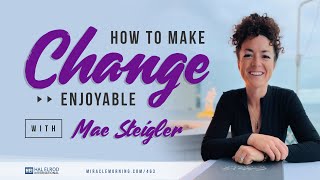
This is a recorded YouTube interview (Jan 4, 2023) between Hal Elrod and Mae Steigler (CEO of Organifi) exploring how to make behavior change enjoyable. Mae recounts joining Organifi early (employee one), helping grow its community and launch its greens powder (Organifi Green Juice launched as a hero product around 2014). The conversation covers mindset (framing change positively vs. "rearview mirror syndrome"), micro-steps/1% upgrades, measuring actions vs. outcomes, designing a new healthy "normal", individualized wellness, aging and the adaptive stress response, and using adaptogens to support homeostasis. Mae gives practical examples (pickleball as enjoyable exercise), and recommends Organifi products (Green Juice, Harmony, Balance, Vanilla Protein, Pure, High Performance). Sponsorship/offer details mentioned: Organifi.com with code HAL for 20% off for listeners.
Questions this video answers
2014 (Organifi was launched in 2014; Mae refers to the brand being ~8–9 years old).
KSM-66 Ashwagandha, 600 mg (described as included in Green Juice).
"You were promoted to CEO of Organifi three years ago." (phrase from the interview).
Green Juice, Harmony, and Balance (Mae lists Green Juice and Harmony as top two and Balance as a daily ‘pixie stick’ she uses).
Organifi.com with code HAL — listeners get 20% off all products.
Chapters
May.
It is so good to see you, Hal.
Thank you for having me on. It is wonderful to be on the show with you.
We just talked about. It's been a few years since we saw each other at Back at one of you were one of the best year ever events representing Organifi, right?
I was, yeah. I think actually before 2018, because I got to see you and you visited the office in 2018, so it must have been 17 maybe so a couple of years back now. It's great to see your face.
Yeah, yeah. And I mentioned this for recording, but you were promoted to CEO of Organifi three years ago. Congratulations. That's such a huge accomplishment.
Thank you so much. It's been a big new hat to wear. A huge adventure and I couldn't ask for more. So it's been a total treat. Quite an adventure that I will say. Thank you.
And you said you tell me the story of that. Like where you met Drew, you said over a decade ago. So, like, where did you start with Organifi and how, like, how'd you work your way up from, you know, where'd you start and how'd you end up, you know, here?
Well, I was employee one, so I. Oh, you were working with Drew back when we actually had a media company. So we were making a lot of content and educational information like YouTube videos.
Actually around that's how I discovered Drew. I used to watch his YouTube channel all the time.
Remember Mindset Monday Saturday strategy? Yeah. He made some amazing content and that was actually the way that I met him. I was just blown away with his level of just sharing the experience. It was like, you know, live broadcasting before it was a big deal on YouTube and just really, really enjoyed that experience. And so 10 years back, I was a personal trainer. I was in the health industry. I had just come out of actually. I'd studied pre vet in college and animal nutrition and so was in big Ag and really saw how dysfunctional that was. And I really wanted to address some of the food system dysfunction that I saw by really getting involved in human health and personal training. So I actually went. Went back and studied personal training, got certified and worked with clients. That's when I met Drew. And so I was in the personal training field in nutrition and was really just impressed with how he was creating content and educating and building this really amazing community on Facebook. Actually at the time, and Facebook was very different then than it is now, but we had this really wide hundreds.
Of thousands or millions. How many Facebook files? I remember.
Yeah, Hal, when I First started working with him, he was around 30,000 on. This is an interest group. It was called. It was called Juicy Juicing Green Juice. Yeah, it was called Juicing Vegetables and it was 30,000. And we grew that to 2 million. And that was organic. So, like, we weren't buying these, you know, these numbers. And it was a really cool experience. I learned so much in those first couple of years. And that was at FitLife TV, that the company before we launched, Life TV.
That's what it was.
Yeah. You can still. On YouTube, we have an amazing channel. Channel. You can see like over 700 videos that drew had shot during that time and. And released, like, just really cool content. Way ahead of his time. And he was just going through his own transformation. And that was really, like the compelling, authentic way that I met him. I was actually working at Lululemon in personal training and Nice. He lived above the shop. So he'd come down and. And share, like, videos and make videos like in the. In the Lululemon shop. So. So much fun.
Yeah.
But.
Behind the scenes story somebody, I think Brad Weimert, a buddy of mine, was like, hey, you have to meet Drew Canoli. And he introduced us, and then Drew invited me to shoot video with him. And we went. And I think I was just like, the miracle morning had just come out or something. And so I, like, I went with him and we went and got a smoothie together, and then we went up to a studio and this and that, and I don't know if he ever published it. We need to ask him.
We gotta go find it. I bet we never saw it. I'm sure he did.
And I think for like weeks or months out after, I would like Google Hal Elrod, Drew Canoli, like, is there. There's nothing. So anyway, I don't know if maybe it didn't. Didn't turn out well. I don't know.
I'm gonna group text you with Drew after this.
Where.
Where's. Where is Hal's video? Where are you at?
Where is. Yeah, did that ever see the light of day? What the hell, Drew? Oh, my God. Anyway.
Wow. That's so funny.
Before I get bitter, let's keep go. Keep going. Okay, well, we'll.
We'll stop it right there. Perfect. And that's really the foundation of the conversation, you know, and where I. I got connected with Drew, started working with him. I've worn kind of all the hats. As I was saying, since then, my background and focus has been in team development, organizational design, just building teams from 10 years ago to the business that Organifi is today. That was launched in 2014, kind of from the creation of that beautiful community that was looking for an easier way to be healthy, to enjoy juicing, and to see the benefits of juicing. And so we made our greens powder was kind of our first hero product. We had no idea it would become the brand that it has since. Yeah, now almost eight years old or. Yeah, eight years old. Yeah, nine years old. It's been a while.
Yeah.
And so it's just been a tremendous adventure since then. But it was just solving that initial challenge to being healthy with this interest group that really wanted to learn how to integrate juicing in their life. And so we said, hey, try this. You know, lightly dried greens powder with all the. The best juice recipe we can imagine.
That actually tastes good.
That actually tastes good. And, like, such a key part of that.
And that's where I want to go today. I really want us to talk about how to make change enjoyable. When I was prepping for this conversation, I was listening to some other interviews you've done on other shows, and there was a powerful conversation. You had to understand the psychology of habit formation. Like, you know, how do you actually change your behavior? And that is arguably, I think, one of the most important areas of life to master. Right? Because if you master the ability to change behavior, then you literally can go, okay, I want this goal. I want to make more money. I want to be fit. I want to whatever it is. And if you mastered the art, the science of behavior change, there's really nothing that can stop you. And I think that people make it too.
We make it too difficult in our mind, right? Like, we never get started because we're like, oh, I. I've never done that before. I always say we suffer from rearview mirror syndrome, where you look at the past. Well, I got nothing in the past that shows that I could actually make this change. I never did it before, so I don't think I could be a morning person. I don't think I could start running. I don't think I could start drinking green juice. You know what I mean? And so I want to simplify that for people. How do we make it easy for them? So let's start there. And by the way, before you answer that, one more thing, that's what I kind of love about the green juice is that that literally is kind of how Organifi became successful, is that they were like, you know, scoop this green juice. You know, because Drew used to teach juicing, right? Which is. I'VE done juicing, but like cleaning the juicer that stops people from juicing. You know, it's like so much work. But this is like easy to make that behavior change of drinking green juice with a simple scoop. So let's talk about that. How do we make behavior change enjoyable and easier?
Yeah. Thanks, Hal. This is such a fun topic to look at. Behavior change and just transformation in general starts so much in the mind. So you know, to your kind of point, it is the mindset around how we think about change that has one of the, I think the most fundamental impacts to our ultimate success in change. And this is also why in the very beginning, 10 years ago, we had two series of videos. We had Mindset Monday which is all about psychology of change and, and it was all about the mindse of transformation and thinking differently about how change happens. And then Saturday strategy which is very like tactical. And so when we look at habit change, making it enjoyable is so much to do with our perception. And as you said, if we have this like, and I love that analogy, the rear views, rear view mirror syndrome, we have no evidence to show I can be confident in our change. It makes it so, so hard. And so I think first to look at the almost like a little bit of like the energetics of change. If we're coming from a place of lack, if we're coming from a place of like, I don't think I'm strong enough to change. I, you know, I don't have confidence that I can change. Rather than looking at what's possible and looking at maybe the excitement of what you can accomplish when you're change, like the driver of change gets to be positive over negative. Right. And so I think getting really clear, so it starts with getting really clear and excited about why you want to change and what you're going to experience when you're in that change state. Whether it's like very simple habits or really big life change, I don't think it matters. So I think the come from why we decide to make change gets to be ideally motivating and positively framed over I need to lose weight because I'm unhappy.
Because then, so let me try to. I always try to. I always try to understand things in the simplest terms. So if I'm understanding correctly, it's that when you, if you're like, I need to lose weight because I'm so unhappy, right? If that's, if that's what the focus is, you are amplifying that I'm overweight and I'm unhappy and Then from that place, it's really hard to generate the motivation, the energy to make a change because you're focusing on the thing that doesn't feel good. Is that a good way of putting it?
I think, yeah. So, well said, Hal. Thank you. And looking at.
Also removing the obstacles to change. And that's kind of like the organifi story, right? We're like, hey, let's make this easier. And so from that perspective, setting yourself up for success is one of the other kind of areas that we spent a lot of time either coaching in when we worked with group coaching clients or our community. And really looking at how can we design our path forward to really support ourselves by knowing what we need rather than saying, hey, do a regular diet plan or. Or, you know, just go to the gym like everybody else, really taking a moment and saying, hey, for me, what is it going to take to remove some of the things that are maybe making it hard for me to be healthy right now? And so some of those really simple steps in juicing, for instance, was like, hey, the act of juicing is super hard. So we made basically a powder to make it easier. And then looking at how do you make it enjoyable? So it's something that you look forward to. And there's so much habit science and behavior science around, just like how to make change these days. Atomic Habits. Right. An amazing book. Lots of great, great influence in that area. But how do you make it attractive and enjoyable?
Yeah. The other thing that goes along with that, I heard Mark Victor Hansen once speaking at a live event that I was at, and I loved what he said. It was so simple. He said, people always feel like they have to go from 0 to 60 when they're making a change, right? There's this whole quantum leap idea that I've got to make this quantum leap from where I'm at now, eating unhealthy or whatever it is, right? To this radical. That's going to take so much discipline. I don't have the discipline to go from zero to 60, right? And he says, just lean into the change. Go zero to five, right. Zero to two, zero to one, right? He said, and if you go zero to one and then the next day you go one to two, and the next day, right. Two months from now you're at 60, you know, and I loved. It was so simple. But I just. I was like, yeah, lean into the change. And I remember that to, you know, it's probably a decade ago that I saw him say that. And to this day, I've Never forgotten that. Whenever I'm thinking of man, I really want to start exercising more or running or this or that. I hate running, you know. Well, I could go, I'm going to go run for two minutes today and then three and it's like, that's easy. I could lean into a two minute run that's, or you know, a one minute run. I can run that far, that long. And then from there it's just, you know, just inching forward. So what are your, what are your thoughts on that? How has that shown up in your own life or in people you've worked with? Like just leaning into the change, taking baby steps, not needing the quantum leap, but just being able to inch forward.
Yeah. There's two things there and I love the mentality of, and recognizing why there's that resistance to change is it feels overwhelming most of the time because we're looking at an end state when we set a goal and we're comparing it to our beginning state. So two things, the first being really focusing on upgrades. And so I love the mentality of like, hey, how can I upgrade maybe my consistent lunch? Right. If I'm trying to eat healthier? And so it's this mentality of maybe 1% better. We used to always say like, hey, if, if you're having a hard time drinking enough water, like can you just drink a little more?
Right.
One glass more. And if you're focusing on tracking that action, that action is actually the thing that compounds to the result versus simply drinking way more water. Right. Because it's so hard to make that leap. And so you're right in identifying what are the bite sized pieces that get us to the results. And, and it kind of breaks down to another area that I find really fascinating, which is basically measuring the right milestones. So as a personal trainer, I often saw this like contrast for people for clients that were able to get results and those that were not and those that were able to get results were able to kind of watch for the right indicators of progress over those that typically just watched maybe the weight on the scale in comparison to their goal. So for instance, and I'll kind of contrast these two clients again.
The one client would be watching and this is like more of the client that has more stickiness towards their transformation and typically was the one that saw greater success and was motivated throughout the process rather than measuring simply their weight every week. Because we know while it's directionally probably going to go in the right direction as you're consistently taking action, it's going to go up and down. So it's hard to use that as the key indicator of success or not. Instead they were measuring actions which was, hey, I went to the gym every day like I said I was going to. Hey, I ate, you know, this way like I said I was going to. I did my best in these areas consistently. So it was measuring the actions and letting the score take care of itself. And then the other client, to contrast the other client would be challenged to see value in those actions because they were just looking for the outcomes. In business this feels like leading a lagging KPI's right? You have a lot of actions that end up changing the scoreboard. You, if you only watch the scoreboard, man, it's hard to stay motivated. And so I think.
It'S kind of aligning these two then principles which is saying how can my small upgrades or my 1% better or my small actions be the measure that gets me these check marks, that builds motivation and has me say I'm on track. More so and even more valuably than measuring the outcomes because and this is kind of the end state that personally my husband and I talk about this a lot. He's also in this industry. He's a personal trainer and nutritionist. We always have a lot to talk about and we're consistently in the conversation recognizing what's our normal. So hey, our new normal is really great. I love this area in our life where right now our weekday, how we eat is so consistent. We love our kind of, our way of doing our evening routine and our kind of dinner. We almost have like a matrix style for our meals that we enjoy. It's a protein, a carbohydrate and good roasted vegetables. We love our air fryer but we have this like really consistent normal. Our normal affords a lot of flexibility. If we go out to dinner, like I'm not going to be off track or even stressed about eating in a different way because my normal is really healthy. And so I think as we look at habit chains and transformation, if we can begin to design and really architect our personal new healthy normals. And again our focus is health here today. But you can apply this to any habit and transformation in general. But as you look at what is your new normal, then you have a lot of flexibility for new and different change and or and handling off plan exercise or eating or travel because your normal is very healthy. So I think it's the small habits and design and that 1% better and measuring the right progress to get you to a healthy Normal.
Yeah. I love that. I think that, you know, everybody is focused on, like, I want to lose 20 pounds, you know, and, and I think, like, you for, for that specific goal, if you start working out and you're including weight training, right. Muscle weighs more than fat. So if all you're going is off of the scale, you're not going to see progress as fast because you're like, you're building muscle while you're losing fat. So your weight is not demonstrating your results. And for me, it's always like, this year, and I think I really set this as a goal last year. I was like, my goal is to work out five days a week. I don't care what happens. Like. Right.
That's the definition of healthy.
Yeah. What'd you say?
That's like, the. Your definition of healthy is very different than measuring the outcome, but it's the way you're living.
But when I was younger, I was like, I want to put on 10 pounds of muscle this year. I want to. You know what I mean? Like, and now I'm like, I want to be healthy and strong and fit and energized. And so every day I'm going to engage in physical activity and not worry about weighing myself or, you know, measuring it, you know, that kind of thing.
Well, and really quick on that. I think we often have quite outdated ideas of what healthy used to look like in our lives. I know for me in particular, I. I get to catch myself being like, oh, I want to get back to doing this, because it was my way of healthy 20 years ago or 10 years ago, and remembering that, ooh, that's probably not the right fit. Not just because doing exactly those things won't create the same outcome. Now I'm a, you know, different human being. My hormones are different. I'm, you know, 15 years older, but also just even that concept. So saying, hey, I want to get back to 110 pounds, I'm a very small person, very small person.
Instead, as you pointed out, the more effective goal would be, of course, focusing on actions around that that had me feel as healthy as I did when I was 110 pounds. But actually, it's more like looking like I was 110 pounds. Right. In my mind, that has a more accurate goal than the actual weight on the scale. So I think, and to that point, it's like being aware enough of what your goal is and clarity rather than simply a metric. Right. Because that metric may be accomplished in ways that don't have you feel healthy. Like, you Thought it would. And so it's kind of like the answering the. So what I want to, you know, I want to weigh 110 pounds so that, you know, I fit in these clothes, that I feel this way, so my energy is great, so I sleep well. So it's just a bigger conversation that has so much more value and relevant when we're at different life stages that, you know, ideally is actually quite exciting to redefine what your healthiest and most optimal way of living is at, you know, age 30, 40, 50, 60. Very different than when we were 20 and, you know, 25.
Yeah. And I think a lot of us hang on to that when we were 20 or 25. Right. Because one thing that I've realized is that as we age, our body ages. Right. Our consciousness does not.
Shockingly.
Yeah. The consciousness, the you, that's who you are that looked in the mirror when you were 15 years old or 20 years old is the same. You look in The Mirror At 60 years old, it's the same you. Right, that didn't age. You didn't age. Your body age. Right. And so that's why I think a lot of us, you know, it's like as we get older, it's like you still try to do the things that you did when you were 20. You're like, you know, what the heck? Why can't I lift this anymore? Why? I used to be so much. I could. I could go all day. I could. Whatever, whatever, you know. And you had a word for that earlier. We were talking before we started recording. Adaptive something.
Yeah. ASR. Adaptive stress response. And this is something that, as we age, this is like the. The major internal change that happens. Essentially, you can look at, like a really good example is like, when you were younger, you could consume more toxins and, And. And handle it fine alcohol.
Right.
You could. You could handle a little more drinking than you can now. You could handle staying up all night and be fine the next day. I don't know about you, but if I lose, like, an extra hour of sleep, I am crazy. I'm a mess.
Yeah.
So basically, our body's ability to maintain homeostasis.
In the experience of stress. So when we're under any kind of stress, environmental, dietary, emotional, physical, even if it's like working out, our bodies respond very differently as we age, and that's our adaptive stress response changing over time. And why at organifi. I'm so passionate about including adaptogens in our diet because that helps buffer our state of our homeostasis, our Normal, our healthy normal. And our bodies need a little more support as we age because we're not those abundantly energetic children that we used to be that could handle. You know, like, it's like the idea that, I don't know if you ever remember being sore when you were less than 15. There's no such thing as being sore as a child. Right. Like your body just handles it. And so it's just that perspective that like to your point, while our consciousness may be the same, our physical bodies require quite, quite different management and support. And so that's why including adaptogens and especially like scientific doses of adaptogens are really helpful as we age. And something that very passionately we include with our, in our green juice blend and our rest of our products is those adaptogens. And it's a really, I think a fascinating spot to look at. With the stress load that you're experiencing at any state in life, how do you give your body the support it needs to produce the state of wellness? And this is like right back to you know, basically creating, creating enjoyable change that you want. And so it's like designing a support system built self awareness, like that's such a key spot to say based on my lifestyle today. What are the support systems that could help me? Is it, you know, is it a meal? A meal, a food service or something? Is it, Is it. Yes. Supplementation? Is it a coach for fitness? But you know, building that in at different levels and different stages of our life looks very different. And I think it's a fascinating perspective to consider that adaptive stress response.
Yeah, no, it's so true. Right. Like when I was younger I could eat a huge meal right before bed.
And sleep like a baby.
Yeah. And it was like Taco Bell when I was 20. Right. Like, and then I would sleep like a baby and wake up feeling like a champion.
Right, right.
And now if I eat after 7pm I'm screwed and I, I sleep terribly and I wake up with a headache.
And just feel wrecked. Yeah. Things are very different and, and I offer, you know, I think so much of this is like the perception of, of aging and, and change and, and, and creating transformation in our lives at any stage. But I'll offer a different perspective too. And I saw this when I was personal training. Um, there's like actually this like really great advantage when you're starting new behaviors. I would see older clients come in and they hadn't worked out for years and they were like, ah, you know, I'm so far away from where I used to be, this is gonna be so hard. And I was like, oh, but you're so lucky because right now what you're gonna get is the advantage of high adaptation. So your body's going to be undergoing, basically it's a difference of. And I'll contrast a person who's been doing the same workout for 20 years, their body is not experiencing the benefit anymore. They have adapted. Like, there's probably no benefit to that same treadmill. I saw lots of clients doing this. Even like if we ate the same all the time, we wouldn't really see the benefit of those nutrients to some degree. There's like some diminishing returns, static habits that are not adapting with our needs. Contrast that to someone who hasn't worked out and, or they're doing something new, a new mode of fitness. They're challenging their body in a progressive way. They're getting a really special benefit that. And even as we age, we don't have to do as much fitness as we used to when we were younger because we had such a capacity to handle stress in a positive way. Right. So exercise, even like dietary restriction is a form of, there's a bell curve of positive stress. With that, we're trying to find the peak benefit before we see diminishing returns and, or corrosive stress in the body. Right. It's a eustress versus actual negative stress. There's two different types of stress, positive and negative stress. So it's actually really amazing to think as a benefit of getting older. I also don't have to work out as hard, as long as intense as I used to, to see a lot of the benefit and probably define my great spot of optimum health in maybe three times a week working out maybe twice a week, you know, strength training and twice a week cardio. Before I would work out six to seven days a week and I'd barely notice when I was 20. So there's also this other perception that like, ooh, what a nice experience, that we don't have to do what we used to have to do.
Yeah, I love that. And then that's true for me. I used to work out five days a week, one hour a day. Now I work out, I lift through only three days a week for 20 minutes each time. It's this really short, simple, super setting, you know, and then on Tuesday, Thursday, all I do is a seven minute workout.
How great is that?
You know, so, yeah, so it's super short, super easy. Right. You know, and, and I feel great, I feel fit, I Feel strong. All of the above.
So and it's like, I think that's that great example of not trying to do what we've always done and, and, or did in the past, but saying I think this is where, where like I'm really passionate and excited about individualized wellness and building everything from intuitive like, like it's almost like interoception. Right. But it's the ability to understand what our body needs at different times and different stages of our lives. But tuning back into that, we're quite far away from it. I think wearable tech is helping us get a little bit more in touch and build some more self awareness. Everything, how many steps you're taking each.
Day, all that stuff.
Yeah, yeah. And like, I think, I think historically and even in like traditional medicine and ancient times, we were much more in tune with that because we didn't have all the other indicators of our health and wellness. We really had to like listen. So I'm very excited about what individualized wellness looks like for that reason, but also just for the built self awareness of like, hey, you know, I'm not going to do the same workout and, or diet that I did 20 years ago.
Yeah.
Great news, great news. What do I need right now? You know, and it's not even what my best friend's doing, it's not even what my sister is doing, but it's like at least you know, trying some of that for directionality and then getting the experience of fine tuning for what I actually need. And there's such a, going back to the beginning of the conversation, there's such a different intention from that which is like the contrast. What, what do I have to do to change my body? You know, rather than, and I think much better to say what can I do to support my body being as healthy as I, I know it can be.
Yeah, yeah. And I think that, you know, we, the theme of today was, you know, like making change enjoyable. And for me it's like I, I choose to do when it comes to working out, exercising or eating, it's all enjoyable. I think that's a big thing. A friend of mine, when I was 20 years old, I started on like the health kick. I went to Tony Robbins event, you know, health day.
Good catalyst.
And what'd you say?
Good catalyst.
Yeah. Unleash the power within. Right. And I remember I was in my apartment in Fresno, California and my buddy was over and I had soy milk in my fridge. Now we know a lot more about soy and but back then I was like all Right. No more dairy, milk. You know, I'm. I'm a health.
We're upgrading.
Yeah. And so I had my swimmer, and he looked and he goes, oh. He's like, is it worth it? And I said, what do you mean? He's like, you have to drink this stuff just because you want to be healthy. Is it worth it? And I said, well, a couple things. Number one, I said, I've been drinking that for probably about six months now. I said, in the beginning, it was kind of an adjustment. Do you think I even think about it now? There's no. I don't even give it a second thought. It's just my norm. And so for me, I eat one of the. And sorry to make it about me real quick, but I think this is helpful. I eat one of the. Probably the healthy, like, ever since cancer, especially just. I was healthy before cancer, but my health is, like, impeccable now. Like, I will not put anything in my body, which is why I love organifi, because you guys vet out the highest quality whole food, organic ingredients. Right. And most supplements have all sorts of fillers. Fillers and crap. But for me, I eat really healthy, but I eat food that I absolutely love. Like, I enjoy my diet as much as the person that enjoys the taste and texture of a cheeseburger, which occasionally I have, you know, or pizza or whatever. But to your point, my baseline is I have an organic vegan smoothie every morning with, you know, organic pecans for protein and fat and organifi, vanilla protein powder and. Right. And spinach and some other herb, you know, supplements and herbs that go in there, and they're all blended, right. So they break down real easy. But I make a smoothie that I love the taste of. I love the taste of it. And then at lunch, I have the most amazing salad you've ever had. But I've tinkered with it until it's the most. It's like a party in my mouth. The flavor profile is incredible. Right. But it's super healthy, and it gives me a ton of energy because it's all raw, living, organic foods. And so the point is, make change enjoyable by first deciding what your value is. Like, okay, I want to be healthy. I want to be fit or strong and then go, what's an exercise routine? That would be fun. I love riding my bike, so that's what I do for my cardio. I don't run because I hate running. Right? So, yeah, don't. Don't, like, make it enjoyable by saying, okay, here's the outcome. I want to be healthy, I want to lose weight, I want to whatever.
What's the most enjoyable path to get there? Because there are infinite options available to you. Any thoughts on that?
Yes, and I will share a funny example of that as well. So coming from being a personal trainer 10 years ago, my mindset around strength training and everything has been fundamentally important. Hey, go to the gym. Even as I age, very important. I was just challenged the last probably five to six years actually to redefine what my, what my like physical fitness looked like. I was having a hard time enjoying it. I was like really not having fun in the gym anymore. After again more than 10 years ago, not being a personal trainer, it really changed for me and.
And I found pickleball.
Yes.
And so it's something where I have never been this active in my kind of in my adult life actually. We're, you know, we're playing like literally 15 hours a week, if not maybe 20 hours a week of pickleball. Cause we're doing like Saturday and Sunday is three, three and a half hours of open play and, and just like more activity than almost like we can barely. My husband and I can barely eat enough food to fund to, to power our, our pickleball habit. But it was such an eye opening experience last year this time we had just gotten into it together and like just have a really fun community around it. And neither one of us are big on cardio and so we do biking and I used to play tennis but not very consistently. And just for both our heart health, it was an important component to add to our strength training. Again, he's a personal trainer so he's got, he's got that handled. But for myself I just had a hard time finding it. And so big revelation last year was like, wow, I couldn't have imagined how important it was to find a. And I've always coached on this to like oh, do the mode of fitness that you enjoy. But wow, for myself to experience it after just being in a limbo for about six years now, it's like, it's the most simple experience because it's so much fun to think about, like how can I eat enough to, to play pickleball, you know, rather rather than. And again a very high quality, same as you, but it's such a different experience. And so just to reinforce the idea of finding a format of physical fitness, a way of consuming healthy, high quality foods that you enjoy is removing the obstacle to a healthy lifestyle. And it's different than the, you know, diet Kind of fad diet mentality and like let me, let me get this result quick. It's like to be healthy and to create habits around it, find, find ways to make it enjoyable. And, and so funny story but Pickleball made that happen for me for physical fitness, so found that. And, and I think it's, it's, you know, at organifi we talk about making wellness easy and so much of that is enjoying the experience of being well and it comes down to you know. Yes, removing the obstacles. But, but looking at like kind of why we take so long to formulate the products that organifi each superfood blend is because it needs to taste amazing without cutting corners on quality, which takes us a long time and to be craveable. Right. There's something amazing when you give your body the nutrients it needs. You remove most of the cravings you remove because you don't have mineral deficiencies that have you craving sugar, salt and fat. And it becomes really easy to actually curb your cravings and manage your blood sugar and you know, not necessarily crave the food that maybe is part of your regular diet now. So you know, fundamentally I think there's that path towards designing habit change in first and foremost from a place of self awareness that'll be most enjoyed by you and then finding the way that you can at least start to right size, maybe your new normal and begin to build a foundation that's sustainable. Look at like the, the choices you're making now. Can you filter that with the idea of, or the question of will I be happy doing this in 10 years or 5 years even for what you're eating? And I think that's a really, and exercising in, it's a really good way to filter. Is it long term or is it short term?
Yeah, I like that. Rather than a fad diet, it's like, well, no, find a breakfast that's healthy that you love to eat. You know, like for me, my smoothie, I, I, I, I can't go without it, you know. Yes. Right. So if you're, if you, instead of having a bagel in the morning or a donut or something, right. Or a bowl of cereal, make a smoothie and you can, it's so, I love a smoothie because you can just, you can throw anything in it and you don't really taste it because there's so much different stuff, right. You're like, ooh, the spinach would be great. Oh, I don't taste it. Cool. And then what else could I put in?
It's in there.
I don't know if you know this about Organifi, but so the. When I launched the. This podcast, it was. It was. The intention was very pure. Like, I had just written the Miracle Morning, and I. I'm like, I need a way to keep adding value and nurturing my readers. Right? So I refused to take a sponsor on for, like, five or six years, I think, because I thought, I don't want to. Like, I don't want my listeners to. To think I'm doing this to make money. And then my friend was like, that's. That's kind of stupid. Like. But then this is what she said. She said, you always talk about Organifi. She said, you always are recommending, like, different products that you like. She goes, you're, like, the biggest, you know, for your friends. You're like, dude, you have to try this. You have to try this. You always talk about it. She goes, why don't you reach out to somebody like Organifi and see if they would sponsor you because you're. You're recommending them anyway.
Yeah.
So I was like, yeah, that's a good point. And so, like, it's a match. You guys are the first sponsor we've ever had. And, you know, and you're. It's like four. I think it's our fourth year together or something. But. But it's amazing.
That's a huge honor. And thank you, Hal. I. I think that's. That's the ideal for any partnership is just having that level of authenticity and. And I think. And knowing as, like, a listener. Right. Of your podcast and. And a huge advocate of your books and, like, what you're about. It means a lot to have the, like, basically brand partnerships come from that place, which is, like, this is stuff that you truly have integrated in your life and believe in. And that's such a testament to who you are as a human, but just our relationship between the brands. So thank you, Hal.
Totally, totally. You're welcome. And if you're listening right now and you haven't gone to Organifi.com HAL. Right? As a listener to this podcast, go to Organifi.com, o R G A N I F I.com HAL. And then use the code H-A-L My name, HAL. And all listeners of the podcast get 20% off everything on the website all the time. So whenever you want to, you know, try out the products, what is your. Do you have a favorite or, like, top one or two favorite of Organifi's? Products.
Yeah. My, my top two are Harmony and Green Juice. So Green Juice has our incredible. Kind of like it's our. Our first product we made and has an incredible dose of Ashwagandha in it. So the KSM 66 600mg of Ashwagandha amazing for cortisol management, stress management. In my position and and in my life it's a very key daily support. And then Harmony is our women's hormone product and it's also just the combination between the two. So does Shatavari and Chaste Berry. Amazing for just balancing women's hormones. So the two of them are just a really nice blend. Everything in my mind kind of comes back to hormone balance for our homeostasis and ability to manage stress and weight and energy and sleep. And so those two are my fundamental go to. And there's one caveat which is every, every morning we have Balance which is our kind of Pixie Stick style pre and post biopsy. And it's just such a powerful product. Before we go on to eat at a restaurant we're. We're having a quick Pixie Stick on the way out. And so those three products are kind of my. My tops. What about yours Hal? If you could only have maybe three tops.
So Organifi vanilla protein powder is every day in my smoothie.
So good.
The. And then what is the other? Oh, pure. Right. For cognitive ability. It's interesting. I was getting ready. I was at speaking of best year ever Blueprint the event that we met at that the night before I was. Or no the more it was the morning of the first day and like I had my opening message at the event. I like I could not. My brain was not clicking over the leading up to the event and I could not figure out how I was going to open the event. And not kidding. Woke up at like 4:30 in the morning, took pure and like 30 minutes later, whatever 20 minutes later like it kicked in and I'm like. And my mind just sharpened and I you know and then I was seriously. And I was like I got it. I figured it out and I like I figured out the opening. I was, I mean I was like that's a real result. And I was hooked from that point on.
Like such a powerful product. And that's exactly the. The storyline we often hear is like hey. My brain came online like oh you know like everything became clear again. So it's that amazing combination of coffee berry, the neuro factor in there and lion's mane. Just like, like an incredible Brain support, cognitive support. I actually really like that one before I. And during my workout. So there's really cool clinicals on the ingredients in there for improving reaction speed and performance. Plus, it has that hydration component, which is just incredible. So really cool product to try. Also, I guess high performance would be stage time for you. So that. That makes a lot of sense for me. Sometimes it's pickleball court.
Yeah. Yeah. I can't believe. That's amazing. That. Yes. It's great, though. You found something you love to do, and it helps you be totally fit, you know? Right. So, yeah. And that's the whole point of this episode, y', all, is make change enjoyable. Like, how do you do that? You decide the changes you want to make, and then you find enjoyable ways to make them. Right. Find foods that are super healthy, but that also tastes really good. Find exercise that's very, you know, will help you be fit and energized, but that you actually enjoy doing. For me, I actually, pickleball is a lot of fun, but I love basketball. And so playing basketball, just like you at Pickle Joy, it's such a joyful activity for me that I'm not feeling like, oh, I have to play basketball. It's like, God, I'm looking for any chance I get to, you know, to play basketball. So figure out. Figure out the change you want to make and find fun ways to do it. Well, May, it's so great to finally connect. This is our longest conversation we've ever had, and I really, really enjoyed getting.
To know you better Today day well overdue. Thank you, Hal. It was great to be on the show with you. Thank you so much.
You got it. Goal achievers and members of the Miracle Morning community, I love you. I appreciate you. Thank you so much for your time today, and I hope you enjoyed talking with May as much as I did, and I will talk to y' all next week.
More from Hal


Hal Elrod shares the most effective tool he’s learned to quickly handle anything life throws at you.







Jim Kwik: How 5 Minutes Each Morning Can Rewire Your Brain and Change Your Life
