Learning to Love Midlife with Chip Conley
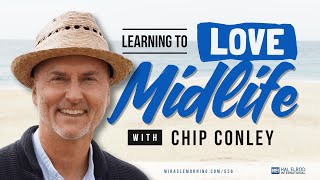
Recorded interview (YouTube) in which Hal Elrod interviews Chip Conley about midlife, aging, and Conley’s book Learning to Love Midlife. Conley contrasts cultural anti‑aging messages with evidence and experience that many capacities (emotional intelligence, wisdom, time affluence, spiritual curiosity) improve in midlife. He describes triggers that make midlife difficult (disappointment from unmet expectations, physical decline, mortality salience) and outlines five of 12 reasons life can get better with age across body, emotional, mental, vocational and spiritual domains. He also summarizes the Modern Elder Academy (MEA)—a weeklong, in‑person midlife wisdom school—and shares a long‑running weekly wisdom practice (journaling lessons) for metabolizing life experience.
Questions this video answers
Five male friends, ages 42 to 52.
An allergic reaction to an antibiotic; he says he "died multiple times over 90 minutes."
Chip Conley: 63. Hal Elrod: 44.
About 47.2 years old (average low point).
Average attendee age: 54. Average age they think they'll live to: 90.
Chapters
Chip Conley. It is good to see you, my friend.
Hal. I feel really lucky to be here with you, truly. And I love your last name.
The Rod. Elrod.
Elrod. There used to be an Elroy and the Jetsons. And so it's way, way earlier than your time. But when I see Elrod, I think Elroy.
I used to have a friend that called me L. Rod Hubbard. Just, just some sort of play on the Elron. Yeah, yeah. No, I appreciate it. Well, I'll tell you, I have been, I've been watching, I watched your Today show appearance, which was recent. Congrats on that, by the way.
Thank you.
Very exciting. Hoda is like your biggest fan. She was fangirling and I love Chip and I love his work and every. I mean, she was just going off. That was cool. And then I also watched three of your TED Talks to today. And I want to say, these aren't TEDx talks. These are the big stage, right? These are TED Talks. And I wanted, I was thinking, I didn't go down the rabbit hole to see, but I'm like, who has not one, not two, but three TED Talks? So, yeah, I think that you have a lot of value to add. And actually, I want to start with something that you said in the TED Talk or one of the TED talks and millions of views on these TED Talks. So you've inspired a lot of people. And you said that you actually asked the question, can we make aging aspirational? And I wanted to hear what you thought because I know a lot of people, it's like, oh, I'm getting older. My best years are behind me. You know the word midlife? I love how you say, if you're playing the word association game, crisis comes right after midlife.
Right?
So talk about this. What does it mean to make aging aspirational?
Well, here's the thing. First of all, how old are you, hal?
I am 44. So I know, I'm like, I'm in. I'm in your target market.
So for those, I mean, I hope everybody's seeing how, how's the best skin? Like, where did that skin come from, my friend? It's amazing. Yeah, so. Well, you know what, we all age differently. And I'm 63.
But the way we talk about aging is as if it's not growing.
Interestingly, when you're Talking to a 15 year old and saying to a 15 year old, oh my, how you've grown. You would never say that to a 50 year old because they think they're talking about their Waistline. But we're growing in our lives in all kinds of ways that are not visible. We're growing culturally and intellectually and spiritually and emotionally and relationally and mentally. And there are many parts of our lives in which things get better as we get older. When it comes to our physical body, that's less the case.
Just as you got comfortable in your own skin, it started to sag. But the reality is that.
Even our body can get better with age. Certain parts of our body can. Our brain can for one. Now, short term memory gets worse with age. But our crystallized intelligence, our ability to trust our intuition, our ability to think systemically and holistically and go from left brain to right brain more quickly, we're more adept at that left brain, right brain tango or four wheel drive of the brain as we get older up until our early 70s. So I wanted, what I wanted to do with this book is I wanted to help people to see that there are a lot of anti aging messages and products in the world. Yeah, there aren't a whole lot of pro aging messages. And I wanted to point out that there are 12 reasons why life gets better with age based upon not just social science, but the over 4,000 people that I've interviewed who have, who are all MEA alums, which we'll talk about are the world's first midlife wisdom school. So that's why I did it. And one last thought is Becca Levy at Yale has shown that when people shift their mindset on aging from a negative to a positive, they gain seven and a half years of additional life, which is remarkable.
Wow.
It's more additional life than if you stop smoking or start exercising. So having people think about aging as not just a negative thing, but as having some upside as well, some unexpected pleasures of aging was part of my intent with this book.
I love it. So, yeah, the book is Learning to Love Midlife. And you know, I'm actually writing. You probably don't know this, but I'm writing a book called the Miracle Morning for Seniors right now. And so I'm excited. You know, I'm at the early. Right. I think you call midlife. It's the 40s, 50s and 60s. Right. I'm 44, so I'm on the early, early side of that. And the. I want to do that. I want to actually go back a little bit. Because for you, I know that you started this work or part of what inspired this work is that you had friends in their midlife, 40s and 50s that committed suicide and took their own life. Can you talk a little bit about that experience, what that was like for you and how that led to this work and to this book?
Yeah, you know, in my late 40s, during the Great Recession, I lost five male friends to suicide, ages 42 to 52. And I was really going through a difficult time myself at the time. I had no idea that there was this thing called the U curve of happiness, which got popularized a few years later, which shows that basically from our early 20s till around 45 to 50, there's a long, slow decline in life satisfaction. Hal, I hope you don't mind. You're at 44. 47.2 is the low point. Your mileage may vary, but these are just averages. But there's a lot of reasons why that, you know, there's this long, slow decline in life satisfaction. And.
So I got curious about midlife because I was like, well, I'm not enjoying my late 40s either. What's going on here? I got to the other side of it. I had an nde, a near death experience, where I had an allergic reaction to an antibiotic and I died multiple times over 90 minutes. And so, long story short, as I got to the other side, sold my company at the bottom of the Great Recession and had some space in my life, and then I went through my 50s and my 50s were like, spectacular. I was the modern elder to the founders of airbnb more than 11 years ago when they asked me to come in and help their little tech startup. They wanted me to help sort of, you know, guide the rocket ship. And it was a beautiful experience. They called me a modern elder because I was twice the age of the average person there, but also because they said a modern elder is someone who's as curious as they are wise. I was like, ooh, interesting. The alchemy of curiosity and wisdom. And. And I loved my 50s. So in my, you know, my late 50s, I decided to create the Modern Elder Academy MEA. And.
I started really getting curious about midlife. And because there's not a lot of research that's been done on midlife, and lo and behold, I ended up deciding to write this book, Learning To Love Midlife 12 Reasons why Life Gets Better with Age. Because I wanted to help people to see that there's a bridge from the rough part of midlife which does exist, and we can talk maybe about why that exists to the other side of midlife, where people, according to the U curve of happiness, get happier in their 50s than their 40s, 60s and 50s. And 70s, then 60s. So if you could get over this bridge over troubled water, you can get to the place where actually life gets better with age.
Yeah, my mom is, I think, 67, 67, 68. But yeah, she's just having the time of her life. You know, she's probably, she, I mean, she says she's the happiest she's ever been. She's energetic, she goes. She dances, she does karaoke, you know, so. So you mentioned you alluded to some of the reasons, like, what are the reasons that that period of, you know, 47.5, that decade in there is so difficult for people.
So what's going on, often for people in their mid to late 40s, and it can happen earlier than that and later than as well, is you're coming face to face with disappointment equals expectations minus reality. So let me say that again. Disappointment equals expectations minus reality. So if you have expectations of one level and then reality is below that, the difference between the two is disappointment. And for a lot of people, it's around 45 or so, they look at all their hopes and dreams that they had in their 20s and they can start to say, like, you know, I'm not going to run for office. I'm not going to be mayor of, you know, San Francisco like I thought I might be, or I'm not going to, you know, climb Mount Everest. It doesn't mean you still don't have the opportunity to, but you can start to see the window closing.
Yeah.
And if these were things that really matter to you, then that can be disappointing. Brett A. Brown, who's a friend of mine, the famous sociologist, says it's a midlife unraveling. And what she means by that is that you've. When I first heard her say it, I said, like, brene, no one wants a midlife unraveling. That sounds terrible, except like you're losing your mind. And she said, look at the in the dictionary under the word Ravel and you'll see that something that's raveled is so tightly wound, you can't get it undone. And that's how a lot of people. How a lot of what? That's a lot of the way people feel in their mid-40s is.
They have the spinning plates phenomena. They've got so much going on, so many obligations, they've been accumulating. They have children, they have all of this, and they're like. And then they also have the sense that they're not meeting their expectations and we need to unravel that. And by Unraveling it, it means you start to get clear on what's important to you. And maybe you start to say, it's time to edit. At mea, we call it the great midlife edit.
Because the first half of our life is about accumulating and the second half of our life is about editing. But nobody told us in midlife, that's part of our job, is to figure out, okay, what do you let go of, what else is going on. Around that time, you start to get realistic about your body. Your body is this rental vehicle that you were issued at birth. And by the time you get to your mid-40s, there's a lot of mileage on that rental vehicle. And for a lot of people, that can be frustrating. And finally, there's a lot of death that starts to become more apparent to you in your late 40s, whether it's family members passing away or your own potential health diagnosis, that's an issue. So you start to, you know, notice mortality as something that's on your mind. So those are all the things that are not going well. But then, frankly, on the other side of that, There are these 12 reasons why life gets better with age that actually start to help you feel better.
Can we unpack some of those? What are some of the themes in the book? Learning to love midlife.
Well, there are five different categories.
There are the body, the physical side, then there's the emotional side, the mental side, the vocational side, and the spiritual side. So I'll maybe take take one example from each of those five different categories, knowing that there are 12 reasons overall. But I'm only going to focus on five right now. The first one is an interesting one. We have really bad longevity literacy for the average person. The average person who comes to mea this midlife wisdom school is 54, and the average age they think they're going to live till is 90. But they've never done the math to realize that 54 is exactly halfway between 18 when you became an adult and 90 when you may die. So you have. You have half your life left. Adult life. Adult life. That's right. And we sort of think like at 54, like, oh, I'm going out to pasture. So one of the positives is, and it's starting to become more clear is that in a world in which people are living longer and a growing number of people are living to 100, that when you start to realize that you have that much life still ahead of you, you can start to actually ask the question, 10 years from now, what Will I regret if I don't learn it or do it now? And so it gives you a sense of seize the day. Of like, okay, one of the things that gets better with age is if you start to realize you have a lot more time ahead of you, you start to actually get maybe a little bit more focused on not the future, but on the moment. What can I do now? One of the great things about aging is you start to realize, okay, I'm going to seize the moment. And so mortality is in essence, death is a great organizing principle for life.
Okay, let's go to the second one under emotions. Our emotional intelligence grows with age. Our IQ does not, but our EQ does pretty conclusively. Our emotional moderation improves with age. We learn how to take things less personally. We care less about what other people think about us as we get later in life. So there are a lot of things that around our emotions that improve. And learning how to put the distance between stimulus and response, actually, whether it's through mindfulness activities or just through not taking things so seriously is another benefit. And all of the things I'm going to talk about here are what I've seen in the 4,000 people who've come through MEA, but also what social science has proven and what our faculty has shown. Thirdly, let's go to the next category, which is the mental category and wisdom. Now, wisdom does not always grow with age. I know some 30 year olds who are wiser than some 70 year olds and that's because they've learned how to metabolize their life experiences. I like to say that our painful life lessons are the raw material for our future wisdom. So having said that, one of the things that, that people start to realize is, oh my gosh, I have the pattern recognition to say I've seen this movie before, meaning I have the intuition to say I know the right answer here because I've been on the planet long enough to understand that my intuition's telling me something, giving me some indications of the right, the right decision here. I'm 63 today and I would say I make much better decisions at 63 than I did at 33. Sure. And that's primarily because I've built some wisdom along the way. And I can actually even talk about a wisdom practice after I go through these five. Yeah, please do go through those. But I'll come back to that fourth category of what gets better with age on the vocational side is we start learning how to curate some time affluence into our lives because if we can actually get off the treadmill. Often it's around midlife that we start to see successism in our life. Now what is successism? Successism is when someone else's definition of success has been imposed upon you and you realize that maybe your definition of success is different than that. Now, hopefully you figured that out in your teens or your 20s. But for a lot of people, they don't figure that out until their 40s and they realize, I have been running up this mountain, but it's not my mountain. I don't love this mountain. This is my parents mountain, this is my community's mountain. This is not my mountain or like my valley. It doesn't even have to be a mountain.
Sure.
And so you can start to look at your life and say, like, how do I spend my time differently? So I have some time affluence. You know, money will make you rich, but time will make you wealthy and being able again. As you get into midlife and beyond, you start to value time more because you have less of it.
Less of it, sure, in the future.
And therefore you want more of it in this moment. So time affluence becomes a thing. And then finally, the fifth category, spiritually, lots of evidence that spiritual curiosity, spiritual intelligence improves as we get older. But what I like to say is, I like to quote Richard Rohr here, who's on our faculty, famous Christian mystic as well as Carl Jung, who both said basically the same thing. In the first half of our life, our primary operating system is our ego, for all kinds of good reasons. It's what individuates us, it's what propels us forward. It's what gives us a sense of who we are. But it's around midlife that actually the primary operating system in our life shifts from the ego to the soul. But nobody gave us operating instructions or gave us a warning this was coming. And I see it all the time in people in their 40s, 50s, 60s who start being more curious about the meaning of life and things beyond themselves. And so one of the reliefs is like, oh my God, I no longer have to live in the ghetto of my ego. My ego is here and it will always be here. But it is now being, you know, it's now servicing the soul as opposed to the opposite, the soul servicing the ego. And so that's a. I could go on to the other seven, but I've given you five of the 12 reasons that life gets better with age. And because those are exists, that's part of the reason why we get happier after age 50. Life begins at 50.
So the. Yeah. Something I realized recently that you kind of a different way of framing what you're talking about. For me, it hit me recently, and I don't feel like I'm going through a midlife crisis, but maybe I've had, you know, like, glimpses of one coming. I don't know. But I realized that when you're younger, the younger you are, the more life exists as pure possibility, and the older you are, kind of the less that it does right now. And what happens is I think you have now possibility with every passing year is replaced with hindsight. So now you're. And that's where regrets are born. You're looking back, you're like, oh, I wish I would have done that differently. I should have made a different decision. Whereas when you're 20, even if you're like, oh, I should have nat differently, but who cares? I'm only 20. I can do. I've got my whole life ahead of me. Right. So I guess I want to ask you.
I'm not sure how to frame this question.
Let's say I'm 44, but let's say someone listening, 50, 60, whatever. And they're like, I've got some regrets. My life, like you said, the disappointment expectation doesn't meet my reality. I'm not where I want to be. I'm not sure what the future holds. I don't have a sense of purpose. Right. So I would imagine, I think that's a large segment of our population that are lacking this clarity, this purpose and meaning, et cetera.
What would you, you know, broad question, and let's just see where. What comes up for you. But what would you say to that person? Right. I'm like, chip, hey, man, my life's not where I want it to be, and I don't know that it's going to go anywhere better. And I don't. I just feel unhappy and stuck.
Well, we. You just described the 4,000 people who have come to our program. But let me talk about the program and then. And then tell you what I would say to them. So six years ago, started the Modern Elder Academy. Sort of doubled down on the term modern elder, because that's what they called me at Airbnb. And it's someone who's as curious as they are. Yeah. So I wanted to say, like, okay, you know what? You can be an elder at any age. Tom Brady was an elder in the NFL. You can be a fashion model and elder at 30, a software engineer in Silicon Valley and be an elder at 35. I mean there's so it's a relative term. So started the world's first midlife wisdom school. Created a campus in Baja on the beach, now have a new campus.
This is an in person school.
It's an in person school and we have a school in Santa Fe, New Mexico on 2,600 acres of regenerative horse ranch. So there's an in person school. People come for a week and they go deep. And so average age is 54, as I said earlier. And it's people of all walks of life because we have financial aid as well as full tuition. So long story short is people come all the time feeling stuck in their 40s, often 40s, 50s and 60s.
So the curriculum we have focuses on navigating midlife transitions, cultivating purpose, and learning how to own your wisdom while reframing your relationship with aging, with learning how to feel better about it. What I want to just say is that.
Two things to related to your question. I like to ask people the following because this is the breadcrumbs to your purpose. Often people get worried they don't have a purpose. Well, find something that you're purposeful about. Forget about the noun of purpose. Focus on the verb of being purposeful. So the first question I would ask is, what in your life are you agitated about, excited about, curious about or, and, or something from childhood or your early adulthood that you were passionate about but sort of got lost?
Sure.
And that question, you don't, you know, often bring something up for a person, so a person might feel stuck or like, I don't, I don't feel like I know what I'm doing. And it's like, okay, what excites you? What agitates you, what makes you curious? But I'll tell you a quick story. There's a woman, she was a litigation attorney and she was in the Bay Area and she'd been doing it a long time. She was 60 years old, six zero. She didn't like what being a litigation attorney was doing to her. It made her conflict seeking and she liked to argue a lot. And she had lost a husband, you know, to divorce, partly because of it, she thought. And so she came to me a stuck because she was like, I'm really good at this and I hate it and I've been doing it for too long and I have no idea and I don't want to, I don't want to retire. I don't know what I'm supposed to do. Next. So ultimately, in the course of the workshop, we asked her this question and we got to the place of like, oh, when she was a child, like a teenager, she loved cooking pies with her grandmother in her grandmother's kitchen. She loved the smells. And as an adult, she realized that whenever she's in a new town or a new neighborhood, if she sees a bakery, she always walks inside, she wants to smell it, she wants to see what they have. But it had not registered to her. It had nothing to do with her career as a litigation attorney. By the end of her week with us, she realized, I'm going to go learn how to become a pastry chef and I'm going to take that baby step and if I like it, I'm going to learn. I'm going to figure out how to wind down my litigation practice and I'm going to go and create a bakery in my neighborhood, because in my neighborhood there used to be a bakery and in Covid it closed and there's no bakery in my neighborhood. And so that's what she's doing now. So that is an example of how do you unlock something for someone when it's not obvious? Similarly, there's a beautiful quote that I like to say, which is, the purpose of life is to find your gift. The work of life is to develop it, and the meaning of life is to give it away. The purpose of life is to find your gift. What if we shifted the word gift to wisdom? The purpose of life is to discover. To find your wisdom, to discover it. The work of life is to develop it, and the meaning of life is to give it away. Part of what we do at MEA is help people figure out what is their gift, what is their wisdom, what is their mastery. Because what I learned at Airbnb when I joined Airbnb, I've been a Boutique Hotelier for 24 years, started one of the first boutique hotel companies in the United States, grew it into the second largest in the US, had 52 boutique hotels.
But a lot of what I'd learned along the way felt really obvious to me. So when I sold that company and then had a little bit of time off and then joined Airbnb as the in house mentor to the founders. A lot of my wisdom was the kind of stuff that I felt like, oh, everybody knows that, but no, no they don't. And especially in an organization where there were some brilliant technologists who knew a lot about DQ digital intelligence, but not a lot about EQ emotional intelligence, or about corporate strategy, or frankly about the hospitality and travel business, the industry that.
We were disrupting, they were now in.
Yeah, that's right. So helping people to see the not obvious to them, but obvious to other people gifts and wisdom you have is a real valuable thing and often your friends don't notice it either because they're just like you.
Yeah, yeah, that's true. I had a coach that taught me that years ago that you know, people take, we take for granted the wisdom or knowledge or experience that we have when there are infinite amount of people that don't yet have that right. And that would, you know, that would love to learn from us. You mentioned earlier a wisdom practice that you could share and to circle back to that. So I'd love, I'd love.
If you're good, Hal, you're good, you know.
Yeah. So When I was 28, I had been CEO of my company for two years and I was sort of an idiot. I mean like a 28 year old CEO. And I had one hotel, it was in a bad neighborhood, it used to be a no tell motel where people paid by the hours, but it become a rock and rol roll hotel. And you know, I was doing my best but I limped into the weekend, one weekend where like I just felt like an idiot. And so, and I've been complaining to a friend of mine and he says, well, just start writing in a journal. I was like, okay, I'll write in the journal. So I took a journal off the wall that I hadn't written in and instead of actually writing like emotional stuff of what I was feeling, I wrote on the front of it. My wisdom book was like out of the blue. I mean, who knew I'd be creating a wisdom school, you know, many, many years later.
Yeah.
So I wrote in the front and I started a practice that I've been doing for 35 years and that is at the end of every week going into the weekend, I spend 20 to 30 minutes. Now I do it in a Google Doc. But back then for many, many years I did it in these journals and I would write down four, six, maybe eight different lessons I learned that week. Like something that, you know, just whether it's personally or professionally, maybe it was a painful lesson, maybe it's something like, oh, okay, now I know that. And then I'd write down what the lesson was and how it's going to serve me in the future. So let me use an example.
When the reason I started doing this in 1989 was because the Loma Prieta earthquake came along, which basically Devastated the San Francisco Bay Area and nobody was coming to town. And my only hotel was in San Francisco. And, like, now it was empty. And I didn't have a lot of cash flow to be able to cover the losses. And so I had a really creative idea that I wanted us as a leadership team to buy into, to help bring business to the hotel. And so I brought it up at a leadership meeting and I was the owner of the business and I was the CEO. So, like, of course, everybody should say yes to Chip, but no, I had two critics on my team who are natural born critics, and they, they, they came up with all the reasons why my idea was a bad idea. And so everybody else just like, yeah, let's not do that. And I still felt it was a good idea. But at that point, I had made the mistake of introducing it to everybody, when, in fact, my lesson was, if there are a couple people who are going to not like your idea, present it to them first, one on one, so they can get their fingerprints on it, so that when you present it to the whole group, maybe they're actually going to be supportive. Now, to me, at 63 today, that's so fucking, excuse me, so obvious.
But at 28, that wasn't obvious. So that became a lesson, and it was going to serve me in the future. So if our painful life lessons are the raw material for our future wisdom, finding a wisdom practice that allows you to actually make sense and metabolize your experience is important. I do this on our leadership team. I've done it at Joie de Vivre, my hotel company, at Airbnb and at Mea now, where once a quarter on the leadership team, each of us will say, here's my biggest lesson of the quarter and here's how it's going to serve me in the future. And so let's say there's eight people on the team, and each of the eight of us say what it is. And then as a group, we say, what was our biggest team lesson for the quarter? And we actually say, how will it help us moving forward? That exercise has helped so many of the teams I've been involved in to not just feel like they have the candor and vulnerability to talk about what the lesson was of the quarter, but that actually they shared it with other people. So their lesson is my lesson. And so I would just say we are moving into an era where knowledge is commoditized. We have AI and all of the world's AI.
Chip GPT. I saw Chip GPT on your website.
There is a chip GPT on the chipcolly.web website. So all of my content is right there. I have a daily blog and all of my books are right there. So you could ask me anything without even meeting me.
Yeah.
What we're moving into is an era, the wisdom era. And the knowledge era has been very good, but it's all commoditized. And what's valuable today is learning how to make sense of our wisdom. And wisdom is very much of a human quality. And you know, a bot is not necessarily going to be wise. It will be smart, but not necessarily wise. So how do you define the difference.
Knowledge you accumulate? And it's some you know that you could learn the knowledge. The capital of Paraguay is fill in the blank. But wisdom is based upon personal experience knowledge. You could also be a knowledge expert in a particular domain but be clueless about a bunch of other things.
When you're wise. Or something has wisdom built into it. It has personal life experience and human qualities built into it. So knowledge is localized. Wisdom is sort of globalized in the sense that when someone has wisdom, they have wisdom across domains. And so also knowledge is something you accumulate, so you add. Whereas wisdom is something you distill. It's taking a bunch of information and distilling down what's essential.
And real quick, just to circle back something you said earlier, which is, you know, you talked about how our memory declines in our older age. And I actually, I have a brain injury from when I was 20, so I have probably the memory of an 80 year old at 44 now. But the point being, uh, the what, what's interesting to me is that even if your memory is not as, as good as you get older, as you're in your midlife or beyond, the wisdom stays with you. So that, that's just a distinction that came up for me as you were talking. Right. Is that like I don't remember a lot, but I do feel like I'm pretty wise for a 44 year old. And to your point, it is all based on life experience. And it's like, oh, I've been there, I've done that, I overcame that. Here's what I learned from it. But I can't tell you the capital of Paraguay or what I did yesterday without checking my schedule and so on and so forth. So that was an interesting distinction for me is that if you can understand it as you get older and if your memory is not good, and that's frustrating, but you realize that wisdom is within you and always available.
So Yeah, I mean, wisdom and intuition have not been studied very much. This is one of the things that we're working on right now is like, how do you, how is wisdom different than intuition? There's similarities. I think intuition is a form of wisdom. It's not the only form. But, but we, you know, I think we're moving into an era where wisdom workers will be maybe as valuable as knowledge workers.
Yeah, sure. Interesting. Especially with chat. Chat GPT or chip GPT, right. That, you know. Yeah. The knowledge is like you said, commoditized. Wisdom is not, you know, you've taught, you've mentioned me a, a few times now that, remember, correct me if I'm wrong, but it stands for Modern Elder Academy.
That's great.
It does. The first one was in Baja, Mexico.
Did you say Baja? On a beach? And so, and we have usually about 24 people in a workshop and it lasts a week and we have them every week of the year and the, the work. And we have workshop leaders, everybody from Esther Perel to Dan Buettner who started Blue Zones to Michael Franti, the musician. So all kinds of well known leaders. And then we have these, our own core workshops as well. And then in Santa Fe, we have a campus opening in the spring that will also be doing workshops as well.
Got it.
Okay.
Yeah, I had ADHD moment and I got curious. So I googled it and looked up the website meawisdom.com while you were talking. I was still listening, but it's beautiful, man. This is pretty cool. Meawisdom.com so if anybody's interested in that.
That'S where you can find my blog there. So I have a daily blog called Wisdom. Well, and if any of this is interesting to you, you can find the blog there and subscribe and you get an email from me daily for free. But what I'll just say is how we, most of us fuel up on a lot of our knowledge and education early in our life. And by our mid-20s, we're sort of like driving our car of life through life. And like, we need some refueling in midlife. So think of this as like a mid, midlife refueling, a pit stop that allows people to not just figure out who they are, what they want to do, et cetera, but also how they understand their life stage of midlife, which is a, you know, much derided life stage because of midlife crisis. And so that's why we're the world's first midlife wisdom school and have gotten all kinds of awards for our program.
Well, this Reminds me you've shared a few quotes. One quote that comes up for me in this conversation is Wayne Dyer, when you change the way you look at things, the things you look at change. And I found that quote to be such a driving force in my life, where I'll be, whether it's. Sometimes I feel like, oh, life's not good right now. This is going wrong, and my business is a mess, and I'm stressed over this, right? And then all of a sudden, I have a conversation with a friend or I read a book like Learning to Love Midlife, or, you know, and it's like, oh, I see this totally differently. It can also be our relationship with a person in my life, right? Like, oh, this person's so frustrating. And then you look at that person differently, or you look even through the eyes of empathy, and you're like, oh, they're just hurting. I'm sorry that I felt that way toward them. So to me, you know that even just the title of your book, Learning to Love Midlife, to me it's like, wow, this is a book where by the time you're done reading it or while you're reading it, you're going to probably see midlife in a totally different way. That's going to upgrade the quality of your life and how you feel about every day and every moment and yourself and your future and the present. So any closing words for anybody listening that you'd share?
Yeah, you don't have to go through this alone. I mean, a lot of people, a lot of times in midlife, we go. We don't go through adolescence alone, although sometimes people do. But generally we go through adolescence as a peer group and we're trying first thing, first thing times. We're trying things for the first time, and we get through it. When we're going through middlescence, a word that describes midlife, a time when we are going through hormonal, emotional, physical, and identity transitions. Just like adolescence was full of that middle essence is too. You don't have to be doing it alone. You can have a cohort of people who are supporting you during that era. Unfortunately, as was true for my five male friends who took their own lives, a lot of people feel like they're getting the game of life wrong and they feel like an idiot and because they're disappointed with their life. So highly recommend that people look at, whether it's reading my book, reading my blog, Coming to Mea, or we have online programs, too. Check out any of that, or check out whatever you need to actually make sure that you have other people in your life who are the emotional insurance for you on a rainy day.
What is the best place online for people to find you and find out about all the work that you're doing?
Meawisdom.com, chipconley.com But I post each of my daily blog posts on my LinkedIn profile, so I have a very active LinkedIn profile and community and so people can check that out as well.
Very cool. Well, Chip, thanks for the work that you're doing, brother. As a early midlifer, I really appreciate it. And you know, and I know that so many people listening. I mean, that is our target. The majority of people that are part of the Miracle Morning Community and Listeners podcast are age 40 to 60. So, I mean, it's literally right in that age range. So when I, when I had the opportunity to bring you on the show, I was really excited because I knew that this was perfect for our listeners and my audience. And thank you so much, brother, for being here. I appreciate you.
Thank you for all you do, Hal. I really appreciate it as well.
Awesome. Well, goal achievers and members of the Miracle Morning community, I love you so much. And check out Chip's book, Learn to Love Midlife. Head over to meawisdom to check out the Modern Elder Academy. And I love you so much. I'll talk to you next week.
More from Hal


Hal Elrod shares the most effective tool he’s learned to quickly handle anything life throws at you.







Jim Kwik: How 5 Minutes Each Morning Can Rewire Your Brain and Change Your Life
