Money Habits That Cure Financial Stress
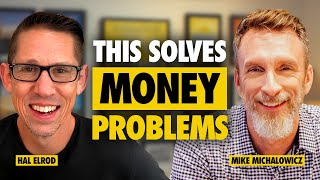
Mike Michalowicz presents a six-account system that divides money into Income, Needs, Wants, Dreams, Fix/Future, and Emergency accounts. A 900-person garage-door company saved $250,000 in six months using it. The approach redefines financial freedom as control over money, not unlimited spending, and builds habits through your bank app rather than traditional budgeting.
Chapters
How would you like to turn your financial situation around and never have to worry about money again? Look, your financial reality is a reflection of your daily habits. And in the next few minutes, you're going to learn the money habit, the worry free way to financial independence, which will enable you to transform your financial reality one day at a time. I am joined today by Mike Michalowicz, the bestselling author of 11 financial books, namely his mega bestseller, Profit First. And Mike has helped over a million people achieve financial financial independence. I am one of them. If you are ready to cultivate the discipline, the clarity and the control needed to achieve financial peace and success and freedom and independence, this conversation can change your life. Mike, I don't know where we should start, man. We have so many stories that we can just tell people right off the bat.
I know. Well, no, you started it perfectly because you said, let's keep it pg, bro. Like behind the scenes.
You said that, like in full disclosure, 30 seconds ago. I said, all right, Mike, we're going to keep this pg. Okay, buddy?
Yeah, so there goes all the stories. Like, there it goes.
Oh, yeah, we can't tell any stories that we have.
Yeah, I walked my dog. It was amazing.
So, hey, let's dive right in, man. The audience, I know we all care about financial independence. And your new book, the Money Habit, is about the worry free way to financial independence. And actually, that to me, is one of the boldest claims that you made. I started reading the book this morning. In Full Disclosure, I'm only a couple chapters in. I don't think you sent me a copy. Thanks a lot.
No, no, no. I need the money.
Yeah, that's fair. So, no, but here's. But, but this, I. This really caught my attention is the claim you make is that if you implement this, you will not. You'll never have to worry about money again. And can you unpack that?
Yeah, yeah, yeah. I don't say you'll never worry about money again. You'll never worry about how you manage money again. So let me, let me give the definition of financial freedom, which you hear touted by all these gurus and stuff and why I call total BS on it. All right, so financial freedom is that you have no concern about spending your money, meaning there's no financial consequence. So you and I are like, hey, man, it's kind of cold here. Why don't we head down to the beach and hang out there? The beach still will be the Caribbean and we'll take a private jet and we'll bring 20 of our best friends, all that. And then we say, and don't worry, the bills don't matter. There's a certain point where the bills do matter, regardless of how much money you've saved or how much income you have. So financial freedom is a moving target and it's defined differently by everybody. So yeah, that's out. I argue you'll achieve financial independence. Here's my definition. Most people, money has control over them. They are, they're placating to what they see. The bank account. I'm saying money won't control you. You'll control it. You'll assert authority over it. It doesn't mean you can live this lifestyle beyond your means, but you'll know what your means are and you'll start working within it. And with cash, clarity becomes control. And here's the funniest thing. I would argue anyone can go on that Caribbean trip on their private jet. Even if you earn $50,000 a year or whatever your number is, that's the average income of the Americans, 50,000 a year.
Okay.
And you can only put away 10 bucks a week. Well, that's 500 a year. And you can pay for that half million dollar trip. It's just going to take you 2000 years to get there.
Okay.
You know, the variable is, is time. So anything that's achievable over time and then you can decide is 2000 years reasonable for me or not? And then you can make adjustments accordingly. But there isn't an infant source of money. And that's the. I think what financial freedom promises us. And I think that's bs.
Yeah, yeah. No, well, that's what I like about too. The premise of the book is that this isn't about necessarily creating a bunch of new habits that are out of your comfort zone. This is taking the habits you currently have and working with them. I mean, your book, Profit first, that's what you. I always tease you. I'm like, when you write a book for the rest, like you just write a book for entrepreneurs and business people. That's like your world. In fact, that's a question. What brought you to write a book for a financial book for everybody, when you've written 11 books for business owners.
Nothing was more painful than going into a Barnes and Nobles and seeing my book Profit first on side and then seeing Miracle Morning, the front facing, stacked, 20 big pictures of Hal Elrod next to it. My ego. My ego's getting punched every time. And so I'm like, what's how doing well, he serves a Lot more people than I do. So I'm like, okay, there's something there.
Yeah.
The. The other part, though, is it's interesting how in the entrepreneurial space that when people crush it in business financially, but they're not nailing it home, the home leeches off the business and the business gets compromised, or vice versa. I've seen people save for their future and have a struggling business, and it eats off their future and crushes their home. So I was like, oh, we need to nail our finances on both fronts. And that's when I realized I'm writing a book not just for entrepreneurs and their home finances. I'm writing it for everybody. Their employees, too.
Well, and I love. I love that. That's an interesting premise. Right? That the idea that, like, if your business is crushing and you've implemented profit first and, like, all is well there, but at home, your finances are out of control and you're spending more than you make and. Right. Like, and you're in debt. Well, now, yeah, like you said, it leeches off. Now you have to pull extra distributions out of the business, and now your business is suffering because you're not making smart personal financial decisions. That's a great point. I want to hear, though, one of the. You tell the story of how you. You were working with a one garage door store.
Yeah, yeah.
Big company.
Yeah.
And then Tommy, the. Is he the owner?
Founder Tommy Mello. Yeah, yeah.
So he had implemented profit first into their business, and that had worked well. And then he implemented the dream manager, or was a dream manager for that company. Right. And then look at the memory on me, man.
Dude, like, you really dug into chapter one.
Yeah, yeah, I dug in deep on chapter one. No, but, but, but this is what was cool. So the dream manager, he had all the. He was working with all their employees. Was it 200, 500 employees? How many?
900. Which was 900. Yeah.
And then you. And then he wants to help them with their finances, so he brings you in. And within six months, they had. Had paid off $250,000 of debt saved. $250,000. Roughly a $500,000 swinging across those employees. Talk about that. And that. That was part of what led to the money habit, right?
Yeah, exactly. Yeah. So the, the. Just to fill in some of the cracks there. So Tommy Mello owns a garage door service company that's nationwide here in the US 900 employees, they have a Dream Manager program, and this guy Travis Snyder runs it, but they have 25 people in the program. He said, I want to introduce this to everybody, but we gotta start somewhere. So that number change of $250,000 of debt to 250,000, effectively a savings, a $500,000 swing was for 25 people. Wow. And their average salary was 75,000. It's interesting how much of a swing you can have when you just manage your numbers better. But here's what was really the impetus behind it. Tommy, when he called me, he said, employers have a big problem. Our employees are worrying about money. And how it manifests is they. They will sometimes come and say, I need a raise when it's not due. Or they'll say, can I borrow money? And he wants to accommodate it, but you can only do so much before you go under. So he says, I can't do it. But he goes, the majority of people suffer in silence. They're worrying if they can pay for their groceries or. Or rent or mortgage. And they don't say anything. But they're not in on work. They're worrying, how am I going to cover the bills today? And so they're distracted. He goes, I'm paying the consequence of that, so I can't pay them more. And. And I can't do anything to alleviate the worry except financial education. And that's the great irony. Not a single person, I would argue, needs or should even earn more until they master what they're earning currently.
Yeah.
I think most people feel the solution is, oh, if I just simply earned x more. Everything's fixed. But right today, wherever you stand today, you're likely earning more than you did in high school. You are earning more. How you doing now? If you're surviving check by check, it's the system and process you're following. We have to instill that and master it. And then earning more becomes even better.
Yeah, it makes a lot of sense. It's our habits.
It's.
You claim in the book, though, that we're not. This, to me, was counterintuitive, and I would almost think it was the opposite. You claim that we're naturally wired for wealth.
Yes.
What do you mean by that? Because to me, I think we're wired especially because of our culture, that we're. At least our culture is programming us to spend, spend, spend. All the commercials we're seeing, all the Keeping Joneses. So why do you think that we're wired for wealth?
Yeah. So wiring is our internal nature, and then there's these external forces that are trying to leverage it to our disadvantage. I researched what's called optimal foraging theory. It is a Behavioral mechanism that's wired into us ever since our Neanderthal days. The essence of it, like, say you and I were in the same tribe and we're like, we need food. Ug. We wouldn't then say, hey, who wants Taco Bell? Ugh. Or let's go out for a steak. Ugh. Like we go on hunt.
Yeah.
When, when, when you're going to collect something, you collect en masse. So we go for the woolly mammoth or collect all the berries and vegetation in the area. But a problem presents itself. You collect a mass because there's a major caloric ex. Ex. You expel tons of calories to do that. But once you kill the woolly mammoth, you better eat it real fast or it's going to rot away. So we go into a gluttonous state to. To consume the calories or preservation. And the only way to preserve is to smoke it, to bury it. When I say smoke it, not like how you smoke, I mean like smoke weed. Yeah, bury it, but consume it fast. The problem in modern society is our wiring is the same when we go on the hunt. It's not for woolly mammoth. It's for. For a paycheck or a distribution from our business. And that happens in mass. For most people. They get paid once every two weeks, sometimes once a month, sometimes weekly. But it comes in a big chunk. So what happens is our mind is programmed to say consume immediately because this will rot away. And we know logically money doesn't rot, but we feel it does, so we start spending it. Unless we have preservations, we know when something's preserved and contained, it can sit there and wait like the bag of chips that sits on the shelf for a couple days before you eat it. We know it's not going bad, it's preserved. So we're naturally wired to be much more. We consume a lot less aggressively when we know things are preserved. What the problem is at bank, at the bank level, we rarely preserve things. So I propose in the money habit is we're going to set up multiple accounts at your bank. So when that big check comes in, we're going to carve it up, preserve it in different accounts, and you will inherently spend more slowly, more effectively. The last thing I'm going to share is there's another way to fix our natural or work with our natural wiring. The optimal payment frequency if your employer or if it's your own company, but if your employer paid you twice a day in the morning and late afternoon, you would actually spend better too. But that's never going to happen. So. So what we're going to do is we're going to set multiple accounts at your bank with its intentions determined by title. This is for my groceries. This is for my mortgage. Carve up that money before you spend it and it feels preserved.
About two of my favorite products. I've been taking these for four years and they are now a sponsor of the podcast Cured Nutrition Flow gummies. I start every day with two of these. I meditate for 30 minutes without any supplements, and then I take flow gummies seven days a week, almost every day. And then I go to bed with night oil. 30 minutes before bed, I take night oil, and it helps me fall asleep and stay asleep. So I start my day with flow gummies. I end my day with night oil. If you want to implement my routine into your day with Cured Nutrition, go to curednutrition.com how again, that's curednutrition.com HAL and use the discount code HAL at checkout for 20% off your entire order. Flow gummies to start the day. Night oil to fall asleep. You'll feel better, you'll act better, you'll perform better. Check it out. Well, and I can attest to this, not only the profit first system in our business, but if I go back further, before I ever met you had. It was, it was a money book. I think I read it like 2008. Secrets of the Millionaire Mind. T. Harveck.
Oh, cool.
Yeah, yeah, very similar. What'd you say?
I said, yeah, it's an amazing book. Yeah.
And he taught a similar strategy of using accounts. And I remember when I was reading it, it was like the 2008 financial crisis. It was actually one of my first books during my miracle morning when I was like turning things around. But it said, set up these accounts and put your, you know, like put, you know, 10% of this, 10% of this different. And I go, dude, I'm surviving on. I need 104% of my income to pay my bills. Like, I'm. I don't have enough money. And his premise was just get the habit.
Right?
And it was like, put, you know, put. So start out with a dollar in each account and by creating that habit, eventually it will grow. And it was like, anyway, and it worked like it, it was a huge thing that it turned things around. What are the five counts that are the, you call them the foundational accounts. What are the accounts and what are the purposes?
Yeah, and just adding to that, just to set the structure for these Accounts. It's in fact 6 is this is the envelope system. So this system that T. T Harbecker wrote about, that I write about, is nothing new. It actually goes back to biblical times in religious literature it says tithe, for example, which means preserve money for an intent outside of yourself from your income. Richest man in Babylon. Think and grow rich. All these books write about these concepts. The modernization I've had is doing this at the bank level and assigning certain names to it and working with some kinds of percentages or fixed dollar amounts. The six primary accounts are as follows. The first account called income, is a depository only account. Why is this important? Because the natural behavior of most people is to log into their bank account daily or weekly, sometimes a day, to see our balances. When that hunt happens and the woolly mammoth is captured, you're going to see that full deposit. That gives us a sense of inbound cash flow. Now the key is never spend money from that. You just want to recognize it. Then ideally automated by your bank on a percentage or dollar basis. But you can do it manually. You carve up money into the following accounts. Needs. These are the essentials for living. We all need food, water, shelter. It's the basics and essentials to survive. The next level is wants or next account. These are the many luxuries in life. So I need food, I want to eat out. And if you're confused if like, you know, I, I need to pay my mortgage for my third home, is that really a need? If you're not sure if it's a need or want, it's always a level up. So need is essentials. Wants are luxuries, mini luxuries. Dreams are the grander luxuries. These are the visionary things. One day I'd like to own a second home, or one day I'd like to go on a big vacation, whatever, that big one day goal for you is a dream. Next account has a variable name. It's either the word fix or the word future. If you come into a system like this, when you have it with debt, which by the way, over 55% of the population does, and I'm saying unsecured credit card debt. The difference between secured debt and unsecured debt is you own a home and have a mortgage, that's debt. But there's an asset behind it which your lender could take back from you if you can't pay your loan. That's why they reduce the interest rate because the risk is much lower. But the lender on a credit card that you just used to pay for Netflix. Well, next month. You can't sell off last month's Netflix. It's gone, it's vanished. So they've high, they charge a very high interest rate because it's unsecured. There's nothing protecting them. Yeah, if you come with unsecured debt, which by the way, 55% of the population does, or more, we gotta fix that. That's very risky. So we're gonna allocate money toward paying down and eradicating debt permanently. But once we're in the position of addressing that debt, we change it to future. This is preservation of money for future events, like retire of significant events for yourself, which are retirement. It could be living in the now. It could be activating funds to, to go on that grand vacation for your entire family. Something that enhances the dream to an even bigger level. And then the last count's emergency. The most predictable bill is the unpredicted bill. The roof leaks, someone gets hurt or sick, something unexpected will happen, I guarantee it. And you know this from your own life, Hal. We're going to preserve money for that. That's the six accounts.
Well, and I want to just zoom in on that last one. It makes so much sense in that you think about most of us aren't saving in an emergency account. And so therefore when we get money, we, our brain, as you said, it thinks, this is how much money I have to spend. And then we spend all of the money that we have, often more on a credit card. And then when that emergency comes up, it's like, oh, wait a minute, I can't afford this, I'm in trouble now. Whereas if we had realized that, no, this is a part of the money habit, is that you're saving for all of these very intentional, very responsible purposes. And therefore when the emergency happens, you're like, oh, thank goodness I have an emergency account like that. That's what it's for.
Dude, you should written the book. You should write the book that, that you just explained optimal foraging theory more concisely, more effectively than I ever have. That's exactly what happens when the money comes in. We spend it all. Because optimal foraging theory says this will rot away. Consume, consume. We are wired to consume. Unless we preserve. And for the emergency account, it's a form of preservation. It's hidden away and we actually are less likely to consume it. Now listen, people cheat systems. We will steal from ourselves. But you can no longer subconsciously do it if you take from that emergency account for a non Emergency. If nothing else, you're consciously aware you're stealing from yourself.
Yeah, yeah, I love that. I want to zoom in on one other account, the wants account. And you called it for. What do you call it? Practical luxuries. Is that what.
Yeah, yeah, I would say mini luxuries. Yeah.
So here's a little bonus tip. I actually, I call that account. That's my guilt free spending account. Or guilt for one. Because here's the thing, as very often we feel guilty to buy things that we don't need. This is a lot of folks. Some folks are too far on the other end where they're like, whatever, did I buy everything I want and I'm in debt and I don't care, you know? But most of us, I think, are more responsible. And the problem is that we, we, yeah, we, we feel like, oh my gosh, I barely have enough money to make ends meet. Um, and so then we feel guilty to spend money on those many luxuries. But if we do that, then we have a negative association with money just in general. And we actually don't get to enjoy any of the money that we make. It's only a source of stress, which is like you live in. People live and die. And the entire time in between is like all I felt about money was stress and overwhelm and scarcity versus, hey, I took 5% or 10% and I put it into a my guilt free wants account because I'm allowed to enjoy a little bit of the money that I make regularly, every week, every month on things that I don't necessarily need. But you know what? They're fun, they bring me joy. Thoughts on that?
Yeah. Well, you're nailed again. It's essential you do that. So I look at all these diets and the diets that succeed and fail. There was one common denominator, diets that were deprivation diets, meaning you were restricted to a certain food consumption and prohibited from anything else. We're the most likely to fail the quickest because we start building this growing resentment saying, I can't have that cookie. I can't have it. At a certain point, like effort, I'm eating a thousand cookies. It's payback. And we know we're hurting ourselves, but it's this internal battle in our head when we have a little relief mechanism. The cheat day on the diet, we're actually more likely to adhere. This is a diet for life.
Yeah.
There's financial systems that say if you are willing, not willing, if you live a life of deprivation for the Next X number of years, you'll live like a king or queen for the rest of your life. And those systems can work for the very few, but for most people fail because we start to resent it. So that's why the money habit has this little relief valve. The wants account guilt free spend on whatever you want because we are assuring that our needs are addressed and that our fixes are addressed. You can still give it a little Reva leave relief valve for whatever you want.
Yeah. Because I do have so much knowledge on this. I'm happy to go with you on all of your podcasts in the future and help you explain.
Yeah, I mean you should present. Here's his handsome younger brother, Hal Elrod. There you go.
Yeah, yeah, you can have me talk. I'll come and speak at another one of your events. You mentioned that budgeting doesn't work for most people and I want to. Before you answer this, I will give my 2 cents here, which is to me, what you're teaching is reverse budgeting. Right. Meaning like if I want something, I go, oh, how much money do I have in my want account? Oh, this thing costs $240. I only have 160 right now. So I'm now going to wait until next month because then I'll have the 240. And so it's this.
Yes.
This kind of reverse version of budgeting that gives you some accountability and, and you know, kind of reinforces delayed gratification. What are your thoughts on budgeting and how it can or can't work?
Yeah, damn it. You're going to do every podcast for me because you're doing, you're doing it better. So all I can do is expand a little bit on that. Is budgets are theory based. In the event the money flows like this, this is what will be available. That's what a budget is. The money habit is a reality cash flow management system. It's active management of real cash. Love it. So it's the money's there or not? Not like will it be there or won't it be? But the other thing is, and perhaps the most important, it's uses a technique called a behavioral intercept. It's a form of a commitment device in behavioral psychology. And this is how it works.
Okay.
When, when you naturally log into your bank account, we want to continue that natural habit. Budgeting requires you to, to establish a new habit. Don't look at your bank account first. Go to the spreadsheet or this specialized app. Yeah, but if your natural tendency is to go somewhere Continue that. It's very hard to change yourself. It's funny, I ran a survey during the launch, and there's quite a few people in there. I said, what's the number one app in the world for money management? And there's all these different things, and there's great apps out there like Ynab or Rocket Money and stuff. I said, no, what's the most in use Demand. No one guessed it. I said, there's one app everyone uses, and probably daily, it's your bank app. That's your biggest financial management tool. And people are like, oh, my God, that's right. Duh, duh. It. It. We use it so much, it's become invisible. And that means it's a subconscious habit pattern now. And when it's subconscious, it is really hard to change that pattern. And that's why we must set this up at your bank level, because it'll intercept that natural behavior.
Yeah. And, and, and to me, it's fun, like managing your. Your money bank, because, like, money now you're like, ooh, all right. Now it's like this little game where you're like, okay, how much can I put in each of these accounts? And so you get to play play with the money, then you get to watch the money grow. Right. Like, there's. There's all these psychological benefits. I feel like in emotional benefits, when you are following the system.
Yeah, yeah. It's real time. It's funny, my wife and I, I'm the main money manager, if you will. In our house, there's usually one primary person who pays the bills. And whoever chooses to do that, it often becomes a parent child relationship. And with my wife, I became a parent, the financial parent. And so my wife would say, hey, I want to go have my friends for lunch. Is there enough money in the account? And I think, shame, shame, shame, there isn't. Or lollipop. There is. It was very awkward, and it was a little bit dysfunctional. Yeah, well, 20 years ago is when we started the system, like in 2006. So when we started it, what was interesting is no longer was there a parent child. Now the system told us there's enough money in the account or not. And there was no conflict about it. We just said, this is the facts and what's the decision we're gonna make around it. Even recently, just a few weeks ago, there's a restaurant we like to go out to, and it's expensive. It's our. Our big night out. So I said, hey, the book just launched. Why don't we go celebrate. And she texted me back and said, oh, not enough funds. Let's wait a couple weeks. Let's wait a couple weeks. And there's nothing I argue about. It's like, yeah, you're right, there's not enough funds in the account. So it was, we both have instant cash clarity and now we're equals working together on our finances as opposed to parent child.
I love that. I love that man.
Yeah.
I imagine it's a great book to read with your, with your spouse. I want to ask this question. It kind of is following up on my situation when I first started this kind of bank account balancing that you teach so well in the book. I didn't have much money. I was like in debt. I was broke. So how do you recommend that someone get started with this if they are living paycheck to paycheck or they are deep in debt?
Yeah. So I wrote the book specifically for this scenario because that is actually the most common scenario. There's different tiers of income. I shared the average income in the US for an American is $50,000 a year. But there's people earn more and there's people earn less. So based upon your category, where we put our money is going to change. If you are living at 50,000 annually or less, you're likely going to have to focus a lot more on needs, the survivability components. We still need these mini luxuries. So if you come to with those components, we're going to orient money there. The second consideration is how much debt do we have? That's the fix component. So if you have debt, we're going to start working on it. We're going to use a couple techniques. First, we're going to use a thing called a debt freeze. No one ever talks about that. There's debt snowball and Debt Avalanche and they're both powerful tools. But the debt freeze is actually the first, most necessary. Stop digging that hole. So what we're going to do is we're going to take charge of those credit cards or wherever you ring up your debt and we're going to freeze them. And there's certain ways to do it. You can cancel your credit cards. That's extreme. You can actually lower the limit on them to prevent yourself from overspending. So certain techniques we can do there. Then we're going to orient money first using a snowball like effect. This is based upon B.F. skinner's work from the early 1900s. Early wins makes us more likely to stick with a process. So even Though a debt snowball focuses on small dollar amounts and it ignores the interest rate. So logically not optimal, it does win our mind. Then after the few wins, we switch to what's called a debt avalanche. The avalanche is where you target the most expensive debt, but you have to win the system over in your mind before you do that.
Got it, Got it. Just, just so I'm clear because I feel like I'm a little unclear and somebody listening might be or watching the fix. Dig into the fix account a little bit. So I understand the emergency is if you need something. I guess where I'm not clear is it's fixed slash, future.
Future. Yeah, yeah.
Why, why the same account with fixed and future and, and not two separate accounts?
Yeah, that's a great question. So fixed future is where we're moving our money with intentionality. If you come in with debt, saving for the future while ignoring your debt will actually cost you severely in the long run. So we're going to orient our money toward fix now. It doesn't mean we're ignoring the future, but, but we're going to reserve money for future intentionality at a lower rate while we dig out of our hole. Once that debt has been addressed and we're talking about unsecured debt, credit card debt, other debt I believe in like asset based debt, we're then going to switch that account to a future state. This is where we're preserving money for retirement or key future events. I think some people try to prepare for retirement and then they never address their debt and the debt is accumulating even faster and they don't realize it. Those retirement accounts you have saved up must pay off that debt. Those that, that's not going to vanish on its own and say, hey, congratulations, you're, you're retired now. Just enjoy that money. It's going to go there. So, so we have to address your debt first if you have it.
Makes sense. Yeah. And I Certainly, I was $52,000 in debt when I started implementing, you know, this type of, of system and I paid it off.
Nice, bro.
If somebody says I'm not good with money, right? Like maybe they're going, oh, there's, there's five different accounts or six different accounts. That's overwhelming, right?
Yeah.
What would you say back to them using the money habit mindset?
If you feel you're not good with money or bad at math, it's called being human. So I first want to acknowledge like that's okay and naturally common. If you feel this is overwhelming, that's okay. And common. I would start slow. And here's the technique. It's real simple. In fact, most of the deployments we did with the A1 garage, there was another company called Insight. They had 250 employees. We over all before the book came out, there was about a thousand employees that were touched through this process. I shouldn't say employees income earners because some were entrepreneurs, many were waged employees. What we did is we started with what we call the Worry or wonder account. And it's a real simple in three steps you can do this right now while you're listening to Hal's podcast. Step one is ask yourself what financial worry or wonder do you have most frequently. So as an example, do you wake up in the morning and worry if you can pay for groceries? That's true for a lot of people. Or do you worry or wonder if you're gonna be able to cover the mortgage or rent this month? Or some people wonder, will I have enough money for that big vacation for the family or do I have enough money for retirement? Whatever it is that's consuming the most emotional burn, write that down. So let's just pretend for easy sake. I wonder if I can cover the mortgage every month comfortably. Step two is call your existing bank and set up a bank account called Matt, Worry or Wonder. So I write mortgage or retirement or vacation or groceries. So I guess I have an account called Mortgage and just pretend for easy numbers. My mortgage is $2,000 a month. What I'll do is every time a paycheck comes in and let's just pretend to get paid weekly. I allocate enough money to assure that mortgage account is fully funded for the necessary cost at the end of the month. So it's 500 bucks every paycheck in that case.
Yep.
Now here's the magic of this system. It's not what you think. We have assured that your biggest worry or wonder is addressed. And that's wonderful, actually will alleviate some of that stress because you know with 100% confidence, the mortgage covered. But the magic of the system is the pot that came out of your check, there's less $2,000 every month. And now you have absolute clarity. That's not as much money as I thought it was. This now forces conscious consideration of how you're spending the rest of it. No, there's not enough money to go out to dinner every week like I want to. Okay, do I want to pay the mortgage or do I got to dinner? What am I going to choose? Do I prefer to earn More money and get a second job, or am I in the mortgage that's too big for me? I don't know what the questions are, but I do know you're going to start asking questions about your money. And that's the key to getting cash. Clarity, which brings cash control, which brings financial independence. It's the starting step.
I love it. And I'm going to give you something else you can use in your future interviews. Mike, for me, what just came up is an analogy, and it's taking the analogy between working out to build muscle, right? Like exercising, lifting weights, and then managing your money. And here's the way I think about it. The importance of having a money habit, having the money habit is that you think about, like, if you're like, oh, I really want to get. I want to get stronger. I want to build muscle, right? And you're like, I went into the gym today and I did, you know, 10 reps, and I don't look any different. My muscles aren't different. I don't feel any stronger, right? Just like, if you're like, okay, I set up six bank accounts and I put a dollar in each of them because money is really tight right now. I don't see, like, that's not making any major change. But if you develop the habit of lifting weights, you know, five days a week, you can't not build muscle. It's impossible. You. If you maintain the habit, you build muscle. And to me, that's what your book. It's. If you begin the habit, the money habit, and following what you're teaching in the book, setting up these six accounts and just putting in whatever you can afford for starters, and then growing that over time. Just like you can't not build muscle if you make a exercise lifting weight habit, you can't not improve your financial future and move towards financial independence if you create the money habit.
That's brilliant. It's brilliant. I. I'll add to that. I've seen people at the gym, the first day they show up, and it's like ogres, like, oh, let me bench £300. And they see these guys rip their shoulders out. I think you can go to the gym and go too fast and you give up. And so I 100% agree. It's just about showing up at the gym. And even if it's a crappy workout, I think it's what you're pointing out to the fact you keep showing up over and over again. Those weaker workouts add into a lot of muscle over time.
Yeah, yeah.
Yeah, I love it.
Hey, buddy, where can people get the money habit? Where's the. It just came out yesterday.
It's called not halelrod.com. not halelrod.com.
Not Halelrod.com.
Oh, please, God. Not Halrod lrod.com. i also own that one. Oh, please, God. Don't have people visit Halelrod.com website. Yeah.
Hey, buddy, you learned your lesson when you tried to post a joking video about me.
Oh, my God. It totally flopped.
The audience is very protective of me.
You better. I love you more than any other colleague I have in this industry. You're so awesome. I love bus and chops, and people hate me as a result.
So I know they don't get it's because I'm not as. Like, I'm the most sarcastic person in the world. But I think with my audience, I think I'm more. Less. Or I'm less sarcastic. So. But like, with friends, I'm. Yeah. So you and I bust chops, and then you do it publicly and people like, how could you be me?
Yeah, he's a jerk. So you can go to any. Whatever your retailer is. I'm a big fan of bookshop.org nowadays. Bookshop.org but you can go to Amazon or Barnes and Nobles or whatever. Go to your favorite AI tool and type in the money habit. Where should I get it? And it will direct you there. In fact, I would argue that's the best way. Go to your favorite AI tool and say, how do I get the money habit? It'll direct you to it. Plus it'll give you some details and some tips you can start off with right away.
I love that. And. And did you read the audiobook or did you have a narrator reading?
Yeah, it's me reading the audiobook. Plus I interviewed our mutual friends like Ramit Sethi, Tiffany Alice, Chris Galabo. All. All those folks wrote books about money. And they have different perspectives, complimentary perspectives, and sometimes totally different perspectives. They're in the books, too, at the end of each chapter, giving their insights around what I talk about.
That's amazing. And it. And it lets me know what you think about me and my financial savvy, that I never got a phone call to be in the book.
That's a good point. I. I made sure you were excluded. I was asked to get you on. I'm like, no, no, no, no.
I gave you an endorsement, though.
Dead center in the back right there.
Look at that.
I should put.
Your honor.
I should put your picture next to it.
Yeah, I'M Yeah, I've got. I've got a headshot with enough good lighting and photoshopping that I actually. I look. I look handsome in it.
Oh, you're a handsome fella. You know what? I think I. Next time I'm gonna do that. I'm gonna. Yeah, I'm gonna update with your picture. So there you go.
Let's go.
There you go.
Awesome. Well, Mike, I love you, dude. You and I are such good buddies. We have such a good time together, and I. I mean, you're brilliant. You know, it's like. It's. It's one of those things where when I met you, I'm like, oh, dude, you're Mike McCallowitz. I read profit First. I love that book. And you're like, you're Miracle Morning Guy. I never read it, I think, but.
Yeah, no, dude, I've read it multiple times. I love you. I'm wishing you health and wealth, and your book, seriously, has been one of the most impactful books of my life. I follow the scribe principle every morning. And actually, in the room, you can't see it. That's where I scribe and meditate right there every morning because of you. So thank you.
I love it. Awesome, brother. I love you. Hey, y'.
All.
The money habit, it is a game changer. I am reading it. I am going to read it cover to cover, and I highly recommend that you do the same, because like I said, you want to build muscle, you got to have a habit of working out. You want to build financial independence, you need a habit around how you manage your money. Every time you. You get a dollar in you, you know, you manage it in these six accounts. All right, Mike. I love you, brother. I'll talk to you soon.
I'm punching it forward. I love it. Thanks, brother.
See you, buddy.
Sa.
More from Hal


Hal Elrod shares the most effective tool he’s learned to quickly handle anything life throws at you.







Jim Kwik: How 5 Minutes Each Morning Can Rewire Your Brain and Change Your Life
