Quit a Job You Hate for the Work You Love with Tim Rhode and Pat Hiban
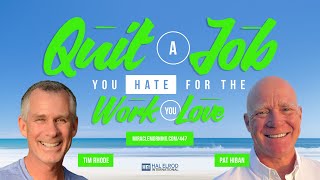
Tim Rhode and Pat Hiban share frameworks from their book The Quitters Manifesto for leaving jobs you hate. They walk through the soul-sucking audit, the I/O quotient (interest versus obligation), and concrete finance steps like building a bare-minimum budget and securing liquidity before you quit.
Questions this video answers
September 28, 2022
Use code ELROD at checkout on biggerpockets.com for 10% off The Quitters Manifesto.
Chapters
Tim and Pat, I always regret not recording the banter before an interview when it's as much fun as we just had. Right. Like all the laughs, the inappropriate stuff. And then you're like, okay, okay, we better hit record before we miss any of this gold. So welcome, you guys. Great to have you here, man.
Al, thanks so much.
Yes. My long time friends, we've known each other since, I mean, early gobundance. What. What are we, six, seven, eight years? Something like.
Oh, goodness, it's about eight years. You first spoke at a one life conference.
Oh, yeah, you're right.
Yeah.
It was before gobundance, and that got me the invite to Go Bund. It's one life fully lived.
Yeah. And what's funny is my. My wife Tina saw you on a Minecast podcast, so I think that.
Yeah, and then she said, she. She came to you and said, you got to have this guy speak at One Life or what?
Exactly. Really reached out to you. And, and so. So our whole world and think of all the connections. Oh, yeah. And all of us, you know, together. It's just been amazing.
So, like everything else in your life, like everything else in your life, Tina deserves most of the credit.
Absolutely. 100%, truth be told.
Yeah. For me, it's Ursula. Right. We all, we all can attest to that. So, you guys, here's where I want to start. I actually want to start with kind of a personal story from each of you in that, you know, the, the new book that's out. I love, I love the concept, right? It's quitting your job to find freedom in your work, freedom to do what you want to do, enjoy what you do, earn more money, all of those things. So what I want to start with is, is there a time where either of you have quit a job that you did not like? You might have hated it, but thought you needed it, right? So. So it took courage to make that, that leap. And then what happened afterward? I'd love to hear that kind of a story.
Yeah, I've got a great story. It dates back to when I was about 20 years old. I lived at the beach in Ocean City, Maryland, and I had a job cutting meats, slicing meats at a deli. And I think I was making like $4 or something an hour. And I'd work 40 hours a week and make like $150, maybe 120 after tax. And in a friend of mine was doing these timeshare sales. Not even like the sales, but like go accosting someone on the boardwalk and Saying, hey, would you like a free dinner, A free steak dinner? All you got to do is show up at these timeshare time, share condos and take a tour and, and you get a free dinner. And everybody that I got to show up or everyone that my friend got to show up at this tour he got $20 for. So I was like, I'll give that a try. And my first day I went out, the boss said, you only got to remember three things. He's like, don't wear your baseball cap. At that time I was like Beastie Boy style with it on backwards. You know, don't wear your, your sunglasses and, and look them in their left eye and keep talking until you're done. And I, I said, okay, cool, I could do that. So I went and did it. And the next day I showed up at the office where they post all the numbers of all the people that, you know, got people to go on the tours. And the number one guy was this guy named Danny. And he was like, I think it was like whatever. His number was 20 and my number was 101. I'll never forget that. And.
We'Re looking at the board and it says top sales five, which means five people went 101. And then it says like second place or whatever, it says two number 20. And then everybody underneath him, you know, got like one sale or zero sales because it was kind of hard.
Yeah.
And I'm standing behind him and he just turns and looks at his buddies and he goes, who the hell is number 101? And I remember thinking to myself, holy dirt, that's me. Like I, I, I, I won the day. On my first day I got five people to go and I said, wow. And you got twenty dollars for each person and then you got a fifty dollar bonus if you got the most in a day. So I got 150 bucks my first day and I was only making like 150 a week at the, at the cutting the meat job. And so basically I didn't even quit that job. I just stopped going. I just never went back. I just was like, you know, this is for me. And since that day, I have never worked a non sales, non commission, non business ever. And it was, it was virtual, it was life changing for me. Now it was all about the money. And it was also all about realizing that I was actually good at something. Because I think up until 20 years old I was pretty insecure kid. You know, I wasn't like killing it in anything, whether it be sports, school, friends, girls, Like, I wasn't at the top of my game on anything. And for me to be at the top of my game suddenly at something and I didn't understand why was very influential to me.
Yeah, Pat, I've never heard that story, and I feel like you and I have almost an identical story. When I was 20, I gave up, actually, and it wasn't a job I didn't like. I was a DJ on the radio, which I loved, 97.1 FM. But I went and sold Cutco, and I was doing both jobs. And my first few days with Cutco, I made, like, a couple thousand dollars, which I was not making in a month at the radio. And so, yes, I like that job. But I was like, man, this is a real opportunity. And it was the same thing age 20, and it was the same thing. My whole life. I had been mediocre at everything. I wasn't good at sports. I didn't get good grades. I wasn't popular. And then it's, like, realized, wow. This is where you can control your destiny. Right. You're not beholden to someone telling you, this is what you're worth. Right. I will pay you this much per hour and no more. You have no ability to generate more than that.
Right.
Really, really interesting, Cool story, Tim. What about you, man? Has there been a. A job that you hated that you quit even though you were scared to do so? Yeah, I'll.
I'll go get into that quickly. But what's interesting when you guys say this, there's this new trend called quiet quitting. Don't know if you're familiar with it.
No.
But it's all over TikTok right now. It's the new rage. And it's. Instead of doing extra or what, our book's all about the Quitter's Manifesto. Quit the job you hate for the work you love. They're simply just, you know, not really working. So I think that's such a. Interesting thing going on today that our book really addresses, I think is. And. And that's. Instead of quitting and just staying there and chilling out, why not find the work you love? And that's what our book's all about. So for me, and I'll go quickly in this, because there's a lot to get to.
Yeah.
Book we'd love to. Mine is selling real estate. I was 35 years old. What was. What wasn't fun? Excuse me? What was so fun from 26 to 35? And I was really good at it. It had oxidized. It had Rust rusted out on me. So I really loved it when I did it. And then right near the end, it was just no fun anymore. And I. And I had all these telltale signs that were telling me, tim, you're ready for your next incarnation. So fast forward about five years of living in that oxidated state, if you will. I was in Belize, and I looked up, and I. I become a millionaire. And it was such a big deal to me because I had barely graduated high school, never went to college, and it was the first time I ever looked up and said, dude, I am so proud of you. Look what you've accomplished. You know, from nothing to something. What do you want to do? And I said, I never want to list another blank, blank house again. And it was just a shocking revelation that had been coming to this point, but it was like, wow, I like it. Let's go. What are you gonna do? It was like, how about if you do this? How about if you're just an investor from. You leave this trip, you never have to sell another house, and you're gonna only work for you. And it's like, I like this. Tell me more.
So.
So a huge piece of our book is. Is your identity. You know, Pat was a meat cutter, you were a dj, and. And I was a real estate agent, and. And you got to go from here to there. What are you going to do? So I rode on a plane on the way home. It was a Tony Robbins plan. What's your outcome? What's your purpose? What's your action plan? And that's how I literally changed my identity on that trip and never sold another home.
So incredible. They're. They're. You know, it's. It's like, I love you shared that Tony Robbins process. Right? Identify. Tell me that again. Repeat that.
It was it. He called it opa. What's your outcome? You know, what do you want to happen? What's your purpose? And Tony talks about a big why. And I had a long list for the purpose. Yeah, I'm sick of selling houses. I. I want to be. I want to actually get true wealth. And I wrote this long why? And then, what's your action plan? And for me, as an investor, it was, where are you going to find the deals? Where are you going to find the money? Who's going to help you? Who do you know that's already doing this? And I just wrote all these. These tangible steps of what's next.
I love that. I. You know, it just shows there's no new information, meaning, like, it's what. What's always worked is what works. Right. Like, I call that the. That's the what, the. The why and the which. Right? What are you committed to? Right. What's your outcome? Why is it important to you? Your purpose? And which specific actions are you committed to taking and when are you going to take them? Right. If you, if you can clarify those three things and keep them top of mind every single day, there's nothing that you can't do, nothing that you can't change. And you guys are living proof of that.
Yeah, Chew that.
Awesome.
One of the things that I want to talk about risk right now, because I think if somebody's listening and if they hate their job, most of us feel like, but that's my security. That's how I pay the bills. And you guys talk in the book about. There's a theme. You talk about a trapeze artist and the risk that they take every time they step on that. That, you know, that. That wire. Can you explain a little bit about that concept and what a trapeze artist has to do with quitting your job?
Yeah, I'll take it. So first, what. First chapter in the book we talk about how is coming to the realization that quitting is scary. A lot of people don't realize that the reason they haven't quit yet is because they're scared. And if you took, you know, a thousand people to the edge of a cliff, you might find one or two that we call entrepreneurs that will jump off and create a parachute on the way down. Like the old adage says, you know, sure. But the rest of them are going to run. The rest of them are going to be like, nah, I'm out. And because it's scary. So once you come to the realization that scary. We wanted to write a book that was a tactical book. Not like, ah, don't be scared, like, ah, you can do it. Don't worry about it. We didn't want to be strategic. We didn't want to be inspirational. We wanted to be very specific and tactical because we saw a need in the market for it. So what we did is we teach people, first of all how to build a safety net like a trapeze artist. When they're out there at the circus, if they fall, they land on a safety net. So we teach you, okay, here's how you build a safety net. Here's the three things you got to do. Then we teach people, okay, here's the first trapeze bar. You hold on to that. Then you let Go. You swing the second one, then you swing the third one. And each chapter in the book is a different trapeze bar. And so basically, if you read the book and you follow the instructions in the book, you're going to have a safety net at the bottom. You're going to have a trapeze bar to go all the way across the gorge or whatever it is you're trapezing across to the other end and be able to quit your job and be happy.
Beautiful. Can you give us some of that? How do you build a safety net? You mentioned there's some steps. What are some of those steps?
Go ahead, Tim.
Well, I think that first part is to recognize how bad is it? And with this, we call it. It's a tool we call the Soul sucking audit. How bad is it really? And it's a metrics to look at. Number one to ten to see how bad is it? If it's a seven, eight, nine or ten. Especially eight, nine, ten. You're in the sweet spot. There's it. You don't need to really make a move.
Now, real quick, when you say how bad is it? Or do you mean your current work, your current job?
Yes. Okay. It's how bad is what I'm going to every day and doing. So. So what? Yeah, thanks. Thanks for that clarification. Help. So. So if you look at five measures on the soul sucking audit, number one is your compensation. Am I. Am I being compensated fairly for how talented I am? Am. Number two is the organization. Am I respected by the outfit that I'm a part of? Number three, how good of a fit am I on the team and within that organization and. And towards what I love to do? Number four is your ability to grow. Am I growing within this organization? Am I, Am I growing as a human? And number five is the most important piece. How do I feel every day when I, you know, show up.
Yeah.
To work? And I got a question for you. How did you feel as a ra, As a disc jockey?
So that's the thing is I loved being a radio DJ, right. Well, except I was DJing midnight to 6am Cause I was the new guy, Right. When you're the new guy, they're like, all right, you're at the midnight to 6am, 6am shift on the weekends, Friday and Saturday night to Saturday and Sunday morning. For me, I think a comparison that resonates with me is really when I left Cutco, so I had been a Cutco sales rep for six years, and it had given me a really secure Income, you know, about $50,000 a year is what I was averaging in my early 20s. And then my last year with Cutco, I earned a little over $100,000 and kind of figured out how I could maintain that. And so, but my, my soul, my heart, like my intuition, it was like, I, I want to, I wanted to be a professional speaker, a motivational speaker, you could say, or really it's a keynote speaker. And I really wanted to become an author. I wanted to write a book and share my story with my car accident. And I loved speaking. You know, I used to speak at Cutco events all the time. I would do division, you know, meetings, weekly office meetings, annual sales conferences for the national events, those sorts of things. And that was really what my passion was. But talk about scary. There was, there is no degree to be a professional keynote speaker. There is no direct path, right? It's not like I'm going to go to school and get my degree, you know, my PhD and then become a doctor. It's like, oh, you want to be a keynote speaker? That's the wild west, dude. Good luck, right? And so in terms of building my safety net, what I did is I saved $20,000 my last year selling Cutco, right? I went out there, I worked my butt off, earned $100,000, saved 20,000 of it to give myself about a six month cushion to start figuring out how to make money. And again, it was still terrifying. I thought, six months isn't that long. What if I get into the end of six months and I'm not making any money and I'm spending money and so on and so forth and. But I think that what you're talking about, that soul sucking meter is so important because we get one life, you know, we get one life and spending our time doing work that doesn't fulfill us, it's a waste of our life, you know, and you just don't know unless you take that risk. I know that you guys say in the book, right, there is no zero risk, right? There's no zero risk plan to transit in anything. There's no zero risk plan in a marriage, right? Or having kids or any aspect of life. There's always an element of risk, but what's on the other side? And I think the three of us can speak from experience. Taking that risk, quitting that secure income for a life of freedom. Not only financial freedom, but time freedom, doing things that you love to do. So, yeah, so that for me was the big transition, was all right. I've had this six Year, career and it's work that, you know, I didn't hate Cutco. I actually really enjoyed it, but it wasn't what I felt I was meant to do and it didn't give me the freedom I wanted. I had to go do an appointment to write. It was, it was trading time for money and I wanted leverage. I wanted to write a book that I could put on Amazon and that yes, I could market it here and there, but that it would pay me even while I was sleeping, people would buy that book. I wanted to be a $10,000 keynote speaker where the leverage, you know, I can make a huge impact, do something I love to do and get paid significantly more for an hour of my time than anything else that I was aware of. So anyway, it's a long answer to your question, man, but that was it.
And, and I'm curious, how did you actually write a plan or did you have this in your head? You know, here you are, you're at go, you saved the 20 grand. But did you actually, you know, map out, I'm going to write a book, I'm going to be a keynote speaker, I'm going to make the, you know, how much, how much did you go into it?
Yeah, I don't remember exactly. Knowing me, I've never been a big planner. You know, I'd maybe plan a year. So I mean, I think it was, it's always, I've always been kind of a. I'm going to, I'm going to schedule time to figure it out. That's usually how I plan. My plan is I don't know exactly how I'm going to get to my destination, but I'm committed to getting there. And I'm therefore, I'm going to, I'm going to focus on it from 8am to 10am Monday through Friday and I'm going to figure it out. You know. And there was all sorts of iterations. I mean, you know, our. You mentioned John Berghoff earlier. You know, John and I started a business with our friend John Vroman called GoT. What was it your best life coaching. And that totally, you know, it was okay and then it flopped. So then we recreated Global Empowerment Coaching and we launched that. We thought that was it. That thing totally failed. I wrote my first book, Taking Life Head On. My publisher stole all my money and then I made none. Very little after that. Like, you know, Right.
So there were.
Anyone who's listening that's like, oh man, I was ready to jump. But screw that, that sounds too scary.
You know, I'M the same way. I've had. I like when I quit real estate.
You know, I, I probably did three things that completely like failed, like are non existence. Like I have a very expensive logo in a frame and that's all I got to show for it. Right. And lost thousands of dollars, you know, and time doing it. But you just don't know until, until you try it. And that's the thing. And I think more than anything, you just have to have faith in yourself. And the one thing we write about in the book, how that people don't realize is when, when we ask people why is it so scary or what is the worst case scenario that could happen? They come up with these disasterly.
Scenarios. They're like, I'm gonna be in a car, I'm gonna be, I'm gonna be on skid row. I'm gonna live in Seattle in a tent. You know what I mean? Like, my kids are gonna starve. And, and I'm like, but in reality, they're a doctor and they're quitting their doctor job or an accountant and quitting their accountant job. That's not what's going to happen if they fail. You know what's going to happen if they fail? They're going to call their boss and be like, hey, I failed. Do you think I could come back? And they're like, oh yeah, we loved having you here. Or if you have a degree in something, you're going to be able to use it again to get another job in that your worst case scenario is you're going to go back to where you were, not go way, way down.
Yeah, yeah, yeah. And they're going to welcome you with open arms and go, oh, we're so glad you're back. Right?
Yeah.
You know, and I thought about that too. I go, I can always go back to Cutco, right? I can always go back to that if I wanted to.
But I didn't, right?
No, definitely not. Now, Pat, you mentioned something. Faith in yourself. And there's a concept I teach the miracle equation, which is unwavering faith and extraordinary effort where you commit to something and give it your all. Do you guys feel that? How do I put this?
I feel like you can't fail. When you commit to something, you figure it out. It usually takes longer than you thought it would. Always, always. Not usually. All right, there, there are almost always unexpected challenges that, that, that, that scare you and that maybe that maybe tempt you to give up. But for those that stay committed, I feel like there's always A way like you always. Everybody figures it out unless they give up. If you guys. What's your thoughts on that?
That's like Napoleon Hill said. Bess. I read an article where they actually asked Napoleon Hill of Think and Grow Rich. They asked him, if you had to boil down everything you know about Think and Grow Rich, what is the one thing that pops into your mind? And you know what he said? There's two things he said. Number one, they feel they. The people.
Right.
That fail. Failed to div. That they asked if people fail at getting rich.
Yeah.
Like what. What. What is the one thing. And he says they fail to develop a proper mastermind. Right. Have mentors, have people around them. They're doing it. And the second thing is they give up too early.
Yeah.
And it goes to what. That second one goes right to what you say. They just give up too early.
Yeah, yeah, yeah. I think the only way to. I really believe the only way to fail at something is to quit is to give up too early. Right.
I have a. I have a good story. A guy that I was. The golf club where I live, and he was a great. I could just tell he was really humorous and outgoing. And I told him, you should be. Would be really good as a realtor. And so he quit and got his license and started selling real estate near me. Right when the downturn started and he failed. He lost his house. And it was like, oh, man. And I talked him into this. Oh, wow. And then it took about a year, maybe two years later, he moved to Park City, Utah. I went and saw him with his family, two young kids, by the way, at the time. And he. He found his way and is now one of the top sales people in Utah. And I think that's a great story to. To show what can be. It doesn't happen overnight, and sometimes it doesn't go the way you think it's supposed to go. Yeah, but I think we end up where we're supposed to end. Yeah, yeah.
Yeah. I think I almost feel like there's an unseen force in the universe for those that commit to something. Right. You know, you can call it God, you can call it luck, you know, a little bit of both. But. But that seems to be it. Like when you. When you maintain unwavering faith in yourself and your ability to figure it out and you put forth that extraordinary effort. Right. You just keep moving forward, you know, and you're going to be hit with obstacles along the way, but it seems like your success becomes inevitable. You're eventually going to get There. And when you do, the timing is perfect. You look back and you're like, oh, why did I stress out so much? I had to go through all of those challenges to get here and the timing was perfect. Now I'm exactly where, as you said, Tim, I'm supposed to be in the exact timing that I'm supposed to be there.
There's a bunch of tools, a number of tools in the book to help someone identify moves they may need to make in life when they're quitting a job. One of the tools is the I O quotient. What is that? What's the IO quotient? And how does this framework help someone quit?
We, we, we stole that from naval. And you're probably a fan of all provocant.
Oh yeah. One of my favorites.
Yeah. So he, he tweeted one day, he said, question, how much of your day is spent in interest versus obligation?
And both Tim and I thought that was incredibly deep. Like mind blowing deep. Interest versus obligation. I mean, I've even thought about creating like a big chart that you could highlight like every hour of your day where like it was this interest or was this obligation? And, and I think that most people are probably, you know, 80, 20, if that, you know, obligation.
Yeah.
And so our goal would be to flip that so you would be all interest. Now you can earn money and interest.
You know.
Sure.
But, but if you, like you said Hal earlier, you only live once and life is short, so why not have a life full of interest, if not all interests?
And you say in interest meaning doing something you're interested in, something that you actually enjoy doing. Right.
Something you just move towards naturally.
Yeah. And that's freedom. To me that, that is freedom where you get to wake up and spend your days, you know, doing that. That's. I try to teach my kids that all the time. When I was 15 and I started my DJ business and I loved DJing, and I was like, whoa. And you can get paid for this, right? And so that's it. It's like figure, you know, I mean, I don't know who said this first, but it's figure out what you love to do and then find a way to get paid for it, you know. And now my daughter is pursuing acting. It's what she loves to do. And she's going to, you know, she's only 13, but I have no doubt she'll keep taking. I keep with the wizard of Oz.
Yeah, yeah.
Figure out a way to get paid for it, sweetie. So we talked about the soul Sucking meter. Right. And really identifying, being really brutally honest with yourself in terms of.
All those obligations that you, you know, the work that you're doing. How. How is that impacting your mental and emotional well being? Right. How. How is that sucking your soul? One of the concepts you talk about in the book is the quit team. The quit team. Can you expand on that?
Sure, I'll be happy to take this one. It's having a team of four different people in your world that can help you figure out how what's best for you moving forward. Number one in on your quit team is the stakeholders, your spouse, those closest to you, those most affected by your decision. And you want to start that early on when you start oxidizing in this current incarnation, you should be talking to them all, you know, regularly so you don't just say, hey, guess what, I quit. You want to be proactive, not reactive with all of this. Number two on your quit team is, is your partners. Those are people that the better you do, the better they'll do. As an example, in real estate, to be a mortgage person or a title company person that, that know you well and know that can help you find your best path. Number three would be mentors and how we think you as a mentor, you know, people that, that you can ask, hey, where do you see me that. That they might be able to work with you on whatever it is you're thinking next for you. And number four, if you can afford them, is a coach. To have a coach in your corner that can help you through this process. So we think that's a really important piece is to have a good quit team, you know, early on to help you get the right thing for you.
Yeah, you can bounce ideas off of them, get emotional support. Where does Mastermind fit into that quit quit team? Which would it be? One of those four categories or would it be a fifth category?
I would say it's your mentors. That's your peer group. And GoBundance, it'd be your go pod, you know, and other people that you spend time. So I'd say yeah, it's just a, that's a larger group of mentors.
Yeah, well, and that's how I actually that, that's how I interpreted it because my go podcast, you know, I'm a member of GoBundance, which you guys are the co founders of. And my gopod, we meet twice a month and they've been invaluable in bringing idea. You know, I bring something up and it's like I feel stuck. My Wife doesn't have, you know, she has no experience in an area. Right. And I bring it on my GoPod call, which we do again, you know, it's every, every other week. And it's like, you know, I have three, three guys I meet with on there, and it's like, oh, they, they all have so much wisdom. They've been there, they've done that, you know. Yeah. So. So really, really invaluable. What. So having a quit team. What about. Where do finances come in into play in terms of transitioning? Right. I mentioned that for me to help kind of give me a little bit of security, I saved that $20,000. And this was back in what, 2004, 5. So without inflation, that was. That 20,000 was worth a lot more than it was probably 40,000 today. But that would get me about six months of minimum expenses at that time.
But yeah. So where would you guys say that finances come into play in terms of somebody quitting their job and transitioning to doing work they love?
So we actually get real specific here because this is the safety net that we're talking about building before you start getting on the trapeze bars. And so for the first thing we ask you to do is get real, which means, like, get real with your finances. Write down every little thing, like how many of these, you know, streaming services are you paying for? How many apps on your iPhone are getting recurring? You know, everything down to the penny that's. That's costing you money, and make it so that it's a bare minimum, right, for you. How much do you really have in savings? What are your investments really worth? What kind of access do you have for credit? That sort of thing. And then once you do that, the second thing we ask you to do is actually go out and get credit. We encourage you to take out a HELOC from your house. And not only that, we, we ask you to take it a step further. Take a HELOC at a home equity line of credit from your house. But then once you get it, take it, write up a check for the entire amount and put it in a separate bank. It's only a savings account that you can't ATM from that you can't write a check from and, and put it away. Because what happens, inevitably, when markets start to go down and the value of your house drops, the banks will take back some of that credit line, and they did this last time, so get it out. Right? And then put an automatic withdrawal every month, every week, whatever, going to that same savings account and Again, you can't get it. Once it goes in there, it's stuck. And we give you all these ideas. Private lending go to people, go to family, go to friends. Just try to build up as much as you can. Exhaust everything, and then you'll have that safety net. And then you got to figure out, you know, how many months of failure or how many months of no income do you need in that safety net.
Awesome. Yeah, it's interesting. I just did. I just was the lender on two of those private loans for two friends of mine that were making their transition. One of them was what he wanted to be going to nursing school. It was his dream to transition from the work he'd been doing. And he's a little younger, he's around early 30s. But anyway, but I loaned him the money for nursing school, and he's paid me every. You know, he sends me money every month ever since then. And, but, and here's, here's what's cool.
He thanks me profusely every time I see him saying, hal, if you wouldn't have loaned me that money for nursing school, I wouldn't have been able to do it. And he said, I. This is what I've wanted to do for years. I love my work. You know, like, he's just, he just, he's. He lights up because that was what he always wanted to do, but he was afraid to make that initial investment up front to go to nursing school and so on and so forth. So, yeah, really, really cool. And I love that, you guys, I think that you're. You're delivering on that promise of the book being very tactical, like, here, you know, open a heloc, do it like this, right? Structure it this way, Set up your automatic payments, you know, so on and so forth. Because that's one thing that I hadn't thought about is that in a down economy, in a recession, they'll come back after your line of credit and take some of it back if the house value drops.
And we touched on how things don't go as planned. It always takes longer than you think, so why not have that extra money? And, and it just makes it easier for you and you don't have that worry. So. Yeah, that's really important.
Yeah, yeah, absolutely. There was a part in the book about, I call it the more Pie part that I thought was funny. You wrote in the book about the joke that making partner at your law firm is like winning a pie eating contest where first prize is more pie.
Right.
But in this case, more work. So what do you guys think a tangible next step is for someone to make after they realize they're winning a never eating pie eating contest? Meaning the more they climb the corporate ladder, they're just given more work, which then sucks their soul even more rapidly, if you will.
I'll take that. You know, it's funny, we this. The book mentions attorneys, and that is the goal is to become partner. As soon as you pass the bar, you got to become a partner. And the thing you get for being partner is more pie. We also see that within GoBundance with doctors. So many of them are in their 40s and 50s and they just have. The quote is more pie just. Just handled. They're just busier and busier and they're on that treadmill. And that's a great example. Or an attorney. It's so hard to just change your identity. And we talked about this earlier in this podcast is that is such a huge piece in this of how hard it is to go from attorney or go from a doctor. And we just had a good friend, Dr. Tom Burns, and GoBundance that loved being a doctor. He loved helping people. But he found he. He was ready for his next incarnation and had to cut the core, meaning no more pieces. And then, and then find what's next for him.
So it's so funny. I was just going to tell Tom Burns story. He's in my gopod. So, yeah, so I watched. We watched that from, you know, I'm a doctor, I make great money. I love what I do. Right. But I feel like there's. I want to impact people. I want to write a book. I want to start a mastermind. I want to, you know, he had all these, these aspirations. And we just literally on our call last week, I won't throw out the numbers, but he shared how many Mastermind members he now has at what price point. And it's so funny, before he shared the numbers, he goes, yeah, man, I feel like I really am ready to start making money with these new ventures. And then he throws numbers. I go, tom.
Did I do the math wrong? You're currently making x amount of hundreds of thousands of dollars in your Mastermind is that. He goes, yeah, I guess you're right. I think you got it, buddy. I think, I think you won, you know, but yeah, but I literally got to watch him go through that process of this secure job that he had done for so many years that his identity was wrapped around. And now he's playing tennis more. He's, you know, he's replaced his Income. Right. He took that leap and. Yeah. And now he's.
Oh. In his next incarnation. And he loved being a doctor as you know how. Totally, really, really good at it. But it had oxidized. And it's funny is Pat and I were there when, when it kind of came to him that he's ready for this next incarnation. So we were. Yeah.
Yeah. So let's, let's do this. Let's talk about kind of first steps for somebody listening to this. So if somebody is listening to this, obviously, you know, I recommend getting the book. It's the Quitters Manifesto. And you guys sent me a note saying that today our listeners can get 10% off their copy with the code ELROD E L R O D. So if you want to get the book, head over to biggerpockets.com.
Quitters Manifesto, that's biggerpockets.com Quitters manifesto, and then enter the code E L r o d lrod at checkout for 10% off. If you want to buy it from Amazon, of course, it's on Amazon too, right. If they want to get it there. Audible, audible, Amazon, all that good stuff. So obviously that I think is an important step, you know, to really get the. All of the tactics broken down in writing so they can review it, revisit it, and implement it. But in general, whether it's a mindset piece or it's a tactical piece, if somebody is listening and they're like, my job is sucking my soul. Right. Or maybe it's just my job doesn't pay me well enough maybe. Right. It could be completely one of those two. I mean, that's why I left the radio DJ job. It's like, I'm not making any money at this, you know, but either. Whatever their, their reason for wanting to implement what you're talking about here, what would be the. Their first step or their next step in addition to getting the book?
Well, I think that.
You know, the first step, obviously, is to read the book and then just start implementing it. We even have a checklist in the back where they could rip it out and put it on a cork board and say, step one or. Or trapeze ring one has been let go of, and now I'm on Trapeze Ring 2.
The.
You know, first and foremost, like I said before, you've really got to admit that it is scary and that you're scared. And here's a way to make you less scared. And if you are getting. If you're doing the soul sucking meeting meter and which I You ask a question, what would you do first? Probably the soul sucking meter. Figure out your soul sucking meter. If you're six or less on the soul sucking meter, it's time to go, right? It's no way to live your life six or less. It's just, it's just terrible. It's time to go. Everything's going to be fine. You got to have faith in yourself. And here's a step by step process to do it.
And I'd like to add to that. Everybody on this podcast is already doing the savers, you know, every day or in their own form, if you will. And it's, it's. While you're doing your savers, hopefully you can get out in nature and get quiet and ask and, and, and just have a real heart to heart with yourself. Is this working? If not, what, what can I do? And, and then go to the people who, you know, it would be your quit team, if you will, and, and ask them, you know, do you think I'm happy in my current job? Do you? If. What do you think I could do that would better fulfill me? You know, I think, I think that's a huge piece. So that's my thoughts.
I love that, you know, and I once heard it, I don't know who said it, but they said something along the lines of like, if I stay in a job that, that I hate, that sucks my soul, what kind of example am I setting for my kids especially, right? And just people around me, right? You know, oh, yeah, just settle for less than you really want, less than you're capable of so you can get your paycheck and go home, you know, and I think that in terms of the next step for anybody, I love Tim. I love that too. In terms of get out, you know, you're get the goods in the woods. That's your, that's your, that's your affirmation. But yeah, for those that don't know, Tim is an outdoor enthusiast and I think he actually sleeps outside. I don't have that. I can't confirm that. But, but, but I think that it starts with a little bit of just let yourself imagine a better future, right? Let yourself dream, let yourself visualize, allow yourself to go in. If I were to make a change, what would I do? If I could not fail, what would I do? If I were to create the life quote unquote of my dreams, what would I do? What would that look like? Right? And that's the thing, is it's hard to go from 0 to 60, right? Instantaneously. Meaning if your mindset before you listen to this podcast was like you weren't even thinking about quitting your job, or maybe you've thought about it, but you. But actually doing it wasn't really something you were entertaining, then you've got to get. You know, I don't know about you, but I, like, I have to acclimate to a new idea. I have to. Whether. Whether it's making a new investment or making a major change, right. I've got to consider it. I've got to sleep on it. And the more time. You know, you mentioned Tim, the Savers, right? Integrating into the Savers, doing some journaling, doing some visualization, meditating, as you said, Tim, go outside, meditate. Have that heart to heart, right? Start there. Start with imagining what would that look like? What's the ideal outcome if you could wave a magic wand and transform your life and then get the book and then follow the steps, right? And then before you know it, you're going to have a different life. You're going to have. You're going to be having, you know, you're going to quit the job. You're going to move forward and step into the you that you deserve for yourself. And so I am so grateful that you guys wrote this book. Honestly. I told you that before we started recording. I said, I just, I love the concept and I feel like it's needed now, you know, maybe. Maybe more than ever as people realize that life's short, man. I gotta. I gotta live a life that I love. So thank you, Pat. Thank you, Tim, man. I appreciate you guys.
Been Pleasure.
Hal, it was great catching up with you, brother.
You too. So everybody again, goal achievers. The book is the Quitters Manifesto and the tagline is. What's the tagline, guys? I don't have it from.
Quit a job you hate for the work you love.
Quit. That's right. Quit a job you hate for the work you love. You can get it on Amazon or If you want 10% off, go to biggerpockets.com Quitters Manifesto and enter the code E L R O D at checkout for 10% off your book. And I'm excited to hear your stories about how you quit a job you hate and find work that you love. Like I've done, like Tim's done, and like Pat has done and so many others. Goal achievers, members of the Miracle Morning community, I love you so much and appreciate you and I will talk to y' all next week. Take care.
More from Hal


Hal Elrod shares the most effective tool he’s learned to quickly handle anything life throws at you.







Jim Kwik: How 5 Minutes Each Morning Can Rewire Your Brain and Change Your Life
