What My Life Was Like Growing Up
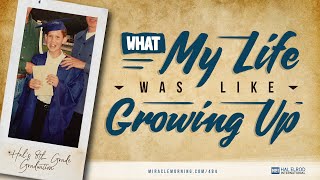
Hal Elrod talks about losing his sister as a child, his sales success at Cutco, surviving a near-fatal car accident and cancer, and how those experiences shaped the Miracle Morning routine and his belief that unwavering faith plus extraordinary effort can transform pain into purpose.
Chapters
We are back on the Gravity podcast today with Hal Elrod. Hal, thank you for taking some time to do this. I'm really excited to have the conversation with you, Brad.
I'm genuinely excited, especially when you just told me what we're going to talk about. Like, I don't get to talk about that stuff all the time, so a lot more fun to get to talk about new. New topics. New subjects, or not necessarily new, but just different. Right?
Yeah, yeah, no, that. That's the thing. You know, we want people to see the full journey. I'm sure that, you know, our audience is familiar with you and your work and Miracle Morning and knows a lot about what you do today, but we really want to talk about the person behind that and how you arrived at that.
And.
And so let's start at the beginning. I'd like to just know, you know, kind of like early stuff. Where are you from? You know, Tell me about your parents, your family, you know, kind of the early life of. Of Hal Elrod.
Yeah, absolutely. Yeah. I was born in Southern California, and then when I was five years old, we moved to Northern California, little small town called Oakhurst, California. When we moved there, there were no stoplights in the town. That's how small of a town it was. In fact, it was like a big deal when we got stoplights. It was like, whoa, we're serious now. But I grew up. I lived for six months. I lived in a camping trailer because my parents couldn't afford a house or trying to find a house. So I lived in a camping trailer when I first moved to school or moved to Oakhurst. And, and I will say this is kind of funny, One of my first memories was when I was in first grade. I had met a friend in school, and my mom took me to his house for, like a little play date one evening, and she wanted to talk to his mom or whatever. Well, I guess we stayed late and I fell asleep, and I woke up the next morning kind of disoriented. Where am I? And she, oh, you fell asleep. Don't worry, I'm going to take you to school. And at that time, I did my hair in a very specific way using a very specific form of hair gel. And I started freaking out because I go, well, wait, did she leave my hair gel? And she goes, no, but don't worry, we have something you can use. And she gives me some pomade or I don't know what it was, mousse or something, and it doesn't fit. And I go. And so I do My hair, and it just comes out totally awkward and totally weird. So we get to the school, I ride the bus and I'm like crying. I'm like, so upset. The new school, I feel like I look funny. The kids are going to laugh at me. So I get off the school bus and I'm like, I can't go to school. Well, we lived a mile away from the school in that trailer. So I ditched school in first grade at six years old. And I walked home so that I could fix my hair. And when I got there, my parents were at work. I didn't even think about that. And I remember dropping to my knees and we had a Dalmatian dog. And I was hugging my dog, crying, barney, where are mom and dad? I can't go to school like this. And I end up just finally walking to school and some woman sees me and calls my parents and they drop me. Anyway, so that's one of my earliest childhood memories. And I don't know what, you know, I don't know what that says about me, but.
Well, yeah, I sort of am curious about that. I'm just going to play with this for a minute because it's funny. Interestingly enough, I was recalling with my therapist yesterday about a childhood memory I had that's similar where I don't remember exactly how old I was. I was probably around 7, 8 years old. But I decided that I didn't like the way that my parents had been styling my hair.
No way.
Yeah. That I literally. I'm telling my therapist this yesterday that is asking me to do some inner child work. And I remembered my parents always wanted to be real, parted and combed over. And I'm like, I. I'm not feeling that anymore. But it took so much nerve for me to get the nerve up to say those words that, like, I don't want to look like that. And. And I just wonder like, if there is something there. Like what was like, tell me more maybe about your upbringing that, like, had you. Is it just normal, you young, you know, school age stuff about, you know, getting picked on or our looks or, or, you know.
Yeah, yeah, tell me. I think it was because if I go back one year prior when I. And we were living in Southern California, I remember the preschool I went to. I did get bullied by. There was this one kid that used to bully me. I remember a nightmare that I had. Do you remember the show, the Jeffersons? Moving on.
Yeah.
So I remember I had this night. And I won't, I won't take Long telling you about a nightmare, but, but I had this nightmare that, that there the, that I was at the Jefferson's apartment and then a monster chased me off. And then the bully showed up and I was like, oh, that's the toughest kid in our school. I'm like, will you please help me? And then the bully actually defeated the monster. So again, that's like some deep psychological work. I don't, you know, but I think that might have been it. Right. Like I was picked on and I'm sure he made fun of me for my appearance and stuff in kindergarten. So now it's a year later, I'm in a new school. So. Yeah, it's interesting that. Dude, Will you be my therapist, Brad? Do you do like a side, like, like a side gig?
No, I have no credentials, but I am sort of just curious and love kind of, you know, this subject really. So. All right, tell me, tell me. Beyond that, you know, I am kind of curious about your family and your parents and you know, kind of how they were in shaping you as a, as a young child.
Yeah. So I, I'm really blessed to have two phenomenal parents. They stayed married until I was, I think 20, 21 years old. So they ended up getting a divorce eventually, but they were married throughout my entire childhood. They both worked really hard, you know, hard working, middle class family. They worked at a grocery. They were both worked in grocery. And so the, and they were, they were, you know, I remember, you know, my dad used to spit. It was a different time, right. I would get spanked. If I was really bad, I'd get spanked with the belt, you know, and, and, and, but overall, like my dad's dad used to beat the heck out of him. I was never beat. Once I got smacked on the butt. That's, you know, one smack that Right. But so, so it was really a nice thing to see. Like the sins of the, you know, they say the sins of the father repeat. But like, he's told me stories of what his dad used to do to him. And my dad, if you ever meet him, he's one of the sweetest, kindest men. And like I'm blessed with just amazing parents. In fact, we might get there. But I was diagnosed with cancer five years ago and given a 20% chance of surviving, my dad immediately flew out. Called in sick to work or whatever, flew out. And then for me it was this long journey where I was going to have to go through 700 hours of chemotherapy and it was going to be eight months or beyond. And my dad called his boss and said, I can't come back to work until my son is healed. And my dad's an executive. You know, I mean, like, it's a. You know, it's. He oversees a bunch of people and, you know, and he's like, I just like nothing else. Nothing else matters. And so I, you know, and my mom, too. I mean, I have. I still have those kind of parents that are just like, will do anything for their kid, really. Get. My mom is very strict. You know, my dad's a little looser. My mom was the, you know, she's the one that was like, you know, very strict with. When I was a kid, my dad would let us do a little extra. It's kind of, you know, normal dynamic. Here's. Here's a very. A turning point in the life of our family.
Okay.
When I was seven years old, so I had a five year old sister, Haley. She was a year and a half younger than me. And my mom had a baby, Amory. Amory was born with a very rare heart condition, to the point where they detected her condition early on. And they told my mother to have an abortion. They said, your daughter will probably not make it through the pregnancy, and if she lives through the pregnancy, she won't live much longer. And my mom said, I'll let God decide that. Not. You know, we're gonna. We're gonna see, you know, I'm not gonna have an abortion. And so my sister's born with metropic dysplasia. I think I might be mispronouncing that, but something like that's a very rare condition. There were like 6,000 people alive in the United States with that condition. And my sister was born part of it. It's actually a form of dwarfism. So she never would have been like 4ft tall. I think was the tallest she would have ever been. She had a very curved spine. It was noticeably curved. And she had to. She basically lived in and out of the hospital. My mom and dad had to constantly take her for treatments and. And she looked different, so some of the kids at school made fun of her. And, you know, I. I dealt with that.
I was in probably second or third grade at this time. Well, a year and a half into her life, it was. I was at home. It was a Saturday morning. It was me, my mom, and my youngest sister, Amory. My dad was at work at the Pines Market, the grocery store he worked at at the time. And my other sister Haley was at my grandmother's house. You know, Three hours away. And I woke up to the sound of my mother screaming, my baby, my baby, my baby. And I literally remember coming to kind of groggy. And I remember my first thought was, oh, my mom's playing with Amory. You know, my baby, my baby, my baby. And like. But as I started to become more awake, I sensed like horror in my mom's voice. And so I ran across the hall to my mom's bedroom and she was performing mouth to mouth CPR and mouth to mouth resuscitation on my sister. And I stood like a deer in headlights in the door, just, you know, trying to, at 8 years old, trying to process what I was seeing. And my mom's out of breath and she said, Hal, call 91 1. So I grabbed the phone, call 91 1, tell the police to come. And then she said, go, go tell Grant, our neighbor, our 80 year old neighbor, 80, maybe even 82, whatever. He was in his 80s. He had an oxygen tank, a very large, like, you know, 5 foot tall oxygen tank that he always was hooked up to, and he carried it with him. Now we lived in the mountains, so it was, there was no sidewalk between the houses. It was like uphills, downhills, right? We were on a couple acres. And so I run across to Grant and I say, grant, Grant, my sister's not breathing. We need your ox oxygen tank. And, and so, you know, I mean, poor Grant, he's 80 something years old and he's like shuffling across my yard, which has sticks and pine cones and, you know, so I mean, it probably took him, you know, 10 minutes to get back with his auction to my mom. And, and, and I, I don't remember if it was him or my mom, but we put it over Amory's face and the air, it was too big for her face. It just blew out the sides of her cheeks.
My dad shows up, ambulance shows up. My friend Ben, his mother shows up, my mom. My dad had called and said, hey, will you take Hal to your house? He probably doesn't belong at the, at the hospital. And so I went to her house and played with, just played with Ben. And in my mind I'm thinking, oh, you know, the, the ambulance is going to save my sister. That's what they do. Like she's going to the hospital, they, they save people there, right? So I had, I had not a second thought over what was happening. I'm just like, oh, yeah, my sister's not breathing, but it's okay. The people came to save her. And a couple hours later.
My Janine, my friend's mom, comes out and says, your dad's on the phone. And she looks very. So I remember, like she's very somber. And I went in and my dad's crying. I never heard my dad cry. And he says, amory's in heaven. And you know, I don't fully remember, Brett, what I was thinking, but I know what I said first, not to my dad, but I think to my dad, I said, wait, she's dead? You know, and my dad said, yes. And my brain, I think, is trying to process this, what it means. And I go out in the living room and I said, hey guys. Hey. Hey Ben. I said, guess where Amory is in a really positive, upbeat voice. And I remember I can see Ben's mom's face, like she tilts her head and furrows her brow. And I just see this look of like sadness and I guess where Amria hasn't been said, where I said, she's in heaven. Isn't that great? Heaven's like the best place ever from what I've heard. And so doing some of my own psychological work and reflection, I think that at that moment my 8 year old self.
Didn'T understand the emotions that were coming up. And I think that I didn't know how to handle them or process them. And somehow a switch flipped in my brain and I went, well, wait, if I look at the positive side of this and I make light of it, I don't have to feel the things I was feeling. And, and, and, and, and I think, Brett. And you know, my Amory obviously died that morning and there's a couple things I want to, I want to wrap this up before I turn it back to you. Number one is, is how I responded and what that meant for the rest of my life and, and then how my parents responded and what that meant for, for our family's life and my life. So number one, I've identified that I, in that moment, I think I developed a superpower. And, and, and we all have superpowers. And almost every superpower, or maybe every superpower has, has a shadow side, right? Has a dark side. My superpower was I became able to handle any painful circumstance that ever came my way. When I was 20, I was head on by a drunk driver, found dead at the scene, broke 11 bones, came out of a coma seven days later to be told I would never walk again. And I was so positive about it. I was genuinely happy and at peace that the doctors thought I was in denial or delusional. But it was very real. It's the way that I process. I go, look, I can't change that I was in a car accident, that I broke 11 bones, that I have permanent brain damage, that I might be in a wheelchair the rest of my life. But I can choose to focus on what I'm grateful for, to focus on what I still have in my life, to focus on what makes me happy. It's not delusional. Those things are real. I'm just accepting the things I can't change. That was the superpower when I had cancer. The day I was diagnosed with cancer and given a 20% chance of surviving. I was 37 years old at the time. I had a seven year old Sophia, the one, I have a seven year old daughter at the time, four year old son. And it was the scariest thing in my life that I, I was being told I was most likely going to die and leave my family, my kids without a dad. Nothing was worse than that to me. But I couldn't change the circumstance I was in. So my superpower was I'm going to accept what's out of my control like that I can't go and change. I can't change that I have cancer. But I can choose to be the happiest and most grateful I've ever been while I endure the most difficult time in my life. And I did. And because of that, I believe I'm alive today. Because of that, I believe I took my first step within three weeks after doctor said I never would, and I broke 11 bones, including my femur broke in two separate pieces and my pelvis broke in three places. So this superpower has gotten me through the mental, emotional, physical and even later financial challenges in my life. The shadow side is emotional suppression. It's a lack of empathy. I never developed empathy in my life because I never experienced emotional pain. And I didn't understand what that was like. So when I got married or any relationships and my wife or you know, even girlfriends throughout the years are like, I'm really struggling with this. It's really hard. I go, just accept it and move on. Just focus on the positive. So it really made my relationships challenging. And I could only help people to a point because I didn't understand what it was like to be them going through these difficult emotions. That all changed for me in 2020. After three years of chemo, I went through chronic sleep deprivation. I was diagnosed with post traumatic stress disorder. I became suicidal. And we could go back to that if we want, but I'm just mentioning that because that period was when I was so depressed and so had so much anxiety that I wanted to kill myself for six months, literally.
And I got therapy. I did everything that I could. And as I went through it, at one point I realized, oh, I'm going through this so that I can experience the most difficult mental and emotional trauma. So that I can now develop the empathy and understanding of what people go through when they're at such a low point that they want to die, that they don't want to live anymore, so that I can help more people. Before, I didn't understand what it felt like to be that low. Now that I do, it's my responsibility to figure it out, to get over it, to get through it so that I can help the other millions and tens of millions of people that are themselves suffering from extreme mental health issues, depression, anxiety, suicidal ideation, and on and on. So that's the superpower and the last thing I want to share. And I know it's a long answer. I'll turn it back over to you.
No, it's okay.
My parents set the example for my work that I do now. My mom lost a baby.
As a parent, I can't even imagine. I could imagine, but even, even imagining, I just, I don't want to imagine it. Right. It's like to me it's the. If you're a parent, it's the worst thing that could happen.
Within six months rather than giving up. And, and, and you know, I mean, she, she went through her grieving. Within six months, she, she founded a support group for other parents who, who had lost children so that she could turn her pain into purpose and help other people through what they were going through. That's where I learned to do that with my, with everything that I've gone through. My car accident, my cancer, my financial collapse, everything else. My book, the Miracle Morning was born out of the 2008 financial collapse because I got through it with this morning ritual. I started teaching it to other people. They used it to transform their lives. And I went, well, wait a minute. If it changed my life, the Miracle Morning changed my life. And I wasn't a morning person. The Miracle Morning changed all my clients lives. And they weren't morning people. Most of them were not. It could change anyone's life if I shared. I have a responsibility to share it. And my dad was raising money, leading fundraisers for the hospital that tried to save my sister's life. I want you to hear that, everyone. He didn't blame the hospital. Because they failed at saving my sister's life. He raised money to support the work because they tried. So my mom and dad turned their pain into purpose. And to me, I believe that for all of us, we have a responsibility to overcome our challenges, fulfill our potential in service of those we love and those we lead so that we can help them to do the same.
Yeah.
Thank you for that. You know, I feel like.
I just want to, like, you know, take a moment to be with you and all that, because I don't want to jump too quick to what you're doing and how it's served you so that you can serve others. It's. It's tempting to do that because I. I share that belief and believe my life and all of ours. It's really the reason I do this podcast is designed in that way. But, you know, I see you choke back the tears. I see you push through, and I just want to, like, take a second and acknowledge that those are really traumatic, really hard, really.
Full life experiences, you know, that you have just shared. You know, and I. And I think sometimes.
As you described, you know, to some degree, it's amazingly powerful and, And. And probably saved your life more than once to have the gift of being able to see the positive, to being able to have the strength to focus on the. On the future and the go forward and the outcomes you want to create. But I do believe in my own experience personally, that, you know, it's sometimes referred to as, like, spiritual bypass, you know, where, yes, you skip over. Yes, the pain and the emotion, and. And then, you know, it can get stuck and land in the body and have all kinds of others. In your case, you know, you described how it was affecting your relationships and.
And it may have been what caused my cancer, by the way, like, just to. Just to, you know, echo what you're saying.
Yeah. And, you know, look, I mean, that's part of it, too. Right? That's part of it too. That, like, so maybe. Maybe you have to learn, you know, that you can't do that. You know, but. But I just want to acknowledge. Just, you know, because sometimes I think it's that simple. You know, I think it's a very fine line. I mean, you can hang out in it too long, too.
Sure. Right.
Because. Because the, The, The. The. The truth is also. It's sort of up to you to decide. Right?
What.
And I think it's more of an energetic thing. It's more of a. A feeling than it is an intellectual thing that, like, I gotta feel this and Then at a certain point, I do need to move on. I do need. Right. So, anyway, I just wanted to acknowledge it, and I really appreciate you sharing all of that, and I appreciate the. The. The emotion as much as the content and.
And, yeah, let's. Let's talk a little bit because, you know, you jumped ahead to a few things that I do want to make sure. We talked about, you know, you talked about your cancer and your depression and the financial collapse and. And these things that happened a little bit, you know, further on in life. But I am curious if you could just maybe fill in the. The gap, you know, between that day that your sister passes and, you know, I think you started to talk about things, you know, in your. In your 20s. I am kind of curious about the. The period of time in between, you know, for you and your family and.
And.
And how. How your life was shaped there.
Yeah. Yeah. Thank you. So, I mean, growing up, I always say I was pretty mediocre at everything that I did. You know, we all know those people that are like, they're just excellent, right? They get great grades and they're. They're great at sports, and, you know, it's like, they're just. They're just. They just like, kind of live with a state of excellence. And often it's maybe their environment, right? Like, their parents were excellent, right? And they passed that down and, you know, so on and so forth, or they held them to standards of excellence, so the kids rose to that. I never. I wasn't. I never got great grades. I was always, like a C student. I never played sports for the school. I didn't have the. I never wanted to because of the. Like, I played soccer and stuff when I was younger. But once you got into, like, high school and they're like, we practice every week, even on holidays. I'm like, dude, no, thanks, man. Like, I like casual basketball. I don't want to give up my Christmas vacation for it, you know? So I was never really disciplined again. Didn't have discipline for good grades, didn't have discipline for school. I wasn't very popular. I got picked on and bullied a lot in high school. I mean, I remember the seniors when I was a freshman, you know, typical. Throwing me in the shower with all my. After I got dressed for my next class, I'm going in there soaking wet and, you know, got beat up and all the things, really normal stuff and really insecure. I had some cool. What I did that was not excellent, but I guess it's kind of extraordinary if you will. When I was 15 years old, I was a sophomore in high school. And my best friend at the time, Jake, called me and he said, hey, my older brother Colin, Colin was a senior at the school, 18, we were 15 year old sophomores. He said Colin was supposed to DJ the junior high school dance this Friday. It was the junior high that we had just graduated from to go to high school. But he is really sick and he can't do it. So he asked if I wanted to do it and if. And he said maybe, you know, you and Hal could do it. And I was like, dude, yeah, that sounds fun. He's like, we can, we're going to use all his equipment, you know, and, and, and we can dj, you know, the dance. And I was like, okay, so we DJ the school dance. It was like, you know, sixth, seventh, eighth graders or whatever. And, and we put out a tip cup, right? We didn't get paid for it. There was no pay. Put out a tip cup. We made like $7 and change, right? So it's like minimal, you know, we're making like 50 cents an hour, but we had a blast. And we start talk, I'm like, dude, I'm like, there's like, you know, how many schools are there? We start, our wheels are turning. How many schools are like within a, you know, 30 mile radius, right? There's like eight different elementary schools. What if we like called all the schools, you know, maybe we like get our, get our own equipment and this and that. So Jake and I start making this plan to start DJing at other schools. And I think we ended up doing a couple schools. Then that summer we both meet a girl named Wendy and we both fall in love with Wendy. And we both have a claim to who should get Wendy. He met her first, but she told me she liked me, so I'm like, dude, I don't care if you met her first. She says she likes me, like, right? So Jake and I broke up as friends that summer over a girl. We broke up as friends. I was still excited about this DJ thing. And I at the time was receiving a magazine from Los Angeles called Pro Sound and Stage Lighting. It was a company in Los Angeles that sold equip DJ equipment, stage lighting, you know, musicians, concerts, any kind of, you know, audio, visual. And I'm getting this magazine all the time. And then we're going to visit my aunt and for just, you know, the summer or whatever for like a week. And I go, dad, I. You know that Pro Sound and stage lighting is like 20 minutes away from Aunt Belinda. Could we go there? So we go there. My dad is the kind of guy that like, you can convince, you can sell him on anything. He loves to shop, he loves to spend money, you know what I mean? And he loves to make his son happy. I think that's probably actually the biggest one. And so we go to the store. I'm like, dad. And at that time we actually. My parents had purchased a grocery store. So When I was 11, my mom and my dad was the manager at the Oakhurst market in Oakhurst. Very small mom and pop grocery store. His dream was always to own his own business. The people that owned it were retiring and they were going to sell it. And my dad was like, can I buy it? And we couldn't afford, you know, it was like he goes, you know, he had to convince my mom, figure out how the heck they were going to get a loan for. At the time it was like, I think $600,000 for the whole store. Which, by the way, had a house in the back. So the house not in the back, like you literally, if this was the check stand and I was checking people out, like ringing groceries through the. The front door to our living room was six steps away. You went in. It was our living room and kitchen with three bedrooms and one bath above. It was built in 1945. So we were living in this grocery store. Literally living in the grocery store in the back. One bedroom house, four people sharing one bathroom or three bedrooms. And so.
So I'm working at the grocery store as a box boy making $4.25 an hour. And I convinced my dad, dad, if you'll buy the DJ equipment all and finance it all, make the payments and, and then I'll start more. I'll start figuring out how to like DJ and get paid for it. And. But even if I don't, until I get paid, we'll do the, the mar. You know, I'll. I'll work at the grocery store. So my dad charges $1500 of DJ equipment. We're talking two 18 inch Cerwin Vegas speakers, a fog machine, like a strobe light, a laser light, right. A mixer, CD players. At the time, there was no digital music. It was CD players, right? And so I get all the equipment and I set it up in my bedroom. My bedroom, which is like 10 by 10ft. It's the tiniest bedroom in the market. It's got 18 inch Serwin Vegas speakers in it and fog machines and laser lights. It's the coolest, better. And so.
Like A week or two later, I'm at the grocery store, and my dad's. You know, he's ringing people through. I'm bagging the groceries, and my dad, a woman comes up. She goes, I'm getting married next month, and she's a customer. And my dad goes, oh, do you have a DJ yet? And she goes, no, we're trying to find one, but they're so expensive we can't afford any of them. And she goes, my. He goes, my son's a dj. And I go, yeah. She goes, you are? Oh. And she's like. She's asking some questions. And I'm like, yeah, I've done, like, three school dances.
And she goes, how much do you charge? And I go. My dad goes, $100 for the whole night. She. And she's getting quotes for like, a thousand. She's, like, hired, right? And it's four hours, and again, I'm making $4.25 an hour bagging groceries and stocking shelves and cleaning to. Right now. I'm gonna get $25 an hour for playing music.
Yeah.
And I'm like, oh. I'm like, dad, you think I'm hugging him.
Thank you.
Like, it's amazing. So I DJ her wedding, have the best time ever, take my hundred dollars, which at 15, that's like, you know, it might as well be a million bucks, right? And then my mind's turning. I get on our computer, which, by the way, I mean, this is a black and white computer. Like, you follow, right? We're talking 1994 or five, black and white computer. Or even green. The letters were green. Remember that? Like, all the letters and numbers are green and the screen's kind of orangey.
Right? Right.
So, but I like. But I'm able to get, like, a black and white graphic of, like, a speaker. Anyway, so I make flyers that say, hal Elrod, professional mobile disc jockey. And then listen to this. I got a pager, and I was able to get an 800 number for a pager. So I made those little tabs at the bottom. I put the phone number, 1, 800, like, Hal DJ or something like that, right? And then there were little tabs that I cut that you could rip off. And I printed those out, and I put them on every bulletin board. Bulletin board, all over town, everywhere. I start getting gigs. I'm DJing at bars, which was probably illegal, but we were in a small town. I'm DJing at the bowling alley. I'm DJing weddings, I'm DJing school dances and I went from 25 an hour to 50 an hour to 75 an hour to a hundred dollars an hour. And what that taught me, which shaped the journey, right? Which is. This is what we're talking about.
Wait a minute. I love DJing. It is not work. I have so much fun when I get to dj. I can't wait. I'm not. I don't love going to bag groceries and, you know, clean toilets and stock shelves, like for $4 and 25 cents an hour. But I love DJing. So the first thing is, oh, okay, I can find work that I love to do. And so I'm like, I'm a DJ. Like, this is the rest. At 15, I go, this is. I'm starting to, like, find out how do DJ companies work? Like, how, you know, And I'm finding out, oh, the big DJ companies, they've got like multiple sound systems and multiple DJs that go out on a Friday and a Saturday night. I'm like, okay, that's my future. I'm going to figure that out. And then I went. And so the first lesson is I can find work that I love. And the second lesson is I'm getting paid $100 an hour to do work that I love, as opposed to $4.25 an hour to do work that I didn't hate it, but that I, you know, that's work. I don't enjoy it so much, right. And I go. And that shaped my paradigm. It was a new paradigm. I go, I'm. That's, that's my future. I'm only going to do work that I love and that the income is scalable, that I don't. That nobody else tells me how much I'm worth or what I can earn. I actually can set my own price and I can find industries or professions or. Right. Where, where you can be compensated at a much higher level for the work that you're doing. So I'm going to love the work. I'm going to get paid. Well, it's going to be amazing. Yeah, I'll pause there. And then I want. There's a second phase to that.
Okay, yeah. So good. And, and you can share the second phase. But I do want to make sure, just in the interest of time, you know what I'm curious about right now. And maybe this second phase will lead us there. What I'm curious about. Those are great lessons, right? And, and I've learned that too. And most of the time, you know, I think you learn what you learn that lesson through being I mean, in my case, really unhappy doing what I was doing.
Right.
I'm like, I cannot continue to do this. I've got to do something that I enjoy. And that continues to change, you know, for me. You know, it's, it's, it continues to unfold in interesting ways. But I guess what I'm kind of curious about and, and I don't want to jump ahead too much, but, you know, you mentioned some things I do want to make sure I talk about, you know, this, this, this depression side, the financial collapse and, and, and, you know, and I'm curious, really, you talked about how you arrived at Miracle Morning, and, and so, you know, if there's a, if there's a piece in between that, let's cover it. But I am really curious about how.
Landing on this thing that, you know, becomes your thing.
Yeah, yeah, no, it's a great. Yeah, and thank you. That's a great question. And we're gonna kind of skip, Skip toward that. So you fast forward five, four years later. I'm 19 years old. My first year of college is behind me, and I'm DJing on the radio. That was really the second phase of the story was how I got into the radio. But you may really, I realize that's not the best use of our time, so. But I got into radio when I was 15. Like, I got a radio show a few months after I started DJing. And so that led to a new dream, like, oh, I want to be a nationally syndicated radio DJ and have a dish, a DJ business where I have DJs going out. Right. So, like, I was, I guess I had that entrepreneurial mindset.
Yeah.
And at 19, I'm on my second radio station, 97.1 FM, moving in the direction of my dream. I'm still DJing, school dance or, you know, college parties and, and weddings and all the things. And a buddy of mine says he's working for Cutco Cutlery. Are you familiar with Cutco?
Sure.
So he's a, he's a sales rep for Cutco. And he says, hal, you'd be great at Cutco. And Cutco is not like a network marketing business where you actually get paid to get people underneath you. So he's not like, incentivized to, like, recruit me in that way. He's literally just like, you know, I love the work that I'm doing at Cutco. Like, there's really no ceiling on your income. It's a commission job. It's like he said, the personal growth, I'm developing is phenomenal. And I'm like, I don't even know what that means. What's personal growth? Which, ironically, would become my life's work. But. But one day I'm with Teddy, and we go into the. I'm like, I told Teddy, by the way. I'm like, teddy, I have zero interest in being in sales. Like, I have my path. I am a radio dj. I have a DJ business. I am. I've got my path. I'm going for it. Like, I don't want to. I have no interest in being in sales. I went to the office one day with him casually. He had to get some supplies. And I talked to the manager, Jesse Levine. And Jesse, who's one of my best friends now, he was in my wedding. So it leads you to believe this kind of went somewhere. But Jesse says. Jesse basically explains the position in a way, the opportunity that I had never thought of. He's like, you set your own hours. There's no ceiling on your income. If you want to make a little money, you work a little. You want to earn great income.
You.
You literally can work, you know? And he's telling me, there are people in our company that are your age, that are in college, that are earning $50,000 a year, plus, like, $50,000 a year. Even at the radio station. I'm earning, like, I'll probably earn 6 12,000 maybe this year, right? Like, nothing. So I'm like, okay, I'll do both. I'm like, I'll try this out, and I'll keep my radio job. So my first weekend with Cutco, I DJed, by the way. I was new on the radio, So I was DJing midnight to 6am Friday and midnight to 6am Saturday to the grunt shift, if you're new, right? I'm only, like, three weeks into the radio job. I start the Cutco job. So I go to training from 9am to 6pm and then I have to drive an hour and a half to my DJ job to DJ from midnight to 6am then I have to be in training at 9am and then to 6pm and then, you know, eat and then drive. So the first few weekends, I literally didn't sleep. And at 19, you think you're unstoppable. You think you can do whatever.
My first week with Cutco, I earned $3,000 in commissions. It would have taken me months to earn that at the radio job. And I actually loved it. I was having so much fun because I believed in the product. I would go to somebody's house and with the same enthusiasm, talking to you about, I'd be like, guy, have you seen these knives? They're amazing. Check this out, try this out, right? So in my first 10 days, I broke the all time company record. And this where I had sold the most in that in 50 years, the most anyone in the western half of the country had ever sold. And that's out of like 500,000 sales reps. And, and I, I, I want to circle back to what I said earlier, which is like, I was mediocre my whole life, right? Really I was. I mean, yes, I DJed, but I didn't have a lot of DJing, wasn't a lot of discipline. One day I spent 30 minutes putting up flyers. A couple times a month I showed up and played music. Like I didn't have daily consistent discipline, right? So that escaped me. And in my training I thought, I want to break this record. And I told my manager that and he said, it's going to require more discipline and consistency than you've ever had in your life. You're going to have to eat, sleep and breathe Cutco for the next 10 days. I'm like, I've never done that before. He's like, if you're willing to be accountable, check in with me every morning, check in with me every night, follow my instruction. I believe you can do it, Hal, but you have to be more accountable than you've ever been in your life. And I was like really insecure, really nervous. But I admired Jesse and I didn't want to let him down. So I'm like, okay, I'll do it. And if it wasn't for his support, belief, accountability, like my first day I went, I had to average fifteen hundred dollars in sales. The record was fifteen thousand dollars. I had to average fifteen hundred, fifteen hundred dollars a day, every day. My first day, I went 0 for 3. I sold 0. And I chose the people on my first day that I thought of. Everyone I knew were the most likely to buy from me. It was my grandparents, it was their neighbor and it was a family friend. And they bought nothing. And I wanted to give up. I kept going. And 10 days later, on my very last appointment, on the 10th day, I had my biggest order and I broke the all time record. And the lesson from that is that every single one of us, no matter what our past has been like, no matter whatever we've lacked up until this point in our life, even up until this morning, if you lacked discipline, self belief, hard work, consistency, you name it, the moment that you Decide I'm committed to do everything in my power to, to achieve a result, to insta. In establish a habit, to make an improvement in your life, to start your miracle morning, which we're going to dive, transition into.
That every single one of us is just as worthy, deserving and capable of everything we want in our lives as any other person. And all that we're missing is the commitment to do whatever it takes to achieve that thing. I'll say that again. Every single one of us is just as worthy, deserving and capable of achieving every or overcoming everything we want in our life. All that's required is an unwavering commitment to do whatever it takes.
Well, let me ask you this. I thank you for saying that. I agree with you. And.
In my experience, it's, it's much easier to see that after you've done it and, and right. And like, you know, Dan Sullivan talks about the four Cs. Like, you know, once you, once you get the courage, right, and then, then you start to build some capabilities and, and you have the confidence, but it starts with the commitment, right? And that commitment is, is pretty hard. And, and actually, you know, even though you've done it once, you know, you find yourself there again. You know, I, I, I, I hear you say mediocre, but, you know, I think, you know, to do what you did with the DJ is, is not mediocre, right? I mean, right out of the gate, like you made a commitment, you know, right? And you started to build some confidence. You started, then you can raise your prices, you got some capabilities. And then there you are again with the knives, right? And this keeps happening now maybe gets a little easier when you've, when you recognize it and you're willing to just dive in, right? But, but I think, you know, my question to you and, and you can, you can take this wherever you want if it's miracle morning, if it's some of the other major events life you choose. But my question to you really is for people listening. And this is, this is again why I do this podcast. You know, much like you, I hope it's, it's, people are getting something out of it, right? It is of service to people. I think sometimes you hear these things, right? You hear somebody say you can do it, right? But, but doing it like taking that step to start to build a new habit, it's just so hard for people.
And so my, you know, question to you really is, how did you, how did you, as you start to think about those big events in your life, whether that start miracle morning or you know, come back or move through the depression. How did you actually like take that step to do it?
Yeah, yeah, no, it's a great question. And, and this is a per, it's really an important or a great transition into the miracle morning. And that is my life's work, the miracle morning. For those that don't know, it started as my morning ritual and we'll get into it, but it became a self published book and now it's, you know, it's. Millions of people around the world do the miracle morning every day. And it's a daily practice made up of the six most timeless, proven personal development rituals or practices of all time. And to answer your question, right, because we're gonna, we'll get to that. But to answer your question, so you fast forward like and you mentioned that, you know, obviously, yeah, doing the DJing was kind of extraordinary, but I still never had discipline or consistency. I still slept in as long as I possibly could. I was not a morning person. Right. So it was extraordinary in certain ways for sure. But my, and also my self concept for sure was I, I didn't see myself as discipline. So when, when the Cutco thing happened, Matt was really leaning into that mentor and if it wasn't for him, I was very blessed him having me call him every day, check in every day. Now what if you don't have the mentor, right? What if you don't have the. Okay, so let's, let's get into that. So in 2008 and everybody think back to 2008, I know most people listening to this, probably everybody listening to this was there, right? The economy starts to crash, right? What became the Great Recession, one of the worst recessions in over a decade. What began being born. I did not watch the news at all. Like zero. It wasn't even. I'd never watched the news before in my life. I wasn't paying attention to anything that was going on in the economy. And I had some friends that were like, hey dude, aren't you worried about the economy? I said, like I remember, I literally, I think I said, I create my own economy. Like I don't, I'm not gonna give in to what somebody, whatever, right? So. And I always say there's a fine line between optimism and delusion, right. And I cross it very often. And that was one of those times where I'm like, I'm not worried about the economy. I'm going to do what I'm going to do and I'm not going to participate yeah. Well, when. Now you're. When you're. When your clients that are paying you money, they're affected by the economy, and now they're not making as much money. Well, what trickles down. So in a matter of. I was coaching primarily. I had finished with Cutco. I was coaching at that time. I'm 20. I think 26 at the time. I had just bought my first house. So I'm like, okay, like, that's a big dream come true, right? I'm with my future wife at the time we're dating, and I.
I lose over half of my clients in a matter of months. So I went from being optimistic, hopeful, building this coaching business. Everything's going great, to now wait, you know, this person cancels. This person cancels. I lost over half my clients, therefore, I lost over half of my income. I couldn't pay my mortgage anymore. So I literally stopped paying my mortgage on a house that I had just bought, like, a year ago. I. I can't pay my bills. So I go from being a Dave Ramsey student who pays his credit card off every month. Six months later, I've got $52,000 on my credit card. Mostly just groceries and utilities and just bills, right?
I canceled my gym membership as soon as I started losing my income because I couldn't afford. I canceled everything I could. So I. I literally am not exercising at all. Zero. I'm not. I'm doing zero exercise and I start developing depression. It wasn't the level of depression that I had after, you know, chemotherapy where I had post traumatic stress disorder. Like, that was a different level. I wasn't suicidal, although I was. It did cross my mind. I was so, like, I was so hopeless. Like, I'm losing money every day. I'm going. I just felt like I was in quicksand. I'm losing money every day. I'm going further in debt every day. My house is going to be taken away from me here in the next, I don't know, month, two months. Right? I don't know where I'm going to live. I've got a wife who is. And I don't know if she was pregnant or a fiance that was pregnant. I don't know if she was pregnant pregnant then, yet not pregnant yet anyway. But we're planning on having a baby, right? Like, and my life, it literally went from, like, everything's great to like, it's falling apart. And so I end up. One day, a single quote changes my life. And before I share that, let me just say this last piece. I was at a place in my life. And I'd imagine most people can relate to this. Either you're there now or you've been there, or you're afraid you're going to be there, but where? And Brett, I'm curious if you've been here before where you're so depressed that crawling into bed at night is like the only safe haven you have where you feel like.
I can kind of this illusion of escaping my problems, I don't have to face it. It was to the where I almost didn't want to fall asleep too fast because it was the only place that I felt safe. And I knew that as soon as I felt fell asleep, I was going to wake up to the shitty life that I had created for myself or that had happened to me, or however you want to look at it, right? The fear, the depression, the stress, the financial issues, the bills that I couldn't pay, on and on and on. And so that's where I was at in my life, where I would sleep as long as I could wake up at the last minute. A friend of mine, John Berghoff, gave me advice. He told me to listen to a Jim Rohn audio. I finally confessed to John how bad my circumstances had gotten. I hadn't told anybody except my fiance, Ursula. I finally tell John, and John says.
Hal, listen to a Jim Rohn audio. This audio changed my life. At one point, what he said, I go, it's not gonna like, I need. I need more. I need to make money. Is this going to teach me how to make money? He said, no, it'll teach you how to think differently and how to change yourself so you can change your life. Like, this is stupid, but fine, I'm desperate. Whatever Jim Rohn says, your level of success will seldom exceed your level of personal development. And I stop and I rewind that audio and I listen to it again, and it lands for me. Your level of success will seldom exceed your level of personal development. Brett, I believe this is the disconnect for 95% of our society, if not more. If you're measuring your success and fulfillment in any area of your life, your health, your finances, your relationship, your happiness, you name it. On a scale of 1 to 10, let me ask you. 10 being the best, healthiest, happiest, most financially secure you could be, and one being the worst. What level does everyone want?
10.
10, right? I've never met anyone that's like, well, I don't want to be too happy. I'll do like a seven. I don't want Too much money. I'll be like, no. I believe there's innate drive and desire within each of us to achieve level 10 for ourself in terms of our potential and in terms of the outcomes and circumstances that we create in our lives. We want to be as happy, healthy, wealthy, successful as we can possibly be. It's innate. However, Jim Rohn explained that your level of success, the level 10 that you want in your life, will not exceed your level of personal development in terms of your knowledge, your beliefs, your self confidence, your skills, your habits, et cetera. And I assessed, I want level 10 success, but my level of personal development is like at a two or a three. Like I'm at a mentally, emotionally, physically, in term, I'm at the. I'm at a low point. Like, I am not dedicating time each day to my personal development. So the epiphany was, I'm going to go home and find out what the world's most successful people do for their daily personal development. I'm going to model them, I'm going to do what they do. And theoretically, if I do the most effective personal development each day, that should enable me to become a level 3, 4, 5, just get better and better and better, become a better version of myself to become the level 10 version that I need to be to create and sustain the level 10 success that I want. I went home. I googled best practices of personal development. I was looking for one, but Brett, I had a list of six. It was meditation, affirmations, visualization, exercise, reading and journaling. And I went, well, which of these is the best? And I'm looking at articles and I can't. There's none that are better. It just depends on which one you invest your energy in. And the epiphany. The light bulb moment from there was, wait a minute. Instead of one of these, what if I did all of them? What if I woke up 30 minutes earlier tomorrow or an hour earlier and I did the six most timeless proven personal development practices that the world's most successful people have sworn by for centuries. I thought that would be the ultimate morning ritual. I woke up the next morning. Even though I wasn't a morning person, I didn't feel depressed when I woke up. I felt hopeful. I felt excited. I went through all six of the practices. I wasn't very good at them. I didn't know how to meditate. The affirmations I found online felt goofy. But even after an hour of poorly executed practices, I realized, this is the one thing that can change Everything. If I start every day like this, with this much energy, clarity, motivation, in a peak, mental, physical, emotional, and spiritual state, it's only a matter of time before I become the person that I need to be to transform my life. And the last thing I'll say, Brett, is it happened so fast. In less than two months during the Great Recession, the economy got worse. I more than doubled my income in two months. I went from being in the worst shape of my life physically to committing to running 52 mile ultra marathon. And my depression didn't take two months to go away. It faded on the first day, gradually faded more and more every day, because the hopelessness that I experienced for six months, every day, as my miracle morning got better, I got better, and what the possibilities I saw for my life, the results I created, got better. And I saw my wife in the hall one day, two months later, and I said, sweetheart, I signed on two more coaching clients today.
We've doubled our income in two months. It feels like a miracle. It's all because of this morning routine. And I was never a morning person before now. I love it. She said, it's your miracle morning. I said, I like that miracle morning. I taught it to my coaching clients. They resisted, saying they weren't morning people. Two weeks later, they said, oh, my gosh, Hal, the miracle morning worked for me, too. I'm having the best results. My business is growing, my career. Everything's improving. And that's when I said, if it worked for my clients, they weren't morning people. I wasn't a morning person. I have a responsibility to share this with as many people as I possibly can. And now the miracle morning movie, the app, and the books are all out there, and I'm just, you know, I'm so grateful that you had me on, because sharing this practice is what my life is dedicated to.
It's wonderful. It's a great story. And I have one more question just to wrap up with.
Sure.
Because I've been thinking about this throughout the conversation, and, you know, you land. You land on the miracle morning. And yet, you know, you spoke of future depressions, you know, and. And, you know, makes sense, right? I mean, to go through all the trauma and the PTSD and the worries about leaving your kids and dying and, you know, the chemo and the treatments and the car accidents. I mean, yeah, of course.
And you know what? I guess I'm curious about, you know, the word miracle by itself.
To me, you know, that speaks to a higher power. And what I. What I have found in My own belief system. And this isn't a religion thing, it's more of a spiritual thing. You know, I use the word God, but, you know, whatever you want to call it, universe, so far, you and I.
You and I are on the exact same page. So keep going.
Okay, so what I guess I'm. I'm noticing and what I believe is that it's all perfect for what it is and what it's not, and that it. It is sort of in a divine design that has you receiving even things like your wife saying it's your miracle morning. Right?
The.
The.
The debt, the loss of the clients.
Right.
The, the tragedy. I mean, and that's where it gets tricky because it's like, oh, man. Really, like tragic things, like, nobody should have that.
Right.
How could there be a God that does that? But, but, Right, but. But, you know, I just see this, this creation that's happened that feels sort of a part of a higher power design. And, and yet, like, you know, I also believe we have to be in action, right? You catch the miracle morning and you create something with it, right? You learn, you hear the quote and you're like, I'm going to do something about it. It's not just like all happening without the action. So I want to just pause there and just let you sort of put a bow on this. It sounds like we see this the same way.
Totally. Yeah, I do. I believe in God. I was raised Catholic. I now would consider myself much more spiritual. Where to me, religion is. You know, there's. There's roughly 3,000 religions. And so therefore it's 3,000 versions of trying to explain what you call God and what some people call the universe and what's right. You know what I'm talking about? And so for me, it's really, it's, you know, so I think there's a lot of value in religion. Religion, right. Community and, and having some sort of explanation and understanding and, and path to God. But to me, it's just all different ways of trying to explain the unexplainable, if you will. And so for me, I've studied all the religions and really trying to understand where the commonalities are. Common themes. For me, my own experience and my own connection and that quiet time where you do feel like you're connecting, there is something here. There is a source. I am, I am getting downloads. I am getting messages, right? Those are coming from God, the universe, collective intelligence, whatever you want to call it, right? But for me, I do believe that we are one. I do Believe that we are. I love what Wayne Dyer said. We are not human beings on a spiritual journey. We are spiritual beings on a human journey. I absolutely believe that. I talk to God every day. I believe that we are in co creation with God. I don't believe that we're supposed to sit here, pray for something, and sit back with our arms folded and wait for someone else to deliver it.
Right.
I don't think that's how it works. I think it's, oh, wow, you pray for something, right? And maybe you get, I don't know, assistance or. I do believe there's some universal thing where I've actually done some really deep meditative work where I've actually tried to be in communion with God. And I've received the message that, Hal, I've put you through everything you've gone through, everything that you've gone through from losing your sister, the parents you were born with, the car accident, the Cutco, the mentor, Teddy bringing you to the interview, like, right, that entire journey, there's. There's divine divinity woven through the entire thing. And I put you through these horrific experiences like the car accident and cancer specifically. But if you notice, he says, I always had the right people and the resources that you needed to go to the brink of death. But you had everything you needed and even the lessons that you learned before the accident that you were able to apply to the accident. So mentally, emotionally, logistically, the people, everything that you needed so that you could maximize your learning from the experience, you could get through it. And then I planted that seed in your heart that you would go share it with other people. The last thing I'll say on that, Brett, is after I had cancer, my agent reached out and said, hey, is there any other book, you know, other than Miracle Morning that you want? They actually said, Penguin Random House reached out and they want to do a book with you. Do you have anything other, other than Miracle Morning that you want to do? And I said, I've always wanted to write a book called the Miracle Equation. I said, I created this thing called the Miracle Equation when I was 20 years old. And it was to, like, break sales records. It was when I was in Cutco and I was trying to break the records, I go. But then I used it through everything I've ever done in my life. And when I was diagnosed with cancer, the day that I was diagnosed and given the grim odds, I went, I'm going to use the Miracle Equation to beat cancer. It's worked for me every time in my life up until now, this is the greatest test. But if it works for this, I know it works. And I had taught it to other people. It worked for them. Well, I used the miracle equation and I'll quickly share what it is. And I beat cancer. And it's like it felt like divinity because in my mind I'm like, I want to share the miracle equation with the world. And then my agent a week later calls or emails and says, hey, do you have a book idea? I'm like, oh my gosh. Like, I literally attracted this into my life, you know, and. And I said, I want to write a book called the Miracle Equation. I said, it's kind of woo, woo. I don't know if a publisher is going to go for it. They did. Here's the miracle equation. It's very simple, but if you study the world's most successful people, however you define success from, you know, the. The world's greatest athletes, or, you know, philanthropists or CEOs, anyone that accomplishes a miracle, which I simply define as a tangible, measurable result that is so far beyond what the average person believes is possible that it feels like a miracle. That's how I define a miracle in this context. Here's how you achieve miracles in your life. Two decisions, very simple. Unwavering faith is decision number one. And the second decision is extraordinary effort, meaning you decide what you want in your life. I want to beat cancer. I want to sell a million copies of my book. I want to save my marriage. Whatever the result you want in your life is. And you apply, you. You establish and maintain un wavering faith that that outcome is a possibility. And you do it in writing. It has to be in writing or you'll forget. And it looks like this. I'm committed to blank, no matter what. There's no other option. I'm. For me, I'm committed to beating cancer and living to be 100 plus years old alongside Ursula and the kids. No matter what. There's no other option. Whenever I felt fear that I was going to die, Brett, I pulled out those affirmations. They were printed on my bedside table. They were on my phone. They were everywhere. I'm committed to beating cancer no matter what. There is no other option. And then I listed all the reasons why there was like, you know, for my wife, for my mom, for my dad, for my. And I had reasons why. For my mom, because she doesn't deserve to lose another child. For my dad, because he gave up everything to save me. For my kids, because they need their dad's love. And guidance for the rest of their lives. And that. That is how I. That's how you logistically, realistically maintain unwavering faith, is you affirm what you're committed to, no matter what. There's no other option. And the second decision is extraordinary effort. You make a commitment in writing that you will do whatever it takes, no matter what, until you get there.
Yeah.
And I. That's how I took my first step when the doctor said I would never walk again. It's how I sold it millions of books for the miracle morning. It's how I beat cancer. It's how I've. Everything I've done in my life. That's the equation. And I believe God is there helping me along the way.
Yeah. Amen, man. It's great. I love it. I love your energy. It's infinite, infectious. Your, Your, Your.
Messaging, the lessons, your life, your experience.
All of it. I love it, man. It's so great. I, I, I don't know that I've ever just sat back and listened during a podcast as much as I did, but I'm just in awe of you and I. Just a beautiful, beautiful story, and it just, you know, speaks to everything that I believe, you know, which is really that we are here to experience this life and to use it, and to use it to serve other people, because we are one, because we have this shared human experience that we're unique, but. But the same. And you are just an amazing example of all that. And I, I know we got to run. We'll wrap up now, but I look forward to having more conversations with you, collaborating. There's a lot of thoughts running through my mind about how to spend more time with Hal, so we'll. We'll do that for sure. But just thank you again for taking the time and sharing your story today.
Yeah, I appreciate it. And part of the reason you've never listened so much on a podcast is because I'm probably more long winded than any of your guests, right?
No, no, no. It's. It's all great.
Whenever a podcast ends, it's one of two things. It's either I had so many more questions to ask you, but I took forever to answer them, or, wow, that was the easiest podcast. I just sat back and you talked the whole time. I was like, oh, I don't know any other way to do it.
Well, it's both. But it's not because you're long winded. It's because it's just enjoyable to, to hear your stories so.
Well, Brett, I appreciate your heart, man. Like, it just comes through the way. I appreciate the way that you acknowledged, you know, after I shared the story of my sister and passing away. Like, it just shows that you're really present and you're really connected, and that's rare. So I really, really appreciate it. And the fact that you have a podcast with those unique gifts and talents. You're. You're. You're. You know, keep doing what you're doing. Thank you for doing what you're doing, because I'm sure it's making an impact for a lot of people, and it made an impact, you know, even for me, just being able to share what I got to share today. Thanks to the. The space you created and the questions that you asked.
Yeah. Thank you. Thank you. All right, that's a wrap. Thanks. Halloween.
More from Hal


Hal Elrod shares the most effective tool he’s learned to quickly handle anything life throws at you.







Jim Kwik: How 5 Minutes Each Morning Can Rewire Your Brain and Change Your Life
