
Five Day Fast Experience, Why Practice Extended Fasting
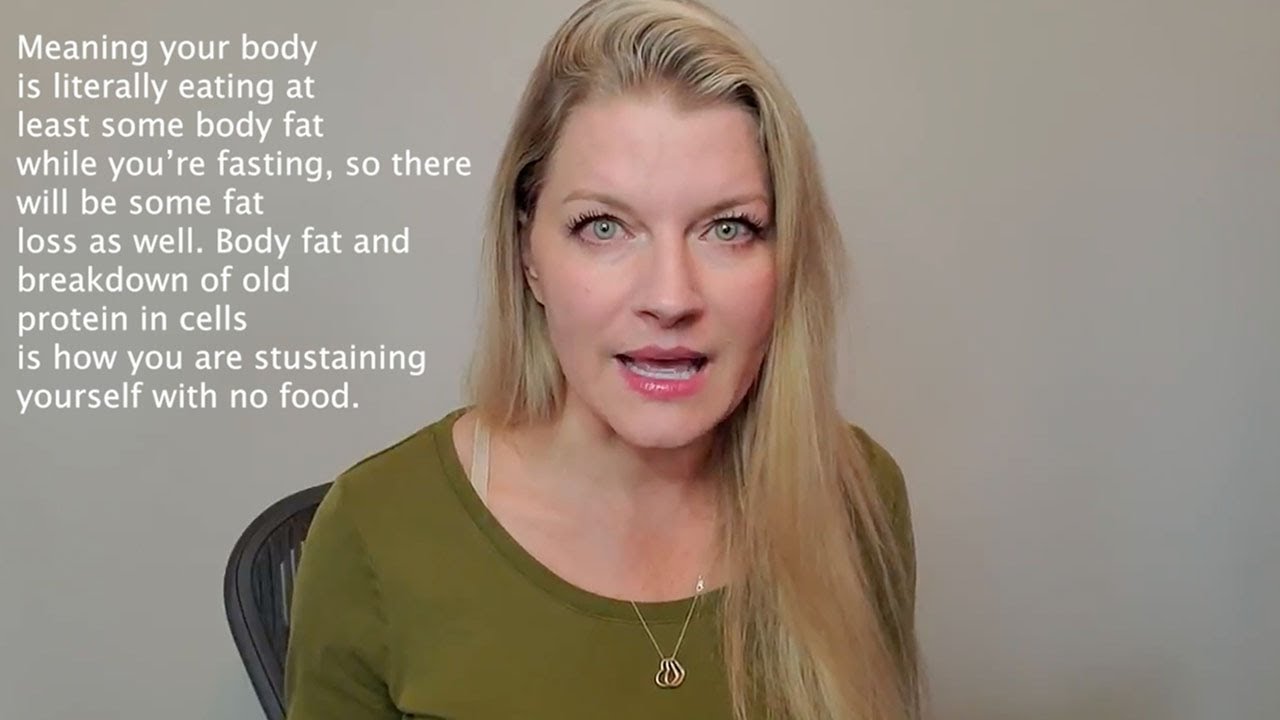
Cheryl McColgan, founder of Heal, Nourish, Grow, shares why she practices extended fasts of 48 to 135 hours on keto to trigger autophagy, a cellular self-cleaning process. She has a family history of cancer and multiple benign tumors, which motivated her to explore fasting as prevention. She recently tested exogenous ketones during fasts but worries they might reduce autophagy through the mTOR pathway.
Chapters
Hey everyone, I'm Cheryl McColgan, founder of Heal, Nourish, Grow, and I just wanted to talk to you today about fasting. So when you are following a ketogenic lifestyle, um, a lot of people end up fasting intermittently or extended. And while this is not required for the diet, it just happens naturally because over time when you become fat adapted and your blood sugar is super stable, you're not getting those up and down crashes, you just find that you don't need to eat as frequently. As you used to when you followed the Standard American Diet. So intermittent fasting, pretty common. People will do it for 12 to 18 hours a day. They might have one meal a day, those kinds of things. But what I really wanted to talk today is about more extended fasting. So just a quick disclaimer, of course, I am not a medical professional. I'm just about to share with you my personal knowledge and experience with doing extended fasts. If you decide to do anything like this, check with your medical provider or your healthcare professional. Always important to do that before you do anything new. So, um, but anyway, to continue about the extended fasting, I first became interested in this when I heard a couple years ago about the Nobel Prize that was won for autophagy. And autophagy is basically your body's self-cleaning process. It'll go around and eat up all this stuff in cells, and it happens to some degree probably all the time, but it happens most strongly when you're not eating. So when you're not eating, your body has really time to focus on— instead of digestion, it focuses on repair, and it can go around to all your cells and take— one of the things that it probably does is get protein during that time that you're fasting from the cell. So it's just a really good spring cleaning process for your body is the best way to explain it. I became interested in this because I have had some health issues in the past. So I'll just tell you about that briefly so that you can understand why I've chosen to do these more extended fasts that some people might think are a little bit excessive. So, um, what I had was many years ago I had fibroids in my uterus and they were so bad and so extremely large and painful that I had to have them removed. So I had a partial hysterectomy partial hysterectomy at that time, and they did it with a really cool procedure that was minimally invasive with a robot. And the protocols were kind of different for the robot at that point. But anyway, long story short, a couple years later, the cells from removing that implanted all over my abdomen, and I had 16 tumors, and they thought it was cancer. I had gone in for surgery to have whatever this mass was they finally discovered removed, and my doctor closed me back up and said you need to go to the Mayo Clinic. Um, it had blood supply. They were very concerned. Um, so in addition to that one very large tumor, there was all these other ones. So after I went to Mayo, they removed everything. Nothing was cancerous, thankfully. Uh, but they did also find endometriosis, which we didn't know prior to that, that I had anything like that. Um, so, and knock on wood, here we are many, many years later. I think it's about 8 years later, and I haven't had any recurrences that I know of, or at least I have no pain in my body from tumors, but that doesn't mean that they're not there my doctor promised me that 100% certainty that he got every single tumor cell in my body and that I would never have another problem again. But that being said, nothing's a guarantee, right? So when I heard about this autophagy process in the body and started reading more about it and researching, I just thought, if there is something that I can do to possibly prevent these tumors in the future, or if they start growing, have my body clean them up periodically, Um, there's also a lot of cancer in my family, so I decided if there's something that I can do to prevent that, I'm doing it. And these more extended fasts are when you really start to get autophagy kicking in high gear. And so I've experimented with many different lengths. I do 48 quite frequently. I've done multiple 60, 65-hour fasts. Um, but after doing all the research, and you can go over to my site, healnourishgrow.com, there's a whole article about the benefits of fasting, is they really think that the maximum benefits from autophagy start to happen between 3 and 5 days. That's quite a long time without food, no doubt. But again, when you're keto, your body has learned to access fat stores really well. And so you can easily— I mean, most of us have plenty of excess body fat. Even people, they say, with, say they have 7% body fat, 5% body fat, which is very low, like male bodybuilders and serious athletes, they still have plenty of fat on their body to sustain them for days, even weeks maybe. And so, um, that doesn't concern me too much. I'm nowhere near that percent body fat. I am on the lower side for a woman, but I still have plenty there. So anyway, that's my reasons for doing it. If you don't have those kind of reasons, maybe extended fasting is not for you. Some people also do it for weight loss purposes and to people in Dr. Fung's program that are managing serious cases of severe diabetes do some extended fasting like this under doctor supervision. So, but I'm a healthy person. I do this by choice and for the reasons that I just told you. And so I thought I'd share with you my experience. So I've done this one a little differently. I've done two previous, um, fasts. So 5 days is 120 hours. The last two fasts I'd started it I think a little earlier on a Sunday, so I actually ended up going to 130, 135 hours on both of those previous ones. My intention for this year was to do one per quarter. I had, uh, read or seen some interviews with John Lemanski, and I believe that doctor, the biohack doctor, he's the one that kind of recommended maybe doing it as a quarterly housekeeping. Pretty sure that was him. Um, but anyway, I thought I would do that, and I actually only— this is the third one for this year because life intervenes. It's a bit of a challenge. It definitely cuts down on your social activities, and it changes, you know, your dynamic of having dinner with your family every night, all that kind of stuff. So it is definitely a bit of a challenge, but this is the third one for this year. I'm currently 92 hours in, and I definitely plan on breaking it no later than tomorrow, Friday, at 6 PM. And I started on Sunday at 6 PM. Today's Thursday, around 2 PM Eastern Time. So I just wanted to talk a little bit how I've felt during these extended fasts. So usually for me, I've found whether I'm doing 48, 60, anything in there, towards the end of the second day is where I start to be a little hungry and a little bit just like, I really want to eat right now. Um, and that— I, I don't know what the mechanism for that is, but I've heard other people that do fasting talk about that. Uh, Jimmy Moore talks about Cheryl McColgan talks about that quite a bit, that the 2-day mark is kind of the biggest challenge to get over that hump. And then, you know, once you're into day 3, things start seeming a little better. I've also noticed over time doing different length of fasts that the less body fat that I have when I've been thinner, that it tends to be a little more challenging. So there might be something there about, you know, you have plenty of body fat to access, maybe you Once your body starts to get, get lower than that, maybe it starts to fight a little bit. I'm not really sure about that mechanism or if that's true. It's just a random thought I'm throwing out there. But this fast was different because I've started recently experimenting with exogenous ketones for the last couple months. I did it because I wrote a whole giant article over at the site on all the research about the exogenous ketones. I tried 4 different ones, spent a boatload of my own money to do that. And, um, just kind of seeing what the possible benefits are and how they can be used. And so one of the things doing this fast I decided was to try out experimenting taking exogenous ketones. In the past, I'd only taken water, coffee, tea, black, all, you know, no calories whatsoever on my previous fast of this length. And I thought I'd try the ketones this time and just see if there was any difference in my experience. So So what I have to say about that so far is that the first 3 days utilizing ketones, I definitely felt better in the past. I think part of that is you're getting a lot of electrolytes when you're drinking those drinks, which I had always been careful to do in the past as well, but just felt more energetic in general. And, but now on day 4, I'm definitely hungry and definitely feeling it a little bit more, but I feel really energetic. I have to go back. I think I did make some videos, um, that I didn't post yet when I did the previous 2Fast, and I just remember feeling like really low energy and just kind of sluggish. Um, but this time I feel more energetic. So if you're a person that has had some trouble fasting in the past, this might be a way where you could, um, support that a little bit and see if it helps you. I had also done the reboot with the Prüvit ketones one time. That's a 60-hour fast and it's assisted by ketones and broth. And what I found with that, for me anyway, is I felt like I felt a little bit more snacky. And you know, when you have the broth, you are putting some calories in there and that could potentially interfere with autophagy. And that's the other discussion to have here. So this fast of being, you know, specifically for autophagy fast, there is a chance the exogenous ketones could interfere with that. Now I've heard some doctors say, and I just heard someone at a conference a couple weeks ago say that they didn't feel that exogenous ketones inter— broke your fast. But you always have to remember with fasting that it depends on what your goals are. So if your goal is fasting for weight loss, then having a few calories here and there, maybe under 50 a day, a little, um, MCT oil or some bone broth if you need it to support the fast, then that's fine. But if you're fasting for autophagy, what I've read and what I've heard on many interviews is that any kind of consumption of calories interferes with that process. But the big question is, does it stop it completely, or is it more like a curve? Is it more like, hey, you're not eating for a couple days, autophagy ramps up, maybe you have a couple calories or some ketones and it's like slows the process a little bit, and then it, you know, goes back on? So That's a question I've never heard a definitive answer to that. I don't even know if they can figure that out, but it has to do with the mTOR pathway. And basically that pathway of healing and autophagy is turned off and on by the lack of food. So when you drink the ketones, it does have, uh, like maybe I think 30 or 40 calories, but those are really attributed to erythritol, which is about 4 carbs, but it's zero net basically because of the— it's not processed by your body. So whether or not that interferes with the process stress. I'm not quite sure, but what I will say is the being more energetic— I kind of was not quite honestly in the mood to be doing this fast right now, but, um, I am acting as a stem cell donor for my dad's cancer treatment. And given my history with the tumors and that stuff, I'm getting ready— whenever I do that, I'm going to be injecting myself for 5 days with a drug that makes my body basically grow a bunch of stuff. Um, hopefully it's mostly relegated to stem cells, um, but there is a chance that it could, you know, ramp up some processes in my body that I've had problems with before. That's just my own feeling. I— that's not— it's based on what I have read and know about the drug that that's a possibility. So my thought was I want to do one more of these extended fasts before I have to go on those drugs so that I can get some serious autophagy in gear if there's anything at all that's starting to grow on my body, have my body hopefully eat that up and get rid of it, and that way I'll have a clean slate for when I take the drug and then do the transplant. So, um, and again, that's just all my little theories. It's probably not related to anything, but again, if you can do something that's a pretty easy thing to ensure your health and to, you know, just feel better and know that you're doing something good for your body, then why not? So that's my personal feeling. I know other people have much different thoughts on this, and people also have different thoughts on it if you're fasting for weight loss, for example. Like, is it an eating disorder in disguise? That kind of thing. Um, when I personally do these, I definitely feast afterward. I don't restrict myself. I don't try to be dieting during those days. I did go back and look at my two previous 5-day fasts, so generally I'll lose 5 to 7 pounds during that time. All mostly water weight for sure. Maybe there's some recomp going on with the eating of the fat, but then I found a week or two later I'm back to basically the same weight that I was before because I am in maintenance mode. I'm not really actively trying to lose that much. I mean, do I have vanity 5 or 10 pounds that I might like to lose? Yes, but who doesn't? And is that really going to make me happy? No, it's not. So I don't focus on that too much. Um, so for me, when I do it, I'm really focused on then feeding myself really well afterwards. Definitely rehydrating, refeeding, eating all of the good healthy fats and good healthy proteins. And so my experience personally with doing an extended fast is it doesn't drop a bunch of weight permanently. Now, if you did a routine where maybe you were fasting more like every week for a shorter amount of time, maybe 48 hours, week after week after week, I kind of think that that probably would result in weight loss over time. And there's research to support that. There's, um, some papers on alternate-day fasting as well as some other kinds of things like that, and it did show weight loss. Um, so anyway, again, it depends on your goals, it depends on what you're focused on and kind of what you do after you do that fast. Um, so anyway, this turned out to be way longer than I expected, but just wanted to share my thoughts on this process, share my thoughts on possibly using ketones as a way to fast easier if that's something that you're interested in doing. And yeah, I'm gonna go drink some more water and keep myself busy until this is over tomorrow. So anyway, hope you had a wonderful day. Hope this is informative. If you have any questions or comments, be sure to message me or leave them below. And, um, happy keto, happy fasting if that's something you choose to do. And I hope you have a wonderful day.
More from Cheryl









30 Day Challenge Series, Day 30: Choose Your Three Habits to Continue for 90 Days

30 Day Challenge Series, Day 28: Schedule Connection (Put It on the Calendar)