
Keto Won The Food Addiction Battle and Gave Robin a New Purpose: 30
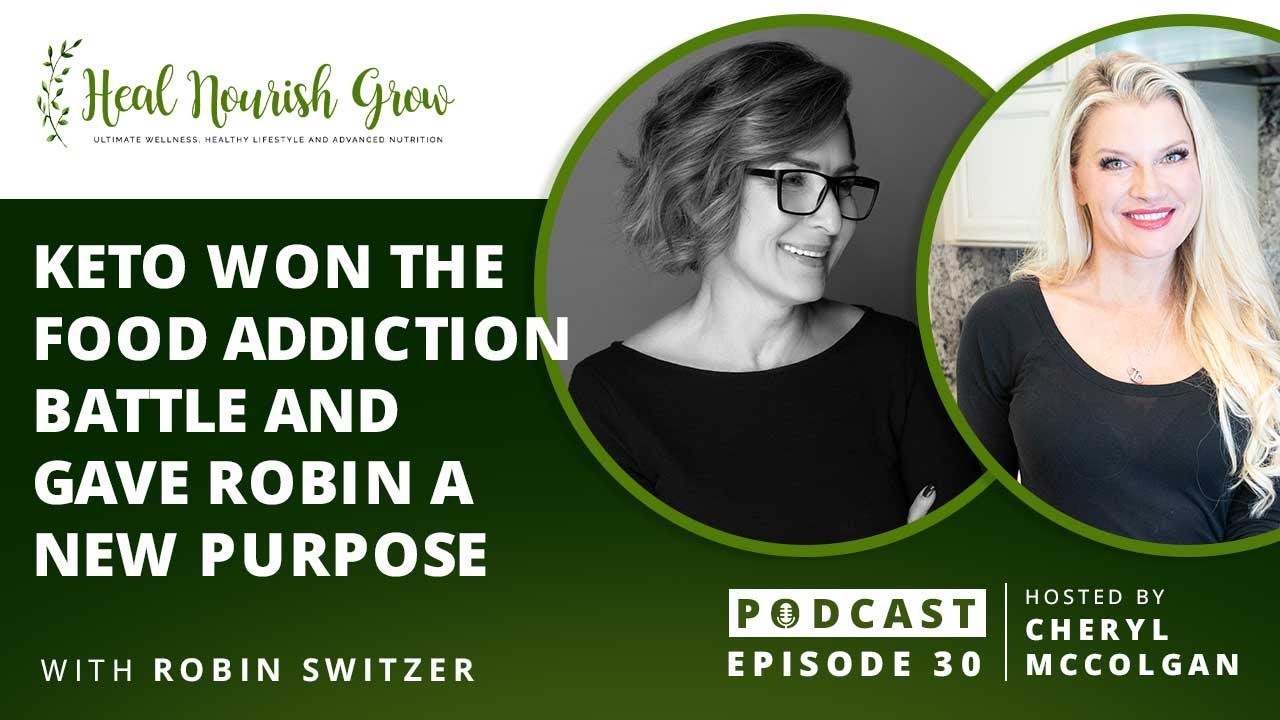
In this episode of the Heal, Nourish, Grow podcast, host (Speaker A) interviews Robyn Switzer, founder and CEO of KetoCon. Robyn recounts a lifelong struggle with processed‑food‑driven metabolic dysfunction, food and sugar addiction, and weight‑cycling that began in her childhood in the 1960s. She describes how repeated dieting, extreme weight‑loss methods, and hormonal issues (depression, perimenopause, large pregnancies) persisted until she discovered low‑carb and eventually ketogenic eating around 2010‑2015, which regulated her insulin, blood sugar, and mood. Motivated by her personal health turnaround, she left a senior banking role at Bank of America in 2014‑15 to join Keto Evangelist, later acquiring the brand and building KetoCon, a live conference for the keto community. The conversation covers the growth of KetoCon from its first modest event in 2016 to a large three‑day gathering in Austin (July 8‑10, 2022) featuring 75 speakers, medical, fitness, success‑story, and a new carnivore panel, plus 125 vendors, networking lounges, demo areas, and cooking demonstrations. They discuss the COVID‑19 disruption, the decision to keep the event primarily in‑person, and the value of community support for newcomers. Robyn offers advice for beginners on how to approach the conference without feeling overwhelmed, emphasizing selective learning and practical implementation. The episode ends with logistical details: website (ketocon.org), ticket options, social media handles, and where to find past recordings.
Chapters
Hello everyone. Welcome back to the Heal, Nourish, Grow podcast. Today I am joined by Robyn Switzer, who owns and manages her own production company and also happens to be CEO of KetoCon, which I read in the introduction. But first, before we really talk about any of that stuff, the whole reason that Robyn kind of got involved in this space is because of some previous health issues and things of her own. And so, Robyn, I'm going to let you take it away and so you can kind of share some of your background and how you got into eating low carb and how this whole thing sort of evolved for you.
Sure. Well, first, thank you. Thank you for having me. Thank you for the opportunity to share the story and to talk a little bit about the event. I found the ketogenic low carb diet and lifestyle as a result of many, many years of struggling with what I understand now to be metabolic dysfunction. But that was, I mean, it was all really a result of just not being able to properly manage the high intake of processed food that I was being given as a child. So I grew up in the early '60s, and that was the invention of TV dinners. And like, it was really cool if you eating something that could go in the oven covered in foil and come out and be a full meal. But it was a combination of that and the convenience of— which families deal with today as well— processed cereals and processed carbohydrates. And I grew up in a Jewish home, so there were a lot of processed carbohydrates. For every day of the week, every holiday, pretty much all the time. It was a tradition to go for bagels on Sunday morning. It was every holiday had some sort of processed carb. And even, uh, like Passover, when everyone else was eating bread, we were eating flats of matzah as a replacement for bread, which for anybody that doesn't know is just really a giant slab of everything that goes into bread, but it just doesn't rise. So anyway, I mean, my life started off like that. And I was thinking the other day after I had done a podcast recording, I was remembering times where, you know, as a kid I was just never full. I was always hungry. I remember just like sitting at the family table and the leftovers always went to me. I, I was just always hungry. So I think I was born that way. Uh, I was a small baby and I was just always hungry. And that led into over years and years of food addiction and sugar addiction. And then the after-effects of, of that type of lifestyle were the long-term effects of that kind of lifestyle after, you know, when I turned into a teen my early 20s, it's really starting to rear its head. Uh, it was clear I had problems. I had mainly food addiction problems that kind of turned into weight obsession problems, and then cyclical dieting. I was on a diet all the time. My earliest memory of diet was when I convinced my parents to take me to Weight Watchers when I was 11. So, and looking back on those times, I wasn't overweight, but I thought I was. So I had all of that mental stuff going on too. And then over the years, in my early 20s and pregnancies and, you know, just growing older, it just— all of the, all of the symptoms of metabolic dysfunction were there, but I don't think people really understood. I don't think the doctors really understood how to diagnose it. They just saw the symptoms I was having. And then as a— like, as a— in my early 20s and into my 30s, I was always like 20, 25 pounds overweight, and it never went away. I just— I would go on a diet, lose it, gain it back, go on a diet, lose it, gain it back. And I've done it all. I shared recently that I have probably done every diet that's known to man. Including the dangerous ones. I've taken the pills, I've, you know, gone on liquid fasting proteins for, you know, a super long time. I did a lot of stupid things, but that brought me to it on the flip side in a good way. It— that obsession that I had with food and weight loss and fitness, and it just kind of evolved into a passion for trying to understand it all. And so it did serve a purpose. So in, I think it was in the early, like around 2010, 2011, I started getting really serious about trying to figure out what was going on with me. I realized, I knew it had something to do with food because I was one of those people that just felt better if I didn't eat anything at all. So, I mean, that made perfect sense. So it was food related and I just kept on going down the rabbit hole of trying to find what would work and what wouldn't work for me. I tried doing a low carbohydrate diet and everything clicked. So in those days it was, it was the Atkins diet and things started to fall into place for me. So I did that for several years. Things started to improve, but I still wasn't really— I really— the food addiction side wasn't being managed properly. It wasn't effective in dealing with the food addiction side. So, um, and through those years, I was an executive banker, so I was traveling a lot. I was managing a large team of salespeople, and I was trying to kind of balance all of that with how I felt physically. And during those years, I always had this interest, like I said, this passion for trying to understand it all, put all the pieces together. And, um, it was probably about 2014 or 2015 where I found the ketogenic diet, and that really put things into perspective for me in a much more clear way. So What was missing in all the other times that I had tried it was the higher fat content and also just sticking to whole real foods. So, you know, the food addiction side of me was always looking for a way to create something that was, uh, a trigger food in like a low-carb way, which never really worked for me because trigger food was trigger food regardless of of what it contained. So when I started doing keto and eating whole real food, then everything made sense. So I, my— looking back on it now, I understand my insulin levels were being regulated, my blood sugar was regulated, and I started feeling better. So Then in, gosh, 2015, I was in a Facebook group for a keto Facebook group, and I saw an ad for program manager, which I had no idea what it was at the time. I was, like I said, I was managing a team of salespeople around the country in the financial services space. And but my curiosity was just like, It really got the best of me. So I figured, what the heck? I don't have the skill set to be a program manager, but I'll see what they're doing. At the time, there was a company called Keto Evangelist, and they had multiple podcasts and these huge Facebook groups and websites and all kinds of stuff going on. And so I reached out and said, hey, I'm interested in having this conversation. And the owner at the time was Brian Williamson. He and I talked and I just, when I got off the phone, I said to my husband, there's something here and I have to do this. My kids by then were already grown and out of the house and self-sufficient. And I said, I wanna take, I wanna jump ship the bank and I want to take a year to see what I can do with this. I still really had no idea what I was doing. And so about a month later, I resigned at Bank of America, just like that. Oh, wow. I would never advise someone else to do this. It was really a harebrained idea. And there was no promise for compensation because he didn't have any money. The company wasn't making any money at that point. So we were gonna build this keto empire and I was all about it. I was like, this is how I'm gonna, turn what has happened to me or what I've been experiencing all these years into something good. So a few months later, we decided we would do an event called KetoCon, which was a way for us to bring all of these people that we had on all these different social media channels together to kind of, uh, celebrate what we had found, how it was improving our health, and we really didn't know what it would turn into, but we wanted to try and pull this off with a really strong desire for these people to know each other, to meet each other, to form these communities. Because, you know, in those days keto was just starting to, just starting to grow, just starting to become more popular. And it was rare for you to go into a restaurant and be able to order like a bunless burger or, you know, to even hear the word keto being talked about. It was very rare, but that changed over the years. So anyway, we wanted to put all of this together and we did. Meanwhile, we're building several other brands under the Keto Evangelist umbrella, and we did the first event in 2016. It was small, but we pulled it off and it was such a huge success for us and we all felt so fulfilled and, uh, just energized by the community that we decided to do it again. So meanwhile, we're building all these other brands under the Key Evangelist umbrella, and we did an event in 2017 and then again in— oh, sorry, we started in 2017, we did '17, '18, and '19. We're planning for 2020, and we all know what happened in 2020.
Yeah.
So that was a huge financial disaster for the Keto Evangelist brand. And Brian came to me and he said, you know, I can't do this. I can't keep this up anymore because I have young kids to support. You know, I have kids getting ready to go to college and we can't make it. Well, I had already walked away from a really lucrative banking career, and I wasn't ready to give up. So I said, okay, but I really want to keep moving. So we put together a contract, and I acquired everything from him and started from ground zero again. And that's what I've been doing for the past 2 years.
So yeah, that's a lot. Well, you know, COVID kind of messed up a lot of things for sure. But before we go into more discussion about this show, just to give people some, you know, because this is this podcast, I did not brand it as specifically keto for a reason because I want to try to like lure people to the dark side without them being scared away first. So I was wondering if you could just revisit for a little bit. And thankfully this has been so long ago that you don't have to think about this so much anymore. But What were some of the, you know, you shared about the food addiction, which sounds like that was a huge part of what was happening. But were there other symptoms that you were experiencing that subsequently resolved or got a lot better once you went to the keto way of eating? Because I'm sure, you know, the food addiction one is huge enough by itself, but quite often people have some other symptoms and things before they go to this, you know, way of eating?
Right. You know, there are so many of them. First of all, the depression that results from dysregulated blood sugar is really huge. And so, and I experienced that from a very young age until I was in my 40s. I didn't put the pieces together. I didn't understand what was happening. Happening, but I have very high, high highs and very low lows. Um, the food addiction part was big. Uh, from a female perspective, I had all kinds of hormonal problems. Uh, my first pregnancy, my first child was 9.5 pounds. My second pregnancy, my child was 10 pounds.
Wow.
So I had huge babies. And I was quite large, you know, I was close to 200 pounds both times I gave birth. So I gained a lot of weight during my pregnancies. And then after having children, going through perimenopause was brutal until I, until I figured all of this out. And then even going through menopause, was tough, even though I had already resolved all these issues. So I mean, there were, there were a lot of, a lot of, a lot of symptoms. I think the most damaging one was the depression.
Yeah, I would agree with you because my personal experience with that, my whole adult life I've been on and off in antidepressants for depression, and nothing ever really worked. Actually, for people out there that don't know this already, my background's in psychology. And, you know, one of the things that the research shows that exercise is really the most effective tool that we have up to this point for depression. So if you're struggling, definitely get out in the sunshine and move your body. But, but I would say for me, I think it was, you know, I grew up, I was a little girl in this, in this early '70s, and then into the '80s, it's all the low-fat craze. And I was very I always thought that I was doing the next right thing and I was a vegetarian for many years and all these things. But, I think the fat component of it that you mentioned before is really huge because when you start— your brain is mostly fat. And, when you start eating healthy fats and really nourishing your body in that way, I think it really helps the hormonal balance come back into a really even place and the lack of the highs and lows with the blood sugar all the time. So, I would agree with you. That's a huge one. And, there is some more research. I was just listening to an interview recently. I think this guy's name is Chris. I can't think of the last name, but I'll put it in the show notes. But he is really starting to do some things with keto diet intervention and depression, schizophrenia, those kinds of things, and is finding some really excellent success with it. So I think that's a whole new way— direction we'll be going here soon.
Yeah, I agree. You know, When you were talking about the blood sugar or the healthy fats, one of the things that took me a while, you know, all this incoming information all the time. If you're a layperson, it's really hard. I understand the confusion. It's really hard to understand what to do, right? What to do and what's right and what's not. I mean, I was— I didn't understand the importance of the source of the fat. So the quality of the fat. So, you know, there were days when safflower oil was considered like the best fat. Like, I used to buy the special vegan mayonnaise that was made with safflower oil. Ugh. So I didn't understand the importance of the quality and the source of the fat, but I also didn't understand the importance of blood sugar regulation and that in order to regulate my blood sugar, I had to lower the amount of sugar intake from all sources, including fruit. And I also had to lower— for me, my carb tolerance is very low, so some people can get away with eating a lot of, you know, natural carbs. I can't. So I had to figure all that out. It took a time. The gentleman that you're talking about that you referenced before, his name is Chris Palmer.
Yes, thank you.
Yes, he is actually speaking at KubeCon this year, and, um, I'm super excited about it because he is— he, he comes from a very reputable position and he's been doing a lot of research, and so I think people are going to learn a lot from him.
Yeah, I can't wait. And that's the point where I should say I'm finally getting to go this year, which I'm so excited about that, um, because now you guys are back in person, live in Austin.
Yes.
So now is maybe a good time, Robyn, for you to share a little bit more about— you know, you said you took this leap of faith because of your passion for keto and really wanting— and by the way, I think that community is a hugely underrated part of success in whether it's weight loss or any kind of new lifestyle. And there are so many studies on this that proves that that's the case, that we're better off when we have a partner or some accountability or something like this. But for some reason, people still underestimate the value of that. So, uh, could you share in what ways the community is coming together? There's gonna be education, there's gonna be all kinds of things, but maybe share about some of the things and anything that happens to be new this year for people that have already gone. What can they expect now that you're back in person?
Sure. Uh, well, the event is held in Austin, Texas at the Palmer Event Center, and this year it will be July 8th, 9th, and 10th. Just really just 5 weeks away. Um, we have a record number of everything happening this year, and we're— I mean, we're just like completely blown away and thankful that, uh, things are, you know, coming together like this. But we have 75 speakers, and I know I can't even believe it out loud. And that's a combination of— we're doing 4 different panels this year. And we run 4 different stages. So there's a keynote stage, there's break— 2 breakout rooms, 2 large breakout rooms, and a VIP breakout room. So 4 stages running pretty much the entire 3 days of the event. So the panels that we're running on Friday, there's a medical panel. So it's 7 medical professionals that will be sharing a bit about what they do, how they incorporate low-carb ketogenic diets in their practices, how, how they work with people, and, uh, excuse me, and then we'll open it up for audience questions. And on Saturday we do a fitness panel, the same format with fitness professionals. Fitness experts. And then on Sunday, we do a success stories panel, which is a group of individuals that are invited to attend the event as speakers to share their personal transformation stories. And this could be weight loss, addressing metabolic disease, it could be addressing type 2 diabetes, it could be addressing any host of of conditions that are, that have been helped by this change in the diet and lifestyle. And then new to KetoCon this year is something that's been requested is a carnivore panel. So there are a lot of people in this space that find healing with the ketogenic diet and lifestyle, but still have remaining gut issues or still have remaining autoimmune issues, and they use a meat-based carnivore, carnivore diet to— as like an elimination protocol. So they eliminate everything except for the most nutrient-dense foods. And they do this for a period of time to, to increase the amount of healing. There's a large percentage of people who are finding this way of eating subset of the ketogenic diet, or the subset of the ketogenic community. There's a large percentage of them that are finding this really, really helpful. So we are doing a carnivore panel on Sunday as well. So we're super excited about that. The event will have— I think we're at 125 vendors. We had space for a lot more than that, but we ended up with vendors who needed a lot more of the geography of the, of the showroom floor. So, um, we'll have about 125, and there's everything from food product manufacturers, technology providers, software providers, fitness equipment, supplements. Uh, there's a few medical professionals that also have a brand that will be represented as an exhibitor. So, for instance, Dr. Anna Cabeca Her girlfriend, Dr. Brand, will be exhibiting at KetoCon. And Tanya Pennington, who is a nutritional therapy practitioner, she'll have a booth at KetoCon. So there's several of them that will also be represented at KetoCon. So the show runs on Friday and Saturday from 8 AM until 6 PM. During that time, there'll be speakers on all of those stages I mentioned before. And panels. And then at the end of the day, we also have a dedicated 90 minutes or so of exhibitor hall activities. So the exhibitor hall is open all day, every day, but towards the end of the day, there'll be no speakers on any stages, and then the exhibitors will be doing all kinds of giveaways and activities on the exhibitor hall—
show—
on the exhibitor hall floor. Then in addition to that, we've added a networking lounge, which is a place for speakers to connect one-on-one or one-on-twenty with their followers. So it's built into the schedule where specific speakers will be in the networking area and they're going to be doing book giveaways and book signings and pictures and all kinds of stuff like that. And then most near and dear to you would be the demo area. So we've never done this before, but we've created a demo area where there'll be a stage and a very small, like a small stage in a 20 by 30 or so space where we'll be doing cooking demos and also other types of demos. But specifically for you, you'll be doing that, a cooking demo, and we're super excited about that. Really appreciate your, your involvement and being willing to do it. So you've brought in some great brands and we're really excited to have you joining us.
Yeah, I am too. And just for people that don't know, the part of that cooking demo will be some recipes for my new cookbook that I'm still not quite allowed to share the name of yet. I should be able to soon. And so we'll be doing a couple different things from that. I'll have some books there. Uh, the brands that I'm working with have generously agreed to do a giveaway. So we're gonna have something from Vitamix and a very high-quality air fryer from Caloric. So I think, uh, you'll have some incentive to come watch me cook and chat with you for a little while. And, uh, if you haven't gotten your tickets yet, you can go to the website and use HealNourishGrow at checkout for $50 off. Uh, anything, Robin, with— if people weren't able to join us in person this year, it's just too far. Are you doing anything virtually at this point, or is that a consideration for the future?
It is a consideration for the future. We may, and we have done this in the past, offer a virtual ticket, which is access to the presentations that we record. However, I honestly KetoCon is an in-person experience. And it's really difficult to put a price tag on just the presentation material because learning is, I mean, that's a huge component of this event, but the experience side of meeting these speakers, of meeting the people you know online, of being part of this community in person. To me, that's where all the value is. Some of these speakers are new to the space, so you wouldn't really find their material online anywhere else, but many of the others are. So in answer to your question, I don't know yet. I'm still trying to decide. We do record the speaker presentations. I'm just trying to decide if if we will offer a virtual ticket for that this year. There's a lot of cost associated with doing that. So that's also why we didn't do like a virtual attendee ticket because there's just no way to experience KetoCon virtually when so much of it is experiential.
It's just— Yeah, and as a—
Go ahead, I'm sorry.
I'm sorry, I didn't mean to interrupt you, but I was just going to say, as a person who— I used to produce conferences all over the world as my job and attend many of them. And I was just going to say, I couldn't agree with you more because there, the aspect of being in person, I mean, we can get a lot of business done over Zoom and over calls and things, but there really is nothing like that experience of, you know, meeting your tribe, meeting your people in person. And to your point, like you said, getting to— like, some of these people I've known online. Like, I think of them kind of like friends in my head, but in, in 5, 5 or 6 years, I've never met this person face to face. And so I think that that's one of the aspects of attending conferences in person again, if you are able to do that, is just really invaluable. And so I just would like to say, encourage everybody, it's fun, it's 3 days. You know, if you are an introvert and you need a little break, you just like peace out for an hour or two and then come back. But it's, it's definitely worth exploring if you have any interest in this lifestyle. Which actually, Robin, would you say for somebody who hasn't taken this on yet, or they're just a beginner, uh, would you recommend them approaching the conference in a different way? Or would you feel like they'll feel overwhelmed? I mean, what can you imagine a beginner just trying to learn about this lifestyle? What would the conference look like for them?
Uh, you know, I, I agree in the sense it might be a little overwhelming just because of the number of people that will be there, but truly, if you can get past your, uh, your just hesitation to be in a large group like that, the people are very welcoming. Uh, the brains that are there Although there are a few, you know, large companies, the majority of the brands that are there were started by people like you and I who found this way of life and they found a need for something for themselves and they developed it and it turned into their businesses. Like, your crisis becomes your calling. That's, that's why this event is even happening, is because of my crisis becoming my calling. And so the vendors are very supportive. The speakers are incredibly supportive. So this isn't an event where someone will go up on the stage, come off the stage, and you never see them again. The speakers hang around. The speakers are walking the showroom floor. They're meeting their, you know, their followers. And they're not, they're not people who are unapproachable. So I, I didn't I didn't share this with you before, but 99% of the speakers that come to KetoCon were personally invited. And there's a handful of people who contacted me, but the majority of them were personally invited because I know them from past events and because they, their goal, their purpose in all of this is the same as mine, to make sure that as many people as possible know how they can take their whole health into their own hands and turn around all of these problems that they have. So for someone who's just brand new to this, I would say soak up as much information as you can, then take it home and pick a few things that you can use to start making changes. And that's really, I mean, that's the most important part, that you come there and find a few things that hit home, that make sense to you, that you can take home and implement easily. The food product manufacturers, they've all been thoroughly vetted. So there's nothing at KetoCon that I wouldn't give to my granddaughter. There's— I think you can If you're new to this, you can feel confident that your best interests are being looked out for. This is much more than just a big event. This is much more than just a business. This is how I live my life, and my family's involved in running this business, so it's really important to me. So if my name is on it, then, um, I'm only going to deliver something that I would share with my own personal family.
Yeah. And I can appreciate that because I feel the same way about a lot of keto products. I mean, you're probably in the same position where I have people reaching out and they're like, oh, can we send you this or can we send you that? And then I go look at the ingredients and I'm like, I would never eat this, so I'm not going to promote it. It's got some garbage sweeteners and people know I'm obsessed with the whole sweetener situation, but it's like maltodextrin and sucralose, basically the cheapest and some of the worst zero-calorie sweeteners. So anyway, I've always appreciated that about the brand. And I think that when you find good people that are running something, obviously, that is why you have so many people supporting it and so many really good thought leaders and speakers and people involved in this space that are in a position to represent your brand very well, I think. So anyway, that's something I've always appreciated about KetoCon.
Well, thank you. I really appreciate that. It takes a year to do all of this, and a lot of sleepless nights, blood, sweat, and tears go into making sure that this is something that I can feel proud of. So, uh, I, I appreciate you recognizing it. It goes unrecognized, it's taken for granted, and that's okay because at the end of the day, I still have to look myself in the mirror. It still has my name on it.
Yeah, and that's the most important thing. So, Robin, to, um, To finish this up, so I think first of all, whether you know it's virtual or not, get on their mailing list so that you know what's happened. You never know when they're going to bring maybe a new event to a different part of the country or offer you other great tips on the keto lifestyle, deals, sales, that sort of thing. So Robin, can you just share all the best places for people to connect with you, where they can buy tickets, and any other information that's relevant to sort of the logistics of, uh, seeing in Austin?
Sure, uh, well, the website is ketocon.org. That one's easy. Uh, if you're looking for tickets, when you click— when you go to ketocon.org, there's a little Get Tickets button on the upper right-hand corner of the home page. That'll take you to a page where you can see all the different ticket options. We are— the VIP tickets are sold out, but we still have 3-day tickets and 1-day tickets. You can purchase a 1-day ticket for Friday or Saturday. They're both the same price. And then there is a discounted ticket if you only want to come to the expo hall Sunday. So there's plenty of different ticket options. On social media, you can find KetoCon @ketokon on Instagram, @ketokonatx on Facebook, and I think that's it. Is that—
okay.
Yeah, yeah. One of the things I also wanted to mention, if you want to— if you can't join us, or if you can, regardless, we do have a YouTube channel, and the presentations from 2017, '18, and '19 are on our YouTube channel. So you can get an idea of, you know, the caliber of speakers that we, that we do bring to the show. You can also go to our website. There is a speakers tab on our website that gives you— you can see who all of the speakers are and their profiles and their bios. And there's also the schedule. So if you are trying to decide if you want to— if you can only come for one day, you can look at the schedule and see Friday, Saturday, and Sunday, decide which day is the best fit for you. So there's loads of options. We're trying to make it easy for everyone to attend.
Yeah, the website's very organized and you won't have trouble finding anything, so be sure to visit. And Robin, I just want to thank you for taking the time. I remember what it's like during this crunch time of the show, so you're almost to the finish line. And, um, I appreciate you taking the time to share this with my listeners, and I hope to see some of you guys there. You can meet Robin, you can meet me, you can meet all these other just wonderful, lovely, uh, speakers and participants that we have this year. So, um, anyway, thanks again for your time, Robin. I'll see you soon.
Thank you.
More from Cheryl









30 Day Challenge Series, Day 30: Choose Your Three Habits to Continue for 90 Days

30 Day Challenge Series, Day 28: Schedule Connection (Put It on the Calendar)