
Lessons From Over 17 Years in the Health Space with Bestselling Low Carb Author Jimmy Moore: 4
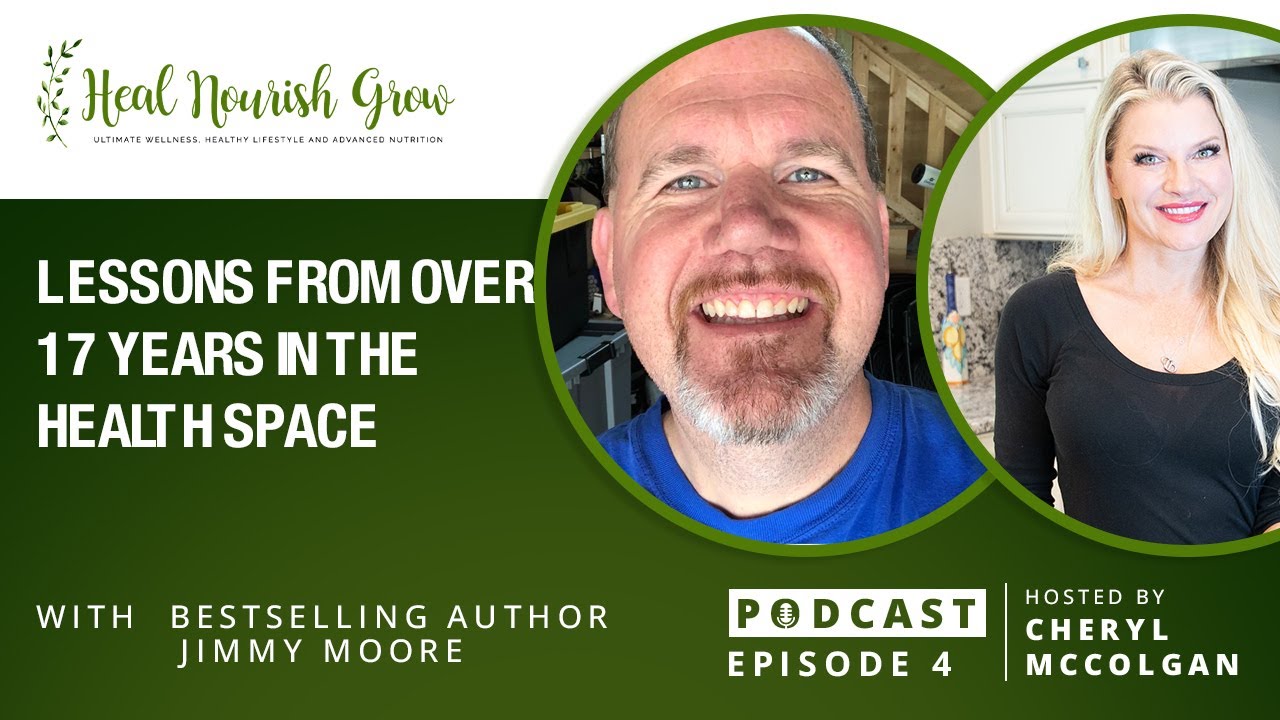
Jimmy Moore, a low-carb pioneer, shares 17 years of health evolution from low-fat dieting to keto and carnivore eating. He lost 108 pounds, has triglycerides of 43 mg/dL and HDL of 72 mg/dL, and warns that cutting fat and calories actually disrupts ketosis. Moore credits a 2019 sabbatical for healing childhood trauma and discusses fasting, red-light therapy, and why listening to your body beats obsessing over the scale.
Chapters
So welcome everybody, I am joined today by Jimmy Moore, who if you are in the keto space, you definitely know his name. And I can't wait to chat with you today, Jimmy.
Hey, hey, hey, what's going on?
So, um, back basically, I, you know, obviously introduced you to everybody prior to putting our interview on, but I'd kind of like to hear from you in your own words. And you have such a very interesting history about how you got into keto and some of your family health history. If you could just share with people a little bit about that and kind of how you got to where you are now.
Oh yeah, like I was king of low-fat diet before finding low carb. And I think that we all do that. We all kind of default when you need to get healthy, when you need to lose weight, what do you do? You cut your fat, you cut your calorie, start walking on treadmill, We do all these like messages we've been told our whole lives. And how's that working for you? Like if you're doing that and you do it over and over and over again. And I think what draws people back to it is the reinforcement in our society. That's the healthy way. And then you do lose some weight. You do feel somewhat better. I would argue because you get rid of the junk in your diet for that period of time. Healthy. And so for me, I had tried all those things and I had been successful, up, down, up, down, up, down, up, down with low-fat diets. And in fact, in 1999, you mentioned family health problem. My brother had a series of heart attacks in one week. So 4 years older than me, my brother Kevin, and in 1999, he had 3 heart attacks in one week. In the hospital and for some routine checkup or something, and he had a heart attack while he was in the hospital. Thank God, because he probably would have died had he not been there. And then they put a defibrillator in, he had another heart attack. I mean, it's just on and on and on. And it turned out he died at the age of 41. But when he had the heart attacks, I said, I've got a hootah. And again, that, oh, that, that Cut fat. So basically, bro fat diet, and lost a bunch of weight. And at the end of about 9 months, I'd lost triple digits of weight, but I was miserable, hungry, I was irritable, I was an angry man, and never put two and two together as to why until I learned the importance of healthy fat. Made up of 50% fat. Yes, you're a fathead. I just called you a fathead, and it's okay. We're all fatheads. And when you don't eat fat, that has major effects on— So at the end of that day, 'cause I was so frustrated, well, this is the way I have to eat forever. Screw that. I'd rather be fat and happy than miserable and thin. And so that kind of got me on the journey up, up, up. For a while, till I got a diet book for Christmas in 2003. And it was the Atkins diet. I read that book. This guy, the wackadoodle, what, eat fat down the carb? What do you mean eat more fat? This doesn't make any sense at all based on what we've known. But I gave it a go. And so January 1st, 2004, I'm on the Atkins diet. Sucks for like 3 or 4 days. Like I had all the carb flu, all the tofu flu. But then like I got on the other side of that and went, all right, I like this. I feel pretty good. Like for the first, I love, like this is kind of cool. And it started so much at the weight loss journey, so much more than I did end up losing 103 prescription meds, cholesterol, blood pressure, breathing problems. And I, Hey, we heard you lost some weight. So they featured me on the page and I started getting all the course, you should write a blog. And this was 2005, like what's a blog? And so I started a blog in 2005 called Live It Up Low Carb, and it's now my trademark kind of name. Everybody knows that's me. Uh, and then a year later started the Low Carb Show, which is now the longest running health podcast.
Yeah, that's actually how I came to know you because, uh, when I, so I started going lower carb about 5 years ago. And of course your work is some of the things that I ran across very immediately. And similarly to you, I think we're kind of a similar age range. I grew up in the whole era of low fat, hardly ate anything. And to your point about your brain feeling so much better, I struggled with anxiety and depression most of my adult life. And after going low carb, higher fat, I've been feeling so much better. Um, so that's just kind of an aside for people to know. Um, but basically, so you really dove in and you said, you know, the longest running, and that's how I came across you. But the other way that I really came across you was I've always had slightly high cholesterol. And when I say slightly high, I'm talking like 220, which is now I know that that is not, not even a concern, right? And it is higher now that I've been on low carb, but The first book I read of yours, and it might have been, might have actually been your first book. Yes, exactly. It was Cholesterol Clarity. And so I just wanna tell everybody, if you haven't read this book or if you are worried about your cholesterol, you need to read this book. It like just puts everything in a whole new perspective really. And, and so was your, did your cholesterol go up? Is that one of the reasons you kind of dove into that?
Well, let, let me say, so at the end of the journey, I lost 108 pounds. Like my doctors think I'm rockstar. I'm going like, whoa. And he did. He was very impressed by the weight loss. Like, "All right, good. What'd you do?" I said, "I did the Atkins." And I didn't tell him because I kind of knew what was coming next and it predicted to happen. He's like, "Oh, the Atkins diet. Oh, let's check your cholesterol." I'm like, "Knock yourself out." Obviously, this is kind of the brokenness of the medical system is it's so numbers-based. You're looking at a patient, right? He could have easily looked at that obvious, you're far healthier than you were. But no, it was, nope, that's not good enough. You've got to get your cholesterol down. So he runs cholesterol and it comes back and he's looking at the results. Ugh. And I was like, what's the matter? He said, total cholesterol. I had not been on. I was on Lipitor and then I got joint pain, muscle aches and things taking Lipitor. I'll put it on a better way. "We'll put you on Crestor." Yet another friggin' statin. And so no, it didn't help. So when I came off of that during the Atkins diet weight loss, he's like, "Oh, 260 is your total cholesterol." I said, "Yeah, but what about the triglycerides?" They were 43.
Whoa, that's amazing.
Like, the anything under 100 is good, but 43, brilliant. And then what about HDL cholesterol, the good cholesterol? It was 72. Good for a man. Hate you ladies, 'cause you ladies get higher HDL than the guy. But that was good, HDL, triglyceride, HDL ratio, kind of what you should look at, not total cholesterol. Yeah, well, yeah, those are really good, but— and like, there's stuff on stupid— Chapter 10 of Cholesterol Clarity, I explain why doctors are so incredibly clueless about cholesterol. Since that book came out, now a brand new recommendation came out last year that before they can put you on that medication, they have to go one more step other than just your cholesterol. They have to run what's called that CT scan that I talked about in the book. And so they look for actual type 2 heart disease, and if there is none, they wanna statin. Oh, if your doctor's not doing that, he's violating guidelines.
Interesting. Now, I didn't know that part of it, but I did actually have that scan, uh, eventually after reading that book so I could put that to rest. It was not, but it was because I think I was a runner for almost 20 years, and my doctor actually told me, um, that there's a study that was done on endurance athletes and they tend to have more calcification because of oxidative stress.
Yes, exactly. It's the oxidative stress. When you overtrain, that's almost like eating carbs inflammation-wise. And so it doesn't mean don't train, guys. Don't hear that as the message. Oh, I'll just be a sloth and eat my bacon like Bon Bon's. No, don't do that. But when you exercise, do it smartly. Do like high-intensity interval, like bursts of energy, but don't overdo it. And yeah, a lot of runner friends of mine always talk about their 8SCE inflammation marker being like 7 or 8, and I'm like, dude, like back off of the drink a little bit and that'll cut down.
Yeah, and I, I did actually have to give that up over 10 years ago now because of my knees. So I have— so I'm hoping between my, you know, my lifestyle now where I do much more reasonable amount of appropriate exercise and eating low carb, that, that number either will stabilize or go down. It's only like 12, I think it was anyway. It wasn't real high, but—
Oh, it's 12, statistically. So I wouldn't worry about that. If it was 150, I'd be like, yeah, we need to regress that. I wouldn't worry about 12.
Yeah, I'm not super worried about it, but my doctor did still want to put me on statins after that.
And how old are you with 12?
I'm about going to be 48 here in a month or two.
48, turning 48. Okay, well, that's good. Actually, a lot of women and guys, of course, Heart disease is kind of like the big concern that people have. That's why saturated fat's been vilified. It's why we all worry about cholesterol, da da da da da. But we're not looking at what's causing that calcification. It's not fat that you eat, not cholesterol, it's inflammation. So deal with the inflammation, which, oh yeah, by the way, a ketogenic diet is an anti-inflammatory diet. And then you add in little biohacks like red light therapy, sauna and ice baths, and all the everything. You bring that inflammation down, you can't have disease.
Yeah, that's, that's what I'm hoping for. That's my belief. So that's the program I'm on now. And actually, I'm glad that you brought up the biohacking stuff because another one of your shows— that again, how prolific you are with the podcast, I've enjoyed all of them— but one of my favorites was the Biohacking MD with John Lemanski. And, um, I, I dig all that stuff. That's how I kind of got into this stuff, the science-based stuff. But, um, You mentioned red light therapy, you mentioned ice baths, things like that. But you also ended up taking a sabbatical for yourself. And I know that you have talked about that a little bit, but if you're willing to share about that period, I know that one of the main reasons you did it was to take care of your health because you are such a busy man and so prolific. And so if you just talk a little bit about what you did during that time and any changes that you noticed in some of the things that you worked on.
And thank you for this, because I'm back about you podcast. Nobody ever asks about it. It's important. In fact, it's ironic you're asking me that, because as of the report today, I said, hey, I'm off. I'm just going to step away for a bit. The, the day that took care of my podcast, he's so visible online, just so I, I can work on Belgium part. But yeah, in 2009, I decided I needed a little time off, a lot of time off, because by that point I had been going for 50 years straight.
Wow.
And because I'm one of those personalities that go, go, go, go, go, and I don't know stop, and, and I am very prolific And I don't have any shame about my work ethic. I had ingrained in me as a child that the way you prove yourself in this world, you work, work hard and you give it your all. Like how cool would the world be if everyone poured themselves into their work 1000%? And like, world would never be the same again. But that's my work ethic. So it caught up to me. I was feeling the physical effects from it. Like, what? So September 1st, 2019, I went away and I went out and away dark. I deleted my phone, every social media app, any podcasts. I had no work. Now I thought I was going to go super crazy, and I did there for a little bit. But after a while, I was like, wow, I don't need that. I don't want that validation of my work. But what happened was, so everything I do is always outward, outward, outward, outward, pouring out, pouring out, pouring out, hey, all the things I do. When all that was stripped away, guess what's left? Oh, this heart.
Oh no.
And so like, I started doing some work on myself, uh, with my childhood trauma. I was physically and emotionally abused as a teenager for about 3 and a half years by my dad. I never dealt with that. I never came to terms with what that meant. I started like digging inwardly. Um, I had a breakup in my marriage at that time as well. It just really kind of brought things to light that I needed to deal with, but I was covering up my pain with my work. And before I left, I was doing sick podcasting and I didn't know I was working so hard. Then when I went away and it was all stripped away, then I'm like, oh wow. And how many of us do that? Get so caught up in our lives, we miss what we need to be working on. And so in that 6 months from September until February last year, I, I did the work. I, I looked inwardly. I reevaluated where did I mess up in life, what can I do to be a better man, all the things. And then I come back March 1st, and 2 weeks later COVID happened. So it was not fun, but I learned so much. And like, I still even now am learning to take that time because like we talk about health from like a diet perspective or health from fitness, but we very rarely talk about health from a mental perspective. And we talk about mindset— oh, get your head right so that you eat right and stay dedicated and have the willpower and all that kind of terminology. Uh-huh, that's, that's cool, nothing wrong with that. But I think what's missing in kind of the health and wellness community is mental health is just as important as physical health. And yet mental health gets poo-pooed, and oh, you just need to go see a shrink and everything will be okay. And it's not always that easy.
No, it's absolutely not. And I do actually come from a mental health background. My degree is in psychology and my minor in addiction studies, and I did some graduate training in psychology as well. So that is actually something that I really am personally interested and focused on. And when I put out my content, I do try to— that's why it's called Heal, Nourish, Grow, because it's really about a holistic approach to health, not just what you put in your mouth. Because we are finding so many things like sleep and stress, and a lot of the things that you were dealing with before you went on hiatus were really affecting your health, even though you were doing arguably everything really perfect with your diet and with the, you know, with the therapies that you were doing.
Yeah, I put on a face for the outside. Not like, it's not like low carb is the answer. It's not like, uh, and people do that, they like to throw, well, if you're eating keto or carnivore, why are you still fat? Why are you still dealing with this, dealing with that? But so much like magical powers on one thing, and I don't think health is about any one thing at all. There are some core things you can do, I think, across the board that would make you trend towards healthier, but you can't just say, "Get your diet right and all of your weight loss will turn on, all of your health will get better." It's like, what if you have childhood trauma that you never dealt with? What if you had some other incident in your life that was just so life-changing and you never came to terms with it? Like, that's the physically manifesting.
Yeah, I 100% agree with you. And I'm so glad that you did take that time and that it sounds like you're about to step away again for a little bit. So, During that time, are you kind of doing hiatus, or do you have any special projects that you're working on, or what's, what's kind of next on your horizon?
It's funny, you think of projects this way. For the 6 months before I left, people were like, you write a book during the 6 months off? That's not so bad.
Yeah, they're like, just whip those writings out.
And so like, for me, I cover up pain still, and I'm gonna, I'm gonna admit this on your show, I still use my work to cover up pain. I've been going through a very difficult difficult personal thing on top of the virus, on top of all the other craziness in the world that everybody's had to deal with. I've had this personal little albatross around my neck for the past year and a half that's just not gone away yet. And so until that's lifted, I'm not going to feel fully able to kind of move on with my life, so to speak. So I have this idea of like covering up that pain by pouring myself into my work. Well, now I'm at the point where today I announced I'm gonna step away for, you know, a week or two or whatever, just to kind of take that big breath and go, "All right, it's gonna be okay." Like, I think if we talk kindly to ourselves and try to show ourselves the grace we want other people to show us, then we need to do that. I think we're sometimes our own worst critics and enemies, and we need to be our number one champion.
Couldn't agree with you more, and I am so happy for you that you are working on all that. And I'm sorry to hear about the, the trouble part, but obviously I think you, again, taking this time and taking care of yourself because you have been such a wonderful part of this community and offering people so much information and so many good things that the only way that you can continue to do that is if you take care of yourself first, right? And I think so few people, and especially women, get in that pattern, but men too, obviously, but of not feeding themselves first, like the whole putting on your oxygen mask, they forget about that, you know.
I'm a bit of a different type of guy, like I'm not the tradition of like Mabel when it comes to like, "Oh, suck up my feelings," you know, "grrr." That's never been me more, like I've always been one a little more in touch with my feelings. Doesn't make me gay, it just means I'm in touch with my feelings. And so when I went away, that became all the more accentuated. So now I can talk very deep with people in conversation. In fact, some of my best friends are girls. And so it's just funny because it's like guys don't go there in conversation. And guys, you should go there. Like, I didn't realize the power of letting go of kind of the stereotype of what a guy should be. Until I started having these meaningful conversations and going, ah. Like I do a show, I do a podcast now called One Step Deeper, and it's literally about mindset, beliefs. I do it with my best friend, she's 20 years younger than me, married, has kids, and so we're very different people, very different age range, and yet we connect on that deep level of conversation that mindset, it's ageless. It doesn't matter what your age is. You all can make changes that can be meaningful wherever you are in your life right now.
That's so powerful, and I love that you encourage other men to, because I think it is healthier. Not that you have to be like in touch with your feelings all the time and make it into somebody that you're not, but it is part of your health really to recognize those things.
I so hate that stereotype that not men can be, like, not men can always feel. It's just been beat out of them. It's been emphasized in the culture. It's like, I think I'm a pretty tender-hearted guy, but that doesn't make me less of a guy because I do that.
No, absolutely not. So just to pivot a little bit, because some people, and I think if you take nothing else away from this conversation, for the people watching or listening, is that you do need to focus on not just what's going in your body, but your whole, your whole self-awareness and your whole wellness program. It's not just eating. But to go back to eating, because that is what we're kind of talking about here at the end of the day. No, no, no, I love— I mean, this is like what I hoped for, for this, um, for people, is to just hear from real people, like, how, how did they deal with things? How do you do low carb and keto for, you know, the 20 years, 15 years, whatever it's been now that you've been doing it and make it sustainable. And part of that is around mindset, obviously, but for part of it day to day, like, can you talk a little bit about how your eating has evolved over time? So when you first started out with Atkins, it was one thing, and then you've messed with carnivore and you've done experiments where you've done 90% fat. And so maybe you could talk about some of that stuff with the eating.
Oh, I did a lot between Atkins, carnivore, so So I went on the Atkins diet. I didn't care about food quality at all. I think some of my first meals that first week was American cheese and processed turkey and rolled up, dipped in mustard or mayonnaise, and I ate it. And hard-boiled eggs dipped in— so it was very rudimentary, but it was what got me off the crappy garbage, as I call it. And then, like, over time, I evolved the eating. To more of kind of a paleo low-carb approach because paleo came around. I got involved in that community. I was listening to a lot of things about microbiome and some of the other things and like what would healthy carbs that you could add in that would be good. Okay, well, I'm doing this and that. Okay, let's try that. And so I implemented that. Then I took that real food approach and I said, well, I want to maximize what this does. Let's see what happens if I put it in ketosis. And then the measurements for blood ketones came around, around 2011, 2012. And so I'm like, okay, I'll test my blood and whoa, I'm not actually burning fat for fuel. So then I honed it in and started experiments, ended up doing a 1-year experiment on nutrition, keto, turned it into this book.
Yep. Keto Clarity. If you're not watching the video, What's that? I was just saying the name of the book in case people weren't watching the video. It's called Keto Clarity.
But what I'm most famous for in my podcasting now is Keto Clarity. And so, so then keto was around, and, and I was kind of early before the trend of keto out there happened. And then the trend happened, but like all the while I was noticing more animal-based, more animal-based, less carb, less carb. And it just kind of— I just naturally fell into kind of a keto carnivore kind of lifestyle. And it's not that everybody needs to go animal-based, it's just I know I feel better eating mostly meat and mostly animal foods. And it's like, if you don't feel good in that, then don't do that. But it's worth something, uh, trying something. Always tweaking, like, what you're doing, um, and pay attention to how you feel. And a lot of people, they predicate what they— based on what the scale tells them. Throw the stupid scale away. I will come bring a big old sled thing for you if you want me to, because it's just encouraging people left and right, and it really doesn't give you the whole picture. Yes, weight matter, but your health matters more.
Yes, and I think what you're saying about noticing what you're eating, a lot of people aren't very in touch with their bodies. And, and that is one of the things that I also come from a background of yoga. I've taught for over 10 years, and that is one thing that— yes, namaste— that is one thing that yoga and meditation definitely help in relation to your health. Like, people think of it for mental health, which is true, but it also allows you to become more in tune with your body where you notice, like for me Um, you know, when all these treat— I've always been a Whole Foods-based person for the most part, but when all these like keto treats and stuff started coming out, it's like, it's kind of exciting. It's like, oh, I can have a cookie again, or whatever. And then I make some of that stuff for myself when I want it. But those packaged things, what I observe in myself is like, uh, if I eat something with coconut flour, man, that just— it just feels like a rock in my stomach. It feels horrible. And the first time I noticed it, I was like I was thinking, wow, people go around eating these all the time. And I'm not saying everybody has the same reaction, but I'm willing to bet that some people just don't even notice that that is the trigger that's causing them like, oh, I don't feel so good today.
And the thing that frustrates me is, well, it's keto, so, or it's unlimited, not off limits in any quantity. That doesn't even make— like, It's still a cookie. Rare, have it on occasion, no big deal. But if it becomes daily, or if you notice that the coconut butter bomb feels like you're having a baby, okay, maybe it's time to lay off of that.
Yeah, and I think that is a thing that happens now is like people forget, you know, even when I ate how I ate before, like I was vegetarian for 7 years and but again, always whole foods based. But, um, what I never did was never— and this is just like a personality trait, I think— I never allowed myself like to have a treat every single day. Like, if you eat dessert every day, that's— for most people, that's not going to work out very well because it's taking the place of foods that are nutrient-dense and that you actually need. And so I'm not saying, like you, I'm not saying never eat a cookie, but I think this idea that we can just like eat all this stuff all the time is kind of a weird thing that's come around in keto.
Well, our culture, like, made this whole appetizer, you know, dessert norm. Go to a restaurant, here's the appetizer. Oh, okay, here's the main entrees. Oh, what would you— would you like some dessert? And so it's like this— it's been subliminally said to us, have to have some at the end of the meal. And that's never the case other than if you're a kid, like, you had pudding.
Yeah. Um, so finally, the last thing I kind of was thinking about in relation to making things the same— we're kind of talking about, you know, going out to eat and desserts and things. If a lot of people come to keto for weight loss, I mean, there's so many other benefits as we just talked about— the anti-inflammation and the, you know, brain health benefits and all of those things— but a lot of people get here because they want to lose some weight. So over your years of doing this and having experimented with all the things you've experimented with, are there any kind of tips or tricks or nuggets of wisdom that you can offer for people whose main objective is weight loss? And I do love that you said throw away the scale because you do need to focus on how you're feeling, you know, measurements, things other than the scale. Um, but you know, some people do need to lose weight to be healthier.
Can I tell you the biggest mistake people make in pursuit of weight loss? But our prescription is when things start moving They want them to do it. Getting rid of the scale is important. What do they do? They do two things. They cut fat and they cut calories. So what happens when you cut fat? Take away some of this— that you were getting. That fat comes from a part of moderate protein. That fat got— can't cut carbs. And cuts at a time, you're just asking for it because the body can only handle just so much protein. And there's this thing called glucokinase inhibitor that causes problems in the body. It squirts out glucose. You're like, I thought it's ketosis, what's wrong? You're not eating enough fats. Don't cut fat. But then even sometimes people will eat the right amount of fat, but then they'll cut their out, down, to a low point and you cut calories below a certain threshold. I think for what— it probably did not dip below 115 to be at a really good pace. For guys, probably 2,000 to 2,200 at min, because when you dip below that, you're telling your body that there's some— there's crisis. What's happening? Okay, we're not letting go of any store body fat because they're obviously Right?
Happy.
They don't have enough food to eat. They're not feeding us enough. Why would people go on fasting? Gonna have a Bulletproof coffee. Eat like 400 calories worth of butter and coconut oil and MCT oil. Your body's going to think you're starving and you're actually going to gain weight, not lose weight. Eat fat. Fat fast. I think that's where people get in trouble. So what do you do? Stay steady on what the basics are. It's why I wrote Keto— I wrote so many, uh, some books. I wrote so many books, uh, is people get so confused because all these messages from all these people out there. When keto-based, get back to the basics, the basic, and then as you go and get results, perfect it. Other things.
Yeah, and I'm so glad you mentioned fasting because I would be remiss to not chat with you about fasting after all of the amazing experiments you've done and the other book, The Complete Guide to Fasting. Um, I'm a huge proponent of fasting as well because of my health history, and also there's a lot of cancer in my family, and so I'm really focused on, you know, making sure I have a good amount of autophagy every single month. Um, and your experiments and your work obviously was really interesting to me once you started doing some of these really longer fasts and stuff. Um, and I actually think it's a pretty good tool for people, you know, in relation to weight loss. Um, but I think maybe you could expand upon that. I mean, I talk about this a lot about, you know, the fasting or the starvation experiments. So your body's starving is really into pure fasting where your metabolism actually speeds up. Dr. Fung's, um, website when I first found that. It's like a book on his website all about those studies and why your metabolism doesn't slow down when you fast. So maybe you could go into a little bit more detail about that part.
And Jason is a wonderful co-author on a book. Probably my favorite co-author. Eric wrote 30 books. I was like, dude, I can ball that. But yeah, like The basics fast are just don't eat. Like, it's not hard. And again, it goes back to our cultural norms of, oh, breakfast and snack and then lunch and then snack and then dinner and then snack and then midnight snack. It seems like culture poo-poo on fasting because they have preached the opposite. And so fasting actually has very powerful, I guess, effects that come from it. You mentioned the autophagy that generally happens fully within 72 hours of a fast. And don't freak out, 3 days is not a long time to fast. I fasted for 21 days 3 times, uh, and 1 month. I tried to go a whole month, but then I traveled and I found out that stress is a you-know-what when you're traveling, for me at least. And so I ate that day. I was jittery and trying to drive and concentrate, uh, but in that month I had, uh, all but 2 days in the 31 days that I fasted. So that was cool. But yeah, like, you do, you speed up your metabolism, boost human growth hormone. There's so many things that happen. The fun part is when you start testing blood sugar in a deep fast and a long fast, and you see like a 112, you're like, how in the world do I have a— Well, that's good news, guys, 'cause what happens, Dr. Funk and I talked about this in our book, You have pockets of sugar hidden in your fat store. So as your fat stores are released, that sugar gets released into the bloodstream. So if you're sitting there pricking your finger thinking, wow, my blood sugar's gonna be great, and then, huh, huh, huh, 112, what the hell? And you don't realize you should celebrate at that point, 'cause it means that fat that's been tucked away protecting you from all kinds of toxins it's now out of your body. It's now getting rid of. And yeah, I think fasting is the magic elixir that not near enough people are—
Yeah, that's— I keep saying, I'm actually doing a little talk for this Keto Diet Summit about intermittent fasting and fasting in general, and I like to say it's really the most powerful health tool in your bag that's pretty easy to do. Even if you decide— even if you never change your diet, I think you can get a ton of the benefits that we've been talking about just by doing a really good fasting regimen.
Well, and everybody says, "Oh, you're just starving yourself." Let me make the difference between fasting and starving. Starvation is you want to eat, you ain't got access, so therefore you can't. Fasting is have availability to eat, you can eat at any time, but you're choosing not to because you have a bigger purpose.
Yeah, and I love that distinction. And, you know, as a woman and as a smaller woman, I've actually gotten some pushback on that occasionally, like, "Oh, you must have an eating disorder. Are you being healthy?" It's like, you have a family that's got as much cancer and problems as I have, and I have a tool that I could possibly prevent that just by not eating in the morning? I mean, why wouldn't I do that? It's like, I don't know, I have to keep reiterating that to people sometimes because— and not to say that I do think, you know, this fasting thing could attract some people that are in it for the wrong reasons.
Oh yeah, we were interviewed, uh, about the complete diet of fat. Is there any contraindication for fast? And I said, you're pre— right, uh, if you were a small child— I think teenagers probably do— small child, don't fast. And then if you have a propensity for eating disorders, get that under control, get that mental health under control, then try it down the road. But first I'm not a medical professional.
Yeah, no, I think that's amazing advice, and I actually think that you could make the argument, you know, eating in this way without the carbs, because it evens out your blood sugar so much, you lose these high and low cravings. I think it can actually be really beneficial for people with certain types of eating disorders.
Oh, for sure. And by all means, go keto before you try fasting. A lot of people ask me all the time, Cheryl McColgan, like, should I fast, get in ketosis? I'm like, if you like pain, fine.
It is harder. I mean, people could do fasting without changing their diet, but keto definitely makes it 100% easier because I did some fasting, you know, long before I was keto and it was way harder.
Oh, I'm like, why keep that to yourself? Like, people over the holidays, you know, they go off a bit and they try to get back on and they're like, did I fat day? I'm like, ketosis. Like, why would you do that? And it takes 2 to 4 weeks maximum for people to get really— and then like that's fasting. And like you could vary it up. One day do OMAD, so that's one meal and then you fast for 24 hours. Then a day you could totally skip it and it ends up being about a 42-hour fast, your last meal, and then eat again. And maybe you go 3 days in a row after that, skipping around. This all the time with exercise, where it makes things up to keep your muscle guessing, but they're growing. Why would it not work where you have intermittent, intermittent fasting?
Yes, totally agree. I love that. Um, well, finally, I've already taken up so much of your time, and again, thank you for being so generous with it.
Um, sorry, are we almost done already?
I mean, I could talk to you all day long, but I know we both have other work to do. Um, but any final thoughts or advice for people that— because this is one thing that drove me to— I, I I get this question all the time, like, or I see it in the media that keto is not sustainable, keto is not sustainable. Meanwhile, we've— there's plenty of us that have been doing it for, for a year, 2 years, 3 years, 5 years, so long. Any final words of wisdom or advice about that?
You know what's not sustainable is chronic disease, because once you die, die, have more obesity, insulin resistance, heart disease, Alzheimer's, yeah. Yada. You don't reverse that easily. So why don't you put in effort to eat in such a way that makes you feel good, it tastes good, and it's gonna prevent all that cardiac and pain down the road? Like, I don't see why this controversial way— I don't see why people would have this negative stigma. Oh, it's not sustainable. Trust me, low-fat diets are the least sustainable diet I've ever seen in my life. 'cause nobody puts up with hunger for long. Are you ever hungry eating keto? Are you ever not liking the food you're eating? Like, it seems to me the desirability of the diet and then the outcomes that that diet gives you are proof enough that it's sustainable forever.
No, I couldn't agree more. I think we just have to keep putting the word out there and hopefully eventually somebody will believe us, or if they finally just try it, the proof is in the pudding. I mean, once you do it, it's like, This is like 1,000 times easier than vegetarian, I can tell you that.
This is why I've been at it 17 years. It's why I still remain so passionate about it, because it is that life-changing.
Yeah, and I thank you again for all the work and all of the things that you do for this community and all the wonderful information that you put out there. And thanks again for joining me today.
Thank you.
More from Cheryl









30 Day Challenge Series, Day 30: Choose Your Three Habits to Continue for 90 Days

30 Day Challenge Series, Day 28: Schedule Connection (Put It on the Calendar)