
Personal Passion for Wellness and Laser Expertise Creates NIRA Skin Care: 75
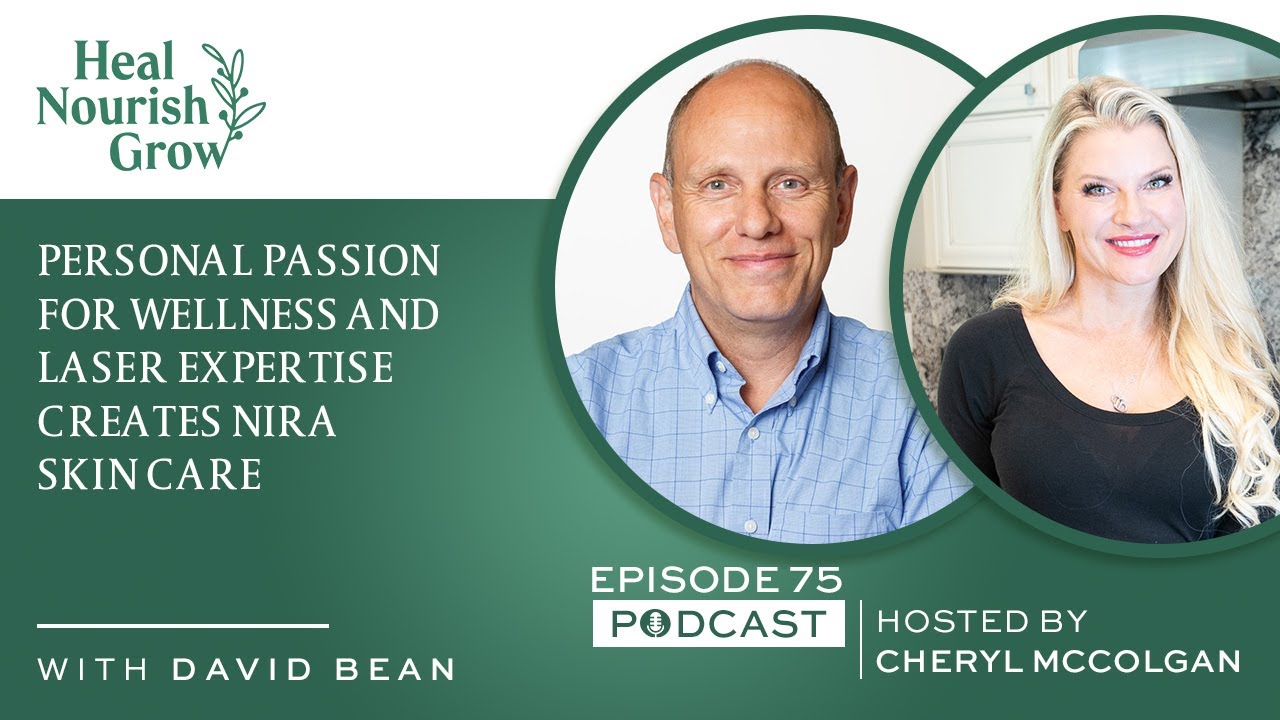
In this episode of the Heal, Nourish, Grow podcast, host Cheryl McColgan interviews laser engineer and wellness enthusiast David Bean. Bean explains his background designing high‑power semiconductor lasers for a Fortune‑500 company and how he leveraged that expertise to found NIRA/Neura, a U.S.‑made home laser skincare brand. He describes the two hand‑piece models – the Precision (4 mm spot for eye‑area treatment) and the Pro (≈10× larger treatment area) – and how they stimulate heat‑shock proteins to boost collagen and elastin, delivering visible anti‑aging results after 60–90 days. The conversation also delves into Bean’s personal health regimen: CrossFit (four years), low‑carb/keto and carnivore diets, intermittent fasting, high protein intake, and the importance of sleep and autophagy. Both hosts discuss how consistent lifestyle habits amplify the laser’s effects, the company’s mission to democratize professional dermatology technology, its rapid growth, a 90‑day money‑back guarantee, and the broader vision of expanding into other skin conditions. Cheryl shares her own positive experience with the devices, emphasizing confidence, vanity, and the synergy between skincare, nutrition, and exercise.
Chapters
Hey everyone, welcome back to the Heal, Nourish, Grow podcast. Today's guest is someone that I am really excited to introduce to you. His name is David Bean, and he's somebody that I have been working with their company the last couple of months. He has a very interesting health background. He's into so many of the things that we're all into here at the Heal, Nourish, Grow podcast. And so he agreed to share some of that with us today. And then we're also going to talk about a little bit of technology that helps your personal health and wellness. So David, welcome. If you could start by just sharing with people kind of in your own words who you are, what you're into, and we'll start getting into some of your, the things that you mentioned before, like fasting, which I was really excited to hear about.
Terrific. Well, thanks for having me, Cheryl. It's a pleasure to be here. My background is in engineering, and I also, as a hobby, am into health and wellness a bit. And the engineering I focus on is laser-based. So we made lasers, I make the laser chips all the way up to systems for medical applications. So your dermatologist laser and plastic surgeon laser and some surgical applications use the laser technology that I've been a part of. And we can address that with skincare for many applications in the home market as well.
Yeah, I thought that was so exciting when I first learned about your company because I think a big part of health and wellness, and I think you touched on this when we had our previous conversation that was not recorded, unfortunately, but that, you know, the way that you present yourself in the world, the amount of confidence you have in your physical appearance, you know, as much as we hate to put weight on that, it does affect sort of your mental health, how you're feeling, and then helps you make certain decisions in your life when you feel more confident. So I thought that was really cool that you kind of took a technology that people wouldn't think of in terms of health and wellness and put it in a place where people can use it at home to help themselves, you know, feel better about themselves. So I thought that was really wonderful. And you said, so you said you dabble in health and wellness. I would love to hear a little about, a bit about the things that you've kind of implemented over the years. And then of course, we're still gonna talk about the lasers, but you've got me so curious. I've been, since our last conversation, I've wanted to hear how you got into all that.
Well, it's a fascinating topic because, you know, we have one body, we wanna take care of it. And it's an integrated system. So there's nutrition, there's exercise, and then there's just taking care of your appearance as well. It all works together. And if you do all 3 aspects of it, right? And also, you know, good sleep and also mental health, altogether you can get the maximum health benefits, right? So the nutrition's important, obviously. I like to eat clean, as I know you do, right? So I like to eat not just organic, but what I call God's food, stuff that was made with the least amount of processing. So whether it be animal or plant-based products, as clean as possible. Also, I'm into CrossFit, which is, pretty intense, high-intensity interval training. And that's, that's a good way to improve your health because you're stressing your body without overstressing it. And that drives a lot of good, not just physical reactions, but chemical and hormonal as well. And then of course, there's the laser technology and good skincare. With topicals as well. And putting it all together really gets the best of all worlds.
Yeah. And you mentioned CrossFit. And I think, well, there's two things that you mentioned there that I think a lot of people that listen to this podcast are interested in hearing about. Number one is it sounds like a very, like, just a whole foods-based diet. A lot of people that listen to this podcast are kind of interested into low carb and keto as well. And then CrossFit, I think most people have heard that before, but can you describe a little bit maybe some of the benefits that you noticed when you started doing CrossFit? And how long have you done that now? This point?
So about 4 years. Yeah. And when I started, it was tough, you know, like anytime you start a new regimen. But if you stick with it, especially for the— get through the first month, you start wanting to go to exercise, especially in a team-based environment. You know, you got typically a dozen people that are working out with you and you can always find someone in the class, at least I do, that's about your same build and age and that's maybe a little bit further along and that they push you in a good way. So you try to keep up with them. And sometimes I try to keep up with people much younger than me. And over time, believe it or not, you're never too old to improve in this area and to build muscle and to rejuvenate your whole body. So I found that even just recently, last week, I hit a new bench press record, a lifetime bench press record. So I can bench more now than when I was playing football in high school or rowing crew in college, which is just amazing. So, uh, your body, if you treat it well, um, and feed it well and, uh, you know, keep fit, uh, you can, you can continue to improve.
Yeah, that's really exciting. And actually, I could, I can, I'll be sharing this on the podcast at some other episode, but I have been working on my body composition lately as well. And had a before and after DEXA kind of thing. And I think it's shocking to people, you know, typically they say we, we can't build muscle as easily when we get older, which I think is true, but that doesn't mean it can't happen because I actually experienced that. I put on a couple of pounds of muscle and I was really excited about that within about 7 or 8 months. So I'll go into that more in depth at some point.
But it's true. That's great. Yeah, your body does take a little bit longer to recover, but a lot of people use age as an excuse and What I've found is it's, most of it's mental. You can, as long as you, you don't overdo it, but you gradually build in terms of your workout intensity and, and how long you, and how, how much you put into it, you can rejuvenate your body quite well and you can get very close to your prime. It's surprising.
No, that's awesome. I love that. And anything around that, another thing we've been talking about on the podcast lately is just the importance, especially as we get older, of protein. Do you have any specific pro— focus in your diet or your workouts on protein, or do you just kind of naturally just don't think about it too much and seems to work out?
It's interesting. I hit a bit of a plateau, and it was a good plateau. I was doing well with keeping up with class and my physical structure and everything, body composition. And I got more into nutrition. I've always been like intermittent fasting and low carb for the last 3 or 4 years. And I love sugar. That's, that's the hard part.
I just love— don't we all?
Especially ice cream, you know. So, but if, if you wean yourself off, it typically takes, if you haven't done it, a couple of weeks that are hard, but then you don't crave it anymore. And if you can not cheat with the sugar, then it's really not a temptation. You can walk right through the aisles and, and I actually go around the perimeter of the grocery store. I don't do anything in the middle anymore because that's all processed, right? So, and, and you feel great, you know? So I do the intermittent fasting and then I did low carb like keto and things like that. But when you're low carb, you still have carb in it. So I read a lot about and did some research in, uh, carnivore diet, which is like zero carb and you just eat, you know, fats and proteins. And I thought I'd try it. And would you believe, um, my body composition got much better. So I kept the regimen and now I've, I've exceeded another goal with pull-ups. I've hit goals there, um, more than I've ever done in my life. Um, and the only thing I changed is, is the diet. So, It's probably different for everybody, but I'd encourage you to experiment. And reducing sugars, I think, is, is clearly known now across the board. It's a good thing. Reduces inflammation and reduces lots of problematic parts of nutrition and body composition. So, yeah, it's worked out well for me. I'm gonna continue the carnivore diet for a little bit longer, see how it goes.
Nice. Yeah, I'm glad you brought that up because you mentioned that in our previous conversation. That's what's really, you know, when you go down these health rabbit holes, quite often it sort of leads you to similar paths for people. And that's definitely one of the things that we've been talking about in this podcast lately is the importance of protein, optimal protein. And it kind of doesn't surprise me that when you shifted to that, that you kind of were able to overcome that plateau. Because when you're working out that much, I mean, I think our bodies actually require more protein than most people think because the RDAs are set so low. And that's kind of in the back of people's minds that they think that that's sort of right, air quotes, for lack of a better way of thinking of it. But it's really just the bare minimum to keep us from being diseased or having serious issues. It's not how to optimize your body. So, I'm glad you experienced those same results because it's pretty exciting.
Well, and the combination of exercise and high protein, low carb is I feel great. I sleep really well. No joint pains, no back pains, no aches and pains. You know, I'm 58 now and I've really never felt better. And, you know, I'll get together with some of my nephews and nieces that are much younger and I'm in better shape than they are. And it's great, you know, to see that. I went biking and I don't bike a lot, but I did better than, than guys that bike a lot more and they're younger, just because I think, you know, I've just stayed, you know, fit. So it's great. I also love water skiing, which is a, you know, a hard thing to do. And I'm water skiing better than I ever have on slalom and cutting through the course. So I really, there's, if you really take care of your body, there's really no limits and you don't have to grow old. You know, at all, really, at least up here and physically. I can do everything I could do when I was a teenager. I really can.
Yeah, I'm— well, I'm fighting. I'm right there with you. I'm fighting it every step of the way, not only in— not only in keeping fit, but also with skincare, which kind of leads us into, um, you know, obviously you said health and wellness is sort of your hobby, but you've taken part of that health and wellness and made it into a business. And I would love to chat with that— chat about that now, because I started using your product probably, I guess it was about in June. And what really got my eyes, I saw the people on YouTube talking about hooded eyelids, and I really have that issue, so much so that I've considered possibly doing surgery for it at some point. So when I saw this product and I saw the results that people were getting, I was totally sucked in. I'm like, I have to try this. Which I did and had some great success with that. So anyway, all that being said, how— so we knew you were interested in health and wellness, but how did you get into the laser portion? You're an engineer first and you shared some of this with me, but I'd love for the audience to hear kind of how you got into this.
Sure. So I was an engineer for a large Fortune 500 company and we grew in a different industry. The highest power semiconductor laser business, uh, in the world. Um, and it, it, uh, amplified internet signals around the world with the best lasers. Um, we had more than 50% market share. And when that market, uh, receded, um, I always thought, well, gee, I'd love to be part of remaking an industry with great technologies that can improve people's lives, truly make a difference. And, and I saw that with cell phones or computers. You know, now we have computers in our hands. And I grew up with a father who was a manager at IBM. So I saw from big mainframes to then, you know, workstations and PCs down to laptops. And now we have computers in our phones based on semiconductor technology. So when I got basically cutting edge for another market, I thought, well, what, gee, medical lasers can do so much. And a big fan of Star Trek where they use lasers to heal wounds and issues and joint pain and things like this, which was all, you know, science fiction at the time. But truly, if you can get lasers, you know, efficient enough at the chip level, you can put 'em in a handpiece, right? And then you can have a laser in your hand just like the old science fiction movies. And so I created a company to take those chips out of one industry and enable doctors' lasers to be much more affordable so that it could be accessible to more people. And so we were successful in that and we're the leader in making laser chips for the doctor systems for everything from fractional lasers to varicose vein laser treatments and other surgical applications. But unfortunately, it made it cheaper for the doctors, but it was still expensive for people to go to doctors and get treated. So I researched further and I was working with all of the key scientists in the field and basically determined that, yeah, if you put it in a handpiece and instead of going to the doctor once a month, you treat daily yourself, with a little bit less power but higher frequency, you can get the same results as professional treatment, but do it at home and also avoid the side effects like redness, which is erythema, pain, any swelling, and of course any downtime. And we achieved that. So now this company launched just a couple years ago, and now we're growing at over doubling every year. And people love it. They really do.
Yeah, I'm definitely a fan. And so for those of you who happen to be listening to this on audio only, if you pop over to YouTube, you can see David held up the device when he was talking about it. And I've also had some videos of my own where I showed the devices. And then also in the background, he has— there's two versions of it now, which you just launched the Pro, I believe, a few months ago. And It's probably— I thought it was interesting when I asked you about it. So yeah, he has them together and the Precision has a very small treatment area. The Pro is about 10 times larger. I think I'm remembering that stat correctly. So David, could you talk a little bit about the difference between the two? Because they have the same technology, but they both have a little bit different application.
Sure. The Precision is what we came up with first. It has a 4mm spot size. And it's really good for around the eyes. And you mentioned the hooded eyelids, the crow's feet area, the bags underneath your eyes. It'll address all of those concerns. And it does it by stimulating the dermis cells. It stresses them out a little bit similar to like when you stress your muscles working out in the gym with weights, but it doesn't damage them, just stresses them. Which generates heat shock proteins, which signals to build and renew your cells, including collagen and elastin, things like that. And so the precision is really good in that hard-to-reach area around the eyes. We came up with the Pro because everyone said, well, I wanna treat my whole face and maybe move on to my neck and, you know, my chest area and even hands and other areas of interest. And it would just take too long with the small tip. Of the Precision. So it came out with the Pro and people absolutely love it. It's, it's taken off like a rocket. It's, and so now people, you know, you save a little bit if you go with the Precision, if that's all you need. But the Pro, you can just treat larger areas and some people get both. So it's really based on what you want to accomplish.
Yeah, I'd say since I had the ability to try both of them, they both definitely target that tip of the small one, the Precision, really gets into the eye area. And again, if you're not watching this on video, you're kind of gesticulating with the, with the devices and the parts of the face. But it definitely has made treating much larger areas way easier with the, with the Pro because I was kind of doing the spots around my mouth. And when I do that with the Pro, it takes me, I don't know, maybe 5 seconds. But with the Precision, moving it from spot to spot, that definitely took a little bit longer. So as far as, you know, you have these two devices now, you said the company's pretty young. To the extent that you're able, because I'm sure there's some secrets that you're not supposed to share, um, any kind of other technologies or, you know, devices in this area that you're considering making or that you wish you could make? Maybe if you like, you could make anything, what would that look like?
Well, we're We truly have a mission to revolutionize skincare. And I talk about that with internally a lot. And I think we can do it, you know, just like, you know, Apple revolutionized computers by making them accessible for home use and then putting them in our hands with iPhones, etc. Elon Musk is obviously with Tesla's making electrification, electric cars and power supplies and home charging and things like that, solar more accessible to everybody with really good implementation of technology. And so both of those guys, you know, didn't stop with just one product. And so we can take and revolutionize skincare by taking the best of what is offered in the dermatologist's office and bring that home. Okay. It's not just with the laser technology, but we also have some topicals with really good peptides. And moisturizing components that give you the best topical treatment that's combined with the best device treatment, like with lasers. And so in terms of indications, we're starting with anti-aging, but there are many skincare concerns, you know, from, you know, permanent hair removal to psoriasis and eczema, acne and more. And so we have a whole roadmap of taking one at a time and getting best-in-class technology first from the dermatologist and then bringing it to the home market in a very enjoyable way. Because we want— if you can treat yourself at home, you get to enjoy the process or you just won't keep up with it. And I think you, you can admit, I mean, using the laser, which sounds crazy at home, is actually an enjoyable process, wouldn't you say?
Yeah, it's, I mean, it's pretty quick and easy. It's painless, which was not my experience because I had had IPL in the past, which is like an in-office laser procedure. And that was fairly, you know, it wasn't very comfortable. I can really say the NEERA is completely painless. And this is maybe a good place to maybe backtrack slightly because I think, you know, one of the things that we were talking about in our previous conversation, as I was saying, well, you know, the results are kind of more— or it takes longer, it takes shorter, you know, it takes shorter time going to a doctor's office, which is really not true. Like, if you truly add up the time that you spend treating, which is a couple minutes a day with Neera, versus going to an office for an hour, driving there to and from, I mean, if you really take into account all the factors, it doesn't take longer, it's actually shorter. And then the way that it works, you described the heat shock proteins and the collagen production, that takes months anyway. So it's kind of the same result, but you're not going through the pain and you're not having to drive somewhere to do this all the time.
That's right. That's right. And, and it— your body requires time to rejuvenate itself. It just does, right? Whether you're exercising you know, in a new routine and you wanna lose some weight and tone up some muscle, you can work out like crazy for a week. You won't look any better after a week. But if you keep that up for a few months, you're gonna look fantastic, right? It'll be truly transformative, especially if you add in diet components and, and other thing in addition to exercise, right? The same's true with the skin, right? We're stimulating you know, heat shock proteins, skin rejuvenation aspects with the laser. And you can add good, good topicals on top of that to nourish and also further stimulate other active processes within your natural skin rejuvenation system to get you those results that you want. But it's still gonna take, we say, 60 days you'll start seeing some nice results. 90 days, you'll see great results. And frankly, we're upfront about that. Okay. Because you're not going to see great results in a week. No one's going to see great results. And if they do, it might be, you know, a limited inflammation that'll go away. We're talking about permanent lasting results, truly rejuvenating your skin. If you want that type of approach, then we can get you there. But it's going to be 90 days. But that's not a lot to ask because then you've got to for going forward, you know, indefinitely. And if you keep up with it, it'll just get, get better over time.
Yeah, I'm over the 90-day mark now, and I've continued using it, and I definitely can see that it just, it keeps slowly improving. I mean, it is a slow process, but to your point, it's like nothing good comes overnight. You've got to have consistency with it. I mean, we wish it could, obviously, but, uh, consistency with the diet, consistency with skincare treatments, which, speaking of diet, there may or may not— I've never dug into this, but is there any data on these kinds of treatments that stimulate collagen externally and then pairing that with a dietary approach, like internally taking collagen? Have you seen anything like that, or do you think that would— they seems like they complement each other for sure.
Yeah, so diet does help. Diet, good sleep, uh, will, will help your skin. Also not just intermittent fasting, but there's good studies on multi-day fasting, which sounds crazy, I admit, but I've tried it a few times and the body actually reacts quite well when you do that, right? So you actually activate genes that have been suppressed until they get to the point where they are basically without food for a couple days. And then they actually go to work to rejuvenate your cells from the inside out. They'll actually reprocess misfolded proteins within the cell, and they'll go through a process called autophagy, which is a whole cleaning and rejuvenation process within your whole body, all your cells. So obviously you want to do that with care. And if it's more than just a a couple days, perhaps doctor supervision or input. But those techniques, and even intermittent fasting, which is becoming very popular, helps and it turns on those processes, but just a little bit, just a few hours a day. If you extend it for a couple days, you can turn them on for a bit longer, actually quite a bit longer, and get some benefits. So if you combine the good nutrition and low sugar, low carb, with some intermittent fasting or longer and good exercise and, you know, some treatments, you know, with good skin topicals and laser treatments, you're basically turning on all of your rejuvenation systems at once. And you can maximize your results that way. Internal collagen, like you said, I think there's definitely a place for that. We need collagen throughout our body. And, You can ingest it, you can, you can put it on with topicals and things like that. But actually I think ingesting is ideal because then, because the skin barrier is, is a pretty good barrier. So not a lot really gets in deep to really activate at the cellular level, right? Whereas a laser can go through the epidermis into the cellular level. And does activate that. So that's where the internal, you know, collagen comes into play as well.
Yeah, I'd love to see a study like that someday. It's unlikely that, like many things with nutrition, that they would do that because it doesn't make anybody any money, right? Like, if you do good nutrition in conjunction with our treatment, like, you might get better results, but unlikely that we'll see that.
You know, this is a really good point. You know, None of the pharmaceutical companies make money if you talk about just nutrition and not needing any drugs. And, but if you keep yourself healthy, right? And you eat well, you avoid the need for all these medications and medical treatments. And so that's the name of the game. And I'm glad you're, you're getting the word out.
Yeah, I'm doing my best. So David, any other final thoughts or things about the technology that we didn't touch on yet that you want to share with people? Because I do think it's a really novel— I'm just so excited to have found it because I, hey, I am, like I said, I am finding it all the way. I have a certain level of vanity and I'm not ashamed to admit that. So I think the more people that know the technology and why it works, they're more likely to try it and then obviously experience the results, have the more confidence, which gets them to the gym. It just all builds on each each other. And that's really what I love to share on this. So if there's anything that we left out, um, that we'd like to share, let's kind of just wrap it up with that, I think.
Sure, sure. Well, as, as you kind of inferred, a lot of people looking for the magic bullet— try this one thing and it'll turn back the clock and you'll be great. And I think what we've talked about here today is so important that ideally, uh, if you can, you know, attack it from several different things, you'll feel better overall. You'll not only look better, but you'll feel better. You'll be healthier. So I'd encourage people to, you know, invest some time into good nutrition research and understanding and try, try some things, you know, try, you know, adjusting your diet. And you don't have to go crazy. You can just drop sweets for a time or, You know, you don't have to, you know, be radical about it, but see what works for you. But also exercise obviously is important and then good skincare. And then with respect to skincare, I'm glad you're, you're, you're trying it and, you know, addressing it with the audience. There's so many things out there that people have gotten burned with, with devices that overpromise and underdeliver. And this is why we offer a full 90-day guarantee that you can try it, and if you're not fully happy with it, you get your money back. So it's risk-free. So I'd encourage people to try not just what we have to offer, but look into other things as well. See what works for you, but make sure you go with a reputable company that's willing to stand behind it, because we're all about authenticity, and you should really, you know, look for those reputable type companies that, you know, what's your most valuable asset? Your face. And that's, I guess, the best advice I can give. Yeah.
And I'm so glad that you brought that up because I do think that, and people that listen to this podcast, they know I'm pretty picky about companies and technologies that I try. I mean, I try a lot of things, but I really only work with companies that are, like you said, have integrity. Stand behind their product. And I think that you guys definitely do a great job with that. So thank you for that.
You're welcome. You're welcome. And we make this right here in the United States too, which is rare, and we're quite proud of that. So appreciate your time. Appreciate you getting out the word. And I hope, I hope we've been some help.
Yeah, David, thank you so much. And anybody, if you're listening, the links of course will be in the show notes, but I do work with Neura and they're giving a very generous discount while we're having this podcast. So be sure to use the link and the code Heal, Nourish, Grow. And if you're watching this when it comes out, which is close to the holidays, this definitely makes a great gift. So I would say consider it and definitely get it for yourself because like I said, I've had some great results with it and I think people should just, like you said, give it a try. It's risk-free. So anyway, thank you so much for taking the time today, David. This is a great conversation and I very much appreciate you coming on.
My pleasure. Thank you.
More from Cheryl









30 Day Challenge Series, Day 30: Choose Your Three Habits to Continue for 90 Days

30 Day Challenge Series, Day 28: Schedule Connection (Put It on the Calendar)