Why Co-Creation Without Gravity Fails: Build a Coaching Business with Real Mass
Christine O'Connell explains how to build a coaching business that lasts. She argues that co-creation needs weight behind it, and walks through how AI integration and long-term client engagement create the foundation that keeps people coming back.
Questions this video answers
July 24, 2025
61 people
$250,000
Chapters
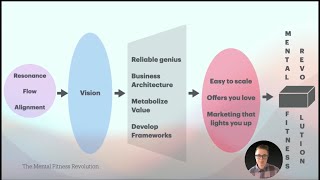
And this kind of sort of speaks to what we talked about last week. Spammy emailing. I just got to know you, but would you like to pay me $10,000 to come to wherever, you know, a program that feels like repackaged from the other thing that you just bought? For the people who are truly invested, there is still a level of tolerance. So I just want to really make that clear. So I'm trying to make this really bold and dramatic. The big risk for each of you is not this alienation, but folks having no clue what you're about. And so by definition they can't engage. The other thing I want to mention, and this is sort of related and sort of disconnected, but as you're thinking into the future with the offer that you currently have and what that's going to look like in 1, 2, 3, 5, 10 years, what's been really helpful for me is to think about lifetime value rather than trying to manage tightly what it costs weekly or even monthly or anything like that. I want to create low resistance entry points for folks and I want to give you guys a proof, my hope that you will be here on some type of thing, whatever that looks like in our AI augmented, changed world in 10 years, still finding something useful. Right? Obviously I know that not everyone will be, but that is the direction I'm shooting. So how can you wrap your mind around the reality that to reduce, in order to reduce friction, to increase flow, to reduce churn, to reduce selling, repeated selling situations, we have to be effective at helping somebody over the long term. The problems that you have today or that your clients have today are not going to be the same problems they have in 10 years, obviously. But what I hope you will be committed to developing in your thinking and what I am committed to really projecting into your minds is this idea of earnestly, joyfully and effectively evolving as your clients have success and then have bigger and more interesting problems coming up. So I just want to give like a really extended timeline for Resonance Revolution so that you guys can start to conceptualize, not writing it in stone, but how you start creating solutions for the new problems that emerge as somebody has success with your initial solution. So everything initial phases was outlined in that roadmap, three phases, kind of your foundation, your data analyzation, and then your scaling over the medium term. Some of the things that I'm actively developing, pursuing at this point, and I mentioned this, I believe, at least to Casey, is this idea of psychedelic assisted business growth, identity reformulation. And so obviously this is a little polarizing and it would never be required for anybody to join. It would be a separate area of the ecosystem. But you guys may have come across this idea of, and I hate the, hate the way that this is framed, but the stoned aped theory, which is that the introduction of plant medicine into the diet of prehistoric people was the sort of impetus for rapid change in brain development. And I personally feel, and have felt for at least 20 years a very intense level of urgency to bring all solutions to bear, at least solutions that I'm capable of operating to bear in service of the world's problems. So that's why that is something I'm developing towards. We've talked a lot about AI. I won't go too into why. It's just my simple belief. I was thinking, I can't find a single expert who says that don't worry about AI. Right. Nobody is saying that at the expert level. And so my conclusion is that if you don't have this integrated, the business won't survive in the long term. So putting in place all of the resources that would be needed to help people integrate AI into their coaching to whatever degree makes sense for the people they work with, automation to keep everybody in flow. So where this is going is N8N templates for automations, the go high level snapshots, things like that. And I don't know if I've ever really made this clear so I can remember in my own experience this fear of alienating the audience, whatever that might be for me. And I know I've said this a couple of times, but I was never at risk of that and neither are any of you. And actually by design, we are seeking to repel 10 to 20% of whoever it is that is actually watching right now. That's actually a goal. So along those lines, when you have folks who are super interested and have developed an understanding that what you have created is the thing that they need, there's still the risk that you can alienate them, for example, by emailing three times a day and creating redundant offers and asking them to pay for them. Right? That's definitely true. I do also want to point out though, even if you somehow found yourself in this situation, which again, you guys are not close to being in there are for the people who have understood how you can help them, there's going to be still a level of tolerance. And I'm not saying you should use that, but just be aware that it's true, they will still have a level of tolerance for what you're doing. Clear. But just so you guys are aware all of your initial email sequences, landing pages and workflows when you are ready to move beyond one on one outreach for your program are already built and basically ready for you to kind of make your own and then turn them on. So I just want you to know that. So the automations that I'm talking about here are a little more complex than that. This would be tying using AI agents to connect your Facebook to your go high level to your ChatGPT. So you're basically going across platforms at that point to try to create higher degrees of leverage. So I also don't talk a lot about math, but just want to illuminate this because it for me has been really helpful to think in these terms if you have, if and when you have the offer that's selling and you also simultaneously have this sensation of this is it, this is where I want to stabilize and expand. That's when you scale it. So as you know, I went through two iterations before I tipped into that sensation of this is it. But I did make money through the entirety, which is what allowed me to get to a place where I actually wanted to stabilize. When I say wanted and kind of tried to highlight, italicize that because if you don't have the option to choose where you stabilize, you're going to be functioning from that kind of scarcity. I have to mentality which will lead you to scaling something that feels prisony and has a lot of problems that you want, you would prefer to actually not have. But through the scaling process you would just sort of exponentialize those problems. So with those initial two offers, the way they were working, the way people were buying them and engaging with them, they were scalable. But for me they had still different pieces that felt prisony. Specifically. What I didn't like about it was the sensation of we were meeting five days a week and I sort of got the impression that folks were using calls to avoid doing work right. So I did not feel good about that and I did not want to grow that sensation. I also didn't really feel, I felt a very strong connection with some folks in the group and in their enthusiasm and what they wanted next. But then there were the other half or so that didn't have that. So I wanted to make sure that I was bringing in more of that first category first. I think you'll have fewer issues striking the note that you need because I'm in there kind of helping you fine tune some of that. But all this is to say reaching a point of stabilization. If I were to get 61 people into this program, it would be a $250,000 revenue, $250,000 revenue business, right? When you have reached the point of stabilization where it's like this is it, it's going to be really obvious to you that you could definitely find 60 people who would not only want this thing, but would be able to buy this thing. So your scaling process is how you find those people. Right? This is all predicated on your willingness established prior to go through that 10 to 20% polarization process. The other thing I want to mention is it's not the easiest thing to grow a coaching business. It's not the hardest thing either, as we've talked about. But I was curious if anyone experienced this and this being the sensation of being a little bit ahead of the curve, anticipating problems that nobody else quite sees yet perhaps 10 years ago being worried about something that nobody else thought was concerning, and now everybody is really concerned about it. If you have that working for you, which frankly has been a huge problem for me, the opportunity, I think, in coaching is that you get to be that you get to versus have to, in my opinion, is a little overused. But literally you get to be on the leading edge of the thing that you care about the most. But in order to be in that space and hold that intensity, you have to be able to accept that mission with all of the complexity, all of the frighteningness and all of the uncertainty that's implied. But I just want to really highlight the what is for me a huge opportunity to take what.
More from Christine

Why Winging It Is Killing Your Coaching Business (Build Your Signature System Instead)



5 Minute Primer on Synchronizing Identity + Leverage + Flow to Move Further, Faster