Bringing Mom Into the Season: A Holiday Gathering for Motherless Daughters - REPLAY
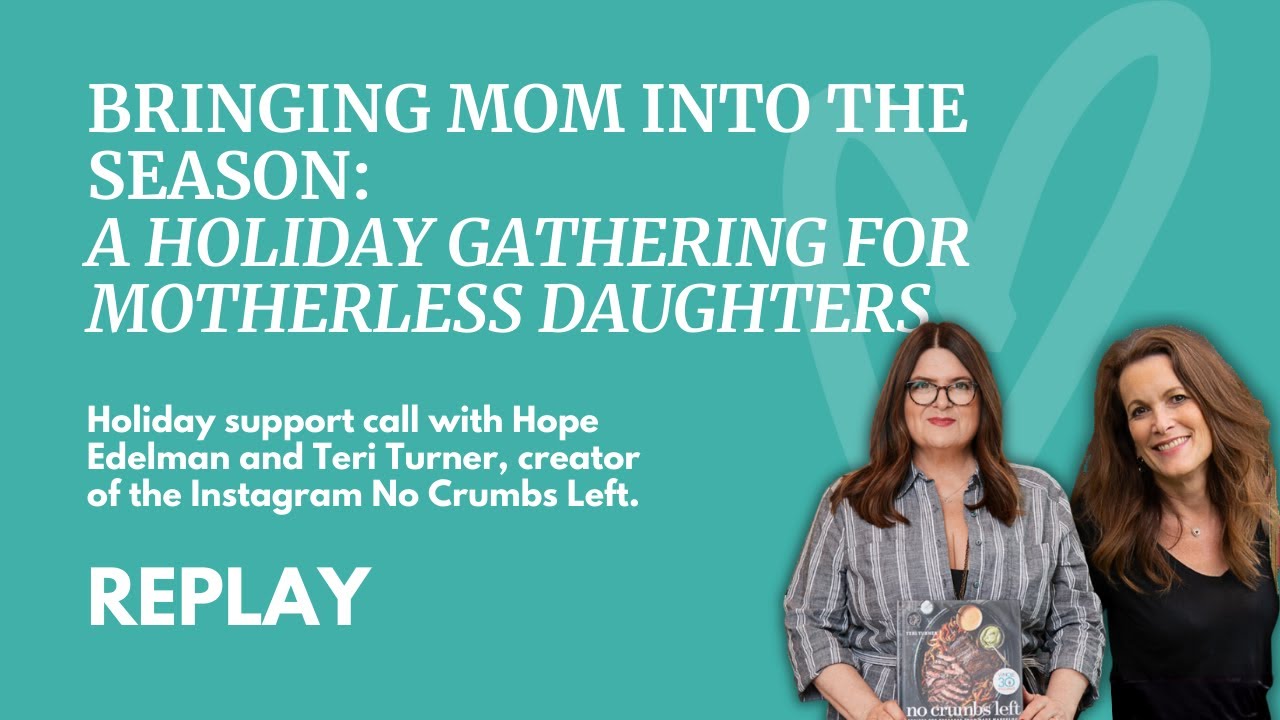
This one‑hour live‑call, hosted by Hope Edelman (author of Motherless Daughters) with co‑host Kristin Silva and guest Terry Turner (food blogger and cookbook author of No Crumbs Left), brings together 640 women who have lost their mothers. The session blends grief support with holiday‑season rituals, focusing on how to honor and keep mothers present through symbols, stories, and food. Participants share personal anecdotes about signs from their mothers (butterflies, ukuleles, dragonflies), discuss creating or adapting signature dishes and recipes, and explore self‑care strategies for navigating difficult holidays. The conversation also addresses practical questions from the chat—how to involve young children, how to cope when traditional family recipes are missing, how to start cooking as a beginner, and how dietary frameworks like Whole30 or gluten‑free can fit into holiday meals. Hope and Kristin promote Motherless Daughters programs (support circles, retreats) and provide resources (Terry’s Substack, Instagram, the No Crumbs Left cookbook). The call ends with gratitude, a reminder of upcoming retreats, and an invitation for continued community connection.
Chapters
Okay, thanks.
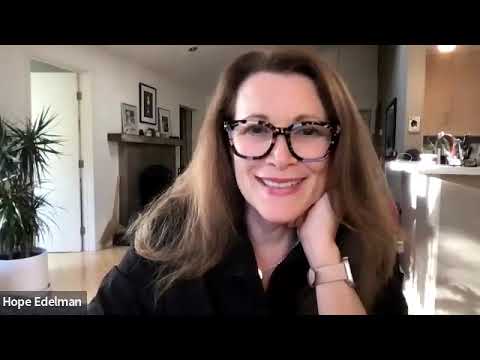
Hello everyone, hello, hello, and welcome to the Motherless Daughters holiday call. Oh gosh, it's so good to see familiar faces. Janie and Jillian and Jill and Cheryl and Annie and Anne, hello, you're right at the top of my screen. So that's why I'm mentioning your names. But hi everybody, I'm Hope Edelman. I'm the author of Motherless Daughters and the founder at motherlessdaughters.com. I'm thrilled to be here today with Terry Turner of No Crumbs Left. And you also see on your screen right now Kristen Silva, who's one of the coaches at Motherless Daughters, and she's going to be assisting on the call and reading your comments in the chat box. And helping us during the Q&A segment. So we've had 640 women sign up for this call. Of course, all of them will not be here live today. So if you're watching this recording after the fact and couldn't make it live, we're so glad to be able to share this with you, and we'll hope to see you at a live event in the future. And for those of you who are here live, it's great to see you. I see that a number of you have participated in Motherless Daughters programs in the past, our community calls, our retreats, our Motherless Daughters support circles. And I also see a bunch of new faces I don't recognize. So welcome, welcome. If you're new to this community, we are thrilled to get to know you in this next hour. So I think without further ado, even as women are filtering in, we'll go ahead And get started. We're here today for our annual holiday call. Every year, we at Motherless Daughters host a holiday call for members of the community who would like a little bit of extra support and love from the sisterhood at this time of year. And historically, traditionally, we've done grief support calls. But this year, so many of my colleagues are offerings. Excellent grief support at holiday time that we thought we'd do something a little bit different. We thought that we would try to bring you something that might bring some mom love and mom comfort into your life at this time of year. If you'd like to drop in the chat box where you're calling in from, we'd love to know how many of you are local in the U.S. If anyone's calling in from overseas, we have quite a following in the U.K. and the E.U. in many. Many of our programs. Also, if you'd like to drop in the box if your mom has died, how old you were when she died, or if it's a recent loss, we also just sort of like to know. I'm here as a 40-plus-year mother loss survivor. My mom died in 1981 when I was 17 years old. She was 42. She died of breast cancer. And since then, I've written a number of books and started this initiative, this mission to help other women find support and services and community. I'm gonna hand it over to Kristin to say hello to you and introduce herself, and then I'm gonna do the formal interview— the formal introduction and the discussion with Terri Turner, who we're so grateful to have with us today. Terri, thank you so much for joining us, and we'll just let Kristin say hi and—
Hi, everyone.
let us know who she is and what brings her to this call, and then we'll, we'll jump in. Kristin, would you like to say hello?
Sure. Hi, I'm Kristin Silva. My mom passed away when I was 18 from brain cancer. She was 38. January 4th will be 38 years from the anniversary. A year ago, I joined Hope with the support circles. Since, I've co-led with Zan and Hope support circles. I've been to a retreat. I know many of these faces. I did the early Mother Loss: Grief with Hope and Claire Bidwell Smith. So I dove in over the last year, and it's just always such an honor to hold space and just be here with you all, and I cherish it. It's such sacred work, and I just want to say I love you and happy holidays. Thank you.
Thank you, Kristin. Thank you so much for being here. I'm going to take you off the spotlight so that people can see Terry and I and then bring you back for the Q&A. Thank you for monitoring the chat box, and I just wanted to acknowledge I don't get to see all the chats when I'm talking, but one did pop up on the screen, and there's a woman named Jennifer who shared her mom died 2 years ago, and today is her mom's birthday. So let's all spend some send some special love to Jennifer as she remembers her mom today. We're so glad you're here, and we're honored to spend part of your mom's angelversary with you. All right, everyone. Well, welcome to the Motherless Daughters Holiday Call. In 2025, I am thrilled to be here today and introduce you to Terry Turner, who's I've been following on Instagram for quite a while. Her her site, her page No Crumbs Left was actually recommended to me by another motherless daughter years ago when we were talking about cooking and recipes. And and then Terry contacted me out of the blue as a motherless daughter, and I couldn't have been more thrilled. Terry is a best-selling cook. cookbook author. She's a blogger. She's a traveler, just returned from Paris. She's a mother, and she's the creator of the blog and the Instagram site No Crumbs Left. But for our purposes today, most especially, Terri has been a motherless daughter for 25 years. And in her work, she doesn't just talk about food and cooking. She also teaches people how to embrace their lost loved ones, how to bring them forward in ways that make our lives more meaningful. And she understands and she shares how messy and how beautiful life is, and food can be, certainly, whether she's taking her community through recipes or living her personal journey through motherhood and joy and grief and life. And Terri has shared with us that her path since losing her mom has shown her, has shown her that All of us can pave the way for others by extending a loving hand like others have done for us. And that is the heart and soul of what we do here at Motherless Daughters and in all of our programs. So, Terry, thank you. Thank you for being with us today, for taking time in this busy holiday week. And we want to welcome you in a big heart— with a big heartfelt hug from the Motherless Daughters community and And we're so glad you're here with us today. Hello.
Thank you. I mean, our motherless daughters, like, the very best people. It's the club that no, no one wants to be in, yet we don't know anyone who's, like, more loving, more extending, more putting their hand, you know, back forward. So it's just a club we don't wanna be in, but we are, quite frankly, the best people on the planet.
I'm glad you're saying it because I can't say that. It's a little, it's a little bit much for me to say, but I will say that this group of daughters is the most compassionate, the most generous, the most altruistic group of women I have ever had the opportunity to be in touch with. And I'm grateful for them every day. So I'm glad that you asked me.
So many people in my community are, you know, parentless also. I also lost my dad. And so, you know, a lot of my work is around food, but just it's a lot around life, you know, and sort of embracing all, all of that. And my own mother was You know, the matriarch for us, our, our, the, the most beloved. And I know everyone doesn't have that relationship with their mother. I know that that is my own journey. So if you have another journey, you know, I'm just, I'm sharing what mine is. But she was, you know, she was everything for us. So losing her and the journey to losing her was, you know, was hard. And it, you know, began 25 years ago, and the journey just continues. We were lucky to get to really be a part of her death. You know, we, we knew that my mom was sick. We could see where we were heading. Certainly we had a lot of hope. But when we realized that, you know, our mom was going, we did everything we could to kindly usher her, you know, from the planet and to know that, you know, we lied to her when we said we're gonna be okay. You know, when we knew that was the end and, and when the doctor said, You know, Mrs. Turner, I'm going to put my armor on you today, and I'm going to tell your family that, that it's quantity over quality, you know, and that, you know, like the journey has come to an end. And I remember my mom saying, because we were all there for her, she said, I don't know any people like you guys, you know, that has just been able to be so present for her. And I'm so grateful that we were, you know, we were able to exit her off the planet in that way. But before my mom died, you know, when she was feeling okay, I said to her, I just want to say all the things today that we might not be able to say at the end. And then if you, if you don't die, at least we've said all the things. But let's just say all of the things, how much we love each other, how grateful we are. And so one of the things I said to her, and there's a reason that I'm going to tell you this, is that I said, well, what I want to know is when you go where you are and I'm here, I want you to always come to the edge of your world, and I will always come to the edge of mine. And I want us to find ways to find each other if that's possible. Let's, you know, really make a commitment. So I said, we need a telephone. What's that telephone going to be? And we decided on ukulele because my mom was a ukulele player. Um, she loved ukulele. She was all about music. And so we said, okay, we're going to set this up. And so we know that anytime we see, we hear, we come across, we know that you're— we know that that you're ringing the bell. And, you know, for my sisters and for the rest of the family, it was other things. For my one sister, it's butterflies. You know, every time a cardinal comes, we, we know that it's my mom, or if there's 2, we know it's my mom and dad. And one of the things that I've really done is, and if you follow me at all, you know this, I, I fill my life with sort of symbols. So wherever I am, you know, I have those symbols. And they are things that are like guiding lights for me because I think for each of us, you know, if you're open to it, finding a symbol for your mom, and that can be like asking your mom, okay, help me figure this out. You know, bring it to me, come in a dream, or you can simply decide what the symbol is. My mother loved roosters. So my one sister has roosters as a symbol. You know, we give each other rooster teacups. You know, you know, we have rooster napkins. You know, so it's like I'm always bringing my mom forward. So one of the symbols for me, and I just took it off the wall, is Butterflies. So wherever I am, in every room of my house, I have one butterfly framed. I mean, something that I found at Jason Home. But wherever I go, like my husband and I have this place in Michigan, and when we came here and we wanted to get a little place, what we found was these butterflies framed on the wall. And so we said, we'll take it, and we'd like everything, including the butterflies. But it's You know, it's, it's like kind of a little game that we play in the family all the time. And so for me, it's just filling my life and my space with those things that are always bringing my mom, that my mom, that are always bringing my mom back.
Terry, I love that. I mean, if any of you have specific signs that you believe are some form of communication with your mom, drop them in the chat box. Let's see if there's any patterns. I hear about these a lot. I hear about hummingbirds. I hear pennies or dimes or, you know, certain coins that people find, um, particular types of birds. Interesting. I don't hear a lot about mammals. I hear a lot about birds, you know, and flight. And if you've been to a Motherless Daughters retreat, you know that the icon of the company is dragonflies, and that whenever women finish a retreat and leave, they start seeing dragonflies everywhere. I've got them all over the place here. Here's a little dragonfly that was a gift. from someone in the community. And my house is filled with dragonfly paraphernalia. But I think, you know, we don't always have to wait for those signs, right? We can put them in our spaces like you do. And then every time we look at them, we think about our moms too.
Yeah. And just even like next to my bed, my mom wrote something on a card for me, maybe when I was 20, that I kept that she wrote on a receipt, which is shine, exclamation point. And I have that next to my bed because it just reminds me that, you know, one way I give honor to my mom— and that's like, I'm here today to give honor to my mom. I have the butterflies to give honor to my mom. You know, I, yeah, I try to do the right things in life. That's in honor to my mom. And one way to honor my mom is to live a good life. Like, I know that my mom wouldn't want me just to be crumpled. She would want me to carry forward. She would want me to find joy. So it's like, I always miss my mom. That's just, that's my truth. But also, I have a joyful life. And, and, and what I say to myself is, you owe that to your mom. Your mom would want that. She would want you to carry on. She would want you to find joy. You know, one of the other things that someone told me at some point, and it's been hugely huge for me, which is when I go into the world, I can say, I can feel my love for my mom. Like, if we each do that now. you know, and it's like, okay, I can feel that love. I can just totally, totally feel it. And then I can go in the world and say, what does my mom's love feel like for me? And whether my mom is gone 25 years, I can totally feel her love shining on me, and I can absolutely feel that love. And then when I say, now I'm going to feel the interplay of our love together, so we're going to have those 2 energies meet, And what does that feel like? So even if my mom is gone, what I know for myself is that I can feel her love. I can feel my love for her, and I can feel what it feels like when we love each other. So, like, how does that happen? I don't know. For me, it's, it's, it's real, and I wouldn't want to convince anyone if they didn't want to believe that. But this has been hugely helpful in my life. And like, right now I'm going through radiation. This is not an easy time for me. My mother died of breast cancer. It's a different kind of cancer. But the point is, it brings up a lot of shit.
Okay?
It just brings up a lot of worry. And so I just always am bringing my mom back to me. I'm always like, I got my parents around me. You know, the other day— my mom's name was Patricia. The other day I walked in the hospital, and I'm not in a waiting room. I'm just walking down the hall. Some woman comes up to me and she goes, is your name Patricia? So, like, right away, there's my mom coming through.
Yeah.
Letting me know she's coming through. You know, there would be no reason for someone you'd walk down a hallway to say this, but I felt like that's my mom, those little winks where she's letting me know, we're with you, we know where you are, we know what's happening. And those things make my life so much more fun.
I love what you said about your commitment to finding joy and living a happy life, because we have a saying at Motherless Daughters that the best way to honor a mother is to take good care of her daughter.
Love it.
She would want us to live a happy, fulfilled life. Almost, almost any mother, almost any mother would, you know. And that goes again, that sort of is in line, but also goes against the saying that a lot of us heard when we were young. And we, we talk a lot in all of our programs about what messages did we receive about grief when we were younger, or when our moms died. And a lot of us heard the, your mother wouldn't want you to be sad. That was one that I heard a lot at 17, which was this way to sort of, I think, make someone feel better, but to suppress our emotions. And that's not really true. I think most mothers would want to have been good enough mothers that their children would feel sad when they die. And then they would, they would metabolize that emotion, they would work through it, and then they would come out on the other side with a deeper appreciation for joy.
Yeah.
And seek that out in their daily lives.
And I—
it's also like, it's also okay to be broken. Like, you know, when, when someone's mom dies, I always say it's okay to be broken. Sometimes it's the only way home. It's the only way through. So it's— it is fine to just embrace that, to fall apart, to make your world small, you know, to not say yes to everything, to take care of yourself. But then there's a time you emerge from that and say, okay, you know, I remember when my mom died, saying to my kids, and it was like I heard on Oprah Show or something, crying is mommy's medicine. You know, is, is it's okay to be broken, but also say to yourself, I'm gonna come through it. It doesn't mean I'm gonna be the same. The paradigm has shifted. I'm another human being. I'm not that person that I was. And allow yourself to be broken, but then also allow yourself at the same time to really have to, to come to that point where you can have joy, where you can celebrate life where you can be in that. And my mom was like fun and funny and a showgirl. So it's like, I'm always kind of tying that in. Sometimes when people watch the page, it's like, my, you know, somebody will be like, you know, you're mom. I mean, you know, when you do all of that, you're, you're being mom. So it's like to incorporate the best of who our mothers were and to understand it's perfectly fine to leave the rest behind. My mother was like not a good cook at all, didn't like cooking. And I remember thinking—
Right.
At a certain point, well, I don't want to do what she did, which was that she really avoided cooking and she really hated it. So I was like, well, I'm not— I don't want to be her in that way. I'm going to really take it on and embrace it because we are going to be eating the rest of our lives. So we might as well enjoy it.
Well, that is really inspiring to hear, Terri, because I work with a lot of women who say that they feel like they don't have the domestic skills that other women have. They don't have the ability Or the appreciation for cooking, which is a form of nurturing, of course, self and others, is food preparation and, you know, sharing the abundance of whatever you can create or order by phone. And in, in the case of lots of us, and it's inspirational to hear that you learned it on your own, and that's possible. I took my first cooking class when I was in my 40s. And now I love cooking. But before then, you know, my mom didn't live long enough to teach me. And I sort of leaned on that as my excuse for not being able to cook. And I think it was more of a way of saying, no, only my mom can nurture me in that way. And then finally opening up to being able to do it for myself. What are your thoughts on that?
Well, I mean, my thing is like, embrace, embrace cooking because you're going to have to do it. But get some signature dishes and I can help anybody find those. It's like, These 5 things, you're gonna make these 5 things, or it's a holiday. My mom made that, by the way. Here's the funny part. She was really good at a holiday, and she did her certain— or her, like, her corn soufflé and her stuffing, and she knew how to do a turkey, and she did raspberry Jell-O. She did certain things. And it was like every holiday, this is what we had. But it's such food of love, and I've embraced those recipes. It's really not the way that I cook. I cook from a much more real food perspective. But I've embraced my mom's recipes, and I love on a holiday making those. It fills me with such joy. And all the grandkids— and I don't have any, but all the nieces and nephews, my sisters and I, our kids— they all love my mom's recipes. And it's like you couldn't do a Christmas and not do corn soufflé because they would be like out of their minds. So my thing is embrace cooking, learn a few dishes, cook real food, get some things that you're good at. You can find some simple things or, you know, or, you know, it's okay to make a fuss, you know? And if you, if you can't, then set a beautiful table because we have to bring magic into our lives. You know, for me, my mother was magic for sure. Absolutely. And I know for everyone it's not that way, but carrying a beautiful table forward, making a beautiful holiday thing, coming and surrounding with people I love. That is why I love cooking, is I love the magic of what making truly beautiful food, what it creates. for those people that, you know, get to enjoy the meal.
I love hearing about this 5 signature dishes idea because it's really simple. 5 is a manageable number. I think I probably have at least 5 signature dishes that I make for parties when I'm feeding lots of people because it's a crowd pleaser and I can make it in quantity. But also when you have 5 signature dishes and you really lean into them year after year, you're creating a ritual for the people around you, right? Like, was corn soufflé a ritual in your family?
Oh my God. I mean, my mother, my mom's strata overnight, you make it bread, cheese, milk, eggs. You, it takes 5 minutes to put together. You put it in the fridge, you take it out an hour before to get it room temperature. You put it in the oven and open. It's like, it's like a cheese soufflé. I mean, it's like the greatest thing in the world. Her corn soufflé, which I, I say Patty Turner's, and it's a viral recipe for us. I mean, believe me, it could have been on the, the Jiffy box mix. I'm not saying my mother made it up. I'm saying. My mother made it. We ate it. We loved it. And by the way, it's frickin' delicious. I mean, it's Jiffy corn mix. You know, it's eggs, it's corn, it's cream of corn, it's sour cream, it's butter, but it comes together in this thing. And we call it a corn soufflé. It is not, in fact, a soufflé, but we love saying that word. But it's like a corn pudding, some people call it, or, you know, or corn casserole. But it is quite delicious. And when you do it with a turkey or beef or a meatloaf or whatever, it's this lovely, lovely side dish. It's very, very easy to make. My mother's stuffing, delicious, very, very easy to make. You know, it's, it's saltine crackers and it's some cut-up vegetables and it's butter and it's these crackers. But it's, if you make it, you'll be like, this is frickin delicious. I mean, for sure. So everybody can find 5 signature dishes. You don't have to go out and get all 5 today. Start with one. And you can come over and follow me and you can direct message me. We can figure out what your signature dishes are. But that is, you know, But we can, you know, you can absolutely come up with dishes that people will love and think are wonderful. I mean, it's funny because of what I'm going through. For Christmas, we've invited some friends over. And I just thought I should— he said, let me make a second dish. So I said, well, what would you do if you made a holiday salad? And he goes, I've watched all of your stories. I know what to do. No frisée, a little bit of citrus, a light dressing, maybe a pear and a nut. And I'm like, okay, you're in, do it.
You know, and I also think it's important not to be afraid to sort of change things up if you need to. Like my mom's signature dish for every school event, every holiday potluck, every, you know, dinner-go-round, which was a thing in the '70s for those of you who remember those, she would do dessert and she would make a lemon meringue pie. And her lemon meringue pie was kind of legendary in our community. And I don't know, maybe 10 years ago, a friend found the old PTA cookbook from my elementary school where my mom had submitted her recipe. and sent it, and I tried to make it. But the little packages of either lemon Jell-O or lemon pudding are different now, and it was a disaster. And I, I really mean, like, disaster. Inedible. Inedible. But that doesn't mean that because I don't have my mom's specific recipe, I can't make a lemon meringue pie.
Yeah.
But I was so wedded to the idea of making her pie for my daughters that I kind of didn't want to try again.
No, absolutely. And you can find a better version. That's why you can adopt my recipes. You can go adopt Ina Garten's recipes. You can have the spirit of mother at a holiday, and it doesn't have to be the specific recipes, you know. And it's like sometimes we really change it up where it's like, okay, this year we're not going to do— when Roy and I cook, it's like a huge, you know, pony and dog show. I'm like, this year it's going to be really simple. How are we going to make this so much simpler? And sometimes it's fun to really change it up, you know. do a completely different menu. And I think you have to allow the holidays to change, you know, because they're gone, by the way, of course. So it's like we have to. And so it's like this year, like, my kids aren't coming home at all, you know. So we have to then create a new tradition and try new dishes. And, and, and, you know, part of it is, you know, one thing I want to say to everybody is, what is your self-care thing you're going to do on the holiday, whether it's Hanukkah, whether it's Christmas, whatever you're celebrating? You have to have some portion that's like you're going to have a quiet moment. You're maybe going to take a walk. Maybe you're going to go with that, reflect and make a connection with your mom. Maybe you're going to take a bath. Maybe you're going to say to everyone, I'm not going this year and I'm going to the movies. But we have to, number one, take care of ourselves and have some sort of routine on these challenging days that really— that exactly what you said earlier. It's like treat our mother's daughter really, really well. And we know she would want us to.
And also, I think it's important sometimes to release ourselves from expectations, especially self-expectations, right? That's a form of self-compassion, which is also taking care of ourselves by saying, well, I wanted things to go a certain way, and maybe they're not going to go that way this year. Or maybe, you know, we get into it and it doesn't turn out the way that we hoped. And to remind ourselves, that's okay. That's just this year. Next year can be different and this year can still be great in other ways. Yeah. Terry, I'm so curious. First of all, I wanted to show everybody Terry's cookbook.
Oh, yeah.
I've been slowly working my way through. You can get it on Amazon. It's fantastic. No Crumbs Left. And but I wanted to talk a little bit about how you came about this work and if you started it while your mom was still living. I mean, you have this wildly Popular, devoted following. Did your mom get to see any of this start?
None of it at all. No.
What were you doing when she died?
You know, I was in event production when she died, but I definitely took a hiatus because I knew that we— I was in a position to, and I knew that that time with my mom wasn't ever going to come back. And so I was able to really be there, sort of like support and care and all of that. And I think my mom always knew that, you know, I, I mean, I did a lot of interesting different things, and she was certainly super proud of me. But no, she really, she missed it. She, she missed it. And, and I like to think she's a part of it in a, in a bigger way. I feel like all the time, wonderful, we call them Patty sightings, and I want you guys to adopt that for your own mothers, where there's a Patty sighting where you're like, oh, she's a part of it. You know, there are things we go and you'll hear her favorite music playing somewhere and all the grandkids and the sisters will text each other and say, oh, we heard Malakalikimaka today. You know, Mom was coming through. Like, we're, we're forever celebrating her, remembering her, telling a funny story about her. So I feel like even though she missed it, in another way, I feel like she didn't. At the, at the book signing, my mother was the leader of a band. She had an all-girls hillbilly band, and, and they all came to the book signing. And, you know, they're like my extra mothers, and they stood up and they sang You are my sunshine. You know, you wanna cry, it's right there, you know. And they stood up and said, your mother would be so proud of you. And you know what I wanna say is, our mothers are gone, but there are lots of amazing women who will love us. And it can be your neighbor, the woman at Starbucks. It can be me. It can be all kinds of people who just, even for a moment, you know, give you kindness. So say to your, you know, say Universe, bring all the mothers to me, bring mothering to me, and then recognize it when it's happening and really be grateful for it. You know, there are all kinds of people who are gonna mother you, even situationally for 5 minutes. So embrace it, acknowledge it, bring it to you, and appreciate the universe when they do. You know, I've had, I've had wonderful friends of my mother's that love me that, you know, I still call on and see, and I'm a part of their lives. People on this phone call, Barry Leiner, you know, Grant, who's, you know, forever giving me mother love, you know, Barry, when I had a podcast, Barry was on twice. So just know that that's still available. And, you know, and sometimes it comes from your kids, you know, it comes from your sister-in-law. Just allow yourself to be loved and mothered by other women. Our mothering journey doesn't end because our mother's gone. And also our ability to love and mother other people and help other motherless daughters. That doesn't end either. And that just brings all of it very full circle.
Absolutely. Our whole community is built on lifting each other up and being one of those figures to each other, which is— and we see it happening, you know, years later, women who were at a retreat together will still be in touch, supporting each other, mothering each other, sharing that kind of energy for each other. But I got to back up for a second. Okay. Patricia was in an all-girls hillbilly band.
Mattie was in an all-girls hillbilly band. My mother was a showgirl. I mean, they did shows, they went out, they had these fabulous costumes. My mother was very, very, very, very funny. So yeah, I mean, she was definitely like living her dream. I mean, she was one— she always loved music. She was humming one day in a grocery store. She heard a woman humming to aisles over, and she said to the woman, would you like to be in a band with me? And I mean, I'm not kidding. This is how they started a band. And every year of— in my life, every Thursday morning, the band came over to practice. These were best, best— these were besties from the way back. So they— that band still goes on today. We've lost a number of the members. We have a yearly event that we get together for. But, you know, my mom, the way I love cooking and the way that I love, you know, sort of all things No Crumbs Left was my mother with music, you know. And when she died, I remember we had these cards made up and it said on there, she filled our life with music, love, and laughter, which was, you know, who she was. And 25 years later, she's as giant for us as she was the day that she died. And my mom was like that for a lot of people. There are many, many people who still love Revere, talk about, you know, my mom. And when people want to talk about my mom, like, I'm like, of course I want to talk about my mom. I don't know a better subject. Or if someone says like, tell me your best memory, or what is something you love about You know, your mom. I mean, I just, I love that. That's the greatest thing in the entire world. And I think when we see others who have lost their mothers, that is the biggest kindness that we can do is to ask them to tell us about their moms and to, by the way, really listen when they do.
Yeah, absolutely. I see the chat box is really active. Kristin, are you able to keep up with it? We're going to go to a Q&A in just a couple of minutes. But I see some great discussions over there. I do see one sort of like repeating discussion. So I'll bring it up for you first, Terri. Is that We have a lot of women in our community who were young when their moms died, you know, like children, teenagers, with fathers who maybe cleared the house of their mother's items or stepmothers who came in. And then, you know, the traditions from the biological mom are abandoned or forgotten. And so those women who don't have their mother's recipes, how can they recreate that sense of their mom through food, do you think?
Right. Well, I think, I mean, first of all, is there any way to get it? Can you talk to the aunt, the sister-in-law? Like, are there any people? So my thing first is do your research about your mom and go out. And are there any people, you know, Sandra Taggi, my mother's friend from high school, she's still around. I can go to her. So first, just see what you can do to write your own book about your mother and get all of what you can, because I think That's the heart of what we want to know is who were our mothers. And then if that's what, if that isn't possible, adopt your own recipes that are in the spirit of loving, remembering, and the kind of recipes that your mother's daughter would want to have. You can find a lot of them online on my blog over with Ina Garten. I mean, so many people and, and just start. I mean, that is a, that is a, that's, that's heartbreaking, right? So we first try to figure out anything we can, and then we just figure out what to incorporate in our own lives. that you can make up or imagine your mother would, you know, would think was fabulous.
We have to give ourselves permission again, I think, to not have exactitude, you know, because we may not be— we may not have access to it, especially those of us who don't have anyone to ask because we either lost contact with the mom's family or they've all passed on by now.
Yeah.
And, you know, if you remember anything that your mom used to like, Like, for example, more than anything in the world, I would love to have my great-grandmother's recipe for potato latkes at Hanukkah time. They are legendary in my family, but I'm not sure she ever even wrote it down. I think she once voice dictated it to my mother, who wrote it down, and that's lost to posterity by now. But I found a recipe I like, so I just started the tradition of making that recipe year after year and telling the story. of my great-grandmother so that this new recipe is, you know, still now partnered with the story of her and how she used to eyeball it and had to voice dictate it. And even if they're not the exact same replicas of what she made, she's still a part of— yeah, it's in the spirit of her.
I'm with you. And there are so many wonderful cookbook authors, bloggers, food influencers. So there's lots of wonderful tried and true recipes to find, whether it's mine or somebody else's.
Yeah, or, you know, pick a food blogger or a cookbook that you think your mom might have liked.
Absolutely.
And then make the rest—
like Ina Garten, by the way, we all love her.
And then make the recipes that she didn't get to make, but maybe would have had she lived longer.
Yeah, I love it.
I love that.
That's a great answer.
So why don't we skip over to a Q&A now?
Are you ready?
Are you willing to take some questions from the audience?
Of course. Yeah.
Okay, great. Kristen, we're gonna bring you back onto the screen so you can Let's see, so you can be part of the conversation since you've been reading our very active chat box.
No main questions, actually. Everyone's doing such a great job answering one another. Someone asked, how do I introduce the memory of my mother to my young daughter and young children? And there were beautiful responses about sharing photos, telling stories, talking about your mom at bedtime. Lots of mixed about cooking. Some people hate it, or they're single, so it's easier to get takeout. And somebody even posted a link to your cornbread soufflé, I believe. So a lot of sharing there.
Wonderful.
And people are from all around the country and world and even Berlin. I don't think any specific questions have come up. Let's see.
But I do. I love— I mean, my September was 3. When my mom died. So much of what September knows about my mother is the myth of my mother. But we keep my mom alive by telling those stories, by recounting— like, she's always with us. Every holiday when we're all together, we're talking about— with my kids and I, we talk about my mom every day. And Patrick remembers a lot more than September does. But we have told the stories enough that September tells the stories. And it's a memory for September because September grew up with knowing about my mom.
I see a comment here from Emily that I'd like to share with you, Terri, because I think it, you know, it's very evocative of what perhaps others are feeling too. She wrote, I've never cooked Thanksgiving since my mom died when I was a teen and never learned. My expectation is I never will, and I'm 49 now. Luckily, my husband can cook and he does all of Thanksgiving. But if I didn't have him, I wouldn't do it. It feels too sad or too hard. I definitely have some barrier related to my dead mother, specifically related to Thanksgiving. So maybe we could come up with some gentle suggestions for Emily. Not that she has to prepare Thanksgiving if she has someone in the house who does it, but if she wants to. Yeah.
I mean, first of all, you've got your husband doing it. It's like, why do you need to do it? How fabulous. I mean, maybe you want to have one dish that you do. And if it feels just like too sad and your husband's making a great Thanksgiving, I would say do the dishes and say thank you. But, you know, the reality is, is that sometimes there are holidays that are hard. I remember every year we went to the mother-daughter. And in the beginning, I didn't go to the mother-daughter because I was like, I can't be the one to show up with the dead mother. It just— it was too damn much. Eventually, a couple of years, I went back, and now it's very, very joyful for me to go to the mother-daughter. But I think it's okay to do it. I think it's okay not to do it. I think it's okay to say, You know what? This year I'm going to make one dish. Or to sit down with your husband and say, okay, let's plan a menu together. What do we think? How could, how could I be a part of it? But I just think there's— that it's absolutely fine, Emily, to not, if that's the right thing for you. And I think each of us on any of this, you just have to sort of figure out what's right for you. I mean, here's one thing to know. I don't acknowledge the day my mom died. My mom lived 68 years, 365 days a year. And let me say, of all those dates, I don't know how many numbers that That is, that is the least important day of her life. So I don't acknowledge it. And I let everybody know, don't anybody text me the day mom died, because I don't want to get those texts. What we do is we celebrate her birthday. So Emily, what you might want to do is pick another holiday that's yours. We make a big deal about her birthday. I usually go on a trip on her birthday. Whatever I do on the birthday, it's my very favorite day of the year. I eat her favorite foods. You know, we— whatever it is. But my mother's birthday is a national holiday for me. So You might, Emily, take a whole different holiday. Maybe it's Fourth of July. Maybe it's whatever it is—Hanukkah, Easter—you know—or maybe it's like her birthday, and you make that be a day that you make the meal. But it's like, how could you move to have Thanksgiving not be a day of like ennui and sadness? And I think that's the thing you want to drill into. How can I make this day better for myself? You know, we don't—we don't—we don't give Christmas presents. I mean, after my after. I lost my parents. I just— we don't do Christmas presents. And I do a lot of lovely things for my kids, by the way. We just don't give Christmas presents. It, it— the whole thing makes me sad. So what we do when, when my kids were, you know, when I, when I would see them on the holiday, which I don't see them on Christmas because they've got their each their thing going on this year. But there were years that we were in California and we would take a walk on Christmas. So Christmas Day, we'd go to Muir Woods. We would take an hour and a half walk. You know, we then at, at that night, it might be there was one thing where you gave a gift to one person in the group, but it might be something you have to make or do. So it's like how to switch a holiday and infuse it with something and really think through, Emily, how can I do Thanksgiving and not have it be horrible for me? Because I couldn't celebrate my mom's death day like that wouldn't be possible. But taking all the pressure off. And by the way, I don't even know what day she died. I know it's like October 8th, 9th, 10th. Don't anybody Google it and tell me. somewhere in there, but I've been able to sort of erase it so that I just— it's like it's not a day I'm a part of. I don't know if that's helpful, Emily, or not.
You know, but I think it speaks also to what you were talking about before, which is that we can't get back to the life we had before our moms died, which is why what comes next is often referred to as the new normal in bereavement. We are, like you, you were saying, we're never going to be that person again because that person had a living mother in the Yeah. So we go through this adjustment process, right? We walk through the, the tunnel or the liminal space to discover who we're going to be in the world without our mom. And part of the answer to that conundrum, I think, is that we can start thinking about how we're going to shape holidays in ways that can commemorate her and include her energy, but also be very much ours.
Right. You know, we can also say, I'm bringing my mother with wherever I go. She's a part of me. She's a part of who we are. You know, and I remember my September sat at the, the bed of her grandma when the, when Stephen's mother died. And I remember them saying to her, we will take you for the, for every day from now forward, we will bring you wherever you go, we, you will walk with us forever. You know, and, and they do, they, they, and they do walk with us forever. Mm-hmm.
Kristin, what else have we got in the chat box that we might be able to draw from or share?
Here's a tender— oops, it goes flying up— but there was a tender question about not feeling the mother or seeing her in the dreams, and she asks if she feels like she's a terrible daughter because she doesn't feel connected to the mother, and do you have any advice around that?
So is it that she wants to have her mother come in dreams, or She just doesn't feel connected to her mother.
Just doesn't feel connected and not showing up in the dreams. And yeah, any advice around that?
I mean, I think it sort of, to me, depends on if you don't feel connected because you did, you didn't have a good relationship. And that's one thing. If what you want is your mother to come in dreams, then what I would do is say to my mother, I want you to show up in my dreams. I absolutely want you to come. And I would invite the universe every night before bed. By the same token, if you don't feel connected, I mean, that's okay too, because it is what it is. And we have to be real with where we're at. What do you think, Hope?
You know what we find? We do motherless daughters programs, specifically retreats for women who were children and teenagers when their moms died, for women who were in their 20s. And then we do some programming for women who are adults or have recent loss. And we find something very interesting. We find that the women who were adults who are adults now, but were children or teenagers specifically when their moms died, often are looking for ways to reconnect with their mom because there was a disconnect in that relationship. And that's often because they didn't have adults around them helping them feel connected and stay connected to their mom. They needed adults around to tell stories about her, to remind her of things that they had done together, To tell them details about her that they might have asked as they got older but didn't get a chance to. Maybe they were cut off from the mother's family. Maybe a stepmother— I'm sure that some of you are understanding this or have had this experience— a stepmother came in and then conversation about the original mother had to stop to not upset the father or the stepmother, or silence around the mother's life and death because it was just too painful pervaded the family. So They need— they could have had an ongoing inner relationship with her, but they couldn't. It's really hard for a child or a teenager to do that on their own. So we have whole, you know, we have reconnection exercises that we do. The women who were older adults when their moms died are often looking for ways to stay connected to their mom, to, you know, like cross that bridge between life and death. to incorporating their relationship with her to become an inner one that they carry forward rather than one that they can have on a regular basis in the physical world. And there's a different set of exercises for that. So, Kristen, I'm not sure if the person who wrote that, that in the chat box was young when her mom died, or if it was a more recent loss. But we do in our programs have exercises to help women get connected or stay connected. I did see a woman here talking about making some German recipes. If you don't have your mother's recipes, you can also maybe include or find some recipes from her heritage or her history that you can make that will help you feel close to her also, depending on what your mother's, you know, racial or ethnic or religious background was, geographic, what, you know, if she came from the South, for example, versus a different part of the US, there may have been Things in her childhood that would have been staples that you can try to recreate, even if you don't know specifically whether she liked them, they can be associated with her history. Terri, what was your mom's background? And did she ever, you know, make foods? Or do you make foods? Or what's your family's background? Do you lean into that ever?
I mean, you mean like ethnic background?
Yeah.
Yeah. I mean, you know, I guess we're all mutts that come from Europe, right? So, no, I mean, my mom really didn't cook. I mean, she cooked, she put dinner on the table, but she didn't like it. So I don't really lean into that, you know, but I just think, make foods that you love. I mean, my whole thing of like cooking is make it— learn to make something you love. That is the most important thing right there. That'll be easy to make a signature dish of something that you love.
And I think a lot of us, you know, also have moms who cooked in an era— like my mom cooked straight from the Better Homes and Gardens cookbook, and it's all full of butter and flour and things that a lot of People don't want to eat it. So I have to change it up. You know, I've got to do gluten-free pies.
Yeah. And by the way, I don't know if you know this, but this is gluten-free except for 5 recipes, by the way, Hope.
I did notice that. Yeah. Can you explain what Whole30 endorsed means? Because there's a seal on your cookbook that says Whole30 endorsed.
But they're really wonderful recipes, whether you're doing Whole30 or you just like delicious food. The fact that most of them— well, that they don't have gluten, you wouldn't taste it and even know. Because they're, they're, because they're good.
Can you tell us what Whole30 is?
Whole30 is a program that Melissa Urban has done, and it's a 30-day thing where you eliminate certain things. So you don't have gluten or dairy or certain things for 30 days, and then you kind of just sort of learn about you and your body. But it's just, it's a wonderful reset. A lot of people do it in January. It just happened to be that they came to me and said, Would you do a cookbook for us? And that's how that came to be.
Well, a great reset for the holidays then. Start in January and try to give it a shot for a whole year.
Yeah, yeah. Or you do— it's, it's really a month that you do it because, because it's fun to have a piece of pie.
I see Lucia saying here that she couldn't say the words my mother without sobbing for a long time. She was told it was wrong. to grieve her mother. And I imagine that's true for a lot of you on the call here. Um, I wrote a piece, actually, I think it was for the New York Times, an op-ed piece a couple years ago, and the title they chose was I Couldn't Say My Mother Without Crying. And that is such a classic symptom of a child who didn't get to talk about her mom after she died, or for whom that curtain of silence came down. You're nodding your head. Do you want to share a little bit about Your story with us. We'd love to hear from you too.
Sorry, you know, can you rephrase that? I was reading comments.
Yes, yes. Lucia said she couldn't say the words my mother without sobbing, and I was talking about how that is such a common response among daughters who lose a mom and don't have an opportunity to talk about her and to normalize talking about her after she's gone, so that mentioning her after a period of silence brings up all of that emotion.
Oh, 100%. So I joined Hope's support circle last fall. So it's been a year. And I could not even say my name and say how my mother died. I sobbed. And now it's a year I dove into this work. And I think the more you talk about it, and the more you're in this community, the support circles and monthly meetings, it just, you know, now I have her picture out. Her picture was in a drawer my whole life. I've really incorporated her into my life. And it's funny we're having this call because I want to start cooking. I'm 56 and single, so— and it's been like my jam to cook. So it's perfect. See, there she is, Betty. She's sprinkling her love down on me. So because this is about cooking, so I really appreciate the alignment. So thank you.
Well, Terri, for those of us who really feel completely incompetent in a kitchen but want to start developing some basic skills, what's a good place to start?
Well, first of all, come over and follow me because I do a lot of really good stories and sort of step-by-step stories of kind of like breaking down cooking and what I'm doing in the cooking. And, you know, we've got a Substack, which, you know, with great recipes, and there's just a lot there because we're kind of talking about this all the time. But it's like, first of all, what do you like to eat? Because that's where you really want to start. But I mean, having— I have a recipe for sizzling everyday roast chicken breast, which is a bone-on, skin-on chicken, you lots of good salt, and you roast it in the oven, you know, and you get it nice and really brown and crispy. And I mean, it's wonderful because you can eat it just like that, but you can take it apart and make yourself like a fabulous chicken salad that you can have in your fridge and sort of enjoy it every day. You know, for lunch, you can make extra ones and slice it up and make a sandwich. So, you know, it's just really finding the things you like, but also doing some simple meal prep. You know, maybe on the weekend you make something that's a little bit more exciting, but you can have meal prep for the week, you know, so that you can always Get home and have something delicious to eat. But mostly the thing is you're going to live a long time and you're going to eat. So my best advice is get on in there and embrace it. My mother hated to cook. It was one of the best things that I learned from her because I just was like, I'm not going to be that person. And when you, when you embrace cooking and then you learn to make things that you love and you get so much like love and, you know, wonderful compliments about it and people, you know, want to eat your food and everything. I mean, it's wonderful. I mean, in the cookbook I have rotisserie soup. It's an easy thing where you take a rotisserie chicken, you pull it apart, you make a quick stock, you know, and then you make a lovely soup, you know. So having beautiful food in your refrigerator that you make, it's going to make your life better. Absolutely. I guarantee you.
You know, what I love about your book is how accessible it is. And when I first started cooking, like maybe trying in my 30s, I literally had to look up how to hard boil an egg.
Yes.
And I felt like ashamed of that. But when I started approaching that with a sense of humor and not self-recrimination or grief about not having a mom to teach me, I started, you know, expanding a bit. But what I love about your book is like you have a chapter called How to Become a Spectacular Sandwich Maker. And it's just, you know, it's just tips in there about how to get better and how to feel more I think it's more about confidence, at least with me it was. I don't know, tell me in the chat box if you feel the same way. But with me it was like this sense of confidence and this narrative in my head that if my mom's not here to have taught me how to cook, then I can't possibly be a good cook, or only my mom can be the one to teach me to cook. And those are limiting stories, right? Those are very limiting stories.
Well, they're— By the way, my mom— I was 30 when my mom died. And she never taught me how to cook. So it's, it's not only limiting, but it's not actually true because you can learn to cook without your mother and you can absolutely do it. And you could learn to be really great at something that your mother wasn't good at. And that's what's important. We can bypass them, by the way. And I think they would want us to.
Look, most of the food that my mother knew how to make, I'm never going to make. First of all, I'm not a one-pot slow cooker. I'm not a Crock-Pot person. 90% of her dinner recipes were made in a Crock-Pot. So she could put it all in in the morning and leave it. That's not how I cook. And, um, it was just a whole different era of what we thought was good for us or what we didn't know was bad for us. So even if I'd had her recipes, truly, how many of them would I really be using?
Absolutely.
It's a good question. So what's the narrative beneath the narrative that I was telling myself? That's a, that's a good question. You know, when I dig down beneath the, well, I can't be a good cook if don't have a mom. There's some other story down there that needs attention, right? That's showing up in this way that isn't even completely true.
Yeah. And I want to say, like, here's this rotisserie soup. This is like, really, you can take a rotisserie chicken, a few vegetables, and you can get this golden pot of goodness that's like my homemade stock, you know? But I mean, here's the great thing about ChatGPT: how to boil an egg, and they're going to tell you. So we can embrace it. We've got so much available to us that our mothers didn't. It doesn't need to be from No Crumbs Left. Food inspiration is available on the planet, and we should avail ourselves to it. I mean, one of my favorite things to make is a tuna cado. It's like tuna, avocado, a squirt of mayo, a squirt of soy, a squirt of sesame oil, you know, maybe a little sriracha and some lemon, and you mix it up and you can eat it just like that, or you can eat it with rice, or you can put it on a little seaweed. I mean, it's I make it in 4 minutes and it's like it's the most soul satisfying and really good for you also.
Love that. And, you know, it's okay to keep things simple, right? To look at photos or elaborate recipes and back away because you think, I'm never going to be able to do that, becomes self-limiting in its own. I've always been of the opinion that salt, pepper, garlic, lemon, soy sauce, mustard, like a good some, a couple of spices. You can get really far with some simple recipes with just having a couple staples in your kitchen.
Absolutely. What are your favorites?
What could you, if you had to, if you had to clean out your kitchen and just leave 5 or 6 of these staples that you use the most, which ones would you choose?
Well, you know, for me, I'd say like, I love Chili Crisp. You know, I love Duke's Mayo. You know, I love a lot of the— I like a lot of the Asian spices and things. And so I keep, you know, sort of like the sesame oil, you know, kind of like with tamari, you know, which I really love. But by the way, I really love sumac as a spice. It's a lemon flowery spice. And I think sumac is good on everything. And it's a way to update your kitchen for like $3 to $4. So, you know, I'm a girl that likes, you know, I like stuff. I have a little too much stuff, by the way. You know, but I love all the, like, the magic sauces. I mean, who doesn't love sriracha?
I saw in your book that sumac was listed as a recipe. Can you buy it anywhere?
You can get it a lot of places. I mean, I like to get it from like a Middle Eastern store personally, you know, somewhere that has good spices. But yeah, you can get it. I mean, you can find it online, but it's just, it's red and it's flowery and it's lemony and it's like absolutely delicious.
What is your favorite kitchen implement or appliance? What's the one that you—
A sharp knife, a garlic press. I mean, a sharp knife is lovely. We all need a sharp knife if we're going to cook in our kitchen. So I love a sharp knife. Yeah, but I love a good garlic press also. I have a slicer. It's, it's like, you know, whatever. I'm gluten-free, so it slices potatoes, it slices onions, it slices zucchini. That is my favorite probably appliance in the kitchen. I use it just all the time. And by the way, I didn't learn to cook from my mom, and I'm also not— I'm not a schooled cook. Everything I learned, I learned because I'm interested. It's my hobby, and I've— I'm self-taught. But it's like I've learned from everywhere in the world. You know what I'm saying? Like from a cookbook, from a restaurant, from talking to a chef, from talking to a farmer, from talking to a friend. We can learn anything that we really want to if we put our passion behind it and we make it happen.
I also want to just put in a plug for occasionally eating out too. Yeah, absolutely. How great it is to, you know, have someone else feed us. At our retreats, we have, um, always have all the meals provided. And women say that one of the things they love is that they just get to focus on themselves. They don't have to cook. They don't have to clean up. You know, little respites are wonderful too.
And it's nice to cook with friends, by the way. It's really fun on a Sunday to invite 4 friends over and decide you're going to meal prep for the week. And everybody do something that other people are taking home. I mean, and by the way, you get a lot of mothering when you do that, but set up a meal prep thing within your neighborhood. You're going to be very popular.
That's a beautiful idea. I cook with the little girl across the street.
Love it.
Who was 6 when her mom died. And so what we do is we get her mom's recipes and sometimes we have to look them up, but she just remembers what it was and then we make them together. So that she can learn how to do them herself and still have them in the house. So that's been one of the great gifts of yeah of the past couple of years is getting to being able to do that with with the child. And we talk about her mom when we cook too. Like what does she remember? Because reinforcing those memories for those of you who were like seven or eight or under when your mom died, it's so important that people reinforce the memories of your mom with you, or you just naturally start. Losing them as you get older. After age 7, you know, whatever you haven't— whatever you don't hold on to by age 7, you're likely to lose. So, you know, to have people around you reminding you of these things. Lori's asking if this chat can also be shared when the recording is emailed out. Yeah, I'm pretty sure it can. Zoom allows us to do that, and we typically do that with our recordings. So yeah, because there's a lot going on in the chat box. There's a very, very active chat. So, um, we're coming to the end of the hour. Before we hop off, I just want to thank all of you for being here, and Terry so much for coming to share your history, your experience, your insights, your tips with us this past hour. We will be sending out a link to rewatch this, if especially if you came in late and you want to see the beginning, or if you want to rewatch any part of it. We'll do our best to attach the chat box. I don't think that's a problem. Barry, just thank you, Barry. Hey, shout out to Barry Leiner Grant, who's in the bereavement space doing great work with the Memory Circle. She dropped the link to Terry's Substack. I recommend that you follow Terry on Substack. Check her out at Instagram, No Crumbs Left. And check out our Motherless Daughters programs. We'll put links in the replay email that we send to you. And if If you had registered for this call, we just opened up a new retreat in June in Connecticut, an East Coast retreat for women who were up to age 21 when their moms died. And if you've registered for this call, we have a coupon for you for a 100%— whoa, that would be good, right? A $100 discount off the retreat in June in Connecticut. So we'd love to see you there. All that will come to you in an email. But in the meantime, Terry, thank you so, so much for this time. Kristen, thank you so much for helping us with the chat box. And we're sending warmest wishes to all of you for a beautiful holiday season. Terry, is there anything you'd like to say as a goodbye?
Not at all. You know, recently I've had some good Substacks on embracing symbols. I just helped a friend A lifelong friend who was a friend of my mother. We sort of helped in the crossover process. And we— I talked about that. I shared— I mean, anybody who's lost their mother, I think, would enjoy that issue. So we talk about food, but we very often talk about our mothers or loss or grief. So, you know, there are some good free issues about that. If you go over and look, you can always message me and go right there.
Thank you for all the amazing work that you do and wishing you specifically a very happy holiday season. Thank you. Coming up. Thanks so much. Thanks, everybody. We'll see you in 2026.
Great. Bye-bye, everybody.
More from Hope



Childhood Trauma & Complex PTSD ~ A real conversation with author Stephanie Foo