
In this recorded community call hosted by Hope Edelman for the Motherless Daughters (MDD) community, author Moon Unit Zappa joins to discuss her memoir Earth to Moon. The conversation explores Moon’s childhood with her mother (Gail) and father (Frank), detailing a family environment marked by emotional unavailability, infidelity, parent‑ification, and a lack of attuned caregiving. Moon describes how these dynamics produced “mother hunger,” disorganized attachment, and a lifelong sense of unsafety. She explains how she used decades of personal journals (150+ since age five) to construct the memoir, and how therapeutic approaches such as Internal Family Systems (parts work), shadow work, and “mother‑self” imagination helped her re‑parent herself. The dialogue also covers sibling estrangement after their mother’s death, grief, the paradox of feeling both love and resentment toward her parents, and practical self‑care practices (nature, dance, yoga, screaming in the car, tea, music). Hope and moderator Christina Currie field audience questions about journaling, self‑parenting, and how to hold space for complex emotions. The call ends with a promotion of MDD’s ongoing support calls and a brief mention of Moon’s tea business.
Chapters
Hello everyone and welcome. So happy to be spending this hour with you. Hello. I can see across the top of my screen some faces of people who've been in the community for a while. I see some new people. I see some returning people. Thank you so much for all being here today for our conversation with Moon Zappa.
Hi everyone. Thank you so much, Hope. Thank you all for being here too. I see Sabine. Hi, Sabine.
Yeah, it's great to see you. We're going to start in just a minute. We're going to— people are flowing in, so we're going to just wait maybe about 30 seconds before we get started. Welcome to the Hour of Hope. This is our free quarterly call for the Motherless Daughters community and anyone else who's interested. We have a different guest speaker Every 3 months, often an author who has a new book out that we have read and recommend. And we are here today to talk with Moon about Earth to Moon, her new memoir, which is out now and available and pretty incredible. If you read one of my newsletters recently, I tore through this in less than 3 days, reading it almost every chance that I could. It is so—
Thank you.
Irresistibly readable. Moon, you did an incredible job, and we'll talk more about the writing of it too, if that's—
Yeah, thank you.
Of interest to people. And at the end, we're going to have a question and answer period. So if you've got questions for Moon, we'll ask you to drop them in the chat box. I want to introduce you all to Christina Currie. Christina, would you like to wave? Christina is our tech diva at Motherless Daughters and our marketing director. And she will be womaning the chat box and, and reading the questions and bringing them up during the Q&A session. So we are taping this, and it's going to be shared with anyone who signed up, and also portions of it will go out. So that's why we are just using the chat box instead of having people come on for privacy reasons. So Let's go ahead and get started. Moon, we are so, so grateful for you being here today. This is an international intergenerational community of women whose moms have died. And quite a few women in our community have had difficult relationships with their mom while she was living. We see it a lot among the women who were teenagers when their moms died because they were in that natural push-pull. But we also have quite a few women whose mothers struggled with mental illness or addiction or other personality disorders. And you've written, you know, quite honestly about your relationship with your mom. So I thought maybe you could just tell us a little bit about your childhood with her, your experiences growing up as her daughter. I know that's a huge question, but feel free to be as broad or as specific as you'd like for anyone who hasn't read your book yet.
Yeah. So, uh, I will start by saying I'm almost done with Motherless Mothers, and I've learned so much in the short time that I've been, like, powering through it. And, um, one thing that really struck me was, uh, you know, you talked about— and I swear I'm answering your question— you talked about, um, having a wonderful mother but too brief a time with her. And for a moment, I let myself imagine that that was my circumstance too, and like an animal wailing Like a guttural— like, I'm tearing up thinking about it— just came pouring out of me because growing up with a mother that wasn't mothered herself, and that's the— I mean, from the time I was very small, I just had this tremendous love and empathy for this— I call her an archetype, not a mother— the one I got. And she was— her father was— she was oldest of 7. Her father was a military man. Uh, so emotionally unavailable for her. She married a rock star and was just trying to keep that relationship together. And, um, all arrows pointed towards the top of the pyramid, which was my father. And, and it never traveled back down, uh, down the line to, in my opinion, to any of the kids. And I'm the oldest of 4. And, um, I, I just always felt like there was something wrong. Like, there was a— there was a, like, a handbook for living, and I— all the pages were missing, or I didn't have the right copy of this thing. And, uh, I had this, um, mother who publicly was zen about my father's prolific cheating, but privately was a rageaholic, and who, from my perspective, took it out on—
on—
on me because she was not— um, there was— there wasn't this, um, access to therapy. There wasn't this It wasn't even regarded as something you would do, even if it was available. It was frowned upon. And that's just the generation that she had come from. And so I tried to write this story about feeling like a fish out of water in my own home and in the world in almost like a police report kind of a way, just trying to be as fair as I could, just talking about the dynamics of that experience and what that was like. And ultimately, Some people have said it's kind of a portrait of what they're now saying is toxic femininity, where I just learned to have no needs, to shrink, and just be of total service to my family, to my mother. And one last thing I'll say about that was, one example is I just kept missing all the developmental stages that a human is supposed to go through, one of them being object constancy, which is where your parent stays put and you crawl off as a baby and you return and you know that the world is safe because they've remained in place going, you made it back.
How are you doing?
And, um, and that they have a smile on their face and they're happy to see you. Um, but what I got was objects constantly instead. So I was just given things. And so that was all these pacifying things. And, uh, your example, the, the wire monkey, um, uh, experiment where I always— I would have chosen the, the terrycloth monkey over food any day. I just wanted to be— I just wanted a mother. And I did not realize that so much of my weird behavior, my intensity for other people, was this humongous gaping hole. And so I just tried to write about the whole thing and say, this is what I experienced. And I hope you learn to love yourself faster.
That's so interesting. Are you familiar with Mother Hunger and the work of Kelly McDaniel?
I'm reading it now. And I'm like—
Isn't it?
Right? It's incredible. And so I have a therapist in our community who does a— lot of work for us and leads our recent loss calls every week, Angela Schellenberg, leads Mother Hunger groups. And she said, it is actually a group where women whose mothers have died and women whose mothers are living but didn't give them what the kind of mothering and attunement that they needed work together really well, which is not the case in some of our programs because we're very focused on not having that relationship in the physical world. Mainly, but you had mother hunger even though your mother was alive all those years until 2015, right? And yet she was not able to give you what you needed. It occurs to me as I'm, you know, as you were talking, that she was the oldest daughter in a family of 7 children with an emotionally available, at least one emotionally unavailable parent. and probably was parentified, which is part of your story. You're the oldest child in the family and the girl, and you were tasked or felt responsible with taking care of or protecting the younger siblings. Is that right when you were growing up?
Yeah.
You know, again, I don't know what her interior life was like, but I like to imagine that she didn't intend these consequences and that my father didn't intend them either. And I never felt comfortable when people said, they did the best they could. I'd be like, okay, maybe they did, maybe they didn't, I don't know. But all I know is I'm working with the broken, scattered pieces.
Right.
And I just, I made that decision so early on that this pattern ends with me and that I will not move these pieces forward. I may not do a great job as a parent myself, but I'm not gonna do— I'm gonna try to at least give my kid what I did not receive. And it's my kid's job to tell me what I didn't do And in that case, I want to give what I didn't get, which is to say, I'm sorry, to say, tell me everything, cry as long and as loud as you want to, which then asks me to hold the space for myself and for my human, which is so hard. And that's when you're— when you're changing that pattern, you're in this weird position of holding both of those, those realities. And it's challenging.
You just explained that so well because we have a lot of women in our community who experienced complex PTSD as children, either because of behaviors in their families or around their mother's death or what happened after their mother's death, and went for decades without trauma counseling because the kinds of methodologies that exist today and are so helpful simply were not exact— available when we were younger and raising our own children. And so now we're doing the work on ourselves and also holding the space for that. And, and I just want to acknowledge it's a lot, but we do it with love and, and the outcome can be extraordinary for both parties. But it is, it is. Yeah, it's big.
Yeah. The other things I'll say is that as I age and look like my mother who was not nice to me and I've internalized her voice, I'm like, Get this thing off me! Like, this is so challenging. And then to develop that, that self-soothing that I didn't receive, and then to provide it. Certainly, there are stages in my kids' life where I don't have the tool, as much as I want to have the tool, and as much work as I've done on myself. And then the other thing too is, I mean, when I was younger, if you heard voices or you talked to yourself, this was a sign of mental illness. And now, now, just to give you an example, some of the therapeutics that I'm working with, with shadow work, for example, the—
Mm-hmm.
you know, accessing the unlived life is literally giving a voice to an internal part of yourself and then having a chat with it and being this internal, you know, an internal mother talking to your internal baby. And then you're the external one. It is so maddening. But honestly, at the end of the day, it is what, what ultimately is working for me is to literally imagine, use my imagination to say, what would an amazing mother do in this situation for myself and for my kid? And it is It is, it is, it is some next-level difficulty.
No, there's a woman in our community who's also, she's a colleague and a friend who shared with me that when she's facing moments like that, she asks, what would love do? And I feel like that is such a beautiful question. I think about it all the time when I'm facing things that I don't know how to resolve or address or decide on. And I just think, what would love do? And I feel like that comes from a very heart-centered place. But I hear you about parts therapy and internal family systems. I've found it to be enormously helpful, and I use some of it with clients, and we talk about it in our community calls. But the first, when I started doing it, I thought, oh my God, this feels really schizophrenic.
I know.
Peeling off pieces of myself and, and having them dialogue with each other. And, but it's enormously effective because especially for, for people who missed some of the developmental phases or have gaps. There's a part of us that's always a child. And in this community, it's often arrested at the age we were when a mom died. There's a part of us that developed along chronological, you know, developmental lines with our peers. And there's another part that maybe had to become an adult and take on big responsibilities sooner. And when we let those parts talk to each other and soothe each other, That's a way that we can achieve some of that healing. Have you found the same?
Oh, definitely. And it's so validating. I mean, I could have some of these complaints and then talk to somebody who doesn't get it and then feel cuckoo. And then if I talk to these people who have had these experiences, I feel empowered. I feel a little bit more buoyed. And going back to the thing about the what would love do, I employ this all the time to the point where I have so many pieces of clothing that have the word love on it. So I'm constantly reminding myself, We're love. We're gonna do love. We're not gonna— we're, we're gonna do love. We're doing love. And that's just how— that's just— it's a— I'm like, mm-hmm.
It's a pretty good credo to live by. I have found it really is.
So it's my value system. It's my value system too, you know.
And you're— and you live by it, which means you live in integrity if it's your value system. Um, I'm curious, what, as you were growing up, what role did your father play in your relationship with your mother? Was he a counterbalance to her? Was he an accomplice? Was he a refuge? Was he an absent figure or a combination of all of them?
All of those things. The thing that was wild was here he was cheating on my mother, which I hated. She pretended it was fine in public. She hated it privately. That's where I felt like I had to take care of Gail, where I felt like my father needed some scolding, but he was not having it. He was a take-me-as-I-am person. The weird thing was he never, and I mean never, raised his voice his voice. He was Spock and Jesus. And so he was just so— I mean, he would simmer with anger, but he would not express it. And so the same way he smoked and swallowed the cigarette smoke, I watched him eat his own anger. But then he had the ability to have applause and blowjobs to fill his well. And then And so I got the weird message as a kid that the women that didn't matter to him, that he spent time with, meant more to him than I did, who he didn't spend time with. So I thought I was worth less than the thing that didn't matter to him. So it was a very— there was so much messaging. Again, I'm sure not intentional, but I was just doing kid math the whole time. And he, because he didn't attack me and raise his voice, he was technically my ally, even though he was neglectful. He was my neglectful— ally. And so— and then getting praised publicly for being a genius. And I thought, well, he doesn't even make a meal and he doesn't drive a car. How much of a genius can he be? So it was extremely complicated territory. And I was always keeping a journal and just tracking this stuff. I mean, forensically, I was just just in there, just trying to just untangle every Christmas strand, every light, every necklace, everything. I was just untangling and untangling. And when Gail died, and when both of them actually died, I just— I thought, okay, now this is the time when I can start to grieve, the healing process. But as you read in the book, my mother throws a crazy curveball. And so I don't even get to begin that grieving journey because of the result of the way she— divided everything in terms of the will, that was a whole other— just, I was like, okay, I'm gonna reset from the ground up, burn the whole thing to the ground and start from scratch. So...
Yeah. You know, I'm curious. That's fascinating to me that as a child, you were documenting all of this. Were you putting it down to work through it or try to figure it out or understand it in the absence of things that didn't make sense around you? Did you have any sense that you were writing that down for your future self? And did Did you, in fact, go back and look at any of those journals, if you still have them, when you were writing your memoir?
I have something like 150 journals starting from age 5. And I'm— the thing I write the most is, I am sad. And so that was really hard to go back and look at because when you're— when there's no one saying sorry and no one saying this isn't about you and no one recapping and explaining the world and giving you the tools, then You know, in my case, I was looping and looping on like maybe it's this, maybe I'm to blame, maybe like I just went absolutely crazy. Like I was in solitary confinement, and I mean that's that's a that's solitary confinement is a an actual punishment we use to torture people. And so when you feel like that in your own home, and you feel like there's no mirroring back, there's no I mean to even to the point of like I like music, and and everyone's like here's a basketball. Like the the the the disconnect was just, it was just so harming. And so my journals were my only place to just talk to someone. And I was talking to an unskilled someone, but that's the best I had. That's what I had. And somebody had pointed out in one of the book, whatever, one of my book readings I did, they said, thank God there were no drugs in your house because that would have been— also terrible. And that is true. My father was completely— there was a drug— no drug, no alcohol family. And so, because my dad was so addicted to his creativity, and I guess his sex addiction, that he wanted just that pure expression. And so, that was, again, one benefit of growing up in that way. But the idea was that you could be your whole self, but it was only one of them got to be their whole self, my dad. And And the taboo in the house was to say a feeling. To be earnest was a crime against humanity. If you became a Republican, somebody in the military, a religious person, or you had a feeling, those were, those were a no-go.
And you must have known that from an early age. If it wasn't spoken out loud, it would have been implicit, right?
Yes.
I'm amazed by how Betrayal trauma and, you know, infidelity, cheating in a family is not considered an adverse childhood experience because it affects the whole family system in such a negative way. And that's something that, you know, would have, I imagine, have been an undercurrent even before you knew that it was going on. I'm wondering, at what point did you realize that your parents' behaviors, or some of them, were harmful and having an adverse effect on you? And were there any adults around you? who were aware of what was going on, or did it just look all fine and good on the outside?
Oh, no, it was— it was— it looked like chaos, and it was very harming. I mean, there was no consent under our roof, but it was— it was publicly identified as consent. But it wasn't— I wasn't consenting to my dad cheating. endlessly. I wasn't consenting to his treatment of her, and then therefore her treatment of me. I was not a willing party to these things. I mean, growing up, I wish they would've gotten divorced. I wish they'd never had us. I mean, these are horrible things to think as a kid. And I mean, I always— I'm just— all of my siblings and I, we became serial monogamists. We were just all so traumatized by this that we're like, No, we're not doing this to people. And when I hear about people that are in plural marriages or whatever these— I'm just like, this is territory that I do not understand. And I'm sure you do it if you don't have kids, but do not do it if you do have kids, especially young kids. It's not right.
You know, and also, this was happening in a historical context. It's Los Angeles of the 1960s, '70s. '80s. And I imagine that some of what you were, or much of what you were exposed to, might have been minimized or described as alternative or artistic or cool, and even admired to some extent. So—
Yeah, I mean, and in their case, they probably were breaking out of their '50s rigid boxes. And this was— their explorations were probably very exciting and healing for them. But it— they When you have the whole sexual revolution in your living room, you don't get a chance to find out what do you like sexually? What is safe? What is stranger danger? What, you know, there's— if you're just seeing everybody naked and running around, you're just like, ah, you know, I always joke and I said I was looking for, you know, turtleneck bathing suits. You know, I was like the bathing suits from the '20s. I was just— I didn't want anyone looking at my body. I didn't want to think about— I didn't— it was, you know, that objectification thing was happening. inside the home. So there was a performative me in my family, a very private me that was feral, and then the public me. And that was so confusing.
You write about that in your book. I just want to share a sentence or two because I felt like you articulated it so beautifully. You said beautifully, you said, in my adulthood, I will come to realize I was pinballing Between the outer public fake me, the under my roof family fake me, and the real me who desperately wanted to feel safe. And so the undercurrent of what you're saying is that as a child you didn't feel safe, right? How did you start?
Right. And I, and I've unfortunately spent most of my life just trying to feel safe. And that is so indicative of not having been mothered and not ever feeling safe. And so, I would— so, I always had a curiosity about, well, who does feel safe and what does that look like? And if I did feel safe, what choice would I make? Because I struggle, like, again, you talked about, or maybe it was in the Mother Hunger or the combination, talking about just indecision.
Yeah.
I struggle with indecision today because I just— I'm so aware of the time I've lost and the time remaining and not wanting to waste any of it and wanting to— like, now that I'm committed to loving myself and giving myself the space to heal and grow, every single decision feels supercharged and hugely problematic. Just, they're all— it's always feeling like high stakes. And so I don't have a great relationship with time and with safety, but I'm— again, I have to use my imagination and just say, okay, if I was safe— but mostly I just go, okay, it's a 50/50 chance. I'm just going to bet on myself. I just take the action that would be the most for myself.
If what Moon is saying about safety resonates with you, Please let us know, maybe drop a heart in the chat box. We'd just love to know, and it might be interesting for her as well to see how many people on this call are really getting what she says, because safety is something we talk about a lot in this community. Moon, what does help you feel safe?
Nature. That's the fastest way I can feel safe because nature is— I just think nature is, is doesn't have favorites. And I think dancing is another place where I shake off whatever the terror, whatever the anxiety is, and I can access a part of myself that's like, okay, I can get through this next hour. I mean, sometimes I have to literally go an hour at a time because I just— That's just the territory that I'm dealing with now. So those are 2 things I do. I try to get a good night's sleep because I don't love that right now there's a— what's it called— like a neutrality bias or a happiness bias, because I really feel I was so silenced in my expression that I need to feel like, all parts of me are safe, that all parts of me are able to be expressed. Because if you say I can't do it, that thing is going to be the elephant in the room, and it's gonna, and it's gonna, uh, be like, what about me? And, uh, but if you say I could be my whole self, then all parts of myself can at least start to calm down to then, um, uh, not be neutral to please you, but be neutral to be able to make better decisions for myself. Because, because that's the other thing too, when you're And maybe this is true for other, other people, but I always— I learned recently, a couple years ago, that people pleasing is a form of PTSD, that it's fawning. And I had no idea that that was another way that I got to safety. If I take care of you, then there's less of a chance you're going to attack me. I mean, this is just all of these, these, these little tricks to to feel safe instead of risking and saying, I don't like that. Oh, that was the other thing you said in the book about ambivalence. I forget how you worded it, but that thing of where you finally express yourself and you're worried that the other— if I, if I say I'm mad at you and I think you're mad at me because I'm— I've said I'm mad at you, like that thing is— I am so stunted in that, in that area. And I'm seeing it in my own kid and I'm like, oh my God, with me trying my hardest and giving something different, he's still experiencing That, are you mad at me, thing. Instead of me being able to hold the space and be like, whatever you're— whatever you're feeling, I got you. You know, I won't— I won't— I won't leave. I'll stand by you. So, so when people stay, this is a miracle. When people stay and I don't have to pay for it in therapy, a double miracle. But, you know, at least you get it somewhere.
You know, what you're describing is trying to move from a disor— or succeeding in moving from a disorganized attachment to a more secure attachment. And that is, you know, disorganized attachment is the category that we see most in adults who have lost a parent when they're young, or adults who are growing up in chaotic households where affection is unpredictable or erratic. There is this heartbreaking moment in your book when you're taking care of your mother at the end of her life, and she looks at you and says, I wish you had always been this nice.
Actually, what she says is, what if you were always this nice? Meaning, what if you were this nice and I missed it? Essentially, was what she was saying. And I was ecstatic because I was like, I am this nice. I was this nice. I have always been your ally. I have, in spite of you not being mine, I've stood by you. Maybe not to your taste, but, you know, to the best of my abilities, given my lack of care. So, because as I think you describe in your book and in the Mother Hunger book, Mother, even if you get a bad one, you're still like, Mama, you know?
Both, both of your parents died from cancer, and you were present up until the end of both of their lives under different circumstances. And but at Motherless Daughters, we talk a lot about how 2 things can be true, that we can be both angry and grateful at the same time, that we can be sad and joyful, we can be guilty And relieved. And so I'm wondering, how do you personally hold space today for both the love and the appreciation that you have for some of your upbringing and feel toward your parents with the grief, the anger, the resentment, whatever else it is you feel when you look back on your history with your mother? It's a lot of emotions all at once, right?
Yeah.
I spend a lot of time making Venn diagrams. I watch a lot of revenge movies. I listen to a lot of sort of anthem songs. I'm I take lots of long walks. But, you know, the thing that I'll say is that when I've had to really just start with the messaging I got. So, for example, my happiness was a threat to Gail. My— if my dad spent time with me, it was less time that Gail got with, with my father. Whereas if my kid got time with somebody else, I would be so happy that my kid gets to have more than I ever did. But that dynamic was not present in my household. Everybody was a threat. Everybody was competition. Every fan, every affair. It was— especially if they didn't mean anything. Every legal call my mother was on meant more to me, even if she was upset, and these kinds of things. So, I had to first untangle the— and I'm still untangling the terrible messaging and then reclaiming things like, I'm allowed to be happy. So it's not just I'm holding the paradoxes, I'm also saying, and I'm allowed to have this one that doesn't seem— that's incongruous to this other thing. So it feels like there's 2 tracks that I'm always kind of toggling back and forth between. And Yeah, I don't know. Maybe it's because I've done a lot of yoga and I just, and I really look to experts and I try to see, okay, how are they doing it to be able to hold that paradox? But again, I just, I don't, denial, I tried denial that the other side doesn't exist and that didn't work. So at the end of the day, I'm just like, okay. What do I have to look at? And, you know, do I have to get under a weighted blanket to hold both realities? And that's, you know, it's a cup of tea, it's a weighted blanket, it's holding a hand. It's all of it. But yeah, the paradox is real.
And yoga, it sounds like, has helped you. What are some other practices or methods that you have found really helpful in your healing?
I mean, I'm a fan of just the scream in your vehicle. Well, the driving and like, you know, screaming, F you, infinity forever, giving myself the space to be as angry as I want in a safe way where I'm not harming somebody else. And that's really important to me because it really does manifest as a— like what feels like a rage that will never end. And I think rage is my default because if I feel the sadness, my real fear is I will never stop crying. And so, so sometimes I have to, even though I'm very— I have the sadness within me, sometimes I will need a very sad song or a very sad movie or just slowing down. And then the emotion just comes pouring out of me. Slowing down or shavasana are a nightmare to me. And they're the thing I need the most. They're the thing I need the most. Also, a really good hug. A really good hug is helpful, but that's not always available.
So.
What was it like for you to write this all down? I mean, this was— it's not something that took a week. And, you know, it's— there's a lot of thought and care that went into your— these— every paragraph. So would you have considered writing or publishing portions of it when your parents were still living, or was it their deaths that gave you the freedom to write it all down? I think it was their deaths.
Well, so I tell people it took me a lifetime and 4 and a half years to write this thing. But when I was growing up, people would always ask me what was it like growing up with Frank Zappa for a father, thinking, oh, you must have had total freedom. You must have had such a cool upbringing. And I felt so bad. I didn't want to ever, you know, dash their hopes or disappoint them and their projections. But what— and if I had written the book any sooner, it would have been the very public me of just like, here's the 12 fun things about growing up in my house. And it would've been this— I would've stayed on brand promoting my father's mustache eternally. But it wasn't until— and I always thought it was Gail's story to tell 'cause she was the adult in the relationship. And she— the music made sense to her. She understood the context of the times. But it wasn't until she basically said I could never have anything to do with my father's legacy, and that she basically wished 2 out of 4 of her children well eternally, and not the other 2. This was— I mean, I don't think you get a bigger betrayal than that. I had to become larger than her final word at death. What? I wasn't expecting to have that put upon me. So, honestly, writing the book didn't feel like a choice. It felt like I had to do it to save my life.
So, and you do in the book reveal what happened after your mom died regarding her will and that unequal distribution and the rifts that it led to between you and your 3 younger siblings. And you write about your attempts to heal those rifts and an honest assessment of where you all were at the time that you stopped writing the book, which may not be the same today, I understand. And we have a number of women in this community who have experienced sibling estrangements. It's not All that uncommon after a mother dies. And I'm wondering if you could speak to that group who might be on the call today, knowing what you know and have experienced, if you have any insights or words of encouragement you can share on this topic. Because having gone through like the same small and unusual war together and then not to be close afterwards is, you know, a situation that is again not uncommon in our community.
Yeah, I mean, I feel like that you're— we have crossover here, and so I probably would do better with, like, specific questions than some general, like, overall statement. So—
Okay.
How are you feeling about where you are in that relationship right now? How do you sort of just reconcile what's happened and where you are with siblings?
Oh, okay. So, again, that was another shock to me that I helped raise my siblings and that they liked the arrangement and didn't— weren't thinking all for one and one for all the way I had always thought. And then I realized that they grew up in the same house, but technically they got different parents because the experiment was failing with the first one. And they were trying to find their own place as— Dweezil is the— The younger one. the golden child for a while. And then Amit didn't—
he—
that wasn't his identity. Dweezil was a more fit individual. Dweezil— Amit had bigger bones. My sister was the baby. So there were dynamics I was just unaware of. And so I always think about European seating, where you both sit on the same side. And that's how I thought we were all living, that we were all like, check out the view! And it just was not the case. And it was extra not the case after— the deaths. And so the way I think about it now is I can love them and not like their choices. And so making more space for their realities has been my practice. And it's still going on. I've made some good progress with one of my siblings. But yeah, just giving them the space to work their stuff out the same way that you would do it as a parent for For your, for your kid.
And patience and faith and belief, you know, accepting that it's a process.
Yeah. And healing. That's the thing too. These are— a lot of these things are invisible bruises. If you, if you, if, if these injuries lopped off an arm or a leg, you'd be like, yeah, this is— it would be easier to understand. And you could understand like, oh, I'm missing this bone or I'm missing these. I could build a bionic arm or a thing. But this is, this, this is such tricky healing. And it takes the time that it takes. And you— it's not just it does it on its own. You still have to— I mean, for me, I'm constantly saying, okay, what's missing and who does it best that I can take that, learn from? And so I'm always reading stuff. I'm always— yeah, I'm just always trying to figure out how to feel better.
Yeah. Some injuries are invisible. And no one knows that they're there because, as you wrote about, masking becomes such a coping strategy or even a survival skill. So nobody would imagine there's this invisible injury behind or underneath that mask.
Yeah. And I definitely was nervous to put the book into the world because I just thought, oh, I already feel so hated by the people closest to me. So what tomatoes and, you know, Whatever, what's going to get thrown at me by strangers? But then I also thought, well, if I can help somebody who was like me to know that they're not alone and to maybe get there faster, save them some time, then I have to do it.
I want to make sure we have plenty of time for Q&A, but I want to ask a question that I like to ask at the end of interviews. Which is, especially since you've done so many interviews for the book, which has been amazing to see how much, what positive reception there's been in the world. But what is a question that nobody's asked you yet that you wish someone would ask? Is there one?
Uh, do you need a hug? Do you need help with any of the tasks in your home? And then they actually do it and show up. I mean, I have, I have had a few people say, I wanna give you a hug, can I? And I'm like, do I want a hug from this person? Sometimes I don't. And I say, that's so kind, thank you so much. And if I think it would be a good hug, I'm like, thank you, I accept.
Aww.
Yeah, I feel hug-starved. I really do. I feel just on that most basic level. I mean, there's only so much self-regulation I can do that, you know, Moon, check out that sunrise. Oh, you know, oh, this is— we made a really yummy soup. But it's missing that actual person in your space, That's in the trenches with you. There's an Edie Brickell song, she says, I'm in the habit of being alone. I try hard to break it. I can't on my own. And it brings tears to my eyes every time.
Hmm.
Or in the movie Roxanne with Steve Martin, the retelling of Cyrano, and he says, you changed your hair. Not much, but I noticed. That's— those are the killers for me when I'm— when somebody notices something without me having to point it out. Yeah, those are the things that just are so, you know, that makes me feel like I got you.
Yeah, and seen.
I got your back. I'm in it with you. I'm gonna stay.
Yeah. So I always think about a relationship when If someone completely changes their hair or cuts it and walks in and nobody, you know, the other person doesn't even really notice. Are they paying attention? Are they seeing you? And that's superficial. That's superficial, of course. But it means something to feel seen.
Mm-hmm.
A lot of us didn't feel that way when our moms were alive and, or, and didn't feel that way after. And that is part of feeling safe. I feel like so much of human behavior is shaped around feeling physically and emotionally safe. Yeah.
Definitely.
I want to, I want to end just by reading this beautiful, beautiful passage at the end of your book, if that's okay. Um, at the very end. Um, or maybe would you like to read it?
It's— No, no, I like, I like it.
Okay, I'll read it. It's so gorgeous. It brought me to tears. And all right, it's at the very end. And it says, all I ever wanted was a loving family. I wanted to give my kid the stability I never had. I wanted to give that to myself. I've always had a sense that love is something that can beat back pain, even death, that if you are loved by someone, truly loved, you can internalize them and their deep well of emotion for you, and it will live on through you. Oh, that's beautiful. Death is still sad, of course, but that grief has a completely different quality. That's not the grief I got. Every day I make a decision to walk through the hurt I've felt at the actions of my parents and my siblings, to remember that each of them was operating from the bank of their own learned behavior, that each of them was navigating the world as their hearts and minds told them was right. Their decisions were not in my control. My reactions were. And my reactions have ranged from anger to grief. I have always remained utterly loyal to my parents and my siblings, but I grieve relationships that could have been or never were. Oh well. For now, I'll just keep on breathing and running.
Ah, thank you.
I'm curious about that passage. What did it take from you to write that? Did you already know that? Did you discover it through the writing? Was it? Do you remember?
Yeah, I do remember. No, you know, I— when I would see people that, that could watch the Oscars and not freak out when somebody's like, I'd like to thank my parents and my family, I would be like, I'd be livid that people had support. And I grew up without that. And so when I would meet people that actually had that support, I thought, oh my God, how, how amazing would it be if you had support? Because then you, like I said, you can internalize that voice of love and support, and then you can still feel connected and buoyed after they're— if they die. That's my fantasy anyway. I guess you'd have to tell me if that's— and this community would have to tell me if that's true. But maybe it's just that we never really know because we get what we get. But from my perspective, that would be— That's something I, again, I just use my imagination and I have to— I build that internally.
All right. Let's make some time for questions. And then those of you who are on the call, if you enjoyed being here today, at the end, we're going to talk about our weekly support calls and how you can join them if you're interested in having ongoing support from a community of women who understand. But I'm going to bounce to Christina. Christina, I see there are a lot of questions that came up in the chat box. I was wondering if you might start by pulling a few that you think would be good for Moon to hear and answer.
Yes, definitely getting a lot of love in the chat, Moon. Just in case you want to glance through. So Fran had a question. She asked, how did you use your journals when writing your memoir? She also has loads of childhood journals, and she's writing a memoir as well.
Well, so I gave it many tries in terms of creating a, like a spine or a, or a, like a, a kind of a timeline or skeleton to follow. So one version was all the beds we ever had because we would just— we were on all the bed trends. We had the waterbed and then the memory foam and anyway, the cotton top thing that you couldn't flip over, the ones where you could, but that structure didn't hold. Ultimately, I used my journals to just like validate myself and be like, oh wow, this is how it felt. Or sometimes I'd have a memory and I'd try to go back to that year and be like, oh, I wrote about that. There it is in my own handwriting. I would just say to try a bunch of stuff, let it be the process. And the thing I mainly did was I picked events where they were turning point events where I felt one way before the event and then one way after. And then the other thing I did was just ask my friends, have I ever shared anything with you that was meaningful, that made you laugh, or that you thought, that's weird, or I triumphed over something? And so just going back and forth between those, those kinds of things.
Thank you.
All right, we have another question from Cassandra. Do you feel like you had to raise yourself? How does that affect you, or have you healed it?
I definitely think I raised myself. My parents would have said something different, I'm sure. And yeah, it's a daily effort to climb what I call Mean Voice Mountain and say, nope, no more. I'm not gonna do that. I'm not gonna waste any more time being in the past. glance but don't stare. And then I just try to build in things that I can look forward to, whether it's time with friends or a dance class or, you know, giving myself an art day. I'm actually— I haven't been able to write in my journal since writing this book. And so I'm little by little befriending myself. I open the page, I'm like, are we doing something in this thing today? And usually it's like, nope. How about a drawing?
Maybe.
So I'll just, I'll just, you know, play with some colors or something, get some Japanese sticky tape and just like make a little weird thing. I just, just, just to have the feeling that something is always moving, and I'm just letting it be what it is, which I, again, I didn't, I didn't have that space. I wasn't given that. So I'm inventing it as I go.
All right, and we have another question. To what extent do you blame your mom's insecurities and rageful behavior on your father?
I mean, I try not to blame anybody, not myself, not anybody, because I really— I feel like we're all given this arbitrary goodie bag of a human. Like, we don't pick our eye color or height or, um, our, our, our reactions to stimuli. I, I don't know, I just feel like there's— everybody gets a weird goodie bag and when the culture at large says only blondes can move forward, then, you know, then you're like, okay, I'll be a blonde. Or, you know, only tall people, whatever. It's just trying to get rid of the noise in my head about it and move from my center and say like, what do I think? What do I like? 'Cause that is difficult enough, just on, especially as a woman, especially as an un— mothered human. It takes me a long time to just figure out what I want, what I need, and what I'm going to do about it. And that's— I mean, that could take a whole 2 hours in the morning. And also just make good choices. Don't just space out with Netflix or something. To really, you know, read things that fill my well up and talk to people that don't drain me. And yeah, I don't know, there's something about just trying not to leak. That's the main thing I do now. I'm just like, where am I leaking? Plug that hole and keep the energy inside myself so that I can make the best use of it.
Here's an interesting question. Tracy's asking, what music brings you joy today? Having grown up surrounded by music, what music brings you joy today?
I mean, I will always go back to Fiona Apple. She is a go-to because she really gets it. She's just a livewire, volcanic, says it all, says it beautifully, melodically. I just— I have a lot of sing-alongs in my car to her music. I— that's probably one of the— and then I can tend to head towards the mopey things. So I love the Bon Iver and things like that. I mean, I can get into a good pop song. I can jump on there. I think I really respond to lyrics, which again was taboo in the house. And I hear music vertically. I hear it in where does it hit my body? There's some stuff that just— it's too intellectual, like Talking Heads. I like it, but it just feels like it's from the neck up. Or sometimes stuff— I don't know. I'm like, what part of me needs filling up today? And so I listen to stuff that— that, that kind of hits a body part. I know it sounds weird, but that's— I think everyone can do it, but that's, that's just how I experience it.
Here's another question over here. Um, Christine, they're just showing up on my screen, and when I see one, I, I'm just grabbing it. I hope that's okay. Um, Cameron's— uh, Cameron says, do you feel certain you're doing the opposite that your parents did in terms of parenting? If so, I imagine that could be the best Oof.
Do I feel certain? No, I never feel certainty. I'm always like, I hope it's this. Is this working? And then you just like watch and see and adjust. You know, I think about how an airplane— somebody told me an airplane flies in a straight line by adjusting a little to the left and a little to the right. It's just I had way bigger pendulum swings. And one place where I— a metric I'm seeing that I'm not succeeding at the moment is in relationships. I have repeated These wounding dynamics in, in my friendships and my work, uh, arrangements. And, and, um, so I— that's something that I'm like really, uh, trying to, to stay on top of because I, I tend to, um— Yeah, I don't know. I'm, I'm still trying to make sure I don't choose people that are love bombers or that, that are fine one day and then gaslighting the next or whatever the Yeah. I'm really on the lookout for people who can really do conflict resolution with maturity and kindness and respect, that you can have differences and share them. Or if you talk about something that didn't feel good, that somebody could be like, oh my gosh, I can see how that happened. I can see how I contributed to that. I'm I'm looking for people that are, you know, that have self-reflection, that don't just like cut off an experience. Because it's that cutting off thing that is so triggering for me when somebody exits your life quickly or just they love you and then suddenly they don't. You're like, what was all that time? Like, I don't feel safe. I don't feel safer the longer I know someone. I'm just like, they have more information. They could just injure me at any time. It just feels so— That feels so scary to me. So trusting and risking. I'm just like, well, I hope it works out. I'm just gonna do what I do and just hope that it's, it's matched. I mean, in some ways, the book is my, my bat signal, like, where are my people at?
You know, in attachment terms, that's saying, I think, I want to find people who can— are capable of secure attachments. When people who are disorganized themselves are anxious or avoidant, feels so much more familiar. And, you know, we know it can activate all of our familiar and comforting coping strategies. And but it doesn't ultimately lead to what we're hoping for, which is that sense of safety and security and love and truly being seen.
Yeah, especially when they're not aware of what they're doing. And they're, then they're like, no, I'm, I had a happy childhood. I don't, and then meanwhile, they're like, they can't follow through on anything, they promise something. It's just I'm just amazed at the puzzle piece, that thing. It's really, for me, difficult to spot the people that won't do that. But it's trial and error, trial and error.
I see another great question here. We're going to ask it and then we're going to go for a minute and then come right back because I think it will take a bit to answer. Fluffy asked if you ever tried to talk to Gail about any of this? And if so, what was her response reaction? So I'm gonna let you think about that just for a moment while I let people know about our weekly support calls for anyone who'd like to join them and have these kinds of conversations on an ongoing basis, because we do different topics every week. And we talk about relationships, we talk about attachments, we talk about anger, we talk about safety, you name it. So I'm just gonna share my screen for about 2 minutes, and then we'll come back and hear more about If you've ever tried— if you had ever tried to talk with Gail about it. And also want to mention, I think something we didn't mention, but you called your parents Frank and Gail. You didn't call them Mom and Dad. And so maybe that'll—
And that was their choice. That was not something that I— yeah. And so that developmental stage of where you are yourself and then you eventually call them by their first names, it happened way too soon. So.
Okay, here I'm going to share my screen. I hope everyone can see this. So we have— whoops, sorry, I hit share by accident. There you go, slideshow. There we go. Um, we have a special offer here, but I'm going to go back to the beginning. There we go. Okay, this is about the Motherless Daughters Community Calls, which are group support, weekly check-ins, discussions. I see that there are quite a few people on this call who participate in them. If you'd like to drop anything in the chat box about your experience with the weekly support calls and share with anyone on the call, please do that. They're weekly 60-minute calls. The topics are chosen by participants. Live chats, very active chat box and interactions. And then at the end, we have a 30-minute open discussion about anything that's on your mind. You can continue talking about the topic or bring up other things. If you're feeling in need of some support, want to be witnessed, we're there to witness you. Um, through any of your achievements or hard times and lift you up, offer support and our own experiences. They're international. Women participate from anywhere around the world. Our Thursday call, I think last week, had women from 7 countries on it. They're intergenerational. So the young members learn from the old ones. The old ones feel that they are helping the younger ones. They're interactive. They're eclectic.
They're—
no 2 are the same, though sometimes we'll take a topic like we just did generational trauma. We could not cover that in one week. We did 2 sessions on that, 2 sessions on female friendships. Probably there will be 3 or 4, and they're very intentional. We co-create the community. You have a voice in what we discuss and how we discuss it, and we are frequently checking in with you to make sure your needs are being met. I'm there. I share my research, my insights. Zan Hollingshead, some of you may know, she's a coach. She co-facilitates. And leads the 30-minute discussion at the end. And then we have peer leaders on Tuesdays because that's our larger call. We have breakout room discussions twice a month for more intimate conversations for different subgroups of motherless daughters, like mother loss up to age 12, mother loss in adulthood, motherless daughters of color, motherless mothers, women who are childless by circumstance or choice, to talk about issues that are directly affecting you. So you have 3 options. Tuesdays and Thursdays are for loss at any age or time, but they tend to be more for loss in the past, not very recent loss. Tuesdays, we're at 5 PM California time, 8 o'clock East Coast time. That's the morning in Australia and New Zealand. Thursdays is 11 AM Pacific time, 2 PM Eastern time, and And that's the call where we have quite a few women from the UK and the EU joining us. And then on Thursdays, we have a call just for women who've lost moms in the past 2 years. And that's 5 o'clock California time, 8 o'clock East Coast time, and in the morning again, Australia, New Zealand. I'm there on Tuesdays and Thursdays with Zan. On Thursdays, it's therapist Angela Schellenberg and peer leader Devin Brinkley. And I'm there once a month on the Thursday calls. And if you can't make it live, or if you're thinking, oh man, I can only be there once or twice a month, you'll always get a recorded link within 48 hours, thanks to Christina, who sends them out, and then you can watch at your convenience. If you sign up by midnight tonight and pay $39, it's $39 a month for 4 calls a month. So you pay for the first month, you'll be billed again the second month unless you cancel. This is for new members only. And then in month 3, it goes up to the regular price of $59 a month. If you can't start in November, you're welcome to join us at the beginning of every month. So no pressure to join us in November if you say, hey, I think I might want to do this after the holidays. But we are offering special holiday support in November around Thanksgiving and in December around the December holidays, because we find that that's when Women who have lost their moms, you know, are thinking about their losses. And if you're thinking, oh my my mom died 30 years ago, really? Is it still for me? Oh yeah! Oh yeah! If anyone here is on the calls and has a loss in the past, you can let them know. Women know in the chat box. We have lots of women who are decades past the loss of their mom. So oh, I am sorry. Correction: you sign up before the end of day Tuesday. For the discount, so you have a little more time. The code you can use is hour H O U R, and it's just $39 a month for the first two months. So that's eight calls, and you'll be getting this in an email as well. But Christina, maybe you could drop the link in the chat box for signing up to make it easy. You can go to community calls there also. That's a link. Christina is going to drop it in the box. Remember to use the code H O U R all caps. And you get your $20 discount for the first month. We would love to see you there. It's a really incredible community, and we've gotten to know each other. Women are meeting offline, um, and we're, we're there every week. So hope to see you there. But let's bounce it back to Moon to answer the question about whether she's tried to talk with Gail about— tried to talk with Gail about any of this, and if so, what her response or reaction was. Of course I did!
And she was a rager. Yeah, I mean, at a certain point I just thought, this is not possible to have this conversation, you know? And so, yeah, that was super frustrating. I just wanna also say to the people that have questions I didn't get to answer, if you really have a burning thing that you wanna ask me, you can write me a little message on my moonunit.com website and I will try to get back to you at some point. And, and Hope, I just love what you do because the amplification of this collective love and nurturing and deep listening, it is— it just, it just makes it so much better, so much sooner, in such a, in such a bigger way. That amplification is really, I think, is vital. I'm really happy that you do this for people.
And it's community, you know, so we don't have to feel alone. So many of us felt alone for a really long time with what we were going through, like you talked about, and, and couldn't talk about it and didn't have a safe place where they felt they would be treated with curiosity and compassion instead of being judged or criticized or shamed.
Yeah.
That's—
Yeah.
And the important thing that's so frustrating is that when I finally was, was going to, uh, reaching out for help, I asked all the right questions of so many of the wrong people, you know, bad therapists, therapists who were just like, smack this pillow and that'll do it. Or, you know, take this medication and that'll do it. Or, or they— or no one even said, well, what are the core things? Like, what do you— what do you do for work? Like, how can you feel sturdy in yourself? Like, there was— there was not even practical advice. And so there's— there's been so many— that was so frustrating. And so, I mean, I'm 50 7 now. And just this last year, I met 2 amazing people that are so smart. And luckily, their educations and their— just, yeah, just their wisdom and their way to verbalize it. They have literally magic words that they just know how to articulate things in ways that I just think I can work with that. So yeah, if you don't have somebody professionally, if you don't feel better after every call, or you feel like you can handle something More than keep looking. It's so irritating, but it's—
thank you so much for your time. I see that Christina also dropped your website in the chat box. And so we encourage people to check it out because we didn't get to talk about Moon also being a businesswoman, but she's got a tea company and you can buy teas online. Earth to Moon Unit Tea.
Yeah, my tea was a— tea is another way that I reset and get back to myself. That's one of my go-tos is like Beautiful.
Thank you so, so much for your book, for your generosity, for your big, beautiful open heart, and for the healing energy that you put out into the world that everyone benefits from.
Thank you so much. Thank you, Hope. And I can't wait to finish your book and start on the next ones. And thank you everyone for being here. And I just— big, big love for all of us. So thank you.
Thank you everyone for being here. Hope to see you on a future call. Bye.
More from Hope

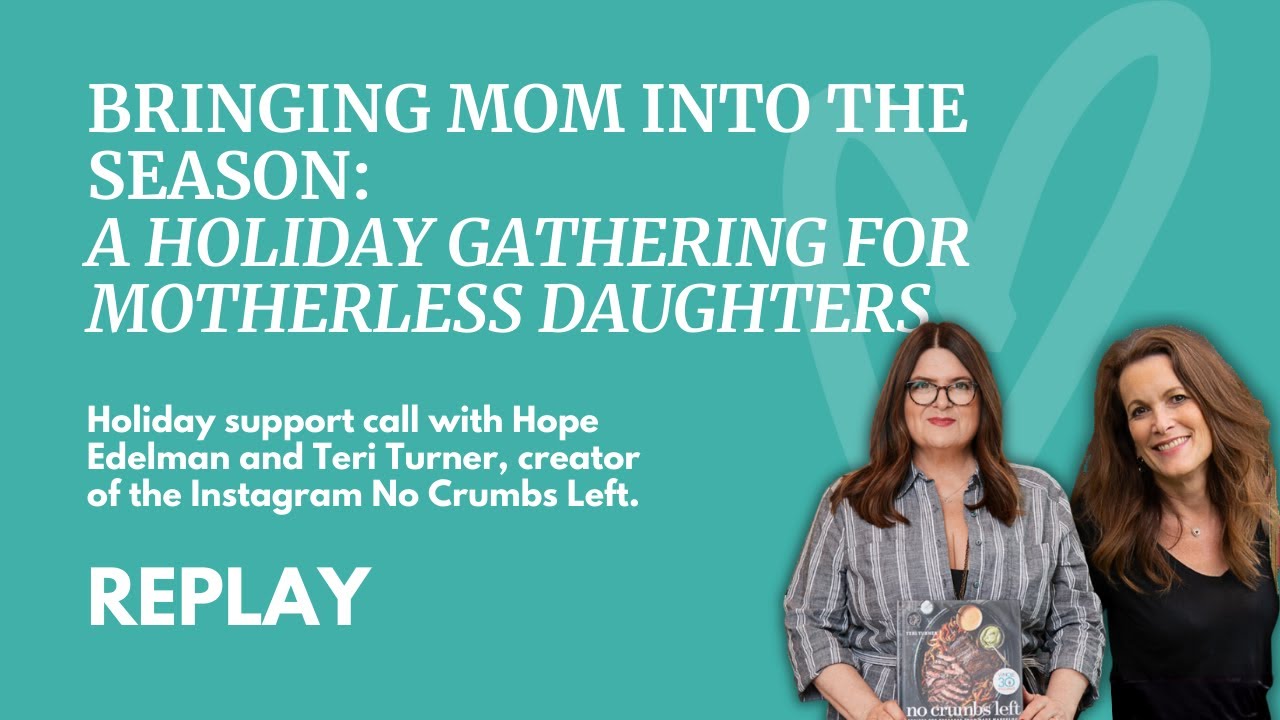
Bringing Mom Into the Season: A Holiday Gathering for Motherless Daughters - REPLAY


Childhood Trauma & Complex PTSD ~ A real conversation with author Stephanie Foo