How Do I Avoid Burnout? with Guest Jonathan Mendoza | Ron + Hope: Unfiltered
Ron Carpenter and Jonathan Mendoza trace Redemption Church's growth from 40 people in a warehouse to a 5,000-seat megachurch, then into burnout. Ron describes running five weekend services, the 2008 recession that nearly bankrupted them, and painful staff layoffs. He learned that visionary leadership without sustainable systems destroys you.
Chapters
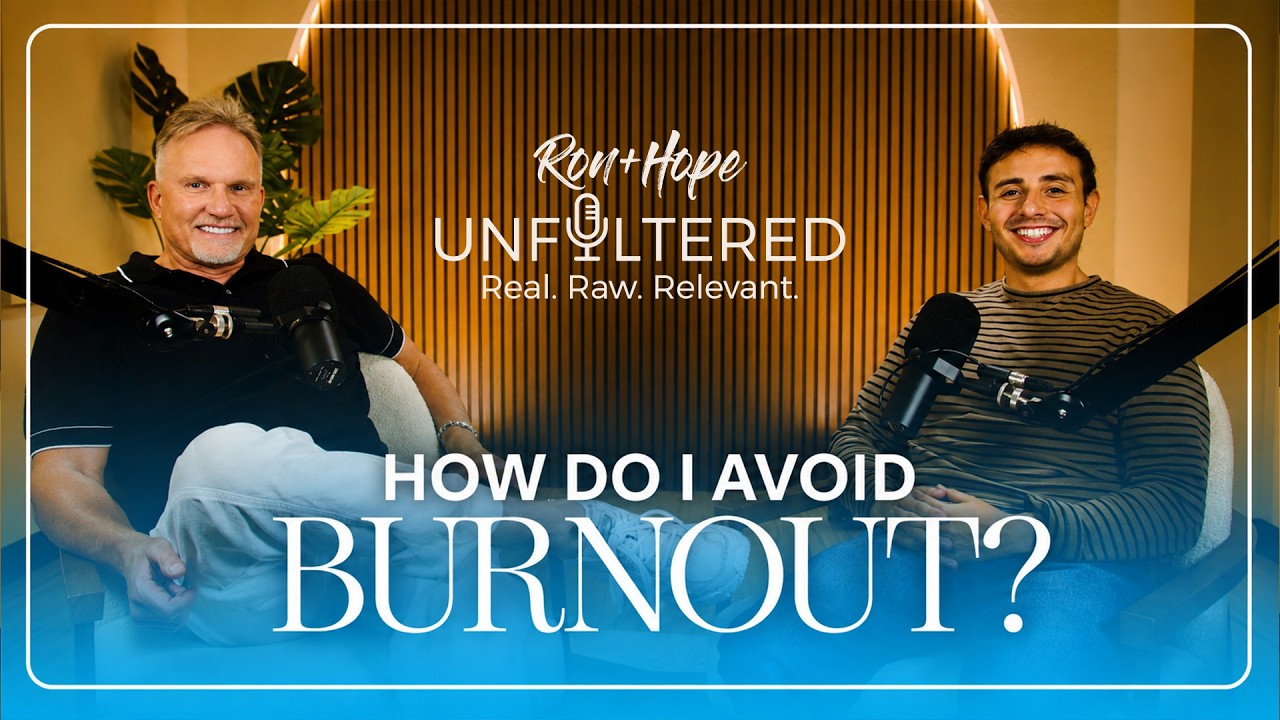
Hey guys, this is Ron and Hope, Raw and Unfiltered. And, uh, as you can tell, I mean, he's, he's quasi-good-looking, but he's not as good-looking as Hope. So this is Pastor Jonathan. Pastor Jonathan's the lead pastor of our Spanish church and also Society 242. And now, as though you needed something else to do, he's the one that is helping me split time here when I go coast to coast. He's the one that is speaking for me a lot of time. That's a that's pretty that's pretty big deal. That's pretty big thing. You've done a great job with it too. And we sitting here. I'm going to get started because we try to do these things in only about thirty minutes, and I can tell these stories forever. But Pastor Jonathan, I'm excited. You've always been curious, you know, about the history and the 35 years, and you ask me a lot of questions whenever we're together. And Hope and I, in the last podcast we did together, we did a thing where we were going through each decade. So it's been 35 years, 3 and a half decades. I can't believe that, 3 and a half decades. And we were going through the '90s.
Hmm.
And those of you who watched that one, you remember we told you a lot of the breakthrough moments, but a lot of the ridiculous things, you know, my first drummer, I literally got him off the street and raised money for him and his wife. And when I stood him up and pulled everybody, we were trying to have a housewarming for him. I got him off the street, got him off drugs, got him in an apartment. I mean, I went myself and talked to the manager and got him in the apartment. In the little church, the first ever thing that we did, our little church of 40 people, for like an outreach was to give them a housewarming.
Wow.
I mean, like literally silverware and linens. So I brought him up for an interview. Everybody, him and his wife. And he looked at me while we were bringing stuff up and he said, oh, this ain't my wife, right in front of everything. And I said, what? He said, this ain't my wife. He said, my wife lives in Indiana. I said, Indiana? He said— I said, we got to get y'all married. He said, well, I got to get divorced first. And I was sitting there having people bring them linens for their bed. That was my first— that was my first benevolence ministry. Talk about outreach. I mean, we just did— we had so many things like that. You know, one of the first guys I went to go see held a gun to me and made me sing country music. I mean, just so many ridiculous things. I could put a book— I could write an SNL comedy night with stuff I've been through.
That's so funny.
And then a lot of, you know, little miracles and breakthroughs we saw. But let's start with the 2000s.
Yeah.
And you may have heard some of the stories, you may not have heard them all. And last week I was surprised when I started remembering, when we started talking, I started remembering stuff that I had, you know, not thought about in a long time.
Yeah.
But 2000s to 2010 was the world changer decade for us. I mean, just from a handful of people and on a back road in a warehouse with a wooden plyboard sign with paint on it. to, you know, TBN, 5,000-seat dome, $40 million campus inside this amount of time, that decade right there. Our lives changed, our world changed, our kids grew up.
Yeah.
Ministerial fellowship exploded, the church exploded. We went on international television all inside that. year and, and the effects that it had on us and our personal life and trying to adapt. Yeah, there's a lot going on there. What are some of the things you've been most curious about as you've looked over our journey?
2 things that I've been thinking about was, uh, well, we have like a, I guess, our Hall of Memories right here in our, in our staff.
I try to do something called a history hall and a destiny hall, you know. So we, we do have a Jubilee—
Yes, we do.
Destiny wall and a little bit of a redemption, uh, Excuse me, history wall and a little bit of a redemption history wall. Well, just some defining moments, the different buildings that were built, the different stages. It's not anything in depth, but just a little bit showing kind of where we came from.
Yeah. One of the times, like, I thought of asking you, so I'm really glad that we get to just have this conversation, because every time I pass there, I mean, to get to my office, I got to go, it's always the photo where it's just this big piece of land and there it looks like the construction's barely starting, but you have a shovel and it says, Redemption World Outreach Center.
1994.
Yeah. Can you tell me, like, from there until, you know, the 2000s, what was that like process building that place, doing all that?
Hard.
Yeah.
That was all hard.
How do you like keep doing that?
There were no easy moments then. There were no easy moments. There was no— there was no— it was plowing. It was little by little. It was— the church went from 50 to 100, from 100 to 200, from 200 to 300 to 300. I mean, it was just plowing steady, show up, grind it out, love the people, build the organization. People leave, new people come in, start over, invest. It was just a process of starting. It's getting your paperwork, getting your bylaws in place, your articles of faith, just all the stuff that trying to hire first ever staff, find you just 2 or 3 people.
Wow.
who will come in for minimal pay and work their behinds off. Those are hard to find. And all those years were trying to get established in a building. We did in the mid-2000s finally get our own piece of land. And I talked to 'em about that in the last one about the first couple of buildings. We had a 500-seat, just totally metal building. And then we bought the land next to us, a few more acres, and built a— A bigger one. It's really supposed to be 800 seats, but we put 1,000 in.
Wow.
1,000-seat building. And that was the— from the old warehouse and shower curtains to the little building to a little bit bigger building, that was all the '90, '91 to 2000.
Got it.
And but '99, we went on TV, local and regional.
Wow.
Okay, now back then, people gotta understand, no internet. Well, the internet was in '95. No social media. No social media. So no social media, limited use, anything Christian of the internet, except a website. There was no streaming at that time. There was no streaming services. So TV was still the thing. We went on local television, bought up a lot of time on local television, because the thing was back then, use the television to fill up the building.
Got it.
So any local $100 time we could get at 4:00 AM in the morning when nobody's watching, we bought it. All those little spots on cable, we would gobble up that time for next to nothing. And then we had one regional thing that went into about 4 or 5 states, and we started that TV there. I bought some secondhand equipment from an old recording studio, literally secondhand. I bought an entire studio for $20,000.
Wow.
Everything they had, all their cameras, all their lenses, all their recording stuff, all the mics, everything for $20,000. We set it up. So '99, Tommy Barnett, the multiplication anointing, he passed it to us.
Yes.
We had our breakthrough with our first fruits of our African American constituency starting to come in the church and then going on TV. And all 3 of those combined at one time in '99 started the mushroom cloud. And that's when we had a building that we could put 1,000 in and grew to 5,000. And we were doing Saturday night. I don't mean—
You were doing like—
I don't mean these were services with a few hundred people in them. These were 5 services with people standing up around the wall. Saturday night, 8, 10, 12, Sunday morning. Then I'd go eat, lay down a little bit, literally take a shower, Suit back up. That was suit that time. And come back at 4 o'clock and do it again. And we did that for 2, 3 years. It was brutal. It was brutal because of the kind of services we had.
That's what I'm saying. Yeah.
Like, I mean, it's anything. We were foot to the floor.
The whole time.
Pentecost. And all the services, quite honestly, were exhausting. They were like, all of them were like revival services. So we would have 5 services every weekend that would be like somebody else would be like a conference.
Yeah.
And people are like, do y'all really act like this all the time? It's like this every Sunday. And that was the first time I started feeling it take a toll. I was about 30, you know, 31, 32, 33. I remember by the time I was 35, we got that big building up, 2004.
Wow.
So 1999 to 2004, we kept growing in that 1,000-seat little metal building. And then 2004, we finally got that big dome in the air. But by then, my whole goatee was gray like it is now. This right here, I've had this for 20-something years.
Really?
I had gray hair start popping out in my mid-30s. The toll that it'd taken— we laughed a lot with Hope talking about the '90s, but the 2000s, there weren't as many laughs. It was great blessing, but nobody told you what came along with the blessing. Blessing is very difficult to manage. You don't just get blessed, you gotta manage it.
Yeah.
And for the first time, I felt in my leadership, I'm going back and forth between leading and managing. Let me tell you what I'm talking about. If you're a visionary, And the vision that God has given you brings a great harvest. Okay, then somebody's got to manage that harvest. It don't just come. Those people got to be pastored.
Yeah, you're right.
Taken care of, followed up, assimilated, discipled. Community's got to be built. Okay, so I found myself the visionary that was causing all the church to progress and increase, being taken out of that role. And now I was having to manage all the fruit that the vision had brought, but there was no longer a visionary. We're spending all of our time administrating and managing.
Wow.
And so I had to really learn in those early 2000s years. That's when that staff went to like 50, 75, 100 people, 150, 200 people. And here again, I don't know anything about HR. I don't know anything about how to build an accounting department. I don't know anything about production, don't know anything about social media, don't know anything about any of it. And so I'm having to build all this on the fly. And that is where operating under somebody who's done it can be so valuable, because I had no access to none of those people. That's why the Rod Parsleys and all those, and I give such honor to because they let me in their world a little bit.
Yeah.
And I didn't go in their world and shout. I went in their world and watched. How does this work? How does this work? How do y'all do that? How did it— like, I remember sitting at Rod Parsley's Dominion Campmeeting and people— so there's so many people there. I don't even know how many were there. And I'm sitting like on row 4 and somebody walks over and hands me an envelope. I open the envelope and it's an invitation to a dinner afterwards. I'm like, how did they know I'm here? How did that person know to me? How did— see, I didn't know how all that stuff worked.
Mm-hmm.
And that don't sound like anything. Now I have very antiquated and updated systems of how we do all those things now. But then I sat there and said, how did somebody know I was here? I ain't signed anything. And I was picked out and a handwritten note was given me inviting me to a dinner. Those things used to blow my mind.
Yeah.
Okay. And so that was what I had to build. You don't just have a bunch of people in a service. You gotta build something. I heard Craig Groeschel say one time, I thought it was very powerful, and there's a lot of truth to it. He said, you don't rise to the level of your vision. He said, you fall to the level of your systems. So that's powerful. And for every wine, there has to be a wineskin. That's right. And so those were the years of, Yeah, we were growing. We went to 22,000 active members. I never got more than about 10,000 or 11,000 in attendance, but give me 4 weeks, I'd see all of them.
Yes, sir.
So everybody was coming through, they'd attend 2 or 3 times a month. So it took me about a month to see everybody. But on our roll, we had 22,000 active members. That, that happened in a short period of time from just having a few hundred people in a metal building. There was not a lot of time. It's crazy. So can I ask you something?
I know this is real raw and relevant, so I wonder if I could just ask you a little bit. I remember one time we didn't really dive deep on it. We just talked a little bit because, you know, you just mentioned like, I'm speaking for you now. So then some days I'll do— some Sundays I'll do 3 services and you check up on me, which I'm really grateful. You'll be like, you feeling good? You doing good?
It's hard though.
So one time you mentioned to me, Pastor, you said when you guys were doing, I think, 6 services to like a Saturday.
I think we've only done 5.
Oh, 5.
Most we did was 5.
Yeah, 5. So like it was on Saturday night, 3 Sunday morning, 1 Sunday afternoon. Exactly. Okay. So that time you mentioned like you got to a place where one time and I just, you know, want to bring it up and you could tell me the insight on it. You were like in the shower one time and you were just like, like trying to like re—
I would hang on to the nozzle. I don't mean— I mean, I would hang on to it. I was exhausted. I was physically absolutely exhausted. Um, I can't even explain it. I would just go let water run on me. And the only time I gave myself that time, you know, from the last service till 4, was literally to try to recuperate a little bit and get my feet back up under me.
Geez.
Because it was packed out again at 4, right in the middle of the day. Even during, you know, NFL football, it was packed.
Wow.
So, and they— and everybody came in with such high expectations. Oh my gosh. They wanted it to be, you know, Jesus coming out of the tomb every single service. And you say, well, Ron, if you're really depending on God, you ain't got to worry about that expectation. I had high expectations of myself.
Yeah.
Yeah. I had high expectations of myself. I had high expectations of what I wanted people to experience when they came in there. There was people coming in there, life hanging by a thread.
Yeah.
There's people that had never been in a church like ours, and they found out Mama had cancer and they would all come. Well, we used to make fun of this church, but now she's sick. So, I mean, it was that kind of stuff. And so I wanted Mama to be healed.
Yes.
And so, you know, trying to make room.
Yeah.
Every single service for marriages healed and addictions broken and lost saved and, you know, backsliders returning and, you know, cancer. And I mean, people were looking for that every time they walked in the building. And I remember going home and it was— it's unfair. You know, I'd go home at 7 o'clock, 7:30 on Sunday night, you know, to my children, and I'd just be so wrung out. Just, just almost like I was in the room, you know, trying to watch a movie with them. I just— like a mummy. Because it, it's like when Jesus came back to the Garden of Gethsemane and they kept sleeping. He said, the spirit is willing, but the flesh is weak. And I'm gonna tell you, I don't care what anybody says, I've heard people say, well, if you're really anointed, you don't feel it. That's a— the anointing will take a toll on your physicality. The anointing takes a toll because you gotta understand, the spirit man is attached to an inexhaustible supply.
That's exactly right.
Well, the spirit knows no lack. The spirit doesn't— it's never diminished. The spirit is not tired. You can't bring that into the natural realm. The body knows diminishing. The body knows weariness. The body knows tiredness. And then Garden of Gethsemane, that is exemplified.
Yeah.
And so those years, there aren't as many funny stories. The services were unbelievable, Jonathan. They were unbelievable. I just can't even. And the buildings were built. We built— I had like 6 or 7 building programs in 6 or 7 years.
Wow.
There was not a time on that campus a building wasn't going up for probably 8 years. That on one of our pieces of property, there was a building being built or one we had bought and gutted and remodeling.
Wow.
And it just never— it was growing at that pace. Yes, it was growing. So 2004, we built the dome. 2006, we built all the educational space and our first gym. We also bought the theater. We also bought an administration building adjacent to us. 2007 and '08, we redid our first building and made it into, after my dad, Bishop's Chapel. We had weddings and funerals in it because it only sat 500. We needed something smaller. And in 2009, we built something called the Imagine Center, which was a 56,000-square-foot sports club.
Wow.
And I mean, and I just said that real quick. These were huge multimillion-dollar projects. So You're growing, you're building staff, you're managing, and you're doing building projects. And you're in a plane flying all over the place with hundreds of pastors and a ministerial fellowship. It was crazy. It was crazy. And I would not shush my kids. So, you know, if I preached somewhere Tuesday night, I would fly all night so I could be there cooking eggs for 'em when they got up, 'cause I did not want them to feel it.
Mm-hmm.
I did not want them to feel a father's absence from ministry because I remember when I was growing up, and I love my dad deeply, but I remember my dad was not there a lot. And so I remember, Jonathan, I developed this, well, I know y'all's daddy's here, but my daddy's not here because my daddy works for Jesus.
Hmm.
So my daddy's different than your daddy. My daddy works for God, but really it don't take the place of the things I missed and the things I missed out on. So the toll was being taken on my body because I tried to be the perfect dad and I tried to be the perfect husband and the perfect minister. And that's why kind of 2010 to 2013, we had some rough years. We can talk about those next time.
Yeah.
You know, we went into 2008, 2009, 2010. That's when the recession started. You're a little young for that. That was rough. That was rough for everybody in America. Everybody got— Silicon Valley out here got hit. Everybody got hit.
Yeah, big time. I remember that.
But I got slammed.
Wow.
I got slammed. My congregation was full of middle-class individuals, had good working people, working jobs, gave sacrificially, served. But when those, man, when those companies started shutting down and those manufacturing plants started shutting down and everybody started losing, I remember one day we had lost 48% of our operating revenue and I was teeter-tottering on the edge of bankruptcy.
Wow.
Not a lot of people knew it 'cause I didn't tell 'em. I just, here again, I just dealt with it. It took a toll on me. But while I was up preaching, that was what I was dealing with during the week. And that thing was a Titanic that had about flipped on its side. Because, you know, you just take $1 out of every $2, you just remove it. You know, how do you function like that? And that's what happened to us. And I remember one Sunday I just had an altar call. I said, everybody here that needs employment, you need favor of God to come on you for employment. And there was nobody left in the seats.
Wow.
I'm like, no wonder there's no tithe and offering. Nobody's got a job. And so I don't know how other people remember 2008 to 2012, but it was brutal on us in Greenville at Redemption. And it took a toll.
Yeah.
That took a toll because it didn't end quickly. So let me tell you one of my big mistakes. We had a reserve. We had about $2 million in a reserve. Now, today that wouldn't be much for what we're doing, but in that day it was pretty salty. So what is a reserve? It's for a rainy day. Well, we're in a recession. That's a rainy day.
For sure.
I'd never had a point of reference with leading through a recession. I'd never been through a recession as a leader. So that's my first one. So I'm thinking, I'm looking at the economic indicators, you know, it's going to last about a year. I don't want to fire anybody. I don't want to send anybody home. I had a ton of single moms on staff. Let's get in. And let's make up this lost revenue with our reserves. And so, you know, a year we'll be out of this thing and back. Well, that thing lasted 4 years. So now we lost our revenue and I spent my reserves and I still had to lay people off anyway. And I remember one day I laid 17 single moms off in one day and I went home, put my head in my wife's lap, and I wept like a baby. baby. I wept because we were their only source. But in that moment, we were in survival. We were in survival. I mean, me and Hope had taken like 47% pay cut. Um, you know, I was trying to go to the banks and get interest-only payments on my loans. I was doing everything I could do.
Wow.
Uh, to try to survive. But just Them was rough times, man. So like I said, the '90s was full of funny stories.
Yeah.
But the days everybody looked at us like, man, this church is taking America by storm.
Yeah.
Those were some of the most difficult days of my life.
There's one thing that you— just because you were probably— I mean, you have this anointing on you, Apostle. Like, it's just, it's evident. And obviously the '90s part of that formation, but in the 2000s, obviously God like elevated it. And you told me a story one time, and I don't remember all the details, so I would love for you to say it again. I don't— and I don't know if it's in the 2000s when some, some very prominent lady in your, in your, um, in Greenville passed away and they did the funeral service in your guys's church and there was deliverance like happened through that. Like that was the anointing that—
That was about the year 2000.
Year 2000. Like, have you told anybody that story or like have you talked about it?
I don't know if I've told them my podcast, uh, family that?
Because that just is so—
Well, I'm preaching now. If people want to know what I'm about, if you were a part of Redemption Now, we've been taking a long time on Make It Plain about the vision. What is vision? Now, what is God's vision? Now, what is God's vision for us? What is God's vision for Redemption? And we're trying to make it plain. And people ask me all the time, what's your strategy for this? What's your strategy for growth? Or what's your strategy for expansion? Or what's your— My strategy has always been, and it's very difficult to do, to build a great house. And if you build a great house where Jesus is truly lifted up, he draws. So to have a church growth strategy that is based upon what is going on in the room is so unbelievable. I'll move heaven and earth to get there.
Yeah.
I looked at that the first time we hosted a Benny Hinn crusade in 1999. And I looked at that place, that building sat 17,000 people and it was jammed in Greenville. We hosted it, Redemption hosted it for him. And I looked in that parking lot and there's cars from all 50 states. They did whatever they had to do—
They did.
To get in that building. And I learned something that I wanna build an atmosphere where people will do whatever they have to do to get in the building. Why did they take the paralytic and rip the roof off the house?
Come on.
Just to get him in the room. There was no way to get him in the room, so they found a way to get him in the room. If he hadn't have got in the room, I don't know that he'd have got his miracle.
Yeah.
We don't know.
Yeah.
But he got in the room and he got his miracle. That was our claim— claim to fame, that's a terrible word— but that was, that was our brand. That was our brand. I didn't take a lot of care on what happened outside the service. But when it came in that service, it was on. I mean, it was on wide open. And to let you know the kind of backstory, he's talking about something I— we had a very well-known underprivileged community in our city called Nicholtown. It had the Jesse Jackson government housing projects, which has since been torn down. And I think it's been moved and rebuilt.
Oh, wow.
We took that area over as a ministry project. It was mostly government housing or government-subsidized housing, but it was a very, very, very impoverished, low-end community. Lots of crime, lots of hurt, lots of pain. And so we wanted to take it on and begin to serve it, but they had a doorkeeper. And her name was Mary Nell. It was not a man. It was a woman. And I don't know how she rose there. If anybody from that family's listening, 'cause I know her family's been connected to our church for years now, I say this with deepest respect. Whatever you did in that community, she was the gatekeeper.
Wow.
You went through her. And everybody, man, woman, boy, girl, young and old, knew she was the man. I don't know that dynamic. I was a country boy.
Yeah.
This was a very, very inner-city dynamic, and I was actually having to learn it as I go. So I became very good friends. Marynell trusted me. I don't think she trusted anybody, but she trusted me. And she swung open the door wide to allow Redemption to minister to her. Those were her people. to minister to those people. And she passed away suddenly by a heart attack. She died in the parking lot in her car of a grocery store, had a heart attack and just leaned over against the window. She was pronounced dead on the scene. And the family called and said, we want to have the funeral at your church. Well, I had never done an African American funeral, never been a part of one, never been to one, and never really done what I would call an inner city funeral. This was going to be the first for me.
Yeah.
And remember, we had just started this multicultural breakthrough. So I'm having to learn a lot about the way people do things who aren't my color, who didn't come from my world. And so I went into that, and I mean to tell you, that day the cars started rolling up and I saw every type of gangster. I saw every type of drug dealer. I saw every type of pimp. I saw the people who ran the streets getting out, and that building would hold 1,000 people. It was standing room only and probably another 500 to 700 people standing outside. Okay. And everybody that was anybody that ran the streets, they were there that day. And so we went out there and I had our praise team start singing a song. 5, 10 minutes into it, it's been a while now, everybody started throwing up. I mean, all over the building.
That's crazy.
People bent over, started throwing up. Women, men, everybody. And all of my ushers and all of my altar workers and everybody there literally had to walk running around with trash bags catching it. Well, for those of you who don't know and you're like, what in the world? I would've ran. That's in common with deliverance. Mm-hmm. Whenever demons are being cast out, that's somewhat common.
Mm-hmm.
Those 2 worlds, righteous, the kingdom of God and the kingdom of darkness, came in conflict right there in that building. And I watched it and everybody on my stage, their eyes got this big, like, what do we do? And I looked at 'em and I said, keep singing. In other words, I said, keep worshiping till they're all out.
Yeah.
And we worshiped. I don't know how long till all the throw-ups ceased. And I cannot tell you how many of those people's lives were forever changed. They put down that lifestyle and they are still with Redemption to this day because of that service that day. But what was it? Just get in the room.
Get in the room. That's exactly it.
So my vision is to build a house.
Yeah.
Still good. Or if you can just get in the room, anything can happen. But for you to build a house that God lives in, his protocols have to be followed. And we're far, far away from that. As I said on Sunday, now the last 15 years, we've built a house for man. And man is very comfortable in it. But I question whether or not God's even there. Because it's like, you know, It's like Jacob said at his ladder, his dream. He said, the Lord was here and I didn't even know it. And so that's kind of what the 2,000— it's funny you brought that up. I wasn't thinking about that story. That's what I'm after. That's what I'm after here now on the West Coast. That's what I'm after to build again. God gave me, when I reopened in Greenville, God gave me a word, the ladder will be greater.
Come on.
That you saw me do some things. Wait till you see what I do now. Wow. And, uh, and we're starting to see the very first— the dam's beginning to break, and there's a crack where we're beginning to see you can walk into a service and just about anything can happen. Yeah, that's a house that God lives in.
Come on, that's so good, man. Well, that, that, that's just crazy because, I mean, you all, you just mentioned it, like, the reality is, is we don't We don't know all that's going on in the background. I remember seeing the first time I saw you, my dad's the one that showed me one of your preachings, and you're, you know, you were in a vest with a big cross on your back. You kind of had a mullet, uh, so I'm pretty sure that was like in the early 2000s. And I remember just through the screen being able to unsee and witness that there's an anointing in that room, like what was happening in that room. So then the first time you guys came— I know I'm jumping it— but first time you came to Thunder in the Bay, my dad was like, we gotta be there. So I remember like being all that stuff. But anyway, I just, I could just tell that whatever was going on in Redemption Church in those 2000s, they're like, it was obviously something that the Lord put on your guys's life, you and Pastor Hope and your family. But obviously it was translating into a room, into a people building something. So like, even now here on the West Coast, like, it's crazy how it's just been compact, a compounding interest, right? Because at the end of the day, like, it's, it's led you here. So one thing you said, and I know we probably have to wrap up soon, I'm sorry. You were talking about how to sustain these things though, right? Like what are those life sustainers?
I talked about that today in our staff meeting.
Yeah.
Like, like— Life stabilizers.
Stabilizers.
Yeah.
Like—
Or how do you stabilize these things for long-term ministry? That's what I'm trying to do now because I'm, I'm, I'll just be very vulnerable. I'm not sure I did a good job of it first round. I kind of looked at moving and expanding to the West Coast and then reopening again in Greenville. I kind of looked at it. You know, they said Thomas Edison, the great inventor, said his house burned down and all of his notes, all of his inventions, all of his ideas burnt with it. And he said people were just so distraught for him and felt so bad because, you know, he had a great mind and everything was burning to the ground. And so they went up to him, and I don't know if this is true, this is what I've heard, that they were, you know, consoling him. He said, oh, look, he said, all my mistakes are burning up. I can finally do it right. That's kind of— with all the great things, there were things that I'm not sure were built right. And this time around, being, you know, 58 instead of 28, trying to see God puts this here and he puts this here and he puts this here and this— because the Bible says we're being fitted together.
Fitted together, yeah.
The wording there would be almost like that of a puzzle. And I think some of mine was thrown together. We were growing so quick, just tag, you're it, do it. And now it's moving, but it's moving at a little slower pace. And I have that time where I probably have the place— the best placement of people that I've ever had. And so I want to build a house that God lives in.
Yes.
And when God lives in the house, You don't have to geofence and have a marketing strategy. They'll bust down the door to get in the room. I've seen it and we're seeing it again. So anyway, I appreciate you being in here with me and us being able to chitchat about it. I love— I don't want to be the old guy that starts telling everybody his stories, but I do have a lot of them.
Yeah.
And so I'm going to do a couple more of these, the 2010s to 2020s. and then 2020 to now, you know, since COVID till now.
Wow.
COVID was rough too, boy. COVID was rough on us. And so, but God's been faithful and rebuilt again. And we'll talk about more of those stories. I do have some laughter along with the pain. It wasn't all pain. So we'll talk about both of them. Hope should be back in here next week. Hope hadn't been feeling well. And so we just, I told her, I said, baby, just take a couple of days and stay home. Schedule's been so crazy. I said, just stay home, take care of yourself, get your feet under you. And we are celebrating 35 years 5 years this year on the, on the West Coast. August the 30th will be on the East Coast. If you can get to one of them, get there. We would love to have you. You got Bishop Wallace preaching this week. And then if you can't, join us online because it's going to be special. And until next time, it's Ron and Hope Unfiltered, real, raw, and relevant. Me and Pastor Jonathan signing off. God bless you guys. See you later.
More from Hope



How Do I Balance Marriage and Kids? With guest Chaz Carpenter | Ron + Hope: Unfiltered