Ian Ugarte (smallisnewbig.com) explains a residential property investment strategy in Australia designed to generate positive cash flow regardless of market direction. He argues most Australian houses are larger than needed (citing about 12 million empty bedrooms and a 16‑year price cycle) and that 60–80% of renters are singles or couples while many rental listings are large multi‑bedroom homes. His recommended strategy is to convert or build adaptable larger houses into micro‑apartments to house multiple singles/couples, increasing rental income (doubling income in many cases), offering tenants rent savings (about 1/3 to 1/2 less) and protecting investors from downside. He also describes a "rentrepreneur" approach where an investor rents someone else’s property and applies the same conversion strategy. He claims entry can be possible for as little as $15,000 and that most conversions are low-cost and often don’t require council approval.
Questions this video answers
As little as $15,000.
12 million empty bedrooms (claimed).
60–80% (claimed).
About one-third to one-half of their normal weekly rent (claimed).
A 16-year cycle (referenced).
Chapters
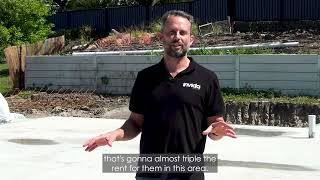
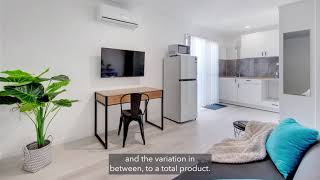
Hey there, Ian from smallisnewbig.com and in the last previous two videos I talked about firstly APRA changes three or four years ago and how it actually did a negative effect to the property market and push the prices upwards. And then I talked about how property prices and cycles in Sydney have made a move over many years and that a sustainable change in property is going to happen every. You know, there's a 16 year cycle that a number of different economists talk about. Now for me in this video today, what I want to talk about is a strategy that gives you positive cash flow that regardless of whether a property goes up, down, sidewards or any direction, if you've got positive cash flow coming from that property, then you're in a really good situation. How does that happen? Well, you see that up to 80 or 90% of the properties all over this country, Australia have the ability to create more income. If you're negative geared and you want to get better income out of your property and if you want to buy into property, you want to protect yourself against the downside. If you want to get into a property for as little as $15,000, then the strategy is for you. You see, in Australia we build houses way too big. In each one of those houses we have two and a half people and there's 12 million empty bedrooms tonight when we all go to bed. So if we've got 12 million empty bedrooms and only two and a half people in a house, why do we continue to want to build and buy four bedroom houses as investment properties? Remember, I'm not talking about your own home. You can live wherever you want. But if you to be an investor you have to cater for the marketplace. What's the Marketplace? Right now, 60 to 80% of the people that are currently looking for somewhere to live are singles and couples. And majority 60 to 80% of the properties available for them to rent are three, four and five bedroom houses. So what we do is we talk about a strategy where you can take those larger houses or you build houses and have adaptability to cater for those singles and couples. What does that mean? It means that we can get singles and couples into larger houses. We create micro apartments within them and from that the singles and couples save 1/3 to 1/2 of their normal weekly rent. That means that they can save money towards buying their house in the next three to five years. You as an investor are protected against the downside in property prices dropping because by them paying 1/3 to 1/2 of their normal weekly rent, you've actually got 4, 5, 6, maybe even more people coming in and you've got multiple income coming out of one property. You will double your income day in and day out. So the people that live in your house, they win. You win because as a strategy, you've doubled your income or you've got $300 to $900 more, or you've got a double digit return out of residential property. We're not talking about the scary and high risk commercial area, we're talking about residential property where people need to live. And I can tell you, people love living in them. We're not talking about low socio, we're talking about doctors and we're nurses. We're talking about people that actually just want people that work 70 or 80 hours a week. A young person that's just finished university, that's just got into their first job, we've got the 55 plus single female, the biggest growing demographic of homelessness in the country right now. And you don't even know that she's homeless because she's walking past you every day. They're the people that live in the properties that we own and we also teach people how to do this. But the purpose of this video is to let you know that this strategy is out there and it protects you against an upside, and it protects you against a downside and it protects you against the properties moving sidewards. Regardless of what the property prices do, the income will always come in, but you make sure that you get in when the mismatch is now, because we're correcting the mismatch and it might take five or 10 years, but you want to get the best out of right now. So you know, the strategy is quite simple and you can do this all over the country and you can also do this in every state, in most jurisdictions without even needing to go to council to get approval. Yes, there's some upgrades and yes, there's some work that needs to be done to the property, but it's not huge, it's not humongous and it doesn't cost a lot of of money. You can get into some of these properties and even some properties that other people own. It's a strategy we've taught called the rentrepreneur strategy, where you rent someone else's property as an entrepreneur and you put it together with the strategy I just talked about and put yourself in a much better place.