Ian Ugarte (speaker) argues that high-yield and affordable housing are compatible by retrofitting oversized Australian homes into multiple small, self-contained units. He defines affordable housing as costing less than 30% of gross wage, shows local rental data and high rates of housing stress, and critiques Australia’s prevailing large-family housing stock (many empty bedrooms). By using available policies, compliance and incentives, landlords can create smaller units that halve tenant rent while increasing investor yields. The approach aims to produce 1 million self-contained homes by December 2027 and invites investor participation.
Chapters
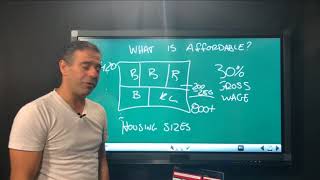
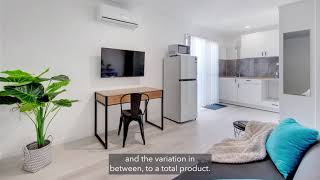
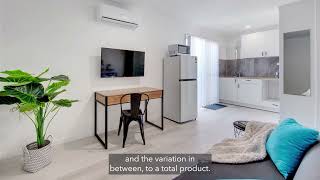
Hey, my name's Ian Ugarte and I thought I'd just talk to you make a short video today around what we do and a lot of the questions that get asked. The most important part of what we do is we create high yielding and affordable housing. And high yields, it's a contradiction, is a common question we get asked and a common comment that gets made to us. Let me show you about why we can do high yielding. We talk about affordable housing and the way we talk about affordable housing is by getting an understanding of what that really means. It's not low socio, it could be. But affordable housing essentially is by federal definition creating properties that cost you less than 30% of your gross wage. So if you're paying more than 30% of your pre tax wage towards rental accommodation, you are considered to be under housing stress. Let me show you an area of Australia that has this problem. And in this area of Australia you can see quite clearly that here for a four bedroom house you're paying $420 and for a two bedroom house you're paying 415. Why as an investor would you build a four bedroom house when it's not giving you a return? In this area here in 94% of the people that are renting in this area are living under housing stress. Now that is a huge and an enormous figure to start to understand because see the problem in Australia is we build the wrong product. In Australia we, we have the average size house is 246 square meters and in that house 2.5 people is the average. So essentially you've got parents in one room and you've got a child in the other. And this is what we call a four bedroom two bathroom house. Tonight when we go to bed we've got 12 million empty bedrooms in Australia and I can fit 22.6 Hong Kong houses in that one house. So what we do in Australia is a very silly thing for we build the wrong product. But let's look at it in a different way. If you had that standard four bedroom house with a bedroom here and these three bedrooms and you had a kitchen and lounge area and you could find policies to retrofit this. Now normally this house will rent for $420. But if I get this and I take the policies that are available around the country and I create small self contained areas that share one other area, I, I can now get a better return for my money. But more importantly rather than $420 I can rent those from 200 to 250 because it doesn't act as a ratio. That means that in this household I will be able to rent the place for 800 plus when normally I would only get $420. So understand that when you build the right policy, when you build the right product or you retrofit the right product, you'll get a better return. And more importantly, there's policies all over the country. There's rules and regulations that you need to follow and compliance that you need to understand and install into these properties. The governments are giving incentives for you to do that. That may be cash tax or even time incentives to get approvals. The governments are so wanting to get these style of accommodations that the fines for doing things illegally are huge, including jail time. Which is why you need to know these rules and regulation, regulations and put them in place and use the incentives. Now, I can only do a short video and I just wanted to answer a few questions as we go along. So what does this mean and why would you do it? Well, let's look at it. The residents that are looking into renting these property are getting a cheaper rent. So rather than paying $420, they're actually halving their rent and coming in and only looking after part of the property, having utilities included and saving themselves the money so they can invest in some property and is there a demand for it or. Well, I can tell you the 60 to 80% of the residents that are looking for somewhere to rent are either single or a couple. So effectively they only need a studio or one bed, a home, not apartment to live in. Ironically, 60 to 80% of the stock on the market are three, four or five bedroom houses. Now can you see that we've got an upside down marketplace that hasn't been catered for for many, many years. Residents get a benefit because they save money. The investor, which is you, the mum and dads of this world get a better return, which means that they can continue to grow their income and get to a point where they no longer need to be in paid employment and can earn an income out of this. By providing good housing. You're creating a community outcome. Now, unfortunately, community has been lost in Australia. This style of housing actually brings back community and we have example upon example of how that works and may not be to your advantage, but, but the government cannot and no longer can afford to put any money towards housing. So what you're doing is you're filling a marketplace and you're taking the pressure off the bottom of the market by taking this style of accommodation now you might do low socio, you might do high end, you might just do the middle. It's going to be up to you. It's what we teach and what we talk about. So people always say to me, well, why is it that you do this? Shouldn't you just be giving away what you do? Well, if you give everything away of what you do, you'll end up with nothing and you'll be the person actually ends up needing to have the housing that we provide. What we say to you is if you go out and you're a mom and dad investor and you have somewhere between one to six investment properties, you're going to be filling a marketplace that really needs this. And when I say that, what I mean to say is for every property that you do, it's going to put you in a better position, it's going to affect a resident in a positive way so that they can save some money and they can go and invest as well, which means you can continue to do the same thing we have. And what we do is we create genuine community connection by providing elegant housing solutions, housing diversification for everyone in the community. And we have a goal and our goal is to produce 1 million self contained homes within the next 10 years. So by December 2027 is when we got to hit our target. Can we do that target on our own? No, we're. We need someone like you to come along and help us to do this. If you want to learn more, come along, hear me speak and listen and hear me out. If it's something that you want to do, it's something that you want to do. So I hope to see you soon. Thanks for listening to me and have a great day. Cheers.