Ian Ugarte ABC interview with Ninna Millikin
Ian Ugarte discusses micro apartments as a solution to Tasmania's housing shortage. He describes converting warehouses into small self-contained units with shared spaces, targeting rent at 30% or less of gross wages. One north Tasmania project converted a warehouse into 16 micro apartments, addressing a mismatch where most available homes have three to five bedrooms while waiting lists are full of people needing studios and one-bedroom units.
Questions this video answers
Approximately 3,700 people (statement by Ian Ugarte).
About 80% (statement by Ian Ugarte).
No more than 30% of gross wage should be spent on accommodation (stated target).
Twelve million empty bedrooms (statement by Ian Ugarte).
Conversion of an existing warehouse into 16 micro apartments (stated approval).
Chapters
Ian Egarte is a board member of the Future Housing Task Force. He's currently a full time property investor, a consultant and adviser, and he is Australia's leading micro apartment specialist. Also looking at rooming houses and boarding houses, boarding houses makes me think of maybe the 1960s or the 1970s. Ian, good morning.
Hi, Good morning.
What's the modern take on a boarding house?
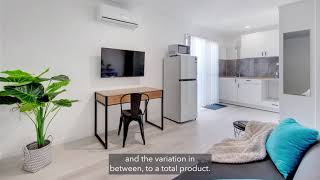
So a micro apartment boarding house, very much the same. So if you can create small self contained areas for people to live in within a building which is a larger building that has communal space, then that's essentially the modern day boarding house. So I know you know, affordability is obviously a problem. You clearly hear that from the Salvation army report. And if you can create better outcomes in smaller spaces, then you come as an outcome. Firstly, it's cheaper for someone to rent a small space and we're talking about a hotel suite essentially with its own bathroom, its own kitchenette, and if the residents choose to, they have the communal area to cook in and or interact with other people.
So do you buy Airbnb from these micro apartments that you build? How do you make sure they don't get snapped up and end up on a. Yeah, on a short term rental market?
Well, I think that the major point you make there is Airbnb is obviously a huge influence on the market and a huge influence on the vacancy rate and increased prices in standard long term rentals. Government's job is to create policy to make sure that as an investor that actually buys a property, they have a better return by doing long term rentals and short term rentals. So tonight as we go to bed, there's 12 million empty bedrooms in Australia and that's because policy doesn't allow those empty bedrooms to be used in better ways. So as an investor, if you can convert an existing dwelling into smaller micro apartments, that means you can create a lower rent in a smaller compartment in a property. So four times smaller compartments means that as an overall they get a better return on their property. If you look at the waiting list, currently in Tasmania you've got 3700 people on a waiting list that 80% of them are either couples or singles. So they only need one bedroom or a studio to live in. And housing stock In Tasmania currently three, four and five bedrooms, 80% of the stock. So we've got an upside down market. And so Airbnb can be fixed quite simply. I can tell you people that manage Airbnbs would rather not manage them. And if they could get a better return out of a Long term rental, they would do that every day of the week.
So are you suggesting that we rent out our spare bedrooms?
I suggest that there's policies across the country that the state government in Tasmania is now looking at because we've put that in front of them and that you can create what we call in Tasmania communal residence. So that is smaller compartments of the house being rented out individually. So if you took an example for an investor that would be renting Hobart right now, you might be able to rent a house for $450, $400 to $450 for a full house. If you compartmentise that you would be able to rent sections of the house for $150. So essentially the investor just made an extra $10,000 however has created an affordable outcome. So and again I want to make sure that you understand affordable that no more than 30% of your gross wage is being spent on accommodation. And so we're not talking about low socio economic, we're simply talking about creating better outcomes for someone's wage and they can live more comfortably and save towards buying their own property.
It's 25 minutes past 7. You're listening to Ian Agarte, he is part of the future Housing Taskforce. Ian, we've had you on ABC Radio Hobart. I think this might be the third time you've done quite a few visits to Tasmania. Have you started building yet? You've been speaking to our state government, you've been speaking to local councils and community groups. Where are we at?
So you know the great thing, I love what I do and it's great to be an advocate and go around and talk about change but we're more advocates that actually action take. So we currently just have approval in the north of Tasmania to do our first micro apartment development which is in an existing warehouse and that's going to be converted into 16 smaller micro apartments with a communal courtyard where all the apartments come into and share space with and you know it's a very proactive local council, a general manager who's very proactive and you know it's in a CBD so it's great and it's really exciting for us because it's a new concept obviously for Tasmania and we're really happy to prove the concept. It's been proven all over the country for us it's what we do all around the country and you know a major component of what we do is and it breaks my heart that 70 year old people that have worked for the last 50 years are living on less than 399 a week on average. And so their choice at the end of the week after spending $300 on rental is heat or E. And then, you know, the next biggest part of the demographic, the biggest growing demographic in Australia of homelessness right now is 55 plus year old women who were told when they were 20, marry someone with a good job and you'll be right for life. And they managed a house for 30 years and 30 years later they realised that probably the guy that they were with is not the guy that they like anymore. Claim their independence, go out, not a great financial settlement and the next phone call they get is from their parents to say, I need some help to be looked after. And it's really quite a horrible situation. It's a nightmare. It makes me really emotional that those people, those women who spent so much of their life have lost their independence and now are in financial stress.
I was reading a message from a friend earlier this morning that has a heritage building in northern Tasmania that she hasn't been able to do anything with, just getting approvals through councils for the last couple of years and has discovered that it's being lived in by squatters, which she was upset about at first, but then found out that it was a middle aged woman and her 20 year old son and a whole lot of other middle aged people that were living in there, which made her feel a whole lot better about it. It's a lot more common than we think.
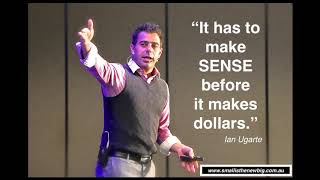
Yeah. You know, four years ago I was going to be the biggest developer the world had ever seen and I had a social change and I'm sorry, I've just got really emotional really quickly, had a social change around what, what does it mean for what I do? And in the end, passionately, I have, I have to say that anything that I do for community has to be of benefit to community and so I'm not here to fill my pockets anymore. So we've got a saying within our. Thank you. We've got within our business that it has to make sense before it makes dollars. So S E N S e and so if it doesn't make sense first, then we don't do the project. It has to make money though.
Who did you meet? What was the story that has affected you like this and has made you change your career path?
I had a number of different circumstances over a short period of time, over two or three months and one of them was there was a realisation that everyone has this grasp for the need to be very rich and wealthy because it's going to make them happy. And the realis for me was it didn't make me happy, it actually made me sadder because I didn't have a purpose to what I was doing. I was simply going out and doing what I was doing to fill my pockets and there was just, there was just nothing in return. And that, that point where I got to the, to the. I call it rich. So, you know, rich people have a lot of money and wealthy people have time to spend it. And that's, and that's what I realized, that I wanted to be wealthy and I wanted to make a difference. And I'm hoping, and I am doing that with a number of different social enterprise business partners in what we do on a daily basis.
Well, you're on your way in North Tas. How close are we in Southern Tasmania to getting a micro apartment building or something similar to what's happened up north with this warehouse?
Extremely close. We've got some great state government public servants that are working with us. We've got some great general managers around the Hobart region and surrounding councils. One in particular that we're working with, we're going to visit a few sites today.
Can you name it? Are you on the Eastern shore, Western shore? Come on, give us a call.
One of the southern councils, let's say.
So just south of Hobart, Just south of Hobart. And it's a great, it's a great thing, It's a great opportunity for me to be able to open up a need in the community. And again, we're not talking about public housing. We're talking about those people that are putting pressure on public housing. And so if we can create better accommodation for them, that makes a big difference. And I'm 100% believer that government should never provide public housing. They should make policy that allows investors, Mum and Dad, invest in zero to six properties, to invest in property for positive cash flow, not negative cash flow. That's the craziest thing on earth. And then if they can make an income out of property and they can fix an affordable accommodation problem, then that's a good thing.
This was unintentional today, having the Salvation army on talking about the hard road. Followed by you is the connection that you've made today by listening to what Stuart has said and what you do. The thing that's upset you this morning.
I come from a European family, so emotion is just a normal thing for me and I'm very happy to show it.
I think what creates my emotion is the pain that I feel for other people and you know, and with all the pain that I feel for other people, I feel all their happiness as well. So, you know, it's a good thing.
It is a wonderful thing. Well, how long are you in Tassie for this time? Have we got you here for the rest of the week?
I'm gone in the morning, but I will be back very soon, very often.
All right, we'll get you back on again. I want to find out more. I'm thinking. Is it Kingbrough Council Research? Possibly. Okay, thank you so much. That's Ian Agarte.
More from Ian

Check out INVIDA's latest project ...an adaptable home with universal access. (30 seconds)

Check out INVIDA's latest project ...an adaptable home with universal access. (60 seconds)

Check out INVIDA's latest project ...an adaptable home with universal access. (120 seconds)