Ian Ugarte presents a "circle of life" housing model emphasizing rooming houses and incremental, multi-stage housing that adapts as families grow and shrink. He describes small rooming houses (about five or six rooms) that allow Gen Y and young adults affordable independent living, enable tenants to become owner-occupiers who rent out rooms to cover mortgages, and support multi-generational community features (play areas, hopscotch, barbecues). Ugarte argues that "mum-and-dad" investors can help fix affordability, cites international examples (an Argentinian architect using partial-build strategies to lower upfront costs), and appeals to councils and governments to permit such diversification.
Questions this video answers
Ian Ugarte
January 15, 2018
Five or six rooms
Chapters
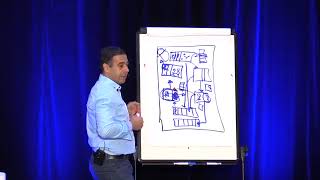
I've got this thing here which is called, for me, it's called the circle of life. And if we were smart about what we were doing, and this is what I'm pushing towards with governments and councils, I would simply say that whether this be a large development site or whether it be houses next to each other.
My vision, and it's coming close, is that I go off and I build two lots of rooming houses on this property.
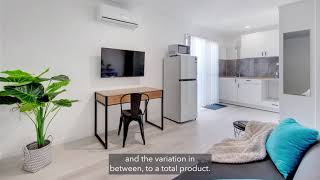
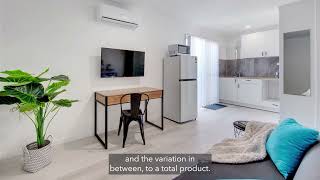
And they've got five or six rooms in each one of them. And in this house here is a Gen Y that lives there solo, got their own bathroom, comfortable living, it's reasonably affordable, so they don't have to live with their parents and they move into that. I don't go and build a property which is the 60, 30 or equivalent somewhere, and this person now finds a girlfriend and they go up and they either rent or buy this property.
Because they're living in this side of it. They can then either put a head lease over the top of it or own the property and they can put someone else in there and they've got rental getting paid. They're their mortgage is now getting paid down so that they can continue to afford to live. Maybe their mortgage gets covered completely. We then have the position where they have a child or they just want more space, so they move into here. They then put someone in here to rent. They've still got rent coming in. They have one child. Well, they kick that person out. Their child goes into there, they have a second child and then they decide, well, you know what, we probably need something a little bit bigger. So I'll come in here, I'll build something bigger and I will move my family in here. They have another child in this place and they occupy rooms, maybe part of it can be rented to the public. Once they have another child, they then kick that person out and the other child goes in there. They're crazy. And they have four kids.
Four daughters, let's call it really crazy. And then they put in here the same thing. They live in this property and everything's fine. Now, there's a point in time where their first child down here, by the time they reach up here, becomes a teenager of 16, 17, 18, 19, then 20. And in that period of range, one of the teenagers will move down and their circle of life starts because they've got one person less in here. They either rent out the component of it because it's allowable under the new changes and regulations which will come in in the next little time, or on the same property, they downsize again. They then lose another child, they go downsize again. And at this point in time, when all of these children are moving into the separate accommodation, they go and buy themselves a caravan. They live in this part of it, they rent part of this one out, and they get some rent coming in. When it gets to the point where either one of the parties dies or they decide that that space is too big, they end up going and living in a rooming house. And if we look at this as a circle of life, it's important because you've got up here, you'll have a hopscotch court going. There'll be a basketball ring in the corner over here. There'll be over here some sort of play area and a barbecue in this corner. And this is what we call community. This is what we call the grandparents saying, and these are adopted grandparents, because these are different families. And the grandparents that are across here, or uncle and auntie, whoever comes across to this young couple that's just had their first baby and goes, you know, I remember.
I remember what it was like to have our first baby and we didn't have any time. I just want to look after your baby for the night. Why don't you go out and have a date night? Because I'm sure you haven't had one in a while. And then this family continues to do things. This is the start of community which will bring back what Australia once had. We don't play with people in the yards out the front anymore. They don't play on the roads anymore because everyone's worried about their kids getting abducted or something going on with that, you know, and it's not fair that us as Australians, as a nation that can get on with each other quite as well as anyone else. The multicultural component of what goes on here, and if we can all work towards this, not only are we going to fix an affordability problem, but the young can start to buy property, and you as investors can also benefit out of it. And that's what the government's missing. The mum and dad investors are the answer to what we need to do to fix affordability in this country. And I hope you're on it.
There's people already doing it all over the world. This is an Argentinian architect who went off and has built these places, and they build the superstructure on the outside, the. And half the building gets built. And that means that it's affordable for someone to go in there and buy the building because they don't need to pay for the full build, they've only paid for half the build.
The family moves in as they get bigger, they infill the house so that they can make their two bedroom, they make their third bedroom or an extra living area. And this is just. That's not rocket science, it's just simple. It's really simple. And there's some great people around that are doing this. And, you know.
I thank Mick for what he says, but all I'm asking for everyone in this room is to think about what you can do, firstly for other people and as a subsequent outcome, you start to earn some income out of it too. That's all I'm saying. And why. And you know, you could have a socialist view that you say, oh, no, give away all your stuff for free. If you're well off, you should just let people stay in your houses for free. Well, how can I go and do more houses if that's the case? And for all of you, if you've got more income coming in, you can go and do more affordable housing as well.
You can see I get a little bit passionate at times. I'm going to give you till 11 o'. Clock, please thank Mick and we'll see you after the break. Thanks, guys.