Transcript of a Sky Business interview (Dec 5, 2017) with Ian Ugarte, a property investor and advisor advocating micro apartments/rooming houses to address Australia’s housing affordability crisis. Ugarte argues Australia builds very large homes (quoted 246 m²) leaving many unused bedrooms (quoted 12 million), and identifies rising ‘white-collar’ homelessness among women 55+. He proposes converting/creating micro apartments (approx. 22–35 m²) with utilities included, affordable by the standard definition (rent/mortgage ≤30% gross income), and has a stated goal to produce 1 million self-contained units in 10 years. He discusses lending constraints (typical lending 60–75% LVR; negotiating for 80% LVR products), typical micro-apartment rents (~A$450/week in good areas versus A$650–700 nearby), and investor returns (quoted double-digit returns: 10–16%). He also describes regulatory/safety limits (building rules change when >299 m² or >12 people) and argues government should set policy not directly fund housing.
Questions this video answers
246 square metres
12 million empty bedrooms
Women aged 55 and over (referred to as 'white-collared homelessness')
22 to 35 square metres
Spending no more than 30% of gross wage on mortgage or rent
Chapters
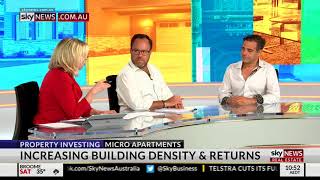
Well, the latest national rental affordability index out this week has again painted a bleak picture of the rental market in Australian cities. But imagine if property investors could help alleviate the housing affordability crisis and also make greater returns on their properties. Well, we're about to meet a property investor and real estate advisor who believes that micro apartments are the solution. So small is the new big. Co founder Ian, you got a. Joins us now to tell us more and this is just fascinating. Firstly, I guess just paint a picture for us about just how bad the housing affordability crisis is and who it affects because sometimes, obviously it's dominated headlines this year, but sometimes we forget just how serious it is.
Yeah, it's huge in Australia. We have, we probably have top 6 out of 20 cities of the most unaffordable in the world every year. And the reason that it happens is that we build the largest houses in the world at 246 square metres. We have two and a half people per household. We have 12 million empty bedrooms tonight. And if I took my Australian builders to Hong Kong and I built an Australian house over there, I could fit 22.6 Hong Kong houses in an Australian house. And it's really crazy. We've got an affordability issue because we build too big.
Okay.
I know that you're, you know, I'm interested why you're so passionate about it and I know you travel the country. I think you speak to like 100,000 people in the last eight years. Why is this so important to you?
I previously was a developer that was just trying to make as much money as I possibly could and I woke up one day pretty hollow and money in the bank and I thought it was going to make me happy and money in the bank didn't make me happy. So I went looking and searching for something that was actually going to fulfill something on a daily basis. And I started to research and I found that we had this. The biggest growing demographic of homelessness in the country right now is a 55 plus year old woman. And this is what we call the white collared homelessness. And these are women that were told at the age of 20, marry a man with a good job and a man's your plan. They raised kids for 20 or 30 years. They get to the end when the kids go to university, they look across at the husband and they go, not for me anymore. So they get a really crappy financial settlement and they go out and they don't change their standards of living rightfully. So, so they still do their hair, they still have nice clothing. And the easiest thing to give up is actually the income that they require to rent a property and they start living and sleeping in their cars. And I can't go to bed every night knowing that someone is in that position.
And so I'm driven to make sure that those people in the community that are not low socioeconomic, they're actually people that deserve a bed every night have that.
So it's not just sort of families that are in need of more affordable rental or housing opportunities, it's what more like likely to be singles or couples.
It's demographics everywhere. So families obviously are having an issue and we don't cater for families in the style of accommodation we do. But we have the 25 to 35 year olds that have got their first job and they just want to save some money to buy their first home. We have the 30 to 40 year old professionals working their way up the ranks through the legal firm or the accounting or the doctor. And then we've got the 55 year olds. We also have the 70 year old plus. And you know, there's huge areas of Australia where 50 to 75% of 70 year olds are living on less than $399. A the cheapest rent they can get is $300. So the end of the day, the end of their week is heat or eat. That's their choices. Do they pay for utilities? Do they pay for food? It's a shocking state of the nation right now.
You know you used the term boarding house and sometimes there's a negative connotation to that of people living in something. But I remember my dad as a young lad moving out of his family home and living with other men, working life in a boarding home. So what's the definition these days of a boarding home? What's it, what's it like?
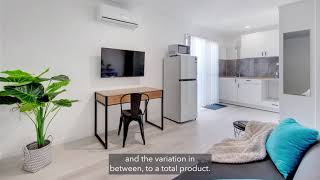
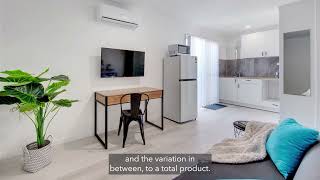
So when we talk about boarding houses, rooming houses, communal residences or micro apartments, they're essentially the same thing. We're taking a larger house and dividing it into smaller self contained areas. And what they were in 1970 is very different to what they are today. We have oversized hotel rooms with granite bench tops.
I'm just looking at some that you've built.
And you know, these things are very comfortable. What they cater for is they rent for somewhere between 1/2 to 2/3 tops of the niche rental availability in an area. So affordability by definition is spending no more than 30% of your gross wage on mortgage or rent. And in Australia, like if you took metropolitan Melbourne for example, 97% of metropolitan Melbourne is actually living under housing stress under definition. So affordability is not low socioeconomic. If I wanted to go to Double Bay or Paddington in Brisbane or New Farm or, or high end areas, if I can provide something at 30% of their wage, then I'm actually providing something that's affordable. So somewhere between 450 to 500 in higher end areas, 150 to 180 in lower end areas.
And how big are they and what do they have in them? Each micro apartment within the communal, they.
Essentially will be somewhere. The perfect size for a micro apartment is somewhere between 22 to 35 square metres. So a 22 square metre will have a single person in it and 35 will have a couple in it. In that room will have generally their own en suite. They'll have a kitchenette that they can cook and wash their dishes in. They will have a wall bed. In our ones we normally have a wall bed that folds up into the.
Wall, the Laverne and Shirley bed and.
It becomes a sofa or a desk during the day and at night time they just fold it down. So that gives you really great use of space. We have generally utilities are included in all our costs, so this is the actual bonus as well. So when someone comes to rent one of our properties, we end up in the position where we're creating something affordable for someone to rent and their utilities are also included so their cost of living actually lowers.
Do you convert existing homes into boarding houses as well and do you advise.
People to do that? Yeah, absolutely. I mean, this is what I teach people to do. I've got a goal. Our big audacious goal is to produce 1 million self contained accommodation units in the next 10 years. And that means that I'm going to have to show people how to do this. And the reason I want to do that is to oversupply the market to retrofit existing properties. You can do it and there's policies all over the country. Some properties may cater for a little bit more cost because you might have to upgrade for disabled access, universal access, so wider doorways and ramps. Some properties you can do for as little as $10,000.
And does it affect things like fire safety and access because there is more people in the dwelling, correct?
Yeah, it's exactly the same as a normal dwelling as long as I don't go over 299 square metres and over 12 people. So the building construction is exactly the same. I'll just have some extra components into the property which will be link smoke detectors. There'll be emergency light. They'll be, you know, evacuation handles and signs on doorways. It's not a huge amount of work.
I guess. Obviously lending is an issue for investors right now. Are the banks willing to lend for creating these kinds of properties, building them from scratch or also retrofitting and converting an established property?
So that's the only sticking point we have so far. They will lend at 60 to 70%. We can get 75% lend depending on situation. What we're working with the banks at the moment is to actually have a straight 80% loan to value ratio with a higher percentage rate. So it's actually a mixture between a residential loan and a commercial loan. And what that will do is actually give us the opportunity to get in and do more with the property. The lenders have a risk component to say that we've got no one to sell this market to and there are so many people there and they're selling for way above a recent property which was actually brand new purpose built rooming house went to market. The house next door sold for about $787.90 and someone bought the rooming house for $930,000. Because the returns on a ridiculously great.
Yeah, I think that that's where you're hitting a really, you know, you're hitting the point, aren't you? Because. Or hitting the nail with a hammer, I should say. The point is that you are dealing with people who want to make money from property. You as yourself said you started like this and then almost got a beautiful social conscience about the side of doing it. But you can still make a lot of money doing this. So how are you, you know, that's the message that you're sending to investors.
Absolutely. I mean, I call myself a socialist capitalist, which is like mixing a cat and a dog together. So this style of property has a great return because if I take an existing house or build a new house and break it down into individual components, people are willing to pay more for a smaller part because they only have to look after that part. They have the communal areas cleaned for them. And ultimately.
The outcome of all of this is that investors do really well out of it in the short term. You talk about granny flats. 10 years ago no one was doing granny flats. Everyone's doing granny flats. And it's the same with the lending and it's the same with the type of investors. We have a catchphrase now business, it says it needs to make sense before it makes dollars. So it has to actually affect the community in a positive way. And then it has to make money because I can sit at home and go broke. I don't have to do property deals to do that. And so we really love what we're doing. We really love inspiring people to say, well actually you're benefiting people to be able to afford to rent. They can save money. The investors make really great returns. We're talking about Double digit returns, 10, 12, 14, 16% returns on standard investment properties. And at the same time we're actually helping the community in a positive way because the pressure on social housing is released.
How do you though ensure that investors won't just continue upping the rent and then you lose. The whole point of helping lead the.
Housing supply and demand is the thing that comes in out. Right now in Sydney, for example, you could rent a micro apartment out for 450 plus in good areas. So that's $450 a week. However, the nearest closest rent is probably about $650 to $700 for those areas. So the thing is it's a supply and demand. So when we produce 1 million rooms over the next 10 years, what's going to happen is it's actually going to stunt the supply, it's going to stunt the rent and then stagnate the capital prices. So ultimately, you know, in 10 years time the rents are going to be affordable. Now remember, 80% of some of the areas in Australia are singles and couples looking for accommodation. And we're supplying four bedroom houses. So you know, if I gave you some figures at Metropolitan Melbourne, you can rent a four bedroom house for $420. A two bedroom house will rent for $415. There's no difference. People don't need the bigger houses. That's the problem right now.
And you're on the board of the Future Housing Taskforce, aren't you? So I mean, can governments help encourage housing?
Absolutely. I'm the biggest believer that governments should never supply $1 towards housing. What they should be doing is creating policy. And so I mandate myself to run myself around the country, talk to ministers at all different levels and there's some great existing and so government should be creating policy and get out of the way. And the investors are standing on the sideline, ready to go. Like I've got many, many clients that we've taught how to do this that are doing this day in and day out.
Beautiful. I love the message that you're sending. It's really nice.
Thank you so much for coming to chat to us today. Thank you. Ian Yougarte there from small is the.
New cents and dollars.
That's it, very good. All right, we're now going to get a preview of another auction that we've got coming up very soon for you. This is a unit in Adelaide, actually I should say it is the most clicked unit going to auction in South Australia. On realestate.com this week, it's unit one, number two Dolman street in Goodwood. And the agents and auctioneer David Cox from Harris Real Estate joins us now. David, thank you so much for this. So tell us, why is it the most popular?
I think it falls in a really good little price bracket. We're quoting 500. So it's probably that 500 to 550 price bracket which is very affordable. The position is really good. It's just off King William Road which is a really, really good, fantastic strip. Cafes and restaurants, walking distance to that. It's just one of a pair separated by a lock up garage. There's no party walls and it has got a really good yard with it and it's beautifully presented. So it's got everything really in a very affordable price bracket.
Now what sort of interest are you having in this property? It's a family home. Is it? Families that are looking.
Not really family, it's two bedrooms. So you're getting single people. Single single people. You're getting retirees, young couples and yeah, usually actually single ladies like this one because it's nice and secure and safe.
I just wanted to ask unit two, I think the one next door basically sold for 581,000 in 2015 a couple of years back. So yeah, this one's just slightly priced that guide a bit below that.
They did a really big Renault job on that. They actually converted the garage into a room. They just really spent a lot of money on that. So we're about right at 5 to 5:50. That's 582 years ago. So we're about right. We're about right, yeah.
Fantastic. Just I guess in terms of Goodwood as well, you mentioned there, that fabulous strip, King William Road. Just tell us a little bit about where it is and the sort of size of the suburb because it seems quite, quite a small suburb.
Goodwood runs between King William Road right down to Goodwood Road. In fact over Goodwood Road on the other side of King William Road there's Hyde park. That's where I live. Thank goodness, that's a good spot. But that King William Road is probably one of the most vibrant little strips, very fashionable on this side of the town. You know, this right side of the city, just out of the city. We're about to three K's from the gpo.
Beautiful. And you've got a nice weather there. Aren't affected like poor Victoria. So you're getting a good turnout already. We're about half an hour away.
I don't know. There's a few people peering. We're in size. A few people peering through the windows and trying to barge in. So we should have a pretty good roll up in a minute. I'll let you know in about half an hour.
The weather's looking. Weather's looking a little bit dicey.
Okay.
So we might have to scramble inside.
Okay, good luck with that. We'll let you go chat to them. Thank you so much for that, David. We'll chat to you soon.
Thank you. Thank you very much.
Ok, we're going to take a quick break. After that we'll be back to Brisbane. Mount Gravan, in fact, for our next live auction.
More from Ian



Check out INVIDA's latest project ...an adaptable home with universal access. (30 seconds)

Check out INVIDA's latest project ...an adaptable home with universal access. (60 seconds)

Check out INVIDA's latest project ...an adaptable home with universal access. (120 seconds)