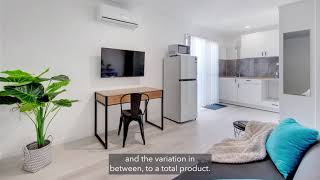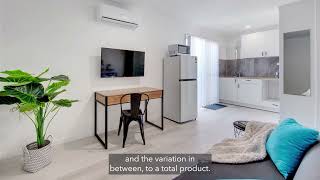
Ian Ugarte explains how staging a home for sale works and why it matters. Staging typically increases sale price by 10-15% and reduces discounting. Key moves: less is more, remove personal photos, clean surfaces, and don't overcrowd spaces.
Chapters
Good afternoon. How are we all? Thought I might just do something on staging. So currently have had meetings for the last few days in Tasmania looking at doing some changes around policy and it's a very exciting time for us because those changes are going to mean a lot of difference to accommodation all the way through the country. Because the start start in one place just here in Tasmania means that we now have a pin up policy that we can take around the country to say that the Tasmanian did it, Tasmanians did it and the outcome's been a positive one all the way around. So.
Staging, should you be staging a property? So staging a property is where you take very n furniture, very nice additions to the house.
Put some extra paintings, you might do some a little bit of painting to get it right and then put it to the market for sale. And staging has been shown over many years to increase the price of your property by 10 to 15% when you're selling it. It also.
Reduces the amount of discounting. And so when I say when people put a property on the market they always put it on at a price higher than that what they're really willing to accept. And when that, when that acceptance happens it's a lowering in the price. So that's called discounting. Where might be listed for 400 but they accept 360. So there's been a discount in that of 10% because they've taken 40 grand less than the 400. So.
That'S one thing with staging, it will discount less. It will generally in an auction scenario sell for more. And you don't really know that because you don't have anything to compare it against. You also have the ability to.
But you'll be paying for that obviously. So staging can happen in two different ways. You can stage a property yourself which will mean going out and buying furniture and buying paintings and buying knickknacks and buying the fruit bowl and all the things that you will would expect to increase the price of to make the property look nice. Or you just go out and hire it for a period of time. When you're hiring furniture for staging or hiring the staging person or stylist to come in and do your property, you usually pay for six weeks in advance, which is a normal cycle of selling. When you're trying to sell a property and then if you haven't sold that property yet and you maintain it and try to and pay, you end up paying weekly. When you pay weekly ends up being a lot more in cost. So you're better off to.
Do it in A number of different ways. The first way is to do the six weeks, and if it ends up in a position where you haven't sold it yet, then you can tell them to come and pick it up. And a little trick of the trade is when they do come to pick it up, they give you a date. You simply say to them, sorry, I'm actually not going to be there on that day. We're going away on holidays. And.
Can you come after that? And they're usually pretty good. And they come up, come a couple of weeks later, so you can try and get a couple of other extra weeks out of it doesn't always work, but it's a little trick of the trade that we actually only stumbled across simply because we were on holidays when they were coming to pick it up and we ended up in a better position.
So that's one way. The other way is that you go out and buy the stuff yourself and end up. And then by the time you've finished your campaign and sold it, so it can be as long as you want. And if you've sold it, if you sell it, then you end up paying. You end up losing money, obviously, because you're selling something secondhand. But it could be. Could end up cheaper than just doing a staging and styling. I think generally when we're talking about staging and styling, that you got to be careful if you're going to do it yourself, that you might think that you're great at styling, but at the same token, you may not be. So be very careful with that. Your tastes are not necessarily what the general market tastes was. And these people that style and stage for a living have an eye for detail, have an eye for color, and will put things together usually far better if your ego can get out of the way, usually far better than what you can do. So I would be, you know, very cautious about doing it yourself. The there we had staging furniture for a number of years that we just had in storage, and we'd update and change it as we went along. Nowadays we simply just keep everything and don't worry about selling it. The other question someone had was around and remember, placement of more is less when it comes to staging, because you want to be careful that you don't overcrowd things like bench spaces on kitchens. You don't. You want to be very sparse and just have one thing that they. That people look at and concentrate on. And you also want to make sure that you clear all the personal items out so no photos of yourself or your family because you're trying to get someone to imagine living in your property. So clear those out. Anything that's hanging on the fridge, get rid of any dusty corners, make sure that happens. Anything that's hanging, any windows, they've got any dirt on it, make sure you clean all of those up. And you might think that this is just a normal standard thing that I'm telling you and why wouldn't you do it? But there's plenty of people that go down that track and actually don't do these little things that make a big difference. Because even if you don't, even if you might just see a little speck of whatever on glass, the buyer that comes through may not notice that, but they will have and understand that there's a component of dirtiness that their unconscious mind picks up. Not their conscious mind, their unconscious mind.
I think ultimately regional people ask the question all the time. In regional. In regional you probably don't have to stage as hard as what you would in metropolitan, but I would consider doing something and that might be trying to buy some second hand furniture. Even if it's just getting a bed without the mattress on it and putting some cardboard boxes down to give it its base. I know it sounds stupid, but a bed in a room, a house empty, will look very sparse and won't actually attract anyone. Putting some furniture in that is half decent. I don't mean go down to Vinnies and buy the cheapest beds that you can get, but get something that's half decent and that again you can on sell down the track. You might lose a little bit of money in the unselling, but like you will probably most likely gain more money in the back end of actually sell price. So. So understand all of that ultimately, should you stage most of the time? Yes, I would suggest, yes, that you should do it if it's a. If you're selling a property that has, you know, no bones to it and you're expecting someone to trash the place and renovate it to bring it back from trash to treasure, then you know, you probably won't bother. But otherwise, in most cases you'll have an increase in price, you'll have a decrease in arguments from, you know, conditioning from buyers and you'll have a lower amount of discounting. But you do need to understand that you have to be good at it. So anyway, that's my view for the day. Cheers.
More from Ian




Check out INVIDA's latest project ...an adaptable home with universal access. (30 seconds)

Check out INVIDA's latest project ...an adaptable home with universal access. (60 seconds)

Check out INVIDA's latest project ...an adaptable home with universal access. (120 seconds)