Ali Tabrizi, who made Seaspiracy, talks with Wim Hof about how each generation loses its baseline for what nature should look like, a concept he calls generational amnesia. Hof explains that cold water exposure spikes noradrenaline by 530 percent and dopamine by 250 percent, acting like a natural antidepressant. Both argue that reconnecting with nature, not screens, is how we heal.
Chapters
There's a concept that I learned while making this film from some marine biologists and scientists, conservationists, was this concept of generational amnesia. So for you growing up in wherever you are in the world, you look around and the amount of trees and the amount of wildlife and the amount of how clear the ocean is, is what you base for the rest of your life. So as you get older, as you see the diminishment, you say, hey, there used to be all this wildlife. And, and look how much has been destroyed in my lifetime, lifetime. But when you look at your grandparents' generation, they had a different benchmark. And it— and so it goes on, and we forget what used to be here. And to, you know, when I made this film, before this, I'd never seen pods of dolphins swimming in the ocean for free, you know, that were free. I'd only seen dolphins in a tank, in a swimming pool, in SeaWorld. And When I saw them for the first time, you can't help but feel extremely happy. All your worries are gone. You're looking at some of those incredible species leaping out of the ocean. And I think when you have a diminished environment, a diminished landscape, a diminished ocean, it feeds back into something very primordial within us that is used to that interaction with the natural world. And all we're left with is these concrete block towers and oceans that are now turning brown and green and forests that don't have any sound anymore. You can't hear the songbirds. And I think it's all feeding back into the same concept of sickness and disease, and we're like a plant that's been put into really bad soil. It's just not possible. So yeah, we need to approach this from both the inner and the outer dimensions as well.
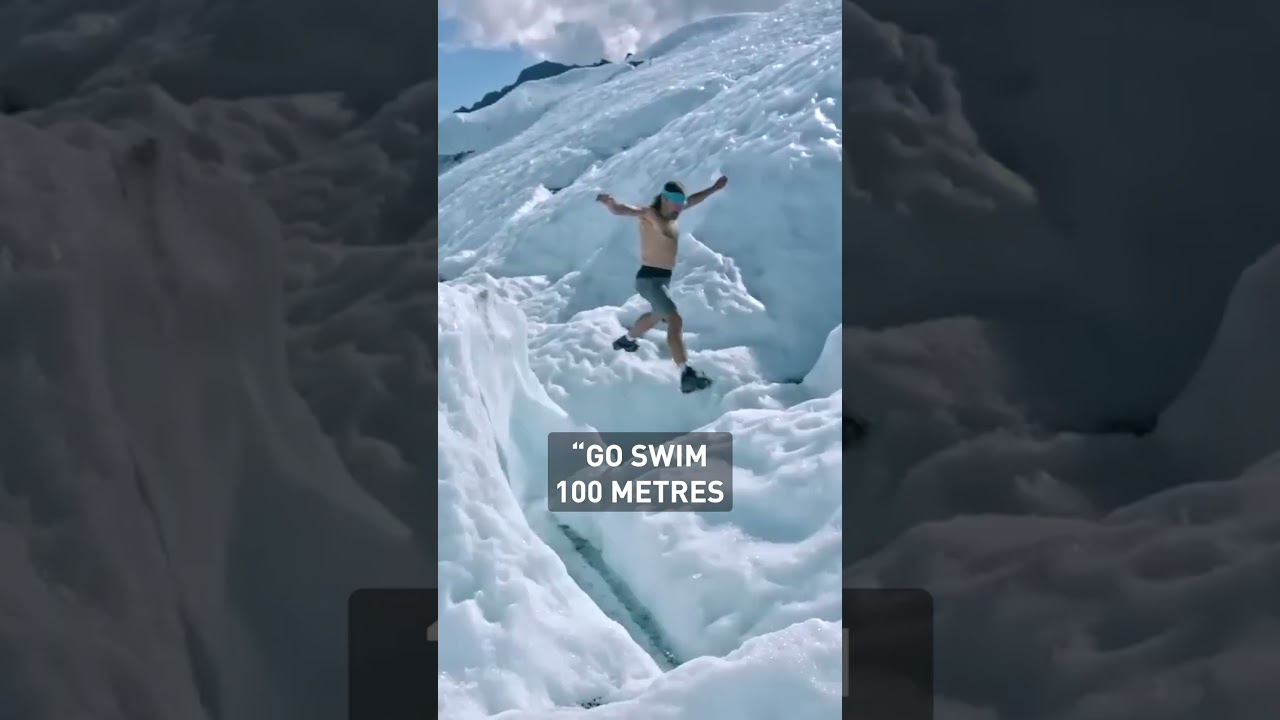
Exactly. And they saw where if you go into cold water, what nobody likes, because everybody likes comfort zone behavior, and then In depression, there is a deficit of noradrenaline and dopamine. If you go into cold water, that means sort of a sacrifice of yourself. You got to go out of your normal way of paradigm of thinking and all. Ooh, it's cold. Hey, you know what happens if you go into cold water? 530% of noradrenaline spikes. 250% of dopamine spikes. Nobody is telling about that. And there is a spiritual pandemic of depression going on all over the world. If everybody just takes a cold shower, I always say it funny, a cold shower a day keeps the doctor away. But there is so much more behind it. Only I give it by little baby steps until I'm fed up and I say, Get the fuck into the cold, man. If you wanna feel good, if you wanna feel the way nature meant you to be, then get into the cold water 'cause then you're gonna be humble and you're gonna feel so good. And this is what you say about looking at dolphins out there instead of a tank. Man, that tank is killing me. When I see it out and I'm so, wow, wow. That is antidepressant.
Left.
Guys, that's the way nature should be. So we need to get back into harmony with nature, but we got some hurdles to go. In 2 years, billions of people— I'm gonna— that's my goal, because I want to leave the bullshit. I want to leave the rhetorics and do it.
People are searching for some connection again. I remember when we were little, you loved to go to the animal zoos. And they're in cages also, but the feeling you got with seeing these animals and feeling like a little bit of touch in nature within this whole Western society where we're like, yeah, stuck away in our houses and outside of nature.
It's a great way.
Exactly. But there is a middle way somewhere. Well, they always say, hey, look at how cruel it is to have that orca or that dolphin in the tank. Hey, they're meant to be swimming 100 miles a day. Look at human beings, right? We're in our cute, we're in our bedrooms or in our offices or in our houses. We are like the dolphin in a tank for most of our lives. We're desensitized. We're constantly stimulated from this blue light from our laptops and our screens. Always got noise going on. Our phones are going off. We're not going out in nature anymore. We're not walking. We're not running. We're not in the ocean. So we should feel just as sorry for ourselves in some ways as the dolphins and the killer whales, the orcas, except for We do it to ourselves. The dolphins and the orcas don't put themselves there. We've done that to them. And I think it's an extension of wanting to put things in boxes, which humans are really good at doing.