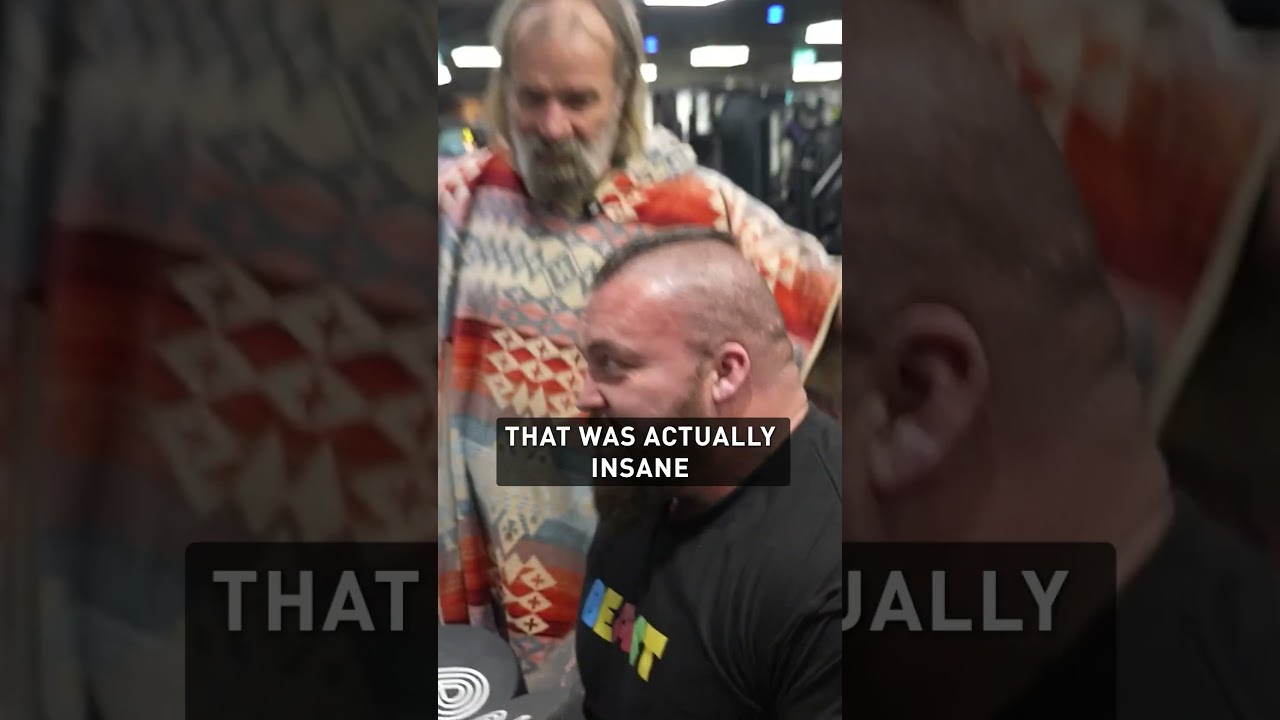
Joe Rogan Experience #712 - Wim Hof

In this episode, host Joe Rogan interviews Wim Hof, the "Iceman," exploring his lifelong pursuit of mastering cold exposure, breathwork, and the mind‑body connection. The conversation covers the physiological mechanisms behind ice baths versus cryotherapy, the role of controlled breathing in enhancing vascular function, pH balance, and immune response, and the scientific validation of Hof’s methods through studies at Radboud, Harvard, and other institutions. Hof shares personal anecdotes about his early fascination with cold, his diet (vegetarian, one‑meal‑a‑day), and extreme feats such as a 26‑mile desert run without water. They discuss the broader societal implications of his work, including its impact on athletes, the potential to treat depression, arthritis, and other autoimmune diseases, and the importance of reaching children with these ideas. The dialogue also touches on the viral spread of his message via media, the need for a paradigm shift toward natural health, and future collaborations with universities and researchers. Throughout, both speakers convey enthusiasm for the method’s potential while acknowledging the need for rigorous research.
Chapters
And boom, we're live. You're here.
Thanks.
A wolf t-shirt on nonetheless.
Yes, endurance, you know.
Is that what it is?
Yeah, something. I bought it this morning. I thought, you know, it's of the Lakota Indians in the Venice Beach.
Uh, Venice Beach, Lakota Indians, they're probably not legit. Probably Pakistan or something.
Oh yeah, yeah, probably. But, uh, the symbol, it symbolizes endurance, but not, you know Not physical endurance, though I did stuff, but more like believing.
You have a very fascinating life, my friend, and you have done some amazing things. I've been paying attention to you for the last couple months pretty intensely, and leading up to this podcast, I've been researching you a lot. And first of all, I want to know, how did all this get started? For people who don't know who you are, you've accomplished a ton of world records. You've endured things that most people think may be physically impossible. You've proven they're possible. You've shown that you can alter your immune system on demand. You can, you can regulate levels of stress hormones that people thought were unable to be controlled by the human mind, that were autonomous, and you're doing this all like on your own. I've never heard of anybody else doing this. First of all, how did you get started in this and what led you to this?
Yes, like many, probably, I was in a soul search and I visited many countries, traditions, languages, esoteric disciplines, and also like you, you know, karate and kung fu and yoga, but also the dervish, the Sufi, Buddhism. All kinds of traditions and disciplines, but it could not really fulfill me in the depth. A certain day, it was a Sunday, I was attracted to cold water. I don't know why, but because I was seeking already for years, you have a charge within you, you always keep on looking, searching. Seeking. And at that moment I felt the attraction, and I knew I'm going to go in, you know, ice water. And it only took me 30 seconds or 1 minute it took, but I felt this is it. This is able to connect me with the depth of my physiology the way nature has meant it to be. So it felt too good. I felt connected.
This is not something you were drawn to before?
Not really, no. Yeah, per accident. I was more conscious at that moment, and, uh, from there I began to do it every day. 17 years old I was then. That's about 38 years ago. And from there I began to do it on daily, uh you know, every day.
And this is in Holland?
This is in the Netherlands, and the Netherlands in the winter, it's cold water. Water transmits the temperature like 25 times more than the air. So, but I returned the other day, and the other day because I felt so good, I felt connected. And it's all about the connection within, which I was looking for, the depth, which I could not find in books. I read about hundreds of books on philosophy, on religion, on esoteric disciplines, all kinds of books, you know, searching, searching, searching. But the answer is not in the head. The answer is in the body and the brain together. And cold water triggered. This. And then from there on, the cold water, at a certain point, when you do it regularly, you become conscious your breathing pattern is gonna change because you gotta be more effective. You need more oxygen to withstand the impact of the cold. And that needs oxygen. It needs combustion in the cell. And feeling it, I was doing that and I changed my breathing pattern. And when I changed my breathing pattern is when the magic began. Then I began to see, you know, lights by manipulating the breathing differently.
See lights? Like how so?
Yeah, in the yoga they call it the chakras. In China they call it the qi, the chi, and so forth. And I found out that this was, very possible in a very short period of time.
And this is nothing someone showed you how to do. This is something you figured out on your own.
The cold is my only master. The cold is my only teacher.
And the breathing— when you say you altered your breathing patterns, like, what do you mean exactly?
Like, uh, when I went in, at a certain point I knew how to be, you know, very relaxed going in. And then let the cold impact go within, and then begin breathing deeper. And then a certain dance between the cold and your breath begins to start up, begins to charge your body. And after 25 breaths like that, very conscious in the cold, the cold is a force and it has its impact, And you go along with the cold and what it does on the physiology, and you use your breathing. Now I know what happens physiologically, but then those days it was all by feeling.
And after— What does happen physiologically?
You become fully charged. The carbon dioxide goes out, O2 begins to roam freely throughout the body and fills up every cell, And pH levels go up.
Now when you say you altered your breathing, what you're showing me here is just breathing in and breathing out. Like what is specifically different about that than normal breathing?
The way I used it was like after 25 breaths, I was so fully charged, I could stay like 5 to 7 minutes under the ice. Every time, very controlled. And that means that there is not only a whole lot of oxygen inside the body, but the pH levels go up. Now, later on, I began to understand by science, by thinking about it and deducting and all that. I saw that we are able to tap into the brainstem. The adrenaline. We showed lying in bed people producing more adrenaline. Now I know how to show to people just in a couple of days. That means every listener right now is able to do that. So we have proven this scientifically, and it showed that people lying in bed were able to produce more adrenaline than somebody in fear going for its, First, bungee jump.
Bungee jump. And when, but you're still, I'm still confused as to how you're doing anything differently other than deep breathing. You're taking a deep breathe in and deep breathe out and.
No, we retent from breathing after exhalation.
Retent?
We stop breathing after exhalation.
Once breathe in, like show me the method like.
If you go with me. All right. 30 times.
Okay.
Let go. Fully in. Once again, fully in. Letting go. Right on. Fully in, but letting go. Not fully out, just letting go. But fully in. Once again. And once again. Come on, don't hesitate, give it. It's about changing the chemistry right now in your body.
So I'm breathing in—
You become lightheaded, and at a certain point you're so fully charged and the pH levels go to a very high level, you're able to stay without air in the lung for minutes. Just keep on, the feeling is understanding. Go on, and deeply in, letting go. Deeply in, letting go. Deeply in, letting go. 10 times more. Deeply in, letting go. Deeply in, letting go. I'm gonna time it. Letting go. Deeply in, letting go. Give it fully. Take 'em in, letting go. Take 'em in, letting go. Take 'em in, Letting go. No hesitation. I do this with over him as well. And it feels wonderful. Take him in. Fully letting go. Okay, 5 times more. Deeply in. Letting go. Deeply in. Letting go. Deeply in. Letting go. 2 times more. Letting go and stop. Just stop. Witness. Without air in the lungs, you are able to stay much more than normally. Why? Because we changed your chemistry. Carbon dioxide went out, O2 went up. Filled up all the cells and the pH levels go up. Then we are able to tap into the central nervous system. And at the end, we got the brainstem. And that's the place of the pineal gland, hypothalamus, pituitary gland. And the pineal gland makes the secretion of adrenaline in dangerous situations. Normally, we do not get into it because of our shallow breathing. But this is the way to get into the most primitive part, the reptilian brain, without many difficulties and fend off bacteria, getting better into the endocrine systems. We'll talk about it later. You're past 1:10 in minutes, and you're still on. That shows that the capacity to fill yourself up with oxygen is a lot more more than we normally use. And as we do not use it, we are not making use of the full capacity of our physiology. Now we found out we got different layers and we never use it. And this is the way to learn to use it, to tap in and bang into the primitive brain, into the endocrine systems, immune systems, the way nature has meant it to be. Everybody is able to do it. 1:45, and this is only round 1. If we would do like 3 rounds, you would go to 3 minutes, 4 minutes without air, without training. It only shows the capacity to store up oxygen inside. We never use that. You're doing great, he's doing already 2:05, almost 2:10. Whenever you feel the urge to breathe, you don't need to force. It's only learning how to oxygenize the body and all the cells. You're going great, man. Nice one. Feels good, huh? Hey, yeah, yeah, yeah, that's okay. 2:30, yeah. When you feel the urge to breathe, you breathe in fully and keep it for 10, 15 seconds. Then that's one round. Fully in and keep it. And now you press your belly, the neck, and then the head. And now you are able to tap into the brainstem. And yeah, that's him. If we would do it again, you would, you know, suffer very lightheaded.
It was interesting. In the breathing, the breathing in part. So to explain to people at home, what I'm doing is I'm breathing in all the way as deeply as I can, but I'm not breathing out all the way. I'm just breathing out a little bit and then I'm breathing in more and I'm just breathing out a little bit and I'm breathing in more and breathing out a little bit.
Yes. If you breathe in completely, you get all the oxygen possible inside. If you just let it go, Then you get it to where the exchange of the gases happen. And this is the way best to oxygenize the body. So it's a different way to get into the chemistry of the body. And we have shown this.
Now, that's one of the fascinating things. If people are listening to this, go, this guy's fucking crazy.
Yeah, absolutely.
You're definitely crazy.
Crazy about life and my wife.
In a beautiful way. In a beautiful way.
I know, I know.
What you've done is you've allowed scientists to test you every step of the way, and you've proven that all this is true. When we're saying these things, I mean, this is, these are things that have been studied at universities. What was the university in Holland that—
Radboud University.
Radboud. And they injected you with an endotoxin?
Endotoxin, yes.
To prove that you can, you can auto-regulate your immune system.
Exactly, exactly. Normally it is a, it's a controlled experiment. And they did it with thousands of people already and nobody was able to control to the depth of the immune system because the endotoxin provokes a response in the immune system. You become feverish, you get headaches, all over agony, uncontrolled shivering, vomiting, things like that happen. But the people I trained, First I did it myself, then they said, yeah, but you are the Iceman, you are an exception on the rule, you confirm the rule because of this. No, I said, anybody can do this.
Why would they say that you confirm the rule? If they have a rule and one person can do something different, then the rule doesn't work. It's not a rule anymore.
It is, that's absolutely true between us, but in science it only works, it's only validated if it is a group who is doing it.
Right, but the— how many in the group are doing your method? That's the thing. When, when, when they test normal people on things, the, the amount of people that are doing what you're doing and trying these kind of experiments and going under ice and breathing the way you're breathing, it's almost none worldwide. I mean, I'm sure more people now are inspired to do it because of you, but so I don't understand how they could say that you confirm the rule because you don't adhere, you know, you don't— it doesn't apply to you.
Yeah, that's a saying, you know, the exception confirms the rule. That's a Dutch saying. So I told them, yes, I'm the Iceman. I got so much experience. I did so many challenges and records. But no, the thing, my mission is to show that everybody is able to tap into their physiology a lot deeper just in a couple of days. And it has been shown, 12 people in a comparative study, 12 people been instructed and 12 people non-instructed. The non-instructed people got to be sick, all of them, and the instructed people, all of them were not sick.
Now this endotoxin, what exactly is the endotoxin?
The endotoxin is a part of a bacteria and the immune system recognizes it as a negative intruder. So that's why it is a controlled experiment. And this is the way they inject it and they try to learn about the immune system, the endocrine systems by doing this controlled experiments on many, many people all over in the world.
Now, prior to doing this, what made you think that you could do this? Like what convinced you that you could actually regulate your immune system to react to a response that was injected into your body like that?
Now you're talking to, now we begin to talk. Like 25 years ago, I already stated and told everybody the autonomic nervous system and the immune systems related to the autonomic nervous system can be influenced. The autonomic nervous system will be no longer autonomic. And it is what I told. Many people mocked me because of it, and they told me negatively that I was crazy and all that.
But see, 25 years ago, you were in your 20s then.
Yeah, no, no, no. Yeah, 30s.
Okay. How old are you now?
56.
Okay.
Yeah, 56. But then I told it then, and now it's scientifically proven. Yeah, it's a— why? Because I inside, I know.
So you're this 31-year-old guy and you have this, this idea in your head that you can control your your immune system.
Yes.
What gave you this thought that you could do this?
You know, in the beginning, when I was 17 years old, as the story began, I went into the cold and it just felt good. I felt connection. After years of searching, then you have a certain kind of knowledge, you know, from the inside also, the gut feeling and intuition. And that's more than the, what we think.
And this is not a reaction to how your body felt when you got out of the water, like you're saying, hmm, I feel like I get less sick, I feel like I'm healthier. Oh yeah. It was that too.
Yes, yes.
But it was also you felt internally that you were controlling it, like you could feel it?
Yes, yes, oh yeah, you get a real sense. Listen, you are a fighter, for example. You got an opponent, but this time the opponent is yourself. And, uh, and you know it from the inside and you feel it from the inside and it makes you happy, it makes you strong and makes you healthy. And this is what we have lost from nature and now it's back.
So, so in a sense what you've done is you tapped into something extremely primal by dealing with one of the most primal elements of all, which is cold.
Yes.
So the cold, like in the Vice documentary, I thought it was really fascinating. You said cold is your God.
Yes, it is. Yeah. If I had a teacher, I've never had a teacher.
That's amazing.
And no guru or mentor or a sifu or anything like that. The cold, that's my teacher. That's my God.
I've been dodging the cold since I was a little kid. That's amazing. You just felt compelled to jump into that.
Yes, absolutely.
And what was— when you're saying this to people, when you're 31 years old and you're telling people, I can control my immune system, they must have been like, you're out of your fucking mind. Look at this guy, he's jumping in the freezing water and he says he can control his immune system. How did you convince people to the point that you got actual scientists to measure your blood, do legitimate scientific studies on you? —like, what was it, your accomplishments? Like, you went— for people who don't know, you did a bunch of really unbelievable tasks. You climbed Everest in your shorts. Did you have shoes on when you climbed Everest? Yes, I had to, with spikes.
Spikes, 'cause you're climbing ice. Otherwise it's too slippery. Right. And I run marathons. You had no shirt on? No shirt on, just in shorts. That's insane. It's a— I think going by clothes, It's insane because it's like you're not challenging nature. You can go up with a car as well. And then you go up Everest. Anything artificial you use in nature doesn't make you having the right connection with nature. And what I wanted to challenge in all the challenges I did, like marathons beyond the polar circle in midwinter in shorts, but also in the heat, of the desert without drinking, or hanging by one finger on a 1.5 kilometer, like a mile up in the air. What? In wintertime.
You hung on by one finger a mile up in the air?
Yes, yes. Where was this? At that altar in Holland between two hot air balloons, and then climbing between them, and then there was a, you know, a thing, a device.
You just hooked it on with one finger? Yes. How long did you hang there for?
25 seconds. Jesus Christ. 25 seconds. With one finger? And in wintertime. Oh my God. In wintertime. You know, you lose control when the blood becomes colder in the hands. Yeah. You lose control. So that was the challenge. It's mind over matter. And I wanted to show that in all the challenges, the adaptive power of ours is enormous, but As we are not stimulating or using that anymore, you get a neglected body and become sick or half in its potency. It's all very logic.
So the powers that our body has, the untapped powers that we probably had for millennia, dealing with the cold, dealing with the heat, dealing with adversity, dealing with struggle, all those powers are not being tapped into. So because of that, the body just atrophies and we don't, it doesn't know what to do with itself. Exactly. You think that that may be also a cause of depression?
Yes, I'm right now into new research. As soon as I want to do research, they did research on mindfulness, for example, mindfulness related to depression. And I think, not only me, also psychiatrists, they saw the blood values, the markers in the blood within our study, and most probably our This method, this what we just did, brings the people very much faster into controlling their endocrine system. The endocrine system is about hormonal balances in the body. And because we are not able to tap into that, we are victimized because of too much stress or this or the daily life or whatever, and we get depressed and we are not able to get out of it. Now, this method, Wim Hof, because of tapping into the endocrine systems, makes you feel you are able to rebalance the hormonal disturbance in the body, creating eventually in length the depression. So I want research on this because this is— my wife died in '95 because of suicide. I have 4 children with her. I was powerless then. My heart was broken and had no money, no nothing. And then this struggle and this fight began. I'm going to prove this to the world and create a shortcut for anybody who is depressed or, you know, sick and everything. And now we got the key. We got the key to the endocrine systems and the immune system. And anybody can do this. And because it is done by science, it's beyond speculation. We make it a choice. And that's why I'm on a mission. And this mission brings me here to Joe Rogan, who's a good guy. He's a fighter himself and he loves life and he brings it out and he tries people out. I can see, I can tell. And I— Try people out? Yeah, yeah. Try people who Who are you? What are you doing? And things like that. It's a, I like it. I love it. And we need to do this because we gotta change this world where there is no control. I mean, we can build, we can fly to the moon. We can make, this is more intelligence than the whole Apollo 13 project. Yes? We can, this is the fruit of our mind. And the power of our mind is enormous, but now it is time to use the same power to learn to control our happiness, strength, and health. And we have shown this now.
So you feel like what happened with your wife, that your wife killed herself, was due to depression, and you feel like that type of depression, the depression that a lot of people experience is because their, their mind is not stimulated the way it was intended to by nature. Is that a fair way of describing your thoughts on this? Absolutely. And that we're left with residual effect of civilization in a way, where your mind is overwhelmed with things that really are not natural, like living in a cubicle, the stress of office life, traffic, things that aren't natural.
Exactly. We are living toward the system, but it should be going around. The system once again should serve our happiness, strength, and health. And now we have proof that we are able to tap into the endocrine systems and the immune system far deeper. So we gotta try this out, and it is natural. Anybody can do this in just a couple of days. Right now we are in the third year of the university books here in America. Testing the Iceman. It's not about me anymore, it's about the comparative study. And then it tells the endocrine systems and the immune systems. And it only takes one guy, is endurance. You know, belief that we are able to tap in deeper into our physiology, thus enabling enabling the person to direct his hormonal secretions. Strength, for example, lying in bed, as we told already, producing lying in bed, there's no rhinoceros coming to that guy. No, he's at ease. And he controls completely the stress hormone. And the controlled stress hormone works like medicine. A non-controlled stress hormone, works in the end acidic, and that becomes no good. And that's— we are victimized because we have no control in daily life anymore, but the stress is there.
So the stress is there, but there's no physical exertion. Yes. And that's why they've shown tests that in many cases, um, exercise can be just as good as antidepressants, just as good as medication for people who are depressed, which totally makes sense if what you're saying is right. It totally makes sense that your body like has a desire to exert itself and it has a built-in system that's designed to deal with certain natural stresses, running from predators, dealing with the cold and dealing with the weather and climate and, and nature and the adversities of the environment as far as like challenging yourself, climbing hills and exerting yourself. Then we don't do that that much. And because of that, That's what you think leads to this dis-ease of the brain. Yes.
And for many people who are depressed, they are quite unable to get into their body and begin to run and things like that. It's the brain. And we are going to solve this by very easy techniques. Instead of them having to run because their environment is really pressing upon them, they feel completely immobilized. But if you are able to tap into the brain and let him make, feel the change, that he is changing the chemistry of the brain, then he becomes a different person much faster. So, but I'm subject to science and I want more research on this. And soon we have the outcomes. And then we will tackle this problem with depression because it's related to the endocrine systems and having no connection with it. Normally the hypothalamus in our primitive brain, the brainstem, is not under our control. But these breathing techniques deriving from being in the cold so much, they are very effective not only in the cold, which is stress, but also in the heat, also for a predator, also on Mount Everest where there is a lack of oxygen outside, and also for daily stress.
What was the first one of these experiments that you tried to do to try to show the effectiveness of your methods?
I was at the physiological department in the same university, different department, —and that's the cold physiological department. And I stood there for 80 minutes in a tank full of ice. For 80 minutes. Fully connected to wires, being— blood was taken.
So you were just covered in ice? Covered in ice. I've seen the pictures of it, it looks insane.
Except for this arm, because the blood was taken away from it. And you know what they saw? And I was talking to these people, to these professors who were, while everything was, because I was very much in control. And they saw the core temperature even rising while I was inside.
The core temperature was rising while you're covered in ice for 80 minutes?
Yes, yes. And you see how much power we have, how much, you know how much power cold can be.. But how much more power we are able to learn to control. And that the blood taken from me while I was in the tank, I got a few remarkable results. One is the blood taken, it was exposed to endotoxin afterwards, but in a laboratory without me, ex vivo it's called. And they saw Normally it has a very violent reaction on the immune cells in the glass of the laboratory. And this time, 0%, 100% suppression.
And that's my blood. 100%. 100%. So the endotoxin just gets squashed the moment it gets in there.
And that's the bacteria. Yeah. And that's the immune system. And that's the way we are actually built to be able to. And that was one really. Another remarkable thing, before I was going into the tank, they took blood from me as well. And this blood was looked upon into it by a microscope. And they saw 300% more metabolic activity in the cell without moving. That's the mind. My mind was already into, I go inside that one, in that box, I need to do 80 minutes, I program myself up to cell level what I'm about to do. I need more energy, because energy is needed to withstand the impact of the cold. So I control my body by my mind, and that's all of us. And this mind then makes the connection with the hypothalamus, which is the brainstem, and that is able to control the hormonal system, the immune systems, the vascular system, all the systems.
Now when you say that your metabolic rate rose 300%, is that a normal thing because of the cold? Because that's one thing that they tell you, that it's a great way to lose calories, just dress very lightly when it's cold outside. Yes. And it forces your body to work hard to stay warm. So it was an effect of that?
Yeah, it was, it was, it was. And that's also a thing about the brown fat adipose. We got all these cells, but as we never exposed to cold anymore, it doesn't— it's not stimulated. It's like a muscle you not train, it becomes weaker. So we got also these cells which needs stimulation. I did experiments with the brown fat adipose in the nuclear department of nuclear medical department in Maastricht, a different university. And it showed that I had the same brown fat adipose levels as a young man, like 20 years, 15 years. They still have it. You get older and you wear clothes and you lose it. It's logical. But I always expose myself to cold on a regular basis. So they had me exposed as well to, in an experiment like that. And they saw that I, with the same level of, or amount of adipose, brown fat adipose cells, I could produce 5 times more energy. That's what they saw. So compared to these guys, because of the breathing and influencing into, on cell level, I was able to do 5 times more. And this could be a solution for people who have overweight because when the fat is consumed, which is very in the moment when you need it, then it gets depleted. Then the rest of the white fat in the body is being withdrawn very systematically, very effectively, direct, and like 5 times more effective. It's maybe a solution for many people living in the West obese problems and heart problems, vascular problems because of it, etc.
There's a type of therapy that's becoming really popular here in America called cryotherapy. A lot of athletes use it, and I started using it a few years ago. A lot of people from jiu-jitsu were telling me about this thing. You go, you stay in this— it's a box, it's 250 degrees below zero, and you do 3 minutes in it. Yeah. I do it 4 days a week now. It's amazing. It's nice. It's amazing. I get out of there, I feel so great, and I I had my friend, Dr. Rhonda Patrick, who's a scientist, and she explained all the, what's happening inside of it, and then I took her to the chamber and had her stand in the cryochamber, and she said it was incredible when she got out of it. She was a scientist, she understands the body very well, so she knew that it was raising her levels of norepinephrine and her whole body was being stimulated by this reaction to this extreme 250-degree below zero cold.
Yes, I did it too.
And, uh, uh, yeah, have you done the one where you get inside of it fully, or the one that's just from the neck?
Uh, fully and, uh, and, uh, up till the neck a couple of times. And, uh, yeah, I could stay quite long in there.
You could stay in there forever. How long could you go in there for?
I don't know, maybe 10 minutes or something. And but still feeling okay? Yeah, 3 minutes.
I take a test in 30 seconds and I do it more than anybody in the whole place.
I can't believe you could do 10 minutes. Yeah, you know, it's a thing with nature.
Just keep going and keep going and then you just push your boundaries. That's it.
But it is not necessary to reestablish the right natural connection between your brain and your endocrine systems and immune systems. Just a little bit of cold is enough to trigger the vascular system. The right way, enabling it to work better with your nervous system. And then the breathing and focus your mind. Like, the mind was able, without moving, to produce 300% more metabolic activity in the cell. That is mind. The mind is so much able to do so much more. And this is the quintessence. This is the essence of what I come to tell you. We gotta change our belief. We gotta change the way we think. It's like a paradigm shift. And why? Because we have proven with thousands and thousands of results beyond speculation that we are able, if we use our mind once again, not in dependency for doctors and this and that, no,— you are able to repair yourself whenever you feel not healthy or depressed or with a loss of energy, strength, happiness, and health, then you should go in and breathe better. And then you will reestablish the connection with the endocrine systems, immune systems, and the brain together. And then repair whatever is producing an obstacle for you to function in the world. Maybe you are able to function in the world, but you don't feel good. You don't feel happy and you don't feel strong.
So say if a person had a cold, a slight cold, what would you recommend they do?
I would say breathing once.
Breathing your method. Yes. Breathe in fully, as hard and deep as you can, and then just exhale a little bit. And then breathe in as far as your lungs can stretch.
And then how many times? Like 20 times. 20 times. Then take them in and then go to the place, to the spot where you feel the cold is happening. Could be in the throat, could be here, could be, you know, somewhere in this part.
So go in your mind to that spot.
You know what happens when I'm in the ice for an hour, for example? Most of the times I begin to feel it the cold at the part of the kidneys, which is mostly on the surface, and the cold gets there, the ice. Then I ain't got no, there is no way I'm able to move because it's like 600, 700 kilos of ice around me. And I'm not able even to breathe very much because it's pressurizing. What I learned is to think it away within a minute. Within a minute, I make the difference from the brain to the kidneys and change the temperature like 10 degrees. This is a measurable thing?
You've changed a measurable 10 degrees?
Dr. Ken Kammler, who did experiments with me, I did records here in New York and Florida, I don't know, a couple of places. And while I was in the show, for example, Regis and Kelly Show, you know the guys? Right. And he saw my core temperature was dropping, was dropped to 32 degrees Celsius, Celsius, I don't know, but it's far lower. Very low. People are not normally not able to raise the temperatures anymore. They just go into unconsciousness and coma and things like that. But I rose the temperature back. And he said he never had seen a person do that because physiologically stated in the science books, it's not possible. And I say, so much more is possible than not only connecting with your core temperature, but also with the endocrine system.
Now, when you say you were raising your temperature, where— what was the environment that you were raising your temperature in? Where you were in the water while this was happening?
Yes, in the tank.
So you're in the tank freezing cold and you raise your temperature from there?
Yes. That's amazing. No, what we are able to do, that's amazing. That's amazing. Life is amazing. Life's pretty amazing. Living is a wonder and we have to re-experience that. And that's the paradigm shift. We are able to learn to control. It needs some steady attention, like a baby needs attention to grow up. We need to pay attention to ourselves again, trust ourselves again, believe. Believing is neurotransmitters in the right way. And when it connects with the body again, and we got the techniques, and it has been shown with thousands of results that we are able to control the endocrine systems or Better said, our mood becoming happy, yes or no? Serotonin, melatonin, dimethyltryptamine, and all the other hormones. We are able to tap into that system. We have shown that. Another one, the strength, which is adrenaline, epinephrine, norepinephrine, noradrenaline, cortisol, and all that. We have shown more than somebody lying in bed than somebody going into a bungee jump. That's strength. And then health. Health is the immune systems. Learning to tap into the immune systems and like cryotherapy, as you were talking, mentioning, it goes up to the bone marrow. It activates these blood markers over there. And people with arthritis then are able to move better again after a session like that. But we, with these breathing techniques, we get into the bone marrow as well. And there we have the T cells, the T cells and B cells, and they are a part of the specific immune system. And the specific immune system normally only begins to work after 2 weeks. And then the body knows what kind of molecules it needs to produce to kill the intruder cell. And it gets on the membrane, the skin of the cell, and it kills it. Instead of inflamming the whole body, it goes very specifically, but it takes 2 weeks. We do it in 1/4 of an hour with this breathing. And only with this breathing, you are able to control the pH level. And the pH level, right, as we are mammals, If you look in nature, you see all these mammals. If you take blood from them, they all have the right pH degree, very alkaline. But only because we wear clothes and we live in a comfort zone, we do not stimulate, thus oxygen doesn't get as deep as it could. You have shown this, 2.5 minutes without air in the lungs. That means the capacity to store up oxygen is far bigger than you normally use.
That's still pretty minor though, right? Like what, you held your breath for 7 minutes?
Is that what you did? Yes, and under the ice. But that, once again, that's, what did you do? You have been fighting people I never could win off. Because I was not trained to do that. You have trained to do that. I trained to do this. That's the range of possibilities, but it's very unimportant. We don't need to know heroes.
We need to become healthy, strong, and happy. Does it matter whether you breathe in through your nose or in through your mouth? Because there's a big thing in yoga and they teach you that in a lot of other— in jiu-jitsu, they try to teach you to breathe in through your nose.
I wrote books on the subject. Before. Now I say, doesn't matter what kind of hole you use, just get it in. That's it. You know, these girls and these women, they ask you to— I just tell them that to make a joke. But the serious thing is we got it scientifically endorsed. No speculation. Just do it. It is easy, accessible, very effective.
Because the idea is when you breathe in through your mouth, it induces panic breathing. That's what they say in jiu-jitsu, that to keep yourself calm, you're supposed to, you breathe in through your nose and out through your mouth, in through your nose and out through your mouth. And in yoga, they try to teach you to do the entire class through your nose.
Yeah, yeah, I know. You don't think it matters? Yeah, no, it doesn't matter at all. I'm gonna tell them that tomorrow. Yeah, just do it. In this technique, which has been shown as the first group in the world to be able to tap into the autonomic nervous system. Related to the immune system and endocrine system, it shows the depth. And this depth normally is a result maybe of yogis who are really going into samadhis and dharanas and into the Kundalini up to the Sahasrara and all that, the kumbhaka yogis. And I know all this, all the terminology. I've been doing Sanskrit and Hindi before. But I thought it to be far too complicated. They made it into a myth. We Westerners, we have no time. We want to understand things the way we are living. And I thought to simplify it, and science backed it up.
Now when you're talking about your breathing, you were saying that when you were young, that when you discovered this type of breathing, that you could see lights. Yes. You know, that's one of the core components of Kundalini yoga. Yeah, chakras. Yeah, that they experience this intense state due to this specific type of breathing.
I haven't practiced it. This is the nervous system. I could make you do this in 15 minutes.
What do you— what is that? Is it just your body's production? That's the nervous system.
Nervous system. The nervous system is about electrical potential. So it's just firing? That's it. And you are just manipulating the nervous system, pressurizing it, and then electricity comes out bigger.
So what you were saying before about someone who has a cold, so you would tell them to utilize your breathing method and concentrate on the area in which they're sick. Like if they have a lung infection, concentrate on clearing the lungs.
Any infection, any disease, any, anything they got, we have the ability to connect with our body. You just have to absolutely believe it and you have to absolutely be focused on it. If you, if you want your phone, then if I want my phone, then I need to grab this one, not this one, not this one, and not that. I have to be busy with what I'm doing for real. You have to grab the actual phone. I gotta go to the place where something Everything is happening. So if there is a disturbance, you go to the disturbance until you release it. You gotta learn to connect once again. That's the change of the belief. The change of the belief is nothing more than the mind, which is neurotransmitters, electrical potentials, and use it once again instead of being alienated because of comfort behavior. You learn to use these neural microbiological patterns again, which are existent, but they are down-exercised, unexercised. And that's why we don't trust them, because they are not so strong. Learn that these are very capable of you making connection with the endocrine systems, immune systems, far deeper, thus being able to control Happiness, health, and strength. And we are going to prove this more and more because I'm dealing with the universities and I want to— I want cold measurements, figures, statistics, no speculation.
Well, that's what separates you from a lot of people who've made these crazy claims. You've actually done physical feats that show extraordinary abilities. What you did in Mount Everest, no one's ever done before, and I've never even heard of anyone attempting to do something like that. You ran a marathon, a half marathon in Finland Finland. Did you run it barefoot? Yes, above. I mean, you were, you were— how cold was it out? It was like -30 outside.
Yeah, yeah, yeah. You have to reach about those temperatures. You were shirtless, right?
Yeah, yeah, just shorts. Shirt, shorts, barefoot. You run a half mile at -30.
So that's what, is that 13 miles? 13 miles. Jesus.
Yeah, it was something. It was something, man. That's undeniable. That's undeniable. So when, when people— is that why you started doing these things? So that people would pay attention to what you're doing? Because when, when you hear someone's doing that, when you hear someone's climbing Mount Everest in their shorts, you go, what? Okay, what is he doing? How's he doing that? And then we find out that you're incredibly healthy and you're vibrant and you're doing all these things and you're allowing yourself to be tested and you're showing this ability to regulate your immune system. This is all incredibly exciting stuff. And then the scientists come in because then they're like, okay, what is going on here? And we have to change our beliefs about what is possible with the human mind.
Exactly. And be very clear about it. No speculation. It all began with, you know, when I felt so powerless with my wife, then those days, I loved her to death, but not in that way, of course. I work now with the 4 children I have with her, I had with her, I still have with her. And I began to— I only could find rest and peace within the depth of my own being emotionally. You know, you cannot see it, but it is there. And for that, I went into nature. I began to climb without gear and go into the ice more, and this made me silent within. That was my curing.
It calmed all the horrible stress and—
Yes. Depression. Emotion is stress. And later on I began to understand about it. But then it caught the attention of the news. And then they began to ask, "But are you able to do this then too?" And I told them, "Oh yeah, I can do that. I can swim under the ice, like distances. Oh yeah, I can climb the mountain barefoot in the snow. Yeah, I can hang by one finger in the air." Yeah, I can run a marathon shirtless beyond the polar circle midwinter. I can do all this. And then science came in. It came into the newspapers and internet and all that. And they took— how is this possible?
Did they not believe you at first?
Yeah, of course. If somebody tells in the books, in the university books now, which have been dedicating one chapter about The Iceman, which is the study which we did. There you see the whole story where professors normally, they say, yeah, this is not possible. In the books it's stated, it is not possible to do a half marathon barefoot or climbing Mount Everest that way because of the physiology of ours and the hardships outside. It's not possible. But this guy is doing it. So how? So began to raise questions. And then they invited me to be tested. And they were skeptical, of course. They were absolutely skeptical and only want clinical proof of what I was doing, which surpassed the physiological laws stated in the books. If I was able to produce that in laboratory settings, and then they had something to start off with. To do, which could be a possible method or abilities, evidence-based, helping people who are sick. And now we are going to do more clinical studies showing sick people to be able to cure a lot faster or not to having to make use of as much medicine as they do now, because yeah, I'm not anti-pharmaceutics or anything like it because I'm not into politics, but I'm in, you know, I want people to know there is so much more within every person here in the world, which will enable you to tackle a disease, unhappiness, and having no energy or strength. And we are able to do that, and that's love. I want to bring back love in the world, constituted by happiness, strength, and health.
It's just fascinating that it takes— you're such an outlier that it took one person to come up with this method, and one person to challenge these ideas that the body can't do this, and now they have to reconsider. There's 7 billion people on the planet. We've been around for who knows how long, with thousands of years of written history. And then they had these laws that they believed that the body was capable of doing and not capable of doing. This is, this is where it ends, that your body can't do this, your body can't do that. And you came along, one guy, Wim Hof, you come along and you change everything. That's amazing. That's, that's truly, truly amazing.
It's amazing. You know, it's a— I was never out there to, to to change the world, but because of, you know, things happened in my life, I was triggered in the depth of my body and even in the emotional part, as I explained before, because of my wife and all that. And now I'm very, very certain I got a mission. It was born in 2007 in the Feinstein Institute, Manhattan, New York, when Dr. Kevin Karmel, gave me the results of blood results after an experiment in the Feinstein Institute, which is a biochemical institute. And he told me, if you are able to reproduce these results and pass it on to a group of persons, say in 2 weeks, then that would mean huge consequences for human mankind. Then the missionary was born. My mission was born. And since then, I want to get into it and beyond speculation, prove it by evidence. And it is belief, emotion and belief are very close together. We lost the emotion, we lost the feeling, the sensitivity, and we lost the belief within ourselves. And we got to go back to the belief. Belief is able to tackle science. Belief is able to tackle any problem in life by every person. And belief is chemistry. And we have to go back to that chemistry. And we are showing this by scientific evidence and results.
I think what you're doing is so important. It's so important to human beings because we were existing, we were operating under a false assumption. And this false assumption had made it into textbooks. And if a guy like you comes along and shows a method for changing your physiology, and if you could teach that to children early on, you would change their operating paradigm. You would change the way their mind views the world. You would change— it would change— it would empower them.
That's why I'm here at Joe Rogan's.
All right. Thank you. It's a pleasure. Handshake, sure. Now I understand why you can hang by one finger. What is that feeling like? Like, man, when you're hanging a mile in the air by one finger? What is that feeling like? I felt great.
You know, all the things that I do, I never know it before I'm doing it. So you never know what it's going to feel like?
Yeah, yeah. What's going to feel like? Did you practice hanging from your finger before you did it?
Oh yeah, yeah. But then at home, yeah. If you fall, when you— yeah, you just fall 30 centimeters. Right. But over there, it's a different thing. Yeah, you know, you learn to surpass your fears and you learn to calculate with your body as a part of the calculation.
What was the scariest one of these stunts that you tried to attempt?
Scariest? What about the most exciting? Most, most of the fear, because fear is just, you know, a advising signal within. Which was the one? Maybe swimming under the ice. So I lost track. Listen to this story. This is nice. I had no goggles on when I dove like 1 meter thick ice.
So the ice is 3 feet thick for people who don't know what a meter is. You're diving into the water.
And where is this? In Finland. Finland, so the water— But beyond the polar circle. Insanely cold water. It's like needles, but I was trained. I did not even feel the needles because that's one thing. And then I did my breathing really good. This was the day before I was going to do, attempting to do a world record. So I had a general repetition and there was nobody, only one diver somewhere. But he was not in the water, and to me, I didn't want to just try and train half the distance. I was like, no, if I have to do it tomorrow, I'm gonna do all the distance now. But nobody took real attention and nobody was so serious. They only thought, we are the safety around the real record with the television and this and that and all that. So I began to do this breathing, which you just did. And then at a certain point I was so lightheaded and this and that, but then in the water, in the cold, and you become fully charged with oxygen so much that your pH levels go really up. There you feel lost. First you need to go under the ice and then you begin to swim stroke by stroke. Every stroke is something more than a yard.
How far are you going under the ice?
Uh, I, uh, the length at that, uh, in that record was about 60 yards. So 60 yards holding your breath under the ice, but in like 40 yards later, I could not see anything anymore because my retina froze. Your retina froze? Yes, retina froze. And I missed the hole at 60 yards. And I was counting subconsciously. I had it all figured out, so much strokes, that means then I'll arrive at the other hole. How far in did you go blind? Like 70, 75 yards. It's when I, I need to go back. You only think very instinctively at that moment. There is no space for thinking.
And now when you say you went blind, how much could you see?
Very little? Very blur, a blur. Blur. Yes. So I went on swimming and trying to find a way to the hole, but I never found it. And I had actually, in the distance. I made the biggest distance ever done. I could never reproduce this, but doesn't matter. The thing is, I lost the fear of death right over there. It's like every animal in the wild dies in peace when they die, not of an accident or this or that, because their blood is alkalized. PH level is really up and the body is able to retreat in the nervous system, then go into the central nervous system and then the tunnel of the light and that's it, you go to sleep. And I had the same sensation. My PH levels were so rosin before I went in that there was never a a lack of oxygen, or the lack of oxygen was there, but it was never disturbing with withdrawal. There was no panic? Of the energy, there was absolutely no panic. Actually, I felt a little bit good, you know, like a rush, like going to sleep. Wow. So you thought you were close to death?
Yes. So somebody grabbed you and saved you?
Like 2 times I experienced this. I lost my fear of death, and that's a personal story. I wouldn't try it under, you know, beneath the water, these breathing exercises. You have to learn first to recondition your body to its natural state, and then you get a different connection. You are more able and become more conscious of your abilities.
So someone grabbed you and brought you to the hole?
Yes, to the 50-meter hole, back.
So you had turned around and went backwards trying to find out where the hole was?
Yes. Yes. Like, so there was more than one hole? Hole was here, hole was there. I went that way.
So one was set up in 50 meters.
Oh, you tried there? I tried there, and then they brought me back here. Okay. So I did more than double the distance.
So for people listening, you, you missed it by going to the right, and then you went to the left and you couldn't find it. So there was a 50-meter hole, and then what was the second hole, 70 meters?
No, no, no, it's just one 50-meter hole.
One 50-meter hole. That's it. There's just one hole. Okay. So you just, just totally missed it. Yeah. And so then they brought you back to the hole. Yeah. So you did accomplish what you set out to, but you did it while being blind.
Yeah, yeah, yeah. I'm still blind.
Double the distance. Did it mess with your vision at all permanently? No, no, no, no, no. So when you got out of the water, how long was it before you could see again?
Almost directly. Really? Almost directly. Yeah, the blur stayed a little, but that's began to, as oxygen comes back, you almost directly was restored again.
One of the things that I found fascinating about the cryotank is that your eyeballs don't get cold. I'm like, why does everything get cold but my eyes don't get cold? I found that fascinating when I'm outside and I'm freezing cold too. It's never the eyeball itself. And I don't know if there's a lack of nerve endings or I don't know what it is.
We are not built to swim under ice, but We are built to be able to walk like Inuits outside for hours and days and maintain vision because that's survival.
Right, but you can also get snowblind, right?
Like outside. Yes, with the white.
Yeah, the white. Somehow or another, the reflection off the white.
Yeah, that's a different story. Yes. Yeah, with the white. Like on Mount Everest, on these mountains, actually, we are not built to get up there. No, either. I found out, but it's amazing. You did it, and you did it in shorts.
Yes. And did that piss off the other people that are trying to climb Everest? So did that piss off the other people that are trying to climb Everest?
Because I don't think it is a challenge to do it in clothes. Yeah, anything. It's no challenge. You are not in contact with the natural environment at that moment.
But, well, how come so many people die if it's not a challenge? It seems like it's a big challenge. Are they just not prepared properly?
Yeah, yeah, yeah. There's a lack of oxygen over there. And if you use all the time oxygen, at a certain point you don't use oxygen and you get in a storm or a blast or the whiteout things, then you're just lost. Yeah, simply lost up there. It's a different loss. Now listen, I am going for the 4th time now climbing Kilimanjaro in January coming. And I teach people to do it in a record time without mountaineering experience and even having diseases like asthma or chronic diseases, things like that in 4 months, 4 days actually, 1 day in 1 month. I train them and then they have to do homework, say exercising at home and believing. Just be in it. No ego, we go, I always tell. And then in 4 months, the oldest participant without mountaineering experience is 76 years old and we are going to do it in a record time. That's learning how to use, if you know how to use, the adaptive power of ours, and you endorse it with the right breathing and belief— the belief was the neurotransmitters who are influencing on cell level— the breathing brings about the right pH level, and then the adaptive force is able to adapt, to enter into the body because the chemistry is right.
Now, when you say the right pH levels, is this something that's been measured? Like the difference in the pH levels?
Yes, we just completed new studies and it showed that all the people who were doing this, they had a pH level average of 7.8 and then went down to the normal, real natural standard, which is 7.3, 7.4. But most of us, we have lower more acidic state levels of pH degrees. And we did research on pain. Now, if you are able to control to 7.6 pH level, you are able to control the pain signal. It falls apart. Trimerization, trimer, it's the 3 components. And if you bring up the pH level controlled to 7.6, it falls apart. You don't feel the pain anymore. And we lost the ability to suppress or control the pain. Now with this breathing influencing on the pH level consciously, you're able to learn to control the pain. We just finished the studies and 100% score once again.
Wow. Now this Mount Kilimanjaro thing. Is this the first time you've ever led a group of people?
It's the third time already. Would you like anything else to drink?
You're okay? No, no, I'm good. Yeah, yeah, more beer.
More beer or anything? Oh yeah, yeah, beer.
Yeah. Okay, let's get a few beers, Tim.
Oh yeah. Oh boy, here we go.
Yeah, sure, man. So this Mount Kilimanjaro thing, you're gonna take these people. Now, do you have any concern with taking a 76-year-old person without any understanding of their physical condition? Do you gonna give them a thorough examination or have someone do that? How are you going to approach that?
You know, after 30 years or 35 years, almost 40 years already, of experience of exposing the body, the physiology to extremes, I know and I can feel if I'm fit or somebody is able or fit to do and being part of a calculation. In the extreme. I learned to climb without gear on rocks. That means you read the rock first and then you are part of the calculation.
And Sam Adams in there?
Yeah, get some of those too. Hey, have a nice beer, man.
Yeah, have a Heineken. That's from your people, right? No, that's not.
That's German, right? Isn't it Boston? Boston? Oh, is that a Boston? Yeah, yesterday it was in Boston.
Chicago on the other one. Yeah. Oh, oh, so it's Heineken. But Heineken, what is that? Is that from Germany? Absolutely.
Isn't that from Amsterdam? Your people? Yeah, yeah, you people. Yeah, yeah.
Well, your people have accomplished some incredible things. Holland is the birthplace— well, not the birthplace, but one of the greatest kickboxing nations in the world.
Yeah, yeah, I'm training Alistair over it.
I want to talk about it right now. So what are you doing for Alistair?
The same I did with you and I get into you. Yeah, you know, if you're doing— Cheers.
Yeah, cheers, man. All right, so, um, so with Alistair, how did Alistair find out about you and how'd this get started?
Alistair is absolutely not stupid. He's a very controlling and intelligent person. Yeah, he's a very smart guy. Calculating what he is doing. And he's trying to get always the best out of it. So he came to me because of people saying, hey, this guy is scientifically endorsed. He got some methods about breathing and focus and it's all been measured. So he asked me to come by and he came by. This is in Holland? In Holland, in Amsterdam. Where does beer come from? Cheers. Cheers. And we just had a talk and the man is so in control of his body. He can read my mind when he's talking with me if I'm being right because he can feel what happens with his logic and his body. So he thought it to be right and okay. And then he is listening. He's a pupil. He's very humble. He's a nice guy. That's all. And he is learning, listening, respecting. Okay. And then he took it up. I told him what to do. I told him, you have to regain the connection with the hormonal system. You know, when you fight, you try everything and your hormonal system gets out of balance, sort of, is possible. From stress. Yeah, from stress. Training. Yeah, and those people live in the extremes, so your hormonal system gets out of control and we bring it back first. And you know, you know what you want, you want to win, but moreover, you want to have control within. You want to feel that you are able to steer and direct your body. And in the training you want to get better. But if you frustrate yourself, then it's because of hormonal disbalance. And you are training, training, training, but it doesn't get through. And what we do is just taking away the blockages and the disbalance. Thus you got an open way, because you want to win, you want to increase, you want to become better. And you know your feeling. "Take up with cold water," I told him. "Easy does it, you begin with cold showers, that's all." And now he's taking cold baths, ice baths every day. And 2 weeks later, he told me he is improving so much that he regained the connection with his deeper physiological systems, the endocrine and the and immune system as well, but he is healthy already. But endocrine systems, that's important for him because, you know, it's pure adrenaline what happens when you do a match. But you're living towards it. I have learned how to deal with the mind. I explained about the mind as well. And now, 2 weeks later, I got a phone, uh, he told me, uh, I'm going to win. Why? Because I feel I've taken, I'm in charge with my own body. And I'm not talking, you know, bigger, Alistair Overeem is his person. I don't know the way he is now, but I'm going to meet him, say next week, and do a last training, directing, simply awakening his ability like everybody, The ability to connect with the deeper physiological systems within our body, enabling us to do about anything, because this adaptive power is really so far out.
Well, for fighters, that could be a huge advantage, because one of the big things that happens to them during hard training is their endocrine system starts to break down. Their testosterone levels are very, very low during training camps. Because they're oftentimes overtraining, meaning their body can't recover, and they're training so hard the body doesn't have enough time to recover. Do you think that you can stimulate the production of testosterone in people's bodies?
Oh yes. You know, think logically. Testosterone is about procreation and all that, you know, and defense of your territory. It's a natural thing. But if you keep on training, training, training, training, then the body shuts down because there is no need to defend. You are looking for some imaginary opponent. That's what the nature of this endocrine system is telling you. So you have to learn to control this primitive reactive part of ours. It's a primitive brain, the brainstem. And learn to bring it under your dominion. And if you take on too much adrenaline, then it becomes acidic and you mess up the endocrine systems. Very logic. Now, we have shown that without forest, we are able to produce more adrenaline than somebody going into a bungee jump.
You know, we're very fearful, And how do you do that? Like you were saying that earlier, like if someone's lying on the bed— What did you do? The breathing method? Exactly.
But do you have them visualize something terrifying or— No. Once again, if I want my beer, I'm not grabbing this telephone. Right. And neither this one. Now this is my beer. You know, just be busy with what you are aiming at. Okay. That's it. And visualization comes from itself. You see a mountain and you feel, I want to climb this. Then it'll be there every time you are there and tuning the body toward the eventual performance. And this is the way it is done inside. And sometimes you can visualize first. And then, but I say like breathing by the nose, by this, or this, and oh, it doesn't matter what kind of hole you use, just make it happen.
But how do you stimulate adrenaline though? Like if you have someone lie on their back, like if you have me lie on my back and I'm starting to do your breathing exercises.
Got you, got you. You know what we do? Okay. They saw it in the university. They saw, they got these devices to measure the saturation of oxygen in the blood. And normally at sea level like here, it's like 100%. But this is only the measurement device, they created it. And it goes from 100% to 30%, 30% everybody is dead, something like that. At 40, 50 normally. There people die. So they have these measurements. They measured us, the guys I trained, and they saw not only 100%, but probably 150%. But the measurement device is wrong. It's just based on what we think that our body is capable of. Wim Hof, I put this aside. We do this breathing exercise, then you see directly on the monitors what happens if you are without air in the lungs, staying without air in the lungs like you did, 2.5 minutes. What happens, everybody after 1.5 minutes got to this 100% on the device, on the monitor. Probably 150, but it was only visually shown and visible after 1.5 minutes that the 100% was reached. Then it went into 90, 80, 70, 60, 50, 40, 30. Measurement device shuts down. Bang! We go even lower. And then the body, the primitive brain, the brainstem, the reptilian brain, who only reacts on cold like reptilians, cold, warm, deprivation of air, things like that. Very primitive. We got a part, the brainstem of ours works like that. It reacts. So at that moment, it doesn't think there is no oxygen. No, it just reacts because there is no oxygen inside the body. But because the pH levels we went have been risen, nothing is happening to the body. But the primitive brain is reacting, the brainstem, and it gets into this survival mode. And so much that adrenaline, wow, is over there.
So it's just about holding the breath for long periods of time while you raise your pain level.
How simple is it? How simple is it?
And that causes a—
well, that makes sense. Yeah. And that way, without any damage in the brain or nothing like that, it also begins to— if you do it on a regular basis, it begins to reestablish neural patterns between the neocortex The surface of the brain, our thinking, and the primitive brain.
That makes sense because when you had me hold my breath and I only did it for 2 minutes, but I was starting to panic. I was starting like my body was going, what are you doing, dude? What are you doing? Come on, breathe, bitch. My body was telling me, come on, breathe, breathe.
Hey, Joe Rogan is a bitch.
I call myself a bitch all the time. Me too. That's my secret. My secret is I'm not a fan of me. Life is a bitch. My secret is I'm not very impressed by me.
Yeah, yeah, yeah, me too, me too.
Now, this Mount Kilimanjaro thing, I want to get back to that because that, to me, what's dangerous about that is not you, because I think that you have a very deep understanding of who you are and what you're capable of, and obviously you've done amazing things, but these other people. How do you know them? Do you know how well do you know these people? How do you feel them? Yeah, how well do you know them?
And how you love that knowing is feeling, feeling is understanding. And we have the ability like living in a pack of wolves. No, we are mammals too. In a pack of people, we are able to exist in nature. And as I know the challenges in nature and how to counteract in interaction with the nature, I know how to lead people through extreme, in extreme conditions. And I already did it twice. First with 26 people, the oldest one was 65 people without mountaineering experience and with 4 bypasses, coronary bypasses. 65 years old? And coronary bypasses and a guy with cancer, 2 people with the disease of Crohn, one with rheumatoid arthritis. What is ROMA? ROMA, ROMA arthritis. Arthritis, arthritis, yeah. Arthritis, atroces, you have all kinds and autoimmune diseases, right? And we had a lot of them. MS, multiple sclerosis, really, for example. Yes.
And you, you've been able to help those people improve their conditions?
And not only that, 26 people, and we told them in the press We are going to climb the Kilimanjaro in 3 days in shorts. And everybody's saying, but in this condition, without mountaineering experience, people are going to die. The physiology states that this is not possible. Many, many, many arguments. And then we didn't do it in 3 days, we did it in 2 days. Oh my God. And they changed, these guys. They have a lot more control within their lives And they know from within. Then last year, or this year, January, we did it once again over and we did it. We took 16 hours off from the 2 days, from the 46 hours, went to 31, 48 hours to 31 hours. And this time the oldest man is 76. I can feel it. If one is able to do it, it's him. And then I still have to see about the youngsters because their mind is yet not so in connection with the body.
That's interesting that you say that because ultramarathons are typically run by older people. It's one of the more interesting aspects of that endurance sport is that—
Brain-body connection. They're also tougher. Yes. And, you know, like the Bushmen, They hunt a kudu like for 2 days and the kudu is—
and they just— yeah, persistence training.
That's us. We do conscious breathing and this conscious breathing is a neural pattern between the body and mind and the animal hasn't got it.
Well, the animal is also not physiologically capable of running long distances like a person is. They tire out. They're built for sprints. And that's what they do. They just wear them out. They persistence hunt. They chase them down and they wear them out. But oftentimes they're too exhausted at the end of it to even enjoy it. Yes.
Yes. Okay. But it shows once again the mind and the breathing because the breathing, when people get a headache, which is the first sign of acclimatization problems, high altitude disease, AMS, acute mountain sickness is what it is. Then I just make them breathe and bring more oxygen to the brain.
So if you're climbing up, you're not using any of those oxygen tanks that a lot of those people use? Nothing like that. Now when you hear about people dying up there, do you think that you could have helped those people if you taught them breathing techniques? Oh yes, yes, yes.
Oh, absolutely. I saw all the, you know, 26 people ranging from 22 to 65 with coronary problems, with, all these diseases and still able to do it within 2 days in shorts. That means—
They're all in shorts. They're all in shorts. 76-year-old guys in shorts.
Yes, yes. And women, yeah, not only in shorts. Wow. But it happens, you know, and it's possible. People transform. People get back to their natural ability. That's it. Wow.
That's a big responsibility to take a group of people like that and to be— Yeah, you understand.
Yeah. It is a big responsibility. Responsibility. But I'm so sure because I trust nature. So I just respond to what I feel naturally with these people.
But what if you get somebody with you that's a legitimate bitch? Like, what if someone signs up for it and they just fold under pressure? There are people like that that do that.
Yeah, I know. I know what you mean. I say ego— no ego, we go, right? Like before, right? And this is that. And I got a very good sense of control and detecting if somebody is hiding something, because if you hide something and you have an attitude on the mountain, the mountain is much stronger than you. It is gonna break you.
And you think that would be a part of, that would be a big issue, the attitude of the person?
Yes, yes. It will horrify the person's situation. And then it's not, you know, it will block us of going up and get a rhythm out. It's just a problem. He won't be— he or she won't be able to get up on the mountain anymore.
And you're saying an attitude, meaning like a negative attitude or an attitude of ego, like the ego protecting you from giving in and realizing your true potential, right?
You have to learn to let go. Like in the cold as well, you have to learn to let go. Then things can happen in the body naturally, and then you are able to manipulate.
And they can absorb your mindset as well. They can absorb your example. And that's one of things like I can tell just talking to you and being around you that you have this very powerful belief in what you're saying and what you're doing. And when people around you— That's Joe Rogan telling me that, huh?
He's a fucking good bitch, man. We love life.
Well, you know what I'm saying, man? I love you too. People absorb that. Respect. When people around someone like you that has this legitimate powerful belief in what you're saying and what you've proven to be true, then other people absorb that. And it's one— it's a thing that if someone has an attitude, meaning a negative attitude, they have too much ego, they're gonna say, well, who the fuck's this guy? Well, why does he think he knows this? Well, you know, you know, you know what I've done? Let me tell you what I've done, you know. Yeah, yeah, that type of person is gonna fall apart, right?
Oh yeah, yeah, yeah, yeah, yeah. I always say, yes, the heart nature is My teacher, and he is merciless but righteous.
Hmm, yeah, merciless but righteous is true. You know what is possible because you have achieved it, and they know that you know this truly. You know, there are, there are people, you know, uh, uh, in Taekwondo, the, the teacher is, uh, called, uh, sabomnim, you know, like sensei in karate. Sabomnim is the, the Korean version of it. It. And what that means, the literal translation is one who leads by example. So, but you leading by this example, you, you, you doing this and showing these people that this is all possible. Yes. They absorb that. When you— that's one of the reasons why it's so important to be around motivated people. Yes. Yeah. You, when you're around them, you take that in. You take that in. And when you're around people who are troubled and they're falling apart and failing at everything, you take that in too. And it's bad for for you, you know. And you could, you could be around people that are always in trouble, and your life will be affected by their negativity. Yes. So when you take these people with you, you are raising them up with your own mind, with your own, your own belief in what you have done and what they can do. You make them better. Yes, sir.
It is that way. And we should heal each other again.
Yeah. And we can. We can. If everybody does their own part. Yes. If everybody gets in that fucking water. Don't be scared, get in that water. Yeah. Do you think that the cold water is maybe even better than like a cryochamber? Because it's so hard to breathe in cold water. You know, when I was hosting Fear Factor, one of the hardest things that we had people do was cold water stunts. Because especially if you're not used to it, I mean, I've I've jumped in cold water before. One of the craziest feelings is you can't breathe. Like, when you get in the water, your body goes— it's like this weird thing where your body— you can't— even if your head is above water, you can't— like, if I get in a pool, okay, like a normal pool, like a swimming pool, um, yeah, it's nice. I can breathe. I breathe just like I can right now. But if you get in cold water, even if you're up to the same level your head is above water, you can't breathe. It constricts your body's ability to take in oxygen. You're like, uh, uh, uh, uh, uh. Do you think then, in that sense, that maybe there's more benefit even to getting in a tub of ice and water than there is in one of those cryochambers?
I think so, yes. Yeah, you see it longer too, right? Yes, you see the difficulty with the cold water You see, and as you see that, that means there needs a greater performance and greater control over the body to do that. Yeah, but then once you do this consciously, you get a bigger control over your body and you are able to perform better. And it's a vascular thing, I can explain, but it takes quite some time.
So maybe it's like the— maybe the smart thing to do is to do both things, is do like a cryo chamber for the physical effects because they They say that the cytokines are released in the body when you get to like 150 degrees below zero. Like that's like the most benefit where your body produces the most anti-inflammatory reaction. You don't get that cold when you get in the ice bath with water and the ice. It doesn't get to 250 degrees below zero, but maybe that's— there's more benefit with the mind and with controlling the breathing in that respect because you have to breathe in deeper, longer, and you can sit in an ice bath for 20 minutes. As opposed to the 3 minutes of the— like when I've taken people into the cryotherapy place, you know, they say, I don't think I could do it. I'm like, well, the first time you do it, you're gonna do it for 2 minutes. You count to 60 twice and it's over. Just go 1, 2, 3, 4, 5, 6. You do that, you're 1/10 of the way there. You count to 6, you're 1/10 of the way to 60. Do it 10 times, you get to 60. Do it again, you're done. It's over. It's 2 minutes. It's nothing. You can hold your breath for 2 minutes. It's not that hard, but ice bath is a different story. You get in that ice bath, you climb into that thing, it's all half ice, half water, just fucking freezing. Can't breathe. That's when you really have to— yeah, so this— but you can't— for athletes, you can't train after you do the ice bath. After the ice bath, your body is so cold that they say you can't work out afterwards, but you can work out after you do cryotherapy. So maybe like the benefit for athletes is to do a combination of the two things.
Yeah, sure, sure, sure. Do. When I get these people going, then within a couple of hours, you will see that they are able to do so much more. It's awakening the right pH levels once again, controlling it by breathing and focus, using focus, and then having a lot more control over the chemistry, and the chemistry is needed controlled when you get the impact of the cold, which is a force, you need to produce chemically within your own body, consciously, a contra force, an opposing force. And we are quite able to do that, but you have to know how to do that. And for every individual, it's a little bit different. So for tuning, like, so yeah, it's a vascular thing. You say, well, we are able to go like 20 minutes in a cold ice bath eventually, but not in a cryotherapeutic chamber. And that's because it works different on the body. And it works on the marrow, it gets deeper inside, it's dry, it's dry. And water gets 25 times faster into the body It's a different force. And I recommend myself, I don't know exactly, but I would recommend the ice bath beyond cryotherapy. And cryotherapy is very artificial. You need a tank, you need this, and people are not able to get into it, et cetera. But when you get the means, hey, cryotherapy is okay. I always said the cold is okay. But there needs to be so much more research. Yeah, yeah, yeah, you're sure. Yeah, there needs to be more research, so much more research. And once again, I want to be beyond speculation, but we are able— and that's my belief, like 25 years ago I told everybody— the autonomic nervous system in relationship to the immune system can be influenced far deeper And they mocked me then, and now it's science, and they changed the books, and now I tell everybody, listen up, health, strength, happiness is ours. That's our natural state. And whatever we use there in cold or heat or stress or this or that, which is an impact on the body, we are able to withstand it or able to control it as we are able to control the system which is producing happiness, strength, and health.
Well, your story, one of the most amazing aspects of it is your story is a story of persistence and belief because you've been doing this for a long time, but it's not until recently that you've sort of broken through to the mainstream. I think Vice had a lot to do with that. That Vice piece was so powerful. Thanks, Vice. Vice. Shane Smith, my man. Yeah, right on. When you watch that piece, it's undeniable because you're seeing you do these things and you're watching your enthusiasm and your belief. You're taking these other people, those reporters that were with you through these experiments and these techniques. It's got to feel good for you to finally be able to get this word out and to realize that the light is at the end of the tunnel and that you've sort of reached this point. Place where your, your ideas have gone viral. Yes, recognition. Do you know Kelly Starrett? He's a famous strength and conditioning coach, and he's author of The Supple Leopard, Becoming the Supple Leopard. He's a very, very respected strength conditioning coach. When he found out that I was gonna have— I didn't even talk to him, but he found out through the grapevine that you were gonna be on my podcast, and he sent me a text message, and I'll paraphrase it, but he said that what your work is some of the most important work that's being done today in the world of understanding the human body. That's what he was saying. He was saying that what you're doing right now for athletes and for people that want to understand how their body works is some of the most important shit that's happening right now. And that for self-empowerment, for this book, that's got to feel good for you, does it? I mean, what does it feel like to you to realize that from the time you were 17, having this calling to jump in the cold water, to getting this understanding of what that really means, to this breathing method you're developing, and then having this scientific proof, like this, this, this justification, this elaborate testing that was done on you that shows that your method has been— it's been proven, it's effective, it's real, it's written down. Yes. Undeniable.
Emotionally, you know, how deep can you go if you lose your wife, etc.? But it has been healed It's one of my songs too. I think now I've scientifically proven it. Recognition has come. The mockery has stopped. Respect is regained, re-established, and that's good. But there is still so much work to do because the love and the care for the planet, for the children, for all the living beings still is not established. We gotta change the mind. And we got to go on now. I don't want anybody to suffer anymore from not being happy or not having strength or not being healthy. And bring back the harmony. Until that, we need to go on. But I'm really thankful for people like yourself and this person. Kelly. Kelly, thank you very much for for endorsing this. We are going on, and Harvard is coming in, and which is one of the best universities of the world, and we will undeniably prove that we are able to become strong, healthy, and happy, everybody.
And what is start— what does Harvard want to do? What are their—
I don't know yet, but you know, the same person you were talking about, Rhonda, uh, Rhonda, who's a Dr. Rhonda Patrick. Yeah, exactly, Rhonda She was with me 2 weeks ago, or 1.5 weeks in Amsterdam, or in the Netherlands, my place. We had a great, great discussion. Later she looked it up and compared blood results with the threat number 1 in America, which is arteriosclerosis. It's the heart disease, anything what goes with the arteries and the veins and all that, and that our alkalosis within this technique is capable of influencing in the arteriosclerosis. Not a little bit, big time. It's chemistry. So we got it not only for the public enemy number one, killing so many people in US, it's all over the Western world. We got it also for depression and we got it all. So for actually any disease. We gotta bring back the belief that we are beings who naturally should be happy, strong, and healthy. And as long as there are systems or this or complications and nobody knows anymore how to be happy and without war and without tensions and too much grieving and too much greed and all that, then we got work to do. The new world is a world of harmony, and we are working on this, and we do this together.
I love the fact that you believe that, and I think that it is possible, and I really do. I mean, I've been called— uh, cheers, my brother. Cheers. I think, uh, we live in a unique time because we can share information now in a way that was never possible just a decade ago. And like something like this, a podcast It's free and it goes out instantly and then the world gets it. Beautiful. And this information gets shared and transferred and everybody gets a hold of it and then it reshapes the way people think. The millions of people that will listen to this, it will absolutely affect their lives. And how many of them will act on it? You know, it's up to them. But it is possible and it will become viral because of that. You know, your ideas are becoming viral.
Yes. And it's a non-dogmatic choice. Yes. We give the people No religion. We give the people results, no speculation. If you do this, then this happens. And we want to bring back the natural state, which is healthy, strong and healthy. Anybody can do this because it's endorsed with thousands of results. And these are the means. You are helping to make a paradigm shift possible. So it's great work what you do, and the world needs it, and somebody needs to do it. So we do this together. Well, that— this is good.
It is very good. But the beautiful thing about what I'm— it's not really work. I'm just having a conversation with a cool guy. Yeah, yeah, yeah. That's the beautiful thing about this. Likewise. Now, do you monitor your diet at all? Do you— are you conscious about what kind of foods you eat? Or you do have a specific diet that you follow?
They messed up food really good. They synthesized it and they voluminized it and they make it really shiny. You know, if you take a paprika, you can always, you don't need a mirror. But the nutrients that they're in, they are changed, you know, maybe half or less than half of the nutrients which normally should be in there. Vegetables, you mean, yeah, they make it more durable. Yes. And also with the meat and all that. My diet is more vegetarian and I eat once a day. Once a day? Yeah, once a day after 6. After 6? After 6.
So you haven't had anything to eat?
No. Yeah, after 35 years, today I had my breakfast. But yeah, I never have a breakfast, but it's because of the jet lag, it took energy and What time is it now in Holland? In Holland, it's like a 9-hour difference.
9 hours ahead? Ahead. Oh yeah, well, that makes sense.
It's midnight. It takes energy. And because I have this control over the endocrine systems, the melatonin, serotonin, which is the day and the night, I didn't suffer any jet lag. But still, it takes energy.
You don't suffer jet lag when you fly that far? No.
No, no, no, that, that's a, you know, hormones.
So you, um, by doing your breathing method, you can sort of mitigate that?
Is that what it is?
Yes, sir. I have a rule that I follow whenever I go, uh, anywhere that I might get jet lag, which is really far. I go immediately to the gym. It's the first thing I do, unless I'm exhausted.
That's your way to regain strength by connection with the body?
Yeah, I exert myself in a very, very strong way. I don't do a light workout. I do a ferocious workout when I land, and that usually resets me.
Right. Yeah, I understand, because if you do a ferocious workout, you get into the adrenaline axis of yourself as well. I do a lot of—
people might think it's silly, but I do a lot of things when I work out. One of the things that I do is I work myself into this state the— where I feel like what I'm doing is I'm fighting for my life. I mean, it might sound crazy, but I put myself—
sounds beautiful.
Yeah, when I was beautiful, if I lift weights or if I run on an elliptical machine or one of those things, do some sort of cardiovascular, I do it like I'm fighting for my life. And I feel like that's, that's the way I understand the maximum benefits of it. Now listening to you, it makes sense why I'm doing this. Like, I just been doing this sort of instinctively. Because I feel like over the years of exercising, that's the way I've gotten the best results. And but people, they listen, what the fuck you doing? You're not fighting for your life. Like, I know I'm not, but in my mind I am. When I do it, I'm 100% committed to it because my survival depends on it.
You're literally fighting for your life when you do extremes like I do, and, uh, and you know it, and you are very focused at that moment that you have to go beyond your conditioning.
Yeah, you're not playing, you're not pretending when you're under the ice. You are fighting for your life.
And, you know, a jet lag is something out of your conditioning. If you are conditioned, you're not able to surpass the effects of a jet lag. But if you are able to get out of the conditioning, go through it all,, then you are able to regain contact with the serotonin-melatonin balance within the body and thus, yeah, overcome jet lag.
There is no jet lag. So one meal a day in the evening, and what, like, what's typically a meal for you?
Oh, I like pasta. I'm sorry, they say it's terrible, etc., but Yeah, I like macaroni. It's delicious.
Yeah, yeah, I like it. I'm Italian, I enjoy it. It tastes great.
I love it too. I love it. Yeah, my piace molto.
So you eat a lot of pasta? Yeah. Well, that's a lot of carbs. You burn off a lot of calories, obviously, if you're doing all this crazy physical stuff.
I can eat anything. I can eat anything, any amount, but I do it after 6 o'clock.
Why after 6? So like when you wake up in the morning, is it you're not hungry or is that a conscious decision?
I don't want to be stuffed.
I eat very lightly. I eat very lightly in the morning. My first meal is almost always fruit now. That's mostly what I eat. Like, that's nice workout in the morning. That's nice. I have like a few pieces of fruit and I don't stuff myself. I do it until I feel like I don't need any more, and then I work out. Sure. And then afterwards I have something light. Like today I had some sushi, very light, you know, not much. Sounds great. And then at dinner I usually eat a lot.
But I— it's not about you, you know, it's about those people who are getting in so much, right? It's not— they don't use it in the body anymore.
It's taking in too many calories.
Yeah. And they have no control, but it tastes good.
This is about it. See, for— I think for a lot of people, the problem is they go to a job that they don't really enjoy, and they're stuck in traffic, and then they get to work, and the reward is they'll have a donut, they'll have some coffee, they'll have a break, an egg sausage sandwich, with cheese and mayonnaise and blah, blah, blah, but you're getting sensations when you're eating that that are pleasurable, and that's their reward. And to take that reward away from them, you're giving them a few less bright spots in an otherwise dull day.
Yeah, yeah, exactly is what you call it. And that's so. The day's got to be dull. We got to bring back the intensity of the wonder of the day. And that comes with being consciously connected with the depth of your physiological systems.
It also comes with making good choices as to what you do for a living and how you spend your time.
Oh, well, yes, we need to be creative, all of us, because creation and being creative creative is the expression of the soul, and the soul needs to breathe like anything, you know, and it needs to expand in consciousness.
Yeah, I've always had a real hard time with the expression creative people. This guy's creative, he's creative, she's creative, because people are all creative. Everyone's creative. It's just a matter of finding what it is that you're creative with. Some people are creative with constructing cars, some people creative with clothing. Oh yeah, people are creative. Like, it's a part of being a human being. It's not It's saying someone's a creative person is like saying they're a hard rock. You know, everyone, everybody's creative.
Yeah, the serenity which goes along when people are creative is beautiful.
It's a natural part of being a child. Every child draws and paints and plays with things and sculpts and makes little things with it. And it gets beaten out of us. It gets beaten out of us in school and beaten out of us with jobs and beaten out of us with responsibilities and careers.
George Floyd. Yeah, a teacher. Leave them kids alone. Yeah, breaking the wall.
Yeah, my man. Yeah, that's, um, but that for a lot of people, they're like, that's great, but how do I get out of this? And that's unfortunately, that's your own path. You got to figure that out on your own. But if, if you can— the problem, if people also, people get burdened down with bills and responsibilities and debt, credit card debt. First of all, they get you with student loan debt. I don't know how it is in Holland. Do you guys have public universities?
Yes, yes, yeah, the same thing.
Oh man, that's a— there's a resistance to that in this country, and it makes me sick. School should be fucking free. Yeah, it should be free. You're not making any money, and we should encourage people to learn as much as possible so that they could contribute more. And I don't know how to do it, but if I have to pay more taxes, Jesus Christ, I'll pay more taxes. I think we should all be enthusiastic about people being able to get out of school without being hundreds of thousands of dollars in debt. I mean, we have an enormous problem.
We got— we don't have the same problem. With us, we got a partial, you know, you got to redeposit the loan which you build up, something like that. But, but it's a much smaller Smaller. Yeah, it's smaller. It's smaller, but yet it is not the solution. The solution should be that the system is so complicated, so away from us, it should begin to look— people should be strong, healthy, and happy. Are we able to do that? And that's what we do scientifically right now. Science demonstrativa non omnes factae sunt, sed pluris ad hoc invenire. It's a sort of a Latin showing the science didn't prove it all. There is more to prove. And the school is not where we should live for. The life is the school. And in life, we should be happy, strong, and healthy. That's the way we are naturally built.
So all the system— It seems like it's all tied together, right?
Yes, yes. It's quite logic, very simple, very effective, very there. And yeah, we just keep on making sense to it. We lost the sense.
Do you think that society has moved too fast for our bodies? And that, I mean, 'cause I think this is all kind of tied together. You're talking about depression and you're talking about how our body is not really designed to deal with the stress that it deals with without any of the physical physical taxing of the actual unit of the body itself, you know, the stress of exercise, of exertion, of, you know, of dealing with the environment and the cold. All these things are sort of— there's demands that are on the body, and the same could be said about the demands of society, the demands of our culture, the demands of civilization. Do you think that maybe what's happened that our civilization has gotten too advanced too fast and our bodies just have not been able to adapt. So they're left in this state of confusion and anguish because they're trying to— yes, trying to get what they— there's reward systems that are deeply ingrained in our DNA. They're not being satisfied.
Yes, exactly. That's the neural connection between the neocortex and the brainstem, the primitive part, and The human part of the thinking and the reptilian, the primitive brain, the brainstem is cut off somehow. And that's why we don't control the stress of just stress, which is stress hormone. And the endocrine system is connected to the brainstem. And we lost this and there's too much going on. And we think the body will follow, but it is not following anymore. We have problems. And what we right now do is consciously bring back the neural channeling between the neocortex with the brainstem. And then I think it'll solve, it'll make sense again.
Yeah. So exercise, breathing, diet, all in consciousness, mindfulness, all these things are connected to live a happy life.
Yes, because happiness is about controlling the endocrine systems and they are resetting over there and that needs neural challenging.
What is the difference between the way you approach a cold environment versus the way you approached— what is the thing that you did in the desert with no water?
Yeah, I did it with a physiologist, a doctor who was monitoring me and he saw without me having prior experience in the heat.
You didn't have any experience in the heat at all? No. What was up into the— where did you go and what did you do?
In Namib Desert. Where's that? Sossusvlei in the near South Africa. And yeah, I went down there and it's very dry desert, but maybe the driest desert in the world. World, maybe the second, I don't know, enough to have an impact on the physiology. And I went up there and I lost 5.2 liters of water. Of water? Yeah, yeah, yeah, you know, things happening. That's jugs. Yeah, that's, uh, it's, that's quite a marathon.
Is that what it was? Yeah, yeah, 26 miles in that desert and without drinking.
No drinking water at all? No drinking.
Did you rehydrate beforehand? Did you like drink a shitload of water before you ran?
2 coffee, 2 cups of coffee. I'm a little bit addicted to coffee. I don't know if I'm gonna master this. Doesn't matter, tastes good. But that's all. No, my mind was already there, you know, I'm gonna do this and whatever. No extra water or anything like that.
And so you brought in physiology cardiologist to monitor your body while you're doing this?
Yes, and then he saw all the range, my core body temperature remained 37 degrees. It's like, you know, the normal body core temperature. But do I lost 5.2 liters of water? So even in extreme conditions, you are able to control the body.
And while you're running, Are you actively engaging in these breathing exercises while you're running?
I always say to the persons who would do endurance, you know, long distance running, could be 100 kilometers or 100 miles or 500 miles, they probably are knowing, not probably, they have to know to breathe more than the normal conditioned breathing patterns, which are shallow. Because if you're not breathing deep enough, you will exhaust the reserves of oxygen in the tissue. And then the man with the hammer comes. You know, you become acidic, you're not able to run anymore. That's because the depletion of the oxygen in the tissue is done.
I like that expression, the man with the hammer comes.
Yeah, yeah, okay, okay. You're not able to do anything.
That's a crazy way to look at it. And then the man with the hammer comes.
Yeah. So I always say, take one principle, because we have the ability to store up more oxygen, but then you have to go past your conditioned breathing pattern, which is too shallow. And on the performance, on the pressure, it will just take the oxygen out of your tissue. And then at a certain point, it's depleted and you are not able to run anymore because your pH levels become too low. So you are able to influence in that path, in that, while you perform, by thinking. You know what thinking does, influencing cell level. But also breathe more than you feel is needed. Oh, okay.
So if you're running and you're like—
instead just go— just big deep breaths. And just mess with your own body. Then you are able to get into the tissue and maintain in the cell biology oxygen instead of disconnecting and becoming acidic. Oxygen is inside and gets on and is producing energy. It's called aerobic dissimulation. It's a process in the cell, but we are very able to do that. And I do that and I show that people just in a couple of hours how to do it. I stand with people like even barefoot in the snow in shorts, say on day 2 or 3 for 1 hour in the horse stance. You know the horse stance? And then stand for 1 hour in shorts in freezing temperatures barefooted for 1 hour in the snow in horse stance. Because they influence— coal takes oxygen to combust energy, combustion, and it takes energy and it needs oxygen. And the horse stance is a performance, is a pressure. So it creates heat? It creates heat, it creates control. It shows that we are able to influence cell biology by bringing consciously more oxygen inside, thus producing more energy.
So how do you keep people from getting frostbite? Because I would think that standing in the snow barefoot could make you get frostbite.
After an hour, they are still not suffering from frostbite, anything. So how do you get frostbite then? We begin to sing and we begin to have fun.
Are you guys drinking while this is going on?
So I had these East European people European and Russian people coming to my place as well. And they look really tough and this and that. And they have this attitude. I say, okay, let's do an experiment. If somebody is very tough, etc., just we take a bottle of vodka, we put it in front of us, we stand outside in the horse stance, barefooted. And then in 1 hour or 1.5 hours, also okay, We drink all the bottle and still remain in balance. And because cold is affected if you get alcohol in the blood, so you need more oxygen, you need more control. And we drink the whole bottle of vodka.
Oh, you drink vodka, not water, vodka. Oh yeah, yeah, yeah.
I think you said water. Yeah, vodka comes from the word water.
Water is water. Water. So it looks like crazy Russians are— vodka, water, same thing, just drink. Oh yeah. So, so they put a bottle of vodka in front of them and they have to drink the whole bottle.
I say I do crazy experiments, I guess. Yeah, man, come on, life is crazy. You gotta do crazy experiments.
Under anybody's definition, life is Crazy, but we're having fun.
But we never did it. But I think, you know, if you have a hangover, a hangover, you know, then if you do 20 minutes this breathing, then you have no hangover anymore. It works that way. You are learning to detox yourself in 20 minutes.
I have a guy that I do podcasts with occasionally. His name is Dr. Carl Hart, and he's an addiction specialist. Brilliant guy, and he explained hangovers to me in a way that I never understood. He could— he's like, we have this very confused sense of what addiction is. And he said what a hangover is, is your body being addicted to alcohol. Even from one binge session, your body creates these mitigating responses to the alcohol. And then when the alcohol is no longer present, your body has this like horrible headache. And what it is is a compensatory response to the alcohol. That's what it is. Amazing. Adaptive. Yeah, I mean, that's what a hangover is. Adaptive forces. Yeah, so like he redefines the premise of addiction and he believes that our ideas of addiction are very self-limiting.
Yes. So we have very self-limiting ideas about our control over life itself.
Yes, and then your breathing method just flushes this, this, this out of the system.
Yeah, yeah, yeah. In any sense.
What other athletes have you worked with other than Alistair?
Olympic sports, sporters like rowing people, people who do judo. Also very aerobic, right? Yeah, yeah. And, yeah, skaters, hockey team. I'm gonna—
And when did these people start coming to you?
Yeah, whenever I had this scientifically endorsed result, this is when people begin to think, hey man, this is real. People think when it is scientifically proved, then something is real.
Now, how do you have the time to engage all these people? I mean, it seems like you've got a lot of people pulling on your time now, right?
Yeah, yeah, it does. But once again, I got my mission. My mission is to help as much children in the world as possible. We have to bring back care and love. And this is my mission. And I believe in what I do. So let the science come, but the science as I see it sometimes is as fast as a slow turtle.
Science has to be very thorough. The problem is you are legitimate, 100%. 100%, but a lot of people are not. I've had a lot of people on this podcast that I thought were legit, and then after talking to them and then after going over their stuff and then after being in contact with people who've criticized their work, you realize they're bullshit artists. They're just really good at being a bullshit artist, and some of the stuff they say is true. That's an art itself. It is, it is. Unfortunately, those people, they bullshit themselves as well. That's one of the fascinating things about bullshit artists is they're their own victims. Victim. They're the victim of their own work. And, you know, what a guy like you— it's frustrating to you because you are legit and you want this message to get out there. But that scientific method is critical because that scientific method is also establishing the veracity of your work. It's establishing that absolutely what you're doing is provable and it's real. It's one of the things that makes you so unique is the fact that it's not just you and your method. It's not just anecdotal Evidence is the fact that there's a bunch of people out there that have actually tested you, that have no vested interest whatsoever in you being accurate. In fact, would probably like to debunk you just as much as they would like to prove you accurate, and they can't. And that's, that's what things get very, very, very interesting. What's fascinating to me is that you're this one guy. You're like an outlier in the most extreme sense of the term, because there's 7 billion people and this one guy has figured some shit out. What if you weren't around, man? What if you didn't exist? We might never figure this shit out. It might be 100 years before somebody figured it out. You know, it makes you wonder, like, what people do.
Now we work together. Yes. I do not only love you, I love your work. I love your spirit. No, I love the spirit, and that's why I love you, you know, for what we do. And it needs to be done. Somebody needs to do it. And if we do it together, we are stronger.
Well, listen, I love you too, and I love your spirit. I love what you're doing, and I will help you in any way I can. I will get this word out as much as possible. I believe what you're doing, man. I think what's fascinating is that the parlor tricks, as it were, or your feats, your amazing endurance feats, those— that's what's bringing people to you. You know, that when you see you on Everest in your shorts, you know, like there's this one image of you out in the snow, and, uh, you're bouncing on, uh, some ice. Yeah, yeah, yeah. Like, look, that gets people going, what the fuck is this guy doing? And then they start researching it, and then they start realizing, like, whoa, this guy— this— there's been scientific examinations of his claims, and it holds up. Like, here's this— is one image of you here. Oh yeah, yeah, yeah. Great picture, man. Yeah, people see shit like that, they go, what the fuck is this crazy guy doing? He's He's got no shorts on, he's out in the snow, it's freezing cold out, and he's having a great time. It's very contagious in a lot of ways. I have a great time. Seems like it. What's going on here?
What is in this picture here? This is Columbia Sportswear. This is a commercial.
Oh, it's a commercial they did for you.
Yeah, they did it. And that's on the Mont Blanc. And then, and in the Alps. Wow. And yeah, more stuff.
That's a crazy picture to see you out there in that frozen tundra. Yeah.
In your shorts. Yeah. No shirt on.
It's all there, you know. Well, how about the one when you're up there in the lotus position? Yeah, that one. Where's that? That's Iceland. Iceland. Jesus. Now, how do you keep your legs from getting frostbite? Frostbite? Like what causes frostbite and how are you able to stop that from happening?
We got an ability to maintain above zero within the cell biology. But as we not expose ourselves anymore, we get frostbite, et cetera. But if you get into the system and you learn to control right and you get the right pH degrees, The frostbite will not come because we got a mechanism to do that, that will bring the cell temperature just above zero. That means in Fahrenheit, what is it? 32? 32. Because if it gets below, you get irreparable cell damage. But yeah, we are mammals and we are able to do that like dogs and as you Well, we do—
we know that people adapt to certain environments. You know, like they know that Inuits have adapted a very interesting ability with their hands, where their hands don't freeze up and get numb, whereas a person like me from California, if I was in their environment, I would have a real struggle. But for them, it comes natural, and their bodies adapted to this extremely harsh environment. It seems like human beings are much more pliable than we give them credit for.
That's the adaptive power which we have, we never resort to because we live in a comfort zone, a kind of behavior, and we think we can control nature. But as long as we do not control what makes us happy, strong, and healthy, we have no control at all. And I want to bring it over there.
That's interesting. So what we've been doing is trying to control nature. We've been trying to build houses and heat them up, and we've been trying to control the environment instead of control ourselves to adapt to the environment.
Exactly. And it's nice to have a nice fireplace and everything, uh, accommodated, etc., but sometimes, like a dog, you need to go out.
And you know what else too? The fireplace, you don't appreciate that fireplace unless you're cold as fuck.
That's when you really appreciate it. It's when you really begin to enjoy.
Yeah, like after your eyeballs thaw out. Like, what are you talking about? Yes, yes. Going blind. I bet if you got in front of a fire then, oh, it would be a glorious fire.
Oh man, man. You're very silent and serene at that moment. Yeah. Enjoying every bit.
We need the harsh to appreciate the mellow. You know, we need hard things to appreciate soft things. We need violence, I think, sometimes to appreciate peace. It's like there's something fascinating about human beings that we, we almost are designed to overcome, and if we do not overcome, we find, we find ourselves lost.
Yes, and it's all about consciousness. Yeah, being aware of life itself, which is a wonder. So we are going to bring it back first chemically and then make understandable that You know, consciousness and love are the best things on earth, accessible for everybody.
Now, are you experiencing over— like, how— what has been the last, like, few years? Like, what has it been like where people are awakening themselves to your accomplishments and your work and your belief? What has it been like? It seems like, at least me on the outside, becoming more and more aware of you, it's like I'm I'm getting people tweet at me all the time with your videos and articles about you and all these different people ask me about getting you on. It seems like there's an awakening that's going on. How much of a requirement has that been on your time and you and what does that feel like to you to have all these people sort of like overwhelmingly coming after you now?
Yeah, I love it, I love it. But, and I think this way and being with people like you Like Joe Rogan is an entity, it's not just you, it's more, it's an image. We gotta use and abuse all this for the goal to bring it non-dogmatically to anybody and every person in the world. We want to make the world happy. We want to make it strong and healthy. We want to bring consciousness of the wonders of life, et cetera. And as long as it is not there, then all these people who tweeted you and who are helping me now, that's the way I feel it. It's love itself that brings me towards this mission and the destination of it is helping children, love and care. I thank these people very, very much. From the heart, and we still need to go on.
So we all need you. You, you keep bringing up children. That's, that's a primary focus. Is that because you feel like they're the most receptive to new ideas?
Exactly. They are open, and they have to learn from people who are wise. You know, we are the, we are the elders. Somebody's got to do it, and that's us. So we have the responsibility, and are we able to respond? And that's right now, right here. That's why I'm here with you, and you're asking, and I can feel you are somebody, you know, you go deeper into it all. Then yeah, what is deeper than love? What is deeper than the care for a child? And that's what we need. And once it begins to establish the love continuously without fear of disease, without fear of being unhappy, without fear of having no energy, et cetera, then the love will bloom because that's the natural flower of every person. And that's why I call it children, et cetera. We have to make this about everybody. This beautiful, beautiful planet, which is actually the best spot in all the universe. We don't need to look beyond Mars or there or there or there. No, just look within and make this world a better place in harmony with the nature. And it begins with the children.
I share that idea, and I've been saying to people for a long time that one of the things that makes me so enthusiastic and so optimistic about the future is the fact that we can reach kids now in a way that we couldn't reach them before. We can reach kids with ideas and with open-mindedness and with just massive amounts of information that just weren't available before, and that if you can change their opinion or inform them or expose them to new ideas that generate new creative ideas inside them, then you have broken the system, and this system that's designed to carve paths that have already been— they've already been traveled and then, you know, I want to be a lawyer just like my dad, and you get on that same fucking path and you get stuck. And I think now there's, there's an infinite number of paths and they're branching off into infinite different directions and new streams and new, new tributaries. And I think we live in a beautiful time because of that, because a guy like you in Holland can get your ideas out. You see, I do a few things and then all of a sudden people know about it, and then it spreads, and then you connect with other people and you connect to me, and I connect to the internet, and then it connects us, and then it's gonna— people people that are practicing what you do, and then they're going to tell their friends, and it's going to get— they're going to tweet about and write blogs about it, and boom, boom, boom, and make videos. And then, yes, it's overwhelming. Yeah, it becomes overwhelming, and then it becomes a natural part of life.
Yes, and it is overwhelming. The wonder of life is overwhelming. It is. And, uh, media is helping us.
It is. Internet and all that. This kind of media is the best because no one's controlling it. You know, the fact that anybody— you could start your own podcast.
Nobody is controlling it. You ever thought about starting a No, not yet. Why not? I got this. I got him to help me on the podcast. You never did this. Why didn't you do that?
We'll talk to him. Jamie will school him. We'll get this straight. Right on. So beside the Harvard thing, the studies, what else do you have going on that people can look forward to?
Well, we got the different universities and we got different protocols out to do work on arthritis, Arthritis. Yeah. And different autoimmune diseases in general. And about depression. I want to get— we are able to control depression.
Really? That's amazing. I mean, that's a huge, huge, huge problem, not just in this country, but all over the world. Yes. It's one of the main problems that plagues modern human beings.
Yes. And it's not so difficult. It's very simple. But you know, No, the genius of things is to make things simple, and that's belief. We are built to be happy, strong, and healthy. We just need to go back to nature, the natural laws within us, and connect again.
Very simple. Is there anything that people should read that you've done or watch? Is there any, besides the Vice documentary, is there anything else that people, that you recommend people check out?
You know, this study which we did is actually the first study that showed that the autonomic nervous system in relationship with the endocrine systems and immune systems are deeply to be— deeply able to be influenced. So bacteria has no chance.
Things like that, you know. That's crazy because that's also, you know, I had a friend of mine who got a staph infection, a horrible staph infection. I posted a photo of it online a friend of mine the other day because he got MRSA, which is medication-resistant staph infection.
It's horrific. Horrific. He should do this.
You think that this, something like this could help that?
I think, I'm sure about it, but my son, my team is always saying, I don't say you are curing people, etc., unless it is totally scientifically proved. It was 25 years ago I stated something that is scientifically be proved now and it changes science as it is.
Well, I think what they're doing is they're just— they want to rein you in just because they understand the importance of what you're saying. Yeah. And that, you know, they're, they're optimistic but cautiously optimistic.
It is so. It is so. But if I see the person and, and always they won't get worse of it, at least. And I saw miracles happening because life is a miracle. I saw people getting back to life. You know, to be in connection with life and trust within their own natural ability, and then changing all the disbalances so much that they felt confident within their own bodies again, and taking away— regaining control over the immune systems. And yeah, then diseases go. And it's very simple. You just need to do it.
Do it. I just need to activate those systems that are already inherent in the body. Exactly. You know, I just think guys like you— I mean, I want to say guys like you, but I don't know anybody else like you. But I think what you've done is so amazing and so important because out of all these human beings, of all this stuff that's going on, all the different activities and interactions, all the different thoughts, just takes one person to step out with a new unique idea that could be completely revolutionary and change the way the way people behave and the way people interface with nature. And I think you've done that. And I thank you very much, man. Thank you for coming on here.
I really, really appreciate it. I love you. I love you. I love your work. Thank you. And keep on, and we do it together. Yes, absolutely. We are all on the same mission, bringing back love and confidence that we are able to do, you know, to be a part of this wonder.
Well, anything you ever need tweeted or put on Facebook or put on the podcast, just let me know, and you got an open invitation to come back anytime. Anytime you want. I really appreciate it.
Yes, sir. Thank you very much.
Wim Hof, ladies and gentlemen. And, uh, your, your Twitter page is what? It's Iceman— what is it? Innerfire.nl? No, the Twitter page is, uh, it's actually Iceman Hof. It's Iceman_Hof. And, uh, that's the, that's the Twitter page. And, uh, your website is, uh, what is your website? Your website is wimhof— what is it? wimhofmethod.com. Wim Hof Method. Wim— W-I-M-H-O-F method.com. Thank you, brother. Appreciate it. All right, folks, see you soon.
Mother, holy mama. Yeah, great.
More from Wim
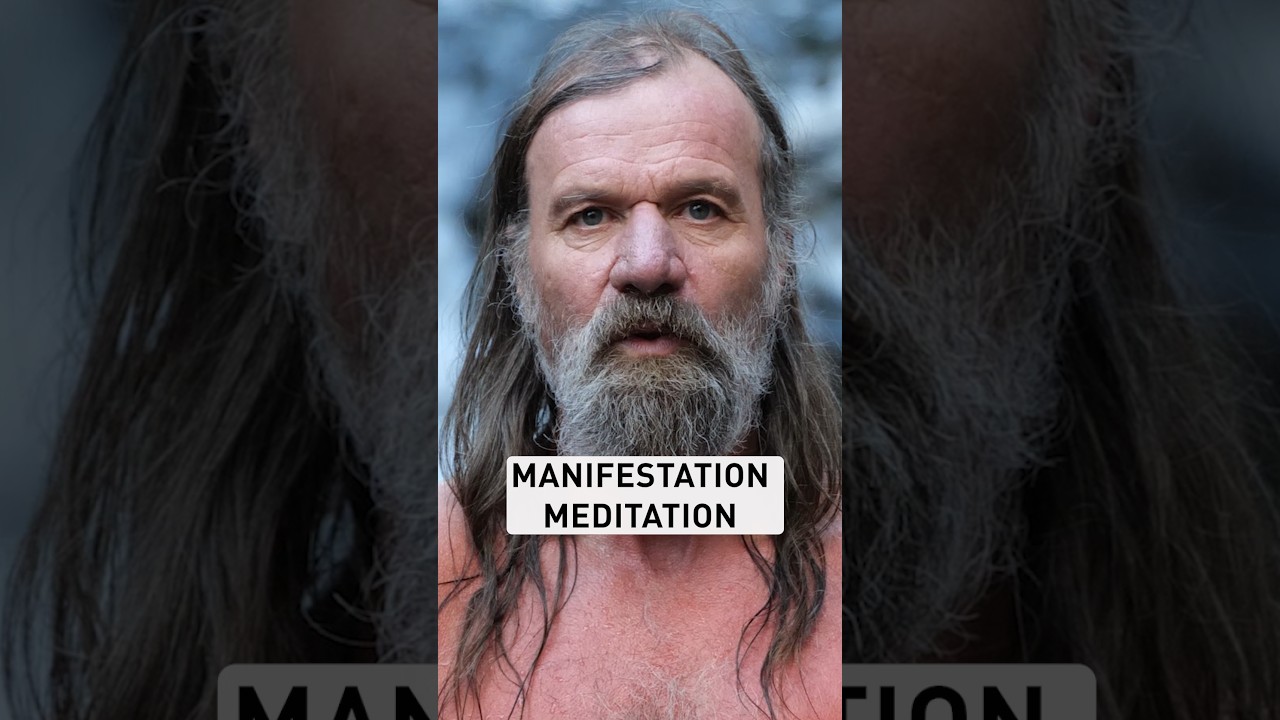
Where thinking stops, and manifestation begins. #wimhof #manifestation #meditation
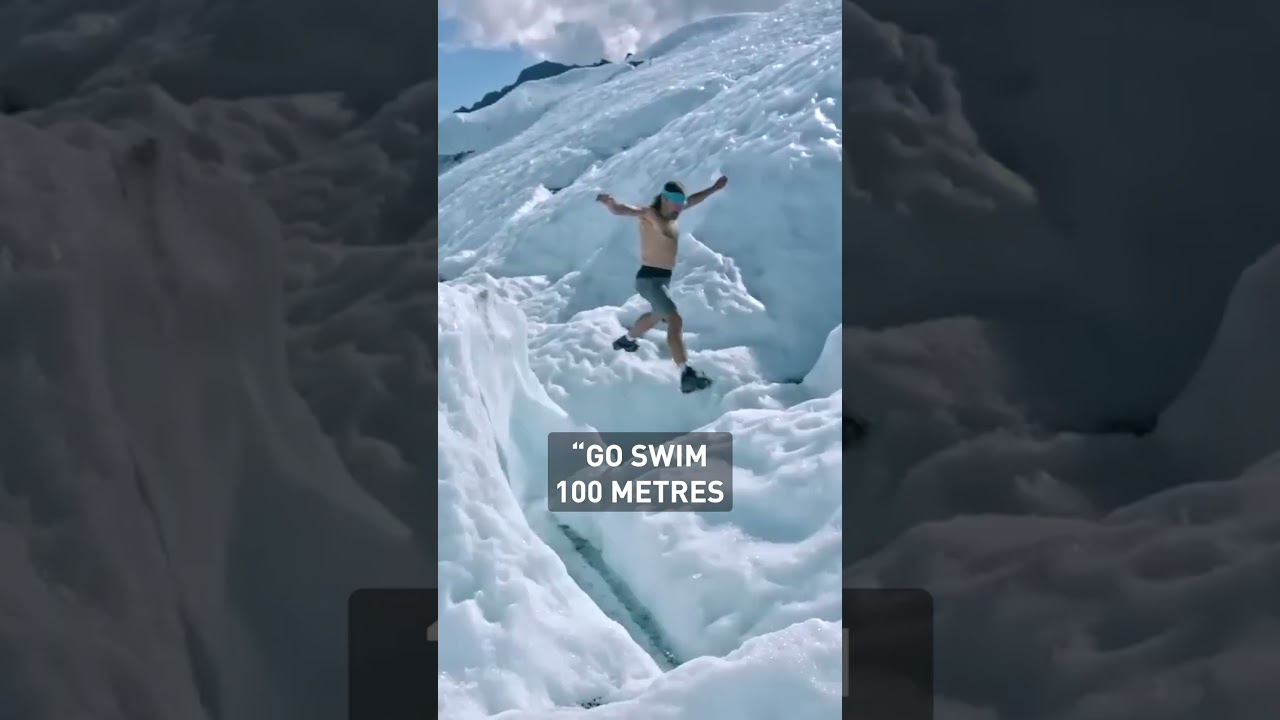
For 30 years they called me crazy, irresponsible and a thousand other things...📹: @uproxx



Are you someone who suffers from cold hands? This ice-bucket exercise helps.🧊 #wimhofmethod