Renata Brocka, mother of 7‑year‑old Severin, recounts how her son was diagnosed at age five with a third‑degree AV node block, a condition that caused dangerously low heart rates (as low as 25 bpm during sleep) and led doctors to recommend a pacemaker. Unwilling to accept a device for a small child, Renata researched the Wim Hof Method (WHM) after hearing about its benefits for various ailments. Despite concerns that WHM might further lower heart rate, she contacted the WHM organization and received direct guidance from Wim Hof himself. They began practicing the WHM breathing exercises together, monitoring Severin’s heart rate with an oximeter. The breathing alone raised his resting rate from ~49 bpm to over 100 bpm, and after a year of regular practice—including cold exposure—Severin’s heart rate during activity reached up to 166 bpm, far exceeding expectations of his cardiologists, who could not explain the increase. Renata reports that the method has helped keep Severin off a pacemaker, improved his overall vitality, and fostered a strong bonding experience as they share the practice. She urges other parents to explore natural, non‑invasive options alongside conventional medical care, emphasizing hope, perseverance, and the psychological benefits of shared effort.
Chapters
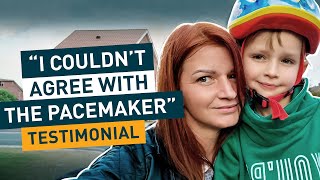
So my name is Renata Brocka. I am mum of now 7-year-old boy. His name is Severin. When Severin was 5, he was diagnosed with heart condition called AV node block. It's a third-degree heart block. Some of the cells that passing signal in his heart, they are damaged, and the byproduct of this is that his heart rate is very low. As a mum, I couldn't agree with the pacemaker being inserted in such a small boy. That gives lots of other troubles. It's not just a device. It may give inflammation to the body. The cables need to be removed and replaced because the body is growing. For me, it was like if I don't find anything, it's like a failure. I felt devastated. So I read about Wim Hof Method that lots of people had very positive response with lots of different conditions. So I thought, why not try this? But I wasn't sure if that will be for Severin because his heart rate is slow and the method usually where I read, it says that it will slower the heart rate even more. So I was afraid. I wanted to find out if that method will not harm him even more. So I wrote lots of emails to the company with a for about Severin being ill. And one day I had a phone call from Wim. Wim called me and he reassured me that I should try, and he told me what to do exactly. One day we were invited into Stroh. We did the breathing together and we did very basic tests with oximeter on his finger. Severin was running and his heart rate when he, when he was running was up to going only up to 80 beats per minute, which is understandable with his condition. When he lay down and did his breathing, the heart rate went up to 101 beats per minute, and I was like, wow, you know, I've got goosebumps by telling you this. Fully in, letting go. So I strive to practice the method all the time with Severin, and now it's a year passed, and the great news is that Severin's heart rate can go up to 166 beats per minute. I spoke to several cardiologists and they said it's very, very unlikely. It's not— they don't understand why his heart rate goes up to 166 beats per minute. Now I can see on his watch that his heart rate improved so much. So I think we can keep Severin off the pacemaker doing the method because his heart rate is up. And from my understanding of his condition, if the heart rate goes down, it's basically a risk of heart arrest. So we need to keep the heart rate up naturally And then who knows if we do another scan, maybe the AV node is repaired. I don't know. I'm hoping for that as well. That would be magical. His average rate was 49 beats per minute about 1.5 years ago. When he sleeps, sometimes it was even going as down as 25 beats per minute. That is crazy to see. But now, during the day, it's much improved. You know, it depends what he does, of course. But if he does the breathing, he does a little bit of cold. Sometimes he surprises me a lot. He goes to have a bath and then he puts the cold water and then he calls me like, "Mom, can you put some ice cubes in the bath for me? I am doing the ice bath." And it's so nice, heartwarming. He understands in his own way. How to practice the method. I try to set the example for him. I'm happy to give him that strength and then we can do it together. It's very bonding as well. I think he just wants to surprise Mama. He gets it. He gets my full surprise. You are in. You did it yesterday too. That's amazing. Wave to the camera. You need to— you need to work. Wow, bravo! When he does the breathing and then takes a cold shower, I think the mindset kicks in place as well. It's a beautiful circle really for me. He knows that he did something good for himself and so beautifully connected. I think it all works together. I would like to say to all the parents out there who are searching for a solution for the heart or any condition for their children, don't give up. Always search outside of the box. I know doctors, surgeons, they're very needed and they help us a lot. And my message is not to disturb any medical interventions. My message is out there to go that a little bit step extra for your child. Don't just put pacemakers in children just like that, but also try natural ways first because that's what really counts. If you go to hospitals and I know it's It's nerve-racking, but it will help the parents if they give the child a hand, and that will change his life. It may not always change the condition, but it will also give the hope in the children's minds that there is something out there that they can explore. Do you feel warm in your legs? Yeah. It's nice, huh? Yeah. And if the parents practice, that's a totally different story as well. You know, that will bond together, that will get you through that hard time. That would be my message really to, to all the parents and people out there to try it, to try it. It works.