The Secrets Behind Cold Exposure & Breathing, "Ice Man" Wim Hof | Framgångspodden | 332
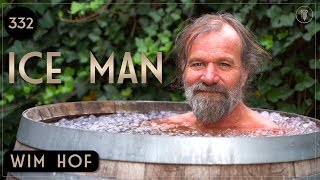
Wim Hof explains his breathing technique and cold exposure method, which he says trains the nervous system and immune response. He describes a study where trained participants showed no inflammatory reaction to an E. coli injection, and claims four days of his training prevented illness in volunteers. Hof also recounts climbing Kilimanjaro in shorts and surviving a 1 hour 53-minute ice bath.
Chapters
Oh, I like that one. So good.
Sometimes—
Whoa, that's so nice! Alexander. Alexander, nice to meet you.
Nice to meet you.
Wim Hof. And you can have the microphone a little bit down there.
Yes.
Great, great.
Yeah, I'm gonna do a little bit of this later. Yeah, yeah.
What an entrance! Nice to be here.
Nice to be here.
And welcome, Wim Hof Iceman, to Framingham Sports Arena. And it's so cool to be here. At your place, the Iceman Center.
Yes, yes, that's right over here. And as you see, you see a lot of palm trees. Yeah, yeah, little bananas over there. They, uh, up there. Yeah, yeah, have some. Yeah, very little, but yeah. Ah, I love it, I love it.
And you have many stones as well.
Yeah, I love, uh, rocks, all, all kinds of— yeah, it's energy, trapped energy. It's still moving. You think a rock is not moving, but inside the molecules are moving. It's energy. It's amazing. It gives me energy. I love rocks. I think the heathens, you know, the natives before, they all, they worshiped rocks like it's, it's a sanctuary place. It's natural and you can feel the presence. And I think we lost a little bit of that presence and that we are great in shooting people to the moon and making bridges, etc. But where are the core values of ours? The purpose deeply inside, the absence of depression, the absence of inflammation is done by feeling the nativeness of ours. And that is in connection, in harmony with the rocks, with the plants, with the animals, with the people around us. Love. In love. That's what I— you see rocks here?
Yeah, I see rocks. I saw that you have a rock that, and I recognize it because I saw it on your YouTube channel, and it's called Elephant.
Yes, Elephant.
Happy as an elephant.
Yes, happy as an elephant. That's That's me. And I'm into the fundraising for elephants right now, and I want to make it structural. Elephants are amazing, amazing beings. They have ultrasonic sounds inside. We cannot even hear them, but they connect with us very deeply inside. And the people whom I work with they bring you close to the elephants without gates. It's not a zoo, it's direct contact. And then you feel this presence awakening, a deep presence within your own body, your own physiology. And that is those things we forgot. So yeah, it's all in our beautiful nature, our beautiful minds. We need to waken up to our potential. And you, with this great podcast of yours, chapeau for what you did, because you bring out consciousness, awareness to the people, and that is great work. It's love, because in the end, we are— humans are beautiful.
Yeah, that's right.
Only they forget, and they are not able to tap in deeply.
Yeah, we're stressed up right now, stressed up, depression, smartphones, and all the career, everything.
All those things, yes. And I think technology is great, but don't let it overtake you. Let it be a servant and not you the servant of the technology.
Right. And can we start about your morning routines? How does your morning routine look like?
Yeah, opening the eyes and I begin with a good deep breath, and then very soon later I'll take a cold shower.
How long?
Uh, something until—
4 hours?
No, no, no, no, it's too much time. You know, if you take a couple of minutes and you make sure all the body adapts to the cold, because you know you are very warm, you're warm like a hot dog, right? In the— when you wake up, you know, nice and easy, like a marmot, like a lemming. I don't want the cold, I don't want the cold. No, I go directly straight to the cold and get the biggest of reactions on my body, and within 30 seconds or something, I'm completely not feeling the cold anymore. And then 2 minutes later, I just finished it, it's okay, doesn't need anymore. Well, what the importance of that in the morning is that you wake up your vascular system. And your vascular system is like 2.5 times the world around in the length of the veins, arteries, and capillaries. Everybody has it. And it contains millions of little muscles. And they are trained if you go and adapt to a cold shower a day. And that way your vascular system is optimized and then your heart doesn't need to pump so much because all these millions of little muscles, they help the blood flow go through and work with each other. Yes, it's one closed system and the originator is the heart. What happens if you take a cold shower every day? The heart rate is going to go down with 20, 30 beats a minute, 24 hours a day. That means stress is gone. This is what we do. It's a hormetic exercising. Hormetic stress exercising is a cold shower. Cold shower a day keeps the doctor away. What happens more is that the blood flow runs much better through the system. The nutrients, vitamins and minerals and oxygen, they get better to the cells. So it produces more energy. That's why everybody feels so energized directly after the cold shower because the system is getting better into feeding all the cells of ours, which makes up molecules, which is energy. You feel more energy.
And how long time do you recommend?
Like, is it 1 minute, 2 minutes, or is it every day? You begin with 30 seconds.
Yeah.
I say to the people, just take your hot shower. And I love hot showers too. So I take warm showers, hot showers.
Just start with the shower, hot showers or after?
Yeah, but not me now because my vascular system is really trained. I just take the cold shower. And when I take my ice bath, which is even more colder, Then afterwards, and I go for, I recommend 2 minutes, but then very soon you are able to go 5 minutes. And today you and me, Alexander, we go for 10 minutes. That's awesome. Because we're going to set our mind right. And the ice bath, the power of the mind is amazing. This is what I've been showing the last study. To be able to make my skin temperature not going down while ice water gets on the skin just by using the mind. Isn't that amazing?
That's amazing.
And that means we are able to make stress go away just by using our mind. And this is the result after so much training and exposing myself into, into the cold. That I've learned to awaken direct connections in the brain that enables me, just by thought, to make the difference in my body whenever there is stress. And that stress could be emotional, physical, bacterial, virus stress, mental stress, daily stress, stress and congestions, stress that you cannot shit well, whatever, you know? Stress is stress. And you are able just by using your mind to deal with that type or any type of stress. That is the message.
And what is the negative effects from stress?
There are oxidative— you got oxidative stress and hormetic stress. Oxidative stress is negative. That means that things you cannot handle and they get into the cell mechanisms and they have an absolute negative influence on the cell mechanisms and the mechanics and the telomeres, the longevity, the cell division, the DNA, and it produces wrong genome expressions which makes you sick or even cancer in the end. So it all depends. Stress is like an attack on our healthy mechanisms. And if we learn how to deal with stress, we— the healthy mechanisms stay healthy. That's the whole trick. And this is what we do right now with— in San Francisco with 140 people, with the top researchers on the DNA to show how to protect the cell by exercising, the cold showers, And the breathing exercises, they are into positive stress activation, which is hormetic stress. And that makes the cell protected by proteins around the cell like little guards, like little warriors who fend off viruses, bacteria, inflammation and oxidative stress. So then the cell remains intact and the healthy production of the mechanics of the cell, they are able to flourish and to keep on going. It's amazing what we found.
Yeah, it's amazing. And that's also what you did with the deadly bacterial E. coli.
Yeah.
And that's just so crazy.
Yeah.
That you inject E. coli in your bloodstream.
Yes.
Can you tell us a little bit about this?
Oh yes, so because of me doing a study, and I will show you the study, the first study, I was staying like 80 minutes in ice up till here, and I showed, they took blood, like 36 tubes out of my arm while I was 80 minutes up till here, up till my neck in ice. And my core body temperature remained 37 degrees, 80 minutes long. And then they took the blood, and the blood, they injected E. coli ex vivo, so I was not there, but my blood was there. And normally you have a very violent reaction of the immune cells on the E. coli bacteria injected in the blood serum.. And now there was zero reaction. They never had seen that. And then they said, can you do this? That's crazy. Yes. Can you do this when we inject you directly in your veins? I said, yeah, hey, let's try it on. I think so. Let's try that.
What is the worst that can happen?
I die? Yeah, yeah. You get a little sick or heavily sick, but only for 6 hours., but I did not become sick. I did my breathing techniques, I used my mind, and I did not become sick. I felt great. And they saw that I was influencing directly at conscious will the autonomic nervous system, thought of inaccessible in medical scientific literature that humans are able to do that. And I was showing the contrary. So with that, they said, yeah, but you are the Iceman. You are special. You are different. You are a freak of nature. And this is with normal people not possible. And then I told them, yes, give me people for 10 days and I will make them able what science is saying that is not possible with the human. Physiology at will. I will make them able at will to influence so deep within their bodies, and, uh, with that we will change medical literature as it is. And they said, okay, finally they said, yes, let's do it. And we did a comparative study with 18 people there who did not train with me and 18 people who I trained. 12 of them were randomly chosen to, uh, take part of the injection of the E. coli bacteria. And all of them, non-trained and trained— the non-trained people, they, uh, became all sick. And the trained people, after 4— only 4 days of training, they did not become sick. And, uh, then they saw 16,134 people who had been exposed to the same experiment all became sick, and then suddenly 12 people did 100% score in one comparative study, showed not to become sick, 100% score.
So, but it is— this is only for that you train them for 4 days with the breathing technique, the focus, and also the cold. Yes, exactly. And what did you do with them?
Uh, I— what I do always with people is to go to the mountains. I have a, a house in Poland somewhere at the mountain slopes, and, uh, I trained the people over there every day, uh, uh, inside and outside in the snow, barefoot, in shorts, going to the waterfall, and, uh, slowly but surely in 4 days climb a mountain in shorts for 5 hours in freezing temperatures and have a great time. Then when we arrived on the top of the mountain, I knew these guys are ready. Let it come, let the injection come of the bacteria, they will show the difference. And 4 days later, they were in the hospital, got the injection, and they showed turned around scientific literature as it is, we are able to do so much more than has been believed by science and scientific community, and we have to bring this to the people.
So what was the first time you exposed yourself to cold?
When I was 17, that's 43 years ago, I just saw this thin layer of ice on the water. I was pondering at a Sunday morning in the park, and I saw nobody, and I just felt attraction. I went in, and I— there from the inside, I felt so good. It's like, this is it. It's not in words, but that's the feeling. This is it. It's, it's nice, it's good. And I was playing around with the ice. Never been in ice water as such before. So whenever you feel so good— and only stayed 1 minute— I, I had a rush later, and I felt good all day long. Then the other day I came back and I felt it again. And since then I did it every day, every winter. So 43 years ago I did it for the first time. And you know what happens when you go into the cold water? I began to realize the thing that happens when you go into the cold water is you breathe deep, and that deeper breathing brought about that I was able to stay longer and longer controlled in ice water. And ice water is like stress. Ice water is stress on the body, severe stress. Everybody knows it in Sweden. Finland, Norway, and Russia that everybody knows. It is cold. Yeah, it's fucking cold. Here we are. You gotta man up. And this is what I've learned to do through these breathing techniques, to take away, to control the stress, to make swimming in ice water a— I always say make of your winter a summer. Like what I do is in wintertime, I'm in shorts outside. I'm having a good time like people in the summer. I swim outside. I do yogic exercising, flexibility of my muscles, which needs to be warm outside in the snow. I call it snowga. Yeah, man. And you can have such a fun Going outside in the cold and then afterwards take a hot shower, it's amazing. That's so good. We miss out on that. We should take the winter as the greatest station of our years. Now we get the winter depression because there's little, little light, but you know what the cold does? It produces energy. That is like light. Light produces photosynthesis in the, in the trees, and in the leaves produce glucose, a life's energy, food for the cells. And but so do we with the cold. We turn the cold into heat, in internal heat in the body. That's because it affects the mitochondria, the energy factories inside, and more molecules are manufactured by going into the cold. It's amazing. And then depression is no longer there. Boom. It influences par direct with the endocrine system. The endocrine system is the hormonal system. What is depression? A lack of serotonin uptake and the dopamine. It's out of balance, and then you get the pressure loss. That's deep pressure. Now, if you go into the cold, then it activates the endocrine system, and with that, it begins to supply where there is shortage. Where there is a lack, it begins to supply. Natural, because our bodies, they work that way. But we don't know how to bring the energy. The cold controlled, like gradual cold exposure, is the ability to tackle depression. Depression, but also inflammation. Inflammation is cytokines, and cytokines, they come when the immune system is deregulated through oxidative stress of daily life, of emotions, of the work you have to do.
Actually, I must ask you about this because I got— for this is actually the first time I talk about this. For 3-4 months ago, I was going to the doctors and I asked them for, for this. You maybe see a little bit here, white patches. Yeah, yeah. And, and here I was like, what is this? And they said like, yeah, that's vitiligo and that's autoimmune Autoimmune diseases, diseases, right. And now, and also, and for, for those guys that don't know what vitiligo is, uh, it is, uh, like which, um, the pigment is lost on the, the skin. Yeah, I asked several doctors and they said, as it's new, it's— it isn't a cure. But, uh, have you met, uh, many people with, uh I know that you have met many people with autoimmune diseases.
Yeah, yeah. Vitiligo, psoriasis, and all kinds of skin conditions. Does this cure?
Does your method cure?
Yes, absolutely. It absolutely battles the cytokines responsible for the autoimmune disorder, and that is IL-6, IL-8. Those are pro-inflammatory. And then you have IL-10, anti-inflammatory, and those need to work. We were not able to make them work at will, but these breathing exercises have shown in the university to take down the responsible inflammatory markers for vitiligo, but also psoriasis or any other autoimmune disease. To bring them down. That is bringing down the cause of the inflammation, which is the overreactive immune system, and to bring up the right pro-inflammatory response, the IL-10, who battles it. And then we had no control over that, and now we have shown to be able to have control within 10 minutes.
All right, what do you recommend me to do? Is it take a cold shower every day? Yes. And also the breathing? Yes. You start the breathing every day in the morning as well? Absolutely. I have started to do it. I have done it for like a month right now, your breathing technique. That's amazing. I'm 34 right now, but when I was 20, I was a mine clearance diver in the Swedish Navy. That's why I have this frog on my—
Aha. So it's like— Next week I got generals here. All right, the Marines, and I trained also the, the SEALs in America, but in Pearl Harbor, you know, the special forces. Yeah, they love it, they love it because it's what happens, they deal with a lot of stress, stress and sleep deprivation, see, sleep deprivation, and the breathing really calms all the stress down.
Yeah, it's amazing. When I, when I try this, I said to my wife, you must 'Try this, this is so crazy.' It's like you take, I've never tried drugs, but it's like you take like so much drugs. It is like amazing. And, but also when I were a diver, I could hold my breath for like 3, 4 minutes. When I did your breathing, I hold for 5 minutes. And I was like, holy shit, I were a diver elite diver for a couple years, and I hold my breath longer with your breathing technique for like 2 weeks.
Yes, yes, amazing.
And I couldn't die.
It's amazing. Yeah, yeah, I must especially felt bloody great to feel it. I always say feeling is understanding. Just do it and you feel it. We have it endorsed by science and all. We have a potential waiting for us. It's bigger than we ever thought possible to control, and now it's there. You say within 2 weeks, I say within a half hour you're gonna change yourself. You're gonna awaken to your potential, and you know what? There is much more there. It's only, we give a direction, a new angle, a new opening to our potential, and for that, your work here to bring this to the people is, yeah, respectful, great.
Super. Can you explain to me what the, the breathing you recommend to do in the morning every day?
On empty stomach, which you begin with without food in the morning, I suppose, or maybe you eat to not go sleepwalking the night. Sleepwalking, take a burger, take a burger, hot dog. Check your fridge before you begin with the breathing. If you have been eating, yes or no? When you already lie, still lying in bed, is when your tissue is very relaxed. And when your tissue is relaxed, it is able to store up more oxygen. That's what it is. So the best is to do it on empty stomach while you're there in bed and do 30 times deep breaths in. And that means with the stomach or the belly, chest, and into your head. Into your head, and this was also not known, we have shown this in a study in the mountains where if you climb too fast a mountain up to the top, and it's like 6,000 meters, it's less than half the oxygen up there.
Uh, like in Kilimanjaro?
Yeah, like Kilimanjaro.
Yeah, I were at Kilimanjaro for 2 years ago and I did it in 4 days and I get altitude sickness. Ah, and you did it like in 48 hours and you didn't?
Yeah, yeah, uh, 28, 28 and a half. 28 and a half hours? Yes, and now I'm gonna do it in, uh, next February possibly in a documentary, maybe 20 hours or something. And, uh, but the thing is, the principle is that it was not possible to acclimatize, to have enough oxygen if you go too fast in the ascent. If you go too fast to the top, the body is not able to adapt to make more white cells, red cells to get more oxygen because there's less oxygen outside and the body has to come up with extra transporters of oxygen, and that is acclimatization, but it takes more time. Now these breathing exercises, they make you able to, say, when you get a headache because you're ascending too fast, you do the breathing exercise a little bit. It means the headache that you have a lack of oxygen in the brain, and you do this simple breathing technique. It's like 10 times, 15 times, Then you take it in and you bring it, squeeze it to your head. You make the headache go away or you bring in oxygen. This is what happens. So what I say to the people, when you lie in bed, you lie in bed, remember you are able to bring in your belly. That is deep, the down part of the lungs. Exercises so more oxygen gets in, more air comes in, more oxygen comes in. And then your chest, expand your chest. And don't forget, into your head you are able to bring in also oxygen.
Okay, but do you take, take the breath like that and then let it go?
So not from the nose? Nose, I, I always say doesn't matter what kind of hole you use, just get it in. People ask me, hey baby, it doesn't matter what kind of hole you use, just get it in. It's funny, you know, but thing is, it doesn't matter. We are not going to go into technical details. You have to do this, Nadi Sudhana Pranayama, Suryabheda Tatva into the Kavala Kumbhaka and then into the nostrils, getting into the Kumbhaka yoga of the Kundalini, and then The Swadhisthana chakra is suddenly open and wow, the solar plexus, there you got him. And that is only one part of the seven, and so we got a lot more to explain. Just get it in. Just come on. Fully in, letting go. Fully in, letting go. Pulling in, letting go. And logically, what happens, more air is coming in than normal, more oxygen is coming in. That means that the CO2, the carbon dioxide, is going down. That is when you feel lightheaded, tingling in the fingers. Very good for vitiligo because the more oxygen comes in, becomes alkaline. That suppresses the cytokines.
But do you recommend me to do this like every morning, or is it like 3 times a day or 2 times a day?
As you feel. As it is still there, learn to connect, because this has shown in science, these breathing techniques, very simple, very effective, to go into the autonomic nervous system, to go into the immune system. So whatever your body is saying, hey, 'Look at me, look at me and do something about it.' 'What the fuck happened? You're too stressed up.' 'Yes, you got the tools. Go to me and deal with me.' So until you're not dealing, you keep on going, and maybe 3 times, maybe 10 times, and it doesn't matter until it's gone. And then you have control. Then there is the neurological pathways are created, and then in an instant you can do something. It's creating a pathway over there. It's out of control. So you bring it into your control, and then once the pathway is there, it really does not appear anymore because it goes naturally then. So it's amazing that we are able to create a bypass, new neurology in the brain, in the body. It's all connected. The brain is the big neurological conductor, and the rest of the body is— the neurology is rooted. So it's all connected. Okay, so you take the 30 breaths, and then after that, you take them fully in the last time. The last time you let it go, and after that, and then you stop. Stop. You stop after the exhalation. Not fully exhalation, just letting it go. Like, if I let it go, I go to the atmosphere around here, which is 1 atmosphere. 1 atmosphere is like this. Then I feel no pressure. But if I do this, this was extra, but now I'm below the atmosphere. I want to stay in the atmosphere. It's for the reason is for the best gas exchange in the lungs. And how long time? Then it begins with 1 minute, 2 minutes, 3 minutes. Amazing. Everybody who is listening now, 3 minutes on empty lungs. Everybody, you should be very able to do that. And it's amazing what happens. Your body, through these breathing techniques, your body becomes very alkaline. Alkalinity is positive, it's not acidic, it's alk— the other side is alkaline. And after 1.5 minutes, and you are still alkaline, then we saw in the charge in the university on the monitors, we saw the saturation, the oxygen dropping dramatically, and they dropped to levels where people normally die. But you feel okay while you do it because you are alkaline. It's amazing. It's a— what happens in the brain is that there is no oxygen anymore in the body, but you are— chemistry is great. It's great. There's only no oxygen. Now we got in the brainstem we got the parameters for when there is no oxygen, then adrenaline, adrenaline, survival, survival, you know? It's survival mechanisms are at work, the deepest part of the brain. And who is doing it? That is you, because you are doing this consciously. So you create a neurological pathway to the brainstem, and that was thought of inaccessible not controllable by humans. Now you learn to control it and to make a new pathway to that part. And what happens? The adrenal axis is being activated, and with that you get a reboot, a reset, uh, resetting of your body the way nature meant it to be. And the way nature meant it to be means that bacteria goes, uh, is being suppressed Virus is being suppressed. Stem cells are being generated. Bad cells are being annihilated or recycled. And, uh, uh, yes, wrong cancer cells are being, uh, killed. Apoptosis, cell death. All those things happen because it's all, uh, not things that are not helping the functionality of the body at that moment to survive. This is the natural mechanism in the body. And this is happening while you are, you feel great while you're lying in bed. After 1.5 minutes, dramatic lowering the saturation, the oxygen in the blood makes the adrenal axis go, and then the immune system starts to work, the endocrine system. And we lost all those connections. And with this, it all comes back. And you know how much adrenaline— and it's only spiking, it doesn't stay all the time, only boom, a hit in the body. It's like an injection of it when somebody's a heart attack, you get injection boom in your heart. Yeah, to survive. Now you produce that yourself, and it has been compared the blood samples of the people doing these breathing exercises with adrenaline is compared to, in a study, to a study where they took blood of people who were going into their first bungee jump, and it produces more adrenaline than the guys who went into the first bungee jump. Can you imagine the resetting, the rebooting of your systems. And it's only very simple breathing techniques. It's amazing what we can do with that. Besides of that, besides of that, if you had sex, if you had sex, this is nice detail, and, and you are like exhausted because it's done, it was nice, you do a little bit of this breathing You like to go again.
That is a nice detail. That's amazing. And one of the most frequent questions from you when I talk to the audience and they was like, yeah, you must ask Wim Hof, like, you have the world record in ice baths. That's crazy. 1 hour and 53 minutes. But what happens with the testicles?
What happens with the balls?
Yeah, they're wondering what happens. Can I be in the ice baths So long time. Yeah, I, I, I'm, uh, that's your balls work, does it?
Yeah, I know. Yeah, you know, it all goes back, it retracts because, uh, and the balls and the, uh, and the penis, they are, uh, it's blood flow. Blood flow makes a boner. Yes. And the balls begin to work and it retracts when I go into the cold water. Then becomes little. You know, you see these Greek sculptures, the Adonis and the Olympic disc thrower, they all have these little penises. We are not built to have a big penis while running. It hurts, it's painful. Bang, bang, bang, bang while you run. No, it was It's normal that it retracts completely inside, and, uh, when you need it, it's there, it go outside. Yeah, small penis is good for you. A small penis when you are in the cold water, that is good. A big one when you do something else.
All right, all right. And actually, also, I heard that you don't have to take any Viagra if you do this as well.
They, they said, a bio, uh, biochemical professor And he told me, you know, the genome expression for virility in the genes of the DNA, one of them is responsible for the virility. It really, through this method, spikes up. That means Viagra, take your suitcases, goodbye.
When you lost the love of your life, you start to come down. And, uh, going more deeply in all of these things.
Yes. What happened? It's logical when you— when the love of your life, the mother of my 4 children, jumped from 8 stories down, that is serious. That is not— it's not only serious, you cannot grasp with the normal mind what is going on, and you have a broken heart. I was— I'm connected, my nervous system, my blood, my everything It's connected to the love of my life. Yeah, it connects that and it breaks the neurology. It needs the other tuning, the other vibration, the other electricity, the neurology, which is one. That is love. That is light. And we produce light. We had 4 children and we— I still have the 4 children. I'm working with them every day, with them. And, uh, but in '95 they were like little children and I was left alone. She jumped from an 8-story dome because she couldn't handle schizophrenia. It is a terror of the mind. She kissed the children goodbye before jumping down. This was a beautiful, very intelligent woman, and the whole psychiatry could not handle this. With all the injections and all the medicines and the pills, it only became worse and worse and worse. So my, my thing is I was left behind, brokenhearted, and you get depressed. But you cannot be depressed because you got— you're the only parent, you got to take care of the children. Yeah, you had the pressure. What exactly— what I, what I did was going into the cold water because I knew the cold water And the cold water makes your mind go still. You are just surviving in the cold water. So everything is not important. Your thoughts are going to go and be stilled. So that gave me from inside a moment of relief, a moment of repair. And so I did that every day. I did it so big. I loved it. I loved it and I cured myself. And the love I found for my children to go on, that they, they made me survive. But the cold water healed me. It gave me the chance to relieve and to break this vicious circle of heart loss, heartbreak. And, um, so I came out of it. And you know what, Alexander? Now I'm working with the best psychiatrists in the world, and I'm showing how to tap into the brainstem, which was thought of inaccessible. And the brainstem is also the seat of the hippocampus, of the amygdala, which is emotion. And when it is wrongly fed by no serotonin uptake and dopamine, you get depressed. Or psychosis or manic depression or schizophrenic or trauma, fear, PTSD, all those things, and we had no control. And now I've shown in scientific study how to tap into that area because I had to heal myself. I had to go in society and just be there for 4 kids and be happy and be be full of energy and full of love and not being depressed. There was no time. But it's there. The heartache is there. The heart pain was there. But I was able to get out of there because I was going into the deepest part of the brain. And then I've shown it recently in a study how to make the power of the brain at work with the deepest part of my brain. That means— this is what they say as the conclusion: We found the compelling evidence— compelling evidence, that means dramatic for psychiatry— we found the compelling evidence of the key components, the key components of the autonomous processes in the brain. Autonomous means outside of our will. But now we found the key components of those autonomous processes in the brain related to mood regulation, absolute mood regulation. That means emotion, that we are able to control our emotion. And with that, it's controlling the stress that is affecting the emotion, our emotional state, equilibrium, balance. We are able to get it out. And with that, we battle trauma, psychosis, depression, heartache, emotional loss, and all those things. We are able to get into that. And with that, I have a full circle from my wife where I was powerless and all the psychiatry. And now we found the remedy. Now we found in a natural way how to control the emotion that is so terrorizing so many.
There we are.
Yeah. And for that, me and you, that is great. I got knowledge from nature and you bring it out to millions of people. That's magic. That's chemistry.
That's alchemy. Yeah, yeah, it is Wim. It's so cool. And I, um, I, I really like your breathing technique and like your, your Wim Hof method. Nice. Yeah, great.
It's awesome.
Great to meet you, man. And I also, uh, would like to, uh, I hope it will, uh, cure this. Amazing. But also, I have some more questions to you. I would, uh, you have done a very crazy record in Finland. That's close to Sweden.
When you swam under— I could see Sweden. You can see Sweden? Yes, I was taking that under the ice up, up in Kolari. Kolari is at the Swedish border. And, uh, yes, under the ice. And I lost the way. 57 meters?
Yes.
And you lost the way? I lost the way. What happened? 35 meters, I lost the way because I had no goggles. I had no glasses on, so my retina or the cornea, that it froze. The ice, it froze. It froze after 35 meters, and I could not see anything. It was a blur.
Jesus.
Yeah, you cannot wait and say, I have no glasses, that's why I'm here. No, you swim on, you keep on going. But I could not find the hole. The fifth, then it was the The first, my first record, it was the 50-meter hole. I could not find it. I made 113 meters in the end. And in the end, I lost my consciousness. But the main thing is I never felt the agony of drowning. And there was no misery going on. There was nothing bad, no pain, no nothing. And I was only breath-held in shorts under the ice. 113 meters is when a diver took me by the ankle and brought me back to the 50-meter hole. Oh shit. And then I took one breath and it came back to life, to consciousness. Amazing. That there I conquered my concept of what is death. I have no fear for death. I always say I have no fear for dying, I have fear of not living. So I want to live. I want to live for all who have unnecessarily died. For those I live and find cures, find why we are here, what we can do, and that is so much more than we thought possible. Is that your mission? Yes. Exactly, and together with people like yourself, great people bringing it out, it is awareness, it's awakening to our true potential. That is my mission, absolutely. I want to bring love, and love composed by absolute guarantee to control your own health, happiness, and strength, and that all endorsed by scientific evidence.
Can we do like this? Can we take like, uh, can you play the Hakuna Matata song for like 1 minute and then we take a couple of more questions? Because this is love and this is so cool. I love it. From the, from the Kilimanjaro, from the top.
That's a story, man, with 26 people where they— and they had all kinds of diseases, cancer, Crohn's disease, arthritis, asthma, depression. And I told them, listen guys, we're gonna climb the Kilimanjaro in 3 days in shorts with all you guys, whatever you got, doesn't matter as long as you are motivated. And then all the doctors, the physiologists, and the alpine experts were saying, this is not possible. Are going to die. We will not link up with this expedition. This is irresponsible. You cannot do this. We went anyway. We didn't do it in 3 days, we did it in 2 days. That was my first Kilimanjaro climb with 26 people, and those people transformed because now they had found a resource, a potential deeply within themselves, which is far more than we ever thought possible. And we have to bring this news to the world, that everybody is able to become a great climber. The oldest one was 65, the first climb, with 4 bypasses in, coronary bypasses of the heart. And he did it, he did it, he did it in 2 days. Amazing. And the last time I did it, the oldest person with Lyme disease, and he did it in 31 hours. That was the last, the fourth climb with Lyme disease. He did it in 31 hours and he was 76 years old. So there is a little song they play on the Kilimanjaro. And it goes as follows.
Whoa, it's so good, so good. Look at my hair.
All right. Oh hey, that's something amazing. That's good, that's good for— it's good for the fucking Vitaligo. That's it. The guy, the oldest guy who went up Kilimanjaro in 31 hours, 76 years old. With Lyme disease. He's healing people now. He transformed. He's making use of his deeper potential. And we are showing through this podcast that we all have that deeper potential. And know that it is connected to your autonomic nervous system, to your subconscious, and that you at will are able to connect with that and make your dream become true. Realize your dream. That is the purpose of life. That is our soul. That's why we are here for. And this work brings it to the people, right? There we are, there we go. And we have fun while we do it. So we make music, uh, I make stupid jokes because I'm stupid. Dad jokes, uh, yeah, all the time. Is it I got this story. You know Kilimanjaro? We did that very successfully with all these people and all these doctors, physiologists, and Alpine experts. I never heard them anymore. Yeah, before they had so much criticism, so much arguments, all physiological and all scientific and this and that, and then morally we were not able to do this and we should not do this. And people were going to die. This is immoral, this is irresponsible. We did it, and we did it faster than anybody thought. And even us, we surprised ourselves. We could do much more than we even set out for to do. So there we did it. And then this, this part is called the love of the family. For the family. And it's my son. And so after the Kilimanjaro climb, I went to the Serengeti. And the Serengeti are the elephants, the Loxodonta africana. Yeah, I've been there. But you got also this— the biggest one is 7.8 tons. 7.8 tons? Yeah, so big. Almost 8 tons. It's like 8 cars or It's alive. And me with my friends, the Maasai, we go—
and the Maasai—
and we go approach them, uh, directly, uh, to the elephant. And, uh, it's huge. You hear and feel its presence, the ultrasonic sounds and everything of this elephant. You just have to keep your cool while you stand there. It's enormous. The legs They are big like columns, like the Acropolis, but now it's alive and it's coming to you and it vibrates with your physiology. It's amazing. Slowly but surely we go to the back of the elephant. I lift up the tail. I see an enormous asshole. Enormous. It's Black Africa. That's what I see. I'm so astonished, but I got Yogic power control. I remain in check, in control with myself. Little by little, I'm so astonished about this black hole, man. I go little by little, I go away from the elephant and we get back to the Moshi, to the city, and I get reception on the telephone. I call my son, say, Anna, Anna, yes, what's that? He says, Yeah, we did Kilimanjaro very successfully, not in 3 days but in 2 days, with all the 26, and all summited in shorts, and it was amazing. It's all completely— all the doctors, all the physiologists, all the experts, they are wrong. We are right. The heart is right. Intuition is right. We have so much more. And I went to see the biggest elephant in the world, and I saw it, and he had an enormous asshole. But you, motherfucker, you are still the biggest asshole. Bang! Love of the family.
That's a joke, man.
That's so good. That's a joke. That's a joke. But this is the way we, me and my son, sometimes we clash so much, but our chemistry is marvelous. It's marvelous. Love is not always, oh, I love you so much. No, chemistry, it's strong. It makes you happy, it makes you feel the purpose of life. You stay healthy when you are in love. You do not think, you fly. Yeah, that's right. You want to go as fast from A to B. You're not thinking, you feel. And that feeling you should feel for life.
And from Kilimanjaro, we must talk a little bit about Mount Everest. Mount Everest. Mount Everest. Altitude at 7,200 meters to the death zone.
Yeah, yeah. I was at 7,500 in the death zone, like— that's crazy— about 10 times, 10 times, up and down, up and down, up and down. But the last one, I wanted to go to the summit. In short, And in the depth, so how cold was it? It's not only the cold, it's like the lack of oxygen. It's only one-third of the oxygen left. That makes it so difficult. Not, not so much the cold. The cold here, I mean, when there is a wind going on, and then, then it's like a whip. It's like torture on your skin. It's like knives pricking at you, but it's— most of it is the lack of oxygen, because for combustion, for energy, you need oxygen. When, when there is no oxygen, then it's like you can feel your skin, but when there is a slice, when you cut in your skin, you will not heal. You do, you do this and it's very painful. That is what— when you have no oxygen and you are in the cold, it's like an open wound and you are feeling over it instead of having skin. That is a little bit the feeling. So, but I felt good. I felt good. We have an innate capacity to adapt to severe stress, and that's what I've shown. But 3 months before I was on this, on the North Call of Mount Everest and did it all, I was in Finland and I run half a marathon in, uh, in shorts, barefoot, barefoot, barefoot. And my left forefoot after 18 kilometers became frozen. This, now it's okay. It's all okay, but not at that moment. It had no blood flow anymore, and it was like a cold injury. Wow. Was inflicted, and the doctor said it's irreparable cell damage, done, they said. And you have to take this and that and all the medicines. That was 3 months before the Mount Everest was going to take or 3, 3 and a half months later I was on in the death zone of Mount Everest. But 3, 3 and a half months before, I was just after the half marathon barefoot in Finland beyond the polar circle. So the doctor said, dermatologist professor in front of TV and showing this is irreparable damage and you can't— it's like that, and that meat and your necrosis, you will get right— we have to cut it out in 4 months. 4 months? But in 4 months I got already the money raised to go do the expedition Mount Everest. I don't have time to wait. I'm not going to do this. I'm not going to wait 4 months and take a box full of medicines. I never took the medicines. I began to heal myself. Through these techniques, through the breathing, and one month later my foot was healed. Three months later I was on Mount Everest, and then I was in the death zone, and then I felt my foot from the inside. And I'm crazy, but I'm not an idiot. There in the death zone, it was going all great, but I felt my foot. And then I thought it's still not completely healed, so I turn around, right? That's what I did.
Do you take any supplements or vitamins to, uh, enhance your performance? Um, no, no, not at all. No, not at all. No. How many, uh, how often do you eat?
I eat once a day. Once a day, after 6:00.
After 6:00.
And what do you eat? Mostly vegetarian. Yeah.
And sometimes fish. Nice. Why not meat? I'm a vegan, so I don't eat, but why do you not eat meat?
First of all, did you see cows in the streets? Yeah, cowspiracy. The cows are not living in the street. It's all not natural the way meat is being processed, and they put a lot of shit in the cow's—
Antibiotics.
Antibiotics. Hormones, and hormones, uh, what was it, yeah, these grow hormones, etc. It's all, it's all not natural, and our bodies are not able to process this, and because they are not built to process chemistry which is alien, which is not ours, but it is in there. And with that, the fear, fear also in the animals comes into We also deal with that. So the thing is, meat is taking like 10 times more plant material to grow one piece of meat. So plant-based proteins are equal to meat proteins. This is— it's only built in that we eat so much meat. We are actually collectors. We got a physiology to collect. And I take myself away from prejudice. Be vegan, be— how do you say these people who are just eating meat? Doesn't matter. Or vegetarian, or half, or pescatarian, or this. And they're all— to me, it's like politics. I think you have to learn that Life is life, and food is life. And if you take life, you take something else too. Yeah, I take a lot of shit, and it also comes to you. But it's, uh, it's all up to you. Uh, there's only one thing I say: don't— you don't really— don't eat meat as much as being presented. We are presented— don't eat meat, you said? Breakfast.
Yes.
Yeah, not only meat. But you don't— if you eat less, you become better. Your neurology is being tested and revised every day. If you do it, it's called now intermittent fasting, and I already did it when the name was not existent, like 40 years. I began— so you've done this for 40 years? Yes. All right. I eat once a day, 40 years long now.
And how big is your meal? Is it like your 4 plates?
Until I feel complete, done.
It's normal. It's normal. So how many calories do you get every day?
I don't know. I just eat to my heart's content.
Yeah, and that's it.
And you are never sick? No, no sickness.
No, you have not been sick for like how many years?
Yeah, too many years maybe. I'm sorry for the doctors and the pill industry, but I'm not a customer of yours. That, that is kind of a joke, you know. Yeah, the thing is, I'm healthy, I'm healthy, and I got stacks of energy. I got so much energy. And that is, you know, food equals energy, but too much food takes energy to process. It takes— so it takes energy and it's being stored as white fat in the body.
That is— and what do you recommend then?
Breathing better. Breathing better equals also energy. If you breathe better, oxygen gets better in the cell, then it makes the mitochondria switch to ATP molecules, energy. It makes it, enhances it. You got aerobic dissimulation and anaerobic dissimulation. And we are able to produce like, or 2 molecules, or 38 with the same amount. And that is by making it aerobic. Aerobic is oxygen. Oxygen comes from energy, comes from food, but also from breathing, of course. So if you breathe deeper, you get more oxygen in the cell, creating more energy. Less food is needed to create all these molecules. This is not— once a day eating is not only good for you, it's also making a solution for the food problem in the world. We are missing out into something— conscious breathing, conscious deep breathing— which enables us to go and stimulate our deeper physiology. We get more energy and we are able to connect with that deeper physiology then at will, consciously. With that, the immune system, endocrine system, depression is gone, anything is gone. It's amazing. Just breathe. And this is— we got this t-shirt, it says freeze on one side and turn around It says, breathe, motherfucker. You know, because it is so simple.
Yeah, it is so simple, and it's like, it's too simple.
It's maybe too simple for those who make a lot of money. Yeah, that's right, that's right, that's right. Producing pills and medicines because we get so much stress through shallow breathing, and in the long term becomes oxidative. We deregulate the immune system, we become, uh, we get diseases.
Yeah, and I must ask you about this. When you, when you took the world record for ice bath in 1 hour and 53 minutes. 1 hour and 53 minutes. Did you felt like when you were sitting there for like 53 minutes, like, holy shit, it's 1 hour more, it's 1 hour in this cold, or how is your mindset? But you talk about the focus, but What are you thinking about?
What is Wim Hof's mindset? Exactly. The thing is, you do not think. You are not thinking. Thinking is only the layer when you feel comfortable, you have clothes on and you sit, then you are able to think. But when you are in love, you don't think. When you go for your first bungee jump, you don't think. When you are in war, you don't think. When you have to survive, You don't think. This is what I've learned to do: to not think, just feel and control. Feel and adapt to the stressful environment, which is in this case the cold directly upon my skin. It's stress. And feel, go into the adaptation and stay over there. Become aware that you are in control. We lost that connection, which is the limbic system together with the brainstem, the survival mechanisms, which is opioids and cannabinoids. Opioids, cannabinoids, adrenaline. That is not only to survive but also to have a great time. Many people who have been rescued in a very strange, mortal, almost like survival situations, they say 'It was a great experience.' What is that? That is when the deeper part of the brainstem is activated. But we never do that because we are into shallow breathing, comfort zone behavior, and then only the surface of our brain is really well blood— the blood flow is then very well over there, but not into the depth. It's not there because it's not exerted. It's not needed. We don't expose ourselves. And when we find in very difficult situations, we don't know how to get there to heal ourselves or to get out of a situation, we become fearful. It's all logical. So what I do at the, uh, through all these exercising in the cold is learning to shut the fuck up inside. I am here to deal with the stress coming in, and I want to have a great time. And I always have a great time. When you will see, when I go into the ice water, I'm here. Yes, a big smile coming on. Yeah, I can't wipe it up, man. And it's nice because it's feeling, feeling you're alive. I'm alive in the deeper parts of my my own brain. And that, that, that, that— there is the child, there is the spontaneity, there is the lust for life without thoughts, just pure energy. Yeah. And that, that, at that moment, I just simply control it. I stay over there. I'm not going to begin to think. And I, you know, I can even think about things, but it's of no good. I know I have to be there. In my feeling.
And what are your advice to me when we go into the ice bath? And I said to you, like, I want to— I never done it before. I never— I've only been like, yeah, you go to ice bath for, you know, 10 seconds, 20 seconds, something like that. I am at my, my place in my, my wife's place in Sweden, and we take ice baths and then we go to the sauna. What is your advice to me to stay there and have a nice, cool lesson and feel alive in 10 beautiful minutes?
Yes, beautiful minutes.
That's—
What are the advice? My advice is simple. Let yourself go. Control of the mind is learning to let go. Not to control, let it go. Then the body suddenly is able to adapt. The adaptation is being done by deeper mechanisms in our brain. You learn to, by letting go, to activate deeper parts in your brain. And with that, you learn to have a control over stress. The cold is the stress. But now you will see in the 10 minutes that you are able to deal with the stress by letting go. You just let it go, and it will come to you, and it is able not to be blocked, but to flow into the deeper parts of the brain, and you will learn to have a neurological new pathway to those parts of the brain.
But all the thoughts that will come, like saying, 'Oh, you have stand here for like 3 minutes, you have 7 minutes left, holy shit, you're going to die,' You're freezing. Yes.
With all this— I'll be there, but yeah, know that it is a ridiculous motherfucker trying to get you out of the— it's like this, the surface of the brain has taken over the identity of who we are. Well, who we are is the whole of our brains. We have shown in Hanover with one of the two best brain scans that through these breathing techniques we are able— and they derive from going into the cold. Then you learn to breathe deep, and with that deep breathing you are able to control your chemistry, to change your chemistry, and that needs to be done to oppose the stress. The chemistry needs to change to neutralize the stress impact. For that, you do the deeper breathing, and you will do that. Long breaths in, uh, uh, uh, yes, long breaths in, letting go, long breath. Just follow the breath and you will be okay. Great. Um, thing is, they saw what we normally— we are only able to consciously control 16% of our brain, because our chemistry is mostly, well, blood, fat, fat. The blood flow goes to the surface of our brain, and thus the chemistry is right with the right blood flow. Now you learn to bring the blood flow to all the parts of the brain. That means that all the parts of the brain suddenly become within the vicinity of your conscious will. Then you are able to get into the deeper parts of the brain and to learn to at will control it, to activate it, to by letting go, you know, it is going to come and it's going to take, it's going to deal with stress. After this, you will be able not only to learn to let go and deal with this stress like 10 minutes and it's nice, it's okay, wow, but to deal with mental stress, with emotional stress, with bacterial stress, virus stress, any stress, right? By learning to let go. You let it come. Don't, don't be in fear. Oh, I have to do it.
No, let go, let go, let go.
And then it's able to deal with the stress coming, right?
Okay, we jump into the last questions. And the first one: What advice would you give given to your 30-year-old self?
30 years and/or 20 years, you know, younger self, I say just keep on, man, you're a good motherfucker. Great, okay.
If you only have 10 minutes a day to do a new routine, what do you recommend to do?
10 minutes, if you only have 10 minutes, then at least do 2 rounds of these breathing, we have a free app on our website and you can go there and you see— wimhof.com. Yeah, wimhofmethod.com. And there is a free app, you take it down, you get all the basics of the breathing. And if you only have 10 minutes, that 10 minutes, even 1 minute of that breathing is 10 times better of not doing it. The outcome is by far more than the investment you give. You learn to become the alchemist by just in a couple of minutes deeper breathing within you. You change your chemistry. You become the alchemist. You make your body positively in chemistry alkaline. We did the studies in the blood, so it's all there. And then a cold shower Cold shower a day keeps the doctors away.
That's awesome. And download the app, that's very, very good, at wimhofmethod.com. Yes, sir. And also my last question: is there a new extreme record that you would like to accomplish?
The thing is, right now I am into many scientific programs, but yeah, you know, the blood goes as the blood goes. It goes where it cannot go. So I think of doing a new Kilimanjaro climb and go even faster, and that's coming in February.
I'm 60 years old now, and I think it's time for a new world record. Whoa, interesting, interesting. And if you want to learn more, you can go into your website, wimhofmethod.com, and also you have a YouTube channel. As well? Yes, Wim Hof. Okay, and, uh, Instagram, you can have some Iceman Wim Hof or something. I do know. Yeah, Iceman Wim Hof, that's right, that's right, that's right.
They make all kinds of things and it's nice. And you have courses here? Yeah, I got courses, retreats, events all over the world, and we even got an academy, so we teach doctors and— but Not only doctors, also carpenters. Anybody who's motivated is able to become a therapist with these techniques who have shown themselves in science to be very effective and very accessible.
That's amazing. And it has been a pleasure to have you here and also to be here. And now it's going to be so interesting to take a nice, nice ice bath in at least, at least 10 minutes, 10 minutes in hell.
10 minutes is coming.
It's like 10 minutes in fucking hell.
Yes, it's like from hell to heaven, 10 minutes. It's like time, from time to timelessness, no time. It's like experience, and you are in control. So you get a deeper control within yourself today. And with that, I thank you to have come to my place.
Thank you very much.
So for me to be on your podcast, it's great. It's a synergy, it's alchemy, it's chemistry. And this is going to reach out to so many people, and there's so many people deserve so much better techniques, tools, and awareness. And we will give it, and that because we love everybody.
That's right, that's right. Thank you very much, Wim Hof, the Iceman.
Hey man, yeah, great, great. Yes, good shit, man, good shit.
It was really good.
That was so good.
More from Wim
For 30 years they called me crazy, irresponsible and a thousand other things...📹: @uproxx



Are you someone who suffers from cold hands? This ice-bucket exercise helps.🧊 #wimhofmethod
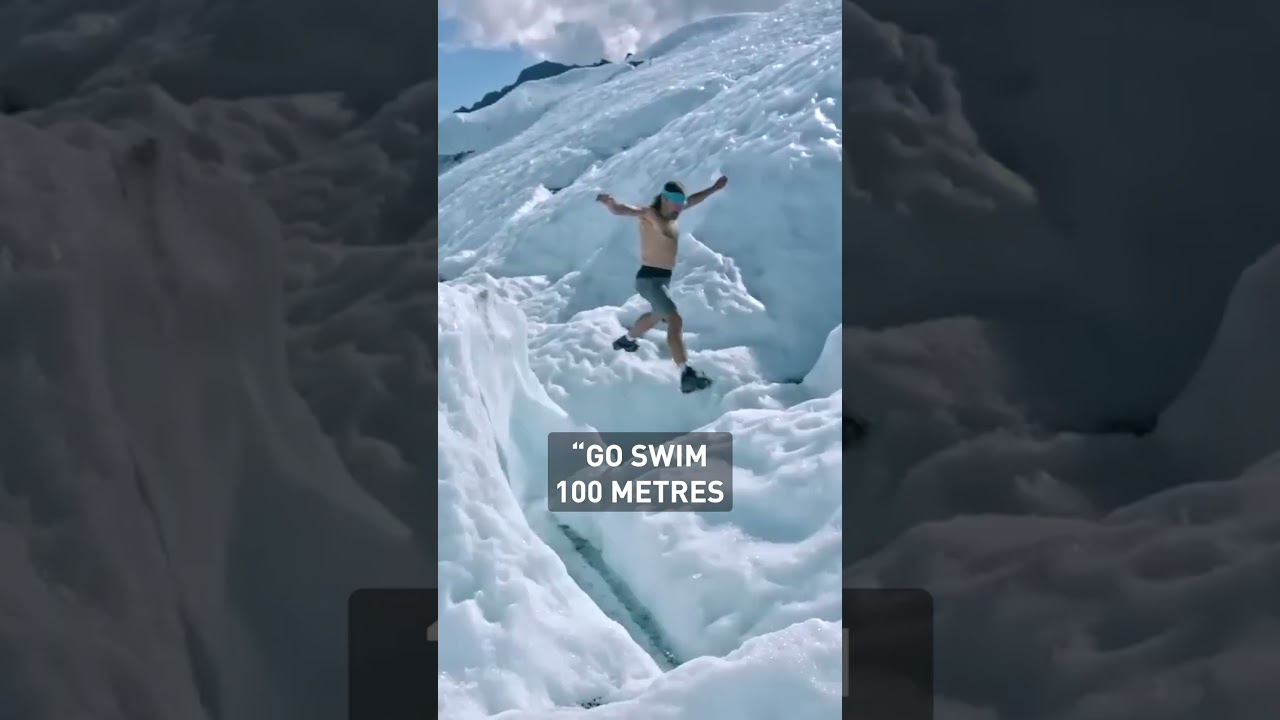
Do you ever fall asleep during Wim Hof breathwork? #breathwork #wimhof #sleep