Wim Hof Interview (Full Episode) | The Tim Ferriss Show (Podcast)
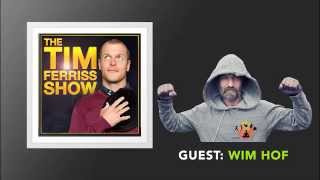
Wim Hof, the Dutch "Iceman," explains his method: controlled breathing, cold exposure, and mindset. A 2011 study showed that after four days of training, novices could suppress inflammatory immune responses. He discusses swimming under ice, climbing Everest in shorts, and using cold showers to improve mood and activate brown fat.
Chapters
So I'm recording. Could you just tell me maybe what you had for breakfast?
Yeah, nothing. I had nothing for breakfast. I never eat breakfast.
Okay.
Just once a day.
All right. We're going to talk about that for sure. Let me just pause this. Optimal. At this altitude, I can run flat out for a half mile before my hands start shaking. Can I ask you a personal question?
Now would seem an appropriate time.
What if I did the opposite?
I'm a cybernetic organism living tissue over metal endoskeleton.
This episode is brought to you by Audible, which I've used for years. I love audiobooks, and I have 2 to recommend right off the bat. Number 1 is perhaps my favorite audiobook of all time, and that is The Graveyard Book by Neil Gaiman, the only audiobook I've wanted to immediately listen to a second time as soon as I finished. It's amazing. You will thank me. The Graveyard Book. The second is Vagabonding by Rolf Potts, which had a huge impact on my life and formed the basis for a lot of what became The 4-Hour Workweek. So all you need to do to get your free audiobook and a free 30-day trial is go to audible.com/tim, and you can choose one of those two books, The Graveyard Book, Vagabonding, or more than 180,000 audio programs. So that could be a book, that could be a magazine, that could be a newspaper, it could be a class. It's that easy. Go to audible.com/tim. Audible.com/tim. That's audible.com/tim and grab a book. Enjoy. This episode is brought to you by a new sponsor, so listen up folks, this is a good one. Because have you ever wanted to be as powerful as a mullet-wearing ninja from a 1980s movie, or as flamboyant as Big Gay Al? Big Gay Al in South Park, or as sleek as a Black Panther in the Amazon on the hunt? Well, there's great news because I've been testing this product that you wrap around your genitals and it makes you feel like a superhero, and it is called MeUndies. I've I've spent the last 2 to 3 weeks traveling with underwear from these guys, and they are comfy. I gotta tell you, it feels like a geisha is giving your groin a hug. And it's not just for dudes, but if you go to meundies.com/tim, that's M-E-U-N-D-I-E-S.com/tim, you can see all of the underwear that I've been wearing. There's some pretty ridiculous ones, and I will also highlight my favorite. You'll probably be able to guess which it is. These underwear are made from Micro Modal, which is extruded from Austrian beechwood trees in the Alps. Yes, fancy. And it's 2 times softer than cotton, scientifically tested using the Kawabata method developed in Kyoto. You know those Japanese, very crafty. And I will say a few things. Number 1, if you go to meundies.com/tim, you get to see all of these spectacular underwear that I've been wearing, and I am a bit of an underwear connoisseur. Socks, Fashion sense with sweatpants, not so much. Underwear, I understand. So check them out. And if you go to meundies.com/tim, you will also be able to see lots of hot ladies wearing MeUndies female underwear, and that's just a lot of goodness for both the men and the women out there. So check it out, meundies.com/tim. I love these underwear, and I am going to be packing tonight probably 6 to 12 pair to take with me to Australia. They're great. Check them out, meundies.com/tim. Why, hello, lemurs and leprechauns. This is Tim Ferriss, and welcome to another episode of The Tim Ferriss Show, where it is my job to deconstruct world-class performers, whether they are actors like Arnold Schwarzenegger, military strategists or generals like Stanley McChrystal, chess prodigies like Josh Waitzkin, or in this particular case, a miracle worker of sorts. In fact, you could say he is a daredevil. Wim Hof. Otherwise known as the Iceman, is a Dutch world record holder, adventurer, certainly daredevil, and he's nicknamed the Iceman for his ability to withstand extreme cold. He is the creator of the Wim Hof Method and holds more than 20 world records. He is, in my mind, the outlier of outliers, not because he does so many absurd things and proves that these impossibles are in fact possible, but he routinely asks scientists to scrutinize and validate these feats. That's what makes him very unique and very interesting for this type of conversation. What are some of his feats? Well, in 2007, he climbed past the death zone altitude on Mount Everest, which is around 7,500 meters, wearing nothing but shorts. 2009, he completed a full marathon above the polar circle in Finland in temperatures close to -20 degrees Celsius, again, dressed in nothing but shorts. He holds the Guinness World Record for the longest ice bath, which is around 1 hour, 53 minutes, and 12 seconds. But it's not just cold. He has run full marathons in the Namib Desert without any water. He has also had top toxins injected into himself under doctor supervision and demonstrated that he can effectively control his autonomic immune response. This is crazy talk. These are things that fly in the face of many textbooks, and now he is featured in textbooks himself because he has documented all of this. And it's not just a Wim specialty. He is not a mutant. He is able to train others to achieve many of these same effects and abilities, in some cases with just 4 days of training. So we'll dig into all this and more. I love this conversation. He is a human guinea pig of human guinea pigs, certainly, and makes me feel like an amateur. So without further ado, please enjoy my conversation with Wim Hof. Welcome to the show, Wim. I'm so pleased to have you.
Great. Thank you for welcoming me this way. Thank you very much.
I've been a fan for quite a few years because we have, as we mentioned before we started recording, a mutual friend in Ray Cronise. And he was in my second book. So, I looked very closely at cold exposure and of course you, the Iceman, came up over and over again. So, it's really nice to finally chat with you. I feel like it's been a long time coming. And also had two past guests or three past guests on this podcast, Laird Hamilton and Brian McKenzie and also Gabby Reece, Laird's wife, who are big fans of your methods and techniques who have been practicing it. So, they are— you have a lot a lot of fans out there, I'm sure, listening as well. And I thought we could just start with your name. I've always loved your name. Is Wim your full name?
Yes, W-I-M, Wim.
And does that, does it have any particular meaning or how did your parents choose that name?
Wim is a common name in Holland, in the Netherlands. But I looked it up and It says it's the protector of the people. Any name has got some etymological roots to it. My name is the protector of people. My brother's name, who is my twin brother, is André. André, en français, André. Andrew, like Andrew. He is the protector of goods. So who's better? I don't know.
I suppose you need both. You need both types of protection, right?
Yes.
You have such a fascinating story and you have a lot of accolades, a lot of records. I think more than 20 world records at this point, it seems. What was the first world record that you set?
The first was in Paris, just staying half an hour immersed in ice. And 12 days later I repeated the record time and made it an hour in Hollywood, actually. Yes.
And I saw one also, I mean, you've spent a lot of time in ice baths and I've largely influenced by you and a handful of other people, Tim Noakes, Ray, I'm a huge fan of ice baths and my fans always complain about it, but I've seen you in so many containers full of ice. I saw one where it looks like there was a lot of Chinese or Japanese in the background. What has been the most challenging cold exposure experience that you've had, whether it's for records or anything else?
Maybe losing my sight while I was swimming underneath an ice deck of almost 1 meter. I had no goggles on. So I lost sight at 35 meters, something like 40 yards. And I lost the hole. And yeah, things like that shit happens. It happened over there, right there, with a meter ice deck above me. So yeah, that was some great experience. Another one was losing my way on Mount Everest in shorts at like 18,000 feet. In a blizzard, in a whiteout. So things like that happen, yeah. And they are challenging, but then it throws me back to the depth of myself, which is trust and confidence. And I got it.
What do you say to yourself in one of those moments? So I guess physiologically, did your retinas just freeze? Or when you were swimming under the ice deck in a moment like that, when many people would panic, I mean, did you panic?
Did you panic?
If so, what was the mental self-talk when you realized that was happening?
Very interesting. It is the stress level at that moment is absent. It's not there. I'm just dealing with the situation. And it has been shown in the university that our stress levels, the stress hormone levels are able to be raised Lying in bed more than somebody in fear for the first time going into a bungee jump.
Oh, going into a— doing a bungee jump for the first time.
Yeah, yeah. But not me, because a bungee jump, you are attached. But very unexpected situations in nature, like a blizzard or swimming beneath ice and losing the hole because your eyesight is gone, things like that. That or climbing without gear steep mountains and having cramps. And what do you do at that moment? And that's exactly what I learned, how to raise consciously the stress hormone level, purely controlled. And I'm able to deal with the situation at that moment without panicking. And I think that's one of the crucial findings which could benefit for human mankind as it is, you know, very subjected to stress all the time, panicking, having fear and all that. And I learned in nature how to deal with that, and the cold brought me that science, brought me that knowledge, wisdom actually.
And the raising of stress hormones, so controlling something that has long been thought to be part of the autonomous nervous system, something that you have no control over, right? And we'll get to the breathing because breathing is very interesting since it's both autonomous but you can consciously control it and practice different methods. I think it was certainly in the Vice documentary that recently came out, which I recommend to everyone and I'll link to in the show notes, but was it in 2011 that you were injected with some type of virus or bacteria? To see if you could control the immune response. That was at the Dutch— I'm going to mispronounce this— the Radboud University?
Exactly. Radboud University in Holland and the intensive care nuclear science. I underwent an experiment and they injected me with an endotoxin, with a toxin actually, which is a part of a bacteria. And that creates a very dramatic immune response. And as we have no control over the immune response in our body, they thought I was not able to do it as well as expected because nobody showed to be able to suppress the immune response because it is part of the autonomic nervous system. And nobody is able to do that until now. I showed that I was very able within a quarter of an hour instead of hours suffering from uncontrolled shivering, fever, headaches, and all that. I showed within a quarter of an hour to have control complete over the symptoms and also the cytokines, which are the inflammatory beings in the blood created by the immune response. And I showed in the blood and by blood results to suppress them dramatically within a quarter. And then they told me, okay, but you are an exception that confirms the rule because you have been training so many years, you are the Iceman, you do exceptional features, but nobody is able to do that without that proper training of so many years. And I told them, no, I can train them within 10 days. And then the professor was really challenged because if this group would show to be able within 10 days to be able to influence deeply into the autonomic nervous system related to the immune system, Then that's for the first time in the scientific history. So, but he saw the indication of the possibility, but still thought those guys are not going to be able to do that within 10 days. And you know what? It wasn't within 10 days, it was in 4 days of training that I made them able to undergo the same experiment. That means the injection of the endotoxin and have them within a quarter of an hour completely control over their immune system related to the autonomic nervous system. So they showed a 100% score of everybody to be able within a couple of days to go in to tap into the autonomic nervous system related to the immune system. And yeah, and the training, about the training prior to it, we had our beers, you know, in the evening and a lot of music and very relaxed. And their mindset, I said, hey guys, Probably you guys are the new gladiators. We are going to win the worst war ever, which produced the most casualties, agony, pain, and all that. And that's the bacteria. That's the vaccine. That's the virus. And we're going to win this war. Are you with me? That's the way I talked to them. And so they had a mindset. So in the evening, we had a relaxing— it was like a hippie movement, but this is a new revolution. And in 4 days' time, they were able at the 4th day without prior experience in the cold, they were able to go in shorts At minus 10, that's about, I don't know, in Fahrenheit, Celsius. This is Celsius. I mean, it's freezing cold.
Yeah, yeah. It's probably in the 20s. Probably in the—
Yes, in the 20s.
Below freezing. Yeah.
And then for hours and hours, we were going uphill and up the mountain. And we arrived at the summit after hours. And it was minus 27. -27 Celsius. That is more than minus 20, it's probably 10, something like that. And we danced the Harlem Shake up there. Then I knew these guys are ready. In 4 days' time when they will be internalized in the hospital and injected with the endotoxin, They will be able because I feel when somebody is back into its natural state of his or her physiology. And I know how to do that. The cold trained me. The cold is my teacher.
And with these subjects, I'm so curious to ask because I mean, I am certainly not as proficient as you are in any of these techniques, but I've enjoyed experimenting over the last 10 years and writing about these short experiments, whether it's related to breath holding with David Blaine or other aspects. Obviously, you're a professional and I am not, but I'd be very curious to hear you perhaps elaborate, for instance, on the first day of training with these subjects in preparation to be injected 4 days later.
Sure.
What did the first day of training look like for them?
And just in the morning at 8 o'clock without food intake, we do breathing and they lie on the ground all because that's the most relaxed pose. And if you are relaxed, you are able to store up a whole lot more oxygen than when in tension or in posture. So I say to them, just lay down, relax. Now we are going to begin. Just breathe in deeply and let go. Breathe in deeply, let go. Make it a rhythm. Breathe in deeply, let go. Not fully out, but fully in and let go. And repeat that about 30, 40 times until these indications or symptoms come by, and that it means lightheadedness, loose in the body, feeling loose in the body, tingling, contractions. That's because carbon dioxide goes out, oxygen is roaming freely throughout the body, and the pH levels rise, they are optimized. So, they get to their best condition. And that's proven, that's proven. And they saw— when we do this, they saw all these results chemically. Then, once you feel positively charged with all these symptoms of lightheadedness, feeling loose, contractions, and tingling in the body, I ask them, just breathe in deeply, let go. And now the last time, breathe in deeply and let go. And after letting go, after exhalation, stop. Refrain from breathing. There's no need. We get a whole lot of oxygen, and measurement devices are not able to detect how much. It's more than 100%. That's my opinion. But devices still are not able to detect that. They only can go up to 100%, as they say. But the 100%, the body is able to store up more oxygen than measurement devices of now are able to measure. So then after 1.5 minutes, Then, you see that the measurement device shows 100% and then it goes dramatically down afterwards.
And you're using a pulse oximeter, something that you clip on your finger?
Yes. So, you need a heartbeat, you have a heartbeat and you have the saturation of the oxygen inside the blood. So, the amount of oxygen. So, after 1.5 minutes, you see with everybody, that the saturation of the blood is going down. And you know, people with COPD, that's lung diseases and all that, they suffer from real severe COPD when they have 85. We go to 90, to 80, 70, 60, 50. People die at 50 and 40%. Saturation in the blood. We go past, we go even to 30, and then the device, measurement device, the oximeter shuts down. It is not measuring anymore, but we even go past that one.
Now, why don't you, why don't the subjects pass out at this point?
They don't pass out because they are alkaline.
I see.
Their pH degrees are really perfect at that moment. And instead of a person who is dying, he is very acidic. So that's the difference. So because we are so alkaline, people maybe sometimes are able to pass out, but just 2 seconds or 3 seconds because they are out of their conditioned control. But after exercising, they have regained not only control in those moments and in those situations, they win a new part in the brain. They get very deep in the brain, and it's all new terrain. It's like a baby. A baby has no problem with their legs, but there are no motoric motorical neurons to the legs yet. So, we are going into different parts of the brain where the guy or the girl never has been. So, it's logic that people are able to pass out, but nothing happens because they are alkaline. So, they just wake up and mostly or mostly, almost always, they wake up very happy. And it's like a drug experience. So, but that's besides of the real effect I'm trying to, not trying, which we showed scientifically is to be able to tap into the immune system in all the layers. Those are 3 layers.. And normally, we are not able to get into the second and the third layer. And I say now, we have found a key to the second and the third layer. That means the nonspecific immune system and the specific adaptive immune system. And that makes us looking to disease completely different because our ability is so much more And we have been publishing— people in Boston, they published it throughout America on the universities— chapter 22 on Biology Now. And it tells that we have tapped into the autonomic nervous system, into the innate immune system, which was up till now not possible. And we did it 100% with a group of 9 people showing that they were very able to do it all, all of them within a quarter of an hour and have spectacular results. So it is science now, and now it needs to get to every person in the world how to tap into the deeper layers of our physiology. Without training, you know, years and years and years and being yogis or being these super athletes and all that. No, my aim is within a couple of days we are all able to tap into the deepest layers of our physiology and reset our immune system, bring it under our will. And that's my aim. But then we make fun too and all that. But for being serious, that's my goal, right?
No, I was just going to say, I mean, it's very hard to get the— I think you're approaching it in a very intelligent way because it's very hard to get truly serious work done if you're serious all the time. So yeah, I enjoy— it's very fascinating for me as a teacher to watch how you coach your subjects because you use beer, you have guitar, and I think it's a very important component. It would seem to be. And I wanted to ask you about the breathing on day 1 just one more time, which is— Yes. Is the breathing exercise on day 1 something that then the subjects use during the injection or before the injection, or is it an exercise to prove to them that they can do more than they think they can do, and it's more of a confidence builder that you use to set the tone for the rest of the training?
Yes, both. So it's a confidence builder and is very effective at the moment when something, uh, like an injection is coming and they know it will result in a dramatic immune response and they have to build up and make alert their shield or their protective lines of defense, which is the immune system. Yes.
So both, both. And is this something that you can do after the fact? So for instance, at this point with your level of proficiency, if you were to contract a disease without realizing it, and then to get very sick, would you be able to reverse that? Or is it something that needs to be— is that— does the shield need to be activated beforehand in order for you to control that autonomous, so-called autonomous response?
Interesting, very nice. It's both preventive and healing. So once a, a specific hormone or molecule must be generated to get to an invader, a non-self invader in the body, which could be a bacteria, a virus, or a back cell, which got through the first two lines of defense. Then the third line is more specific, but it takes normally like weeks, or sometimes it's not traceable because an invader is mutating. But we have now a method that is able to tap into the third layer and make the specific adaptive immune system rapidly active even after something comes in. So it's both preventive, but is also when you feel you become sick. So a an invader has gotten in, then you are still very able to restore the balance within. Got it.
Yes. And if we're looking at the explanation that the scientists have at this point for your ability and your subject's ability to protect themselves or shield themselves, it seemed like one hypothesis was you being able to increase, I think, noradrenaline or norepinephrine levels in the body. Do you agree with that, or do you think there are other— do you have other theories?
I do, I do. I'd love to hear. It's like if you have HIV, and then the immune system is still looking for answers up till a moment that it is not able to specify anymore what's going on, and then we get AIDS. That means that all the defense systems are shut down. Now, we have shown by norepinephrine and noradrenaline, adrenaline, that we can suppress the inflammation. That means the inflammatory bodies and creating an immune response, and we suppress it. That would be like shutting down the immune system that makes us, following the scientific logic, that makes us more vulnerable. No, what we do, and they still got to find out, but I just use my natural logic, and you can read upon in the papers, that we have found a way to awaken the third line, which normally takes weeks or months to find a specific hormone or molecule, which then is going for the target cell to go on the membrane and to kill the cell.
So that's interesting. It's almost like internal drug development. You're trying to find the lock that— I'm sorry, the key that fits the proper lock, but you're doing it internally. And that normally takes a very long time biologically to conclude with, but you're accelerating that process.
Exactly. And then these hormones are not needed anymore because this specific hormone, this specific molecule gets on the cell membrane and then all this like fire people, which is noradrenaline, gets throughout the system and the epinephrine as well. And they suppress the inflammation, the action. And that is only possible when the target is already annihilated, when the target has a specific molecule on it because of the third line of defense. Right. And that's what we found. We found a way. And it's also Dr. Kevin Tracey from Manhattan, New York, Wim Hof, who tells that he is very much— he's an authority in the biochemistry. And I worked with him in 2007, and I showed I was able in his institute to suppress or to influence the vague nerve, which is the vagus nerve. Yeah. Yes. And now he told in Nature Wim Hof told immunity does not come without neural regulation. They found a way.
So what do you— now, for instance, I was, I did my undergraduate for a very short period of time in college. I studied neuroscience, and I remember when I was in college, there was a professor there who determined that, for instance, that the neurons in the hippocampus could actually be regenerated. And this was very, very big news because people had assumed for a very long time in a number of parts of the brain that neurons could not be degenerated or regenerated. Basically, as you got older, you just lost neuronal function and it could not be restored. Now we know that's not true. And so you're having this similar experience where you are proving to people that things are possible that were thought impossible. What do you think— what other impossibles do you think we will prove are possible in the next, say, 5 years in your kind of area of experimentation?
Very, very nice thought and a very good question. I think depression, for example, and the brains itself. We are able to tap into the brains and do so much more, influence so much more which is related to the hypothalamus, the pineal gland, the pituitary gland, the hippocampus, and the amygdala, the seat of emotion. All these are part and around the brainstem, which is the reptilian brain, the primitive brain. And because of our comfort way of living and behavior, this part doesn't get enough stimulation.
Right, we're untrained.
Yes, it doesn't get this stimulation nor oxygen. So, there is a certain kind of deregulating pH level going on. It's just due to a lack of oxygen. There is no action, no stimulation. So, in time, it begins to malfunction. And that's actually a sort of a logic. So we suffer from a whole lot, for example, of depression in the Western world because we go too much into the neocortex, the superficial brain, the new brain, and we have to do all kinds of things and deadlines and worries. We cannot stop it and it consumes all the energy. What I do and learn is to go into the brainstem again. The simplicity of our reptilian brain, the primitive brain, the brainstem, which is related to all these beautiful glands over there, which is the pineal gland, pituitary gland, and the controller of us, which is the hypothalamus. Right. Seed of emotion itself, which is the amygdala. It's all there. And so I found a way to get into that and show just by this example of ours, to lying in bed, people are able to produce more adrenaline than somebody who is in fear going into a bungee jump for the first time. You see what I mean? Right. That means fear, emotion, uncontrollable emotions and fear. We are able to control that, and that's because we tap controlled into the brainstem and produce any adrenaline or epinephrine or all these, all these gland— no, not glands, hormones we need. And it's the pineal gland, finally, which is the control of all the other glands in our body. So we are able now to tap into that. So the coming 5 years, I want to eradicate depression. I want to eradicate the— yeah, actually, disease. I know that are big words, but We are into that. I'm not only into that, there are also professors, biochemists who stand my point and they see it's so simple, so accessible and so effective, but it needs to be translated into our infrastructure of thinking as well as of interests. It needs to cooperate with schooling. Now we got on the university. That's nice. It's coming top down because if the US universities are taking it on, then soon all the universities in the world will follow. So we find— okay, I rest my point for now.
And with, for instance, depression. So I'm sure there are a lot of people listening who have bouts with depression or even extended depression.
They have no control over their mood. That's no control over the brainstem. We bring it back to the brainstem.
Right. So, for instance, I find that it's very helpful for me at least to use cold exposure and whether that's cold showers or ice bath, it has a tremendous mood elevating effect or maybe mood balancing effect depending on on how we want to explain it. But for someone who is feeling depressed, what are some simple things that you would recommend that they try potentially?
First, get into conscious breathing, deeper breathing, and be consciously doing that. It showed in the university that I was able just, you know, about consciousness, just by thinking that I was going into an experiment, I raised cell-on-cell level, the metabolic activity in the cell with 300% just by thinking. That's our mind. So, our mind should be— with people who are depressed, they just got lost. They have no control. So, they have to regain control by consciously going into breathing. Breathing brings about— deeper breathing brings about a better pH level in the body, but not only in the body, also in the mind. And the right pH level will make the neurotransmitters— that's your mind, electrical signals finally— work better. And then you are able to learn to direct these neurotransmitters or thoughts, the mind itself, consciously with the right pH degree. So, we make it simple and we say conscious breathing all the time because you lost track and it takes energy, it takes your mind, and it You got to bring back your mind under your control.
And so, I mean, this I think is related to a broader topic of compulsive behavior, right? Or people who have automatic behaviors that are not serving them. And one of those is oftentimes eating or overeating. And before we started recording, I asked you what you had for breakfast and you said nothing because you eat once per day. So, could you describe what your daily eating ritual is?
I eat after 6:00 in the afternoon, and that's already for 35 years. And there is— I got a lot of energy. And you know why? You have a lot of allergies? No, energy.
Oh, I'm sorry. Sorry.
Got it. Maybe allergies as well. Women, you know. Okay. Just to make fun, you know.
I think you and I have to have wine next time we do this.
I think it's very healthy. Very good. The thing is, by better breathing, conscious breathing, you make this chemical process in the, in the cell happen, which is called aerobic dissimulation. And as you know, in the cell production to make energy, mitochondrial energy, you need food. But if you are able to influence by better breathing, a deeper breathing, then you produce simple metabolic activity in the mitochondria by better breathing, and that creates energy, which was the purpose of food. So food is nice.
Hello? I'm here.
Oh yeah, food is nice, food is great. You should do it with a lot of love and having a nice time making it, and because that's the energy you get finally also. But like me, it's a sort of a fast, but I have to feel. Your, the senses really get, are going to be much more effective, and the cell activity is going to be much more effective, and it is using all the food. And you can eat after 6 o'clock. I can eat what I want the other day. I'm slim again. And that's making, you know, making the body work. But as we eat all the day long, The body is not shutting down, is not effective anymore, doesn't go deep, doesn't go into survival mode. It's not natural again. So it's beginning to store up all the fats because it doesn't know what to do anymore because the deeper mechanisms are not working anymore. So yeah, and how to bring that?
And what do you usually— what are some typical meals that you have after 6 PM?
That, uh, I like pasta. Yeah, and I like a couple of beers too.
And, uh, yeah, sure, sounds good. I, uh, the eating ritual is very interesting. I've interviewed a number of people on this podcast, including General Stanley McChrystal, who's a 4-star general, and he was— he's also famous for getting a lot of exercise early in the day and eating one meal per day. He's also very well known for that. You described the breathing exercise or some of the breathing exercises that you do. Does the type of breathing that you do have anything— is it similar in any ways to holotropic breathwork if you're familiar with that? I heard from someone, and maybe you can correct me if I'm wrong, that some scientists had looked at whether you were producing or releasing more DMT during some of your breathing activities. Is that accurate or did I get some misinformation from someone? I'll just be very—
Oh, no, that's a professor, right? Yeah. I don't know. Colorado? I don't know where. What is his name again? I don't know. He's an authority in the field. But I had a dialogue with him and he is talking about all these, you know, ayahuasca and all these drugs and all this and experimenting. And I told him, I'm able to produce, to trigger the pineal gland in a way that DMT is released. And yes, Yes, it can make people very, very happy doing all these breathing exercises. That's true, but the purpose of DMT actually is to work out the subconscious while dreaming in the rapid eye movement sleep. And the other one is when you die, then DMT is released as well as to make it more, you know, happy going after. Having a nice time, go to the other side, something like that. So there is a natural purpose for DMT, but we are very— I'm very able to trigger that, that creates DMT. And I told him, and I told him also, it's not only about the DMT, which is very nice, it's a nice drug, you know, all that, But the better part of it is if we are able to trigger the pineal gland, which is related directly to the hypothalamus and the pituitary gland, if we are able to trigger that one and to decalcify because of our comfort way of living this pineal gland, then this gland is able to to direct all the other glands. It's the only gland that is directing all the other glands, and we can bring— we can neurally connect with it without our neocortex is what we do. And it shows them that we are able to prevent from disease or bacteria coming in because we are able to activate it much more directly. And that's the main purpose to, you know, for looking different at what creates disease. It's because of our pineal gland, or the brainstem is not really active anymore because it's neglected because of our comfort style of living and behavior. And we want to make a shortcut and to show it that it is simple, accessible, and effective.
Well, I think that the, you know, the, the comfort is important to underscore because, uh, I was having a conversation with, uh, Dean Karnazes several years ago. He's a famous ultramarathoner. You guys would probably have a lot to talk about. And, uh, he, uh, he ran, you know, 50 marathons in 50 days in 50 states. He's one of those guys. And, um, he said that, uh, he lives in Northern California near San Francisco where I live. Wim Hof, and he's— and one of his lines, and I might be paraphrasing this, but he said, "People now, they confuse being happy with being comfortable, and they think being comfortable is being happy, but those are not the same thing." And I'd like to talk about discomfort for a second. So, you ran a marathon in— was it Death Valley with no water?
Yes. I think like that. Yeah.
Namibia. Namibia. That's right. Even more dangerous because you have snakes and whatnot. So, is it possible to not— so, of course, when you are submerged in ice, it's been demonstrated that you can maintain your core body temperature for a very long period of time. Is it possible for you to drop your body temperature in a hot climate, or is it training yourself to withstand the higher temperatures?
Yes, exactly. Both, actually. Your tolerance is rising, and that means you are able to endure a whole lot more because you are able to influence the hormonal system in a way that neutralizes pain signals. That's one. The other one is, because of my training in the cold, I not only trained in the cold, I trained to endure impact of temperature. And those are receptors of ours which I have trained. And then because of that, which is part— which is controlled by the hypothalamus, is the thermoregulator of our body. And because I trained in the cold, I trained the thermoregulation of the body. Then without training, without training a meter of running, And then not drinking a full marathon in the Namib Desert in the heat without prior training or ever been there before. I was very able to do that because this thermoregulative mechanism, the hypothalamus, I had trained in the cold, which is the temperature impact. So I learned to deal with the temperature. And you know what? And not only the temperature, which is cold and heat, but also deprivation of oxygen. That means going up Mount Everest in shorts. That means it is very cold out there. There is no oxygen. And you need oxygen for combustion in the cell to create heat. Energy and there is no oxygen. So I learned in the cold how to deal with impact on the nervous system, on our metabolism. That means cold, deprivation of oxygen, heat, but also stress, daily stress. So the secret of our comfort, as you say, and the people, they are confusing Like paraphrasing this great guy of Northern California who is telling the truth, we are confused. We don't know anymore what real comfort is. Real comfort is the power to regulate all the impacts existent in life. That means disease, which is impact on our body. Heat, cold, deprivation of oxygen, stress in general, any stress. And we are able to control that a whole lot more, and that brings about the real comfort. Because if you connect yourself with all these, all the systems within, then you feel really good. Real good is real connection, and that, that, that's something we are going to be That's why all these outdoor freaks and idiots and etc., like myself, are doing this, because we just feel good about it.
Well, it seems like it's also feeling comfort is in a way becoming confident in discomfort, right? So you have a confidence that you can handle and adapt to whatever is going to come your way, much like some of the, I suppose, you know, elite military that I've met who are very, actually very relaxed. I mean, most of the high-level guys I've met because they've systematically exposed themselves to discomfort so they don't fear discomfort, if that makes sense.
Exactly. They control their stress hormone release completely.
Right.
That's what I'm talking about.
Now, you speak— how many languages do you speak? 10. 10. That is a lot of languages. How did you learn that many languages?
Just be open and love to learn, and that's it. I, I had no real teachers then, you know, people in the street. And sometimes I had to look for a teacher, like a Japanese teacher here in Amsterdam and a Hindu teacher, a pundit. And so, yeah, I was just interested. If you are interested in life, you get And you never stop learning because you love it.
Is there— what language of all the languages you've tried, what was the hardest for you?
The hardest? Maybe Polish.
Polish?
Polish. Because it's a complete different set of grammatical structures.
I see. Polish. Yeah, na zdrowie. I guess I bet you know that one.
Yeah, yes, of course. Drinking beers, come on.
I know, we definitely have to have a round 2 with some wine and beer. But the next question I'd love to ask is perhaps a simple one, but why are people fat? And how can people develop more brown fat and use it effectively?
Yes, people are being fat because it's a protective mechanism of our bodies. It's actually an answer to too much impact, too much wrong chemistry going on. So it wants to make an insulation. That's a natural thing to do of the body. Now, we are suffering from that now. It's called obesity and being overweight, and we have no control. Just bring them back to the control. How do we do that? By this adipose, brown fat adipose, because they have a— mostly of those people have also an absence of brown fat because they have no stimulation anymore for a longer time. And then this insulation reflex is beginning to build up and build up. But actually this is telling, hey guy, I'm trying to do my best for you, but you are not doing anything in return. And as long as you're not triggering or stimulating the adipose, the brown fat, then it succumbs, it goes away, and then it is not able to divert white fat into energy anymore. So it's gone. With people with obesity, they have no brown fat anymore. So there is a logic explanation to it, and I know it. So they have to bring it back.
And is that cold exposure primarily that would be the first step to try to—
Cold exposure, natural exposure to the elements, that's one, in an adaptive way, gradual way, I mean, then we are able to adapt with it. But as these mechanisms are not working really well within these people, so they have to be very you know, sensitive and gradual going into it. And breathing. Breathing is chemistry, is influencing the chemistry right here, right now. Better breathing, deeper breathing brings about a better pH degree in the body, which then finally results in a faster metabolism.
And if people are practicing this or want to practice this breathing on their own, is there any particular mantra or anything they should focus on or say to themselves as they're doing this? Is any type of meditation okay to start with, like using an app like Headspace or Calm, or do you have a particular recommendation? If someone said, "I have 10 minutes a day I'm willing to spend doing this," what would you say to them?
Yeah, just have your favorite music going on. Go really into it and go really into the breathing because it's about chemical changes. And whenever you hear the right music, you are able to relax more and more oxygen then is able to get into the body, which is finally changing the pH levels in the body to its natural state. That's what we have Because we live in such a compressed society, too much stress going on, we do not have control over the stress, we get out of our natural state. So, within 10 minutes, we are— I say within 4 minutes, just do this breathing exercise, which I teach people and do push-ups, push-ups without air in the lungs. You should do that.
So you do that after the, after the exhale?
Yes, after the— at first you do like 30, like I explained, deeply within, let go deeply within, look at the indications, feeling loose in the body, lightheaded, contractions, a little bit tingling. That's all okay, like 30 or 40 deep breaths. And then letting go 40 times. Then you will arrive at that being charged with oxygen and the CO2, carbon dioxide, got away, pH level has gotten up. Then you should breathe in fully, letting go. After exhalation, you stop and you go do push-ups, and you will see you are able to do more push-ups without air in the lungs because she influenced into the chemistry.
Hmm, that's— and probably a good idea to do on a soft surface first. Yes. Just in case you decide to kiss the floor a little too hard. No, this is something that Laird and his guys have been working on as well. I mean, a lot of these guys are working, doing push-ups or stationary bike. Very interesting. They have free divers that they sometimes work out with. It's very fascinating. Great. Well, I'm going to try that. I would love to switch gears just a little bit and ask you a couple of rapid questions. You can certainly take your time. It doesn't mean you have to answer them quickly. But the first is, when you think of the word successful, who is the first person who comes to mind for you?
The heart in any person.
The heart.
The heart in any person. That's success. Further, maybe Mandela.
Nelson Mandela. Yes. And with the heart, if someone feels like— if someone doesn't feel successful, what would your advice be to them? Or what would you say to them?
Yeah, just do the method. I mean, this method is shown scientifically to be able to tap into the deepest of our physiology. If somebody feels he's frustrated, it's because he is not able to tap in his or her physiology at the deepest. He has no control. That makes people frustrated. And we mirror that with society and all that. But you got your vehicle. If you are able to steer your vehicle, your body, your mind, toward whatever you feel, then you will be successful. So any—
yes? I'm sorry to interrupt, I was just going to ask why Nelson Mandela.
Ah yeah, he's just a good guy. He was always smiling, he loved the women, and, uh, he stayed like 25 years believing in this case, right? And that makes him for me really strong. And, uh, I love people who have faith. Simply because that's what they feel. And yes, I, I've been so many years neglected and mocked, mocked, you know, all that, but I always had my faith. And now it is science. For the same, like 20 years ago, they told me you're crazy, you're an idiot, you're a lunatic, and all that. Yes. And even my— in my family, I was the black sheep. And right now I'm the whitest sheep ever. So it's a lot of hypocrisy going on in the world because people do not know. But I got my faith, I got my belief, and I want to go up till the point that we scientifically showed everybody is able to tap in its endocrine system so much that depression and being unhappy and being frustrated is no longer part of humanity. It's a choice.
Now, this is a topic I think we could talk about for a long time. What is your favorite book or the book that you've given to other people the most as a gift?
Whoa, I never gave so many books. Except for the books I'm writing right now.
What do you give to people as gifts? What do you like to give people as gifts?
Oh, stones. Stones. A lot of natural things. I give people natural things. I collect a whole bunch of things, and then 2 months later, I'm fed up with the thing. And I think, this one wants to go with you. And those are beautiful stones. When I saw them the first time, I thought, wow, great stone, beautiful, oh, this artifact, oh, what great, wow, nice. Then 2 months later, it's gone, you know. Then I just gave it away. And so with books, the same thing. Siddhartha and Jonathan Livingston Seagull comes to my mind. That's okay. In some scriptures, I read about the Bhagavad Gita, and the Bible, of course. All these books, I was reading hundreds of books, and at a certain point I could not make the connection with my— the deepest within myself, which was the seeker. I was soul-searching, and I found it finally in the open book of the ice water, because the ice water is merciless but righteous. It brings you just within, and there is no chit-chatting around that. There is no philosophy. You just do it right or you do it wrong.
Now, you've had, of course, some very challenging times, perhaps more so than many people I've spoken with. You had a very tragic premature death with your wife, in the case of your wife, what do you do to overcome those dark periods?
Yes, very good, very interesting, very real and deep going. Losing the person you love. I have 4 children with her. They work with me right now. They are like 33 years old, the oldest one.— and then 2 daughters and another son, and they all work with me right now. Oh, actually, one is working right now at the Dutch Embassy in Washington, D.C., in America. But the rest is working with me all the time. So losing the love of your life, how deep can you go? And being torn apart. That was what I was experiencing at the time.— then I was the only person who was— yeah, I was alone and had to raise 4 kids alone. And they were like 7 years old, 8 years, 9 years, and 11 years. And I had to raise them alone. So I received so much love of my kids. And I did my training. And as I told you, the brainstem is also the area of the seat of emotion, which is the amygdala. And because of this training in the cold, I could control, silence myself and go on and always find the energy to go on and to be a father, happy and exercising and practical and with my kids and they gave me a lot of love. But the thing about grief and the emotion is you have to go deep because emotion is going deep. And as we live in the comfort zone, we have no control mostly over emotion. And I tell you, there is a way to control the seat of emotion, which is the amygdala. Connected to the, in the area of the brainstem. So I think this, and not think, my experience tells me discipline, discipline and believing, believing within. There is a way to silence grieved, broken hearts, grief and hurt emotions. Yes.
It's, it's the way I did it. And the, um, it's, it's really been fascinating for me to observe a number of people— I won't mention some of the other names— but who have used specifically exposure to the cold to, I suppose, the purity of that cold and the attention that requires, the sort of purity of attention that it requires to overcome very dark periods or be— to act as a strong component for passing through those difficult periods. It's just a very fascinating pattern that I've observed in a number of my friends. I recognize it. What is your morning, the first 60 minutes of your day look like? When do you wake up? What do you do in those first 60 minutes if you have complete control over that morning?
First, I begin to conscious breathing where consciously breathe. When you wake up. Yes, and your life is all about vital force created by oxygen. Just, it's for free and it's there. And I say, it's, to me, it's so, it's God itself. They like, like the vital force, the chi, the prana. It's all different names of God. They tell all the belief systems tell that that's the vital force of any, yeah, of life itself. So that's a very logic natural way I begin, just breathe. Still laying in bed? Yes, still laying in bed. And then doing the exercise which I explained prior in this interview is very nice because because you are still very relaxed and the body is without tension. So you then are able to go tap deeply into the system.
And how long will you do that in bed typically?
Yeah, stay a half hour, something like that before going into action. Could be an hour because it's never, never boring.
Really? What would you say to someone who says, you know, actually I find it really boring? I'm not saying that I feel that way, but if someone felt boring, what would you advise them or what would you tell them?
It's once again the same thing as this Californian great guy. Dean Karnazes. Yeah, Dean Karnazes. They don't know what comfort is all about. So going deep just by breathing into the depth of our physiology, it's like gaining the aim of all those people going into outdoor or taking drugs or doing extremes or going for a rush. Now you are able to learn to control the depth of your physiology by just breathing properly and going into that system. Boring is something if you are doing things repetitiously, but not breaking through the conditioning. And I learn people to go through the conditioning.
Right, so you have to be conscious about the activity, you can't be daydreaming. It seems you just have to be attentive to your breathing when you're doing something like this.
Yes, yes, just go into it. It's like vipassana meditation. That's what they do. You know, they sit and they just listen and focus on breathing. That's all what they do. And they get into a deeper layer of their brain because they are not giving their focus to something else than just mere breathing. It is so simple but so effective.
I'll try that tomorrow morning. So let's say you do that for a half hour, then what do you do for the next half hour?
Nowadays I do a lot, I'm doing a lot of workshops, lectures, and I'm into science. But yeah, for in between I do exercising.
I like exercising. What type of exercise do you— if you had to choose one type of exercise or two types of exercise for yourself, what would you choose? Strength and flexibility.
What would you do for both of those? Strength, for example, stay on two arms, say, for minutes.
Like a plank or just different types of poses on two arms?
Yeah, with one hand or two, a plank or handstands or pull-ups, push-ups, of course. Those are, you know, power exercises, or stand in a horse stance for an hour that sometimes, just with stones in my hands, and make all kinds of kung fu-like movements, just make them up. And but, you know, to battle my acidic, the acidic processes in my body. So I go deeply into the horse stance and breathe in a way that acid is not developing in the body. So that makes me control the body, and that feels good. And then for flexibility, yeah, all kinds of splits, and then put a couple of legs in my— behind my head, things, you know, do balancing exercises. It's nice. I maintain the body that way. Do you listen to music when you're exercising, or do you do it without music? I simply have no record systems, but right now we bought a center, so I will have my big dojo and a cascade and all that, and a swimming pool and all those things, and then I will have the right music. I make music myself. I play the guitar, I sing, I want to make a CD very soon, and people like me singing, doing all kinds of mantras, because I, you know, learned about the Sanskrit and Spanish songs, English songs, and all kinds of songs. I just make up— I'm a sort of a rapper too.
So yeah, I'd love to hear it. And what musician do you you look up to the most? Is there a particular musician that you, uh, admire, that you would like to emulate or look up to?
I like a lot, a lot, a lot of lounge, uh, easy music.
I like Michael Jackson.
Michael Jackson's great.
Yeah, yeah, he is.
Do you have a favorite song or a favorite album, uh, of, of, uh, Michael Jackson? Yes. Uh, yeah, of all the songs, This Is It for example.
It's a great thriller.
Oh yeah, great. Thriller is great. And his voice is mesmerizing. Oh yeah, totally. Yes. So I, I, I, I, I, uh, gave my son, uh, his name, which is Michael, which is one of my sons. So, uh, things like that. But also Pink Floyd, also Gypsy Kings, you know, with their flamenco. And all the good music. There's a lot of good music, uh, going on.
And, uh, yes, I can't wait to visit the, uh, the center. Is that going to be in Holland?
Yes. Okay, it's, uh, for now it's in Holland. I was looking to make a center in, uh, near San Francisco as well. I got some very good friends over there.
You should, you should, you should come out. Maybe we'll do a workshop and I can introduce you to, uh, I'll invite Dean as well. You could meet Dean. Yes, yes, he's a great guy. He's a great guy. He would love— he would love to meet you, I'm sure. The, um, just a few more questions. I want to be obviously respectful of your time. What, uh, what purchase in the last, you know, 6 months or a year of less than $100— so something you bought for less than $100— has most positively impacted your life?
Uh, stones.
Stones. I love these stones. I want to talk about this. So, so how do you How do you find these stones and what makes you pick one?
Do you have any favorites? I always take stones out, whatever touches my, meets the eye. I take them from the mountains I climb, but I also like these amethysts and opals and all kinds of beautiful stones with beautiful colors. I like them, but yeah, I always take stones from the, I just found a big fossil in the Spanish Pyrenees. You know, big means like 2, 3 kilos. That's a big fossil, yeah. Yeah, a fossil. And I couldn't get it down because I was there with a group that had no backpack. I had to carry the ropes. Because we were doing canyoning, right, all that. So, but, uh, there was a girl from, uh, Austin, Texas, Austin, Elizabeth Lee, and she had a backpack and she, she carried it there for me. It's a good friend. Yeah. Oh, she— I love her so much.
Yeah, yeah, yeah. So the— what, what effect do— and did you— do you put that in your kitchen?
Where do you put such a, such a stone, and what effect does it have on you? Everywhere. They have a solid effect. They are simply there and they are beautiful. And I always pass them on to other people, except for the big ones.
What advice would you give your 30-year-old self?
My 30-year-old self?
Just have faith.
Just have faith.
Faith, yes. What type of faith? That things will work out?
That things will be okay? Simple logic. Have simple logic and understand the things simply and listen to your feeling. Listen to your feeling. Your feeling knows. It is simply sense-making. And that if you are letting it in, your way of thinking, then never lose track of whatever makes sense, which is feeling, which is instinct and intuition.
Right, right. This is something I've been trying to work on a lot because it's easy for me at least to get trapped in my neocortex, to get trapped exactly in the front of my brain where I can make pro and con lists. But the answer is so obvious sometimes because you know that something's wrong or you know that someone isn't a good fit, or you don't trust someone, just like you have that feeling like a dog where you immediately either like or dislike something. Yes. I've been trying to train myself to go back to that simplicity. It's— Making sense. It can be challenging, yeah. So, one or two more questions. If you could have one billboard, one huge sign anywhere with anything on it, What would it say and where would you put it? I would say, uh, breathe, motherfucker. So you could put that on like a busy highway, you could put that on like Sunset Boulevard in Los Angeles, or maybe, uh, breathe, um, you know, I don't know where the way they understand it, but it's really meant lovable.
You know, with strength, it is the answer to the— up till the DNA itself. And it's not me telling that anymore because of the blood results. Professors have confirmed that we are in the middle of DNA. And what is the trigger? Breathing.
So this is, uh, so you could, you could have it say, breathe, breathe, motherfucker, within a smiley, a smiley face, like a smiley emoticon.
That'd be perfect. Yes. So we got a t-shirt, it says on the front, freeze, it's about the cold. And the other side is breathe, motherfucker.
Well, you and I need to hang out more. This has been great. Of course, everybody listening, I'm going to put tons of links in the show notes. You should check out Iceman Wim Hof, W-I-M H-O-F. Definitely check out Wim Hof Method, and I'll link to that in the show notes, which is a 10-week online video course, which a bunch of people whose names you would know are using right now. It's very, very interesting. And there are a bunch of documentaries and links to the textbooks I will include as well. Wim, do you have any last requests or asks of my audience? There are a lot of people who will be hearing this if you could ask them all to do something besides check out the courses and so on, what would you ask them to do? Something they could do when they hear this or after they hear it.
Yeah, just pass on, breathe, that's one, and take a cold shower after a hot one. And just get into the science of this all. It is non-speculative. And for the rest, I just love you guys.
Well, Wim, this is wonderful. Everybody listening, I will link to all these things. You can find Wim on Twitter @iceman_hof, H-O-F, and I'll link to that. Instagram, same, iceman_hof. Facebook is facebook.com/becomingtheiceman. And Wim, thank you so much for taking the time.
This was a blast. Thank you very much. I hear a soulmate I thank you very much. I love you very much. Greetings to Ray Cronus. Definitely talk to him. Be— I will mail him also. He loves you and he loves your work. He loves my work. You know, we like to work to make love happen.
Definitely. Well, we will, we'll play some guitar and have some wine and you can— oh yes, I would love to, I would love to get into some shorts and, and freeze my ass off and breathe at some point up in the mountains. That would be great. So until next time, thank you everybody for listening, and Wim, thanks so much.
Great, thank you very much too.
Hey guys, this is Tim again. Just a few more things before you take off. Number 1, this is Five Bullet Friday. Do you want to get a short email from me? Would you you enjoy getting a short email from me every Friday that provides a little morsel of fun before the weekend. And Five Bullet Friday is a very short email where I share the coolest things I've found or that I've been pondering over the week. That could include favorite new albums that I've discovered, it could include gizmos and gadgets and all sorts of weird shit that I've somehow dug up in the world of the esoteric, as I do. It could include favorite articles that I've read and that I've shared with my close friends, for instance. And it's very short. It's just a little tiny bite of goodness before you head off for the weekend. So if you want to receive that, check it out. Just go to 4hourworkweek.com. That's 4hourworkweek.com all spelled out, and just drop in your email and you will get the very next one. And if you sign up, I hope you enjoy it. This episode This episode is brought to you by a new sponsor, so listen up folks, this is a good one. Because have you ever wanted to be as powerful as a mullet-wearing ninja from a 1980s movie? Or as flamboyant as Big Gay Al? Big Gay Al in South Park? Or as sleek as a Black Panther in the Amazon on the hunt? Well, there's great news because I've been testing this product that you wrap around your genitals and it makes you feel like a superhero, and it is called MeUndies. I've spent the last 2 to 3 weeks traveling with underwear from these guys, and they are comfy. I gotta tell you, it feels like a geisha is giving your groin a hug. And it's not just for dudes, but if you go to meundies.com/tim, that's M-E-U-N-D-I-E-S.com/tim, you can see all of the underwear that I've been wearing. There's some pretty ridiculous ones, and I will also highlight my favorite. You'll probably be able to guess which it is. These underwear are made made from Micro Modal, which is extruded from Austrian beechwood trees in the Alps. Yes, fancy. And it's 2 times softer than cotton, scientifically tested using the Kawabata method developed in Kyoto. You know those Japanese, very crafty. And, uh, I will say a few things. Number 1, if you go to meundies.com/tim, you get to see all of these spectacular underwear that I've been wearing. And I am a bit of an underwear connoisseur. Socks, fashion Makes sense. With sweatpants, not so much. Underwear, I understand. So check them out. And if you go to meundies.com/tim, you will also be able to see lots of hot ladies wearing MeUndies female underwear. And that's just a lot of goodness for both the men and the women out there. So check it out, meundies.com/tim. I love these underwear, and I am going to be packing tonight probably 6 to 12 pair to take with me to Australia. They're great. Check them out, meundies.com/tim. This episode is brought to you by Audible, which I've used for years. I love audiobooks, and I have two to recommend right off the bat. Number one is perhaps my favorite audiobook of all time, and that is The Graveyard Book by Neil Gaiman, the only audiobook I've wanted to immediately listen to a second time as soon as I finished. It's amazing. You will thank me. The Graveyard book. The second is Vagabonding by Rolf Potts, which had a huge impact on my life and formed the basis for a lot of what became The 4-Hour Workweek. So all you need to do to get your free audiobook and a free 30-day trial is go to audible.com/tim, and you can choose one of those two books, The Graveyard Book, Vagabonding, or more than 180,000 audio programs. So that could be a book, that could be a magazine,— that could be a newspaper, it could be a class, it's that easy. Go to audible.com/tim, that's audible.com/tim, and grab a book.
Enjoy. If you want more of The Tim Ferriss Show, you can subscribe to the podcast on iTunes or go to fourhourblog.com, F-O-U-R-H-O-U-R-B-L-O-G.com, where you'll find an award-winning blog, tons of audio and video interviews, interview stories with people like Warren Buffett and Mike Shinoda from Linkin Park, the books, plus much, much more. Follow Tim on Twitter. It's twitter.com/tferriss. That's T-F-E-R-R-I-S-S. Or on Facebook at facebook.com/timferriss. Until next time, thanks for listening.
More from Wim
For 30 years they called me crazy, irresponsible and a thousand other things...📹: @uproxx



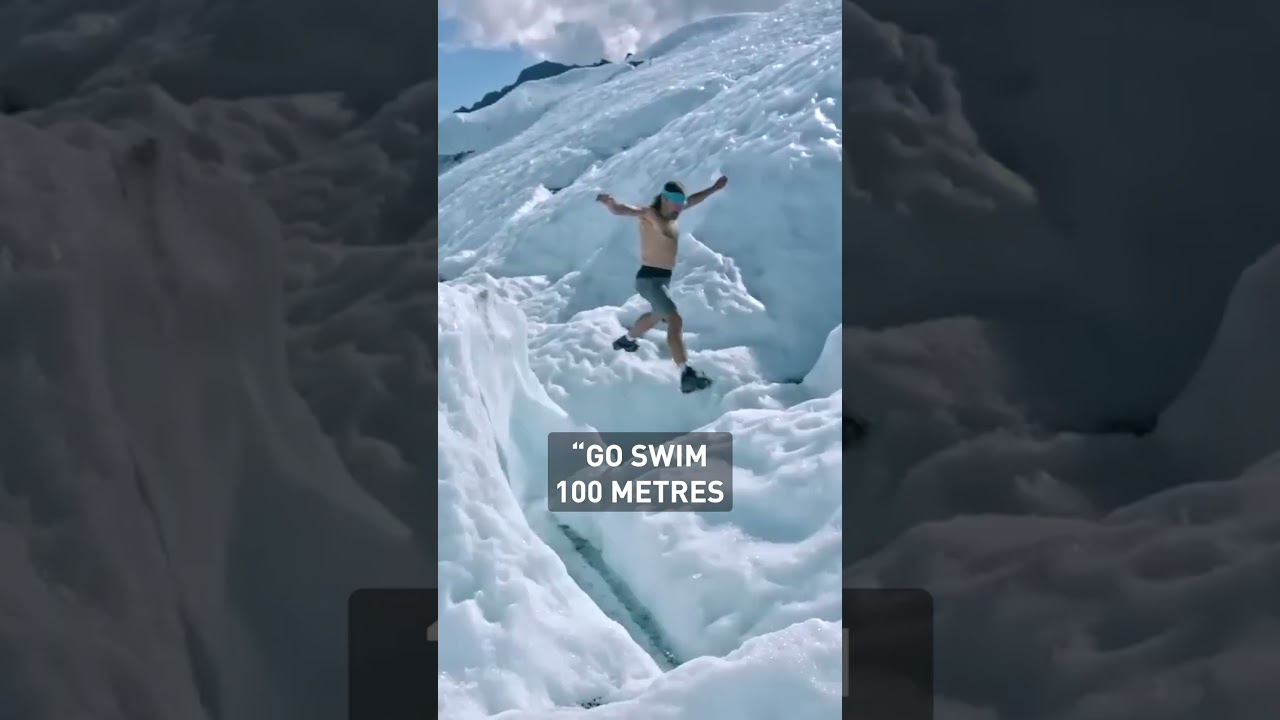
Are you someone who suffers from cold hands? This ice-bucket exercise helps.🧊 #wimhofmethod
Do you ever fall asleep during Wim Hof breathwork? #breathwork #wimhof #sleep